
油气

Search documents
杰瑞股份:12月11日召开董事会会议
Mei Ri Jing Ji Xin Wen· 2025-12-11 10:43
每经头条(nbdtoutiao)——专访管涛:美国政府经济贸易政策正逐渐动摇美元本位国际货币体系,利 多因素下人民币汇率有可能破7 (记者 王瀚黎) 每经AI快讯,杰瑞股份(SZ 002353,收盘价:72.47元)12月11日晚间发布公告称,公司第六届第三十 次董事会会议于2025年12月11日在公司五楼会议室以现场与电子通信相结合的方式召开。会议审议了 《关于修订 <董事会议事规则> 的议案》等文件。 2025年1至6月份,杰瑞股份的营业收入构成为:油气行业占比95.24%,新能源及再生行业占比4.76%。 截至发稿,杰瑞股份市值为742亿元。 ...

民间投资,后劲有多大?
Jing Ji Wang· 2025-12-11 06:56
"十五五"规划建议强调,"完善民营企业参与重大项目建设长效机制,发挥政府投资基金引导带动 作用,激发民间投资活力、提高民间投资比重,增强市场主导的有效投资增长动力。" 今年以来,各地区各部门为支持民营经济发展壮大、促进民间投资,采取了一些务实管用的举措, 营造民营企业敢投、愿投、放心投的氛围,助力民间投资活力逐步释放。 今年5月,我国第一部专门关于民营经济发展的基础性法律民营经济促进法正式实施,将坚持"两个 毫不动摇"明确为法律制度,设置权益保护专章。有关部门坚决纠治涉企行政执法突出问题,截至目前 已查纠相关案件5万多件,"乱检查、乱罚款、乱收费、乱查封"问题和违规异地执法、趋利性执法等问 题得到有效纠治。 展望"十五五",民营企业还拥有许多宝贵机遇,民间投资将迎来新的更大发展。 今年前10个月,第一产业、第二产业民间投资增速分别为6.7%、3.5%。分领域来看,基础设施民 间投资增长较快、增速为4.5%,其中,电力、热力、燃气及水的生产和供应业民间投资增速高达 18.8%。 进一步拓宽准入空间,让民间投资越来越顺心。 持续压减市场准入负面清单,出台实施"民间投资13条",滚动接续向民间资本推介项目。水电领 ...
天壕能源:携手IndoSino公司签署战略合作协议
Zheng Quan Shi Bao Wang· 2025-12-11 06:41
Core Viewpoint - Tianhao Energy has signed a strategic cooperation agreement with PT Indo Sino Oil dan Gas, marking the establishment of a deep strategic partnership aimed at collaborative development in the Southeast Asian energy sector [1][2]. Group 1: Strategic Cooperation - The signing of the strategic cooperation agreement is a key move for Tianhao Energy to implement its overseas development strategy and expand its international energy cooperation footprint [1]. - This partnership signifies Tianhao Energy's entry into the Indonesian energy market, initiating a new phase of international development [1]. - Both companies will adhere to the cooperation philosophy of "resource complementarity and advantage overlap," focusing on strategic mutual trust to explore the vast potential of the regional energy industry [1][2]. Group 2: IndoSino Company Overview - IndoSino has demonstrated exceptional resource integration and project operation capabilities, holding a 90% participating interest and operating rights under the Wain block product sharing contract (PSC) [2]. - The Wain block has identified 12 high-quality structural traps, with authoritative assessments indicating a 2P natural gas reserve of 23 billion cubic meters, showcasing significant commercial development value [2]. Group 3: Leadership Perspectives - Tianhao Energy's Chairman, Chen Zuotao, emphasized that the partnership is a strategic choice based on a shared vision for development, leveraging Tianhao's investment and operational management experience alongside IndoSino's local resource advantages and market insights [2]. - IndoSino's President, Tang Zhongfu, expressed optimism about the collaboration, anticipating that it will create new opportunities and deepen strategic trust between the two companies [3].

基于欧洲和中东油气市场的压力控制校准器前景分析
QYResearch· 2025-12-11 02:36
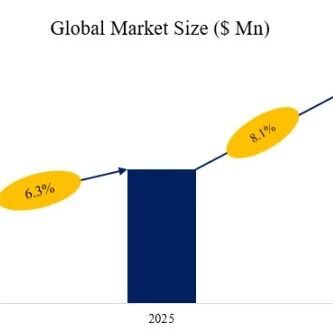
Core Insights - The article discusses the significance of pressure control calibrators in the oil and gas industry, highlighting their role in high-precision pressure measurement and calibration, which is essential for exploration, drilling, transportation, and equipment maintenance [1]. Market Analysis - The development of pressure control calibrators in the European and Middle Eastern oil and gas markets is driven by energy security transitions and the establishment of digital verification systems. The demand for measurement, monitoring, and safety calibration equipment has significantly increased due to the diversification of energy sources post-Russia-Ukraine conflict [2]. - According to QYResearch, the global market for pressure control calibrators is expected to reach $330 million by 2031, with a compound annual growth rate (CAGR) of 8.1% over the coming years [2]. Supply Chain Overview - The upstream supply chain includes critical components such as high-pressure motor assemblies, servo pump bodies, pressure sensor cores, seals, and corrosion-resistant metal housings. The cost of pressure sensor cores accounts for approximately 35% to 40% of the total cost, influencing overall measurement accuracy and temperature stability [5]. Technological Trends - Key technological advancements include: - Smart and remote control capabilities with ±0.005% FS stability, supporting Bluetooth, Modbus, and Ethernet communication for integration into oilfield monitoring networks [6]. - Lightweight and portable designs with built-in battery systems for independent operation in remote locations [6]. - Enhanced corrosion resistance and explosion-proof features, compliant with ATEX and IECEx certifications [6]. - Integration with SCADA systems for automatic data upload and compliance reporting [6]. - Energy-efficient and low-noise motors to reduce operational noise in oil and gas environments [6]. Industry Policies - Energy independence policies in Europe are increasing investments in natural gas storage and oilfield longevity, raising standards for equipment testing and maintenance [8]. - Stricter safety and compliance regulations, such as the EU's ATEX Directive and Pressure Equipment Directive, mandate that pressure testing instruments meet specific safety and accuracy standards [8]. - The strengthening of metrology certification systems, including ISO/IEC 17025 and EN ISO 9001, is driving demand for high-end pressure control calibrators [8]. Market Development Factors - Driving factors include: - Growing demand for high-precision measurement in the oil and gas sector, particularly with the expansion of deep-sea drilling and unconventional gas facilities [9]. - The promotion of automated calibration and digital factory initiatives, leading to increased adoption of pressure control calibrators with smart control modules [9]. - Enhanced safety and efficiency in testing processes, particularly in hazardous environments [9]. - The aging of global energy facilities necessitating maintenance and calibration, increasing the frequency of instrument calibration [10]. Barriers to Growth - High-end technology barriers and cost constraints, with electric calibrators priced between $5,000 and $15,000, making them 2 to 3 times more expensive than manual or pneumatic devices [11]. - Differences in metrology standards and certification barriers across countries, leading to high costs and long cycles for product export certification [12]. - Lack of a robust metrology regulatory framework in emerging markets like the Middle East and Africa, limiting the demand for high-precision calibration [13]. - Environmental challenges such as high temperatures and humidity affecting the performance of pressure control calibrators [14]. Development Opportunities - The trend towards digital operations and predictive maintenance in the oil and gas industry presents opportunities for pressure control calibrators to integrate with monitoring systems for self-calibration and remote data management [16]. - The rise of local manufacturing capabilities in markets like China and India is driving the trend of import substitution, with domestic companies gradually capturing the mid-range market [17]. - Potential for cross-industry applications, including nuclear power, pharmaceuticals, aerospace, and hydrogen energy testing, particularly as hydrogen pressure testing requirements increase [17]. - Innovations in low-power and explosion-proof products are becoming a focus for new product development, with integrated designs expected to dominate the market in the coming years [17].

新华全媒头条|步调一致绘蓝图 因地制宜启新篇——多省份“十五五”规划建议观察
Xin Hua She· 2025-12-10 16:38
Core Viewpoint - The article discusses the implementation of the "14th Five-Year Plan" by various provinces in China, highlighting their strategic goals and initiatives aimed at achieving high-quality economic and social development during this period [1]. Group 1: Provincial Planning and Goals - Over 20 provinces have approved their local "14th Five-Year Plan" proposals, aligning with the central government's strategic objectives [1]. - Zhejiang aims for significant economic and technological advancements by 2030, targeting GDP per capita close to that of developed economies [2]. - Guangdong emphasizes the "High-Quality Development Project" for rural areas, while Shandong focuses on enhancing innovation and ecological protection [3]. Group 2: Economic Transformation and Development - Hubei identifies the "14th Five-Year" period as crucial for its rise in central China, focusing on advanced manufacturing and modern service industries [4]. - Shanxi plans to accelerate its energy transition and upgrade its manufacturing sector, leveraging agriculture and tourism for development [4]. - Western provinces like Shaanxi aim to enhance traditional industries and promote new energy sectors [4]. Group 3: Industry-Specific Initiatives - Guizhou is set to optimize six major industrial clusters, including digital industries and advanced manufacturing, while also developing three distinctive sectors [5]. - Heilongjiang is focusing on developing a billion-level ice economy, promoting a full industry chain around ice sports and tourism [6]. Group 4: Reform and Innovation - Hainan is implementing reforms to enhance its free trade port, while Shandong is focusing on building major open cooperation platforms [7]. - Sichuan and Hunan are prioritizing artificial intelligence integration into various sectors, indicating a trend towards technological innovation [7]. Group 5: Regional Cooperation and Integration - The "Beijing-Tianjin-Hebei" collaborative development is a key focus for these regions, with plans for infrastructure and functional integration [9]. - Guangdong is enhancing its role in the national market while promoting cooperation with other major economic regions [10]. Group 6: Safety and Sustainability - Provinces are emphasizing ecological safety and resource security, with Inner Mongolia focusing on environmental protection and Liaoning on supply chain security [12]. - The plans highlight a balance between development and safety, ensuring that economic growth does not compromise ecological integrity [12]. Group 7: Social Development and Welfare - Provinces are prioritizing social welfare, with initiatives aimed at improving employment and healthcare services [13]. - The focus on people's well-being as a central theme in development strategies reflects a commitment to enhancing quality of life [13]. Group 8: Implementation and Future Outlook - The ongoing release of provincial plans is expected to facilitate the effective implementation of the central government's "14th Five-Year Plan," laying a solid foundation for achieving significant progress in modernization [14].
首个百千瓦级油气伴生废水制氢系统投运
Zhong Guo Hua Gong Bao· 2025-12-10 03:28
Core Viewpoint - The collaboration between China National Petroleum Corporation (CNPC) and Changqing Oilfield has led to the development of China's first 100 kW oil and gas associated wastewater electrolysis hydrogen production system, which has achieved stable operation in the Sulige gas field [1] Group 1: Technology and Innovation - The system features a unique dual-structure electrolyzer design that operates under both atmospheric and pressurized conditions, allowing for direct treatment of high-concentration wastewater while simultaneously degrading pollutants and producing hydrogen [1] - The pressurized electrolyzer processes purified brine for large-scale, high-purity hydrogen production, overcoming technical challenges related to material deactivation in high-salinity and high-pollution environments [1] Group 2: Operational Performance - During the demonstration period, the system processed a total of 24 tons of wastewater, including fracturing flowback and produced water, achieving a maximum hydrogen production rate of 40 standard cubic meters per hour with a hydrogen purity of 99.99% [1] - The chemical oxygen demand (COD) removal rate from the wastewater reached 99%, indicating effective pollution treatment [1] Group 3: Economic Impact - The system's levelized cost of hydrogen production is approximately 25% lower compared to traditional methods that involve separate wastewater treatment and hydrogen production, assuming a green electricity cost of 0.2 yuan per kilowatt-hour [1]

陕西“十五五”规划建议:协同推进煤炭优质产能释放和落后低效产能淘汰
Shan Xi Ri Bao· 2025-12-10 01:45
Group 1 - The core viewpoint emphasizes the strengthening and optimization of the modern energy industry cluster in Shaanxi, focusing on transitioning energy production and supply towards cleaner energy and chemical raw materials [1] - The plan includes the release of high-quality coal production capacity while phasing out inefficient capacity, accelerating oil and gas resource exploration and development, and enhancing the new energy system [1] - The construction of a new power system is prioritized, with significant investments in new energy infrastructure, smart grids, and energy storage systems [1] Group 2 - The initiative aims to promote the energy revolution and transformation in northern Shaanxi, establishing modern energy production bases and upgrading the "energy-materials-manufacturing" system [2] - Regional collaborative development is encouraged, leveraging the complementary strengths of Xi'an's scientific education and Yulin's energy resources to foster mutual growth in advanced manufacturing and energy chemical industries [2] - The development of "flying economy" and watershed economy is highlighted to enhance cooperation with neighboring provinces [2] Group 3 - The strategy includes a commitment to achieving carbon peak and implementing dual control over carbon emissions, with a focus on preventing blind development of high-energy-consuming projects [3] - The promotion of clean and efficient coal utilization, along with the establishment of zero-carbon factories and parks, is a key component of the plan [3] - The initiative aims to enhance the capacity to respond to climate change, particularly extreme weather events, through the development of carbon emission accounting systems and participation in national carbon trading markets [3]
“十四五”期间,内蒙古煤、电、油、气保障国家能源安全
Zhong Guo Xin Wen Wang· 2025-12-09 13:32
Group 1 - During the "14th Five-Year Plan" period, Inner Mongolia's coal transportation capacity continues to enhance, with the construction of 17 coal transportation railway lines, achieving an annual transportation capacity of approximately 1.45 billion tons, meeting an external transportation demand of about 780 million tons of coal each year [1][2] - The electricity grid structure in Inner Mongolia is being optimized, with 42 new approved 500 kV projects and 18 new projects put into operation, aiming to complete over 5 additional projects by the end of the year. The total length of 220 kV and above lines reaches 67,000 kilometers, equivalent to circling the Earth 1.6 times, with a power delivery capacity of about 75 million kilowatts [1] Group 2 - Inner Mongolia is continuously optimizing its natural gas pipeline infrastructure, expanding coverage and enhancing interconnectivity, with over 7,400 kilometers of long-distance oil and gas pipelines constructed. The annual crude oil transportation capacity is 37 million tons, and the refined oil transportation capacity is 3.91 million tons, while the natural gas pipeline system has an annual transportation capacity exceeding 110 billion cubic meters [2]
我国油气生产进入量效齐增与绿色开发新阶段
Yang Shi Wang· 2025-12-09 12:23
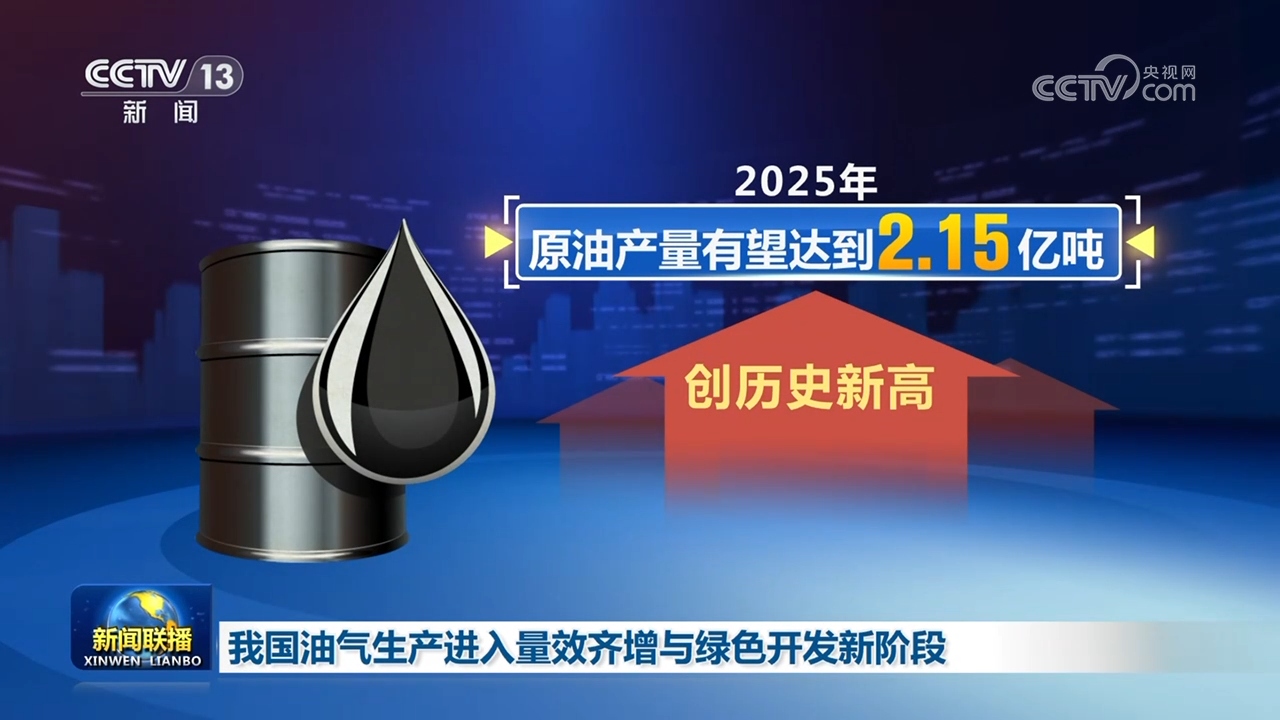
国家能源局最新数据显示,2025年原油产量有望达到2.15亿吨,创历史新高。"十四五"期间,我国累计新建原油产能1.05亿吨。其中,海洋原油成为重 要增长极,连续五年占全国石油新增产量的60%以上。 从天然气看,我国天然气产量连续九年实现百亿立方米级增长,全球第四大天然气生产国地位持续巩固。预计2025年,全国天然气产量可达2600亿立方 米,比"十三五"末增长35%。 央视网消息(新闻联播):"十四五"期间,我国石油天然气勘探成果丰硕,产量稳中有增,推动我国油气生产进入量效齐增与绿色开发新阶段。 "十四五"时期,我国新增10个亿吨级大油田、19个千亿方级大气田,累计新增探明地质储量石油70亿吨、天然气7万亿立方米以上,分别比"十三五"提 升约43%和40%。目前,全国油气管网规模达到19.5万公里,全国"一张网"加快形成。 ...
内蒙古保障能源安全稳定供应成果显著
Xin Hua Cai Jing· 2025-12-09 09:22
Core Viewpoint - Inner Mongolia Autonomous Region is enhancing its energy infrastructure to ensure energy security and stability, focusing on coal, electricity, oil, gas, and hydrogen networks [1][2][3][4] Group 1: Coal Transportation and Electricity Infrastructure - The coal transportation capacity has significantly increased, with 17 coal railway transport channels built, achieving an annual transport capacity of approximately 1.45 billion tons, meeting the external demand of about 780 million tons of coal [1] - The electricity grid structure is being strengthened, with 42 new 500 kV grid projects approved this year and 18 new projects put into operation, aiming for over 5 additional projects by year-end, enhancing power supply and renewable energy integration [1] Group 2: Oil, Gas, and Hydrogen Infrastructure - The construction of oil and gas pipelines is accelerating, with over 7,400 kilometers of long-distance pipelines built, including an annual crude oil transport capacity of 37 million tons and refined oil transport capacity of 3.91 million tons, covering 47 counties [2] - The region is also developing green hydrogen transport networks, with ongoing projects like the green hydrogen pipeline from Damao Banner to Baotou City, expected to be completed by year-end, and plans for additional pipelines to connect with major regions [2] Group 3: Energy Security and System Development - The focus is on ensuring national energy security by stabilizing coal production capacity and enhancing oil and gas supply capabilities, including the establishment of a coal reserve system [3] - Efforts are being made to strengthen the electricity system's grid structure and regulation capabilities, with plans for new energy storage projects and upgrades to the distribution network [3] Group 4: Integrated Network Development - The initiative aims to create a unified network for oil, gas, and hydrogen, promoting the interconnection of long-distance pipelines and enhancing the flexibility and reliability of the natural gas network [4] - The development of the "one trunk, two rings, and four exits" green hydrogen network is being prioritized, with ongoing efforts to include new cross-province hydrogen pipelines in national planning [4]