
奢侈品

Search documents
奢侈品选人新法则,这波卷的是“影后”
3 6 Ke· 2025-09-17 00:23
Core Insights - The luxury fashion industry is experiencing a significant transformation in its marketing strategies, particularly in the selection of brand ambassadors, as brands shift from short-term gains to long-term partnerships with artists who can enhance brand value through their achievements [5][10][14]. Group 1: Industry Trends - The period of September and October is recognized as a peak advertising season for luxury brands, leading to increased competition among brands for celebrity endorsements [3][4]. - The narrative surrounding luxury brand endorsements is evolving, with a focus on long-term relationships and the potential for mutual benefit between brands and artists [14][28]. - Brands like Chanel and Miu Miu are strategically selecting younger artists who have the potential for significant achievements, indicating a shift towards a more calculated approach in ambassador selection [5][13][28]. Group 2: Case Studies - Chanel's successful partnership with actress Xin Zhilei, who won the Best Actress award at the Venice Film Festival, exemplifies the benefits of aligning with artists who can elevate brand prestige [7][10]. - Miu Miu's recent announcement of signing three young actresses, including Li Gengxi, highlights the brand's strategy to invest in new talent with award-winning potential [5][13]. - Prada's struggles with ambassador selection, where the brand has faced backlash for poor choices, serve as a cautionary tale about the risks of prioritizing short-term popularity over long-term brand alignment [8][10]. Group 3: Consumer Engagement - The competition among artists for luxury brand endorsements is fierce, with many seeking to enhance their status through association with high-profile brands, leading to a "gold plating" effect where brand value is intertwined with celebrity status [18][25]. - The narrative of luxury brands is increasingly focused on creating a shared story with consumers, moving away from merely leveraging celebrity status to fostering deeper connections with brand values [30].


安踏反腐策:举报最高奖励百万元丨消费参考
2 1 Shi Ji Jing Ji Bao Dao· 2025-09-16 23:44
Group 1: Anti-Corruption Measures - Anta Group is enhancing its anti-corruption system, focusing on high-risk areas through internal audits and multiple measures to combat corruption by 2025 [1] - A "career tracing mechanism" has been established, ensuring that any employee's misconduct during their tenure will be pursued legally, regardless of their employment status [1] - As of August 2025, 74 employees have been dismissed for serious misconduct, and 46 individuals have been referred to judicial authorities, including one at the presidential level [1] Group 2: Financial Performance - In the first half of the year, Anta's revenue increased by 14.3% to 38.54 billion yuan, while net profit attributable to shareholders decreased by 8.94% to 7.031 billion yuan [3][4] - Excluding the dilution effects from AmerSports' listing, the net profit attributable to shareholders increased by 14.5% [3] - The gross profit margin declined by 0.7 percentage points to 63.4% [4] Group 3: Operational Strategies - Anta has established a collaborative anti-corruption system, including a whistleblower reward program that offers up to 1 million yuan for verified reports [3] - The operational authority within Anta appears to be consolidating, with marketing activities being centralized at the brand headquarters to improve efficiency [3] Group 4: Market Response - On September 16, Anta Sports shares closed at 96.3 HKD per share, reflecting a 2.56% increase [6] - The Shanghai Consumer 80 Index closed at 5379.11 points, with a 0.23% increase on the same day [7]
奢侈品客户,被“盯上”!
Zhong Guo Ji Jin Bao· 2025-09-16 16:59
Core Viewpoint - Kering Group, the parent company of luxury brands such as Gucci and Balenciaga, has experienced a data breach affecting customer information, with the hacker group ShinyHunters claiming to have stolen 7.4 million records associated with email addresses [1][3]. Group 1: Data Breach Details - The data breach began in June, with unauthorized access to Kering's systems, resulting in the exposure of customer names, email addresses, phone numbers, and addresses, but not credit card or bank account information [3]. - Kering has reported the incident to affected customers and relevant authorities, enhancing IT security measures in response [3]. Group 2: Financial Performance - Kering's revenue for the first half of 2025 was €7.587 billion, a 16% decrease year-over-year, with net profit dropping 46% to €474 million [4]. - The company closed 24 stores in the first half of the year, including 18 Gucci locations, with a total of 1,789 stores globally as of June 30 [4]. Group 3: Industry Context - Multiple luxury brands have faced similar data breaches this year, including Dior, Cartier, and Louis Vuitton, indicating a growing trend of cyberattacks targeting the luxury sector [5][6][8]. - The breaches have involved various types of customer data, but typically do not include sensitive financial information [7][8].
LVMH老板又来上海了,还去老铺黄金“逛了一圈”
Di Yi Cai Jing· 2025-09-16 15:08
Core Insights - Bernard Arnault, the CEO of LVMH, was spotted in Shanghai, marking his third consecutive year of visiting China, highlighting the importance of the Chinese market for the luxury goods sector [2][3] - Despite the strong presence in China, the global luxury goods market is experiencing a downturn, with Bain & Company reporting a projected decline in the number of luxury consumers from 400 million in 2022 to 350 million by the end of 2024 [2][3] - LVMH's revenue for the first half of 2025 is expected to drop by 4% to €39.81 billion, with net profit decreasing by 22% to €5.69 billion, indicating significant pressure on the company [3] Market Trends - The luxury goods market is projected to see a total consumption of approximately €1.48 trillion in 2024, reflecting a year-on-year decline of 1%-3% [2] - The performance of luxury brands is becoming polarized, with only about one-third of brands achieving growth amid the market slowdown [2] Consumer Behavior - LVMH executives have noted a growing interest among Chinese consumers in local brands, with a significant overlap of 77.3% between consumers of local brand Laopuhuang and international luxury brands like LV and Cartier [4] - The company plans to continue investing in China, recognizing the changing dynamics of consumer preferences [4]

体验消费逆势崛起,奢侈品营销失灵了
Sou Hu Cai Jing· 2025-09-16 14:59
Core Insights - The traditional luxury brand marketing strategy in China is losing effectiveness, as consumers shift towards seeking deeper, personalized experiences rather than material possessions [2][4] - LVMH's market value has halved by 43.5%, equating to a loss of $94.4 billion over two years, and Bain & Company predicts a 2%-5% decline in global luxury sales by 2025, marking the largest drop in nearly a decade [2][9] - The rise of experience-based consumption is redefining spending habits, with consumers prioritizing unique experiences over luxury goods [4][14] Consumer Behavior Shift - Consumers are moving from a mindset of showcasing wealth to one focused on personal fulfillment and identity [4][11] - Social media trends are shifting from showcasing luxury items to sharing experiences such as travel and outdoor activities, reflecting a broader cultural change [5][9] - The Z generation values experiences that contribute to content creation and social currency over traditional luxury goods [11][12] Market Dynamics - The luxury market is experiencing a significant contraction, with the number of global luxury consumers decreasing from approximately 400 million to 350 million, particularly affecting price-sensitive entry-level consumers [9][12] - Gucci's sales dropped by 23% in 2024, highlighting the challenges luxury brands face in adapting their marketing strategies to current consumer expectations [6][8] Experience Economy - The experience economy is projected to be a multi-trillion-dollar market, with China's experience retail market expected to reach 800 billion yuan by 2025 [9][14] - Luxury brands are beginning to adopt a "product + experience" model, integrating high-end experiences with product offerings to create a more compelling value proposition [14][15] - Successful experience-based offerings require authenticity and alignment with brand values to avoid becoming mere marketing gimmicks [14][15] Challenges for Luxury Brands - Luxury brands are struggling with a disconnect between their traditional marketing strategies and the evolving consumer landscape, leading to a decline in brand loyalty and sales [8][12] - The reliance on symbolic marketing and frequent price increases has eroded consumer trust and alienated younger consumers [8][9] - The challenge lies in balancing brand heritage with innovative experiences, as luxury brands navigate the complexities of digital transformation and changing consumer preferences [15][16]
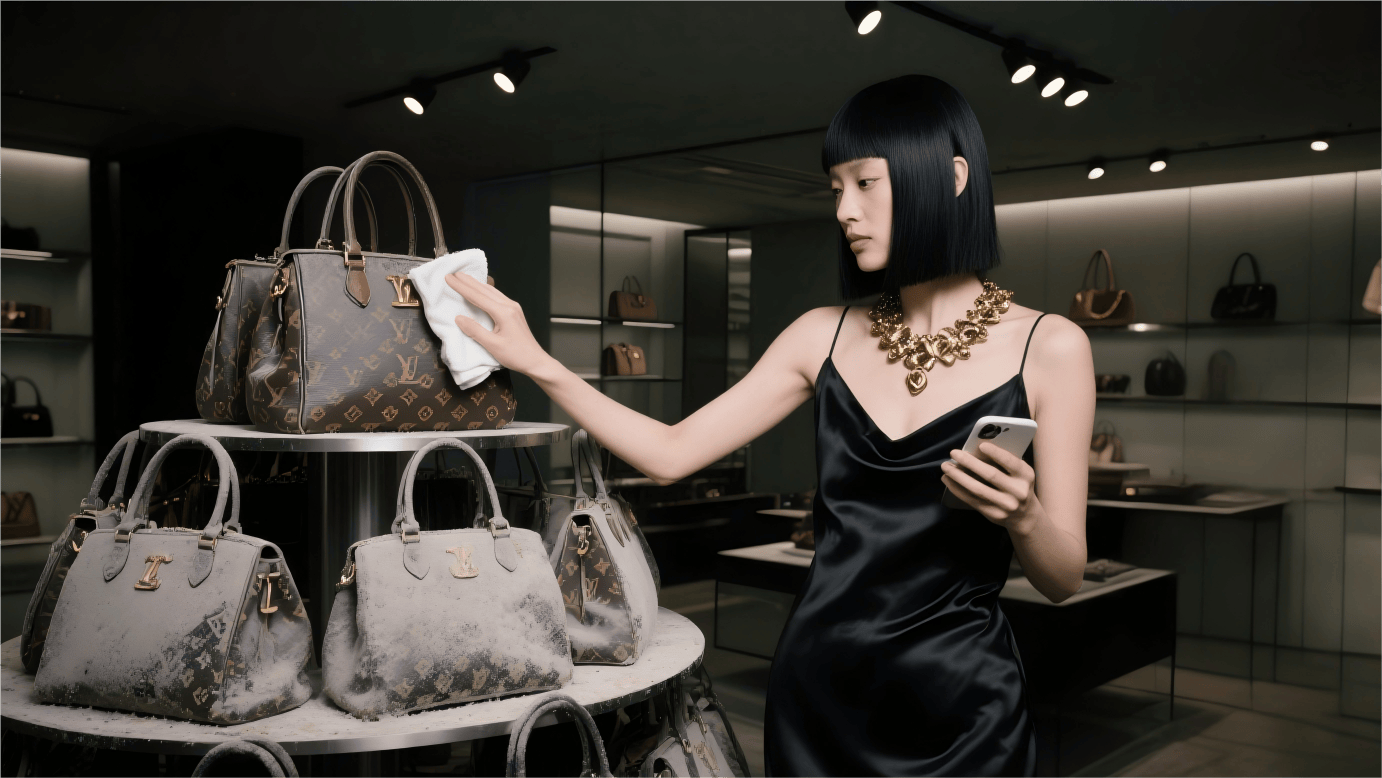
LVMH老板又来上海了,还去老铺黄金“逛了一圈”
第一财经· 2025-09-16 14:55
Core Viewpoint - The luxury goods market is experiencing a downturn, with a significant reduction in the number of consumers and a decline in overall spending, impacting major players like LVMH [4][5]. Group 1: Market Trends - The luxury goods consumer base is projected to shrink from 400 million in 2022 to 350 million by the end of 2024 [4]. - The total global luxury goods consumption is expected to be approximately €1.48 trillion in 2024, reflecting a year-on-year decline of 1%-3% [4]. - Only about one-third of luxury brands are expected to achieve growth amid the market slowdown [4]. Group 2: LVMH Performance - LVMH reported a 4% year-on-year decline in total revenue for the first half of 2025, amounting to €39.81 billion [5]. - The net profit for LVMH decreased by 22% to €5.69 billion during the same period [5]. Group 3: Strategic Moves - Bernard Arnault, CEO of LVMH, continues to visit China, indicating the importance of the Chinese market despite the overall downturn [3]. - LVMH executives have shown interest in local brands, with a notable increase in demand for Chinese jewelry companies [6]. - The overlap in consumer demographics between local brands like Laopuhuangjin and international luxury brands is significant, with a 77.3% overlap rate [6].

LVMH老板又来上海了 ,LVMH老板逛了老铺黄金
Di Yi Cai Jing· 2025-09-16 14:50
Group 1 - Bernard Arnault, CEO of LVMH, was spotted in Shanghai, marking his third consecutive year visiting China [1] - LVMH's flagship store, the "Louis" giant ship, has become a new landmark in Shanghai, attracting global tourists [1] - In 2023, Arnault was recognized as the world's richest person with a net worth of $211 billion (approximately 14,500 billion RMB) according to Forbes [1] Group 2 - During his visit, Arnault toured the Laopai Gold store in Shanghai, showing interest in various gold items and commenting on their craftsmanship [1] - This visit follows a previous trip by another LVMH executive to Laopai Gold in Beijing earlier in June [1]
奢侈品行业频遭网安威胁!LV、卡地亚、迪奥今年均曝泄露
Jing Ji Guan Cha Wang· 2025-09-16 05:44
Core Insights - Kering Group has confirmed a cyber attack that resulted in the leakage of customer data from its brands, including Gucci, Balenciaga, and Yves Saint Laurent, involving names, phone numbers, addresses, and total spending amounts, while financial information such as credit card details was not compromised [1] Industry Summary - The luxury goods sector has experienced a surge in cybersecurity incidents this year, with notable breaches including the leakage of information from nearly 420,000 customers of Louis Vuitton in July, which included passport numbers and shopping records [1] - In June, Richemont's Cartier brand faced a system intrusion that led to customer data exposure, and in May, Dior also reported incidents involving the leakage of customer names, phone numbers, and spending preferences [1]
科技大事件 丨 雷军:小米 17 系列全面对标 iPhone;魅族 22 手机发布
Sou Hu Cai Jing· 2025-09-16 05:03
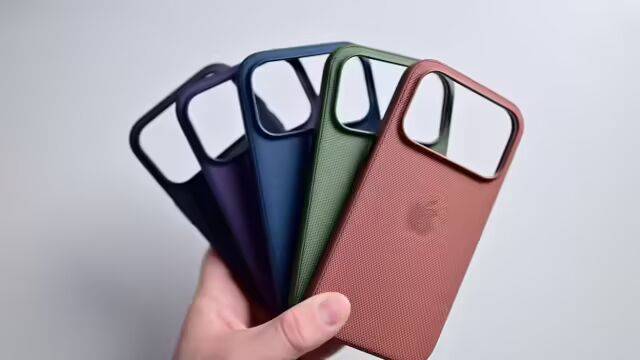
Group 1: Apple Investment and Manufacturing Expansion - Apple CEO Tim Cook announced a $600 billion investment plan over the next four years, benefiting 79 factories across the U.S. [1] - The investment is expected to create more business opportunities in local communities and potentially lead to a "domino effect" of other companies establishing operations nearby [1][1] - Cook mentioned that some communities may experience unexpected business developments from Apple in the future [1] Group 2: Apple Product Updates - Apple introduced the TechWoven fabric for iPhone 17 series cases, which is designed to replace leather and offers better durability than the previous FineWoven material [3] - The HomePod version 26 software update includes new features such as Apple Music crossfade, improved AirPlay controls, and manual Wi-Fi switching [4][6] - New parental control tools have been launched across Apple devices to enhance digital safety for children and teenagers, simplifying account setup and improving age-appropriate content matching [7][8] Group 3: Xiaomi Competitive Strategy - Xiaomi's founder Lei Jun announced the upcoming Xiaomi 17 series, which aims to directly compete with the iPhone, highlighting a significant upgrade in product capabilities [9] - The Xiaomi 17 series will include three models: Xiaomi 17, Xiaomi 17 Pro, and Xiaomi 17 Pro Max, with a naming convention similar to the iPhone 17 series [9] Group 4: Semiconductor Development - MediaTek announced the successful tape-out of its first flagship SoC using TSMC's 2nm process technology, expected to enter mass production by the end of 2026 [12] - The new SoC, likely the Dimensity 9600, will feature improved performance and power efficiency compared to existing technologies [12]

X @外汇交易员
外汇交易员· 2025-09-16 04:04
开云集团确认发生数据泄露事件,影响旗下古驰(Gucci)、巴黎世家(Balenciaga)、Alexander McQueen、YSL等奢侈品牌。开云集团确认本次数据泄露始于6月,有未经授权的第三方临时访问开云集团的系统,获取了旗下品牌的一些客户数据,本次事件中黑客没有获取到信用卡、银行账户信息,但泄露的数据包括客户姓名、电话、电子邮箱、地址及有关品牌门店的消费金额。开云集团并未回应有哪些地区的市场受到此次影响。此次黑客攻击的幕后组织是ShinyHunters(闪亮猎人)。外汇交易员 (@myfxtrader):奢侈品品牌迪奥(DIOR)向用户发布短信称发生数据泄露事件,外部人员获取了部分客户数据,包括客户姓名、性别、手机号码、电子邮箱、邮寄地址以及消费金额和偏好等信息。迪奥客服称,收到短信的客户意味着受到此次数据泄露事件的影响,建议中国客户对任何可疑通信(短信、电话、电子邮件)保持警惕。 https://t.co/aJZw30ou70 ...