支付

Search documents
沉稳应对挑战、增长新动能隐现,如何看待百富环球中报透露的新信号?
Zhi Tong Cai Jing· 2025-08-20 04:22
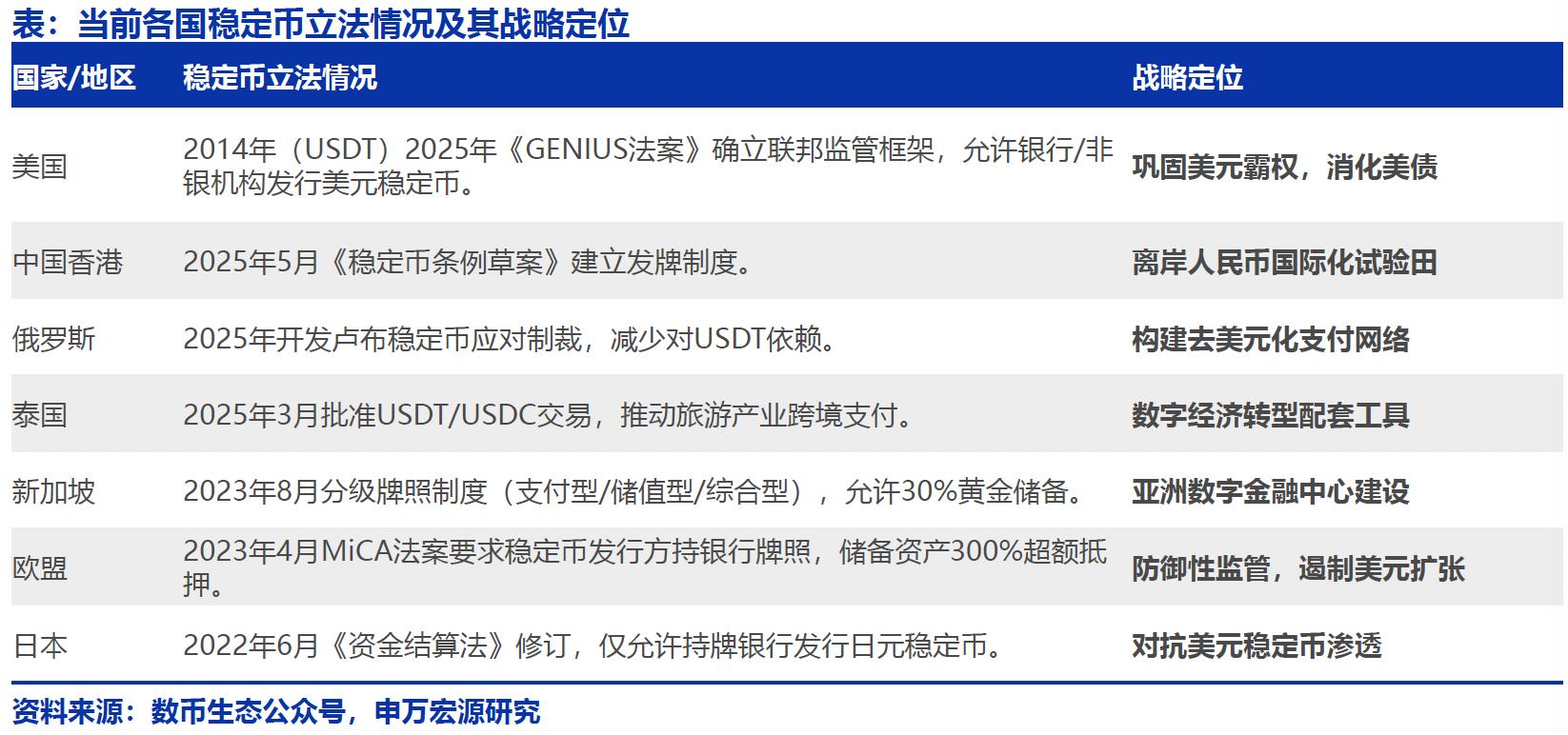
Group 1: Industry Overview - The global payment sector is experiencing significant positive changes with the signing of the US GENIUS Act and the implementation of Hong Kong's Stablecoin Regulation, marking a crucial step towards compliance for stablecoins [1] - The compliance wave for stablecoins is expected to drive a rapid transformation in the global payment market, creating new opportunities for payment infrastructure [1][5] - The industry anticipates that stablecoins will first explode in the payment sector due to the traditional financial system's potential for efficiency improvements and the relative flexibility of policy and compliance [8] Group 2: Company Performance - In the first half of 2025, the company reported revenues of HKD 2.716 billion, with a gross profit of HKD 1.273 billion, resulting in a gross margin of 46.9% and a net profit of HKD 391 million [2] - The company's revenue structure shows that HKD 2.544 billion came from electronic payment terminal sales, while HKD 172 million was generated from services [3] - The company achieved a revenue of HKD 1.084 billion from the EMEA region, despite some sales slowdown in Europe, with notable performance in Italy, the UK, and France [3] Group 3: Strategic Initiatives - The company is actively adapting its resource allocation to focus on high-potential markets, demonstrating resilience in a challenging market environment [1][2] - The company is leveraging its extensive global sales network and SaaS ecosystem to capitalize on the rapid development of stablecoins, aiming to replicate successful methodologies in this new payment area [8] - The company is also enhancing its product line and strengthening its SaaS ecosystem, with plans to integrate artificial intelligence to improve smart support and data application capabilities [8]

商务部研究院的培训,涉及出口管制、跨境AML
制裁名单· 2025-08-20 01:56
Core Viewpoint - The article announces a specialized training program on export control and cross-border anti-money laundering compliance, aimed at helping enterprises enhance their risk identification and prevention capabilities in a complex global regulatory environment [2][3]. Training Content - **Export Control and Economic Sanctions** - Review of global export control and economic sanctions hotspots, analysis of the current situation, and future trends [2] - Overview of China's Export Control Law, including its jurisdiction, measures, and legal responsibilities [2] - Introduction to international export control mechanisms such as the Wassenaar Arrangement and Nuclear Suppliers Group [3] - Study of export control policies from the US and EU, including EAR, ITAR, and OFAC sanctions, and their impact on China [3] - Analysis of secondary sanctions case studies and response strategies [3] - Practical construction of export control compliance systems, including risk assessment, internal controls, training, and auditing mechanisms [3] - **Cross-Border Anti-Money Laundering and Counter-Terrorism Financing** - Analysis of the new Anti-Money Laundering Law and FATF's fifth round of international evaluation standards, focusing on the obligations of financial institutions and enterprises [3] - Practical operations for customer due diligence and transaction monitoring, including identity verification and reporting of large and suspicious transactions [3] - Screening for sanction risks and list management through compliance tools, establishing monitoring and updating mechanisms [3] - Case studies on cross-border transaction risks related to anti-money laundering and sanctions [3] - **Coordinated Compliance for Export Control and Anti-Money Laundering** - Building collaborative mechanisms and policy linkages, including regulatory agency cooperation models and dual-track compliance frameworks for enterprises [4] - Information sharing and technological integration for tracking cross-border funds and logistics, and upgrading list management systems [4] - Practical collaborative models and experiences, such as cooperation modes at the China-Vietnam border and high-risk country management in the EU [4] Target Audience - The training is aimed at personnel from local commerce bureaus, economic cooperation bureaus, financial regulatory bureaus, the People's Bank, foreign exchange administration, and related staff from free trade zones and border cooperation zones [5] - It also targets compliance, legal, risk management, international business, and card center staff from financial institutions, as well as relevant personnel from manufacturing and trading enterprises, trade associations, law firms, accounting firms, and consulting companies [5] Fees and Other Information - The training fee is set at 5,980 yuan per person, which includes teaching, materials, and venue costs [5] - Accommodation is arranged according to the Ministry of Finance's standards, with costs borne by participants [5] - Registration details and payment instructions are provided, with a deadline for registration [6]
合规需求等原因致多家支付机构股权变动
Zheng Quan Ri Bao· 2025-08-19 16:37
Core Viewpoint - The People's Bank of China has updated the significant changes in non-bank payment institutions, highlighting key changes in major shareholders and business types for companies like Chuanhua Payment, Beijing GaoHuiTong, and Lakala Payment [1][2]. Company Summaries - Chuanhua Payment's major shareholder has changed from Chuanhua Logistics Group to Shanghai Xunhui Information Technology, with the actual controller shifting from Xu Guanju to MENGPO [2]. - Beijing GaoHuiTong has reduced its business types, exiting Class II stored value account operations while retaining Class I operations [2]. - Lakala Payment's major shareholder, Legend Holdings, has decreased its shareholding from 26.54% to 23.54% [2]. Industry Trends - The payment industry is undergoing continuous adjustments, with six significant changes reported in 2025 alone, including capital increases, executive adjustments, and changes in shareholding structures [4]. - The frequency of adjustments among payment institutions is attributed to four main reasons: strategic adjustments, compliance needs, business focus, and capital operations [4][5]. - The current payment industry is in a phase of "high-quality development + differentiated competition," with regulatory requirements becoming stricter and the value of licenses returning to scarcity [5][6].


Circle(CRCL.US)的新野心:不想只做发行商,更要成为“稳定币支付时代的Visa”
智通财经网· 2025-08-19 14:04
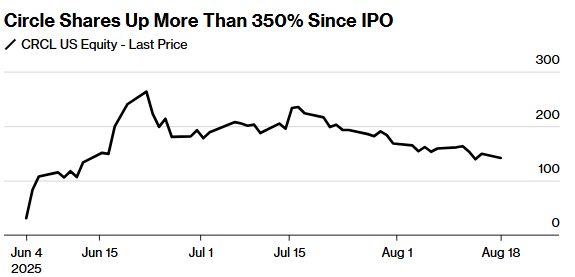
Core Viewpoint - The successful IPO of Circle marks a significant milestone for stablecoins, indicating their gradual integration into mainstream finance, with USDC becoming a foundational digital asset infrastructure [1] Group 1: Circle's Business Strategy - Circle's revenue in Q2 was approximately 95% derived from interest generated by cash and bonds supporting USDC, benefiting from high interest rates [1] - To diversify and solidify its position in digital finance, Circle launched Arc, a new blockchain technology aimed at directly processing stablecoin payments, competing with giants like Visa and Mastercard [1][2] - Circle's CEO Jeremy Allaire stated that they are in the initial stages of building a vast financial network, which they believe could become one of the largest in history [2] Group 2: Competitive Landscape - The competition is intensifying, with Stripe also aiming to establish its own end-to-end network for stablecoin payments, indicating a trend towards potentially closed ecosystems [2][3] - Circle's stock has surged over 350% since its IPO, but analysts predict a slowdown in growth, with non-interest income expected to decline in the second half of the year [2][3] Group 3: Infrastructure Development - Circle and Stripe are both focused on creating competitive financial networks for digital currencies, with companies eager to develop services that control asset flows in the next generation of digital payments [3][6] - Circle aims to maintain market neutrality by offering services like cross-chain transfer protocols to facilitate the movement of USDC and its newly launched digital euro EURC across different blockchains [7] Group 4: Challenges Ahead - A significant challenge remains in convincing other companies to develop on these private systems, as many banks realize that their private blockchains may not attract other banks [7] - The ambition to introduce competition at every stage of the transaction process could lead to more efficient capital flows, moving away from reliance on network effects [7]

这张支付牌照正式易主,跨境支付服务商谋合规
Bei Jing Shang Bao· 2025-08-18 10:53
北京商报讯(记者 岳品瑜 董晗萱)一笔买方来自跨境支付机构的支付牌照交易获批。8月18日,北京商报记者注意到,人民银行官网更新了非银行支付机构 重大事项变更许可信息,同意传化支付有限公司(以下简称"传化支付")主要股东由传化物流集团有限公司变更为上海寻汇信息科技有限公司(以下简 称"上海寻汇")。 | | | | | 同意传化支付有限公司 东由传化物流集团有限 | | --- | --- | --- | --- | --- | | | 传化支付有限公 | 银许准予决字 | 中国人民银行准予行 | | | 65 | 可 | 〔2025〕 第66号 | 政许可决定书 | 更为上海寻汇信息科技 | | | | | | 司,实际控制人由自然 | | | | | | 巨变更为自然人MEN | 上海寻汇是跨境支付品牌寻汇SUNRATE(以下简称"寻汇")在中国境内的运营主体,后者全球业务总部位于新加坡,目前已在香港、雅加达、东京、伦敦 和上海等地设有办事处。其对于传化支付的收购事项于今年4月开始,根据公告,上海寻汇以3.15亿元的价格拿下了这张支付牌照。 正如公司自身评价,跨境支付服务商持续谋求支付牌照,一方面是基于国内 ...

PhotonPay光子易受邀出席摩根大通深圳创新汇论坛,共话中企出海与全球支付新趋势
Sou Hu Cai Jing· 2025-08-18 10:22
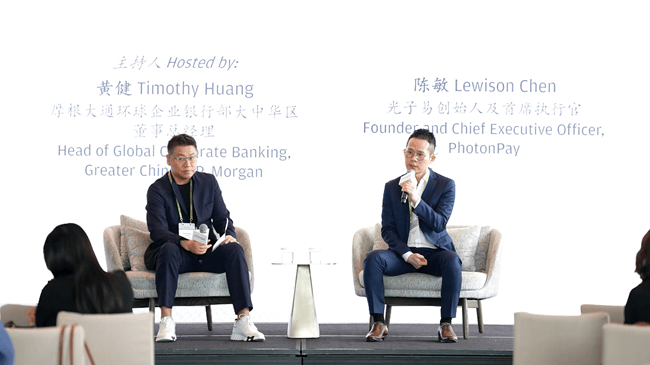
Core Insights - PhotonPay is positioned as a key player in the cross-border payment sector, focusing on the needs of Chinese enterprises seeking growth opportunities abroad [3][6] - The company emphasizes a long-term strategy, having built a compliant and global financial infrastructure that has gained the trust of over 200,000 outbound enterprises and numerous partners, including JPMorgan Chase [3][6] - PhotonPay aims to reduce payment friction for businesses expanding internationally by modularizing payment capabilities and ensuring compliance and risk control [3][6][8] Global Expansion and AI Empowerment - The company has developed a robust risk control and compliance system from the outset, collaborating with local compliance and anti-money laundering institutions to create payment solutions that meet regulatory requirements [6][7] - PhotonPay's self-developed AI risk control engine enables 24/7 real-time monitoring of transaction risks, dynamically adjusting to specific risks across industries and countries [6][7] Digital Financial Infrastructure - Through partnerships with global financial institutions like JPMorgan Chase, Mastercard, and Discover Network, PhotonPay has established a global payment network covering over 230 countries and regions, supporting payments in more than 60 currencies [6][8] - The company has optimized product design to align with local payment cultures and business processes while maintaining global scalability, facilitating true global collaboration [6][8] Compliance and Licensing - Since its inception, PhotonPay has prioritized compliance, obtaining various financial licenses across regions, including Hong Kong, the United States, Canada, the United Kingdom, and Poland [7] - The company employs an AI-driven intelligent risk control engine to create a multi-layered defense mechanism, ensuring risks are identified and intercepted before they occur [7][8] Future Outlook - PhotonPay is committed to further expanding its global payment network, increasing AI investments, and strengthening its compliance framework to support Chinese enterprises in their global expansion efforts [8]
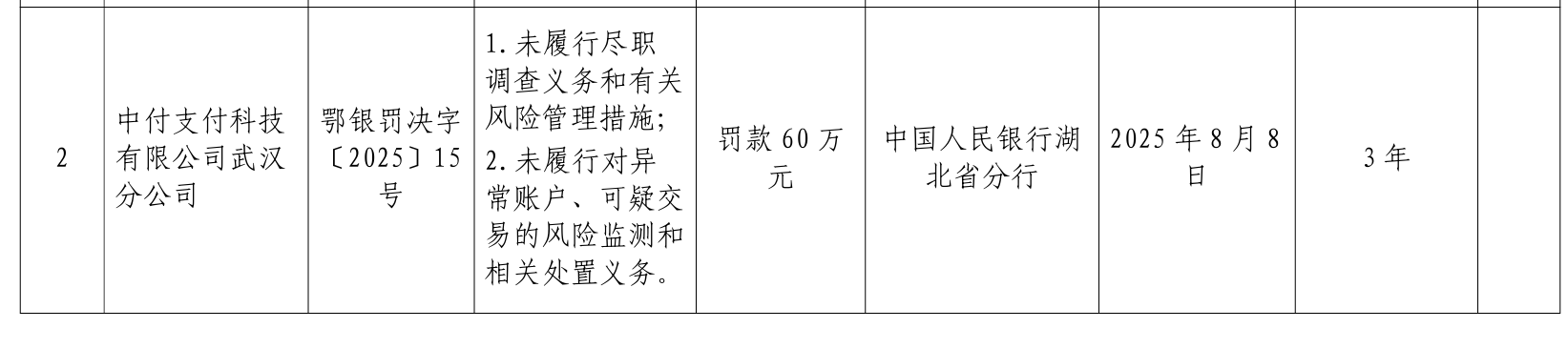
中付支付武汉分公司被罚款60万元 因违反反洗钱相关规定等违规
Feng Huang Wang Cai Jing· 2025-08-18 08:24
凤凰网财经讯 近日,据中国人民银行湖北省分行官网消息显示,中付支付武汉分公司因未履行尽职调查义务和有关风险管理措施,未履行对异常账户、可 疑交易的风险监测和相关处置义务等2项违规,被罚款60万元。 上述"未履行尽职调查义务和有关风险管理措施"违规行为出自金融机构反洗钱规定第九条"金融机构应当按照规定建立和实施客户身份识别制度";"未履行 对异常账户、可疑交易的风险监测和相关处置义务"违规行为出自金融机构反洗钱规定第十一条"金融机构应当按照规定向中国反洗钱监测分析中心报告人民 币、外币大额交易和可疑交易"。 | | | | 1. 未履行尽职 调查义务和有关 | | | | --- | --- | --- | --- | --- | --- | | | 中付支付科技 | 鄂银罚决字 | 风险管理措施; | 罚款 60 万 | 中国人民银行 | | 2 | 有限公司武汉 | [2025] 15 | 2.未履行对异 | 元 | 北省分行 | | | 分公司 | 특 | 常账户、可疑交 | | | | | | | 易的风险监测和 | | | | | | | 相关处置义务。 | | | ...
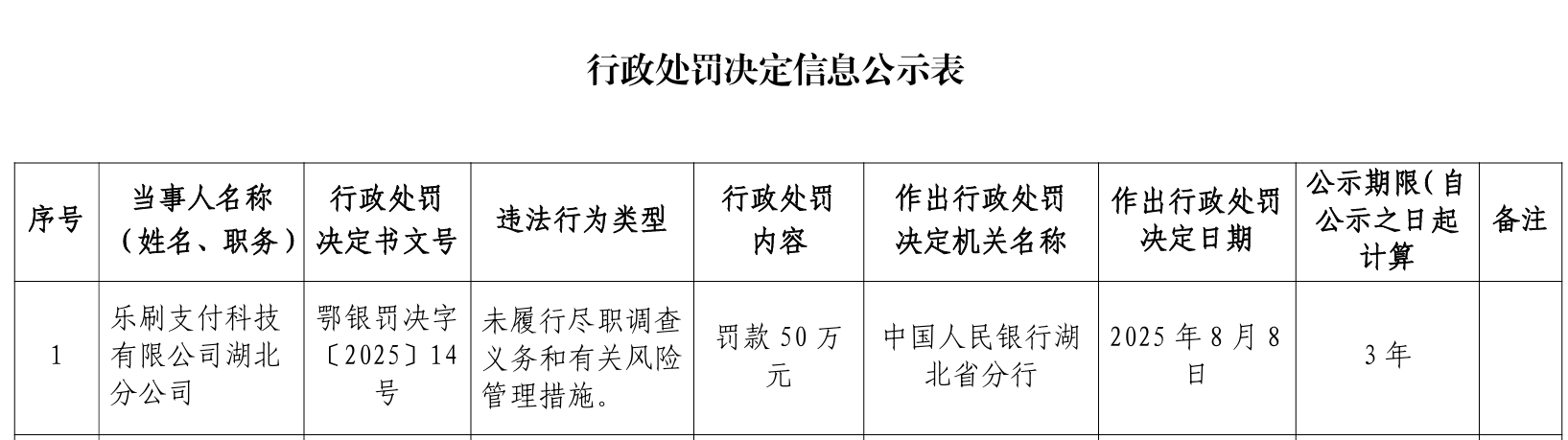
乐刷支付湖北分公司被罚款50万元 因违反反洗钱相关规定违规
Feng Huang Wang Cai Jing· 2025-08-18 07:13
Group 1 - The company LeShua Payment Technology Co., Ltd. was fined 500,000 yuan for failing to fulfill due diligence obligations and related risk management measures [2] - The violation was identified under the anti-money laundering regulations, specifically Article 9, which mandates financial institutions to establish and implement customer identity recognition systems [2]
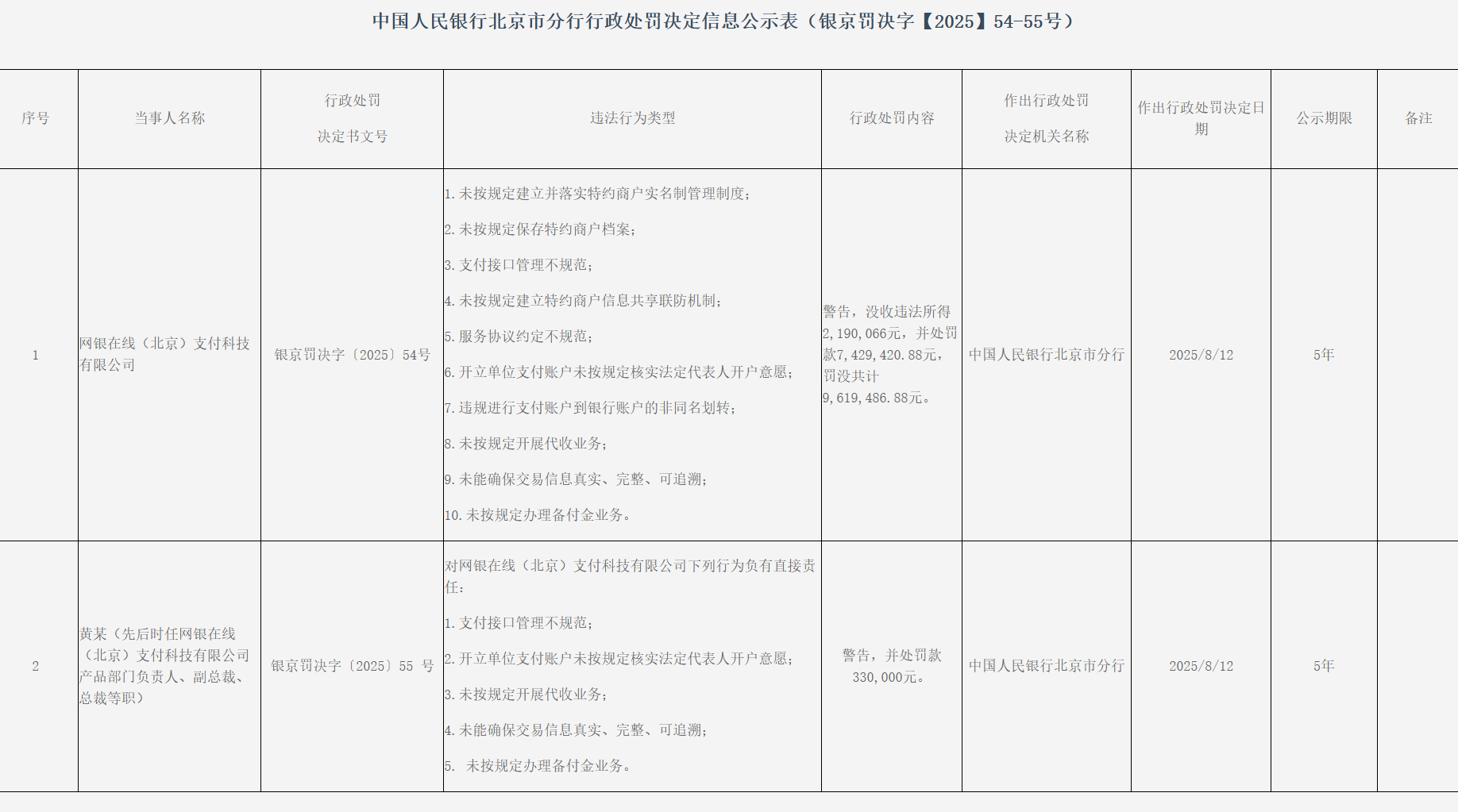
十大违规 网银在线被罚没961.95万元
Feng Huang Wang Cai Jing· 2025-08-18 03:12
凤凰网财经讯 8月15日,据中国人民银行北京市分行官网消息显示,网银在线因未按规定建立并落实特约商户实名制管理制度等10项违规,被警告,没收违 法所得2190066元,并处罚款7429420.88元,罚没共计9619486.88元。 9.未能确保交易信息真实、完整、可追溯; 具体违规行为如下: 1.未按规定建立并落实特约商户实名制管理制度; 2.未按规定保存特约商户档案; 3.支付接口管理不规范; 4.未按规定建立特约商户信息共享联防机制; 5.服务协议约定不规范; 6.开立单位支付账户未按规定核实法定代表人开户意愿; 7.违规进行支付账户到银行账户的非同名划转; 8.未按规定开展代收业务; 10.未按规定办理备付金业务。 先后时任网银在线产品部门负责人、副总裁、总裁等职黄某对,支付接口管理不规范,开立单位支付账户未按规定核实法定代表人开户意愿,未按规定开展 代收业务,未能确保交易信息真实、完整、可追溯,未按规定办理备付金业务等5项违规负有责任,被警告并罚款33万元。 | 序号 | 当事人名称 | 行政处罚 | 违法行为类型 | 行更 | | --- | --- | --- | --- | --- | | | ...
操控POS机“虚构交易”!7500万元套现案告破,支付机构要注意哪些风险
Bei Jing Shang Bao· 2025-08-17 11:12
Core Viewpoint - The article highlights the crackdown on illegal cash withdrawal activities using POS machines in Shandong Province, revealing a significant case involving 75 million yuan in illicit transactions and the arrest of a key suspect [1][3]. Group 1: Criminal Activities - A criminal gang was using over 30 different brands of POS machines and more than 270 credit cards registered under other people's names to facilitate illegal cash withdrawals [3]. - The suspect, identified as Luo, created fictitious lottery consumption scenarios to convert credit card limits into cash, generating illegal profits [3]. Group 2: Challenges in Detection - Identifying disguised cash withdrawal activities within vast transaction data presents technical challenges, particularly in tracking abnormal behaviors across different institutions and brands [4]. - The difficulty in verifying the authenticity of information during the POS machine application process contributes to the prevalence of such illegal activities [4]. Group 3: Recommendations for Improvement - The industry should enhance the real-name registration and operational authenticity verification for merchants, and establish a shared "blacklist" and risk device database [4]. - A collaborative governance system involving payment institutions, regulatory bodies, and commercial banks is essential for effective management of cash withdrawal issues [5]. - The fundamental solution lies in finding stable profit growth points for offline card-accepting institutions to reduce the demand for cash withdrawals [5].