
种植业

Search documents
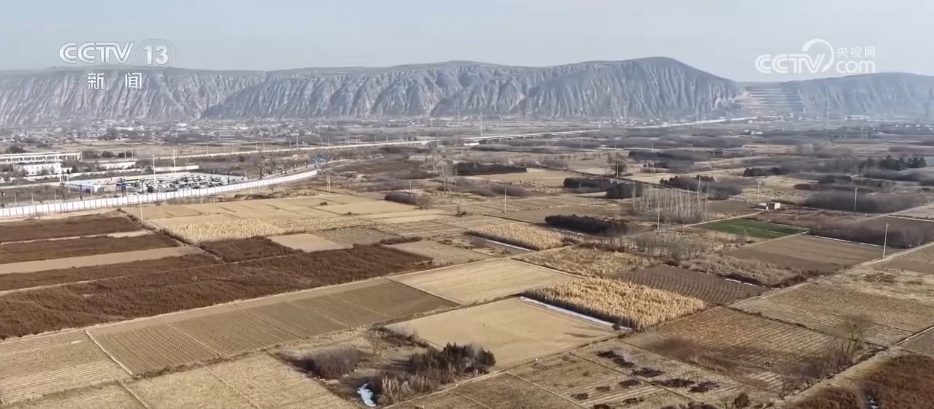
【更新 更新】今年的农田“更新”了啥?
Yang Shi Wang· 2025-12-12 00:24
央视网消息:农田,一边连着农民的收成,一边连着百姓的饭碗,一起来看农民们眼中农田上 的"更新"。 ...
甘肃榆中受灾地区开展备耕工作 农业复产按下“快进键”
Yang Shi Wang· 2025-12-11 13:17
Core Viewpoint - The agricultural sector in Yuzhong County, Gansu Province, is actively working to recover from the damage caused by a mudslide disaster in early August, focusing on restoring farmland and agricultural facilities to boost production. Group 1: Recovery Efforts - The local agricultural department is guiding affected farmers in restoring farmland and repairing or constructing new agricultural facilities to gradually resume agricultural production [1][3]. - Agricultural technicians are collecting soil samples and assessing soil nutrient levels to evaluate soil quality in damaged farmlands, providing targeted guidance for farmers in preparation for planting [3]. Group 2: Machinery and Equipment - Over 400 agricultural machines have been mobilized to assist agricultural cooperatives in maintaining and repairing equipment during the winter downtime [5]. - The local authorities plan to enhance the efficiency of deep plowing and rotary tillage operations for affected farmers in the spring, improving soil structure and aeration for better crop growth [5]. Group 3: Financial Support - Local financial institutions are actively providing funding to support the recovery of agricultural production and industry development in the affected areas [7]. - The financial assistance has helped several enterprises resume production and establish new production lines, while also expanding the market for local agricultural products like corn and creating job opportunities for affected residents [7].

种植业板块12月11日跌2.22%,海南橡胶领跌,主力资金净流出4.82亿元
Zheng Xing Xing Ye Ri Bao· 2025-12-11 09:01
从资金流向上来看,当日种植业板块主力资金净流出4.82亿元,游资资金净流入1.96亿元,散户资金净 流入2.87亿元。种植业板块个股资金流向见下表: 以上内容为证券之星据公开信息整理,由AI算法生成(网信算备310104345710301240019号),不构成投资建议。 证券之星消息,12月11日种植业板块较上一交易日下跌2.22%,海南橡胶领跌。当日上证指数报收于 3873.32,下跌0.7%。深证成指报收于13147.39,下跌1.27%。种植业板块个股涨跌见下表: ...


隆平高科(000998):转基因布局具备先发优势,公司经营彰显韧性,种业龙头地位稳固
Bank of China Securities· 2025-12-11 05:10
Investment Rating - The report assigns a rating of "Buy" to the company, with a market price of RMB 9.55 and a sector rating of "Outperform" [1]. Core Insights - The report highlights that Longping High-Tech is a leading player in the domestic seed industry, with a well-established industrial layout and a focus on high-quality development. The company's research capabilities are industry-leading, and its asset quality is continuously improving, leading to a positive outlook for its medium to long-term development [2][5]. Financial Performance - The company is expected to achieve revenues of RMB 85.8 billion, RMB 92.2 billion, and RMB 99.3 billion for the years 2025 to 2027, reflecting year-on-year growth rates of +0.1%, +7.5%, and +7.7% respectively. The net profit attributable to shareholders is projected to be RMB 2.0 billion, RMB 3.1 billion, and RMB 4.5 billion for the same years, with growth rates of +71.4%, +57.6%, and +46.8% respectively. The current market capitalization corresponds to P/E ratios of 71.9X, 45.6X, and 31.1X for the years 2025 to 2027 [6][8]. Company Overview - Longping High-Tech, established in 1999 and listed in 2000, is recognized as a modern high-tech seed enterprise. The company has a comprehensive business structure that includes seed operations and agricultural services, focusing on major crops such as rice, corn, and wheat, as well as specialized crops like cucumbers and sunflowers [16][18]. Research and Development - The company leads the industry in R&D investment, with RMB 6.9 billion allocated in 2024, representing 9.1% of its revenue. The number of dedicated R&D personnel reached 712, accounting for 17.02% of the total workforce. The company has significantly increased its plant variety applications, with 113 authorized in 2024 compared to just 12 in 2016 [31][39]. Market Position - Longping High-Tech holds a dominant position in the seed market, with a market share of 42% in corn seeds and 36% in rice seeds. The company is actively expanding its international presence, particularly in Brazil, where it ranks among the top three corn seed companies [17][44]. Strategic Acquisitions - The company has accelerated its acquisition strategy since the entry of CITIC Group as a major shareholder in 2016, enhancing its market position and operational capabilities through various acquisitions in the seed industry [28][30].

为地方经济高质量发展注入强劲动力 中国人民银行中卫市分行以“再贷款+产业”撬动县域特色产业发展
Jin Rong Shi Bao· 2025-12-11 03:50
Core Viewpoint - The People's Bank of China (PBOC) is implementing a new management approach for relending, closely integrating it with the financial "five major articles" to stimulate local economic development through targeted financial support for specific industries [1] Group 1: Relending and Financial Support - The PBOC is leveraging monetary policy tools to create a virtuous cycle of "central bank relending - bank precision lending - entity development - farmer income increase" [1] - The PBOC has introduced differentiated financial products such as "Red Fire Loan," "Goji Trust Loan," and "Goods Easy Loan" to support the goji berry industry, facilitating financing for over 950 market entities with a relending balance of 430 million yuan by the end of Q3 [2] - The PBOC is guiding financial institutions to utilize low-cost funds to support the beef cattle industry, resulting in a relending balance of 460 million yuan by the end of Q3, benefiting 3,756 market entities [3] Group 2: Industry-Specific Initiatives - The PBOC is focusing on the goji berry supply chain, collaborating with five units to promote financial support and innovative products tailored to the needs of goji berry enterprises [2] - The PBOC is supporting the beef cattle industry in Haiyuan County, aiming to create a national-level beef cattle industry demonstration county, with loans provided to cooperatives to expand their operations significantly [3] - The PBOC is promoting the cultivation of the Xian Shaguo watermelon by developing financial products like "Xian Shaguo E-loan" and "Agricultural Material Loan," with a relending balance of 410 million yuan supporting 3,068 market entities by the end of Q3 [4]
金融发力 守护“中原粮仓”
Jin Rong Shi Bao· 2025-12-11 03:50
Group 1: Agricultural Development in Henan - As of November 18, over 90% of winter wheat has been planted nationwide, with Henan province exceeding 95% [1] - The People's Bank of China (PBOC) in Henan is guiding financial institutions to support key agricultural sectors through policy and product innovation [1] - In the first ten months of 2025, Henan issued 650.8 billion yuan in agricultural loans, a year-on-year increase of 17.2 billion yuan [1] Group 2: Financial Support for Farmers - The agricultural bank in Zhoukou has issued 109.41 billion yuan in loans to farmers, with a balance of 83.29 billion yuan [5] - Zhoukou's agricultural loan balance reached 1651.9 billion yuan, accounting for 54.8% of total loans [5] - The "惠农e贷" product offers farmers up to 300,000 yuan for land transfer and agricultural inputs [4] Group 3: Innovations in Agricultural Practices - Zhoukou's farmers are adopting large-scale and intensive farming practices, with many engaging in land transfer for cultivation [3] - The "订单农业" model allows farmers to secure higher prices for their crops through pre-arranged contracts with buyers [5] - The comprehensive land governance project in Xinyang aims to consolidate fragmented land into larger, more efficient farming areas [8] Group 4: Emerging Agricultural Brands and Enterprises - The agricultural brand "丽星" has a market share exceeding 60% in the spicy noodle sector and aims to develop a strong brand identity [16] - The company has installed 16 production lines for instant noodles, with an annual output value of 2 billion yuan [16] - Financial institutions in Kaifeng have launched specialized loan products for local agricultural enterprises, totaling nearly 4 billion yuan in loans [17]
这里,“冒尖”的不只有毛尖!河南金融业这样答题→
Jin Rong Shi Bao· 2025-12-11 02:39
Core Insights - The article highlights the significant progress in winter wheat planting across China, particularly in Henan province, where over 90% of the winter wheat has been sown, emphasizing the importance of agriculture in national food security [1] - Financial institutions in Henan are actively supporting agricultural development through innovative financial products and services, aiming to ensure food security and promote agricultural strength [1][2] Financial Support and Agricultural Development - The People's Bank of China (PBOC) in Henan has guided local financial institutions to focus on key agricultural areas, resulting in a total of 650.8 billion yuan in loans for agricultural support in the first ten months of 2025, an increase of 17.2 billion yuan year-on-year [1] - As of October 2025, the agricultural loan balance in Henan reached 25,446 billion yuan, with an increase of 610 billion yuan since the beginning of the year, indicating steady growth in agricultural financing [1] Regional Agricultural Insights - Zhoukou, a major agricultural city in Henan, contributes over one-seventh of the province's grain output and one-eighth of its vegetable production, playing a crucial role in national food security [2] - The local agricultural practices have evolved, with farmers adopting modern techniques and financial support to enhance productivity and income, as seen in the experiences of farmers in Zhoukou [3][4] Innovative Agricultural Practices - The introduction of "order agriculture" by companies like Di Shen Seed Industry ensures farmers receive higher prices for their crops, with a price increase of 0.2 yuan per pound compared to market rates [5] - Financial products such as "Huinong e-loan" are tailored to meet the needs of farmers, providing up to 300,000 yuan for land transfer fees and agricultural inputs [4] Land Management and Rural Development - Xinyang is implementing comprehensive land management projects with an investment of over 1 billion yuan, aimed at improving agricultural productivity and rural living conditions [7][8] - The project includes the transformation of fragmented land into larger, more manageable plots, expected to add 8,273.39 acres of arable land [8] Financial Mechanisms for Agricultural Projects - The Agricultural Development Bank has provided 3.6 billion yuan in loans for land management projects, demonstrating a collaborative approach to financing agricultural initiatives [9] - The PBOC's guidance has led to the development of specialized loan products that address the long-term funding needs of agricultural projects, with loan terms extending up to 30 years [9] Emerging Agricultural Entrepreneurs - In Kaifeng, young leaders like Huang Yana are transforming local agriculture by integrating modern practices and financial knowledge, enhancing the economic prospects of their communities [11][14] - Local enterprises, such as Lixing Yiyuan Food Co., are leveraging financial support to expand their operations and compete with well-known brands, reflecting the growing importance of branding in agriculture [16][17]
农林牧渔行业2026年投资策略:新周期,新成长
GF SECURITIES· 2025-12-11 00:28
Investment Recommendations - The pig farming sector is currently facing losses for both fat and piglet sales, indicating conditions for capacity reduction. The industry is expected to accelerate capacity reduction, presenting a left-side layout opportunity for the pig farming sector. A price turning point is anticipated in mid-2026 [16][20][34] - Major pig farming companies recommended include Wens Foodstuffs Group and Muyuan Foods, with attention to Dekang Agriculture and New Hope. Companies with potential for operational turnaround include Zhengbang Technology, while smaller farming enterprises to watch include Tiankang Biological, Shennong Group, and Tangrenshen [16][34] Pig Industry Analysis - In 2025, the pig price fell below the cost line, leading to overall industry losses. By November, the average loss per self-breeding pig was 122 CNY per head, with an estimated annual profit of 30-80 CNY per head [20][23] - The industry is experiencing a significant reduction in breeding sow inventory, with a decrease to 39.9 million heads by October 2025, down 1.1% month-on-month and 2.1% year-on-year [28][36] Dairy Industry Analysis - The raw milk price continued to decline in 2025, leading to a reduction in dairy cow inventory. As the supply-demand balance improves, raw milk prices are expected to rise in 2026-2027 [16][18] - The beef supply is also entering a contraction phase, with expectations for beef prices to rise in 2026, enhancing the performance elasticity of livestock companies [16][18] Feed Industry Analysis - The feed sector is expected to see stable water aquaculture production in 2026, while demand for livestock feed is projected to decline due to reduced breeding capacity. Domestic feed leaders are positioned to benefit from overseas expansion opportunities [17][18] - The global feed industry is undergoing structural changes, providing opportunities for Chinese feed companies to expand internationally [17] Animal Health Industry Analysis - The animal health sector faces intensified competition, with traditional vaccine product margins declining. Companies are shifting towards multi-business models, including pet health products, to open new growth avenues [17][18] Pet Food Industry Analysis - The pet food market is showing signs of consolidation, with leading companies like Guai Bao Pet and Zhongchong Co. performing well. The long-term growth logic for the industry remains strong, supported by the rise of domestic brands [17][18] - Companies are also expanding their global production capabilities to mitigate trade friction impacts [17] Crop Industry Analysis - Corn prices are expected to rebound in 2025, with a potential strong performance in 2026. The seed industry is currently in a phase of inventory reduction, with opportunities arising from transgenic innovations and industry consolidation [18][19]


种植业板块12月10日涨2.24%,神农种业领涨,主力资金净流入4.35亿元
Zheng Xing Xing Ye Ri Bao· 2025-12-10 09:04
以上内容为证券之星据公开信息整理,由AI算法生成(网信算备310104345710301240019号),不构成投资建议。 从资金流向上来看,当日种植业板块主力资金净流入4.35亿元,游资资金净流出2.21亿元,散户资金净 流出2.14亿元。种植业板块个股资金流向见下表: 证券之星消息,12月10日种植业板块较上一交易日上涨2.24%,神农种业领涨。当日上证指数报收于 3900.5,下跌0.23%。深证成指报收于13316.42,上涨0.29%。种植业板块个股涨跌见下表: ...

广西对外农业投资规模稳增 民营企业成主力军
Zhong Guo Xin Wen Wang· 2025-12-10 05:08
Core Insights - Guangxi's agricultural foreign investment has increased steadily, with private enterprises becoming the main force in overseas expansion, focusing on countries involved in the Belt and Road Initiative and RCEP members [1][2] Group 1: Investment Growth - In 2023, Guangxi's foreign agricultural investment has added over 3.763 million USD, indicating a robust growth trend [1] - The investment strategy emphasizes collaboration with countries like Laos and Vietnam, enhancing agricultural cooperation [1] Group 2: Key Projects - Guangxi Jinsui Agricultural Group has invested 3.243 million USD to establish a new 1,700-acre banana plantation in Laos, utilizing advanced production techniques [1] - In Vietnam, Guangxi Nongken Mingyang Biochemical Group's subsidiary has produced 51,390 tons of modified starch by August 2023, generating over 300 million RMB in revenue [1] Group 3: Employment and Industry Development - Guangxi Xianghe Shun Ocean Fishing Co., Ltd. has developed a comprehensive ocean fishery park in Mauritania, creating over 600 jobs and achieving an annual processing capacity exceeding 200,000 tons [2] - The park integrates all aspects of the fishing industry, from feed production to food processing, establishing a complete industrial chain [2] Group 4: Future Outlook - The Guangxi Agricultural Foreign Investment Project Management Center plans to continue deepening overseas agricultural cooperation, focusing on advantageous industries and key regions to expand investment opportunities [2]