水电

Search documents
水电风险引发哥伦比亚停电警报
Shang Wu Bu Wang Zhan· 2025-09-26 16:13
(原标题:水电风险引发哥伦比亚停电警报) 据哥伦比亚《星期报》9月25日报道,哥公共服务和通信公司协会 (Andesco)主席桑切斯警告称,国家正面临停电风险,或将被迫采取限电措 施。关键问题在于占全国电力供应 7% 的埃尔瓜维奥水电站缺乏维护,水库沉 积物严重堆积,已威胁到涡轮机运行。一旦设备受损,难以在市场上快速采购 替代机组,哥可能面临三到六个月的停电。 ...
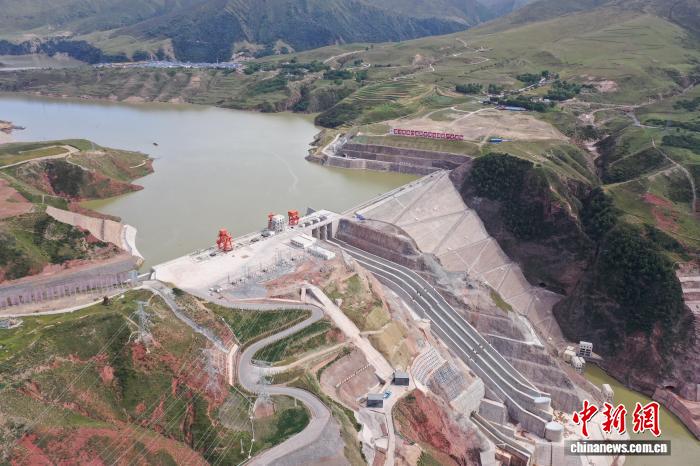
黄河干流装机最大水电站今年发电量突破40亿千瓦时
Zhong Guo Xin Wen Wang· 2025-09-26 13:34
Core Viewpoint - The Malda Dam Hydropower Station has achieved a significant milestone by surpassing 4 billion kilowatt-hours of electricity generation in 2023, highlighting its role as a key power source in China's energy strategy [1][5]. Group 1: Project Overview - The Malda Dam Hydropower Station is located on the Yellow River in Qinghai Province, with an average elevation of 3,300 meters, making it the highest and largest hydropower station on the Yellow River [3]. - The total installed capacity of the station is 2.32 million kilowatts, consisting of four units of 550,000 kilowatts and one unit of 120,000 kilowatts [3]. - It serves as a backbone power source for China's "West-to-East Power Transmission" and "Qinghai Electricity into Henan" initiatives [3]. Group 2: Operational Achievements - As of September 26, 2023, the station has optimized its operations by enhancing water utilization efficiency and equipment reliability through smart station construction and operational adjustments [3]. - The station successfully managed flood conditions with a peak flow of 1,548 cubic meters per second, ensuring efficient water resource allocation and safe operation [3]. - Since the first unit was connected to the grid on April 1, 2024, the cumulative electricity generation has exceeded 6.9 billion kilowatt-hours, meeting the annual electricity needs of approximately 1.725 million households [5]. Group 3: Environmental Impact - The operation of the Malda Dam has led to a reduction of approximately 2.07 million tons of standard coal consumption and a decrease in carbon dioxide emissions by about 7.71 million tons [5]. - Additionally, the station has contributed to a reduction of sulfur dioxide emissions by approximately 28,700 tons [5].

华能澜沧江水电股份有限公司关于签署募集资金专户存储三方及四方监管协议的公告
Shang Hai Zheng Quan Bao· 2025-09-25 19:53
Group 1: Fundraising Overview - The company has received approval from the China Securities Regulatory Commission to issue shares to specific investors, with a total of 631,094,257 shares issued at a price of RMB 9.23 per share, raising a total of RMB 5,824,999,992.11 [1] - After deducting issuance costs of RMB 21,874,277.76, the net amount raised is RMB 5,803,125,714.35, verified by Tianzhi International Accounting Firm [1] Group 2: Fund Management and Regulatory Agreements - To ensure proper management and usage of the raised funds, the company has opened special accounts at various banks and signed both three-party and four-party regulatory agreements [2] - The three-party agreement involves the company, China Agricultural Bank, and the sponsor, CITIC Securities, while the four-party agreement includes additional entities [4] - The special accounts are exclusively for the storage and use of the raised funds, prohibiting any non-raising funds or alternative uses [6] Group 3: Key Provisions of the Regulatory Agreements - The company can invest temporarily idle funds in cash management products, provided it complies with relevant regulations and informs the sponsor [6] - The sponsor has the right to supervise the management and usage of the raised funds, conducting regular checks and requiring timely reporting from the banks [7][8] - Any significant withdrawals exceeding 20% of the net amount raised must be reported to the sponsor within five working days [9] Group 4: Compliance and Dispute Resolution - The agreement stipulates that any party violating the terms will bear responsibility for losses incurred by others [10] - Disputes arising from the agreement should first be resolved through negotiation, failing which they can be brought to the Kunming People's Court [10]

中国三峡集团:在服务国家战略中实现高质量发展
Xin Hua Wang· 2025-09-25 10:18
Core Viewpoint - China Three Gorges Corporation has evolved from a hydropower development company to a global leader in clean energy, contributing to national strategies while achieving high-quality development [1] Group 1: Flood Control and Energy Supply - The Three Gorges Reservoir managed a significant flood event in mid-September, with inflow exceeding 40,000 cubic meters per second, while controlling outflow at 25,300 cubic meters per second to alleviate flood pressure downstream [2] - Since its inception, the Three Gorges Project has effectively mitigated floods over 70 times, storing more than 220 billion cubic meters of floodwater, demonstrating its critical role in flood management [2] - The total installed capacity of the hydropower stations developed by China Three Gorges Corporation is 71.695 million kilowatts, generating over 300 billion kilowatt-hours annually, establishing the world's largest clean energy corridor [2] Group 2: Water Resource Management - The Three Gorges Corporation has optimized reservoir operations, providing 25.2 billion cubic meters of supplementary water to the downstream regions to meet urban and agricultural water needs [3] - The company has implemented a "smart water management" model in 25 cities along the Yangtze River, significantly enhancing sewage treatment capacity from an average of 185,000 tons to 435,000 tons per day [4] Group 3: Ecological Protection and Biodiversity - The corporation has released over 28 million rare fish, such as the Chinese sturgeon, and protected over 2,000 species of rare plants, contributing to the restoration of biodiversity in the Yangtze River [5] - Continuous efforts are being made to explore high-level pathways for ecological protection along the Yangtze River, aiming for sustainable ecological improvement [5] Group 4: Renewable Energy Development - The Hami solar thermal project, the largest of its kind in China, generates 2.067 billion kilowatt-hours annually, reducing carbon emissions by over 1.63 million tons [6] - The company has established a significant offshore wind power corridor along the coastline, with over 7 million kilowatts of offshore wind power capacity connected to the grid, ranking among the top globally [6] Group 5: Commitment to Clean Energy - China Three Gorges Corporation has achieved over 160 million kilowatts of total installed capacity, with more than 96% from clean energy sources, maintaining the highest renewable energy generation globally [6] - The company aims to enhance its core functions and competitiveness to contribute to China's modernization and carbon neutrality goals [6]

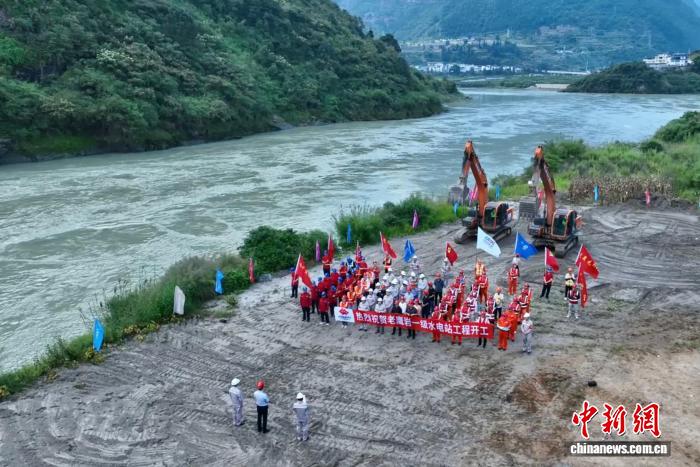
亚洲最大灯泡贯流式机组在四川石棉开工
Zhong Guo Xin Wen Wang· 2025-09-25 09:09
Core Points - The largest bulb-type run-of-river hydropower unit in Asia has officially commenced construction in Shichuan Province, specifically in the Shimen County of Ya'an City [1][2] - The hydropower station, named the Eagle Rock Level 1 Hydropower Station, is the 17th station in the 28-level development plan of the Dadu River hydropower project and is a key construction project during the 14th Five-Year Plan in Sichuan Province [2][4] Group 1 - The total installed capacity of the Eagle Rock Level 1 Hydropower Station is 300,000 kilowatts, featuring four of the largest single-unit 75,000-kilowatt bulb-type run-of-river turbine generator sets in Asia [2] - Upon completion, the station is expected to generate an average annual electricity output of 1.37 billion kilowatt-hours, saving approximately 450,000 tons of standard coal and reducing carbon dioxide emissions by over 1.1 million tons annually [2] Group 2 - The project received approval from the National Development and Reform Commission at the end of 2024 and is planned to be developed in conjunction with the downstream Eagle Rock Level 2 Hydropower Station [4] - Once operational, the hydropower station will provide energy support for the Chengdu-Chongqing economic circle [4]
朝闻国盛:全社会用电量再破万,同比增长5.0%
GOLDEN SUN SECURITIES· 2025-09-25 00:18
Core Insights - The report highlights that the total electricity consumption in society has exceeded 10 trillion kWh, showing a year-on-year growth of 5.0% [2] Industry Performance - The electricity equipment sector has shown significant performance with a 1-month increase of 17.7%, a 3-month increase of 41.0%, and a 1-year increase of 70.0% [2] - The electronics sector has also performed well, with a 1-month increase of 15.7%, a 3-month increase of 52.6%, and a 1-year increase of 118.4% [2] - The communication sector has seen a 1-month increase of 8.4%, a 3-month increase of 59.0%, and a 1-year increase of 114.4% [2] - The non-bank financial sector has underperformed, with a 1-month decrease of 9.5%, a 3-month increase of 6.3%, and a 1-year increase of 34.4% [2] - The defense and military sector has also seen a decline, with a 1-month decrease of 9.0%, a 3-month increase of 12.6%, and a 1-year increase of 49.0% [2] Electricity Generation Insights - In August, the growth rate of industrial wind power accelerated, while hydropower saw a decline, and the growth rates of thermal, nuclear, and solar power generation slowed down [2] - The report recommends focusing on the thermal power sector, highlighting companies such as Huaneng International, Guodian Power, and Baoneng New Energy as potential investment opportunities [2] - For green electricity, the report suggests prioritizing undervalued green electricity stocks and wind power operators, recommending companies like New Energy and Longyuan Power [2] - The hydropower sector is advised to focus on companies like Yangtze Power and State Power Investment Corporation [2] - The nuclear power sector includes recommendations for China National Nuclear Power and China General Nuclear Power [2]
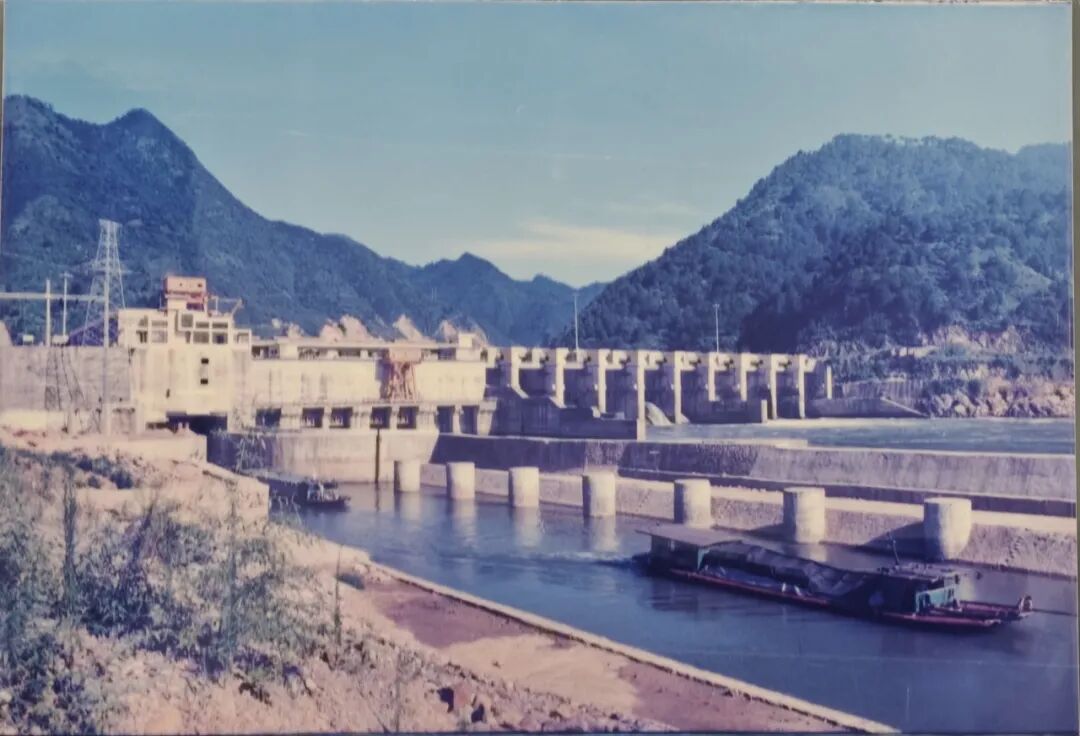
昭平电厂:绿色能源点亮八桂 安全创新铸就标杆——广西首个股份制水电项目30年的实践与探索
Zhong Guo Jin Rong Xin Xi Wang· 2025-09-24 12:22
Core Viewpoint - The article highlights the significance of the Zhaoping Hydropower Plant in Guangxi, emphasizing its role in providing clean energy, ecological protection, and its historical development from inception to modern advancements in safety and management practices [1][4][11]. Group 1: Historical Development - The Zhaoping Hydropower Plant, with a total installed capacity of 63,000 kilowatts, has generated over 6.8 billion kilowatt-hours of electricity since its commissioning in 1995, saving over 2.09 million tons of standard coal and reducing CO2 emissions by more than 5.68 million tons [1]. - Initial plans for the hydropower station began in the 1950s, but construction was halted in 1961 due to various challenges, including lack of resources and experience [3]. - The project was revived after the 1978 reform, focusing on ecological protection and sustainable resource use, leading to a more suitable design for the local environment [4]. Group 2: Operational Achievements - The Zhaoping Hydropower Plant is recognized as the first medium-sized hub project in the Guangxi region, significantly alleviating power shortages and boosting local economic development [5]. - The plant has maintained a record of zero work-related fatalities and major equipment accidents since its establishment, reflecting a strong safety culture [10]. Group 3: Recent Developments and Innovations - In September 2023, a new water management center was established to enhance operational efficiency across six hydropower units in the Hezhou area, including Zhaoping, promoting centralized and professional management [11]. - The plant has achieved digital transformation and equipment upgrades, maintaining an equipment integrity rate of over 98%, and has been recognized for its innovative practices, including 29 patents [11]. - The integration of solar power projects, such as the successful grid connection of the Jingnan power station, exemplifies the company's commitment to green transformation and efficient land use [12]. Group 4: Future Directions - The Zhaoping Hydropower Plant aims to continue its focus on green, safe, and innovative energy production, contributing to the establishment of a new power system and supporting local economic and social development [14].

200亿援助跳票,JETP沦为空头,中国成印尼能源转型真大哥!
Sou Hu Cai Jing· 2025-09-24 10:45
Core Viewpoint - The article discusses the disparity between Western and Chinese approaches to energy transition projects in Indonesia, highlighting the slow progress of Western funding compared to the rapid implementation by Chinese companies [3][12]. Group 1: Western Efforts - The "Just Energy Transition Partnership" (JETP) was established by Western countries to provide $20 billion to help Indonesia reduce its coal dependency, but only $1.2 billion has been delivered so far [3]. - The U.S. plans to withdraw from the partnership by March 2025, leaving Germany and Japan to coordinate efforts, which has led to criticism from Indonesian officials regarding the lack of financial contributions from the U.S. [5]. - Western funding is characterized by a focus on transparency, compliance, and environmental standards, but this has resulted in delays and insufficient financial support for projects [12]. Group 2: Chinese Involvement - Chinese companies are actively investing in Indonesia, with projects such as Longi Green Energy's solar factory with a capacity of 1.4 GW and BYD's $1 billion investment to produce 150,000 electric vehicles annually by 2026 [7][8]. - Chinese investments are backed by comprehensive financing agreements, including a $54 billion memorandum of understanding involving State Grid and Trina Solar, demonstrating a commitment to rapid project execution [8]. - The speed of Chinese projects contrasts sharply with Western efforts, as noted by Indonesian experts who claim that while the West is still drafting feasibility studies, Chinese projects are already under construction [8][10]. Group 3: Environmental Concerns - Despite the rapid progress, there are significant environmental concerns associated with Chinese investments, particularly in the nickel industry, where 80% of smelting plants are funded by Chinese capital and rely on coal-fired power [10]. - Research indicates that air pollution from nickel smelting could lead to nearly 5,000 premature deaths by 2030, raising questions about the sustainability of electric vehicle production in Indonesia [10]. - The Indonesian government faces a dilemma between the quick implementation of projects funded by China and the environmental risks associated with these developments [12][10]. Group 4: Future Implications - The article suggests that Indonesia is caught between the slow, rule-based approach of the West and the fast, results-oriented approach of China, leading to a preference for immediate progress despite potential environmental trade-offs [12][15]. - The ongoing energy transition in Indonesia reflects a broader global trend where practical infrastructure development often takes precedence over idealistic goals [13][15].
长江电力20250923
2025-09-24 09:35
Summary of Changjiang Electric Power Conference Call Company Overview - Changjiang Electric Power has a hydropower installed capacity of approximately 72 million kilowatts, including several large hydropower stations globally, such as Jinwu White and some overseas technologies [3][4] - The company adopts an external expansion model, where the group undertakes power station construction and injects assets into the listed company post-operation, effectively mitigating uncertainties during the construction phase [2][3] Key Points and Arguments - **Cash Flow and Dividends**: In non-acquisition years, Changjiang Electric Power enjoys ample cash flow, allowing for a dividend payout ratio significantly higher than its peers [2][4] - **Risk Management**: The company utilizes six major reservoirs for joint scheduling and smooths investment returns to counteract revenue fluctuations caused by water inflow variability, demonstrating strong risk resilience [2][5] - **Return on Equity (ROE)**: Changjiang Electric Power maintains a stable and high ROE, outperforming other hydropower companies that experience greater fluctuations due to water conditions. The company’s worst ROE year remains above 15% [6][10] - **Electricity Pricing**: The average electricity price of Changjiang Electric Power historically outperforms competitors like Yalong River and North China, although recent projects have higher pricing to offset construction costs [7][9] - **Investment Returns**: The company anticipates annual investment returns from equity stakes in other hydropower companies to reach approximately 350-400 million yuan, contributing to overall profitability [4][10] Additional Important Insights - **Depreciation and Interest Costs**: Depreciation and interest expenses are expected to decline, contributing an estimated 900-1,200 million yuan to growth annually [11][12] - **Future Growth Potential**: Long-term growth is anticipated through joint scheduling with Yalong River and the development of integrated wind and solar assets. The company aims for an EPS growth baseline of 3-4, potentially reaching 5-6 under optimistic scenarios [12][16] - **Dividend Stability**: The company has a history of stable dividends, with commitments to maintain a 70% payout ratio, even during downturns [13][15] - **Market Performance**: Changjiang Electric Power has experienced significant market deviations, particularly influenced by foreign capital inflows and economic conditions, with current yield levels at historical highs [14][16] - **Market Stability Measures**: The company has proactively extended its dividend commitment to 2030 and initiated a share buyback plan exceeding 4 billion yuan, reflecting a focus on market stability [15][16] Industry Context - The hydropower industry is characterized by significant revenue volatility due to natural water conditions, with Changjiang Electric Power's strategies positioning it favorably against competitors [2][5][6]
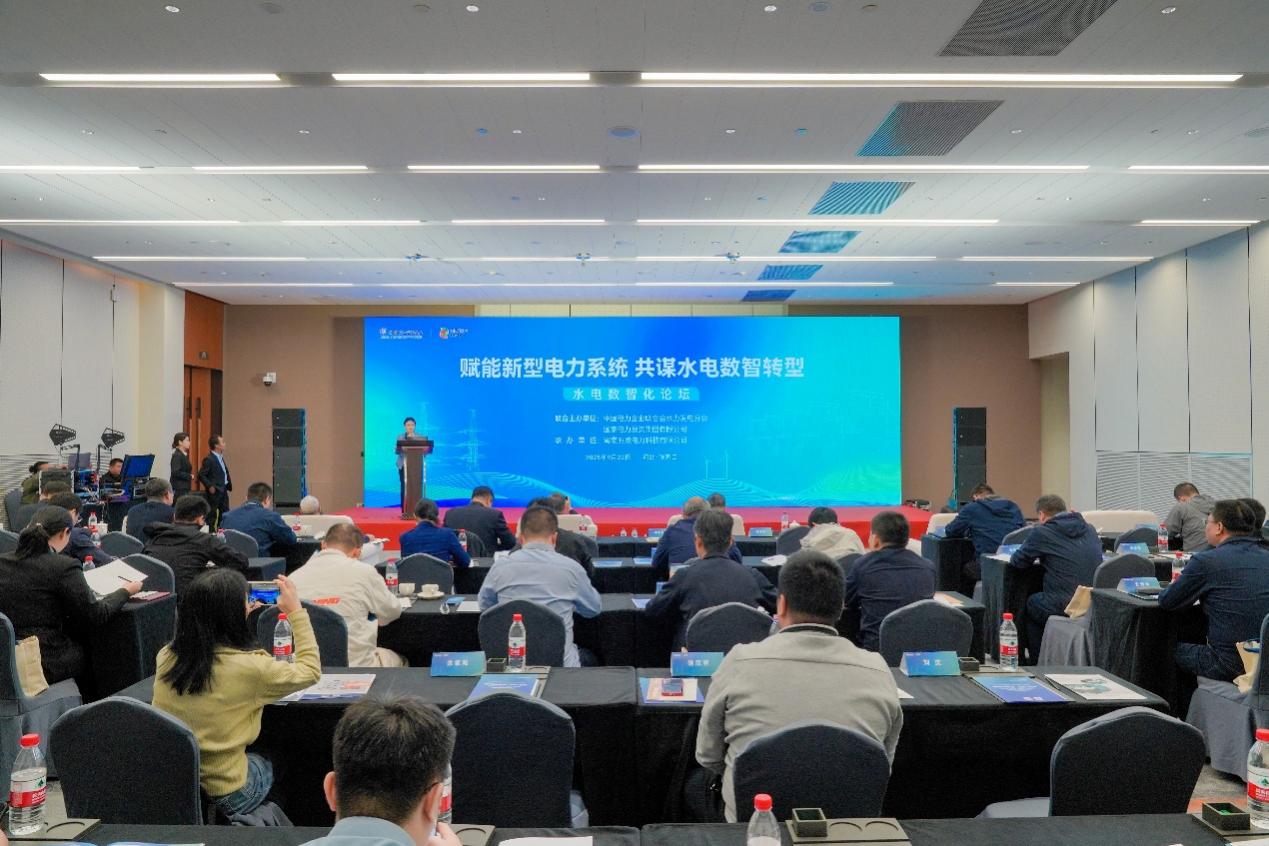
赋能新型电力系统共谋水电数智转型——水电数智化论坛成功举办
Zhong Guo Jing Ji Wang· 2025-09-23 13:58
Group 1 - The forum emphasized the irreplaceable role of hydropower as a clean and renewable energy source in supporting new energy consumption and ensuring system stability [2][4] - The integration of digital and intelligent technologies with hydropower is essential for achieving high-quality development in the sector [2][4] - The construction of a new power system centered on renewable energy has become a strategic direction for energy transition, with hydropower playing a key role in grid stability and flexibility [2][3] Group 2 - Experts discussed core challenges and implementation paths for the digital transformation of hydropower during the forum [3][4] - Various companies presented solutions for intelligent operation and risk management, showcasing advancements in digital transformation within the hydropower industry [3] - The forum highlighted the need for a systematic approach to address the challenges of digital transformation and to leverage hydropower's multiple values in the green and low-carbon transition [4]