种植业

Search documents
韩俊发表署名文章
财联社· 2025-12-10 01:14
Core Viewpoint - The article emphasizes the importance of enhancing agricultural comprehensive production capacity and quality efficiency as a strategic task for building a strong agricultural nation, aligning with the spirit of the 20th Central Committee of the Communist Party of China [5][6][7]. Group 1: Enhancing Agricultural Production Capacity and Quality Efficiency - The "14th Five-Year Plan" period has seen significant achievements in agricultural modernization, with grain production capacity reaching 1.4 trillion jin in 2024 and per capita grain availability at 500 kg [6]. - Agricultural development quality has improved, with over 100 million acres of high-standard farmland built and a crop variety coverage rate exceeding 96% [6]. - The income growth of farmers has consistently outpaced GDP and urban residents' income growth, with the urban-rural income ratio narrowing to 2.34:1 [6]. Group 2: Key Measures for Improvement - Strengthening the supply guarantee for important agricultural products is crucial, with a focus on ensuring grain self-sufficiency and enhancing production capacity through various initiatives [10]. - A diversified food supply system is to be established, integrating agriculture, forestry, animal husbandry, and fishery to meet diverse consumer needs [11]. - Protecting and improving arable land quality is essential, with strict enforcement of land protection policies and initiatives to enhance soil quality and ecological conditions [12]. Group 3: Technological and Quality Enhancements - Advancing agricultural technology and equipment is fundamental, with a focus on innovation and collaboration among research institutions and enterprises to boost agricultural productivity [13]. - The quality and efficiency of agricultural development will be enhanced through the establishment of modern agricultural industrial systems and the promotion of green and high-quality agricultural products [14][15]. Group 4: Support and Policy Framework - The article outlines the need for a multi-faceted investment structure in agriculture, emphasizing fiscal support, financial incentives, and social participation [16]. - Comprehensive rural reforms are necessary to stabilize land contracts and support the development of modern agricultural operations while ensuring smallholder integration [17].


关税回旋镖,美国拨付120亿美元救农业
Huan Qiu Shi Bao· 2025-12-09 22:43
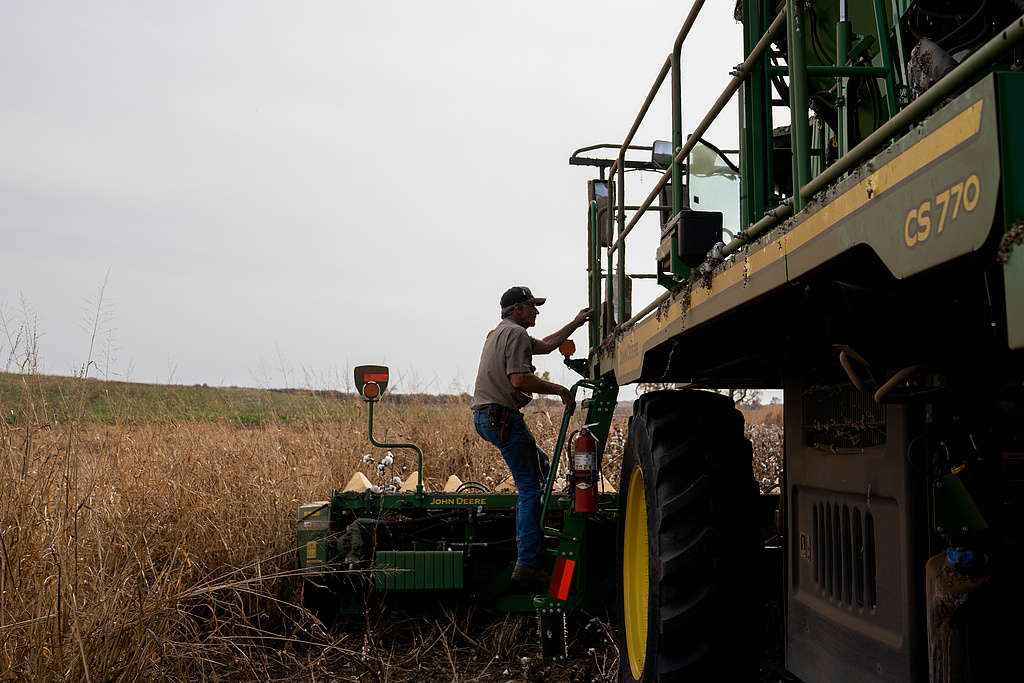
Core Viewpoint - The U.S. government is launching a $11 billion agricultural relief fund to support farmers facing financial difficulties due to tariffs, low crop prices, and rising production costs [1][3]. Group 1: Relief Fund Details - The relief fund will be allocated to crop growers including corn, cotton, sorghum, soybeans, rice, and wheat, with payments expected to be completed by the end of February next year [3]. - An additional $1 billion will be reserved for future allocation to fruit and vegetable growers based on needs [3]. Group 2: Current Challenges for Farmers - U.S. farmers are experiencing a surge in bankruptcy rates, with approximately 181 farmers filing for bankruptcy protection in the first half of this year, marking a 60% increase compared to the same period last year and the highest level since 2020 [3]. - The trade war with China has severely impacted U.S. soybean exports, which previously relied on China as their largest overseas buyer, accounting for half of U.S. soybean exports [3]. Group 3: Economic Impact and Future Needs - Estimates suggest that the $12 billion relief plan may only cover about one-third of the actual losses faced by farmers, with projected losses for this fall ranging from $35 billion to $43 billion [4]. - Farmers are facing ongoing challenges with production costs, including equipment and fertilizer, which have been rising for years, compounded by high production loan interest rates and global trade tensions [4]. - Agricultural groups are calling for more comprehensive measures and long-term structural reforms to address the ongoing pressures in the agricultural sector [4].
提升农业综合生产能力和质量效益(学习贯彻党的二十届四中全会精神)
Ren Min Ri Bao· 2025-12-09 22:32
Core Viewpoint - The construction of a strong agricultural nation is a strategic deployment by the central government, focusing on enhancing agricultural production capacity and quality efficiency as a long-term historical task [1] Group 1: Achievements and Current Status - During the 14th Five-Year Plan period, significant achievements in agricultural modernization were made, with grain production capacity reaching 1.4 trillion jin in 2024 and per capita grain availability at 500 kg [2] - The quality of agricultural development has improved, with over 1 billion mu of high-standard farmland built and a crop variety coverage rate exceeding 96% [2] - Farmers' income has grown faster than GDP and urban residents' income, with the urban-rural income ratio narrowing to 2.34:1 [2] Group 2: Challenges and Needs - Despite progress, challenges remain due to limited per capita resources, historical debts, and low production efficiency, necessitating efforts to strengthen weak areas and accelerate high-quality agricultural development [2][3] - The need to ensure food security is critical, especially as demand for food and important agricultural products continues to grow [3] Group 3: Key Measures for Improvement - The 15th Five-Year Plan emphasizes enhancing agricultural production capacity and quality efficiency, focusing on a comprehensive approach that includes production, ecology, and income growth [4] - Key tasks include ensuring food supply security, optimizing the structure of important agricultural products, and enhancing agricultural disaster prevention and mitigation capabilities [5][6] Group 4: Diversified Food Supply System - A multi-faceted food supply system is to be developed, integrating agriculture, forestry, animal husbandry, and fishery to meet diverse consumer needs [7] - Modern facility agriculture will be promoted, including the use of greenhouses and vertical farming [7] Group 5: Land Protection and Quality Enhancement - Strict land protection measures will be implemented to ensure the quantity, quality, and ecological health of farmland [8] - High-standard farmland construction will be prioritized, with a focus on improving soil quality and productivity [8] Group 6: Technological Support - Advancements in agricultural technology are essential for improving production capacity and quality efficiency, with a focus on innovation and collaboration among various research entities [9] - The development of smart agriculture and the integration of technology in farming practices will be emphasized [9] Group 7: Quality and Efficiency in Agricultural Development - The establishment of a modern agricultural industry system will be pursued, focusing on quality improvement, green development, and brand building [10] - Efforts will be made to enhance the value of agricultural ecological products and promote the integration of agriculture with other industries [11] Group 8: Support and Policy Framework - A comprehensive policy framework will be established to ensure food security and agricultural development, including financial support and rural reform [12][13] - The focus will be on stabilizing land contracts and promoting efficient agricultural operations while supporting small farmers [13]
粮食总产连续五年保持约610亿斤 湖南夯实粮仓“耕”基
Zhong Guo Xin Wen Wang· 2025-12-09 11:29
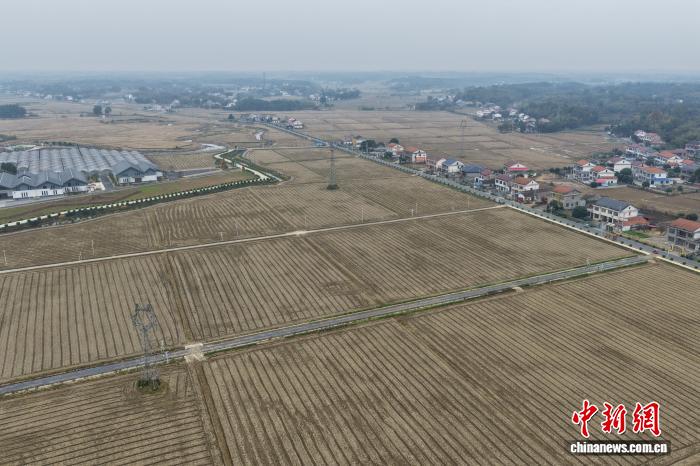
Core Insights - Hunan province has maintained a stable grain production of approximately 61 billion jin for five consecutive years, with significant advancements in agricultural technology and infrastructure [1][2]. Group 1: Grain Production and Supply - Hunan's grain planting area has remained above 71 million mu during the "14th Five-Year Plan" period, with a total production of around 61 billion jin [1]. - In 2024, Hunan's total grain production is projected to reach 615.6 billion jin, accounting for 4.4% of the national grain output from only 2.8% of the cultivated land [2]. - The province has built high-standard farmland covering 43.97 million mu, enhancing productivity and resilience against adverse weather conditions [2]. Group 2: Agricultural Technology and Innovation - The contribution rate of agricultural technology in Hunan has exceeded 64%, positioning the province among the top in national innovation levels [4]. - The establishment of the Yuelu Mountain Laboratory has attracted top talent, leading to significant advancements in hybrid rice production and agricultural machinery [4]. - Hunan has developed various innovative agricultural technologies, including a continuously variable transmission for agricultural machinery and advanced weeding robots [4]. Group 3: Rural Development and Poverty Alleviation - Hunan has implemented a robust monitoring and support system to prevent large-scale poverty, with significant improvements in the living standards of the impoverished population [6]. - The province has established 1,549 labor cooperation mechanisms to support employment for the rural population, aiming for 2.513 million workers by 2025 [6]. - Rural living conditions have improved significantly, with over 90% of rural households having access to sanitary toilets and more than half of villages meeting county-level beautiful village standards [6].
南部地区洪水影响了橡胶和棕榈油的生产
Shang Wu Bu Wang Zhan· 2025-12-09 09:59
据泰媒报道,11月29日,开泰研究中心发布报告称,11月21日后,泰国南部多个地区累计降雨量超过 300-500毫米,是平均水平的1.5倍。橡胶和油棕主要种植在南部,受灾严重。南部橡胶种植面积占全国 总种植面积的57%,主要产区位于素叻他尼府、宋卡府和洛坤府。油棕种植面积占全国总种植面积的 86%,主要产区位于素叻他尼府、甲米府和春蓬府。洪水造成的橡胶和棕榈油作物总损失估计为67亿泰 铢。其中,橡胶损失8.3万吨,价值44.6亿泰铢;棕榈油损失34万吨,价值22.4亿泰铢。 ...
种植业板块12月9日跌1.24%,神农种业领跌,主力资金净流出1.26亿元
Zheng Xing Xing Ye Ri Bao· 2025-12-09 09:05
从资金流向上来看,当日种植业板块主力资金净流出1.26亿元,游资资金净流入5909.18万元,散户资金 净流入6708.61万元。种植业板块个股资金流向见下表: 以上内容为证券之星据公开信息整理,由AI算法生成(网信算备310104345710301240019号),不构成投资建议。 证券之星消息,12月9日种植业板块较上一交易日下跌1.24%,神农种业领跌。当日上证指数报收于 3909.52,下跌0.37%。深证成指报收于13277.36,下跌0.39%。种植业板块个股涨跌见下表: ...


新疆4000亩沙漠盐碱水稻丰收
Zhong Guo Xin Wen Wang· 2025-12-09 07:50
新疆图木舒克市位于塔克拉玛干沙漠西缘,沙漠盐碱地种植水稻,不仅让荒漠长出了粮食,更带来了土 壤的可持续改善,水稻种植过程中,土壤盐分随水分下渗,土壤质量逐步提升。当地无霜期长的特点也 增加了水稻的生长周期,且全程使用有机肥的环保种植模式,产出的水稻口感香甜软糯,受到市场青 睐。 近日,新疆图木舒克市4000亩沙漠盐碱水稻喜迎收获。这片土地曾因荒漠化严重而无法种植,如今却蜕 变为"致富田"。 针对沙漠地区蒸发量大的特点,当地为改良这片沙漠盐碱化严重的土地,构建"节水+排碱"一体化用水 体系,技术人员在水稻生长至1-3公分时推行间歇灌溉法,既为根系生长创造透气环境,又减少水分无 效蒸发。 ...
治酸固良田 八桂保粮安
Guang Xi Ri Bao· 2025-12-09 02:55
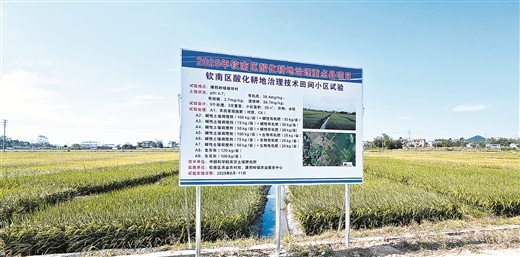
Core Viewpoint - Soil acidification poses a significant threat to agricultural productivity and food security in Guangxi, necessitating urgent and systematic remediation efforts [3][4][5]. Group 1: Current Situation and Challenges - Guangxi is a crucial agricultural base in China, producing significant amounts of grain, sugar, fruits, vegetables, and oil [3]. - Soil acidification in Guangxi has accelerated dramatically, with over 31.93 million acres of farmland having a pH below 5.5, representing more than 60% of the total arable land, an increase of 42.5 percentage points since the 1980s [3]. - The consequences of soil acidification include reduced soil fertility, increased heavy metal activity, and decreased microbial diversity, leading to crop yield reductions of over 20% in severely acidic areas [3]. Group 2: Government Initiatives and Funding - The central government has prioritized the remediation of acidic farmland, launching key county projects in 2023 and further emphasizing this in the 2025 Central No. 1 Document [3][5]. - Each key county receives an annual subsidy of 10 million yuan from the central government, focusing on areas with severe soil acidification [5]. Group 3: Implementation and Results - From 2020 to 2022, Guangxi allocated 62.21 million yuan for remediation projects across 50 counties, achieving an average pH increase of 0.22 units and an average rice yield increase of 29.6 kg per acre [4]. - In 2023, Jin Chengjiang District became the only key county in Guangxi, completing remediation on 173,000 acres and achieving an average pH increase of 0.31 units, with rice yields increasing by 40 kg per acre [5]. Group 4: Technological Support and Collaboration - The region has established partnerships with various agricultural universities and research institutes to create a multidisciplinary expert team for soil remediation [7][8]. - Eight tailored remediation techniques have been developed for different soil types and cropping structures, enhancing the effectiveness of the remediation efforts [8]. Group 5: Long-term Strategy and Planning - Guangxi has drafted a ten-year work plan for soil acidification remediation (2026-2035), identifying four key areas for targeted intervention and outlining specific strategies and goals [9]. - The plan includes the establishment of a digital platform for soil data analysis to support decision-making in remediation efforts [9]. Group 6: Community Impact and Economic Benefits - The remediation efforts have not only increased crop yields but also enhanced local tourism, as seen in Jin Chengjiang District, where improved agricultural practices have led to increased income for farmers [5][10]. - The economic benefits include reduced fertilizer costs and increased net income for farmers, with rice and sugarcane yields significantly improving post-remediation [5].
农业农村部召开小麦油菜冬前田管现场会
Qi Huo Ri Bao Wang· 2025-12-09 01:48
Core Viewpoint - The Ministry of Agriculture and Rural Affairs is implementing a 60-day action plan to enhance winter wheat and rapeseed management, focusing on seedling health and winter survival [1] Group 1: Action Plans - The ministry held on-site meetings in Henan and Hubei to promote the action plan aimed at improving seedling growth and ensuring winter survival [1] - The plan emphasizes key areas such as cold resistance, pest control, and effective field management before winter [1] Group 2: Technical Guidance - A "100-day agricultural technology campaign" has been initiated to provide technical guidance on winter management for wheat and rapeseed [1] - The ministry has released technical opinions and produced 12 short videos on winter management practices [1] Group 3: Expert Support - Expert teams will be dispatched to key provinces to offer guidance and training on effective winter management techniques [1] - A series of technical training sessions titled "Three Autumn Experts Discuss on the Frontline" will be conducted to ensure local implementation of best practices [1]
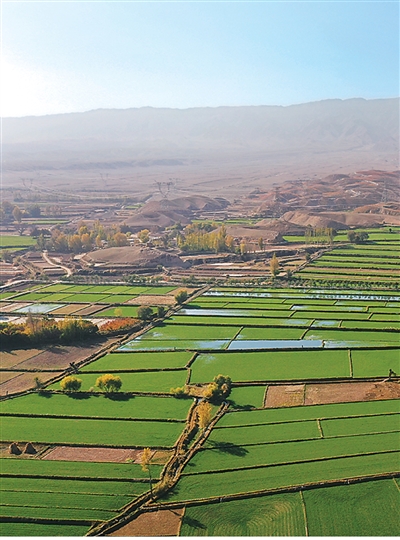
节水增粮润沃野
Ren Min Ri Bao Hai Wai Ban· 2025-12-09 01:12
隆冬时节,河西走廊寒风凛冽,但甘肃省武威市凉州区的农田里却生机盎然。在武南镇下中畦村的示范 基地,连片的冬小麦苗齐根壮,绿意铺展。种植大户张军年笑容满面:"用了浅埋滴灌,每亩地省水100 方,产量还多了100斤!"这项技术一次完成播种、施肥、铺管,让他800多亩地全年省下近8万元人工成 本,成为名副其实的"增产利器"。 同样是节水,民勤县探索推广的"双源互济"智能滴灌泵池构建起"地表水优先、地下水备用"的高效体 系。截至目前,全县累计建成此类泵池1184座,有效运行763座,辐射灌溉13.01万亩。 向高标准农田要水效 水,是制约武威农业发展的最大瓶颈。在年均蒸发量远超降水量的古浪县,"卡脖子旱"曾让农民一筹莫 展。"过去夏灌就心慌,水不够,庄稼'喊渴',人也上火。"古浪县农业资源监测站站长李焕仁回忆。 转变始于对"水"的精细管控。古浪县大力推行"以水定产",将零散的"补丁田"整合成集中连片的"大块 田",并配套建设357座调蓄水池,总蓄水能力近3900万米,为农业用水备足了"家底"。新建的高标准农 田全部铺设水肥一体化滴灌设施。 古浪县定宁镇双庙村村民杨国志对此深有感触。他流转的800多亩玉米地,过去大水漫 ...