酒店业

Search documents
一双拖鞋扯下了豪华酒店的遮羞布
3 6 Ke· 2025-09-24 11:21
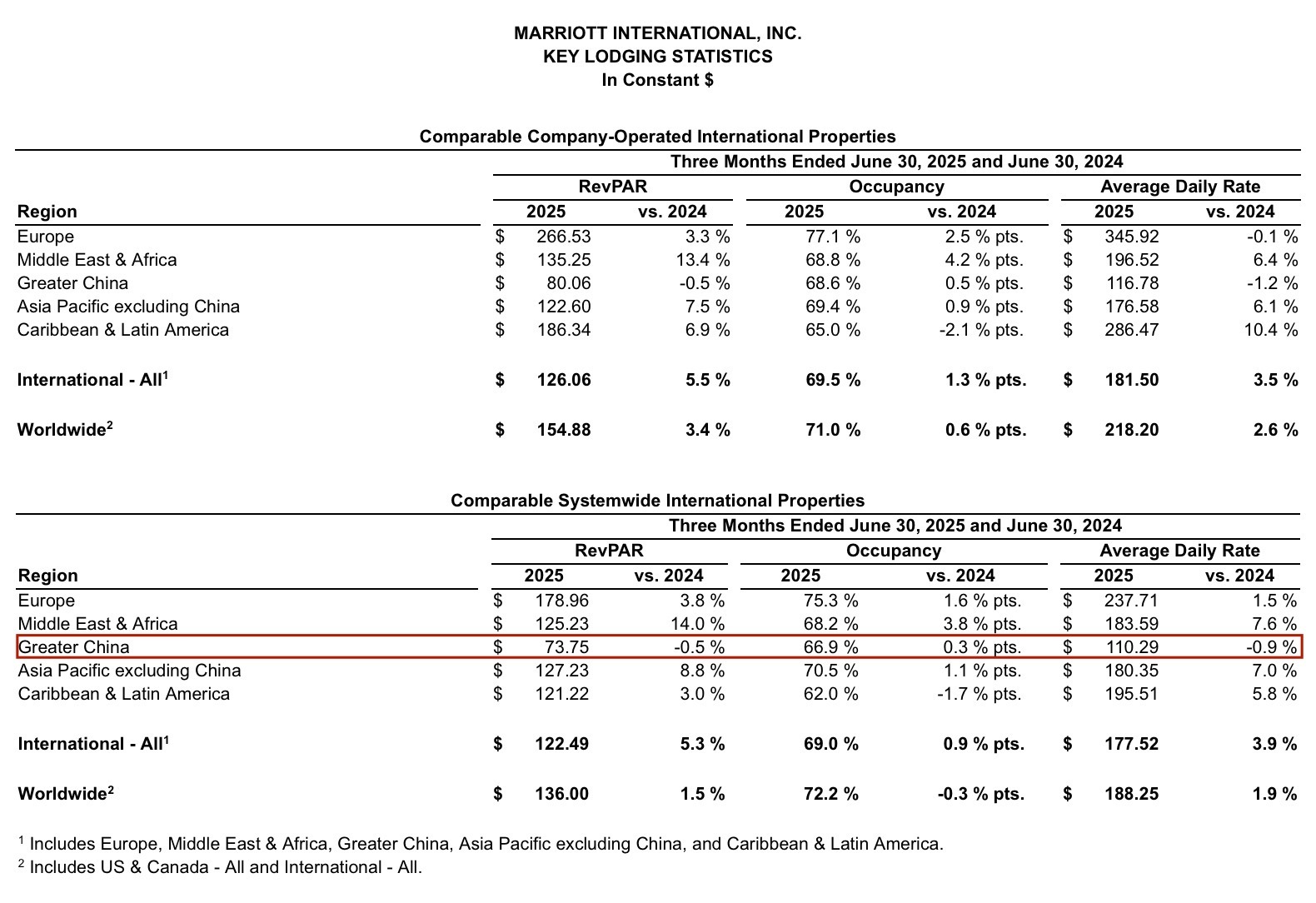
Core Insights - The incident involving the reuse of disposable slippers at the Changzhou Marriott Hotel highlights a deviation from the luxury service standards expected by customers in high-end hotels [1] - The hotel claims that the slippers are not single-use and are cleaned and disinfected after each guest, but this practice raises concerns about customer perception and industry standards [1] - The broader context includes a decline in performance for Marriott in the Greater China region, which is struggling with increased market supply and pressure on profitability [2][9] Financial Performance - In Q2 2025, Marriott International reported total revenue of approximately $6.744 billion, a year-on-year increase of 4.73%, while net profit was about $763 million, a decrease of 1.17% [2] - The RevPAR (Revenue per Available Room) for the Greater China region saw a decline of 0.5%, contrasting with growth in other regions such as the Middle East and Africa, which experienced a 14% increase [3][5] Regional Performance - The Greater China region's RevPAR was $80.06, significantly lower than other regions, with Europe at $266.53 and the Middle East and Africa at $135.25 [5] - The average daily rate (ADR) in Greater China was $110.29, a decrease of 0.9%, while global ADR was $188.25, an increase of 1.9% [8] - Occupancy rates in Greater China were at 66.9%, slightly up by 0.3 percentage points, but still lower than other regions [8] Market Dynamics - The hotel industry in China is facing challenges due to rapid market supply growth, with the number of hotels increasing significantly since 2020 [11] - The overall RevPAR for the Chinese hotel industry dropped by 5% in the first half of 2025, with high-end hotels experiencing declines of 6% to 8% [11] - The shift in focus from luxury service to profitability is evident, as hotel brands like Marriott are pressured to adapt to changing market conditions and owner expectations [14][15]


住万豪得自备拖鞋了?
3 6 Ke· 2025-09-24 10:35
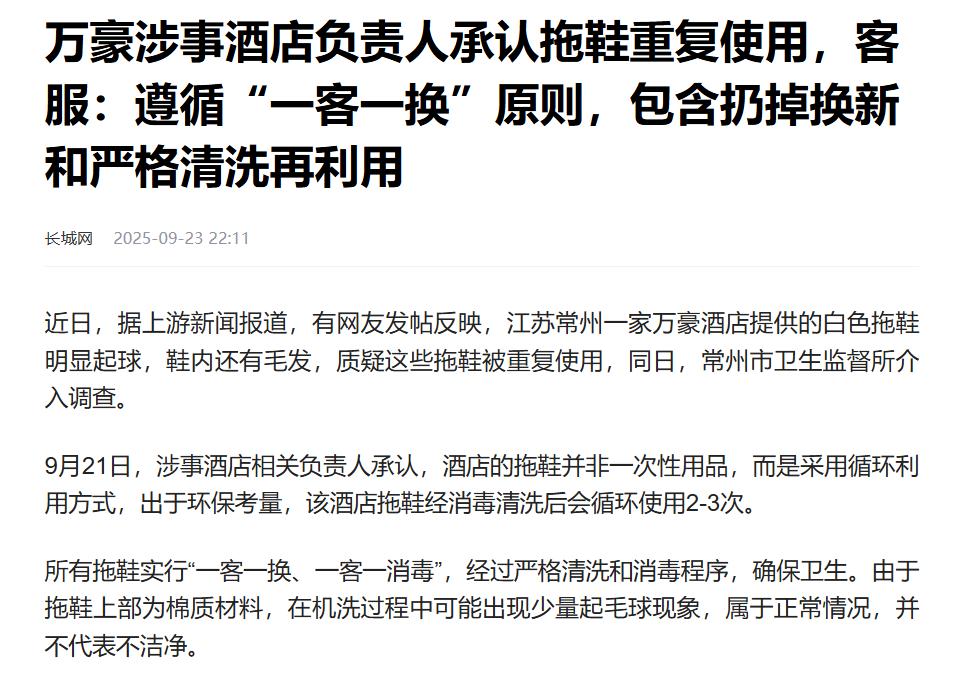
Core Viewpoint - The incident at the Marriott hotel in Changzhou highlights issues of transparency and consumer rights regarding the reuse of hotel amenities, specifically slippers, which were not clearly labeled as reusable, leading to customer dissatisfaction and trust erosion [2][6][7]. Group 1: Consumer Experience - A guest discovered that the slippers provided by the hotel were reused, leading to outrage over hygiene concerns, especially given the high cost of the stay [2][4]. - Social media reactions revealed a widespread sentiment of dissatisfaction among previous guests regarding the cleanliness and reuse of hotel slippers [4]. Group 2: Hotel's Response and Practices - The hotel claimed that the slippers were not labeled as disposable, thus implying they could be reused, which raises questions about consumer rights and the responsibility of hotels to inform guests [6][7]. - The hotel stated that the slippers were washed and disinfected to commercial standards, but the lack of transparency about the cleaning process left guests skeptical [12][18]. Group 3: Economic Implications - The cost of a disposable slipper is approximately 0.5 yuan, while a washable cotton slipper costs around 4 yuan, indicating significant cost savings for the hotel when reusing slippers [9]. - With an estimated 294 rooms and an average occupancy rate of 60%, the hotel could save over 100,000 yuan annually by reusing slippers, while also promoting an environmentally friendly image [11]. Group 4: Hygiene Concerns - Studies indicate that even after multiple washes, cotton slippers can still harbor bacteria, raising concerns about the effectiveness of the hotel's cleaning processes [17][18]. - The design of cotton slippers may contribute to hygiene issues, as they can trap dirt and bacteria in hard-to-clean areas [15][17]. Group 5: Regulatory Environment - Current regulations do not require hotels to explicitly state whether items like slippers are disposable or reusable, creating a loophole that hotels can exploit [21]. - The lack of clear guidelines on the reuse of items in hotels leads to a situation where both consumers and hotels operate under different assumptions about hygiene and cleanliness [22]. Group 6: Conclusion and Recommendations - The incident underscores the need for hotels to be transparent about their practices and to clearly communicate the reuse of items to maintain consumer trust [24][25]. - A genuine commitment to sustainability should involve open communication with guests about practices rather than hiding behind vague policies [24][25].
平时九十,假期一千,酒店涨价套路曝光!
Zhong Guo Xin Wen Wang· 2025-09-24 10:11
平时九十,假期一千,酒店涨价套路曝光! 本文为转载内容,授权事宜请联系原著作权人 中新经纬版权所有,未经书面授权,任何单位及个人不得转载、摘编或以其它方式使用。 关注中新经纬微信公众号(微信搜索"中新经纬"或"jwview"),看更多精彩财经资讯。 来源:中国新闻网 编辑:徐世明 广告等商务合作,请点击这里 国庆假期还没到,有些酒店已经急不可耐地"下手"了。在江西景德镇,一家叫空间酒店御瑶博物馆店的 网红酒店,平时房价九十块钱左右,可一到国庆黄金周,价格直接飙到一千多块。十倍的涨幅,真把自 己当成"黄金屋"了。(黄晓溪) ...
上海锦江国际酒店股份有限公司关于为全资子公司GDL提供担保的公告
Shang Hai Zheng Quan Bao· 2025-09-23 17:53
Overview - The company Shanghai Jin Jiang International Hotel Co., Ltd. has provided a guarantee for its wholly-owned subsidiary Groupe du Louvre (GDL) for a loan of €73.5 million [2][4]. Guarantee Details - The guarantee was signed on September 23, 2025, with the Industrial and Commercial Bank of China for GDL's loan application [2]. - The board of directors and the annual shareholders' meeting approved the guarantee, allowing the management to operate within a limit of €150 million for GDL and its subsidiaries [2][5]. Subsidiary Information - GDL has a registered capital of €652,037,000 and operates in the hotel and restaurant industry [3]. - As of June 30, 2025, GDL's total assets were €159,695.41 million, with total liabilities of €120,341.74 million, resulting in a net asset value of €39,353.67 million [3]. Guarantee Conditions - The guarantee amount is €73.5 million, with a total outstanding guarantee balance for GDL of €287 million [4]. - There are no collateral guarantees for this loan, and there are no overdue guarantees reported [4][6]. Financial Implications - The company has a total of RMB 982,056.47 million in external guarantees, with €109,095.04 million in euro guarantees, which is 63.73% of the latest audited net assets [6].

知名连锁酒店接连被曝“住客遭偷拍勒索”!客服称已配合排查
Nan Fang Du Shi Bao· 2025-09-23 13:33
近日,知名连锁酒店旗下两家门店,相继被曝"住客遭遇偷拍并被勒索"。两家涉事门店告诉南都N视频 记者,有关部门均已介入调查。9月22日,该知名连锁酒店客服人员回应称,目前已对下属全线酒店进 行排查。 深圳门店的工作人员告诉南都记者,"如果住客入住时不放心,我们可以陪同一起前往房间确认。" 南都记者发现,9月10日,该知名连锁酒店的其中一家门店曾在社交平台发布"酒店日常摄像头排查工 作"视频。视频称,为保证入住客人的隐私和安全,会对每个房间进行定期细致的针孔摄像头排查工 作。视频显示,酒店工作人员先拉上窗帘,着重检查对着床的地方,尤其是插孔螺丝空调扇叶这些地 方;此外,浴室的花洒、镜子等重点区域也会进行重点检查。 9月16日,有网友称,在深圳入住上述酒店后,被陌生人以"持有客房内视频"为由勒索。此外,还有帖 子称在佛山入住另一门店后,被陌生人威胁要将客房视频售至各大平台。 对此,9月22日,南都记者致电涉事酒店客服热线,接线人员称,酒店这边了解到,目前有关部门正在 调查处理中,酒店正在等待调查结果。 当南都记者询问酒店房间是否有摄像设备时,接线人员表示目前酒店全线已经在有关部门指导下完成排 查。至于排查结果,对方 ...
华天酒店1.43亿元土地纠纷案二审败诉!
Shen Zhen Shang Bao· 2025-09-23 12:33
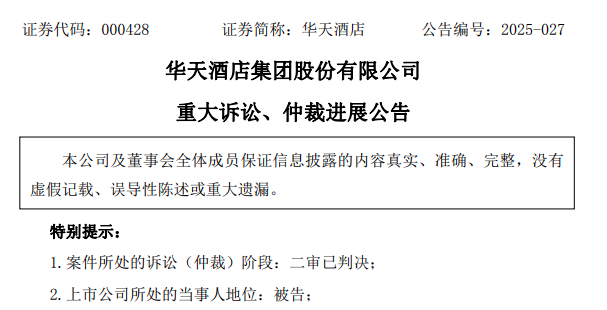
Core Viewpoint - Huatian Hotel faces legal challenges and financial difficulties, including a court ruling requiring the company to pay approximately 9.27 million yuan in land development rights transfer fees and interest, alongside ongoing losses in its operations [1][2][4]. Legal Issues - The company received a second-instance ruling from the Changsha Intermediate People's Court, which upheld the original judgment, requiring Huatian Hotel to pay 9.27 million yuan plus overdue interest of 6.42 million yuan, totaling 14.3 million yuan in the dispute over land transfer rights [1][2]. - Huatian Hotel's subsidiary recently lost a lawsuit related to a construction contract, which may further complicate the company's legal standing and financial obligations [3]. Financial Performance - Since 2020, Huatian Hotel has been experiencing either marginal profits or losses, with cumulative losses of approximately 1.13 billion yuan over five years, except for a profit in 2022 [4]. - For the first half of 2025, the company reported a revenue of 253 million yuan, a year-on-year decrease of 17.34%, and a net loss of 107 million yuan, down 35.46% from the previous year [4]. - The hotel segment generated 211 million yuan in revenue during the same period, reflecting a 19.25% decline, attributed to poor market conditions and slow recovery in business and tourism demand [4]. Financial Risks - As of June 30, 2025, Huatian Hotel's short-term borrowings amounted to 1.573 billion yuan, representing over 44% of total liabilities, indicating significant financial leverage [5]. - The net cash flow from operating activities was only 10.18 million yuan, a substantial decline of 80.15% year-on-year, highlighting cash flow challenges [5].

首旅酒店旗下建国饭店·环球店在北京通州开业
Bei Jing Shang Bao· 2025-09-23 11:48
Group 1 - The core viewpoint of the article is the opening of the "Jianguo Hotel. Global Store" under Shoulu Hotel in Tongzhou, Beijing, focusing on a micro-vacation concept that integrates modern entertainment with local cultural elements [1] Group 2 - The hotel features 227 guest rooms that blend traditional and contemporary styles, along with a Chinese restaurant that combines traditional cooking with creative expression, and a café providing a high-end social space [3] - The hotel is equipped with 13 meeting rooms to meet diverse business needs, as well as facilities such as a gym, children's activity area, and self-service laundry [3] Group 3 - The hotel aims to create multidimensional interactions with major cultural tourism projects in Beijing's sub-center, promoting resource sharing and customer flow exchange to invigorate regional cultural tourism development [5] - The hotel has launched a "micro-vacation series" that includes themed rooms, specialty dining, scenic area tickets, and cultural experience projects, with plans for cycling routes and stations to connect various cultural sites in Tongzhou [5]

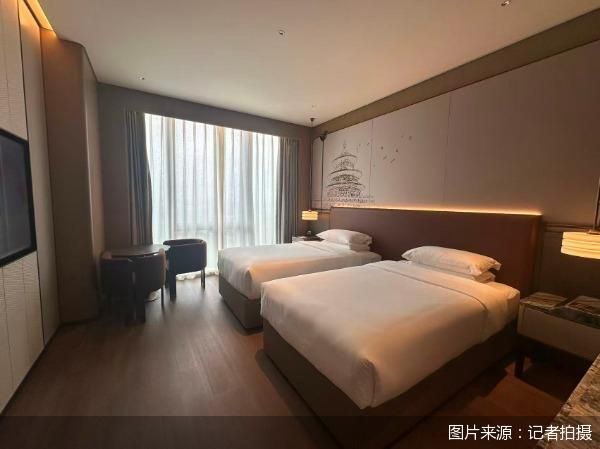
五星级酒店的「金字招牌」,被一双拖鞋砸了?
36氪· 2025-09-23 11:05
Core Viewpoint - The article highlights a growing trust crisis faced by global hotel giants, particularly focusing on a recent incident involving a Marriott hotel in Changzhou, where unsanitary conditions regarding reused slippers were reported, raising concerns about hygiene standards in high-end hotels [4][6][10]. Group 1: Incident Overview - A guest at a Marriott hotel in Changzhou discovered that the provided slippers were worn and had hair on them, leading to allegations of their reuse [6][10]. - The hotel staff admitted that slippers are cleaned and reused 2-3 times for environmental reasons, which contradicts the expectation of single-use items in luxury accommodations [11][20]. - The incident prompted local health authorities to investigate the hotel's compliance with hygiene regulations, particularly regarding the reuse of items in public spaces [11][12]. Group 2: Public Reaction - The incident sparked a divided public opinion, with some viewing it as an industry norm while others criticized the hotel for prioritizing cost savings over hygiene [12][16]. - Complaints against Marriott have accumulated on platforms like Black Cat Complaints, highlighting various issues including hygiene standards and customer service [16][20]. Group 3: Company Performance - Marriott International, despite being the largest hotel group globally with 1.667 million rooms, is facing challenges in the Greater China market, where revenue per available room (RevPAR) and average daily rate (ADR) have seen declines [18][23]. - In Q2 2025, Marriott's global hotel revenue grew by 5% to $6.74 billion, but the Greater China region reported a RevPAR decrease of 0.5% and an ADR decrease of 0.9% [21][23]. - The company is also planning to lay off 833 employees in early 2025, indicating ongoing operational challenges [24].
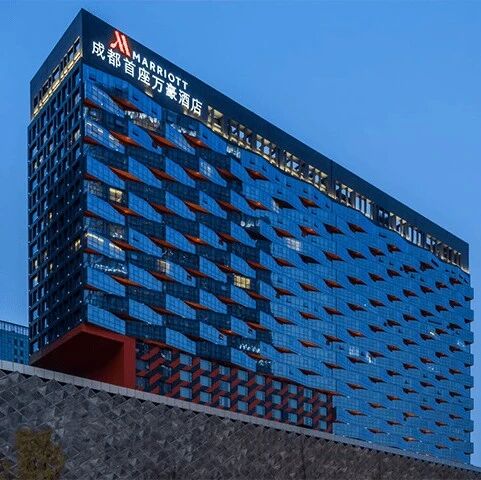
五星级酒店的“金字招牌” 被一双拖鞋砸了?
Feng Huang Wang· 2025-09-23 08:07
Core Viewpoint - The recent incident involving a Marriott hotel in Changzhou, Jiangsu, where a guest found unsanitary slippers, has sparked widespread public concern about hygiene standards in high-end hotels, raising questions about consumer trust in the hospitality industry [1][3][4]. Group 1: Incident Details - A guest discovered that the slippers provided by the Marriott hotel were worn and had hair on them, leading to suspicions of reuse [1][2]. - The hotel staff acknowledged that the slippers are collected, disinfected, and reused, which was not clearly communicated to guests [3][4]. - Local health authorities have intervened to investigate whether the slippers are classified as disposable items, as regulations require that reusable items must be sanitized and replaced for each guest [3][10]. Group 2: Public Reaction - Online discussions reveal a divide in public opinion; some view the incident as an industry norm, while others criticize the hotel for prioritizing cost-saving over hygiene [4]. - There are calls for better communication regarding the use of reusable items and assurance of proper sanitation practices [4]. Group 3: Marriott's Business Context - Marriott International, with 1.667 million rooms, remains the largest hotel group globally, but faces challenges in the Greater China market, where revenue per available room (RevPAR) has declined [7][10]. - The hotel chain's revenue growth has slowed, with a reported 0.5% decrease in RevPAR and a 0.9% drop in average daily rate (ADR) in the second quarter of 2025 [10]. - The company is also planning layoffs affecting 833 employees, indicating ongoing operational challenges [10].
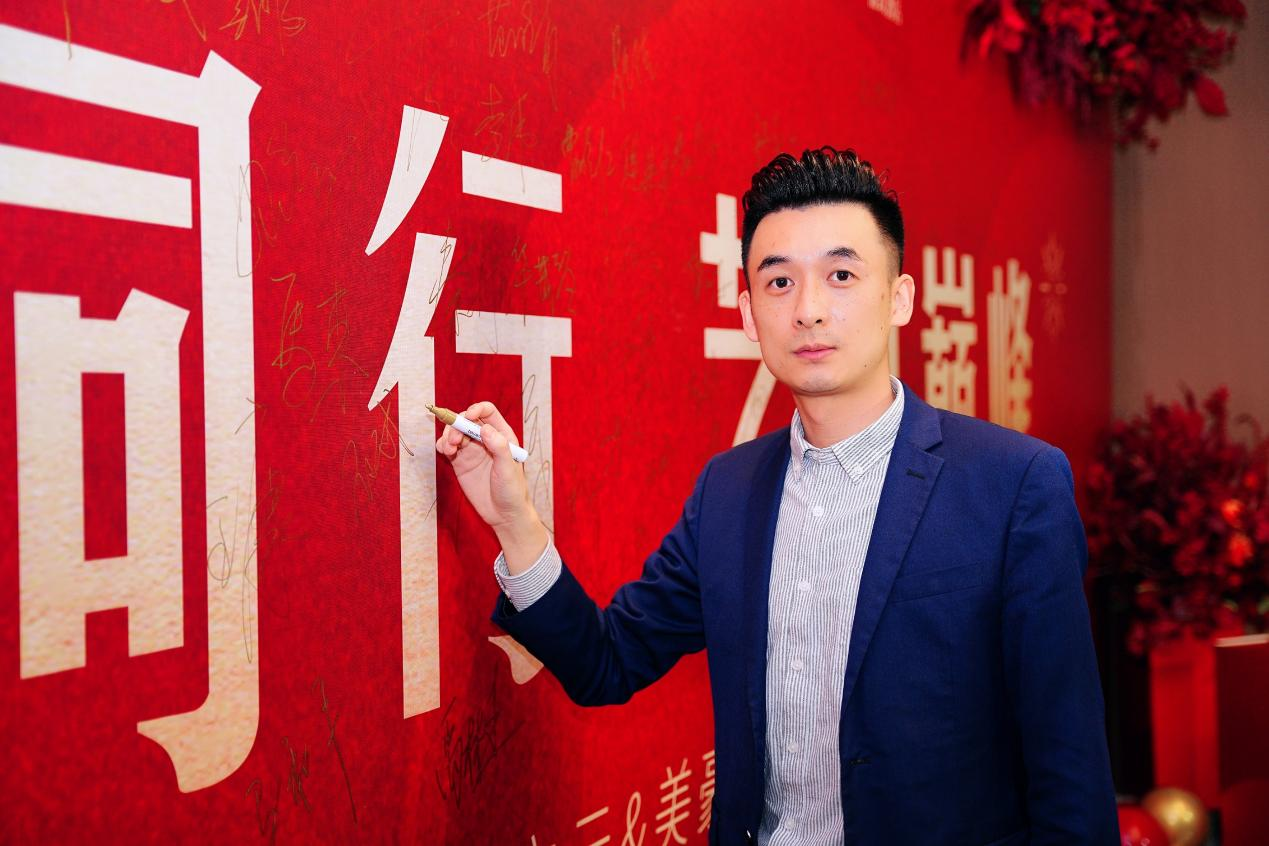
美豪丽致酒店吴传俊:十七载酒店春秋,书写“如沐春风”的温度传奇
Cai Fu Zai Xian· 2025-09-23 07:20
Core Insights - The article highlights the career journey of Wu Chuanjun, who has risen from a front desk position to become the general manager of Meihua Lizi Hotel, demonstrating dedication and passion for the hospitality industry [1][3]. Career Development - Wu started his career in 2008 at the front desk and has been involved in the establishment of three new hotels over 17 years, focusing on project planning that aligns with local customer characteristics [3]. - As the regional academy director, he has trained 13 new hotels and developed personalized training programs, successfully increasing the monthly training completion rate from 80% to 100% [3]. - Wu's team has implemented a hands-on teaching approach, leading to a rapid improvement in service quality [3]. New Store Performance - The Meihua Lizi Hotel in Xi'an, which opened in December 2024, saw significant performance improvements under Wu's management, with occupancy rate (OCC) rising from 68.99% to 81.64%, average daily rate (ADR) increasing by 10%, and revenue per available room (RevPAR) up by 23% [6]. - The hotel achieved a budget completion rate of 104% in August and received a high satisfaction rate of 98.47%, meeting all "ten quality prohibitions" [6]. Management Strategies - Pricing management involved a comprehensive review of the pricing system across all channels, allowing for flexible adjustments based on seasonality and customer type, resulting in an ADR increase of over 8% [8]. - Quality improvement measures included strict adherence to "ten quality prohibitions" and a daily inspection mechanism, leading to a satisfaction rate increase to 98.47% within a month [8]. - Team building initiatives such as the "Star Dragon Plan" training program were implemented to enhance skills and leadership among staff, fostering team cohesion through regular outdoor activities [8]. - Marketing innovations included weekly live broadcasts on Douyin and short video promotions, increasing online booking proportions from 30% to 40% [8]. Future Plans - The hotel aims to diversify its offerings beyond core accommodation by developing unique dining experiences and multifunctional meeting spaces, creating a "lodging + meetings + dining" model [11]. - Service strategies will focus on a blend of standardized and customized services to enhance guest experiences [11]. - Sales efforts will leverage multiple online platforms for increased visibility and conversion, while also targeting business clients with special offers [11]. - The hotel plans to establish itself as the second academy hotel in the region within six months, supporting local talent development [11]. Industry Insights - Wu emphasizes that the future of the hospitality industry lies in service excellence rather than price competition, advocating for a culture of service that benefits both guests and investors [14]. - The Meihua Lizi Hotel brand has expanded to over 500 locations, with many managers like Wu committed to maintaining a service-oriented ethos [14].