
服务业

Search documents
9月制造业PMI回升至49.8%,生产指数升至六个月高点
Sou Hu Cai Jing· 2025-09-30 02:21
Group 1 - The manufacturing PMI in China increased by 0.4 percentage points to 49.8% in September, indicating a slight recovery in manufacturing activity [1] - Factors contributing to this recovery include the easing of adverse weather conditions, the implementation of consumer loan interest subsidies, and the full rollout of the third batch of national subsidies for trade-in programs [1] - The production index rose to 51.9%, the highest in nearly six months, while the new orders index increased to 49.7% [1] Group 2 - Large enterprises reported a PMI of 51.0%, while medium and small enterprises had PMIs of 48.8% and 48.2%, respectively, indicating varying levels of manufacturing activity across different enterprise sizes [1] - The non-manufacturing PMI recorded a value of 50.0%, a decrease of 0.3 percentage points from the previous month, with the construction sector index at 49.3% and the services sector index at 50.1% [5] - Certain service industries, such as postal and telecommunications, showed strong activity with indices above 60.0%, while sectors like catering and real estate remained below the critical point [5] Group 3 - Economic forecasts suggest that the fourth quarter may see the implementation of new policy measures to support economic growth, including financial tools and potential monetary easing [2][4] - The National Development and Reform Commission is actively working on new policy financial tools, with a total scale of 500 billion yuan aimed at enhancing effective investment [4] - Proposed fiscal measures may include increasing support for equipment updates and extending special government bonds, which could significantly bolster the macroeconomic environment, particularly in manufacturing [5]

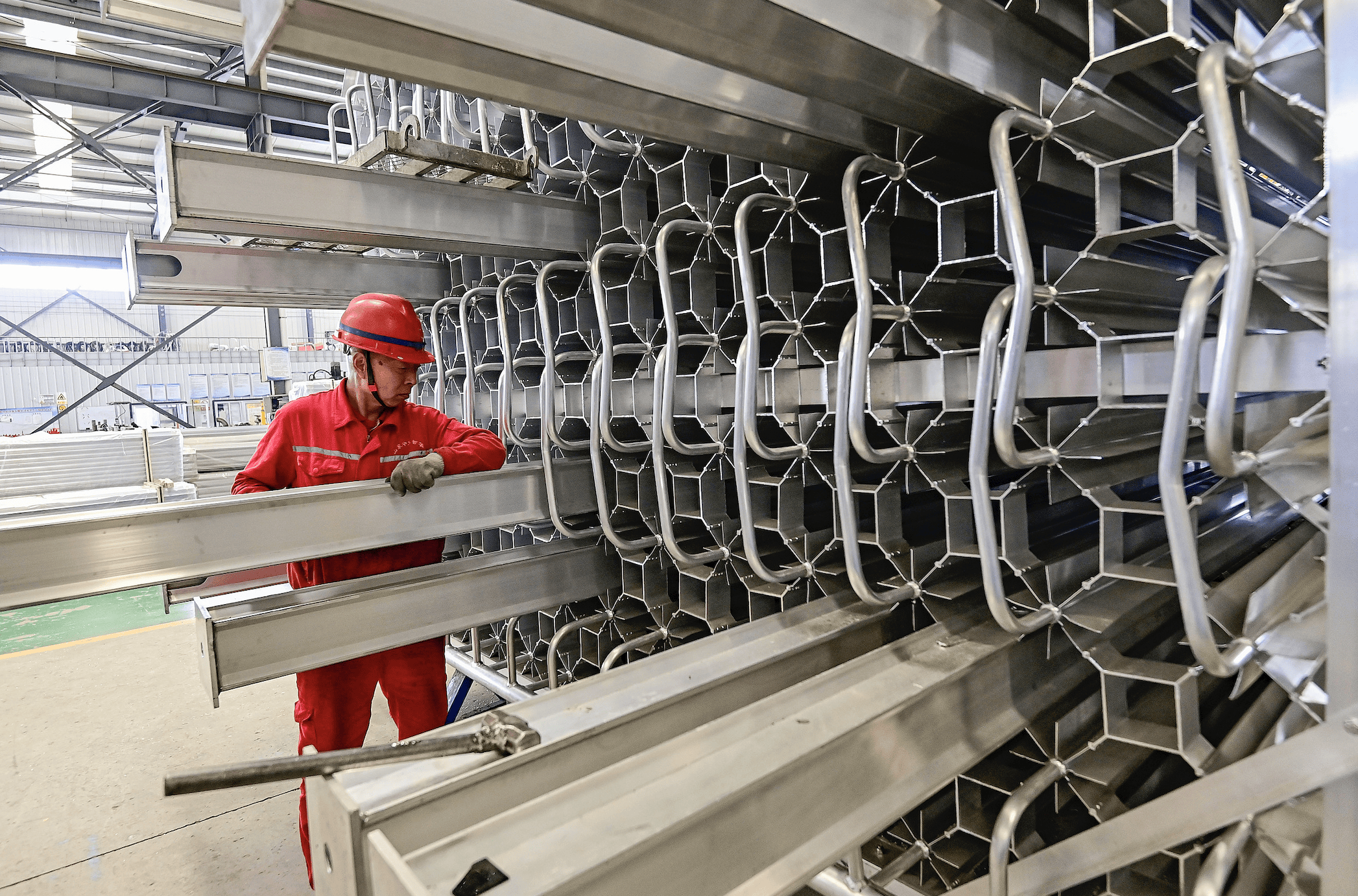
国家统计局解读:9月制造业采购经理指数继续回升 我国经济总体产出扩张略有加快
Guo Jia Tong Ji Ju· 2025-09-30 02:02
Group 1: Manufacturing PMI Insights - The manufacturing purchasing managers' index (PMI) for September is 49.8%, an increase of 0.4 percentage points from the previous month, indicating continued improvement in manufacturing sentiment [1][4] - The production index reached 51.9%, up 1.1 percentage points, marking a six-month high, while the new orders index rose to 49.7%, suggesting improved market demand [4] - Small enterprises showed a PMI increase to 48.2%, up 1.6 percentage points, indicating a slight improvement in their economic conditions [4][5] Group 2: Non-Manufacturing Sector Performance - The non-manufacturing business activity index stands at 50.0%, down 0.3 percentage points, indicating stability in the overall business volume of the non-manufacturing sector [6] - The service sector's business activity index is at 50.1%, remaining in the expansion zone, with certain industries like postal and financial services showing strong growth [6] - The construction sector's business activity index slightly increased to 49.3%, reflecting a minor recovery in construction activity [6] Group 3: Comprehensive PMI Analysis - The comprehensive PMI output index is at 50.6%, up 0.1 percentage points, indicating a continued acceleration in overall production and business activities [7] - The manufacturing production index and non-manufacturing business activity index contribute to the comprehensive PMI, standing at 51.9% and 50.0% respectively [7]
9月制造业PMI为49.8% 比上月上升0.4个百分点
Di Yi Cai Jing· 2025-09-30 02:01
Group 1: Manufacturing PMI Overview - The manufacturing Purchasing Managers' Index (PMI) for September is 49.8%, an increase of 0.4 percentage points from the previous month, indicating continued improvement in manufacturing sentiment [1] - Large enterprises have a PMI of 51.0%, up 0.2 percentage points, indicating expansion; medium enterprises have a PMI of 48.8%, down 0.1 percentage points; small enterprises have a PMI of 48.2%, up 1.6 percentage points, but still below the critical point [4] - The production index is at 51.9%, up 1.1 percentage points, indicating accelerated production expansion; the new orders index is at 49.7%, up 0.2 percentage points, showing improved market demand; the raw materials inventory index is at 48.5%, up 0.5 percentage points, indicating a narrowing decline in inventory [4] Group 2: Non-Manufacturing PMI Overview - The non-manufacturing business activity index is at 50.0%, down 0.3 percentage points from the previous month, indicating overall stability in non-manufacturing business volume [5] - The construction business activity index is at 49.3%, up 0.2 percentage points; the service industry business activity index is at 50.1%, down 0.4 percentage points, with certain sectors like postal and financial services above 60.0%, while sectors like catering and real estate are below the critical point [7] - The new orders index for non-manufacturing is at 46.0%, down 0.6 percentage points, indicating a decline in market demand; the input prices index is at 49.0%, down 1.3 percentage points, showing a decrease in input prices [13] Group 3: Comprehensive PMI Overview - The comprehensive PMI output index is at 50.6%, up 0.1 percentage points from the previous month, indicating continued expansion in production and business activities across enterprises [15]
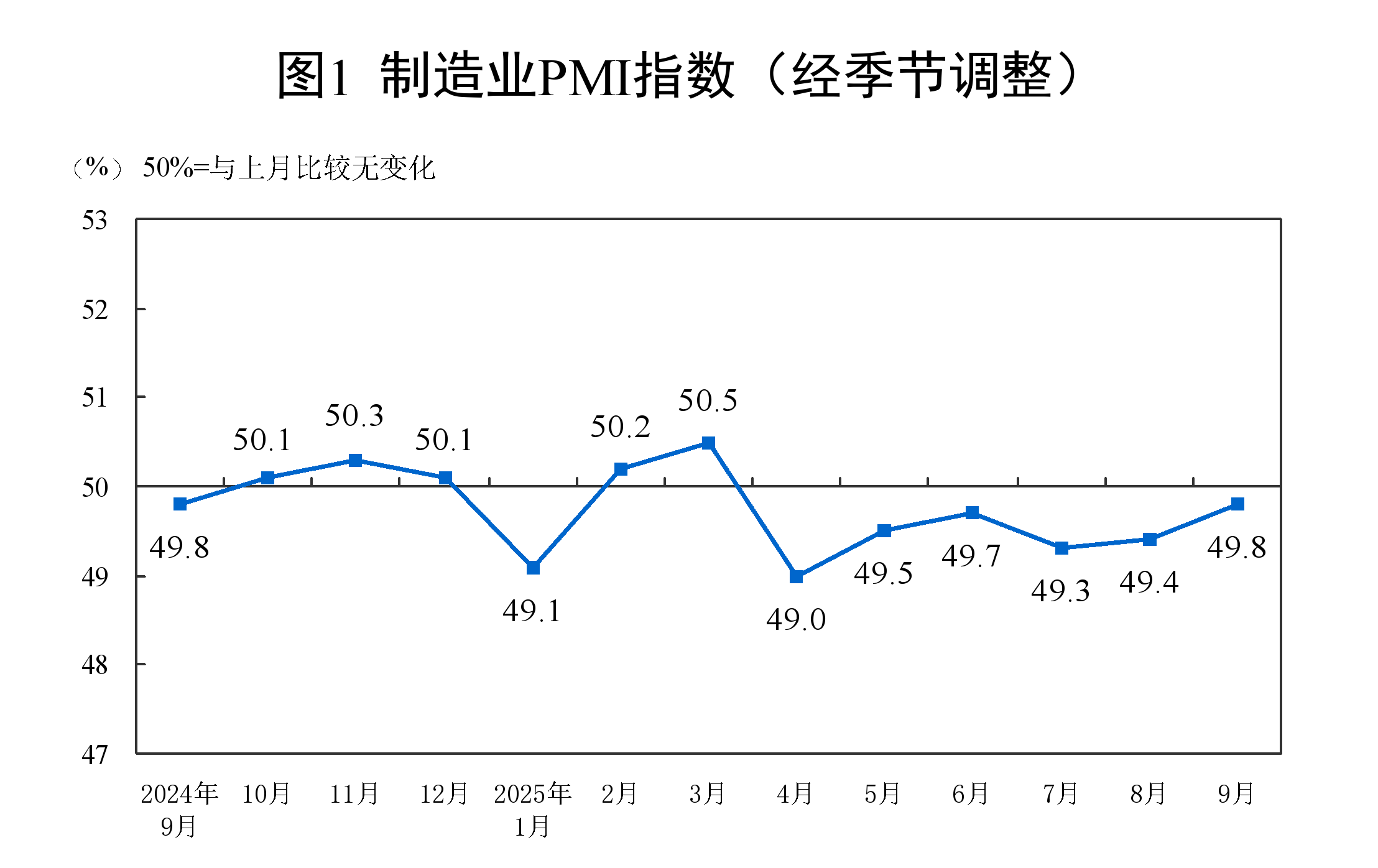
国家统计局:9月制造业PMI继续回升,我国经济总体产出扩张略有加快
Di Yi Cai Jing· 2025-09-30 02:01
Group 1: Manufacturing Sector - The manufacturing Purchasing Managers' Index (PMI) rose to 49.8% in September, indicating an improvement in economic conditions [2] - The production index reached 51.9%, the highest in nearly six months, reflecting active manufacturing activities [2] - New orders index increased to 49.7%, suggesting a slight improvement in market demand [2] - Key industries such as food and beverage, automotive, and aerospace showed production and new orders indices above 54.0%, indicating strong demand [2][3] - Small enterprises' PMI improved to 48.2%, while large enterprises maintained a stable expansion with a PMI of 51.0% [2] Group 2: Non-Manufacturing Sector - The non-manufacturing business activity index stood at 50.0%, down 0.3 percentage points from the previous month, indicating stability at the threshold [4] - The service sector's business activity index was 50.1%, remaining in the expansion zone, with strong performance in postal, telecommunications, and financial services [4] - The construction sector's business activity index slightly increased to 49.3%, showing a minor recovery in sentiment [4] Group 3: Composite PMI - The composite PMI output index rose to 50.6%, indicating a continued acceleration in overall production and business activities [5] - The manufacturing production index and non-manufacturing business activity index contributed to the composite PMI, standing at 51.9% and 50.0% respectively [5]
国家统计局解读2025年9月中国采购经理指数
Guo Jia Tong Ji Ju· 2025-09-30 01:54
Group 1: Manufacturing Sector - The manufacturing Purchasing Managers' Index (PMI) rose to 49.8% in September, an increase of 0.4 percentage points from the previous month, indicating continued improvement in economic conditions [1] - The production index reached 51.9%, up 1.1 percentage points, marking a six-month high, while the new orders index increased to 49.7%, suggesting improved market demand [1] - Key industries such as food and beverage, automotive, and aerospace showed production and new orders indices above 54.0%, indicating rapid release of production and demand [1] Group 2: Small and Medium Enterprises - The PMI for small enterprises increased to 48.2%, up 1.6 percentage points, indicating an improvement in their economic conditions, while medium enterprises saw a slight decline to 48.8% [2] - Large enterprises maintained a PMI of 51.0%, continuing to show stable expansion [2] Group 3: Key Industries - The PMIs for key sectors such as equipment manufacturing, high-tech manufacturing, and consumer goods were 51.9%, 51.6%, and 50.6% respectively, all significantly above the manufacturing average [2] - High-energy-consuming industries experienced a decline in PMI to 47.5%, down 0.7 percentage points [2] Group 4: Market Expectations - The production and business activity expectation index rose to 54.1%, indicating a positive outlook among manufacturing enterprises for recent market developments [2] - In the service sector, the business activity expectation index remained stable at 56.3%, reflecting optimism among service industry enterprises [3] Group 5: Non-Manufacturing Sector - The non-manufacturing business activity index stood at 50.0%, a decrease of 0.3 percentage points, indicating stability in overall business volume [1][3] - The service sector's business activity index was 50.1%, remaining in the expansion zone, with certain industries like postal and financial services showing indices above 60.0% [3] Group 6: Comprehensive PMI - The comprehensive PMI output index increased to 50.6%, up 0.1 percentage points, indicating a continued acceleration in production and business activities across sectors [4]
国家统计局:9月制造业PMI为49.8% 比上月上升0.4个百分点
Guo Jia Tong Ji Ju· 2025-09-30 01:48
Group 1: Manufacturing PMI Overview - The manufacturing Purchasing Managers' Index (PMI) for September is 49.8%, an increase of 0.4 percentage points from the previous month, indicating continued improvement in manufacturing sentiment [1] - Large enterprises have a PMI of 51.0%, up 0.2 percentage points, indicating expansion; medium enterprises have a PMI of 48.8%, down 0.1 percentage points; small enterprises have a PMI of 48.2%, up 1.6 percentage points, but still below the critical point [1] - The production index is at 51.9%, an increase of 1.1 percentage points, suggesting accelerated production expansion in the manufacturing sector [2] Group 2: New Orders and Employment - The new orders index is at 49.7%, up 0.2 percentage points, indicating a continued improvement in market demand within the manufacturing sector [3] - The employment index is at 48.5%, up 0.6 percentage points, suggesting an improvement in employment sentiment among manufacturing enterprises [5] Group 3: Non-Manufacturing PMI Overview - The non-manufacturing business activity index for September is 50.0%, a decrease of 0.3 percentage points, indicating overall stability in non-manufacturing business volume [7] - The construction industry business activity index is at 49.3%, up 0.2 percentage points; the services industry business activity index is at 50.1%, down 0.4 percentage points [7] Group 4: Price Indices and Market Demand - The new orders index for non-manufacturing is at 46.0%, down 0.6 percentage points, indicating a decline in market demand [7] - The input prices index is at 49.0%, down 1.3 percentage points, indicating a decrease in the overall level of input prices for non-manufacturing enterprises [7] - The sales prices index is at 47.3%, down 1.3 percentage points, indicating a continued decline in sales prices in the non-manufacturing sector [8] Group 5: Composite PMI Overview - The composite PMI output index for September is 50.6%, an increase of 0.1 percentage points, indicating continued acceleration in overall production and business activities across all sectors [10]
国家统计局:9月份制造业PMI为49.8%,指数继续回升
Guo Jia Tong Ji Ju· 2025-09-30 01:37
Core Viewpoint - The manufacturing purchasing managers' index (PMI) in September 2025 shows a slight recovery, indicating an overall acceleration in economic output in China, while the non-manufacturing business activity index remains stable at the critical point [1][5]. Group 1: Manufacturing PMI Insights - The manufacturing PMI rose to 49.8%, an increase of 0.4 percentage points from the previous month, indicating improved economic conditions [2]. - The production index reached 51.9%, up 1.1 percentage points, marking the highest level in nearly six months, reflecting active manufacturing activities [2]. - The new orders index increased to 49.7%, indicating a slight improvement in market demand, with certain industries like food and beverage, automotive, and aerospace showing strong performance [2][3]. - Small enterprises saw a PMI increase to 48.2%, up 1.6 percentage points, suggesting a recovery in their economic conditions [2]. Group 2: Non-Manufacturing PMI Insights - The non-manufacturing business activity index stood at 50.0%, down 0.3 percentage points, indicating stability at the critical point [4]. - The service sector's business activity index was 50.1%, remaining in the expansion zone, with strong performance in sectors like postal and financial services [4]. - The construction sector's business activity index slightly improved to 49.3%, indicating a minor recovery in construction activities [4]. Group 3: Comprehensive PMI Insights - The comprehensive PMI output index rose to 50.6%, an increase of 0.1 percentage points, indicating continued acceleration in production and business activities across sectors [5].
中国9月制造业PMI为49.8%,比上月上升0.4个百分点
Guo Jia Tong Ji Ju· 2025-09-30 01:37
一、中国制造业采购经理指数运行情况 9月份,制造业采购经理指数(PMI)为49.8%,比上月上升0.4个百分点,制造业景气水平继续改善。 从企业规模看,大型企业PMI为51.0%,比上月上升0.2个百分点,高于临界点;中型企业PMI为48.8%,比上月下降0.1个百分点,低于临界点;小型企业PMI 为48.2%,比上月上升1.6个百分点,仍低于临界点。 从分类指数看,在构成制造业PMI的5个分类指数中,生产指数和供应商配送时间指数均高于临界点,新订单指数、原材料库存指数和从业人员指数低于临 界点。 生产指数为51.9%,比上月上升1.1个百分点,表明制造业生产扩张加快。 新订单指数为49.7%,比上月上升0.2个百分点,表明制造业市场需求景气水平继续改善。 原材料库存指数为48.5%,比上月上升0.5个百分点,表明制造业主要原材料库存量降幅继续收窄。 从业人员指数为48.5%,比上月上升0.6个百分点,表明制造业企业用工景气度改善。 供应商配送时间指数为50.8%,比上月上升0.3个百分点,表明制造业原材料供应商交货时间持续加快。 | | | | | | | = 17 . 10 | | --- | --- | ...
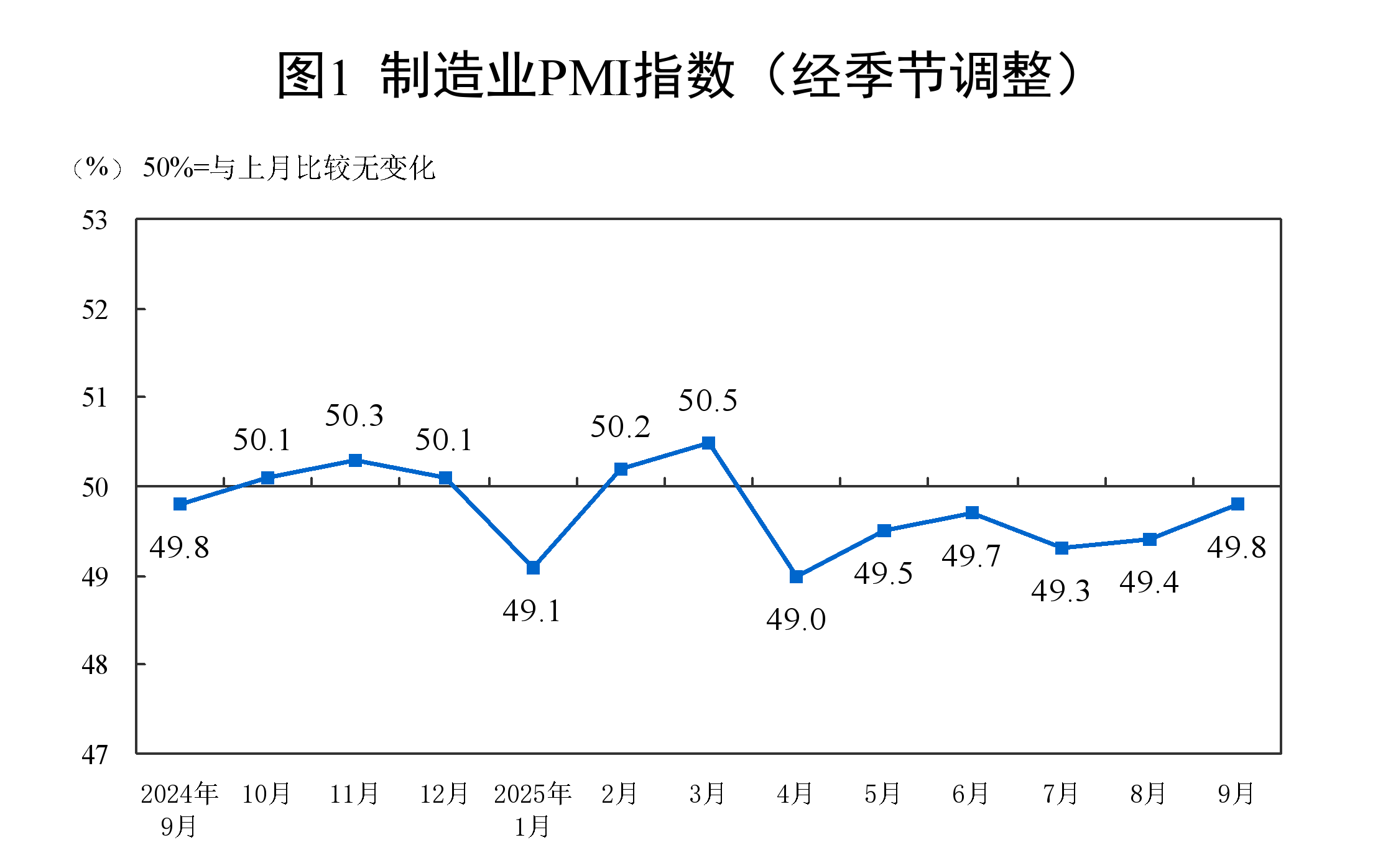
国家统计局:9月制造业生产活动加快,PMI升至49.8%,景气水平继续改善
Guo Jia Tong Ji Ju· 2025-09-30 01:37
Group 1: Manufacturing PMI Insights - The manufacturing purchasing managers' index (PMI) rose to 49.8% in September, an increase of 0.4 percentage points from the previous month, indicating continued improvement in economic conditions [2][3] - The production index reached 51.9%, up 1.1 percentage points, marking a six-month high, while the new orders index increased to 49.7%, suggesting a slight improvement in market demand [3] - Key industries such as food and beverage, automotive, and aerospace showed production and new orders indices above 54.0%, indicating robust activity, while sectors like wood processing and non-metallic mineral products remained below the critical threshold [3][4] Group 2: Non-Manufacturing PMI Insights - The non-manufacturing business activity index stood at 50.0%, down 0.3 percentage points, indicating stability in overall business volume [5] - The service sector maintained expansion with a business activity index of 50.1%, while industries like postal and financial services reported indices above 60.0%, reflecting strong growth [5] - The construction sector saw a slight recovery with a business activity index of 49.3%, and the business activity expectation index rose to 52.4%, indicating improved confidence among construction firms [5] Group 3: Composite PMI Insights - The composite PMI output index increased to 50.6%, up 0.1 percentage points, suggesting a continued acceleration in production and business activities across sectors [6] - The manufacturing production index and non-manufacturing business activity index contributed to the composite PMI, standing at 51.9% and 50.0% respectively [6]
2025年9月中国采购经理指数运行情况
Guo Jia Tong Ji Ju· 2025-09-30 01:30
Group 1: Manufacturing PMI Overview - In September, the Manufacturing Purchasing Managers' Index (PMI) was 49.8%, an increase of 0.4 percentage points from the previous month, indicating continued improvement in manufacturing sentiment [1] - The PMI for large enterprises was 51.0%, up 0.2 percentage points, while medium-sized enterprises saw a PMI of 48.8%, down 0.1 percentage points, and small enterprises had a PMI of 48.2%, up 1.6 percentage points [4] - The production index was 51.9%, up 1.1 percentage points, indicating accelerated production expansion, while the new orders index was 49.7%, up 0.2 percentage points, suggesting improved market demand [4] Group 2: Manufacturing PMI Components - The raw material inventory index was 48.5%, up 0.5 percentage points, indicating a continued narrowing of the decline in raw material inventory levels [4] - The employment index was 48.5%, up 0.6 percentage points, reflecting improved employment sentiment in manufacturing [4] - The supplier delivery time index was 50.8%, up 0.3 percentage points, indicating faster delivery times from suppliers [4] Group 3: Non-Manufacturing PMI Overview - In September, the Non-Manufacturing Business Activity Index was 50.0%, a decrease of 0.3 percentage points from the previous month, indicating overall stability in non-manufacturing business volume [8] - The construction industry business activity index was 49.3%, up 0.2 percentage points, while the service industry index was 50.1%, down 0.4 percentage points [10] Group 4: Non-Manufacturing PMI Components - The new orders index for non-manufacturing was 46.0%, down 0.6 percentage points, indicating a decline in market demand [14] - The input prices index was 49.0%, down 1.3 percentage points, suggesting a decrease in the overall level of input prices for non-manufacturing enterprises [14] - The employment index for non-manufacturing was 45.0%, down 0.6 percentage points, indicating a decline in employment sentiment [16] Group 5: Composite PMI Overview - The Composite PMI Output Index was 50.6%, an increase of 0.1 percentage points from the previous month, indicating continued acceleration in overall production and business activities [19]