国际贸易

Search documents
全球瞭望|马来西亚媒体:关税政策已沦为美“政治勒索工具”
Xin Hua Wang· 2025-07-09 02:20
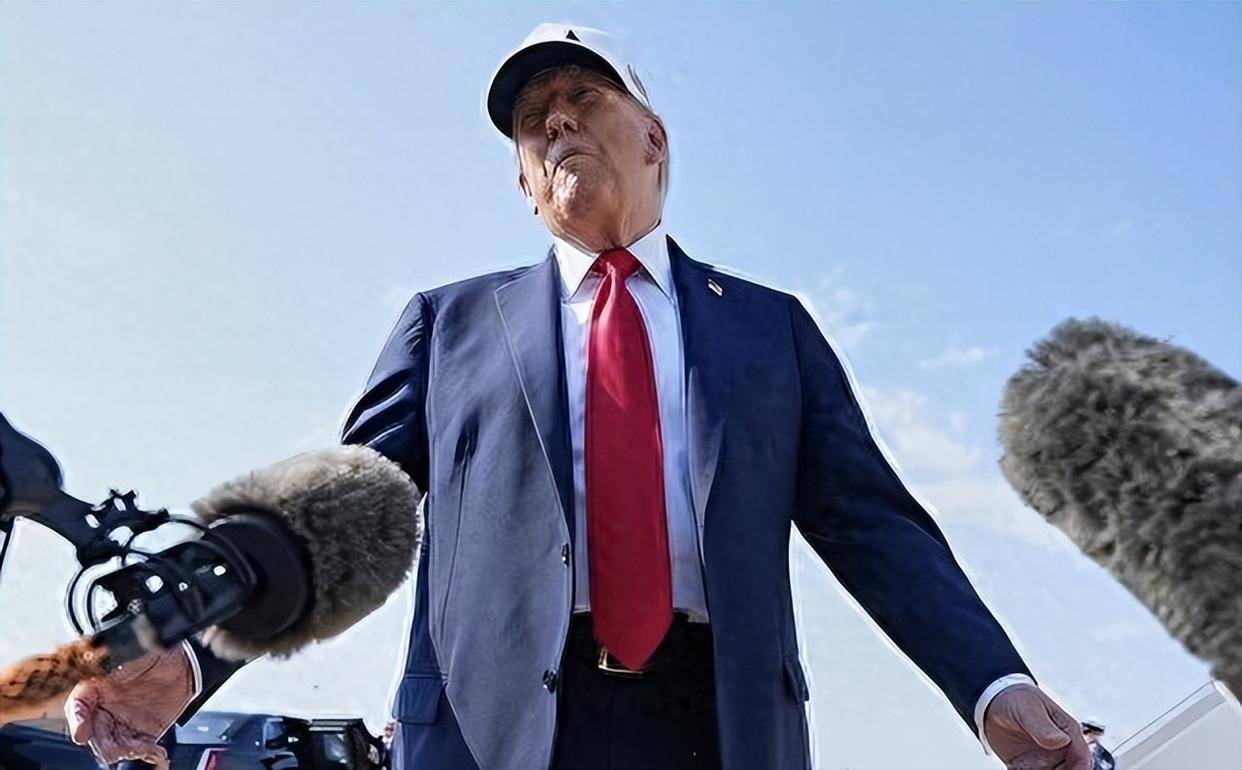
新华社吉隆坡7月9日电(记者王嘉伟 毛鹏飞)马来西亚《星洲日报》网站日前刊文指出,美国总 统特朗普7日宣布将从8月1日起对来自日本、韩国、马来西亚等14个国家的进口产品征收25%至40%不 等的关税,此举对全球贸易秩序构成制度性冲击。文章摘要如下: 文章认为,美政府掌控谈判节奏,以期让对方来不及准备从而被迫应对,严重打击市场信心。此 外,美方单边主义举措不乏削弱世贸组织、东盟、亚太经合组织等多边主义平台的意图。 文章最后强调,美方政策意图已十分明确:其贸易外交并非为建立更公平的经济秩序,而是为建立 惩罚与屈服的框架。在这一逻辑下,关税不再是经济工具,而是外交武器;期限不再是商定节点,而是 施压的节奏;外交也不再是谈判,而是服从性测试。 马来西亚希望通过外交与经济倡议推动区域经济一体化与对外合作。然而,美政府最新关税冲击不 仅针对单一国家,也考验整个东盟机制的凝聚力。 美方关税政策步步紧逼,已然将国际经贸演变为其政治勒索工具,意在通过经济手段迫使其他国家 屈从其战略节奏。作为2025年东盟轮值主席国,马来西亚面临维护区域团结等关键考验,需引导东盟协 同应对挑战。 新的"惩罚性"关税将对马来西亚构成突如其来的经济 ...
世界贸易组织评估认为:全球贸易紧张局势不断加剧
Jing Ji Ri Bao· 2025-07-09 00:09
Core Insights - The World Trade Organization (WTO) has released a report assessing global trade developments from mid-October 2024 to mid-May 2025, highlighting increased trade policy activities and escalating tensions among major trading partners [1] - The report predicts a 0.2% decline in global merchandise trade volume in 2025, with a subsequent growth of 2.5% expected in 2026, indicating a slowdown in trade activities [1] Trade Measures - During the reporting period, 644 trade measures related to goods were recorded, indicating a rise in the introduction of new trade measures, with trade remedy measures accounting for 46% of these [2] - Other recorded measures include 207 trade facilitation measures and 141 additional trade measures, with the latter covering an estimated trade value of $2.7327 trillion, the highest recorded since the WTO's trade monitoring began in 2009 [2] - By 2024, the trade value covered by these measures is estimated at $2.959 trillion, representing 12.5% of global imports, while affected export trade is valued at $81.17 billion, or 3.5% of global exports [2] - By the end of May 2025, the trade value covered is projected to reach approximately $4.6041 trillion, accounting for 19.4% of global imports, an increase of 6.9 percentage points year-on-year [2] Economic Support Measures - Since the 2008 financial crisis, general economic support measures have been a significant part of trade monitoring, but the number of reported measures has decreased from 224 in 2024 to 100 in 2025, indicating a shift towards more strategic and comprehensive non-financial interventions [3] - The report notes that the U.S. has implemented a series of bilateral and global trade measures, prompting retaliatory actions from other economies, including Canada and the EU, primarily involving tariff increases [3] Recommendations - The report calls for countries to reduce tariffs and other trade barriers to promote trade liberalization and economic growth, emphasizing the need for increased transparency in trade policies [4] - It advocates for strengthening the multilateral trading system to ensure fair and effective enforcement of trade rules and encourages collaborative solutions for sustainable trade policies, particularly in renewable energy and clean technology [4]
国际贸易中心执行主任:美最新关税举措增加不确定性和不稳定性
news flash· 2025-07-08 20:53
美国方面7日称,将从8月1日起分别对来自日本、韩国等14个国家的进口产品征收25%至40%不等的关 税,并决定将"对等关税"暂缓期截止日期延长至8月1日。对此,联合国和世界贸易组织的合设机构国际 贸易中心执行主任帕梅拉·科克-汉密尔顿8日表示,美国总统特朗普所谓延长关税谈判期限的做法,实 际上进一步增加了不确定性和不稳定性。 ...
美国贸易谈判言易行难 关税再次延迟坐实“TACO”窘况
智通财经网· 2025-07-08 14:04
Group 1 - The core viewpoint of the articles revolves around the challenges faced by the Trump administration in implementing its trade policies, particularly the tariffs, which were initially expected to be straightforward but have proven to be complex and slow to execute [1][6][9] - The U.S. stock market showed stability as optimism grew regarding ongoing trade negotiations, alleviating fears caused by previous tariff warnings from Trump [2] - The U.S. is negotiating with various countries, including India and the EU, with significant breakthroughs expected to be difficult to announce before the upcoming deadlines [5] Group 2 - The tariff rates for imports from various countries are set at 25% for Japan, South Korea, Malaysia, and Kazakhstan, while South Africa has a 30% tariff, and Laos and Myanmar face 40% tariffs [3] - The potential for tariffs to increase consumer prices in the U.S. is a concern, with industry leaders warning that high tariffs could lead to higher costs for imported goods [8] - The Trump administration's approach to trade negotiations is characterized by a willingness to extend deadlines and consider alternative arrangements, reflecting a more flexible stance than initially presented [7][9]


东南亚多国被特朗普投送关税信函,“待遇”为何各不相同
Di Yi Cai Jing· 2025-07-08 11:26
Core Points - The Trump administration has sent tariff letters to 14 trade partners, including six Southeast Asian countries, imposing tariffs ranging from 25% to 40% starting August 1 [1][3] - The tariffs are particularly high for Cambodia and Laos, with rates of 36% and 40% respectively, while Indonesia and Thailand face rates of 32% and 36% [3][5] - Cambodia has seen the largest reduction in tariff rates, dropping from 49% to 36%, and is in talks to potentially become the second Southeast Asian country to reach a trade agreement with the U.S. [5][6] Southeast Asia Trade Dynamics - Southeast Asian countries are increasingly recognizing the tightening access to the U.S. market and are likely to deepen trade cooperation with countries with existing free trade agreements [1] - Malaysia's tariff rate has increased from 24% to 25%, while Indonesia and Thailand's rates remain unchanged [3] - Thailand is actively negotiating to lower its tariff rate and aims to reduce its trade surplus with the U.S. significantly within five years [6] Ongoing Negotiations - The U.S. Secretary of State is expected to discuss tariff issues during his visit to Malaysia, marking his first visit to a Southeast Asian country outside of traditional allies [3] - Indonesia's government is committed to continuing negotiations with the U.S. regarding the upcoming tariffs, emphasizing the importance of maintaining national interests [6]
律师解读美越贸易协议:如何理解40%转运关税?零关税又意味着什么?
第一财经· 2025-07-08 08:13
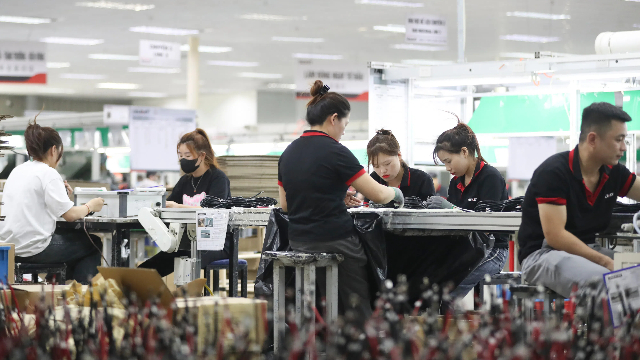
Core Viewpoint - The article discusses the implications of the recent trade agreement between the United States and Vietnam, particularly focusing on the new 40% tariff on transshipped goods and its potential impact on supply chains and trade dynamics in the region [1][4][9]. Summary by Sections Understanding the 40% Transshipment Tariff - The 40% tariff applies to goods that are minimally processed or merely transshipped through Vietnam before entering the U.S., which aims to enhance U.S. oversight on supply chain and origin compliance [1][4][6]. - The definition of "transshipment" is clarified as not merely transferring goods but involves changing the origin through light processing in Vietnam [5][7]. Implications of Zero Tariff for U.S. Goods - Vietnam's commitment to allow U.S. products to enter its market at zero tariffs could enable these goods to be re-exported to other RCEP countries, potentially weakening tariff barriers [9][10]. - This zero-tariff arrangement is seen as a significant structural change in trade dynamics, possibly increasing competition for Chinese products in the RCEP region [10]. Changes and Effects on Trade - The new tariff structure may lead to higher export costs and uncertainties for Chinese companies, prompting a reassessment of supply chain strategies [13][16]. - The previous practice of using Vietnam as a transshipment point to circumvent tariffs will now face a 40% tariff, significantly raising costs for those goods [13][16]. - Vietnam's foreign direct investment (FDI) reached $21.51 billion in the first half of the year, a 32.6% increase, indicating strong economic growth and investment attractiveness [7].
中国立下贸易规矩:谁敢配合美国,联合损害中国利益,必强硬回击
Sou Hu Cai Jing· 2025-07-08 03:58
Core Viewpoint - The article highlights China's strong opposition to any trade agreements that compromise its interests in exchange for tariff reductions, particularly in the context of the U.S. negotiating with other countries to exclude China from supply chains [1][3]. Group 1: U.S.-China Trade Relations - The U.S. is attempting to negotiate trade agreements with countries like India and the EU, aiming to weaken China's position by offering tariff exemptions in exchange for cooperation against China [1][3]. - The U.S. has imposed significant tariffs on global trade partners, with Chinese goods facing tariffs as high as 145%, which has severely impacted global supply chains [1][3]. - China has issued a warning that any country cooperating with the U.S. to undermine its interests will face strong retaliation [1][3]. Group 2: Strategic Responses - China is prepared to implement targeted countermeasures, including restrictions on rare earth exports, which are crucial for U.S. military and industrial applications [3][5]. - The U.S. relies heavily on China for rare earth materials, with 83.7% of its supply coming from China, posing a risk to its military supply chain [5]. - China retains the right to regulate its agricultural imports from the U.S., which could significantly impact U.S. farmers, particularly in key agricultural states [5][6]. Group 3: Multilateral Trade Dynamics - The article suggests that China's stance is becoming a cornerstone for multilateral trade order, as it calls for alliances against U.S. trade bullying [6][8]. - The U.S. has faced challenges in achieving substantial trade agreements, with claims of reaching deals with multiple countries being met with skepticism [6][8]. - The urgency of the situation is emphasized, as the deadline for negotiations approaches, testing the strategic resolve of involved nations [8].
特朗普新一轮关税大棒开始,美媒:先瞄准东亚的盟友,美国暂时不会关注亚洲大国
Sou Hu Cai Jing· 2025-07-08 02:49
Core Viewpoint - The recent tariff adjustments by the Trump administration reflect a continuation of a hardline trade policy while also indicating a tactical shift towards negotiating under pressure [1][3] Group 1: Tariff Adjustments - The U.S. has issued new tariffs targeting 14 countries, with Japan facing a 24% tariff and South Korea a 25% tariff, breaking the expectation of tariff exemptions for traditional allies [1] - The delay of the "reciprocal" tariff effective date to August 1 provides a 20-day buffer for trade negotiations [1] Group 2: Strategic Considerations - Japan and South Korea were chosen as initial targets due to their significant export volumes to the U.S., which can create immediate market impacts [1] - The strategy aims to send a message to other countries that no one is exempt from U.S. tariffs, enhancing America's psychological advantage in negotiations [1] Group 3: Characteristics of the Tariff Strategy - The tariff strategy includes three main characteristics: breaking the ally boundary by weaponizing trade, setting flexible negotiation periods to force concessions, and applying differentiated tax rates based on each country's economic structure [3] - This approach is described as a "carrot and stick" method, with the potential to reshape global trade dynamics as the August 1 deadline approaches [3]
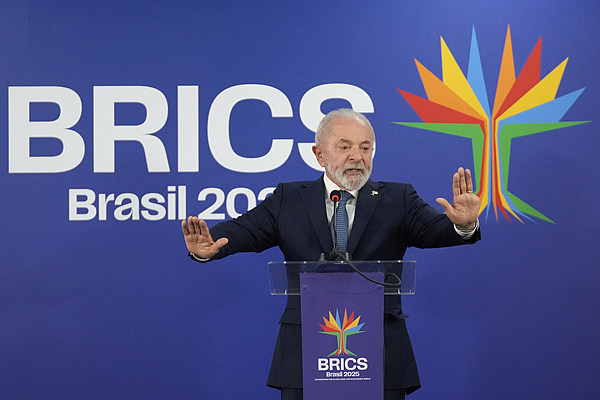
特朗普威胁金砖国家,卢拉反驳:世界不需要皇帝
Guan Cha Zhe Wang· 2025-07-08 00:54
观察者网消息,金砖国家的开放合作之声在南美响起之际,美国总统特朗普又挥舞起他的关税"大刀", 甚至又一次公然向金砖国家发出威胁,这很快引发金砖国家反击。 当地时间7月7日,在金砖国家领导人里约热内卢峰会后,巴西总统卢拉接受采访时猛批特朗普的威胁, 他告诉记者:"世界已经变了,我们不需要一个皇帝。"卢拉强调,金砖国家想要从经济角度寻找另一种 全球组织方式,这正是某些人感到不安的原因。 中国外交部发言人毛宁7日下午在例行记者会上应询表示,"关于加征关税,中方已经多次阐明了立场 ——贸易战、关税战没有赢家,保护主义没有出路。" 据路透社报道,在里约热内卢举行的金砖峰会结束时,当记者问及特朗普的关税威胁时,卢拉坚定地表 示:"世界已经变了。我们不需要一个皇帝。" 2025年7月7日,巴西里约热内卢,巴西总统卢拉在第17届金砖国家峰会新闻发布会上讲话。视觉中国 卢拉再次表达了他关于全球贸易应当摆脱对美元依赖的看法。 "世界必须找到一种方式,使我们的贸易关系不必非要通过美元来进行。"卢拉在峰会结束后的记者会上 表示。 "当然,我们必须对此采取谨慎负责的态度。我们的中央银行需要与其他国家的中央银行进行讨论,"他 补充道," ...
特朗普征税风暴席卷全球,170国遭殃唯独放过中国,意欲何为
Sou Hu Cai Jing· 2025-07-07 16:21
Core Viewpoint - The article discusses the sudden shift in U.S. trade policy under Trump, where the U.S. plans to impose tariffs on 170 countries, excluding China, highlighting the implications for global trade dynamics and the U.S. fiscal situation [1][10][31]. Group 1: U.S. Trade Policy Changes - Starting July 4, the U.S. will issue daily tax bills to 10 countries, marking a significant departure from previous negotiation efforts [3][5]. - The tariffs will be substantial, with the EU facing a 20% tariff, India 26%, and Japan 24%, indicating that even traditional allies are not exempt [4][7]. - The U.S. Customs is hiring thousands of new tariff inspectors and implementing blockchain technology to prevent tax evasion, signaling a serious commitment to this new tax regime [7][14]. Group 2: Financial Motivations Behind Tariffs - The U.S. government is facing a significant fiscal shortfall, with a national debt exceeding $30 trillion, prompting the need for additional revenue through tariffs [10][12]. - The estimated trade volume affected by these tariffs is $3.2 trillion, which could potentially add several hundred billion dollars to U.S. government revenue if collected [14]. Group 3: China's Unique Position - China has managed to avoid these tariffs due to successful negotiations, demonstrating its significant role in the global supply chain and its ability to leverage its position [18][22]. - The U.S. recognizes that imposing tariffs on China could lead to increased inflation, affecting American consumers and potentially jeopardizing Trump's voter base [20][22]. - The negotiations have resulted in tangible benefits for China, such as the lifting of restrictions on EDA software and the export of energy products, showcasing a shift from confrontation to cooperation [18][24]. Group 4: Global Trade Implications - The unilateral approach of the U.S. in imposing tariffs without negotiation undermines established trade norms and could lead to retaliatory measures from other countries, escalating into a global trade war [26][29]. - The article suggests that this could set a dangerous precedent for future U.S. trade relations, where smaller nations may have to accept unfavorable terms without negotiation [28][29]. - The potential for collective resistance from affected countries could reshape the future of global trade dynamics, challenging U.S. trade hegemony [29][31].