无人机

Search documents
建行广东分行:引金融活水 筑低空经济产业高地
Zhong Guo Jin Rong Xin Xi Wang· 2025-12-18 12:23
Core Insights - The low-altitude economy is emerging as a significant driver of new productive forces in Guangdong, with China Construction Bank's Guangdong branch playing a crucial role in providing financial support for the industry's development [1] Group 1: Support for Flying Cars - China Construction Bank's Guangzhou branch has established a specialized service team to support the production of flying cars, completing a "three-in-one" loan application process for fixed assets in the low-altitude economy within two weeks [1] - The bank has become the lead and agent for a 1.26 billion yuan syndicated loan in the global flying car production sector, with the first loan disbursed in March 2025 to facilitate factory construction [1] Group 2: Financing for Specialized Enterprises - Zhuhai Ziyan UAV Co., a national high-tech enterprise, received a 10 million yuan credit loan from China Construction Bank's Zhuhai branch, which assessed the company's 141 patents and 30 software copyrights to provide M4-level innovation ratings [2] - The bank has supported the company over eight years, helping it grow from a startup to a key player in the industry [2] Group 3: Empowering Smart Agriculture - Guangzhou XAG Technology Co. has developed a comprehensive product line for agriculture using drones, receiving 100 million yuan in comprehensive credit support from China Construction Bank's Guangzhou branch [3] - The bank has also facilitated technology innovation loans and cross-border financial products to support the company's global expansion [3] - In Shaoguan, a cooperative received 1.5 million yuan in credit loans to upgrade its data monitoring systems and expand its services into new areas like forest firefighting and mountain logistics [3] Group 4: Strengthening Industry Foundations - China Construction Bank's Zhuhai branch led a 6.4 billion yuan syndicated loan to support the construction of the Zhuhai Jinwan Airport comprehensive transportation hub, essential for aviation exhibitions and low-altitude operations [4] - The bank provided 200 million yuan in loans to a drone battery supplier to support the development of eVTOL battery technology [4] - The bank has also offered credit loans to ensure safety in low-altitude flight operations [5] Group 5: Financial Ecosystem for Low-Altitude Economy - China Construction Bank's Guangdong branch has created a financial service ecosystem covering infrastructure, manufacturing, core components, and application scenarios in the low-altitude economy [5] - As of November 2025, the bank's loans to technology enterprises exceeded 170 billion yuan, with nearly 240 billion yuan disbursed to over 9,200 tech companies [5] - The bank aims to enhance financial services to support the Guangdong-Hong Kong-Macao Greater Bay Area in seizing future industrial development opportunities [5]

高空高速隐身无人机标杆!航天彩虹:让彩虹-7翱翔长空
市值风云· 2025-12-18 10:09
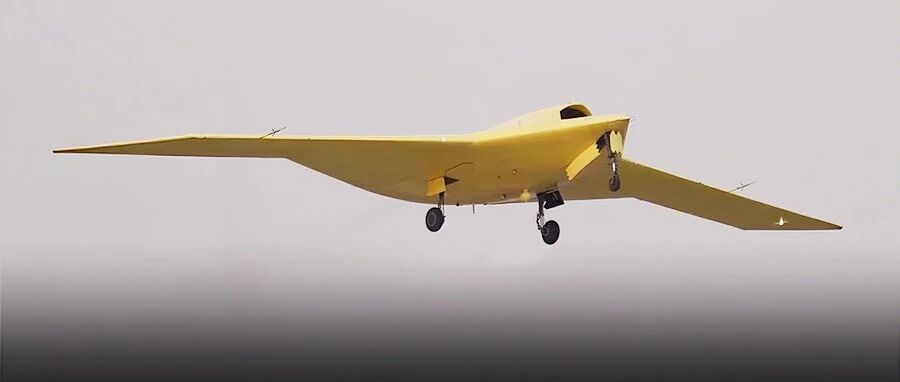
Core Viewpoint - The successful maiden flight of the Rainbow-7 drone marks a strategic breakthrough for China's high-end drone capabilities, potentially enhancing the market position of Aerospace Rainbow (002389.SZ) in the global military drone market [4][10][11]. Company Overview - Aerospace Rainbow, originally Zhejiang Nanyang Electronic Film Co., was listed in 2010 and restructured in 2017 to focus on drone and guided weapon systems, with the China Aerospace Science and Technology Corporation as the new controlling shareholder [12]. - The company operates primarily in two sectors: drones and new materials, with drones being the core business encompassing research, design, production, and sales [12][13]. Product Development - The Rainbow-7 drone features advanced design elements such as a flying wing layout, stealth capabilities, and multi-tasking abilities, including reconnaissance and strike functions [9][10]. - The drone can fly for up to 16 hours, has a maximum range of 8,000 kilometers, and can carry up to 2 tons of weapons, making it a strategic asset in military operations [9][10]. Market Position - Aerospace Rainbow has maintained a leading position in the global drone export market, with the Rainbow series drones consistently ranking among the top three in global export volumes for the past decade [13][24]. - The company holds a 70% share of China's military drone export market, with significant sales to over ten countries and regions [13][24]. Financial Performance - The company has faced declining revenues and profits from 2022 to 2024, with a reported revenue of 2.567 billion yuan in 2024, down 10.45% year-on-year, and a net profit of 88 million yuan, down 42.54% [18][20]. - Despite recent challenges, there are signs of recovery, with a significant revenue increase of 162.48% year-on-year in Q3 2025, indicating a potential turning point [21][22]. Industry Outlook - The global military drone market is projected to grow significantly, reaching $34.3 billion by 2025, driven by increasing demand for advanced drone capabilities [23]. - The Asia-Pacific region is expected to lead this growth, with China's defense modernization efforts contributing to a surge in drone procurement [23][24]. - Aerospace Rainbow is well-positioned to capitalize on this growth, especially with the anticipated demand for high-end drones in the international market [24][25].


破解“黑飞”“扰航”等安全监管难题,山东无人机新规2026年元旦起实施
Feng Huang Wang Cai Jing· 2025-12-18 07:35
Core Viewpoint - The "Shandong Province Civil Unmanned Aerial Vehicle Public Safety Management Measures" (hereinafter referred to as "Measures") was announced on October 31, 2023, and will take effect on January 1, 2026, aiming to address safety management issues in the rapidly growing civil UAV industry in Shandong Province [1][2]. Group 1: Regulatory Framework - The Measures establish that governments at or above the county level will coordinate public safety management for civil UAVs, detailing the responsibilities and operational mechanisms of relevant departments [2]. - Specific responsibilities are assigned to various departments, such as the police for preventing and handling violations, transportation for low-altitude infrastructure, and industrial departments for product oversight [2]. Group 2: Flight Safety Regulation - The Measures enhance management of civil UAVs and operators, clarifying responsibilities, qualification applications, flight approvals, behavioral norms, and reporting obligations for abnormal situations [2]. - It specifies ten behavioral norms for safe flying and nine prohibited actions, including unauthorized flights and illegal photography [2][3]. Group 3: Supervision and Management - A low-altitude flight management service platform will be established for dynamic monitoring and service of civil UAVs, covering the entire chain from production to insurance [3]. - The Measures impose obligations on e-commerce platforms selling UAVs to ensure compliance and strengthen source control [3]. Group 4: Legal Responsibilities - Violations of the Measures will result in penalties, including the cessation of flights for non-compliant UAVs, with law enforcement agencies responsible for enforcement [3]. - Accountability measures are outlined for officials who fail to perform their duties or abuse their power in public safety management [3].
Stifel:美国防预算迎“无人机元年”,2026年将成行业拐点,这些标的或成赢家
智通财经网· 2025-12-18 07:22
Core Insights - The U.S. defense industry is at a turning point, with a significant shift towards unmanned systems expected by 2026, termed the "Year of Drones" [1] - The growth in unmanned systems spending is driven by technological advancements, escalating geopolitical threats, and new political will following recent government changes [1] Historical Context - The current defense landscape is compared to the state of manned aircraft in 1935, where unmanned systems currently represent only a small percentage of the defense budget [2] - The report predicts that unmanned systems will become a major growth area in the budget, similar to how manned aircraft dominated by 1955 [2] Political Drivers - Significant legislative and executive actions in 2025 are laying the groundwork for this transition, including multiple executive orders from President Trump focusing on defense procurement modernization and enhancing U.S. drone capabilities [3] - The "Great Beautiful Act," signed into law on July 4, allocates billions for drone infrastructure, including $2.1 billion for medium unmanned surface vessels [3] Market Dynamics - The government aims to rebuild a "mid-tier defense supplier base," warning that traditional contractors may suffer if they do not adapt to new demands for rapid and scalable production [5] - Companies with "manufacturing adaptability" and business integration capabilities are expected to emerge as long-term winners in this evolving landscape [5] Preferred Stocks - Pure play stock recommendations include Kratos Defense (KTOS.US), Ondas (ONDS.US), and AeroVironment (AVAV.US) [6] - Diversified stock recommendations include Teledyne (TDY.US), CACI International (CACI.US), and Leidos (LDOS.US) [7] Key Technology Areas - Several sub-markets are expected to grow rapidly, including $1.5 billion for loitering munitions, $1.5 billion for unmanned underwater vehicles, and $1.3 billion for counter-drone systems [8] - Collaborative combat aircraft are designed to work alongside F-35 and F-47 fighters, creating a "disposable scale" where the loss of a drone is tactical rather than strategic [9] - The U.S. is accelerating procurement of loitering munitions influenced by the Ukraine war, with projects like LASSO funding systems such as the "Spring Knife" [9] - The Navy is shifting to "single-mission hulls" to reduce costs, including the MASC project for surface vessels and the "Ghost Shark" project for large unmanned underwater vehicles [9] - A wave of contracts is expected to protect venues during the 2026 World Cup from drone threats, funded by new allocations from the Department of Homeland Security [9] - Despite perceptions of high valuations based on current P/E ratios, the report emphasizes that the industry is in the early stages of a transformative shift towards unmanned systems [9]
山东首部无人机新规下月施行,明确违规飞行、违法拍摄等9项禁止行为
Qi Lu Wan Bao· 2025-12-18 05:55
Core Viewpoint - The Shandong Provincial Government has issued the "Public Safety Management Measures for Civil Unmanned Aerial Vehicles" which will take effect on January 1, 2026, marking the first provincial regulation in this area aimed at enhancing safety management and addressing existing regulatory gaps [1] Group 1: Legislative Background and Purpose - The rapid development of the civil unmanned aerial vehicle industry in Shandong has significantly contributed to economic and social progress, but issues such as unclear management responsibilities and insufficient regulatory mechanisms have hindered further growth [1] - The new regulation aims to supplement and improve existing national laws by addressing local conditions and ensuring effective implementation [1] Group 2: Key Provisions of the Regulation - The regulation consists of six chapters and 39 articles, focusing on four main areas: coordination of public safety management by county-level governments, management of unmanned aerial vehicles and operators, establishment of a low-altitude flight management service platform, and legal responsibilities for violations [2][3] - It specifies the roles of various government departments, including the police for safety violations, transportation for low-altitude infrastructure, and industrial departments for product oversight [2] - The regulation outlines the responsibilities of operators, including flight approval, behavior norms, and reporting obligations for unusual situations, as well as procedures for handling violations [2] - A dynamic regulatory and service platform will be established for comprehensive oversight from production to insurance, including specific requirements for e-commerce platforms selling or renting unmanned aerial vehicles [3] - Legal consequences for violations include the cessation of flights for non-compliant vehicles and accountability for officials who neglect their duties or abuse their power [3]
【e公司观察】产业链 “二选一” 引发反垄断新难题
Zheng Quan Shi Bao Wang· 2025-12-18 01:04
Group 1 - The core conflict between YingShi Innovation and DJI highlights the issue of "exclusive selection" behavior in the technology industry, raising concerns about antitrust regulations in technology-intensive sectors [1][2] - YingShi Innovation's founder revealed that 33 key suppliers faced "exclusive" pressure, affecting various components such as optical lens modules, structural parts, screens, batteries, and electronic chips, with some suppliers halting cooperation despite having completed sample deliveries or chip designs [1] - The sales conflict is also intense, with reports of a shopping mall forcibly removing an "Insta360" sign and prohibiting YingShi from opening a brand store during DJI's leasing period [1] Group 2 - DJI, as a leader in the global consumer drone market, has established a "super vertical integration" supply chain management model, controlling core components through self-research or deep cooperation, which may create competitive advantages [2] - The practice of "exclusive selection" in the supply chain is unprecedented in China, although similar behaviors in sales channels have led to penalties for companies like Alibaba and Meituan [2] - The antitrust law prohibits the abuse of market dominance by imposing unreasonable trading conditions, but identifying "exclusive selection" in technology-intensive industries poses challenges for regulators [2] Group 3 - A potential solution to balance innovation protection and fair competition is "technical isolation," where suppliers establish independent technical teams and production lines for different clients to avoid core technology overlap [3] - The outcome of this dispute will determine the future of both companies and may set a new benchmark for competition boundaries in the technology industry [3] - Policymakers need to find a path that encourages innovation while ensuring fair competition, allowing commercial competition to focus on products and technology rather than resource blocking [3]
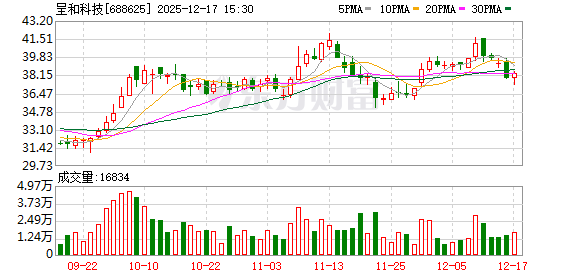
中无人机:截至2025年12月10日股东户数为32424户
Zheng Quan Ri Bao· 2025-12-17 12:16
Group 1 - The company reported that as of December 10, 2025, the number of shareholders is 32,424 [2]

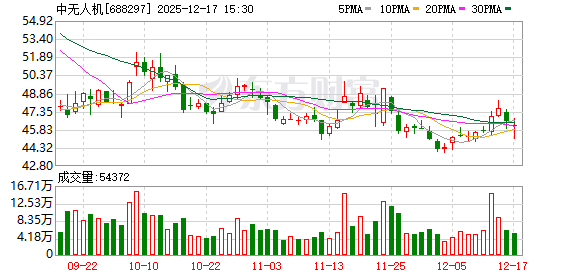
呈和科技收翌智航48%股份,材料助剂龙头低调布局低空赛道
Nan Fang Du Shi Bao· 2025-12-17 12:01
Core Viewpoint - Chenghe Technology is strategically acquiring a 48% stake in Yizhi Aviation to enter the trillion-yuan low-altitude economy sector while maintaining its focus on polymer materials business [2][4][9] Company Overview - Chenghe Technology, established in 2002 and listed on the Sci-Tech Innovation Board in 2021, is a leading enterprise in the field of polymer material additives, specializing in nucleating agents, synthetic hydrotalcite, and antioxidants [2][4] - Yizhi Aviation, founded in December 2019, is a high-tech company under China Electronics Technology Group, focusing on unmanned systems command control, intelligent logistics, and drone inspection [2][4] Acquisition Details - The acquisition of Yizhi Aviation's 48% stake is seen as a key step for Yizhi to transition from state-owned to a market-oriented entity, enhancing its growth potential [2][4][6] - Chenghe Technology emphasizes that this acquisition is an attempt to expand into different types of materials and application scenarios while remaining committed to its core polymer materials business [2][4][6] Financial Performance - Yizhi Aviation is projected to achieve a revenue of 20.78 million yuan and a net profit of 2.43 million yuan in 2024, with total assets of 37.29 million yuan covering liabilities of 28.55 million yuan, indicating stable profitability [5][6] - Chenghe Technology reported a revenue of 740 million yuan and a net profit of 228 million yuan for the first three quarters of 2025, reflecting a year-on-year growth of 14% and 15% respectively [6] Strategic Collaboration - The partnership will focus on resource sharing and collaboration in material research and development, with Yizhi Aviation serving as an important testing ground for Chenghe Technology's future material innovations [7][8] - Chenghe Technology aims to address low-altitude economy material needs, focusing on high-strength lightweight materials, battery energy density enhancement materials, and thermal protection as key research directions [8] Market Outlook - The low-altitude economy is currently in a developmental phase, with significant opportunities expected in the next 3 to 5 years as the industry moves towards large-scale commercial operations [8][9] - Chenghe Technology's entry into this sector is based on recognizing mature opportunities rather than chasing industry trends, aiming to capture a leading position in the trillion-yuan market [9]

“天目山一号”无人机创世界纪录
Ke Ji Ri Bao· 2025-12-17 11:43
Group 1 - The "Tianmu Mountain No. 1" drone has set a world record for the longest distance flown by a hydrogen fuel cell-powered multirotor drone, achieving a distance of 188.605 kilometers in 4 hours and 17 minutes [1] - The flight data of "Tianmu Mountain No. 1" was monitored and verified by Guinness World Records, confirming the stability of its power system and excellent control performance throughout the flight [1] - "Tianmu Mountain No. 1" is designed for long-duration low-altitude operations and is applicable in various fields such as ecological inspections, oil and gas pipeline monitoring, renewable energy plant operations, urban traffic management, and emergency rescue [1] Group 2 - The Tianmu Mountain Laboratory, established in June 2022, focuses on advanced aviation technology and high-performance aviation materials, aiming to support the development of low-altitude economy in Zhejiang Province [2] - The laboratory collaborates with Beihang University to create a complete innovation ecosystem that spans from basic research to key technology breakthroughs and efficient transformation of results [2] - The initiative is aligned with national strategies and emerging industry needs, contributing to the construction of a strong civil aviation province and the development of a low-altitude economy [2]
素食者汪滔,困在千亿大疆王国里
3 6 Ke· 2025-12-17 04:17
Group 1: Company Performance and Valuation - DJI's revenue is projected to exceed 50 billion yuan in 2024, with a net profit margin approaching 40%, nearly double that of Apple [2] - Based on an average P/E ratio of 30 in the consumer electronics sector, DJI's valuation should be around 180 billion yuan, although its unique product and profit levels suggest it could be higher [2] - Despite holding over 70% of the global consumer drone market, DJI is experiencing a slowdown in revenue growth, indicating a shift from an incremental market to a saturated market phase [14][15] Group 2: Leadership and Company Culture - Founder Wang Tao is known for his strong personality and perfectionism, which has led to both the creation of DJI as a drone giant and controversies within the company [3] - DJI's early culture was characterized by a geek-driven, technology-focused environment, attracting many creative young talents, but management issues have emerged as the company has grown [9][10] - The company has faced challenges in retaining talent, with many former employees successfully starting their own ventures, indicating potential misjudgments in new market opportunities by Wang Tao [5][12] Group 3: Competitive Landscape - DJI has recently entered new markets, including 3D printing and robotic vacuum cleaners, in response to increasing competition from companies like影石 (Yingshi) and former employees' startups [15][19] - The competitive dynamics have intensified, with影石 actively recruiting DJI's core team members, leading to significant personnel shifts and strategic conflicts between the two companies [7][8][17] - DJI's recent pricing strategies, such as the significant price drop of the Pocket 3 camera, reflect its defensive measures against market share erosion and competition from new entrants [15] Group 4: Innovation and R&D Challenges - DJI's patent applications have significantly declined, from 3,318 in 2019 to only 76 in 2024, attributed to reduced incentives for innovation within the company [11] - The company is perceived to be focusing more on immediate competitive responses rather than long-term technological innovation, raising concerns about its future growth trajectory [16][19] - Despite its strong hardware capabilities, DJI faces challenges in breaking into new markets like robotic vacuums, where competition has become increasingly fierce [19]