核能

Search documents
中广核发布2024年企业社会责任报告
Zhong Guo Jing Ji Wang· 2025-09-01 09:19
Core Insights - China General Nuclear Power Group (CGN) has released its 2024 Corporate Social Responsibility Report, marking the 14th consecutive year of such reports, highlighting its commitment to safety, technological innovation, green development, employee growth, and social harmony [1][2] Group 1: Safety and Operational Performance - CGN operates 28 nuclear power units that maintain safe and stable operations, with 86.3% of WANO indicators meeting world-class standards, and 14 units achieving a perfect composite index [1] - Over 90% of the units' strong damage indicators also meet world-class standards, achieving historical best performance [1] Group 2: Research and Development - The company invested 5.86 billion yuan in technology activities, with a research and development intensity of 3.8%, and received 1,372 authorized patents in 2024 [1] Group 3: International Expansion - CGN's international business revenue accounts for over 23%, with projects in over 20 countries and regions, including new solar projects in South Africa and Laos [2] - The company is actively exploring "New Energy +" innovative models, promoting ecological governance through projects like "photovoltaic desertification control" [2] Group 4: Environmental Impact - By the end of 2024, CGN's clean energy operational capacity is expected to reach nearly 100 million kilowatts, generating 3,494 billion kilowatt-hours of electricity, equivalent to reducing carbon dioxide emissions by approximately 270 million tons [2] - This reduction is comparable to planting over 786,000 hectares of trees [2] Group 5: Social Responsibility - CGN emphasizes project development that benefits local economies and communities, with significant investments in poverty alleviation and rural revitalization across several provinces [2] - The company has invested over 48 billion yuan in aid programs across five provinces, establishing 31 "Egret Classes" to support nearly 3,500 students [2]
中国聚变能源公司增资至150亿,增幅325%
Sou Hu Cai Jing· 2025-09-01 03:12
天眼查工商信息显示,8月28日,中国聚变能源有限公司发生工商变更,新增中国石油集团昆仑资本有 限公司、中国核电、浙能电力等为股东,注册资本由约35.31亿人民币增至150亿人民币,增幅约 325%,刘叶由董事变更为董事长,同时,新增多位主要人员。中国聚变能源有限公司成立于1983年6 月,法定代表人为刘叶,经营范围含新兴能源技术研发、核电设备成套及工程技术研发、工程和技术研 究和试验发展、知识产权服务、能量回收系统研发、发电技术服务等。股东信息显示,该公司现由中国 核工业集团有限公司及上述新增股东共同持股。 ...
劳斯莱斯否认小型核反应堆部门IPO传闻,称“既无计划也未启动”
智通财经网· 2025-09-01 01:35
Core Viewpoint - Rolls-Royce Holdings has denied reports regarding the exploration of an initial public offering (IPO) for its Small Modular Reactor (SMR) division, stating that there are currently no plans or processes initiated for an IPO [1] Company Summary - The spokesperson for Rolls-Royce's SMR division clarified that discussions about an IPO and other financing options are still in the early stages [1] - In June, Rolls-Royce's SMR unit was selected as one of the first builders of small modular reactors in the UK, which is a key initiative for the country's goal of decarbonizing its grid by the mid-2030s [1] - The UK government has committed to investing £2.5 billion (approximately $3.4 billion) in the SMR project over the next four years, aiming to establish Europe's first small nuclear industry demonstration projects [1] Industry Summary - Several countries, including the US, Canada, Romania, and the Czech Republic, are accelerating the development of small modular reactor technology [1] - The successful implementation of the UK SMR project could not only transform the domestic energy structure but also potentially open new growth opportunities in the global nuclear energy market [1]
“十四五”能源规划成绩评述及形势展望
Zhong Guo Dian Li Bao· 2025-09-01 01:08
Core Insights - The "14th Five-Year Plan" marks a significant period for energy transition in China, achieving notable accomplishments despite various challenges, with a focus on optimizing industrial layout and enhancing system resilience for high-quality energy development in the future [1] Group 1: Achievements in Energy Development - Energy supply capacity has been significantly enhanced, with oil production expected to reach approximately 213 million tons by 2024, and natural gas production projected to hit 246.4 billion cubic meters [2] - Coal supply security has improved, with major coal supply bases established, and over 300 million kilowatts of coal power units have undergone flexibility upgrades [2] - The total installed power generation capacity reached 3.65 billion kilowatts by mid-2025, with China leading globally in power infrastructure [3] Group 2: Acceleration of Green Energy Transition - Renewable energy has become the mainstay of power generation, with total installed capacity reaching 2.159 billion kilowatts, accounting for 59.2% of the total [4] - Nuclear power development has progressed steadily, with operational capacity reaching 60.91 million kilowatts, making China the world leader in nuclear power [4] - The ability of the power system to accommodate high proportions of renewable energy has significantly improved, with new storage capacity reaching 73.76 million kilowatts by the end of 2024 [4] Group 3: Optimization of Energy Layout - Key regional energy projects have been advanced, including large-scale wind and solar bases in the northern regions and distributed photovoltaic development in eastern load centers [7] - Cross-regional energy transmission channels have been established, enhancing the capacity for clean energy transmission to eastern regions [7] - Rural energy transformation initiatives have been implemented, with over 83,000 village-level photovoltaic assistance stations established [8] Group 4: Strengthening Energy Technology Innovation - The efficiency of clean coal utilization has improved, with a 40% increase in the added value of coal conversion [9] - Breakthroughs in deep-sea oil and gas resource development have been achieved, including the construction of the world's first 100,000-ton deep-water semi-submersible production platform [9] - Significant advancements in high-voltage transmission technology have been made, with full domestic production of key equipment [9] Group 5: International Energy Cooperation - Energy cooperation with regions such as Russia and the Middle East has been deepened, enhancing energy supply security and infrastructure connectivity [10] - China's photovoltaic products have captured approximately 85% of the global market share, with numerous international renewable energy projects established [10] - Active participation in global energy governance and cooperation platforms has been emphasized, promoting collaborative efforts in addressing climate change [10]
劳斯莱斯否认其小型核反应堆部门拟进行IPO的消息
Ge Long Hui A P P· 2025-08-30 23:37
Core Viewpoint - Rolls-Royce has denied reports regarding its exploration of an initial public offering (IPO) for its small modular reactor (SMR) division, stating that there are currently no plans for an IPO [1] Summary by Relevant Sections - **Company's Position on IPO** - Rolls-Royce's SMR division is not planning to pursue an IPO and is not in the process of advancing towards one [1] - **Funding Considerations** - The company is reportedly considering various financing options, including an IPO, to raise funds for the SMR division, but discussions with investment institutions and banks are still in the early stages [1]
劳斯莱斯否认其小型核反应堆部门拟进行IPO的报道
Xin Lang Cai Jing· 2025-08-30 23:20
Core Viewpoint - Rolls-Royce denies reports of exploring an IPO for its small modular reactor (SMR) division, stating that there are no current plans for an IPO and discussions with investors are in early stages [2][2][2] Group 1: Company Developments - The Rolls-Royce SMR division was selected to construct the UK's first small modular reactors, part of the country's initiative to accelerate grid decarbonization by the mid-2030s [2][2] - The UK government has committed £2.5 billion (approximately $3.4 billion) in funding for the small modular reactor project over the next four years, aiming to establish one of Europe's first small nuclear industries [2][2][2] Group 2: Industry Context - Other countries, including the United States, Canada, Romania, and the Czech Republic, are also advancing small modular reactor projects, indicating a growing global market for this technology [2][2]

中广核战新产业营收占比超过84%
Zhong Guo Jin Rong Xin Xi Wang· 2025-08-30 05:03
Core Insights - China General Nuclear Power Group (CGN) has released its 2024 Corporate Social Responsibility Report, marking the 14th consecutive year of such reports, highlighting its commitment to safety, technological innovation, green development, employee growth, and social harmony [1][2] Group 1: Operational Performance - CGN's operational nuclear power units achieved a WANO indicator of 86.3%, reaching world-class levels, with 28 units maintaining safe and stable operations [1] - The company reported that 14 of its units achieved a comprehensive index score of full marks, and over 90% of its units' strong damage indicators met world advanced levels, marking a historical best [1] Group 2: Research and Development - In 2024, CGN invested 5.86 billion yuan in R&D, with an R&D intensity of 3.8%, and received 1,372 authorized patents, including one gold and one silver award at the China Patent Awards [2] - The company is advancing three major R&D platforms focused on nuclear energy, new energy, nuclear technology, and digitalization in key regions such as the Guangdong-Hong Kong-Macao Greater Bay Area and Yangtze River Delta [2] Group 3: International Expansion - CGN's international business revenue accounted for over 23%, with projects spanning over 20 countries and regions, including new solar and clean energy projects in South Africa and Laos [2] - The company is actively pursuing global expansion under the Belt and Road Initiative, achieving significant milestones in green field development [2] Group 4: Environmental Impact - By the end of 2024, CGN's clean energy operational capacity is expected to reach nearly 100 million kilowatts, generating 3,494 billion kilowatt-hours of electricity, which equates to a reduction of approximately 270 million tons of CO2 emissions [3] - The company is exploring innovative "new energy+" models, promoting ecological governance and demonstrating a path of coordinated ecological, economic, and social benefits [3] Group 5: Social Responsibility - CGN is committed to local economic development and social welfare, with investments exceeding 48 billion yuan in poverty alleviation and rural revitalization across several provinces [3] - The company has implemented various international responsibility initiatives, such as educational programs in Malaysia and infrastructure projects in Laos and Brazil, showcasing its commitment to global social responsibility [3]

中广核矿业(01164.HK):1H25年铀市波动加剧 成本上升叠加低价合约交付压制公司业绩
Ge Long Hui· 2025-08-30 04:13
Core Viewpoint - The company reported a decline in performance for the first half of 2025, with revenue and net profit falling significantly compared to the previous year, primarily due to fluctuations in natural uranium prices and increased operational costs [1][2]. Company Performance - In the first half of 2025, the company achieved a revenue of HKD 1.709 billion, a year-on-year decrease of 58% [1]. - The net profit attributable to shareholders was a loss of HKD 68 million, representing a year-on-year decline of 160% [1]. - The main reasons for the loss included high unit sales costs in the natural uranium sales business and a decrease in investment income due to falling uranium prices [1]. Operational Costs - The operational costs for mining significantly increased, with raw material prices, such as sulfur, rising by 24% year-on-year [1]. - The underground resource usage tax in Kazakhstan increased from 6% to 9%, contributing to higher unit costs [1]. - The company's mining sales costs rose by 6% year-on-year, reaching USD 27.9 per pound due to inflation and a 5% increase in labor costs [1]. Market Trends - The global natural uranium market continued to show volatility, with an increase in procurement willingness among nuclear power owners, raising their share of total spot trading volume from 16% in 2024 to approximately 35% [2]. - The long-term trading market faced slow contract signing due to macroeconomic uncertainties and trade policy adjustments [2]. - The supply-demand relationship remained tight in the first half of 2025, influenced by production changes and procurement rhythms, while long-term support is expected from nuclear power expansion and global energy transition [2]. Industry Developments - Kazatomprom announced a production reduction strategy for 2026, planning to cut its nominal production by about 10%, which is expected to support uranium prices [2][3]. - The upcoming World Nuclear Association (WNA) conference in September is anticipated to be a significant catalyst for the industry, potentially refocusing attention on the strategic role of nuclear energy in the energy transition [3]. Profit Forecast - The company, as the only pure uranium listed company in East Asia backed by China General Nuclear Power Group, has revised its net profit forecasts for 2025, 2026, and 2027 to HKD 382 million, HKD 939 million, and HKD 1.181 billion, respectively, reflecting year-on-year growth of 11.7%, 145.9%, and 25.7% [3].

老黄又投了一个核电站
量子位· 2025-08-29 06:58
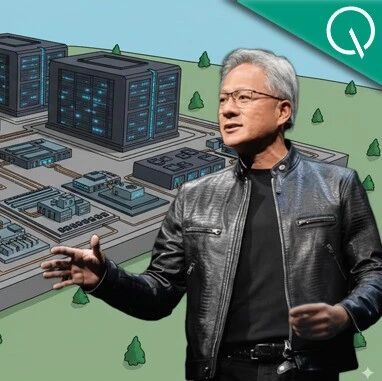
Core Viewpoint - Nvidia's venture arm NVentures has invested in Commonwealth Fusion Systems (CFS), a nuclear fusion startup, participating in a recent funding round of $863 million, indicating a strong belief in the future of nuclear fusion energy [1][2][3]. Group 1: Investment and Funding - CFS has raised approximately $3 billion since its inception, accounting for one-third of the total funding in the global fusion energy sector [4]. - The latest funding round follows a previous $1.8 billion Series B round completed in 2021 [4]. - Other investors in this round include Khosla Ventures, Alphabet (Google's parent company), and several sovereign wealth funds and investment banks [2]. Group 2: Technological Advancements - CFS is developing a compact and cost-effective tokamak fusion reactor using revolutionary high-temperature superconductors (HTS) co-developed with MIT [7]. - The reactor employs rare earth barium copper oxide (REBCO) materials to generate the world's strongest magnetic fields, allowing for effective confinement of high-temperature plasma in a smaller volume than traditional designs [7]. Group 3: Project Timeline and Goals - CFS plans to construct the world's first grid-scale fusion power plant in Virginia, expected to be operational in the early 2030s [8]. - The company aims to achieve operational status for its fusion power plant, generating 400 megawatts of electricity within a few years [9]. - The prototype reactor named Sparc is under construction in the Boston area, with plans to achieve scientific breakeven by 2027 [9][10]. - If successful, CFS intends to begin building its commercial-scale power plant, Arc, in Virginia around 2027 or 2028 [11]. Group 4: Industry Trends and Competitors - The nuclear fusion sector is gaining traction among tech giants, with Google increasing its investment in CFS and signing a power purchase agreement for 200 megawatts from Arc [15][16]. - Other companies like Microsoft and Amazon are also making significant investments in nuclear energy, with Microsoft planning to restart the Three Mile Island nuclear plant and Amazon supporting the construction of small modular reactors [20][21].


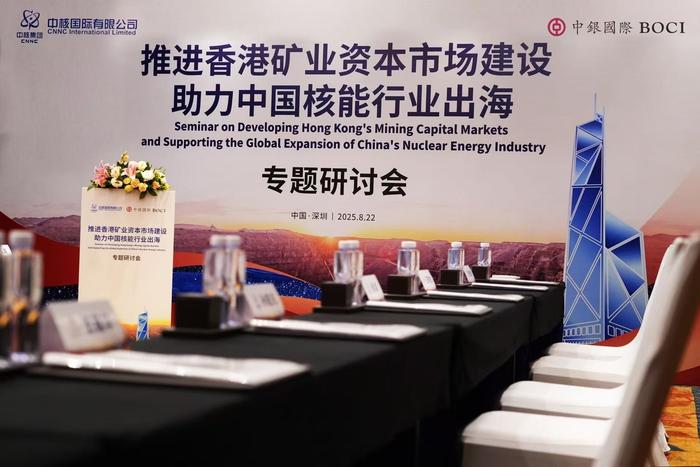
中银国际与中核国际联合举办专题研讨会
Ren Min Wang· 2025-08-29 06:22
Core Insights - The seminar held by BOC International and China Nuclear International focused on enhancing the international financing capabilities of China's nuclear energy industry through the Hong Kong capital market, aligning with the national "dual carbon" goals and energy transition trends [1][3]. Group 1: Industry Opportunities - Nuclear power is recognized as a safe, clean, and efficient energy source, presenting significant development opportunities amid profound changes in global energy security [3]. - Hong Kong's unique advantages as an international financial center can assist China's nuclear energy sector in expanding overseas resources and enhancing global influence [3]. Group 2: Financing Strategies - BOC International has been tracking global uranium industry dynamics since 2018 and has successfully completed equity financing projects in the uranium sector, accumulating extensive experience in overseas mining financing and mergers and acquisitions [3][4]. - Financial institutions can design diverse financing products such as equity placements, convertible bonds, and domestic and foreign bonds tailored to the characteristics of the nuclear energy industry, supporting state-owned enterprises like China Nuclear International in expanding financing channels and attracting international investors [4]. Group 3: Collaboration and Future Plans - The seminar served as a platform for BOC International and China Nuclear International to strengthen collaboration, aiming to secure more support for the Chinese nuclear energy industry in the Hong Kong capital market [4]. - Discussions included overseas regulatory environments, risk management for foreign projects, and capital market development, emphasizing the need for a robust support system for the sustainable and healthy development of China's nuclear energy sector [4].