电池制造

Search documents
董事长专访 | 豪鹏科技潘党育:破解“不可能三角” 做“AI端侧能源引领者”
Sou Hu Cai Jing· 2025-12-16 00:13
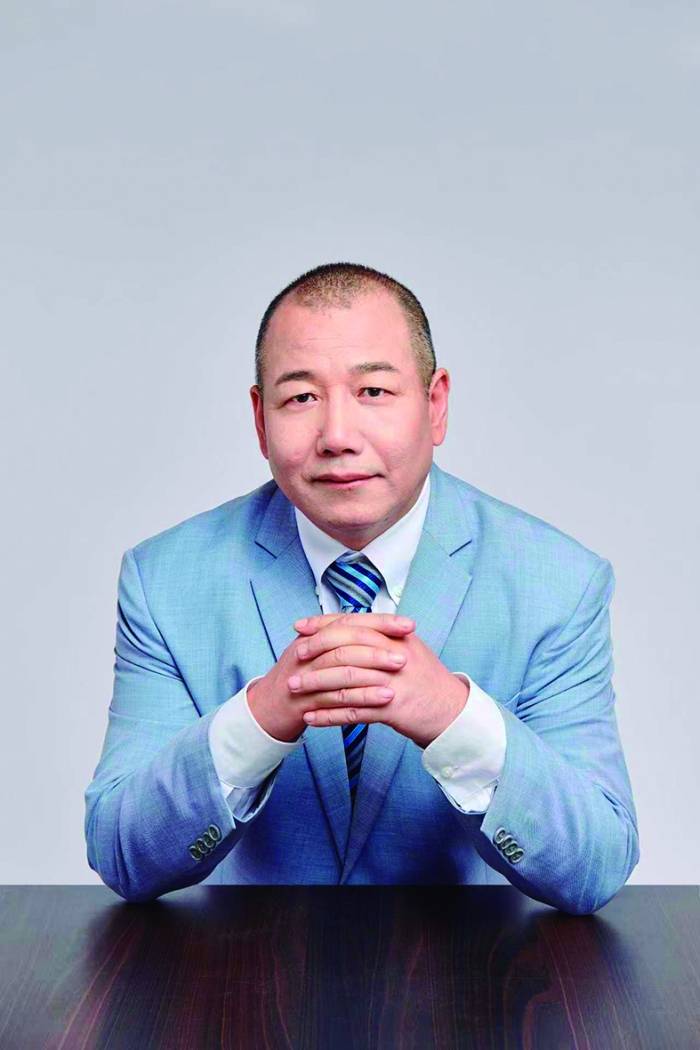
Core Insights - Haopeng Technology, led by Chairman Pan Dangyu, adheres to a business philosophy focused on long-term value through R&D rather than short-term market share or price wars [3][4] - The company is transitioning from a traditional consumer battery manufacturer to an "AI Edge Energy Leader," responding to the demands of AI-driven products [4][5] Group 1: Strategic Transition - Under the "All in AI" strategy, Haopeng Technology is completing a significant transformation towards becoming an "AI Edge Energy Leader" [4] - The company identified three years ago that AI is reshaping product forms, leading to a strategic direction that aligns with the AI wave [4] - The rise of innovative hardware such as AI PCs, AI glasses, and robots is creating unprecedented demands for energy solutions [4][5] Group 2: Energy Solutions Development - Haopeng Technology is developing comprehensive energy solutions that address the core pain points of AI edge devices, focusing on energy density, endurance, and fast charging [5][6] - The company is enhancing its production capabilities with flexible upgrades to existing lines to meet the high technical requirements of AI terminals [5] - By 2025, Haopeng Technology aims to mark the year as the "shipping year" for its AI business, with expected rapid growth in 2026 [5] Group 3: Solid-State Battery Innovations - The company is accelerating its layout in solid-state battery technology to address the "impossible triangle" of safety, performance, and size for AI terminals [6][7] - Haopeng Technology has achieved significant advancements in solid-state battery research, focusing on interface stability and energy density [7][8] - The solid-state battery development is expected to enter trial production in 2026, aligning with the pre-research of new AI products from terminal brands [7][8]

中科院固态电池百亿独角兽冲刺IPO
2 1 Shi Ji Jing Ji Bao Dao· 2025-12-15 23:47
Core Viewpoint - Beijing Weilan New Energy Technology Co., Ltd. (Weilan New Energy) has officially launched its listing guidance, aiming to become the "first stock of solid-state batteries" if successful in entering the capital market [1] Company Overview - Weilan New Energy focuses on the research and production of solid-state batteries and is a spin-off from the Chinese Academy of Sciences [1] - The company was co-founded by Yu Huigen, Chen Liqian, and Li Hong, and has rapidly emerged as a strong competitor in the solid-state battery sector within less than ten years [1][3] - As of June 26, 2023, Weilan New Energy was valued at 18.5 billion yuan, ranking 455th on the "2025 Global Unicorn List" [1] Production and Product Lines - The company has established production bases in Beijing, Jiangsu, and Zhejiang, with plans to expand capacity in Shandong and Guangdong [1] - Weilan's product lines include high energy density power cells and energy storage cells, with deliveries made to various automotive manufacturers and energy storage companies [1][10] Key Personnel - Chen Liqian, known as the "Father of Lithium Batteries," plays a crucial role in the company and holds 2.81% of its shares [3] - Yu Huigen, the chairman and general manager, is the second-largest shareholder with 10.43% of the shares, controlling 29.25% of the company through various holdings [4] - Li Hong, a researcher at the Chinese Academy of Sciences, holds 3.67% of the shares and has significant contributions to the development of high-capacity silicon anode materials [5] Investment and Shareholders - Weilan New Energy has attracted investments from 48 notable shareholders, including NIO, Huawei, and Xiaomi [6] - The largest shareholder is Hefei Blue Mile Venture Capital, which holds 14.96% of the company, linked to NIO Capital [6] - The company has completed six rounds of financing, with a valuation of 15.7 billion yuan in November 2022 and a valuation of 18.5 billion yuan in 2025 [7] Industry Position and Collaborations - Weilan's products cover three main areas: power batteries for electric vehicles, energy storage, and low-altitude economy [8] - The company has established partnerships with several A-share listed companies, including Enjie and Huayou Cobalt, for the supply of key materials [10] - Recent collaborations include a joint release of a new generation solid-state battery pack with BASF, which eliminates flammable liquid electrolytes [10] Market Outlook - The company is expected to achieve market application and scale production of its semi-solid-state batteries by 2026, while full-scale solid-state battery deployment may take until after 2030 [11]
185亿固态电池独角兽冲刺IPO,背靠中科院、中国锂电之父,华为蔚来小米都投了
21世纪经济报道· 2025-12-15 13:38
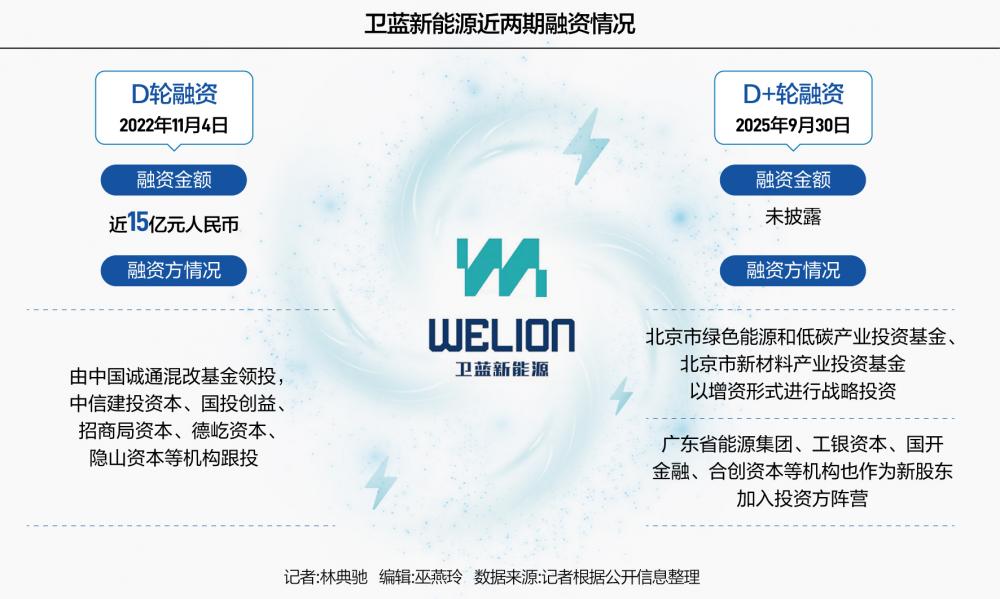
记者丨 林典驰 编辑丨孙超逸 近期,固态电池独角兽北京卫蓝新能源科技股份有限公司(简称卫蓝新能源)正式启动上市辅 导, 若此次成功登陆资本市场,卫蓝新能源有望成为"固态电池第一股" 。 卫蓝新能源专注研发、生产固态电池,是中国科学院物理研究所固态电池产学研孵化企业,由 俞会根、陈立泉、李泓共同创立。 今年6月26日,《2025全球独角兽榜》发布,卫蓝新能源以185亿元的估值位列榜单第455位。 目前,公司已在北京房山、江苏溧阳、浙江湖州布局生产基地,并计划在山东淄博、广东珠海 拓展新产能。产品线覆盖高能量密度动力电芯、储能电芯等专用电芯,目前相关产品已向多家 整车厂商、储能企业和海外客户实现交付。 在"中国锂电之父"陈立泉院士的引领下,成立不足十年的卫蓝新能源迅速崛起为固态电池赛道 的有力竞争者。 背靠中科院物理所深厚科研底蕴,并吸引蔚来、华为、小米等48家重量级股 东加持 ,这家独角兽企业正加速推动固态电池实现规模化落地。 团队由"中国锂电之父"领衔 卫蓝新能源成立至今不到10年,但公司技术背景浓厚,有着"中国锂电之父"之称的中国工程院 院士陈立泉从中发挥着重要作用,陈立泉持有公司2.81%的股份。 资料显 ...
隆基绿能成立新材料科技公司,含半导体相关业务
Qi Cha Cha· 2025-12-15 06:17
Core Viewpoint - Longi Green Energy has established a new materials technology company, indicating a strategic expansion into semiconductor-related businesses [1] Group 1: Company Overview - Longi Leye (Xi'an) New Materials Technology Co., Ltd. has been founded with a registered capital of 20 million yuan [1] - The company is wholly owned by Longi Green Energy through indirect holdings [1] Group 2: Business Scope - The business scope includes battery manufacturing, research and development of electronic specialty materials, manufacturing of semiconductor device-specific equipment, and sales of electronic components and electromechanical assembly equipment [1]

电商卖车不能仅靠缝缝补补
Zhong Guo Qi Che Bao Wang· 2025-12-15 02:42
Core Viewpoint - The automotive industry is facing challenges in the transition to online car sales, highlighted by customer complaints regarding service quality and transparency in the recent launch of the "National Good Car" Aion UT super by JD, GAC Group, and CATL [1][3]. Group 1: Customer Complaints and Response - Customers raised three main issues: unprofessional sales staff unable to accurately respond to inquiries, unclear rental electric vehicle terms with mileage limits, and restrictions on invoice issuance locations affecting subsidy eligibility [4]. - In response, the companies held a face-to-face meeting with customers and introduced four service upgrades, including a service package worth 2,600 yuan, a mileage increment package, broader invoice issuance, and improved return policies [4]. Group 2: Historical Context of Online Car Sales - Previous attempts at online car sales by major companies faced challenges due to consumer preference for in-person experiences and issues with transparency and service quality, leading to failures in initiatives like Yiche Mall and SAIC's Chexiang [3]. - The recent marketing efforts by JD and partners initially generated excitement but were quickly overshadowed by delivery-related complaints, indicating ongoing difficulties in the online car sales model [3]. Group 3: Emerging Consumer Issues - New consumer pitfalls in the automotive sector include the mixing of battery suppliers in electric vehicles, leading to inconsistencies in product quality without clear communication to buyers [6]. - Marketing exaggerations regarding advanced driving features have also misled consumers, creating a gap between expectations and actual vehicle capabilities [7]. Group 4: Consumer Rights and Legal Framework - Consumers are encouraged to be vigilant about their rights when purchasing vehicles online, as the complexity of automotive products and the sales process can lead to misunderstandings and potential exploitation [12]. - Legal protections exist under consumer rights laws, allowing consumers to seek recourse for false advertising and unfair contract terms, although the unique nature of automotive sales complicates the application of standard return policies [13][14].




五天两次涨停板,广汽全固态电池中试产线成色几何?
2 1 Shi Ji Jing Ji Bao Dao· 2025-12-14 14:45
Core Viewpoint - The all-solid-state battery (ASSB) industry is poised for a significant breakthrough in 2025, driven by technological advancements and strong market interest, highlighted by the IPO of Weilan New Energy and the establishment of pilot production lines by major automotive manufacturers [1][2][3]. Industry Developments - Weilan New Energy's IPO has attracted notable investors, achieving a valuation of 18.5 billion yuan, positioning it as a potential leader in the ASSB market [1]. - GAC Group has established the first pilot production line for large-capacity ASSBs in China, marking a critical step towards integrating ASSBs into their vehicles by 2026 [1]. - In October, several companies, including Chery and Sunwoda, announced advancements in ASSB technology, with Chery showcasing a module with an energy density of 600 Wh/kg and Sunwoda planning to build a pilot line with a capacity of 0.2 GWh [2]. Market Reactions - The stock market responded positively to GAC's announcements, with significant price increases observed within a short period, indicating strong investor confidence in the ASSB sector [1]. Technical Advantages - ASSBs are considered the "ultimate form" of batteries, offering double the energy density compared to liquid lithium batteries, enabling electric vehicles to exceed 1000 km in range and significantly reducing fire risks associated with liquid electrolytes [3]. - ASSBs also promise faster charging times, potentially 2 to 3 times quicker than traditional batteries, and improved safety due to the absence of flammable liquid electrolytes [3][9]. Technical Challenges - Despite the optimism, industry leaders like Elon Musk and CATL's chairman have expressed skepticism about the current maturity of ASSB technology, suggesting it is still in the early stages of development [4]. - Key technical hurdles include finding suitable solid electrolyte materials, addressing solid-solid interface contact issues, and improving ion transport efficiency within the solid-state structure [10][11]. GAC's Innovations - GAC has developed a high-performance sulfide solid electrolyte membrane and implemented innovative manufacturing techniques to enhance the performance and reduce interface resistance in ASSBs [11]. - The company claims to have achieved an ion conductivity of over 10 mS/cm, positioning itself competitively within the industry [11]. Industry Comparisons - A comparison of various companies' ASSB developments shows that GAC is currently the only company meeting both the criteria of producing large-capacity batteries (60 Ah) and establishing a pilot production line [21][22]. - Other companies, such as CATL and BYD, are also progressing in ASSB technology but have not yet reached the same milestones as GAC [21]. Future Outlook - The commercial viability of ASSBs remains uncertain, with high production costs and low yield rates posing significant challenges. Current estimates suggest that ASSBs may not achieve widespread commercial use until 2030 or later [22][23]. - The industry is advised to approach the commercialization of ASSBs with caution, as the path to mass production is fraught with technical and economic challenges [23].
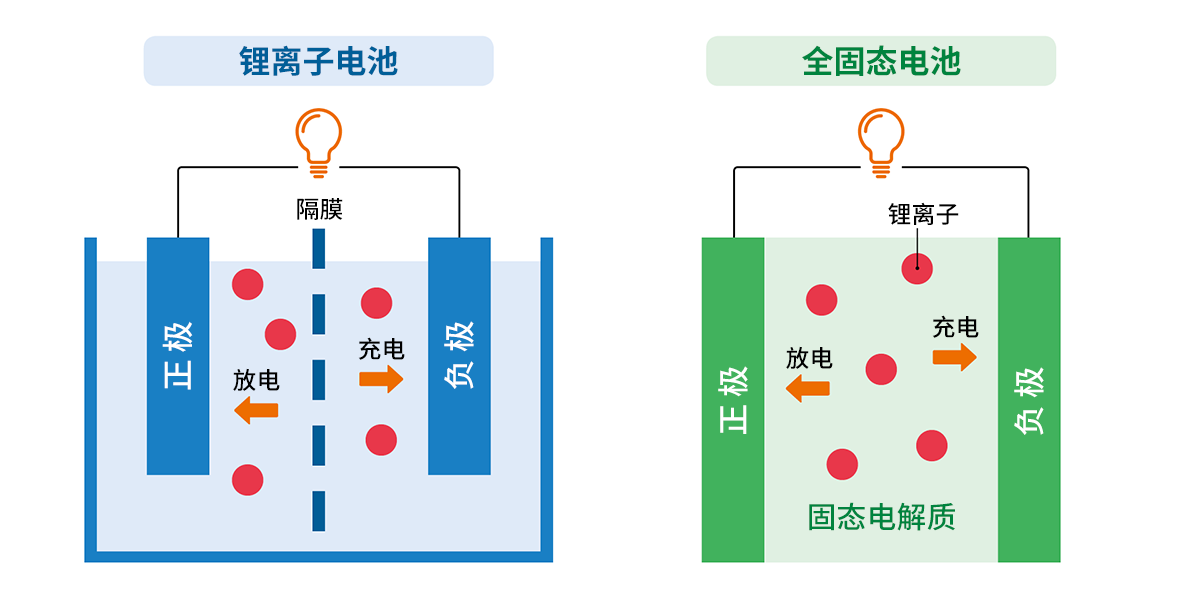
吉利7100万放大验证,奇瑞安瓦获商用车1GWh:固态电池再迎实质进展
高工锂电· 2025-12-13 09:54
摘要 固态电池亟需场景跑通——没有真实工况与大容量验证,制造窗口、寿命与一致性都无法收敛。 在固态电池赛道沉寂一段时间后,吉利近期用一项"工程化动作"把话题重新拉回现实: 旗下浙江绿色智行科创有限公司启动2026—2027年度固态电池电芯研发物料招标。 反过来,只有把电池放进足够苛刻且足够真实的使用场景,让大容量样件在稳定性、阻抗与寿命上 形成可复现的数据闭环,成本才有机会从"不可控的试制成本"变成"可优化的制造成本"。 上周,另一条来自奇瑞体系的消息把固态电池推向"场景绑定":北美商用车企业Horizon Motors 披露与奇瑞汽车达成固态电池合作,将获得1GWh固态电池产能,用于Class 3–8零排放专用卡车 的量产部署,电池由奇瑞旗下安瓦新能源提供。 Horizon所描述的落地场景包括箱式货车、清扫车、冷藏车与市政车辆等高频运营车型,并强调该 类车队对续航与可靠性要求更高。 安瓦此前已对外披露其"新型固态"产线进展: 报道显示,安瓦在芜湖的GWh级产线首批工程样件于2025年7月下线,设计产能1.25GWh,并提 及样件通过GB38031-2025相关测试口径。 该公司产线集成涂布、复合、热封等工序 ...

中马打造共建“一带一路”区域“样板间” 新兴领域合作方兴未艾
2 1 Shi Ji Jing Ji Bao Dao· 2025-12-13 01:01
编者按: 东盟是中国周边外交优先方向和高质量共建"一带一路"重点地区。随着中国—东盟自贸区3.0版升级议 定书签署,双方产业链与供应链正加速融合,为区域发展注入新动能。2025年11月,《21世纪经济报 道》记者深入马来西亚、泰国等东南亚国家,围绕新能源汽车、智能家电、数字基建、人工智能等重点 领域,实地走访工业园区、企业及相关机构,近距离观察产业动态、记录中资出海足迹、感知两地人文 交汇,讲述中国与东盟共赢故事。 马来西亚总理安瓦尔在展望中马合作时就重点提到技术领域,称马来西亚对数字技术、人工智能和半导 体领域抱有极大兴趣,还需要提升劳动力水平。"我们希望中国能给予马来西亚年轻人更多的机会,接 触中国的技术和培训。" 中马务实合作硕果累累 自2013年中国提出共建"一带一路"倡议以来,马来西亚是最早响应该倡议的国家之一,成为共建"一带 一路"早期收获最丰硕的国家之一,突出表现在基础设施建设不断升级、中马双边贸易规模持续扩大 等。 今年11月下旬,21世纪经济报道记者前往马来西亚,实地调研两国共建"一带一路"倡议下的成果。记者 在现场看到,一方面,中马有系统地推进共建"一带一路"的旗舰项目马来西亚东海岸铁路等 ...
江苏久中电池科技有限公司成立 注册资本1000万人民币
Sou Hu Cai Jing· 2025-12-12 23:20
天眼查App显示,近日,江苏久中电池科技有限公司成立,法定代表人为郑忠,注册资本1000万人民 币,经营范围为一般项目:电池制造;电池销售;电池零配件生产;电池零配件销售;蓄电池租赁;发 电机及发电机组销售;电子元器件批发;电子元器件与机电组件设备销售;机动车充电销售;电车销 售;电动自行车销售;五金产品批发;橡胶制品销售;高品质合成橡胶销售;塑料制品销售;化工产品 销售(不含许可类化工产品);有色金属合金销售;货物进出口;技术进出口;进出口代理(除依法须 经批准的项目外,凭营业执照依法自主开展经营活动)。 ...
锂电产业链周记 | 固态电池独角兽启动A股创业板IPO进程 德加能源宣布电池产品将涨价15%
Xin Lang Cai Jing· 2025-12-12 15:18
12月8日,比亚迪(002594.SZ)旗下电池制造商弗迪电池官微宣布,于近日与哆啦好运新能源物流公司(下 称哆啦好运)正式签署战略合作协议,双方将围绕新能源商用车动力电池及智慧物流领域展开深度合 作,联合打造各种场景下的综合物流解决方案。哆啦好运为国内智慧物流新能源生态服务商,聚焦大宗 物流场景,具备新能源重卡全链路服务能力,为新能源商用车及配套产业提供落地场景支撑。 硅固态电池公司Blue Current完成超8000万美元融资 12月8日,美国硅弹性复合固态电池制造商Blue Current宣布完成超8000万美元(约合5.6亿元人民币)D轮 融资。本轮融资由亚马逊领投,Koch Disruptive Technologies(KDT)等公司参投。声明称,此次融资将加 速Blue Current硅复合电池平台的商业化进程。Blue Current成立于2014年,总部位于加州海沃德,专注 于开发硅弹性复合固态电池技术,其产品适用领域为电动汽车、消费电子、医疗设备等。 LG新能源获梅赛德斯-奔驰近百亿元电池订单 来源:智通财经 智通财经记者 | 高菁 锂电产业链本周大事: 弗迪电池与哆啦好运新能源物流公司 ...