
量子科技

Search documents
让科技萌芽长成产业大树!2025浦江创新论坛多维度赋能未来产业
证券时报· 2025-09-21 13:05
Core Viewpoint - The 2025 Pujiang Innovation Forum emphasizes the importance of building an open and cooperative global technology community, showcasing cutting-edge technological achievements and establishing platforms for collaboration in future industries [1][3]. Group 1: Technological Innovations and Platforms - The forum launched over 10,000 technology demands with total investment exceeding 20 billion yuan, covering more than 20 frontier fields including artificial intelligence, quantum technology, and biomedicine [1]. - A series of cutting-edge technologies were presented, including quantum technology, controllable nuclear fusion, brain-machine interfaces, and silicon photonics, highlighting the integration of basic research and industrial application [3][4]. - The Shanghai Silicon Photonics Concept Verification Platform was initiated to validate the feasibility of silicon photonics technologies from research to application, supporting innovation and market readiness [5]. Group 2: Technology Transfer and Support Services - The 2025 InnoMatch Technology Transfer Conference introduced a "1+3+365" model for continuous engagement, providing a platform for technology demand and supply [7]. - The "Transformation Clinic" service at the conference offered one-on-one consultations with experts in technology transfer, intellectual property, and investment, facilitating the commercialization of scientific achievements [8]. - Since its inception, the "Transformation Clinic" has connected 374 projects, with over 50 selected for commercial potential, resulting in 19 projects entering the validation stage and 10 projects forming companies, with a total contract value exceeding 300 million yuan [8]. Group 3: Investment Ecosystem Development - The 2025 WeStart Venture Capital Conference aimed to create a platform for connecting entrepreneurial projects with capital, fostering a hard technology investment ecosystem [10]. - The Shanghai Future Industry Fund and the Shanghai Future Point Community are collaborating to explore new paradigms in innovation, including laboratory companies and silicon-based organizations [10]. - Shanghai Guotou Company is focusing on key sectors such as controllable nuclear fusion and artificial intelligence, leveraging a fund matrix to mobilize over 120 billion yuan in social capital, achieving a 6.3 times amplification effect [11].


上海进一步加大对量子人工智能前沿领域的布局
Zhong Guo Xin Wen Wang· 2025-09-21 10:04
Core Insights - The establishment of the Shanghai Quantum Artificial Intelligence Consortium and the Shanghai Quantum Technology Equipment Industry Innovation Alliance aims to enhance the development of quantum AI in alignment with national strategies for quantum technology [1][3] - The Shanghai Quantum Computing Ten Major Application Scenarios cover various sectors including electricity, finance, logistics, new energy, and biomedicine, showcasing the potential of quantum computing in addressing complex problems and driving industrial transformation [2] Group 1: Consortium and Alliance Formation - The Shanghai Quantum Artificial Intelligence Consortium consists of 12 research institutions and several leading companies in the quantum field, focusing on interdisciplinary research and talent cultivation over the next five years [1] - The Shanghai Quantum Technology Equipment Industry Innovation Alliance, led by the Shanghai Academy of Sciences, aims to enhance the competitiveness of China's quantum technology equipment through collaboration and standardization [1] Group 2: Application Scenarios and Industry Impact - The application scenarios highlight the need for quantum technology to address challenges in the electric grid, particularly with the increasing integration of renewable energy sources [2] - Shanghai Electric is actively researching the optimization potential of quantum computing to improve the safety and efficiency of the urban power grid [2] Group 3: Forum Discussions and Strategic Importance - The forum featured experts from various countries discussing the intersection of AI and quantum computing, identifying key scientific challenges and opportunities for development in quantum AI [3] - The Ministry of Science and Technology emphasizes the strategic significance of "quantum intelligence" and is working to create a favorable environment for development and collaboration in this field [3] Group 4: Research Achievements - Fudan University has established several cutting-edge platforms in the quantum field, achieving breakthroughs in areas such as atomic arrays and efficient quantum instruction sets [4]
2025 InnoMatch技术转移大会上海开幕
Guo Ji Jin Rong Bao· 2025-09-21 08:16
Core Insights - The 2025 InnoMatch Technology Transfer Conference opened in Shanghai, focusing on demand-driven innovation, talent discovery, and capital empowerment [1] - The conference introduced a "1+3+365" model for continuous engagement, showcasing over 10,000 technology demands and attracting investments exceeding 20 billion yuan [1][2] - The event highlighted significant innovations in various fields, including artificial intelligence, quantum technology, and biomedicine, with over 2,000 job postings and 1,728 technology transfer results presented [1][2] Group 1: Demand and Innovation - The conference featured over 120 industry-leading companies showcasing open innovation platforms and demand scenarios, including a major project for electric vehicle charging stations in Kazakhstan [2] - Notable innovations included brain-computer interface chips and advanced medical technologies from Shanghai Jiao Tong University and Huashan Hospital, demonstrating international leadership in their respective fields [2][4] - The event emphasized the integration of innovation chains, industry chains, capital chains, and talent chains in the Yangtze River Delta region [2] Group 2: Concept Validation and Standards - Six high-quality concept validation platforms were launched, providing comprehensive services to reduce risks and costs associated with future industry innovations [3] - The conference announced the release of the "2025 Annual Report on the Transformation of Scientific and Technological Achievements" and the "2025 Shanghai White Paper on the Transformation of Scientific and Technological Achievements" [5] - New standards for evaluating scientific achievements in medical institutions and guidelines for concept validation institutions were introduced to promote a sustainable ecosystem for technology transfer [5] Group 3: Market Engagement and Collaboration - The conference featured a "Technology Trading Market" where innovative products were promoted, attracting significant audience engagement [6] - The "Transformation Clinic" provided one-on-one consultations for over 374 projects, with 19 projects entering the pre-concept validation stage and contracts exceeding 300 million yuan [6] - The event is part of Shanghai's strategy to enhance its global influence in technology innovation and create a modern industrial system [6][7]
从科幻到现实!创新成果频频上“新” 中国驶入量子时代“快车道”
Yang Shi Wang· 2025-09-21 03:35
Core Insights - Quantum technology is a crucial development direction for China's future industries and is expected to revolutionize emerging technologies [1] - The field of quantum technology encompasses quantum computing, quantum communication, and quantum measurement, leveraging principles of quantum mechanics [3][24] Group 1: Quantum Technology Developments - China has made significant strides in quantum technology, with the "Zu Chongzhi III" quantum computing prototype set to be launched in March 2025, establishing a new global record in superconducting quantum computing [4] - A research team successfully constructed a 300-kilometer quantum direct communication network, demonstrating the feasibility of long-distance secure communication [6] - The "Nano-Photon Factory" was developed in July 2025, producing a new type of quantum entangled light source with a fidelity of 99.4%, laying a critical foundation for advanced quantum applications [6] Group 2: Quantum Sensing and Measurement - Quantum sensors, which are atomic-scale devices, can measure extremely small quantities, such as the temperature of individual cells or molecules, thus opening the door to the microscopic world [9] - Quantum precision measurement can detect magnetic field signals that are 10 billion times smaller than Earth's magnetic field, and portable gravity meters can identify mineral deposits deep underground [10][11] - The core team from Guoyi Quantum aims to transform research outcomes in quantum measurement into products, achieving breakthroughs in domestic high-end scientific instruments [11][13] Group 3: Quantum Applications in Power Systems - The world's first quantum application demonstration substation in Hefei operates 85 types of quantum technology-related products, enhancing the safety and efficiency of power transmission [18][20] - Quantum communication ensures secure transmission of electrical information, while quantum computing performs dynamic data calculations between power nodes [20] - Future developments in quantum sensors are expected to replace traditional measurement devices, significantly reducing size and costs, which is crucial for power systems [23] Group 4: Industry Growth and Policy Support - Hefei is a key hub for quantum technology innovation, with plans to develop the quantum industry into a 100 billion yuan industry cluster by 2027 [35] - Various cities, including Beijing, Shanghai, and Shenzhen, are accelerating the practical application of quantum technology through supportive policies and the establishment of innovation incubators [37]
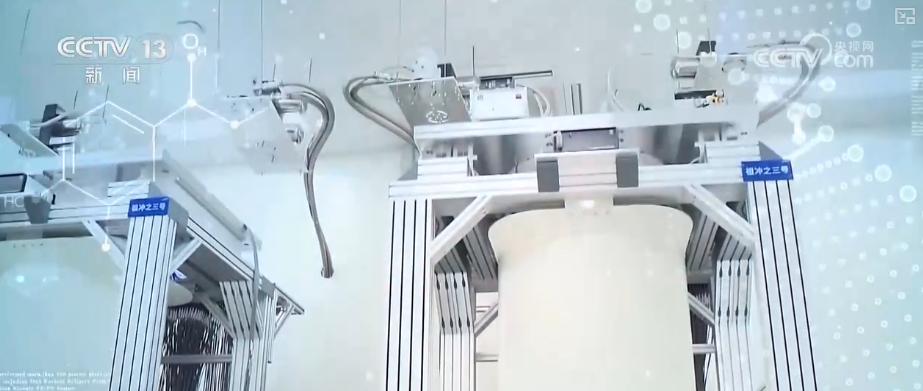
什么是量子科技?都有哪些应用?一文了解→
Yang Shi Xin Wen Ke Hu Duan· 2025-09-21 00:50
Core Insights - Quantum technology is a crucial development direction for China's future industries and is expected to disrupt emerging technologies [1] - Recent innovations in China's quantum technology field have led to significant advancements in quantum computing, communication, and measurement [1][3] Group 1: Quantum Technology Innovations - China's self-developed quantum computing prototype "Zu Chongzhi III" was launched in March 2025, setting a new global record for superconducting quantum computing superiority [3] - In July 2025, a research team created a "nano-photon factory," producing a new type of quantum entangled light source with a fidelity of 99.4%, laying a critical foundation for advanced quantum applications [3] - A 300-kilometer quantum direct communication network has been successfully established, demonstrating the feasibility of long-distance high-security communication [5] Group 2: Quantum Sensing and Measurement - The world's smallest quantum sensor, located at the tip of a diamond probe with a diameter of only 500 nanometers, is capable of measuring at the atomic level [8] - Quantum sensors can measure extremely small entities, such as individual cells and molecules, which traditional sensors cannot detect [10] - The core team from Guoyi Quantum aims to transform quantum measurement research into products, achieving breakthroughs in China's high-end scientific instruments [12] Group 3: Applications in Power and Energy - The world's first quantum application demonstration substation in Hefei integrates 85 types of quantum technology-related products, enhancing operational safety and efficiency [14] - Quantum communication ensures secure transmission of electrical information, while quantum computing performs dynamic data calculations between power nodes [15] - Quantum sensors in the substation can monitor multiple parameters with high sensitivity, significantly improving the reliability of the power system [17][19] Group 4: Quantum Computing Capabilities - China's highest bit-count superconducting quantum computer has 504 qubits, potentially exceeding the computational power of all current supercomputers [21] - Quantum computing can revolutionize fields such as meteorological prediction and information security, with ongoing explorations proving its feasibility [23] - New quantum communication technologies are being tested to ensure absolute information security, with future applications in global secure information networks [25] Group 5: Industry Development and Policy Support - The Ministry of Industry and Information Technology and other departments have proposed plans to develop future industries, including quantum technology, aiming to create a hundred billion-level industrial cluster by 2027 [26] - Hefei is recognized as a key innovation hub for quantum technology, with specialized parks and clusters being established [26] - Other cities like Beijing and Shanghai are also accelerating the practical application of quantum technology through various initiatives and policies [26]
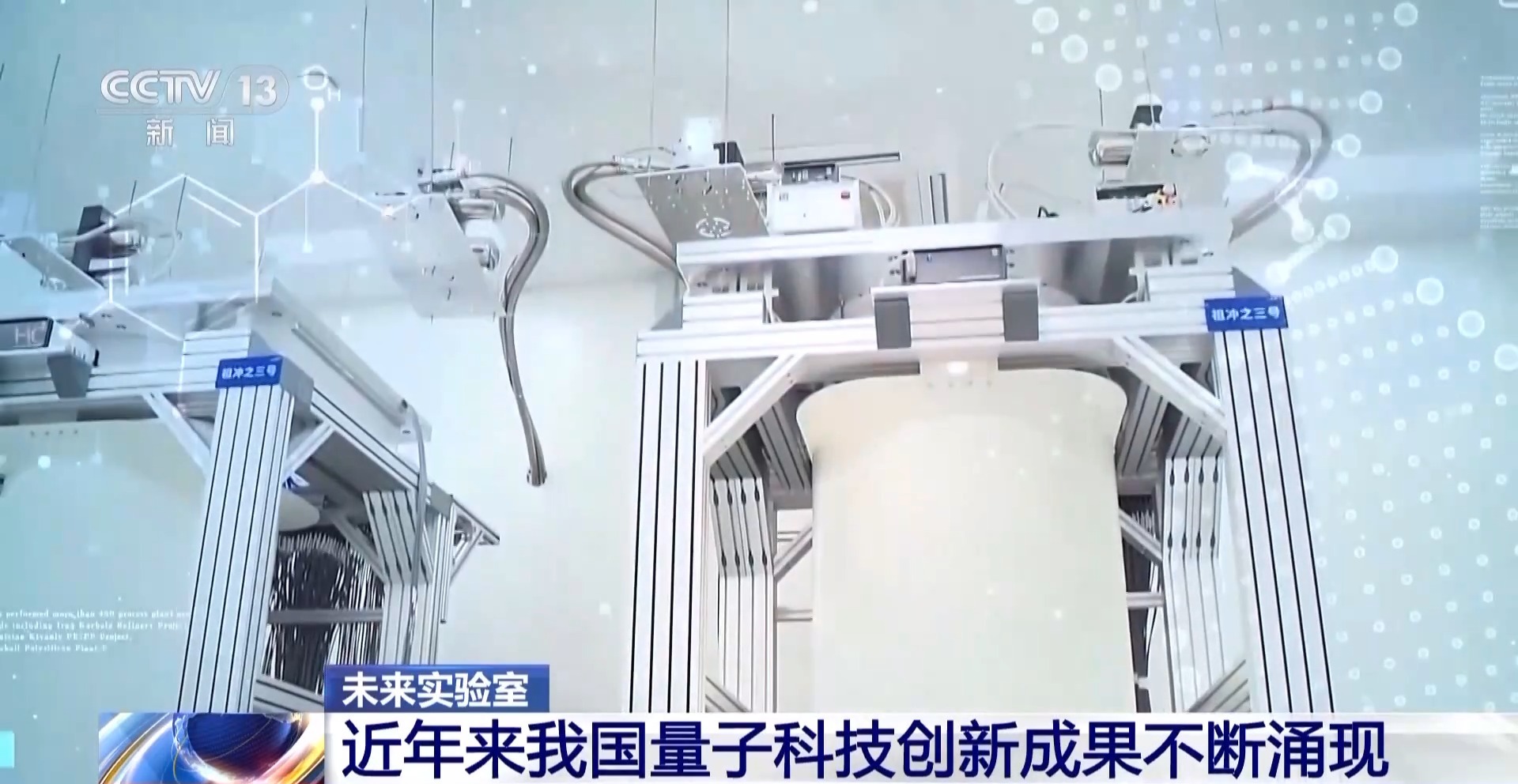
什么是量子科技?都有哪些应用?一文了解
Yang Shi Wang· 2025-09-20 22:33
Core Insights - Quantum technology is a crucial development direction for China's future industries and is expected to revolutionize emerging technologies [1] - China has made significant strides in quantum technology, including the development of the "Zu Chongzhi No. 3" quantum computing prototype and a new type of quantum entangled light source with a fidelity of 99.4% [1][2] Group 1: Quantum Technology Innovations - Quantum technology is based on the principles of quantum mechanics, enabling advancements in quantum computing, communication, and measurement [1] - The "Zu Chongzhi No. 3" quantum computing prototype was launched in March 2025, setting a new global record for superconducting quantum computing superiority [1] - A research team created a "nano-photon factory" in July 2025, producing a new quantum entangled light source with a fidelity of 99.4%, laying the groundwork for advanced quantum applications [1] Group 2: Quantum Communication and Measurement - A 300-kilometer quantum direct communication network was successfully constructed, demonstrating the feasibility of long-distance high-security communication [2] - Quantum sensors, which are capable of measuring at the atomic level, are being developed to provide precise measurements for applications in various fields [3][4] - The world's smallest quantum sensor, with a scale of 0.5 nanometers, is being utilized for measuring extremely small entities, such as individual cells and molecules [4][5] Group 3: Practical Applications and Industry Development - The world's first quantum application demonstration substation in Hefei integrates 85 types of quantum technology-related products, enhancing operational safety and efficiency [8][9] - Quantum sensors are expected to replace many traditional measurement devices, significantly improving accuracy and reducing costs in power systems [9] - The quantum computing capabilities demonstrated in Hefei, with a quantum computer featuring 504 qubits, show potential for applications in weather prediction and information security [11][12] Group 4: National and Regional Strategies - The Chinese government is promoting the development of future industries, including quantum technology, through various policies and initiatives [13][14] - Hefei is recognized as a key hub for quantum technology innovation, with plans to develop a hundred billion-level industry cluster by 2027 [14] - Other cities like Beijing, Shanghai, and Shenzhen are also advancing their quantum technology initiatives, focusing on practical applications and industry cultivation [14]
中国研发人员总量世界第一 综合创新能力升至世界第十位
Xin Hua She· 2025-09-19 01:13
Core Insights - The Chinese government announced that total R&D investment will exceed 3.6 trillion yuan in 2024, representing a 48% increase from 2020 [1] - R&D intensity is projected to reach 2.68%, surpassing the average level of EU countries [1] - China ranks first in the world in terms of total R&D personnel [1] R&D and Innovation Growth - China's basic research level has improved, with national strategic scientific capabilities expanding [1] - The country's comprehensive innovation capability ranking has risen from 14th in 2020 to 10th in 2024 [1] - During the "14th Five-Year Plan" period, the integration of technological and industrial innovation has accelerated [1] High-Tech Manufacturing and Economic Contributions - The added value of high-tech manufacturing industries above designated size has increased by 42% compared to the end of the "13th Five-Year Plan" [1] - The contribution of the "three new" economies to GDP has reached 18% [1] - Corporate R&D investment accounts for over 77% of total R&D spending [1] Growth in High-Tech Enterprises - The number of high-tech enterprises has exceeded 500,000, an increase of 83% since 2020 [1] - Significant original achievements have been made in fields such as quantum technology, life sciences, and material sciences [1] Notable Achievements in Technology - Major accomplishments include the normalization of operations for the "Tianhe" space station, the successful lunar sample return of "Chang'e 6," and large-scale applications of 5G technology [1] - China maintains the world's leading position in the production and sales of new energy vehicles [1]
“十五五”通信行业前瞻:政策推动科技创新四大方向赋能新质
Yin He Zheng Quan· 2025-09-18 11:17
Investment Rating - The report maintains a "Recommended" rating for the communication industry [4] Core Viewpoints - The report emphasizes that the communication industry is experiencing a transformation driven by policy support for technological innovation, focusing on four key areas that empower new productivity [4][6] - The "14th Five-Year Plan" has elevated the strategic positioning of technology from innovation-driven development to self-reliance and strength in technology, with the "15th Five-Year Plan" expected to further enhance this focus [6][8] - The communication industry's main growth drivers include optimized capital expenditure structures from operators and the rapid development of artificial intelligence, which is expected to enhance the industry's growth potential [6][11] Summary by Sections 1. Technology-Driven Development and New Productivity Foundation - The report outlines that the continuity of policy support for technology innovation is crucial for the development of new productivity, which is seen as a strategic initiative to overcome development bottlenecks [8][11] - The focus on new productivity emphasizes the integration of strategic emerging industries and future industries, aiming for high-quality development driven by innovation [11][12] 2. Communication Industry Overview - The communication industry is witnessing significant improvements in revenue quality, with a notable increase in inventory levels indicating tighter supply of raw materials [15][58] - Revenue growth in the light communication sector is leading, while the cyclical impact of operator capital expenditure is gradually weakening [58] 3. Operators: Quality Improvement and Innovation - Operators are undergoing continuous reforms, enhancing their roles as "chain leaders" in the industry, with a focus on strategic emerging industries [6][58] - The capital expenditure is increasingly directed towards intelligent computing, which is expected to generate new growth [6][58] 4. Intelligent Computing Demand Growth - The intelligent computing sector is experiencing a significant rise, with the hardware and software capabilities expected to improve substantially [6][58] - The light communication chain is benefiting from this growth, indicating a bright future for the industry [6][58] 5. Satellite Internet: Accelerated Network Development - The report notes that the development of low-orbit satellite networks is accelerating, supported by government policies [6][58] - The satellite industry chain is thriving, with active advancements in space computing [6][58] 6. Quantum Technology: Ongoing Exploration - The quantum information industry is showing high growth potential, with the market size for quantum communication expected to continue rising [6][58] 7. Investment Recommendations - The report suggests focusing on operators, light communication, quantum communication, and satellite internet sectors as key investment areas [6][58]
IonQ(IONQ.US)盘前走高 收购Vector Atomic加速布局量子传感市场
智通财经网· 2025-09-17 12:55
Core Insights - IonQ has signed a definitive agreement to acquire Vector Atomic, which has secured over $200 million in government contracts and provides critical support for U.S. federal and national security applications [1] - This all-stock transaction is expected to accelerate IonQ's entry into the quantum sensing market and strengthen its full-stack quantum platform [1] - The acquisition will add all 76 employees of Vector Atomic to IonQ, enhancing its world-class quantum talent pool [1] - IonQ's stock rose nearly 3% in pre-market trading following the announcement [1] Strategic Acquisitions - IonQ has undertaken a series of strategic acquisitions, including ID Quantique, Lightsynq, Capella, and Oxford Ionics, to build end-to-end quantum computing and networking solutions [1] - These acquisitions aim to enhance IonQ's capabilities in quantum infrastructure and networking [1] - IonQ is also expanding its ecosystem through collaborations and memorandums of understanding with leading institutions such as Japan's AIST and G-QuAT, and South Korea's KISTI [1]

创新图强 实干兴川——四川省党员干部在经济发展一线勇挑重担
Si Chuan Ri Bao· 2025-09-17 00:17
Group 1 - Sichuan's agricultural sector benefits from high-standard farmland improvement projects, increasing rice yield by approximately 120 kg per mu [1] - The province's GDP grew by 5.6% year-on-year in the first half of the year, reflecting effective economic development strategies [1] Group 2 - The Tianfu Jiangxi Laboratory in Chengdu has developed 17 convertible products and signed technology service contracts exceeding 50 million yuan, showcasing successful technology commercialization [2] - The local government actively supports the integration of research and industry, facilitating connections between technology companies and government investment platforms [2] Group 3 - Sichuan is enhancing the capabilities of local officials through specialized training programs focused on economic development and construction [3] - The province's technology departments are fostering collaboration with companies to identify practical applications for emerging technologies [4] Group 4 - The Chengdu High-tech Zone is witnessing growth in digital cultural and creative industries, with significant contributions from local government support [5] - The local government has streamlined the approval process for gaming companies, reducing the average initial review time for game licenses by nearly two months [5] Group 5 - The establishment of the Chuan-Yu Gaozhu New Area represents a collaborative effort between Sichuan and Chongqing, focusing on cross-province development [6][7] - The new area's management model emphasizes efficiency and cost-effectiveness, benefiting local businesses through reduced operational costs [7] Group 6 - The local government is implementing innovative project approval processes to expedite the entry of new businesses into the market [8] - The focus on supporting startups is expected to foster long-term growth and development in the region [8] Group 7 - The agricultural sector in Sichuan is actively promoting high-quality rice production techniques, resulting in yields that exceed the city average by over 30% [9][10] - The local government is committed to enhancing the capabilities of its workforce to drive economic growth and development [11][12]