
信用评级

Search documents
TransUnion (NYSE:TRU) FY Conference Transcript
2025-11-11 20:12
Summary of TransUnion Conference Call Company Overview - **Company**: TransUnion - **Industry**: Consumer information and credit reporting - **Position**: One of the big three global credit bureaus Key Points and Arguments Growth Performance - TransUnion experienced a growth of **3%** in both **2022** and **2023**, which was below expectations due to high inflation and rising interest rates creating uncertainty in the lending market [2][3] - The company anticipates a return to **high single-digit to low double-digit growth** in **2024** and **2025**, driven by stability in the U.S. financial services sector and increased lending volumes [3][4] Market Dynamics - The lending environment is stabilizing, with notable growth in **consumer lending**, particularly with fintechs [3][4] - Emerging verticals such as technology, retail, e-commerce, and media are contributing to growth, with a **7.5%** increase reported in the third quarter [5][6] Consumer Health - The consumer market is characterized as relatively healthy, with consumers meeting financial obligations due to employment and real wage growth [8] - Delinquency rates have returned to normal levels, with **40%** of consumers classified as super prime and **14%** as subprime, indicating a bifurcation in consumer credit quality [9][10] Product Diversification - TransUnion is diversifying its product offerings beyond credit reporting, focusing on identity resolution, marketing, and fraud prevention [15][16] - The **Trusted Call Solutions** product is expected to generate **$150 million** in revenue by **2025**, up from **$50 million** three years ago [16] Pricing Strategy - Pricing growth in U.S. markets is driven by a **5%** increase, primarily in the mortgage sector due to FICO pricing changes [17][18] - TransUnion plans to pass on costs associated with FICO's pricing changes to customers, which may impact margins but protect revenue [22][23] Future Outlook - The company is undergoing a transformation program aimed at optimizing its organizational model and modernizing technology, with an expected **$35 million** in cost savings by the end of **2025** [30][31] - The acquisition of a larger stake in a Mexican credit bureau is pending regulatory approval, which will allow TransUnion to consolidate revenue and EBITDA [34] AI and Innovation - TransUnion views itself as an **AI winner**, leveraging machine learning for product innovation and operational efficiencies, particularly in fraud detection [35][36] Risk Management - The company emphasizes the uniqueness of its data assets, which are critical for creating comprehensive consumer profiles and differentiating from competitors [38] Additional Important Insights - The company is cautiously optimistic about the stability of the lending market and is closely monitoring consumer behavior and market dynamics [11][12] - The transition to VantageScore in the mortgage market is contingent on changes by GSEs and lenders, which are expected to occur by early **2026** [24][25] This summary encapsulates the key insights from the TransUnion conference call, highlighting the company's growth trajectory, market dynamics, consumer health, product diversification, pricing strategy, future outlook, and innovation efforts.

标普上调加纳信用评级
Shang Wu Bu Wang Zhan· 2025-11-11 15:59
Core Insights - Ghana's sovereign credit rating was upgraded from CCC+/C to B-/B by S&P Global Ratings, marking a significant milestone in the country's recovery process after nearly three years of international debt defaults [1][2] Economic Factors - Ghana's foreign exchange reserves surged to nearly $11 billion by the end of 2025, representing about 9% of GDP, up from $6.8 billion at the end of 2024 [1] - Strong export performance, particularly in gold and cocoa, which account for over 60% of commodity exports, has positively impacted the economy, with the cedi appreciating approximately 30% against the dollar this year [1] - The new government has implemented structural reforms aimed at achieving a primary surplus of 1.5% of GDP annually and a long-term plan to reduce public debt to 45% of GDP by 2034 [1] Investment Implications - The upgrade to B-/B with a stable outlook signals a significant reduction in recent default risk, boosting investor confidence and making Ghanaian assets, especially restructured new euro-denominated bonds, more attractive to global investors [2] - Lower borrowing costs are anticipated as the risk premium decreases, which should benefit both the government and the domestic private sector in future external borrowing [2] - The upgrade also acknowledges the support from the International Monetary Fund (IMF) for Ghana's fiscal consolidation efforts under a $3 billion extended credit facility, effective until May 31, 2026 [2] Economic Growth - Ghana's economy experienced a growth rate of 6.3% in the first half of 2025, indicating a positive growth momentum [2] Risks - Despite the positive outlook, there are still risks, including high debt servicing costs projected to account for 20% of revenue by 2028 and unresolved debt restructuring negotiations with commercial and official creditors regarding $5 billion in remaining debt [2]
GDOT Gears Up to Report Q3 Earnings: Here's What You Should Know
ZACKS· 2025-11-06 18:41
Core Insights - Green Dot Corporation (GDOT) is scheduled to report its third-quarter 2025 results on November 10, with a history of earnings surprises, having surpassed the Zacks Consensus Estimate in three of the last four quarters, averaging an earnings surprise of 42.1% [1] Q3 Expectations - The consensus estimate for GDOT's revenues is $487.3 million, reflecting a 20% year-over-year growth, primarily driven by robust performance in B2B services, which is expected to generate revenues of $363.2 million, indicating a 31% year-over-year increase [2] - The bottom line is projected to show a loss of 11 cents per share, contrasting with earnings of 13 cents in the same quarter last year [3] Earnings Prediction Model - The current model does not indicate a definitive prediction for an earnings beat for GDOT, as it has an Earnings ESP of 0.00% and a Zacks Rank of 4 (Sell), which does not support the likelihood of an earnings surprise [4][8]



武汉企业3A认证办理指南
Sou Hu Cai Jing· 2025-11-06 07:44
Core Points - Corporate credit has become an intangible asset, with the 3A certification representing the highest level of corporate credit rating, serving as a "golden business card" that demonstrates a company's integrity and strength [1] - Obtaining this certification enhances brand image and provides significant advantages in bidding, financing, and policy support for companies in Wuhan [1] Summary of Key Processes - The process of obtaining 3A certification is systematic and involves several core steps: 1. Initial consultation and qualification pre-assessment with a professional credit service agency [4] 2. Submission of the application and preparation of necessary materials, which is the foundation for the evaluation [4] 3. Formal evaluation by a third-party agency, where professional credit assessors conduct thorough analysis, verification, and investigation [4] - After passing the evaluation, the credit rating committee determines the final rating, which is publicly announced for feedback before issuing a credit rating plaque and certificate, typically valid for three years [5] Recommended Channels for Certification - Companies should avoid unverified agencies and must choose legitimate, authoritative third-party credit service institutions for the 3A certification process [6] - Options for obtaining certification in Wuhan include: 1. Professional credit service companies that are registered and possess the necessary qualifications [6] 2. Relevant industry associations that collaborate with credit institutions to provide unified credit evaluation services for their members [7] 3. Rating agencies recommended by commercial banks or financial institutions during loan applications [7] Importance of Certification - Obtaining 3A certification is a crucial step for companies towards standardization and enhancing core competitiveness, with the process being rigorous yet manageable for companies that operate with integrity and prepare their materials adequately [8] - The certification process has become increasingly digital and convenient, exemplified by the use of the "Like Ke Ban" mini-program, which streamlines the 3A certification process and saves time and communication costs for companies [8]

【金融街发布】中债资信推出信用债估值与科创债主题指数两项成果 助力债券市场高质量发展
Zhong Guo Jin Rong Xin Xi Wang· 2025-11-05 07:58
Core Insights - Zhongdai Credit Rating Co., Ltd. has made significant breakthroughs in third-party valuation and pricing in the credit bond market, as evidenced by the release of the credit bond valuation and the Sci-Tech bond thematic index at the "Financial Street Forum - 2025 Financial Street Voice" [1] - The company aims to enhance the bond market's service to the real economy and financial market development through innovative valuation methods and diversified investment tools [1][2] Group 1: Valuation Methodology - The "value-based" valuation method implemented by Zhongdai Credit Rating adheres to regulatory requirements, prioritizing market data for actively traded bonds while carefully assessing the reasonableness of price information for less active bonds [2] - The company has achieved comprehensive coverage of credit bond valuations, publishing 92 yield curves daily that cover over 37,000 individual bonds [2] - An innovative primary issuance pricing method has been introduced to address the pricing challenges faced by newly issuing enterprises [2] Group 2: Index Products - Following the launch of the "Technology Board" in May 2025, Zhongdai Credit Rating quickly introduced the Sci-Tech bond thematic index, which focuses on newly issued technology innovation bonds and provides a representative market reference [2] - The index aims to enhance the market pricing capability, resilience, and liquidity of the "Technology Board," thereby reducing financing costs for Sci-Tech enterprises and promoting healthy development in China's bond market [2] Group 3: Future Directions - Zhongdai Credit Rating plans to further advance its valuation and pricing services, exploring applications in self-regulation, investment trading, and issuance pricing to contribute to a more transparent, efficient, and robust bond market [3]

达利欧:美国经济全靠1%顶尖员工,60%劳动者处境困难
财富FORTUNE· 2025-11-03 13:05
Core Insights - The article discusses the complex state of the U.S. economy, highlighting significant internal disparities that prevent it from being viewed as a cohesive whole [1][3] - Ray Dalio emphasizes the increasing dependence on a narrow sector, particularly the technology industry, which is driving economic dynamics [1][3] - The article aligns with Moody's report indicating that 22 states are experiencing economic contraction, while only 16 states are growing [3] Economic Disparities - Dalio points out that only about 3 million people, or 1% of the U.S. population, are leading the artificial intelligence sector, which is crucial for global reliance [1] - In contrast, 60% of the U.S. population is part of a lower-income group, facing significant challenges such as low literacy levels [1][3] - The article cites that 54% of American adults read at a sixth-grade level or below, which contributes to low productivity [3] Wealth Inequality - Since 2020, wealth has increasingly concentrated at the top of the income ladder, with the bottom 50% of the population seeing a wealth increase of just over $2 trillion, while the top 0.1% nearly doubled their assets from $12.17 trillion to $22.33 trillion [4][5] - Dalio raises concerns about the implications of wealth redistribution, suggesting it is a complex issue that significantly impacts national productivity [5] Consumer Spending Dynamics - The article notes that the highest income group has increased spending to approximately 170 basis points, while middle and lower-income groups have only increased spending to about 120 basis points [5] - The overall U.S. economy is largely driven by the affluent class, and any shift in their spending behavior could pose significant risks to economic stability [5]

地方政府与城投企业债务风险研究报告:辽宁篇
Lian He Zi Xin· 2025-10-29 11:25
1. Report Industry Investment Rating No information about the report industry investment rating is provided in the given content. 2. Core Views of the Report - Liaoning Province, an important old industrial base in China, has its economy and per - capita GDP at the middle level in the country. It faces good development opportunities with the continuous promotion of the Northeast Revitalization policy. However, it has a relatively heavy government debt burden [4][6]. - There is significant imbalance in economic and fiscal development among cities in Liaoning Province. Dalian and Shenyang are the "dual - cores" with stronger economic and fiscal strength, while other cities show relatively weaker performance [22][29]. - The number of bond - issuing urban investment enterprises in Liaoning Province is small, mainly at the municipal level. In 2024, the number and scale of bond issuances by urban investment enterprises increased year - on - year, but there was a decline in the first eight months of 2025. Some cities have large net outflows of bond financing, and the debt burden and short - term solvency of urban investment enterprises vary among different cities [5][47]. 3. Summary by Relevant Catalogs I. Liaoning Province's Economic and Fiscal Strength (1) Regional Characteristics and Economic Development - Liaoning is rich in mineral resources and has a basically formed comprehensive transportation system. It is the only province in Northeast China that is both coastal and border - adjacent. The tertiary industry is the main driving force for economic growth [6]. - In 2024, the permanent population decreased by 270,000 compared with the end of the previous year, and the urbanization rate was 74.18%, 0.67 percentage points higher than the previous year and higher than the national average [7]. - In 2024, the GDP was 3.26127 trillion yuan, with a growth rate of 5.1%. The per - capita GDP was 78,200 yuan, both ranking 16th in the country. Fixed - asset investment increased by 5.3% year - on - year. From January to June 2025, the GDP was 1.57079 trillion yuan, with a year - on - year growth of 4.7% [7]. - The Northeast Revitalization policy is beneficial to regional development, and Liaoning Province's economic strength is expected to be further enhanced [12]. (2) Fiscal Strength and Debt Situation - In 2024, the general public budget revenue was 290.694 billion yuan, ranking 18th in the country, with a same - caliber growth of 5.5%. The tax revenue accounted for 63.25%, and the fiscal self - sufficiency rate was 42.38% [15]. - In 2024, the government - funded income was 50.125 billion yuan, a year - on - year increase of 11.7%. The superior subsidy income accounted for 52.86% of the local comprehensive financial resources, making a large contribution [15][16]. - In 2024, the local government debt ratio and debt - to - GDP ratio were 193.92% and 42.99% respectively, ranking 23rd and 15th in the country, indicating a relatively heavy government debt burden [19]. II. Economic and Fiscal Strength of Cities in Liaoning Province (1) Economic Situation of Cities - The economic strength of cities in Liaoning Province varies greatly. Dalian and Shenyang, as the "dual - cores", have much stronger economic strength than other cities. In 2024, the GDP of Dalian and Shenyang accounted for 29.18% and 27.68% of the provincial total respectively [22][29]. - The economic development levels of cities are clearly differentiated. In 2024, the GDP growth rates of cities ranged from 3.8% to 5.9%. In the first half of 2025, the GDP growth rate of Fushun was 7.0%, ranking first in the province [29]. - In 2024, the per - capita GDP of Dalian, Panjin, and Shenyang exceeded the national average, with Dalian having the highest and Tieling the lowest [29]. (2) Fiscal Strength and Government Debt of Cities - The fiscal strength of cities in Liaoning Province is significantly differentiated. In 2024, the general public budget revenues of Shenyang and Dalian were 82.558 billion yuan and 77.477 billion yuan respectively, leading other cities. The tax revenue proportion of most cities decreased year - on - year, and the fiscal self - sufficiency rates of most cities were below 60% [32][33]. - In 2024, the government - funded income of Shenyang and Dalian was relatively large, with 17.164 billion yuan and 14.080 billion yuan respectively. Except for some cities, the government - funded income of other cities increased [36]. - In 2024, the superior subsidy income was an important source of local comprehensive financial resources. Only Shenyang and Dalian had comprehensive fiscal revenues exceeding 100 billion yuan [37]. - By the end of 2024, except for Fushun, the government debt balances of other cities increased. The government debt ratios of most cities rose, and the debt ratios of Panjin and Yingkou were relatively high, around 500% [40]. III. Debt - paying Ability of Urban Investment Enterprises in Liaoning Province (1) Overview of Urban Investment Enterprises - As of the end of August 2025, there were 10 urban investment enterprises with outstanding bonds in Liaoning Province. The number of bond - issuing enterprises was small, mainly at the municipal level, with AA+ as the main credit rating. Dalian had relatively more urban investment enterprises [42][44]. (2) Bond Issuance of Urban Investment Enterprises - In 2024, the number and scale of bond issuances by urban investment enterprises in Liaoning Province increased year - on - year. Shenyang had a large net inflow of bond financing, while Tieling and Huludao had large net outflows. From January to August 2025, the bond issuance scale decreased year - on - year. Dalian and Shenyang had large net inflows of bond financing, while Yingkou had a large net outflow [47]. (3) Debt - paying Ability Analysis of Urban Investment Enterprises - By the end of 2024, the debt structure of most bond - issuing urban investment enterprises in cities of Liaoning Province was mainly indirect financing. Except for Shenyang, the total debt scale of other cities decreased. Shenyang had a relatively heavy debt burden [52]. - Most cities had weak short - term solvency indicators. Shenyang and Dalian had net inflows of cash from financing activities, while other cities had net outflows [52]. (4) Support and Guarantee Ability of Local Fiscal Revenues for the Debt of Bond - issuing Urban Investment Enterprises - In Dalian and Shenyang, the scale of "total debt of bond - issuing urban investment enterprises + local government debt" exceeded 300 billion yuan. In Yingkou, Panjin, and Anshan, it exceeded 100 billion yuan. The ratio of "total debt of bond - issuing urban investment enterprises + local government debt" to "local comprehensive financial resources" in all cities exceeded 200%, with Yingkou and Panjin exceeding 400% [60].
法国央行行长警告:若不解决预算和债务问题,法国经济将面临“逐渐窒息”风险
Huan Qiu Shi Bao· 2025-10-28 22:39
Core Insights - The Governor of the French Central Bank, François Villeroy de Galhau, warned that without addressing budget and debt issues, the French economy faces the risk of "gradual suffocation" [1][2] - Moody's recently downgraded France's sovereign rating outlook, reflecting concerns over political instability and severe budget issues [1][2] Economic Situation - France's public debt has reached €3.3 trillion, with the government deficit projected to be 5.4% of GDP in 2025, only slightly improved from 5.8% the previous year [1] - The IMF forecasts that if no policy adjustments are made, the deficit rate could expand to 5.8% in 2026 and further to 6.2% in 2027 and 2028, remaining around 6.3% in 2029 and 2030 [1] Interest Rates and Investment - Higher interest rates have increased borrowing costs for households and businesses, leading to a shift in funding away from priority areas like defense and environmental initiatives [2] - Economic uncertainty has resulted in increased savings among the public and delayed investments by companies [2] Taxation and Fiscal Policy - The controversial "Zuckerman tax" (wealth tax) is being discussed as a measure for achieving "tax fairness" in the 2026 budget [2] - The wealthiest individuals are perceived to benefit from tax reductions through various mechanisms, prompting calls for reform [2] Future Outlook - Despite the negative outlook from rating agencies, the French Central Bank Governor expressed confidence in a moderate growth rate of approximately 0.7% for 2025, indicating that France remains a leading country in job creation in Europe over the past decade [2]
270万亿美债压顶,利息超3.5倍,美国信用崩盘,失业率飙升陷危机
Sou Hu Cai Jing· 2025-10-28 10:55
Core Points - The U.S. national debt has surpassed $38 trillion, increasing at an alarming rate of $70,000 per second, which translates to approximately 490,000 RMB, highlighting a severe fiscal crisis [2][4] - Each American now bears an average debt of over $110,000, equivalent to about 770,000 RMB, indicating a significant burden on households [4] - The U.S. credit rating has been downgraded from "AA" to "AA-" due to deteriorating public finances and governance standards, making future borrowing more challenging [5][7] Group 1: Government Shutdown - The government shutdown, which has lasted for 23 days, is primarily due to a failure to pass a temporary funding bill, with both parties at an impasse over healthcare and social welfare issues [9][10] - Historical context shows that a previous shutdown in 2018 resulted in a $11 billion loss to the economy, raising concerns about the current situation's potential economic impact [7][10] - The shutdown has led to rising unemployment rates, particularly affecting sectors like dining and transportation, with predictions of unemployment reaching 4.3% if the deadlock continues [10][12] Group 2: Fiscal Policy and Debt Management - The U.S. fiscal situation is exacerbated by a recent tax bill that extends previous tax cuts and increases defense spending, potentially adding over $3 trillion to the national debt [15][17] - Current spending on Social Security, Medicare, and debt interest accounts for 73% of federal expenditures, leaving little room for growth or development [13] - The reliance on hedge funds for debt purchases poses risks, as these funds are driven by short-term profits and may sell off U.S. debt in times of market volatility, leading to liquidity crises [19][21] Group 3: Political and Economic Implications - The ongoing political stalemate has resulted in a lack of effective fiscal decision-making, with 81% of voters expressing concern over the debt issue, further eroding investor confidence [23][24] - The U.S. is facing a cycle of high interest rates, unmanageable social welfare spending, and ineffective tax policies, which could lead to a significant crisis if not addressed [24] - The current trajectory suggests that by 2030, the debt-to-GDP ratio could reach 140%, with interest payments alone projected to total $14 trillion over the next decade, severely limiting fiscal flexibility [21][24]
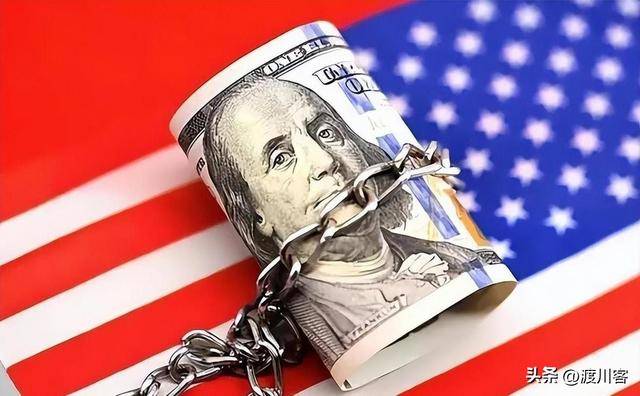
美国信用再遭下调!停摆僵局超三周,欧洲评级机构出手
Jin Shi Shu Ju· 2025-10-27 06:14
Core Points - Scope Ratings has downgraded the U.S. sovereign credit rating by one notch to AA- due to ongoing public finance deterioration and declining governance standards [1][2] - The downgrade reflects increased risks in policy-making predictability and the ability of Congress to address structural fiscal challenges [1][2] - The U.S. has lost its last highest rating from the major credit agencies following Moody's downgrade in May, raising concerns about the fiscal path under the Trump administration [2] Summary by Sections Rating Downgrade - Scope Ratings has lowered the U.S. credit rating to AA-, which is three levels below its highest rating [1] - This downgrade is a result of the prolonged government spending deadlock in Washington, which has lasted over three weeks [1] Governance and Fiscal Concerns - The agency highlighted that weakened governance standards have reduced the predictability of U.S. policy-making and increased the risk of policy missteps [1] - The International Monetary Fund (IMF) predicts that the U.S. debt-to-GDP ratio will reach 140% in the next four years, an increase of 15 percentage points from 2025 [2] Industry Reactions - Moritz Kraemer, former chief sovereign ratings officer at S&P Global, praised Scope Ratings for their courageous and objective stance regarding the decline in U.S. governance standards [3]