医美

Search documents
主题形态学输出0227:水电等主题右侧突破
Huafu Securities· 2026-03-02 07:46
Core Insights - The report emphasizes the emergence of new investment themes, particularly in sectors such as hydropower, alternative sweeteners, and various materials, indicating a right-side breakout in these areas [4][9]. - It categorizes themes into four distinct patterns: right-side breakout, right-side trend, bottom stabilization, and bottom reversal, providing a structured approach to identifying investment opportunities [4][8]. Right-Side Breakout Themes - Newly identified themes include hydropower, alternative sweeteners, small metals, polycarbonate, titanium dioxide, organic silicon, phosphorus chemical industry, superhard materials, vanadium batteries, semiconductor materials, semiconductor equipment, MLCC, and LNG [4][9]. - The report lists specific indices that have shown a right-side breakout, with notable performance metrics such as a 7% two-day increase for the hydropower index and an 18% year-to-date increase for the alternative sweeteners index [9]. Right-Side Trend Themes - Ongoing trends include photovoltaic energy, POE film, and BC batteries, which have shown consistent performance over the past 20 days [11]. Bottom Stabilization Themes - Newly identified themes showing signs of bottom stabilization include trust-heavy investments and medical beauty sectors, with the trust-heavy index showing a 1% year-to-date increase [15]. Bottom Reversal Themes - The report highlights bottom reversal themes such as lithium hexafluorophosphate, lithium battery electrolytes, mobile phone batteries, and leading brands in the liquor industry, with the mobile battery index showing a 1% year-to-date increase [17].
节后消费行业展望-首席联合电话会
2026-03-01 17:23
Summary of Conference Call Records Industry Overview - **Consumer Sector**: The consumer sector, particularly mass dining and service consumption, continues to show a recovery trend. High-end consumption, including luxury goods and high-end jewelry, is performing even stronger, with some indicators exceeding expectations, reflecting a structural recovery in the consumer market [1][2]. Key Insights and Arguments - **Travel and Hospitality**: The travel chain significantly benefited from the longest Spring Festival in history, with hotel Average Daily Rate (ADR) increasing. Family travel demand is prominent, driven by the return home trend, quality scenic dining, and "reverse New Year" celebrations in first-tier cities [1][2]. - **Luxury Goods and Jewelry**: There is a clear differentiation in jewelry and luxury goods consumption, heavily influenced by high gold prices. Luxury goods consumption is relatively stronger, with high-end shopping district data exceeding expectations. The focus is on brand share improvement opportunities, as some brands are pressured by gold prices, creating structural opportunities for share changes [1][3]. - **Medical Aesthetics**: During the Spring Festival, medical aesthetics saw a double-digit increase in customer flow, although average prices were under pressure. Products like collagen water light and related offerings are expected to benefit from a robust pipeline and expanding market size. High-demand categories are likely to continue benefiting, necessitating tracking of certification rhythms and profit balance in the supply chain [1][3]. - **Cosmetics Sector**: The cosmetics sector is expected to see an upward trend around the March 8th node. Notable performance was observed in the China Resources system, particularly with the brand Mao Ge Ping. The investment strategy leans towards "momentum varieties" and "bottom stocks with share improvement," focusing on key companies [1][4]. Additional Important Insights - **Export Chain Dynamics**: The export chain is expected to see excess growth driven by "new products + new capacity deployment." The short-term key factor is the RMB exchange rate, which influences month-on-month changes. Companies with new capacity or product lines are prioritized for attention [2][4]. - **Tobacco Sector Changes**: The tobacco sector is undergoing significant changes due to adjustments in the international system by China National Tobacco. The removal of intermediaries in the domestic duty-free market is expected to enhance profits by approximately 3-5 percentage points [5]. - **Carbon Trading Opportunities**: The importance of carbon trading is increasing, driven by initiatives in Europe and the introduction of carbon tax mechanisms in domestic industries like steel and cement. Companies involved in carbon trading development, such as Yueyang Forest Paper and Yong'an Forestry, are worth monitoring for new business growth opportunities [6]. - **Pork Price Trends**: As of February 26, 2026, the average price of pork is approximately 10.7 CNY/kg, down 1 CNY from pre-Spring Festival levels. The market is expected to stabilize between 10.5-11.5 CNY/kg in the coming months, supported by potential state stockpiling and market entry by new players [10][11]. Investment Recommendations - **Consumer Sector**: Focus on the restaurant chain as a core direction, recommending companies like Anjiu and Yihai, while also considering those with accelerated store opening expectations. The snack sector remains promising, particularly in volume sales channels, with companies like Weilong and Salted Fish being highlighted for their investment value [14]. - **Medical Aesthetics and Cosmetics**: Companies with robust pipelines and market expansion potential should be closely monitored, particularly in the medical aesthetics sector [3][4]. This summary encapsulates the key points from the conference call records, providing insights into the consumer sector's recovery, investment opportunities, and market dynamics.
化妆品医美行业周报:38大促进行时,国货经典大单品合作超头主播-20260301
Shenwan Hongyuan Securities· 2026-03-01 14:14
Investment Rating - The report maintains a "Positive" outlook on the cosmetics and medical beauty industry [2] Core Insights - The cosmetics and medical beauty sector has underperformed the market, with the Shenwan Beauty Care Index declining by 0.9% from February 6 to February 27, 2026, which is 4.9 percentage points lower than the Shenwan A Index [4][5] - The 38th promotional event on Tmall is ongoing, featuring collaborations with top influencers and significant sales from domestic brands like Proya and Maogeping [10] - Huaxi Biological reported a net profit of 291 million yuan for 2025, a 67.03% increase year-on-year, indicating a positive strategic transformation [4] Summary by Sections Industry Performance - The Shenwan Cosmetics Index fell by 0.9%, underperforming the Shenwan A Index by 4.9 percentage points, while the Shenwan Personal Care Index rose by 2.8%, lagging behind the Shenwan A Index by 1.2 percentage points [4][5] Promotional Activities - The Tmall 38 Festival is a major promotional event, running for over two weeks, with significant participation from domestic brands and influencers [10] - Brands like Proya, Maogeping, and Betaini are collaborating on popular products, with sales performance to be analyzed post-event [10] Company Highlights - Huaxi Biological's net profit for 2025 is projected at 291 million yuan, a 67.03% increase year-on-year, with expectations for continued growth in 2026 [4] - The company is transitioning from an agency model to a multi-brand strategy in the sports nutrition sector, showing stable revenue growth from 1.447 billion yuan in 2023 to 1.609 billion yuan in the first three quarters of 2025 [11][12] Market Trends - The global beauty giant Cosmax reported a revenue of 2.39 trillion KRW (approximately 11.514 billion yuan) for 2025, a 10.7% year-on-year increase, driven by the K-Beauty trend [22][24] - The Chinese skincare market is projected to reach 271.2 billion yuan in 2024, with domestic brands gaining market share against international competitors [27][28]


商贸零售行业周报:老铺黄金调价幅度超预期,巩固品牌高端调性
KAIYUAN SECURITIES· 2026-03-01 08:24
Investment Rating - The industry investment rating is "Positive" (maintained) [1] Core Insights - The report highlights that the price adjustment of Laopu Gold exceeded expectations, reinforcing its high-end brand positioning. The price increase for most products is concentrated in the range of 20% to 30%, significantly higher than previous adjustments [5][27]. - The report emphasizes the shift in consumer demand towards self-wearing and aesthetic-driven purchases, suggesting that brands with differentiated product capabilities are likely to navigate price increases more smoothly [31][33]. Summary by Sections Industry Trends - The retail and social service indices reported a decline of 1.64% and an increase of 1.68% respectively during the week from February 24 to February 27, 2026. The retail index ranked 30th among 31 primary industries [7][16]. - The jewelry sector has shown the highest growth, with a year-to-date increase of 10.59% [19]. Investment Recommendations - Investment Theme 1: Focus on high-end gold and fashion jewelry brands, recommending Laopu Gold and Chaohongji, with beneficiaries including Liu Fu Group and Zhou Shengsheng [8][36]. - Investment Theme 2: Emphasize retail companies adapting to trends and AI-enabled cross-border e-commerce leaders, recommending Yonghui Supermarket and Aiyingshi [8][33]. - Investment Theme 3: Highlight domestic beauty brands that meet emotional value and safety ingredient innovations, recommending Maogeping and Pola [8][34]. - Investment Theme 4: Focus on differentiated medical beauty product manufacturers and leading medical beauty institutions, recommending Meilitiantian Medical Health and Aimeike [8][34]. Company-Specific Insights - Laopu Gold is expected to achieve a revenue of 123.54 billion CNY in FY2025H1, with a net profit of 22.68 billion CNY, reflecting a growth of 250.9% and 285.8% respectively [35]. - Chaohongji is projected to achieve a net profit of 4.36-5.33 billion CNY in 2025, with a growth rate of 125%-175% [35]. - Yonghui Supermarket is expected to report a net loss of 21.40 billion CNY in 2025, indicating challenges in its operational performance [35].
商贸零售行业周报:老铺黄金调价幅度超预期,巩固品牌高端调性-20260301
KAIYUAN SECURITIES· 2026-03-01 07:58
Investment Rating - The industry investment rating is "Positive" (maintained) [1] Core Insights - The report highlights that the price adjustment by Laopu Gold exceeded expectations, reinforcing its high-end brand positioning. The price increase for most products ranged from 20% to 30%, significantly higher than previous adjustments [5][27] - The report emphasizes the shift in consumer demand towards self-wearing and aesthetic-driven purchases, suggesting that brands with differentiated product offerings are likely to navigate price increases more smoothly [31] Summary by Sections Industry Trends - The retail and social service indices reported a decline of 1.64% and an increase of 1.68% respectively during the week from February 24 to February 27, 2026. The retail index ranked 30th among 31 primary industries [7][16] - The jewelry sector has shown the highest growth, with a year-to-date increase of 10.59% [19] Investment Recommendations - Investment Theme 1: Focus on high-end gold and fashion jewelry brands, recommending Laopu Gold and Chaohongji, with beneficiaries including Liu Fu Group and Zhou Shengsheng [8][33] - Investment Theme 2: Highlighting retail companies adapting to trends and AI-enabled cross-border e-commerce leaders, recommending Yonghui Supermarket and Aiyingshi [8][33] - Investment Theme 3: Emphasizing beauty brands that meet emotional value and safety ingredient innovation, recommending Maogeping and Pola [8][33] - Investment Theme 4: Focusing on differentiated medical beauty product manufacturers and leading medical beauty institutions, recommending Meilitiantian Medical Health and Aimeike [8][33] Company-Specific Insights - Laopu Gold reported a revenue of 12.354 billion yuan for the first half of FY2025, a year-on-year increase of 250.9%, with a net profit of 2.268 billion yuan, up 285.8% [35] - Chaohongji is expected to achieve a net profit of 436 to 533 million yuan in 2025, reflecting a growth of 125% to 175% [35] - Yonghui Supermarket is projected to have a net profit of -2.14 billion yuan in 2025, indicating a significant operational challenge [35] - Meilitiantian Medical Health anticipates a net profit growth of no less than 34% in 2025, showcasing strong resilience and potential for growth [43]



高层震荡不断,博雅生物陷整合困局
Guo Ji Jin Rong Bao· 2026-02-27 23:53
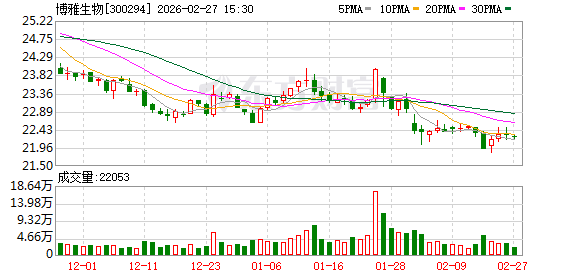
Core Viewpoint - Frequent personnel changes at Boya Bio (300294.SZ) have raised concerns, particularly following the resignation of President Ren Hui after only 10 months in office, coinciding with a significant profit warning for 2025 [2][4]. Group 1: Management Changes - Ren Hui submitted his resignation from multiple positions, including President and legal representative, due to work changes, and will not hold any position in the company post-resignation [2]. - Ren Hui's tenure was notably short, as he was appointed in May 2025 and resigned in February 2026, marking him as the shortest-serving president in the company's history [4]. - The company has experienced three major leadership changes since 2021, indicating ongoing instability in management and challenges in integrating with the parent company, China Resources [5]. Group 2: Financial Performance - Boya Bio expects a revenue increase for 2025, projecting between 19.08 billion to 21.69 billion yuan, representing a growth of 10% to 25% year-on-year, primarily due to the acquisition of Green Cross Hong Kong Holdings [7]. - Despite revenue growth, the company anticipates a significant decline in net profit for 2025, forecasting a range of 1.05 billion to 1.37 billion yuan, a decrease of 65.62% to 73.55% compared to the previous year [8]. - The company is also expected to report a net loss of 7.5 million to 15 million yuan after excluding non-recurring gains, contrasting sharply with a profit of 302 million yuan in the same period of 2024 [8]. Group 3: Reasons for Profit Decline - The decline in profit is attributed to two main factors: a failed acquisition in the aesthetic medicine sector leading to substantial impairment losses, and pressures on the core blood products business due to regulatory changes and increased competition [9][10]. - The acquisition of Green Cross resulted in approximately 300 million yuan in impairment losses due to a downturn in the market for aesthetic products, which was seen as a significant investment misjudgment [9]. - The blood products segment is facing challenges from policy changes, leading to reduced clinical prescription volumes and a decline in overall gross margins, with a reported gross margin of 53.01% in the first half of 2025, down 14.02 percentage points year-on-year [10].


王思聪开始“闷声搞实业”,能否救负债6000亿的万达?
Sou Hu Cai Jing· 2026-02-27 23:07
Core Viewpoint - Wang Sicong is actively establishing new companies, indicating a shift towards a more pragmatic approach in his business ventures, particularly in the medical beauty and catering industries [2][4][10]. Group 1: Company Establishments - Wang Sicong has founded Beijing Yuwu Catering Management Co., Ltd. with a registered capital of 1 million yuan, focusing on catering management and delivery services [2]. - He also co-founded Beijing Ningyue Medical Beauty Clinic with actors Qin Lan and Gan Wei, which has a similar registered capital of 1 million yuan [3]. - His recent investments reflect a trend towards smaller, more manageable enterprises compared to his previous high-profile investments [4][9]. Group 2: Investment Strategy Shift - Wang's investment strategy has transitioned from large-scale investments, such as his 20 billion yuan loss in Panda Entertainment, to smaller, more sustainable ventures in cash flow-positive sectors like catering and medical beauty [9][12]. - The shift is characterized by indirect holdings and lower registered capital, indicating a focus on cash flow and operational efficiency [9][10]. Group 3: Market Perception and Public Image - The establishment of these companies has generated public interest due to the contrast with Wang's previous high-profile lifestyle, portraying him as a more grounded and pragmatic entrepreneur [7][9]. - His involvement in familiar sectors like catering and medical beauty helps bridge the gap between his affluent background and the general public, reshaping perceptions of "rich second-generation" individuals [7][9]. Group 4: Family Business Dynamics - Wang Sicong's recent activities are interpreted as efforts to support his father, Wang Jianlin, amid significant financial challenges faced by Wanda Group, which has debts exceeding 600 billion yuan [10][11]. - The narrative surrounding Wang Sicong's potential succession of the family business has gained traction, especially as he takes on more visible roles in new ventures [10][11].


华熙生物,净利润增67.03%,转型升级重塑长期竞争力!
合成生物学与绿色生物制造· 2026-02-27 13:26
Core Viewpoint - Huaxi Biological's 2025 annual performance report indicates a significant transformation from scale-oriented growth to efficiency and quality-driven growth, highlighting a strategic shift in the medical beauty and functional skincare sectors [2][4]. Financial Performance - The company achieved total revenue of 4.217 billion yuan, a year-on-year decrease of 21.49% [2][3]. - The net profit attributable to shareholders was 291 million yuan, reflecting a year-on-year increase of 67.03% [2][3]. - Basic earnings per share increased to 0.61 yuan, up 69.44% from the previous year [3]. - Total assets at the end of the reporting period were 8.655 billion yuan, showing a slight decrease of 0.02% compared to the beginning of the year [3]. Operational Improvements - The improvement in operating performance is attributed to the optimization of business structure and resource allocation, along with a significant reduction in sales and management expenses [4]. - Sales expense ratio decreased by over 30%, while management expenses dropped by more than 10% year-on-year [4]. Strategic Initiatives - The company is focusing on a systematic transformation towards efficiency and quality growth, moving away from short-term scale expansion [4]. - Key initiatives include: 1. Organizational upgrades to a flatter and more agile structure to enhance decision-making efficiency [4]. 2. Strengthening supply chain management and optimizing inventory structure to allocate resources to core areas with long-term competitive advantages [4]. 3. Continued research in glycoscience and cell biology to enhance the industrialization of bioactive substances and regenerative materials [5]. 4. Implementation of digital and AI technologies in production, supply chain management, and internal operations to improve overall operational efficiency [5]. Long-term Vision - The profit growth in 2025 is viewed as a starting point for a longer-term strategic layout, emphasizing quality growth and technological innovation as key drivers for sustainable development [5].

医药生物行业双周报(2026/2/13-2026/2/26)-20260227
Dongguan Securities· 2026-02-27 12:26
Investment Rating - The report maintains a "Market Perform" rating for the pharmaceutical and biotechnology industry, indicating that the industry index is expected to perform within ±10% of the market index over the next six months [3][26]. Core Insights - The SW pharmaceutical and biotechnology industry underperformed the CSI 300 index, declining by 0.95% from February 13 to February 26, 2026, which is approximately 1.1 percentage points lower than the index [11]. - Most sub-sectors within the industry recorded positive returns during the same period, with "Other Biological Products" and "Hospitals" leading with increases of 2.42% and 1.80%, respectively. Conversely, "Medical R&D Outsourcing" and "Offline Pharmacies" saw declines of 3.80% and 0.65% [12][24]. - Approximately 52% of stocks in the industry reported positive returns, with the highest gain being 14.44% for Erkang Pharmaceutical, while the largest decline was 13.28% for Zexing Pharmaceutical-U [13][16]. - The overall industry valuation remained stable, with a Price-to-Earnings (PE) ratio of approximately 51.16 times as of February 26, 2026, which is 3.82 times higher than the CSI 300 index [18][26]. Summary by Sections 1. Market Review - The SW pharmaceutical and biotechnology industry underperformed the CSI 300 index, with a decline of 0.95% from February 13 to February 26, 2026 [11]. - Most sub-sectors recorded positive returns, with "Other Biological Products" and "Hospitals" leading the gains [12]. - About 52% of stocks in the industry achieved positive returns, with notable performances from Erkang Pharmaceutical and Zexing Pharmaceutical-U [13][16]. - The industry valuation showed little change, with a PE ratio of 51.16 times [18]. 2. Industry News - The Zhejiang Medical Insurance Bureau announced a training session for the centralized procurement of two types of medical consumables, which includes cardiac pacemakers and peripheral vascular intervention micro-catheters [24]. - The average price reduction for cardiac pacemakers was reported at 43.09%, with the highest reduction reaching 76.13% for implantable pacemakers [24]. 3. Company Announcements - Sinovac Biotech announced the approval of a clinical trial for its innovative drug GB19 injection, which targets BDCA2 [25]. 4. Industry Outlook - The report suggests a focus on investment opportunities in the brain-computer interface sector, which is highlighted in the 14th Five-Year Plan [26]. - Recommended stocks for attention include leading companies in medical devices, pharmaceutical retail, aesthetic medicine, scientific services, and traditional Chinese medicine [28].





医美纳入CPI,行业合规化脚步加快!
Xin Lang Cai Jing· 2026-02-27 10:42
Core Insights - The inclusion of "medical beauty services" in the CPI marks a significant shift for the industry, transitioning from a niche service to a recognized component of the national economic monitoring system [3][19] - The implementation of the new VAT regulations explicitly excludes profit-driven medical beauty institutions from tax exemptions, reinforcing their classification as commercial services and eliminating tax arbitrage opportunities [3][19] - These dual policy adjustments signify a transition from "wild growth" to "regulated development," fundamentally restructuring the competitive landscape and development logic of the medical beauty industry [3][19] Market Dynamics - The medical beauty market is experiencing "differentiated growth," with leading chain institutions achieving growth through refined operations, while smaller institutions face significant operational pressures [5][21] - In the first half of 2025, over 63% of medical beauty institutions reported revenue declines, with only 14% achieving growth; Q2 was particularly challenging, with 58% of institutions experiencing declines [5][21] - The average customer spending in the medical beauty industry dropped to 6,500 yuan, a 10% decrease year-on-year, while the frequency of consumer visits increased, indicating a trend towards more conservative spending among middle and high-income consumers [5][21] Consumer Trends - The trend of "popularization and down-market penetration" is becoming increasingly evident, with lower-tier cities emerging as new growth engines for the industry [6][22] - By 2025, the proportion of medical beauty institutions in third-tier cities and below increased from 30% in 2022 to 42%, with overall consumption growth reaching 22%, double that of first-tier cities [6][22] - Non-surgical light medical beauty projects have become the mainstream, accounting for over 53% of the market, with a market size of 227.9 to 258 billion yuan, driving industry growth [6][22] Regulatory Environment - The simultaneous implementation of the CPI inclusion and new VAT regulations represents a policy "one-two punch" for the regulated development of the medical beauty industry, establishing its commercial consumption attributes [8][24] - This regulatory shift has eliminated the "gray area" label that has long plagued the industry, with the CPI now monitoring price fluctuations and consumption scale as part of national economic management [9][25] - The combination of these policies is transforming the identity of the medical beauty industry from "marginal service" to "mainstream consumption," laying the groundwork for its regulated development [10][26] Competitive Landscape - The regulatory changes are leading to a "good money driving out bad money" scenario, where compliant institutions benefit from favorable conditions while non-compliant ones face significant operational challenges [11][27] - Over 18,000 non-compliant institutions were shut down in 2025, and more than 320 violators had their licenses revoked, indicating the effectiveness of ongoing regulatory measures [11][27] - The market is shifting from a seller's market to a buyer's market, with price wars becoming a primary strategy for smaller institutions competing for customers [6][22] Industry Evolution - The medical beauty industry is transitioning from an upstream-dominated model to one focused on terminal capabilities, with an emphasis on differentiation and scale as core competitive advantages [12][28] - Upstream companies are shifting their focus from licensing to product innovation, as competition intensifies and profit margins normalize [13][29] - The entry of public hospitals into the medical beauty sector is becoming a new variable, with a significant increase in the number of public hospitals establishing medical beauty departments [14][30] Consumer Behavior - Consumers are becoming more rational, shifting from a focus on appearance changes to daily anti-aging maintenance, with increased demands for product safety and institutional compliance [15][31] - This rationalization is driving industry upgrades, as institutions move towards standardized solutions that combine products, medical expertise, and post-operative management [15][31] - The transparency of industry information is improving, allowing consumers to compare the overall value of different institutions, which is pushing prices towards greater fairness [15][31]