少女针

Search documents
四环医药20260210
2026-02-11 05:58
Summary of the Conference Call for Sihuan Pharmaceutical Company Overview - **Company**: Sihuan Pharmaceutical - **Industry**: Pharmaceutical and Aesthetic Medicine Key Points Financial Performance and Projections - Sihuan Pharmaceutical is expected to turn profitable in 2025, with projected earnings between 150 million to 250 million RMB, reversing previous losses due to R&D investments in innovative drugs and the impact of generic drug procurement [2][5] - The company anticipates entering a product expansion and distribution phase in 2026 and 2027, which is expected to further enhance performance [2][4] - The aesthetic medicine segment is projected to generate nearly 1.4 billion RMB in revenue by 2025, driven by strong sales of the botulinum toxin product, Letibotulinum, expected to reach around 1 billion RMB, and the Sephora Youth Needle, estimated at 200 million RMB [2][6] Product Pipeline and Market Position - Sihuan Pharmaceutical has a robust pipeline in the aesthetic medicine sector with nearly 60 products, showcasing strong R&D capabilities and significant channel advantages [2][4] - Letibotulinum is rapidly penetrating approximately 8,000 aesthetic institutions, with new products like the Youth Needle and Composite Water Light Needle also performing well [2][4] - For 2026, Letibotulinum is expected to maintain a growth rate of over 20%, while new products are projected to achieve sales of 400-500 million RMB [2][6] Innovative Drug Business - The innovative drug segment is expected to significantly reduce losses in 2026, with anticipated annual revenue exceeding 500 million RMB, and a potential break-even point in 2027 [2][7] - Core products such as CDK 4/6 are entering a commercialization acceleration phase, supported by the listing of the subsidiary, Xuanzhu [2][7] Market Valuation and Investment Potential - Current market capitalization of Sihuan Pharmaceutical is 14.1 billion RMB, with earnings forecasts of 710 million and 930 million RMB for 2026 and 2027, respectively, leading to P/E ratios of 19.8 and 15.2 [3][7] - The valuation is considered low relative to growth potential, with a reasonable valuation estimated at 22-25 times P/E, suggesting a target market cap of 21 billion RMB, indicating a potential upside of approximately 50% [3][7] Market Conditions and Strategic Outlook - Recent surveys indicate a stabilization in demand within the aesthetic medicine industry, with some institutions experiencing a shift from declining to positive growth [4] - Improved market liquidity compared to the previous year and increased attention from core institutional investors are expected to bolster the company's market position [5] Additional Insights - The aesthetic medicine segment's revenue for 2025 is expected to be around 1.4 billion RMB, with the generic and innovative drug segments contributing an estimated 1-1.1 billion RMB [6] - The company is poised for significant growth, with a focus on leveraging its product pipeline and market conditions to enhance shareholder value [5][6]
美容院美甲店不得从事轻医美
Xin Lang Cai Jing· 2026-02-10 19:01
Core Viewpoint - The National Health Commission has clarified that "light medical beauty" is considered a medical practice, prohibiting beauty institutions from conducting illegal operations. The rise of "light medical beauty" has led to frequent injury incidents due to unqualified personnel performing procedures in non-medical settings, prompting the public to choose legitimate medical institutions and report any suspicious activities [1][2]. Group 1: Definition and Regulation - "Light medical beauty" is defined as non-surgical medical beauty projects utilizing injection, phototherapy, and biotechnology, which must be conducted in licensed medical institutions by qualified medical professionals [3]. - Beauty salons and similar establishments are only permitted to offer non-invasive services and are strictly prohibited from performing any procedures that involve skin penetration or the use of medical devices [3]. Group 2: Industry Risks and Consumer Protection - The proliferation of "quick training courses" for medical beauty procedures is concerning, as they often lead to illegal medical practices and the distribution of counterfeit products [4]. - Consumers are advised to verify the legitimacy of medical beauty institutions by checking for a valid medical institution license, ensuring that practitioners possess the necessary medical qualifications, and confirming that products used are approved by the national drug regulatory authority [4].
港股评级汇总:海通国际维持信达生物买入评级
Xin Lang Cai Jing· 2026-02-10 08:36
Group 1: Company Ratings and Collaborations - Haitong International maintains a "Buy" rating for Innovent Biologics (01801.HK), highlighting a new global strategic collaboration with Eli Lilly, which includes a $350 million upfront payment and up to $8.5 billion in milestone payments, focusing on innovative drug development in oncology and immunology [1] - CITIC Securities also maintains a "Buy" rating for Innovent Biologics, emphasizing the trust from multinational corporations in its innovative capabilities and projecting a 45% increase in product revenue by 2025, alongside the commercialization of 17 drugs and advancements in multiple Phase III pipelines [2] - Yuanta Securities maintains a "Buy" rating for Innovent Biologics, noting the new "China PoC + global development" model that enhances its R&D capabilities and forecasts product revenue to reach 11.9 billion yuan in 2025, a 45% year-on-year increase [3] Group 2: Other Company Ratings - CICC maintains an "Outperform" rating for Guoquan (02517.HK) with a target price of 4.90 HKD, citing steady same-store growth in the second half of 2025 and an accelerated store opening pace in 2026, with over half of its market share in rural areas [4] - CICC also maintains an "Outperform" rating for Kelun-Biotech (06990.HK) with a target price of 550 HKD, highlighting the approval of TROP2 ADC for new indications and significant commercial potential expected in 2026 [5] - Guohai Securities maintains a "Buy" rating for Sihuan Pharmaceutical (00460.HK), forecasting a return to profitability in the first half of 2025, with a significant revenue increase in its medical aesthetics segment [6] - Everbright Securities initiates coverage on Yujian Xiaomian (02408.HK) with an "Accumulate" rating and a target price of 4.90 HKD, noting its leading position in the Sichuan-Chongqing flavor noodle market and strong growth potential through market penetration [7] - Guoxin Securities initiates coverage on Power Development (01277.HK) with an "Outperform" rating, highlighting its leading profitability in the mining sector and upcoming production increases from key coal mines [8] - Guoxin Securities maintains an "Outperform" rating for China Oriental Education (00667.HK), noting a recovery in professional enrollment and an increase in net profit margin to 19.0% [9] - Guotou Securities maintains an "Accumulate" rating for Yum China (09987.HK), projecting a 3% same-store sales growth in Q4 2025 and plans for significant shareholder returns starting in 2027 [10]
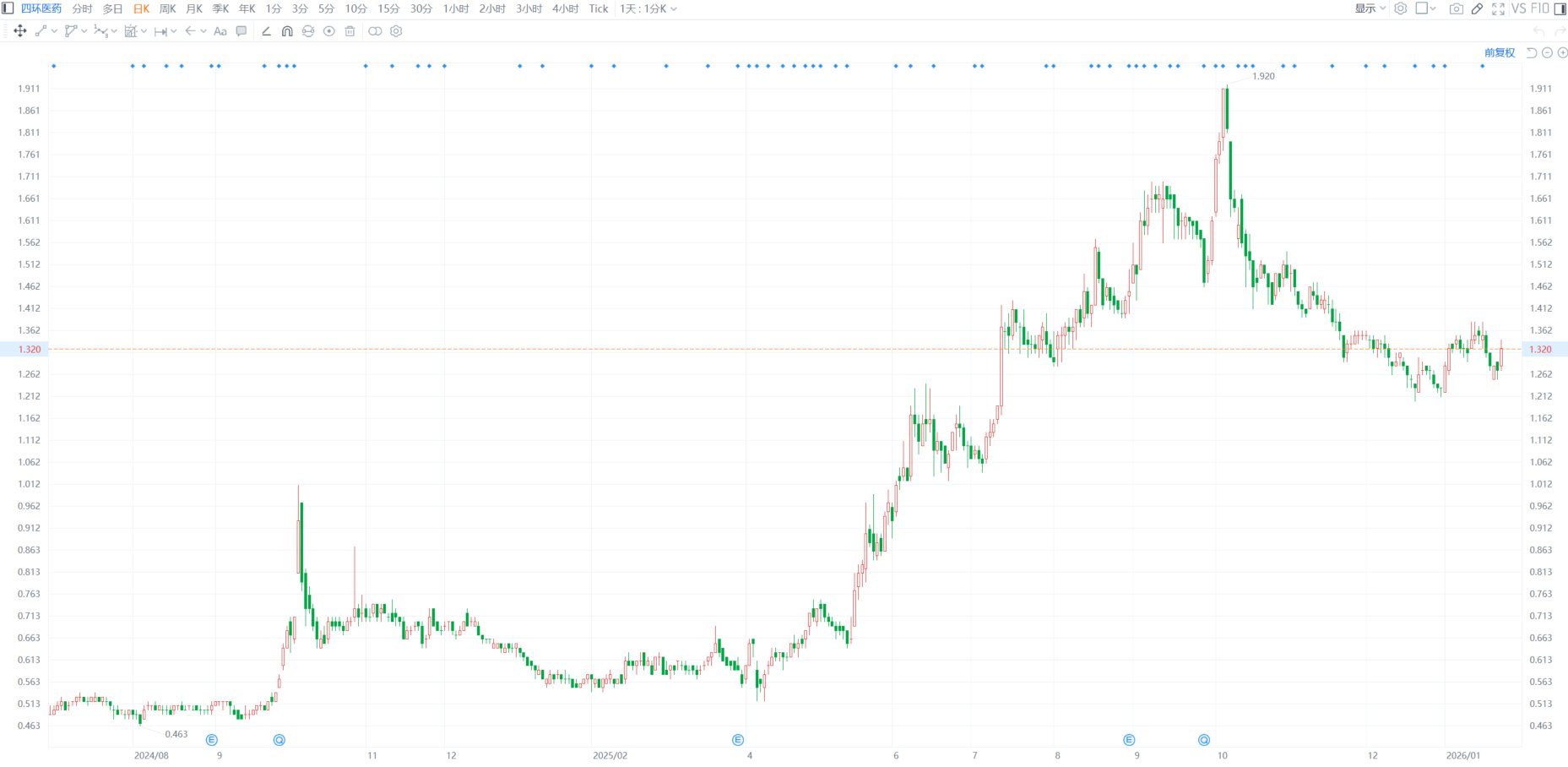
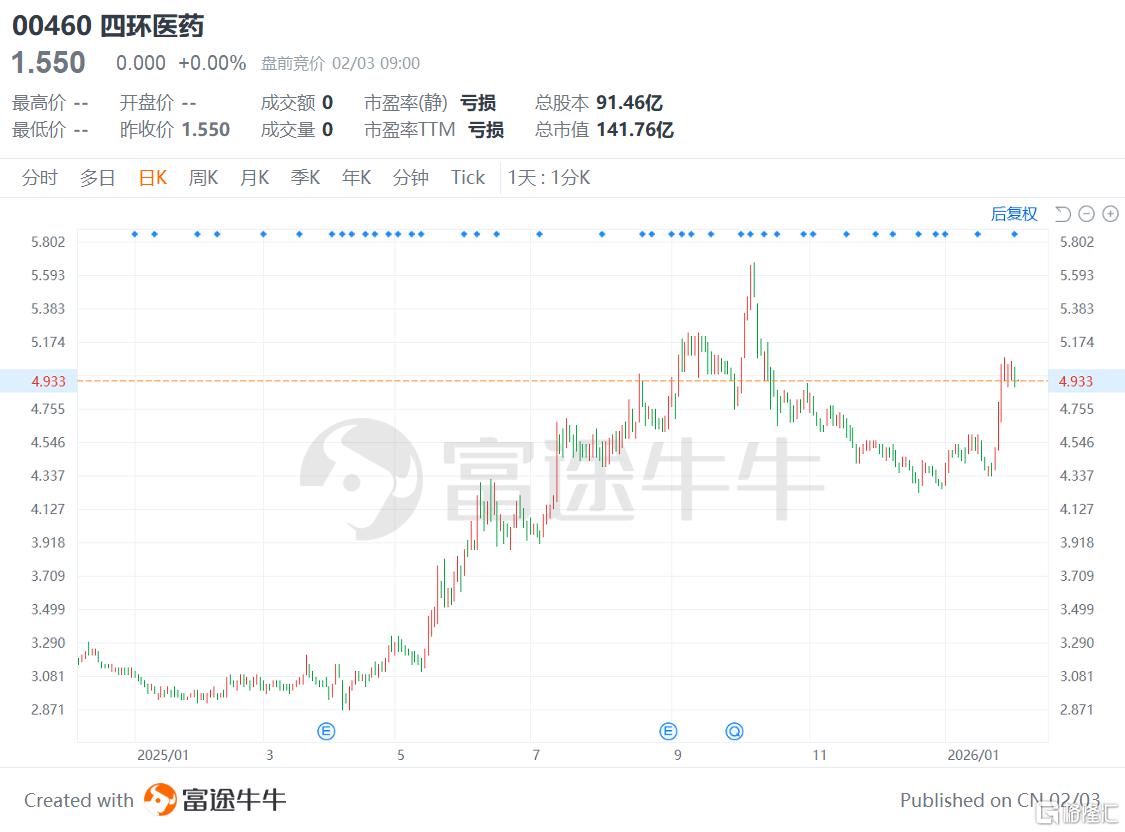
逆势高增领跑行业,四环医药(0460.HK)为何能够锚定中国医美头部地位?
Ge Long Hui· 2026-02-03 01:20
Core Viewpoint - Recently, the new specifications of the polylactic acid facial filler (commonly known as "youthful needle") developed by Sihuan Pharmaceutical's Meiyan Space have been officially approved by the National Medical Products Administration, further enriching the aesthetic medicine product pipeline [1] Group 1: Company Strengths - Sihuan Pharmaceutical is positioned as a leading player in China's aesthetic medicine industry, leveraging a comprehensive product matrix to create a competitive barrier, a robust channel network to solidify market foundations, and a revenue scale that outpaces the industry [1][10] - The company has established a full-category product layout, being the first in the industry to cover five core categories, thus creating a strong product barrier [4] - The company has a nationwide coverage of nearly 8,000 aesthetic medicine institutions and has established deep partnerships with over 230 leading groups and regional core institutions, showcasing a resilient "direct + agency" channel model [5] Group 2: Financial Performance - In the first half of 2025, Sihuan Pharmaceutical's aesthetic medicine business achieved revenue of 580 million yuan, representing a year-on-year growth of 81.3%, demonstrating its leading position in the industry [7][13] - The company has completed 35 dividend distributions since its listing, with a total dividend amount exceeding 7.8 billion yuan, alongside nearly 3.9 billion yuan in cash reserves, indicating a favorable low valuation, high growth, and high dividend profile [13] Group 3: Research and Development - Sihuan Pharmaceutical is increasing its investment in R&D within the aesthetic medicine sector, with plans to launch three significant Class III medical devices in 2025, including the youthful needle and the girl needle, which are expected to support future revenue growth [8] Group 4: Brand and Compliance - The company adheres to GMP standards in product development and production, enhancing its brand's academic attributes through hosting academic conferences and training for doctors, thereby strengthening its professional brand image [9]

仲裁利好下,爱美客也难“翻身”
虎嗅APP· 2026-01-31 13:30
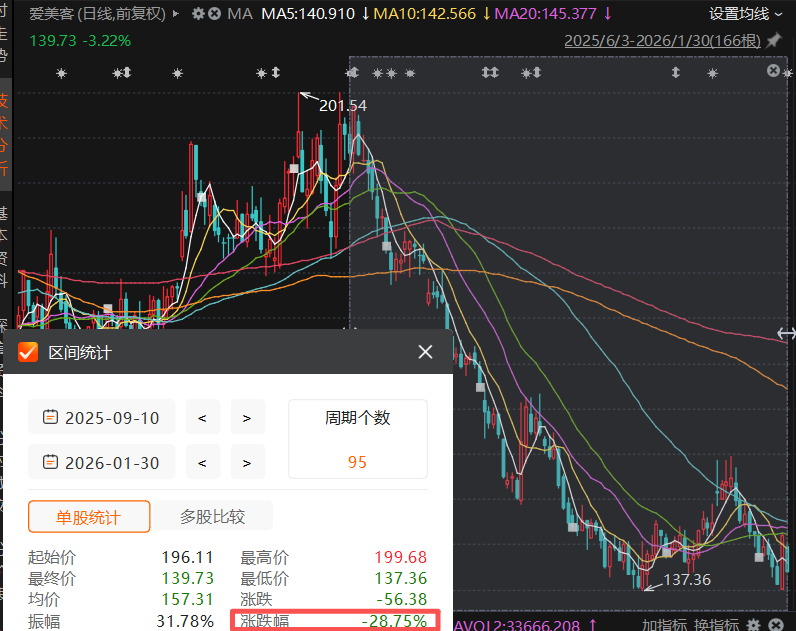
Core Viewpoint - The recent arbitration decision allows REGEN, a subsidiary of Aimeike, to sell AestheFill products in mainland China, but this is not a final ruling, and the ongoing dispute over distribution rights remains uncertain [2][8][20]. Group 1: Arbitration and Market Impact - Aimeike's subsidiary REGEN received a procedural decision from the Shenzhen International Arbitration Court, lifting a temporary measure that previously restricted its sales of AestheFill products in mainland China [2][8]. - Since the initial temporary measure was imposed on September 10, 2025, Aimeike's stock price has dropped nearly 30% [3]. - The arbitration dispute began after Aimeike acquired 85% of REGEN for $190 million in March 2025, leading to REGEN unilaterally terminating its exclusive distribution agreement with Dato Medical [6][8]. Group 2: Business Performance - Aimeike has faced a decline in revenue and profit for four consecutive quarters, with Q1-Q3 2025 revenues of 663 million, 636 million, and 566 million yuan, representing year-on-year declines of 17.90%, 25.11%, and 21.27% respectively [11]. - The decline in revenue is attributed to a weakened consumer confidence due to macroeconomic conditions and increased competition in the medical aesthetics industry [14][15]. - Aimeike's main revenue sources, solution and gel injection products, saw significant revenue drops, with total income from these products falling from 9.76 billion yuan in 2024 to 7.44 billion yuan in 2025 [15][16]. Group 3: Future Outlook - The AestheFill product, despite its potential, is expected to contribute only around 300 million yuan in annual sales, which may not significantly offset the revenue decline from Aimeike's core products [17]. - The competitive landscape for botulinum toxin products is also challenging, with established players dominating the market, making it difficult for Aimeike to gain market share with newly approved products [18]. - Overall, Aimeike is likely to continue facing significant performance pressures into 2026, despite the short-term positive impact of the arbitration decision [19][20].
仲裁利好下,爱美客也难“翻身”
Hu Xiu· 2026-01-31 09:16
Core Viewpoint - The arbitration decision to lift the temporary sales restriction on AestheFill products by REGEN, a subsidiary of Aimeike, is seen as a short-term positive development, but the underlying dispute over distribution rights remains unresolved, indicating potential volatility in the company's stock performance [1][4][14]. Group 1: Arbitration and Sales Rights - REGEN received a decision from the Shenzhen International Arbitration Court on January 29, 2025, which lifted a temporary measure that prohibited the sale of AestheFill products in mainland China [1]. - The temporary measure was initially imposed following REGEN's unilateral termination of its exclusive distribution agreement with Dato Medical, which claimed that Dato had transferred its distribution rights to a related party, violating the agreement [3][4]. - The arbitration decision is procedural and not a final ruling, meaning the dispute over the legality of REGEN's termination of the distribution rights is still ongoing [4]. Group 2: Financial Performance - Aimeike has experienced a decline in both revenue and profit for four consecutive quarters, with Q1-Q3 2025 revenues reported at 663 million, 636 million, and 566 million yuan, reflecting year-on-year decreases of 17.90%, 25.11%, and 21.27% respectively [5][6]. - The company's core products, including solution and gel injection products, saw significant revenue drops, with total income from these categories falling from 9.76 billion yuan in 2024 to 7.44 billion yuan in 2025 for solution products, and from 6.49 billion yuan to 4.93 billion yuan for gel products [9][10]. - The competitive landscape has intensified, with new entrants in the aesthetic medicine market impacting Aimeike's profit margins and market share [8][9]. Group 3: Future Outlook - The introduction of AestheFill is expected to provide some revenue support, but its annual sales of approximately 300 million yuan may not be sufficient to offset the significant revenue declines from Aimeike's core products [10][11]. - The company faces challenges in gaining market share for newly approved products, such as botulinum toxin, due to established competitors dominating the market [12][13]. - Overall, Aimeike is likely to continue facing substantial performance pressures into 2026, with the recent arbitration decision providing only a temporary boost [14].
从卖方到买方市场,医美行业迈入成熟竞争新阶段
2 1 Shi Ji Jing Ji Bao Dao· 2026-01-30 11:34
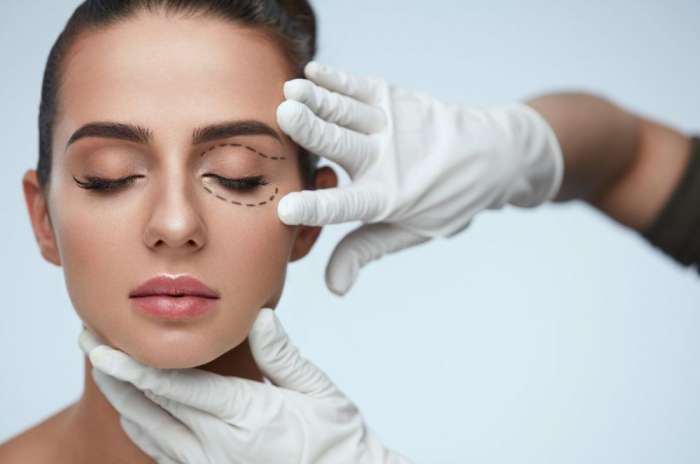
Core Insights - The domestic medical beauty industry is undergoing a structural transformation in 2025, shifting from a "seller's market" to a "buyer's market" due to an increase in the supply of upstream products [1] - The approval of 52 new Class III medical device registrations in 2025 indicates a significant change in the supply-demand relationship within the industry [1] - Upstream manufacturers are compelled to adjust their competitive strategies, focusing on technological innovation, product iteration speed, and commercialization capabilities [1][4] Upstream Manufacturers - The competition among upstream manufacturers is intensifying as the medical beauty market continues to expand and diversify, with the industry size surpassing 300 billion yuan [3] - The light medical beauty market is expected to grow at a compound annual growth rate of over 20% in the next five years, becoming the mainstream segment [3] - Hyaluronic acid, botulinum toxin, collagen, and regenerative materials are projected to dominate the injection materials market in 2024, with respective market shares of 36%, 29%, 19%, and 16% [3] Product Supply Expansion - In 2025, 25 new Class III medical device registrations for hyaluronic acid products were approved, alongside approvals for collagen products, youth needles, and new materials like agarose and calcium phosphate [4] - Manufacturers are shifting from a "follow the trend" model to focusing on product innovation and expanding new indications, particularly in women's health-related aesthetics [4][5] Competitive Landscape - The competition is expected to transition from merely obtaining licenses to a focus on core technology, research efficiency, and understanding end-user needs [5] - The relationship between upstream manufacturers and downstream medical beauty institutions is evolving into a mutually beneficial partnership rather than a zero-sum game [6] Downstream Institutions - The approval of 52 new Class III medical device registrations has provided downstream institutions with greater product selection and negotiating power with upstream manufacturers [6] - New Oxygen's introduction of competitively priced products has sparked controversy among upstream manufacturers, highlighting the ongoing price competition in the market [6] Market Dynamics - Public hospitals are increasingly entering the medical beauty sector, with 203 hospitals opening or establishing medical beauty departments in 2025, a 229% increase from the previous year [8] - Major internet platforms like Meituan and Tmall are leveraging their traffic advantages to enhance the medical beauty sector, intensifying market competition [8] - The future of the medical beauty industry is expected to be characterized by a diverse and competitive landscape, where trust and professional credibility are crucial for consumer acceptance [8]


四环医药午后涨近5% 机构看好其医美及创新药双轮驱动进一步加速
Xin Lang Cai Jing· 2026-01-27 05:20
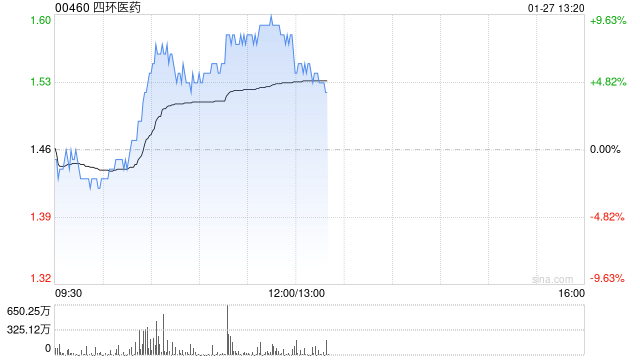
Group 1 - The core point of the article is that Sihuan Pharmaceutical (00460) has seen a significant stock price increase due to the approval of new specifications for its self-developed polylactic acid facial filler, known as "Tongyan Needle" [5] - The stock price rose over 9% during trading, with a current price of 1.53 HKD and a trading volume of 165 million HKD [5] - The approval of six new specifications by the National Medical Products Administration of China is expected to enhance the company's aesthetic medicine pipeline and drive growth [5] Group 2 - According to Founder Securities, the company is experiencing breakthroughs in its aesthetic medicine pipeline and collaborations, with the value of innovative drugs being released [5] - The current pipeline is accelerating, with stable growth from botulinum toxin products and new products like Tongyan Needle and "Shaonv Needle" starting to gain traction [5] - Future product lines, including regenerative, collagen-based, photonic devices, and weight loss products, are expected to continue to be launched, contributing to long-term growth potential [5]
港股异动 | 四环医药(00460)再涨超9% 机构看好其医美及创新药双轮驱动进一步加速
智通财经网· 2026-01-27 04:03
Core Viewpoint - Four Seasons Pharmaceutical (00460) has seen its stock price increase by over 9%, currently trading at 1.59 HKD with a transaction volume of 150 million HKD, following the approval of new specifications for its self-developed polylactic acid facial filler by the National Medical Products Administration of China [1] Group 1: Product Development and Market Expansion - The company’s subsidiary, Meiyan Space Biotechnology (Jilin) Co., Ltd., received approval for six new specifications of its facial filler, commonly referred to as "童颜针" [1] - According to Founder Securities, the company is experiencing a dual-driven acceleration in its medical aesthetics pipeline and collaborations, with innovative drug value being released [1] - The current pipeline is rapidly expanding, with stable growth in botulinum toxin products and new products like "童颜针" and "少女针" beginning to gain traction [1] Group 2: Future Growth Potential - New product "动能素水光" is expected to become a new growth driver for the company [1] - Future pipelines in regenerative medicine, collagen products, photonic devices, and weight loss products are anticipated to continue to be developed and contribute to long-term growth [1] Group 3: Strategic Partnerships - Recent discussions around the Nipah virus outbreak in India have brought attention to the company's previous collaboration with Indian company Hideron Pharmaceuticals, established in 2020 [1] - The collaboration framework includes research and development, product registration, technology transfer, raw material supply, and localized production and sales in cardiovascular, central nervous system, and anti-infection fields, including COVID-19 [1]
港股异动丨四环医药涨超5% 童颜针新增规格获国家药监局批准上市
Ge Long Hui· 2026-01-23 06:05
Core Viewpoint - Four Seasons Pharmaceutical (0460.HK) has seen a significant stock price increase following the approval of new specifications for its self-developed polylactic acid facial filler, known as "Tongyan Needle," by the National Medical Products Administration of China [1][2] Group 1: Product Development - The newly approved specifications for the Tongyan Needle include 60mg/bottle, 80mg/bottle, 100mg/bottle, 110mg/bottle, 120mg/bottle, and 130mg/bottle, enhancing the product range [1] - Four Seasons Pharmaceutical is the only company in China to hold compliant products in both "少女针" (Girl Needle) and "童颜针" (Tongyan Needle), along with other significant medical aesthetic products such as botulinum toxin, water light needle, and golden microneedle [1] Group 2: Market Performance - The sales of the new regenerative products, Tongyan Needle and Girl Needle, have exceeded expectations, with institutions actively purchasing [2] - The medical aesthetic business is expected to continue its rapid growth due to the synergy of multiple products and integrated solutions aimed at medical aesthetic institutions [2] Group 3: Investment Outlook - Citic Securities maintains a "Buy" rating for Four Seasons Pharmaceutical, setting a target price of 1.6 HKD [2]