
服务机器人

Search documents
云迹科技正式登陆港交所:开盘上涨约50%,将成全球服务机器人领域领军企业
IPO早知道· 2025-10-16 02:48
Core Viewpoint - Beijing Yunji Technology Co., Ltd. has officially listed on the Hong Kong Stock Exchange as the first "robot service intelligent agent" company, with a stock code of "2670" [2][15]. IPO Details - Yunji Technology issued a total of 6,900,000 shares in its IPO, with a subscription rate of 5,657.20 times for public offerings in Hong Kong and 18.62 times for international offerings. The total fundraising amount is approximately 660 million HKD at an issue price of 95.6 HKD per share [3]. - The stock opened at 142.8 HKD, a rise of 49.37%, giving the company a total market capitalization of 9.813 billion HKD [4]. Market Position - Yunji Technology holds a leading position in the Chinese robot service intelligent agent market, with a market share of 6.3% and a leading position in the hotel sector with a 13.9% share, surpassing the combined share of the second to fifth competitors [4]. Business Model and Growth - The company is transitioning its revenue model from "one-time hardware sales" to "subscription + service," with a compound annual growth rate of 45.5% in "rental + subscription" revenue from 2022 to 2024. In the first five months of 2025, intelligent agent application revenue increased by 194% year-on-year [12]. - The company has established a global presence, serving over 34,000 hotels and partnering with major hotel groups. It has also expanded into non-hotel sectors, with a 79.1% increase in new contracts in the first half of 2025 [8][10]. Technological Advancements - Yunji Technology has developed a modular architecture called "1+N+AIoT," allowing for rapid functionality switching. The company has accumulated 550 authorized patents and over 600 pending patents, focusing on various technological aspects [10]. - The company has a robust data collection system, with 2.3 billion service data points accumulated, enabling continuous algorithm optimization [10]. Financial Performance - From 2022 to 2024, Yunji Technology's revenue grew from 163 million CNY to 245 million CNY, with a compound annual growth rate of 23.2%. The gross margin increased from 24.3% to 43.5%, indicating a narrowing of adjusted net losses by 65.7% annually [14]. Future Outlook - The global service robot market is expected to grow significantly, with Yunji Technology positioned to become a leading player in this sector. The company aims to replicate its domestic success in international markets, particularly in Japan and Southeast Asia [13][15].


科沃斯携手京东推出“送装一体”服务,进一步优化体验
Cai Jing Wang· 2025-10-10 11:01
Core Insights - The rapid development of smart home appliances in China reflects a condensed version of the industrialization process seen in Western countries over the past 300 years, transitioning from "Made in China" to "Intelligent Manufacturing" [1] - The increasing demand for smart appliances is changing consumer habits, with a shift from offline to online shopping, leading to challenges that need to be addressed by e-commerce platforms and manufacturers [1] Group 1: Smart Home Appliances Development - Smart home appliances, such as washing machines that automatically dispense detergent and TVs that adjust picture quality based on content, are becoming commonplace and transforming lifestyles [1] - The technology for robotic vacuum cleaners is rapidly evolving, with features like automatic water supply moving from "high-end options" to "mainstream configurations" [1] Group 2: Service Innovations - A new solution to the "delivery and installation separation" issue for robotic vacuums has emerged, with Ecovacs partnering with JD.com to launch a "one-stop delivery and installation" service [2] - This service will be rolled out in key cities across China, starting with Beijing and expanding to other major cities by mid-October [2] Group 3: Competitive Advantage - JD.com has established a comprehensive service barrier in the home appliance sector, leveraging its self-built logistics network to ensure efficient delivery and enhance service upgrades in collaboration with manufacturers like Ecovacs [3] - Ecovacs is committed to improving user experience while continuing to invest in product research and development, channel construction, and service innovation [3] Group 4: Future Directions - The introduction of the "fully embedded sweeping and mopping robot" represents a technological breakthrough that integrates smart home devices with home construction, necessitating higher installation standards [4] - Ecovacs plans to expand its service coverage and product categories while exploring additional user scenario-based service innovations, such as remote assistance and regular maintenance [4]

第138届广交会即将开幕,参展企业数量和展位数量再创历史新高
Di Yi Cai Jing Zi Xun· 2025-10-10 10:40
Core Points - The 138th China Import and Export Fair (Canton Fair) will be held from October 15 to November 4 in Guangzhou, featuring a record exhibition area of 1.55 million square meters and over 32,000 participating companies [1][3] - The fair aims to support China's foreign trade development towards innovation, intelligence, and sustainability, showcasing high-quality enterprises and new products [3][4] Group 1: Exhibition Details - The exhibition area is 1.55 million square meters with a total of 74,600 booths, marking historical highs [1] - Over 32,000 companies are participating, with approximately 3,600 making their debut at the fair [1] - A total of 207,000 pre-registered buyers from 217 export markets, a 14.1% increase compared to the previous year, are expected to attend [1] Group 2: Features of the Fair - The fair will feature over 1 million new products developed in the past year and nearly 1.1 million products with independent intellectual property rights [3] - A new smart medical area will be introduced, showcasing products from 47 leading companies in the field [6] - The fair will also emphasize green development, with 305 companies in the renewable energy sector participating, a 3% increase from the last fair [3] Group 3: Business Development Initiatives - The fair has expanded its global partnerships to 227, covering 110 countries and regions, and has increased targeted invitations to key industry groups [5] - More than 600 new product launch events and 13 thematic forums will be held to assist companies in brand building and industry direction [5] - The fair will provide significant financial support to exhibitors, including a 50% reduction in booth fees for export exhibitors and free services for over 5,000 companies [5]

《2025年世界机器人报告》发布:中国市占率碾压全球,印度逆袭第六,日美韩德全线下滑
3 6 Ke· 2025-09-28 02:31
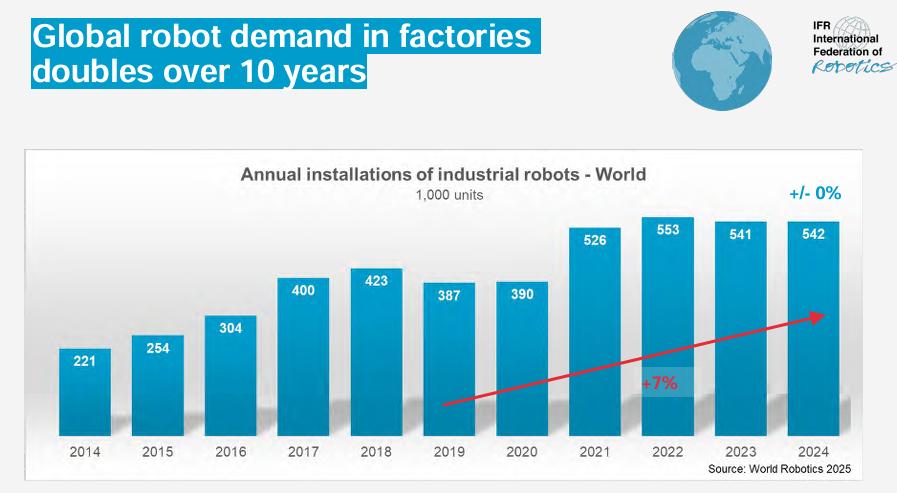
Group 1 - The core viewpoint of the article highlights that the automotive industry has become the largest variable in the global industrial robot market, with China's domestic market share surpassing foreign suppliers for the first time [14][11][3] - In 2024, global industrial robot installations are projected to reach 542,000 units, marking a more than twofold increase over the past decade, with Asia accounting for 74% of new deployments [3][11][13] - China leads the global market with 295,000 new installations in 2024, representing 54% of the global total, while other major markets like Japan, the US, South Korea, and Germany experience declines [3][11][18] Group 2 - The report indicates that the industrial robot market in China has seen a significant increase in domestic manufacturers, with their market share rising from approximately 28% a decade ago to 57% [14][11] - The application of industrial robots has diversified, with the general industry now accounting for 53% of installations in 2024, up from 36% in 2014, compensating for the weakness in the automotive sector [4][11] - The total number of operational industrial robots globally is expected to reach 4.664 million units in 2024, reflecting a 9% year-on-year growth [3][11] Group 3 - The report forecasts that the global industrial robot market will continue to grow, with an expected increase of 6% in installations to 575,000 units by 2025, and projections to exceed 700,000 units by 2028 [3][30] - The service robot market is also experiencing growth, with new installations of specialized service robots reaching 199,000 units in 2024, a 9% increase year-on-year [32][38] - The medical robot segment shows remarkable growth, with an increase of 91% in new installations, totaling 16,700 units in 2024 [32][41]

押注百亿台服务机器人目标,行业“一哥”发布自研大模型
Xin Lang Cai Jing· 2025-09-25 00:08
Core Insights - The company has launched an upgraded self-developed VLA model, KOM2.0, aimed at enhancing the capabilities of humanoid service robots, significantly improving their generalization ability and accelerating product iteration speed [1][2] - The new model incorporates innovative architecture, including a spatiotemporal adaptive attention mechanism and hierarchical decision reasoning module, enabling precise extraction of key information from vast real-time data [1][2] - The company aims to expand its product matrix by developing more general-purpose humanoid robots, in addition to its existing specialized robots for delivery and cleaning [5][6] Company Developments - The VLA model leverages years of accumulated scene data and operational data from over 100,000 online robots, enhancing the robustness and generalization capabilities of the robots [2] - The company has launched its first bipedal humanoid service robot, XMAN-F1, which is based on the VLA model and targets complex service scenarios [2] - The company has established a global presence with over 80 operational centers and sales in more than 60 countries, with international revenue accounting for approximately 50% of total revenue [6] Market Vision - The CEO envisions a future where humanoid robots will be widely integrated into daily life, with a goal of having one robot for every person by 2050, predicting a global population of around 10 billion [5] - The company is focusing on achieving large-scale deployment of humanoid robots in familiar service scenarios, such as kitchens and bars, with the ultimate goal of creating robots that can serve as full-time household assistants [5][6]

中国技工新职业“数智化”趋势明显
Zhong Guo Xin Wen Wang· 2025-09-23 13:55
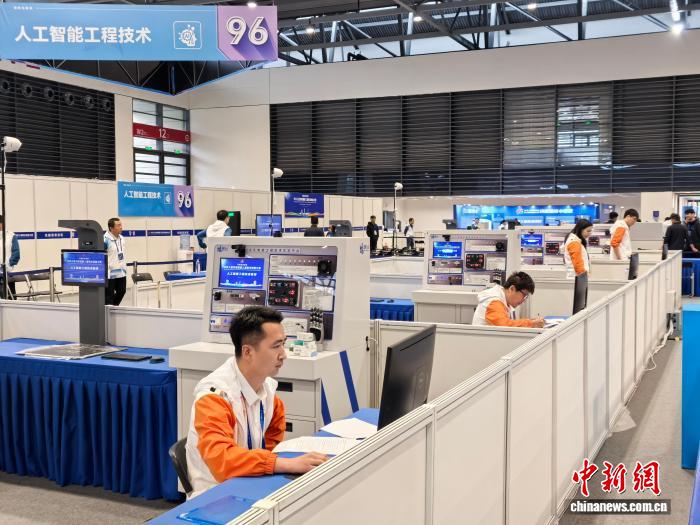
Core Insights - The trend of "digital intelligence" in new vocational skills in China is becoming increasingly evident, particularly highlighted by the recent National Skills Competition, which showcases emerging industries and advanced technologies as key employment areas for the future [1][3]. Group 1: New Vocational Trends - The National Skills Competition, recognized as China's highest-level vocational skills event, features new vocational categories such as artificial intelligence engineering, smart manufacturing engineering, industrial internet engineering, integrated circuit engineering, and service robotics application technology [1][3]. - Since 2019, over 90 new professions have been announced by China's Ministry of Human Resources and Social Security, with roles like integrated circuit engineering technicians and industrial internet engineering technicians becoming popular choices among university graduates [3][4]. Group 2: Industry Demand and Skills Development - The competition's focus on advanced technology fields, including smart manufacturing and digital technology, accounts for over 50% of the event's categories, indicating a strong industry demand for skilled workers in these areas [4]. - The competition also emphasizes the importance of practical skills, as demonstrated by participants in the integrated circuit engineering category who effectively used virtual simulation manufacturing equipment for wafer processing [4][5]. Group 3: Future Employment Pathways - The establishment of a dedicated service robotics application technology category aims to cultivate versatile, skilled professionals in the field, integrating mechanical equipment assembly, intelligent detection, and human-computer interaction technologies [5]. - The competition serves as a reflection of the potential career paths for future workers, with "digital intelligence" and emerging industries leading the way in new vocational opportunities [5].
跨次元互动 “机器人科幻迷”星动纪元星动Q5获刘慈欣签书
Zheng Quan Shi Bao Wang· 2025-09-21 07:23
Group 1 - The core viewpoint of the articles highlights the advancement of service robots, particularly the StarQ5, which showcases enhanced interactive experiences at events like the JD × Galaxy Science Fiction Conference [1][2] - The StarQ5 robot, designed with 44 high-degree-of-freedom joints and an 11-degree-of-freedom dexterous hand, can perform tasks such as carrying loads of up to 10 kg and executing operations with a precision of 10 clicks per second [2] - The robot's applications span various sectors, including commercial guidance, hotel services, and medical assistance, demonstrating its versatility in performing tasks like handling, transporting, and retrieving items from heights [2] Group 2 - The StarQ5's performance at the conference not only displayed its technical capabilities but also highlighted the intersection of robotics and science fiction culture, enhancing the event's technological appeal [1] - The robot's role as a "working person" involved tasks such as reception, guiding, explaining, and engaging with attendees, which contributed to its busy presence at the event [1]
活力中国调研行丨从未来感到日常用 中国智造如何在全球赛道脱颖而出
Sou Hu Cai Jing· 2025-09-19 05:38
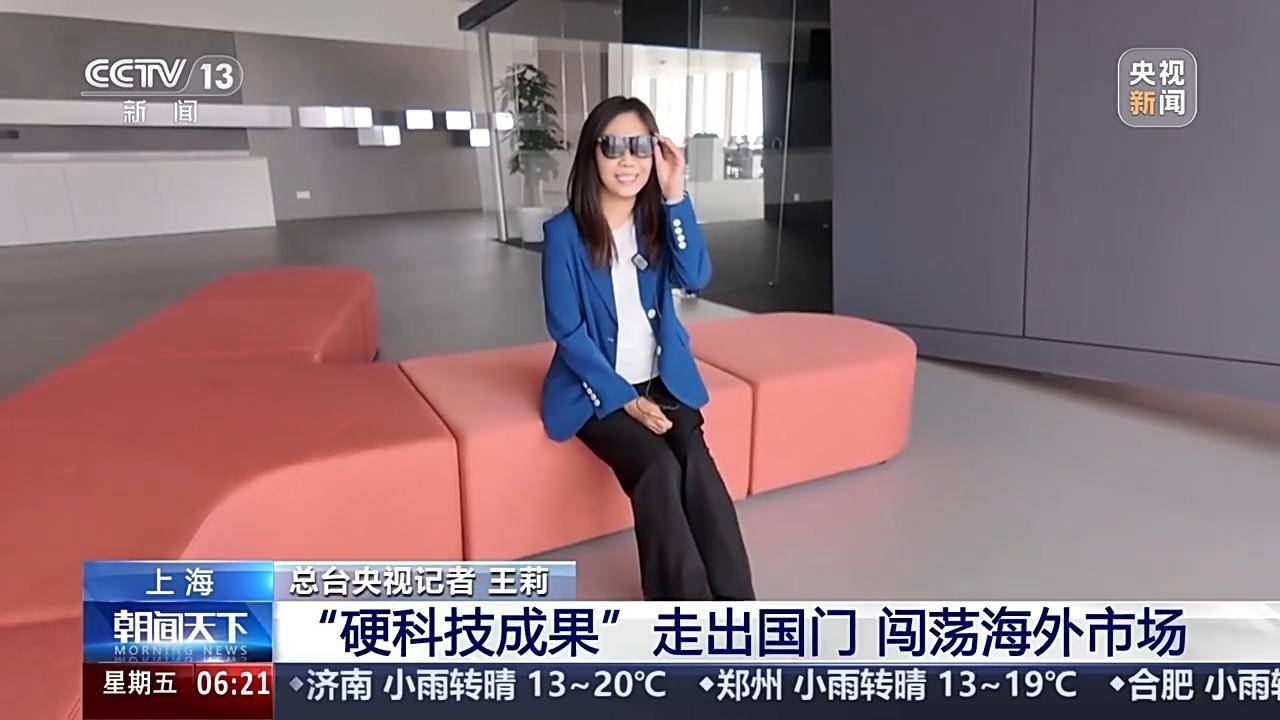
Group 1 - The article highlights the rapid integration of technological innovations into daily life, showcasing advancements in AR glasses and service robots as examples of how companies are transitioning from technological breakthroughs to market leaders [1][3]. - XREAL, an AR glasses company, has achieved significant milestones, including the development of the world's first retinal-level optical module and a dedicated spatial computing chip, leading to its position as the top seller of consumer AR glasses for four consecutive years [5][7]. - The service robot sector is also thriving, with a company reporting over 100,000 units shipped globally, emphasizing China's leadership role in the global market for service robots [13][15]. Group 2 - Shanghai has become a hub for artificial intelligence talent, with nearly 300,000 AI professionals, accounting for one-third of the national total, fostering a strong workforce for tech companies [16]. - The "Mosu Space" innovation ecosystem has emerged as a preferred location for young entrepreneurs, providing essential services such as computational resources, financial services, and talent support, facilitating collaboration among businesses [29][31]. - The establishment of "Mosu Space" and "Moli Community" in Shanghai has created a new industrial landscape for artificial intelligence, attracting mature companies with supportive policies and talent recruitment measures [35][37].
万联晨会-20250917
Wanlian Securities· 2025-09-17 01:08
Core Viewpoints - The A-share market saw a collective rise in the three major indices on Tuesday, with the Shanghai Composite Index up by 0.04%, the Shenzhen Component Index up by 0.45%, and the ChiNext Index up by 0.68%. The total trading volume in the Shanghai and Shenzhen markets reached 23,411.67 billion yuan [2][7] - In terms of industry performance, the comprehensive, machinery equipment, and computer sectors led the gains, while agriculture, forestry, animal husbandry, banking, and non-ferrous metals lagged behind. Among concept sectors, reducer, humanoid robots, and automotive thermal management saw the highest increases, while pork, poultry farming, and genetically modified products experienced the largest declines [2][7] Important News - The Ministry of Commerce and nine other departments released policies aimed at expanding service consumption, proposing 19 measures across five areas, with eight related to "high-quality service supply." The document suggests launching a series of promotional activities for service consumption and supporting cross-industry collaborations [3][8] - Clarification was provided regarding the misinterpretation of the "purchase limit cancellation for foreign individuals" in domestic real estate, emphasizing that the changes only optimize the review process for fund settlement and do not alter existing policies [3][8] Industry Insights - In July, the production of industrial robots in China continued its growth trend, with a year-on-year increase of over 20%. The production volume reached 63,700 units, while the cumulative production from January to July was 447,100 units, reflecting a year-on-year growth of 32.9% [9][10] - The industrial robot sector is experiencing a significant transformation, moving from "scale chasing" to "technology leadership," driven by diversified downstream applications and independent core technologies [10][11] - The service robot market also showed robust growth, with July production reaching 1,489,900 units, a year-on-year increase of 12.8%. The cumulative production for the first seven months was 10,378,300 units, up by 23.6% [10][11] - The future of service robots is expected to focus on high intelligence, diverse scenarios, and ecological integration, with applications expanding into agriculture and emotional companionship [11]
这家公司的“机器打工人”运行里程相当于绕赤道999圈儿!
Jin Rong Shi Bao· 2025-09-16 14:12
Core Insights - The article highlights the advancements in service robots, particularly the XMAN-R1, which showcases the capabilities of embodied intelligence in various service scenarios [1][2][4] - The company, Qianlang Intelligent, is leveraging its proprietary technology to enhance the efficiency and adaptability of robots in diverse environments, aiming for a significant presence in the service industry [2][3][5] - The global expansion of service robots is emphasized, with over 50% of the company's revenue coming from international markets, indicating a successful strategy of providing high performance at competitive prices [3][4] Group 1: Product Features and Capabilities - The XMAN-R1 robot can replicate standardized processes in restaurants, demonstrating its proficiency in food preparation and service [1] - The robots utilize advanced navigation technologies, such as laser radar and visual sensors, to operate effectively in complex environments like restaurants and hospitals [2] - The company has developed a range of robots, including general-purpose and specialized delivery robots, to cater to various service needs [1][2] Group 2: Market Strategy and Positioning - Qianlang Intelligent's strategy focuses on combining affordability with high performance, allowing it to achieve rapid growth in overseas markets [3] - The company has established a strong technological foundation over 15 years, which supports its competitive edge in the service robot sector [3] - The CEO envisions a future where robots may outnumber humans in service roles, indicating a transformative shift in the service industry [2][3] Group 3: Industry Trends and Challenges - The article discusses the current state of humanoid robots, which are seen as a crucial category in the robotics industry, with ongoing developments in artificial intelligence [4] - The industry faces challenges in achieving full maturity in decision-making AI systems, which are essential for the effective operation of humanoid robots [4] - Collaboration among robotics manufacturers is suggested as a potential necessity for overcoming industry challenges and enhancing product offerings [5]