
物流行业

Search documents
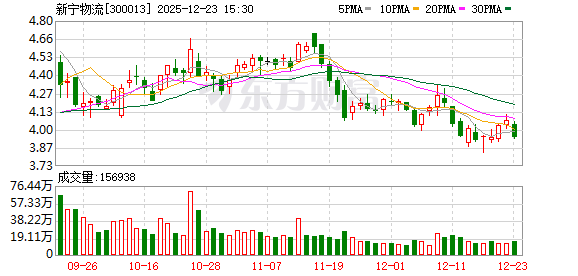
新宁物流:尚未在韩国设立子公司或营业网点
Mei Ri Jing Ji Xin Wen· 2026-01-05 02:35
每经AI快讯,有投资者在投资者互动平台提问:公司在韩国是否开设有分公司或者相关业务往来? (记者 王瀚黎) 新宁物流(300013.SZ)1月5日在投资者互动平台表示,目前公司海外业务正常推进中,但尚未在韩国 设立子公司或营业网点。关于海外公司设立地点的选择,公司将进行审慎评估。如有达到信息披露标准 的情况,公司也将及时按照规定履行信息披露义务。 ...

传化智联:2025年净利同比预增256%-362%
Ge Long Hui A P P· 2025-12-31 08:55
格隆汇12月31日丨传化智联(002010.SZ)公告称,公司发布2025年度业绩预告,预计归属于上市公司股 东的净利润为5.4亿元–7.0亿元,比上年同期增长256.07%-361.57%。报告期内,公司化学业务聚焦市场 需求,优化营销策略;物流业务持续优化资产结构,聚焦优势业务,提升盈利能力。 ...

飞力达(300240.SZ):获得政府补助400万元
Ge Long Hui A P P· 2025-12-26 10:19
格隆汇12月26日丨飞力达(300240.SZ)公布,下属全资子公司飞力达物流(深圳)有限公司于近日收到 政府相关部门补助款人民币400万元。公司本次获得的政府补助属于与收益相关的政府补助,不具有可 持续性。上述政府补助与公司日常经营活动有关,公司已实际收到相关款项。 ...

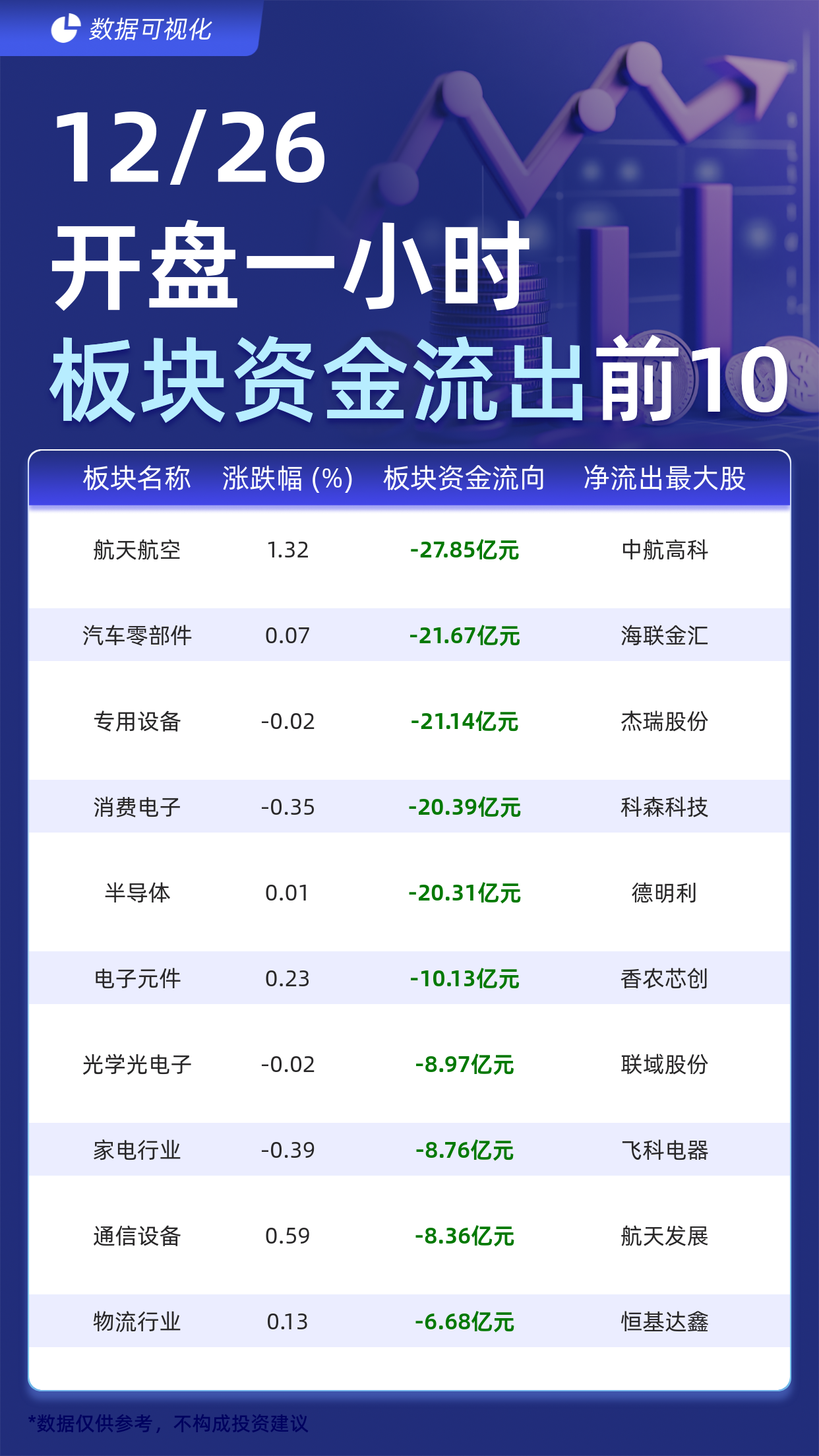
主力板块资金流出前10:航天航空流出27.85亿元、汽车零部件流出21.67亿元
Jin Rong Jie· 2025-12-26 02:55
Summary of Key Points Core Viewpoint - The market experienced a significant outflow of main capital, totaling 15.412 billion yuan, with various sectors showing notable declines in capital inflow [1]. Sector Analysis - **Aerospace and Aviation**: Experienced a capital outflow of 2.785 billion yuan, with a price increase of 1.32% [2]. - **Automotive Parts**: Saw a minor capital outflow of 2.167 billion yuan, with a price increase of 0.07% [2]. - **Specialized Equipment**: Reported a capital outflow of 2.114 billion yuan, with a negligible price change of -0.02% [2]. - **Consumer Electronics**: Experienced a capital outflow of 2.039 billion yuan, with a price decrease of 0.35% [2]. - **Semiconductors**: Had a capital outflow of 2.031 billion yuan, with a slight price increase of 0.01% [2]. - **Electronic Components**: Reported a capital outflow of 1.013 billion yuan, with a price increase of 0.23% [2]. - **Optical and Optoelectronic**: Experienced a capital outflow of 0.897 billion yuan, with a price change of -0.02% [3]. - **Home Appliances**: Saw a capital outflow of 0.876 billion yuan, with a price decrease of 0.39% [3]. - **Communication Equipment**: Reported a capital outflow of 0.836 billion yuan, with a price increase of 0.59% [3]. - **Logistics**: Experienced a capital outflow of 0.668 billion yuan, with a price increase of 0.13% [3].

八部门联手力挺!这波红利怎么看?
Jin Rong Shi Bao· 2025-12-25 08:46
Core Viewpoint - The development of the Western Land-Sea New Corridor has transformed the historical isolation of the southwestern region of China, significantly enhancing its connectivity with global markets and facilitating trade through improved logistics and financial support [1][2]. Group 1: Infrastructure and Logistics - The Western Land-Sea New Corridor has evolved from a single route to a comprehensive network, with annual freight volume surpassing 1 million TEUs, marking a 110-fold increase since its inception in 2017 [1] - The transportation network now extends to 127 countries and regions, covering 581 ports and facilitating over 1,300 types of products, including electronics, vehicles, machinery, and food [1][2]. Group 2: Financial Support and Services - The recent policy issued by eight ministries aims to establish a comprehensive financial service system to support the corridor's high-quality development, addressing funding needs through 21 key measures [1][2] - Financial institutions are encouraged to create specialized service mechanisms and explore integrated credit and syndicate loan models to facilitate cross-province financial resource flow [3]. Group 3: Funding Mechanisms - The policy emphasizes the need for diverse financing channels, including special funds, corporate bonds, and real estate investment trusts (REITs), to support the full lifecycle of projects related to ports, railways, and logistics parks [3]. - Support for small and micro logistics enterprises includes the introduction of comprehensive credit products and financial services tailored to their needs, addressing challenges related to financing [3]. Group 4: Institutional Innovation - The policy introduces measures to enhance cross-border trade settlement and investment financing, promoting efficient and secure capital flow [4]. - Initiatives include supporting offshore international trade settlements and encouraging bilateral currency cooperation with Southeast and Central Asian countries [4]. Group 5: Digital Empowerment and Open Cooperation - The establishment of the "Central Bank Western Land-Sea Intelligent Financial Service Platform" aims to integrate major project databases and facilitate precise connections between banks and enterprises [5]. - The policy supports collaboration with ASEAN and Hong Kong-Macau financial institutions, enhancing cross-border green finance cooperation and broadening funding sources [5]. Group 6: Future Prospects - The financial policies introduced are expected to significantly empower the construction of the corridor, promoting deep integration with logistics, trade, and industry [6]. - The corridor is envisioned as a vital economic artery, an industrial corridor driving development, and a channel benefiting people's livelihoods [6].
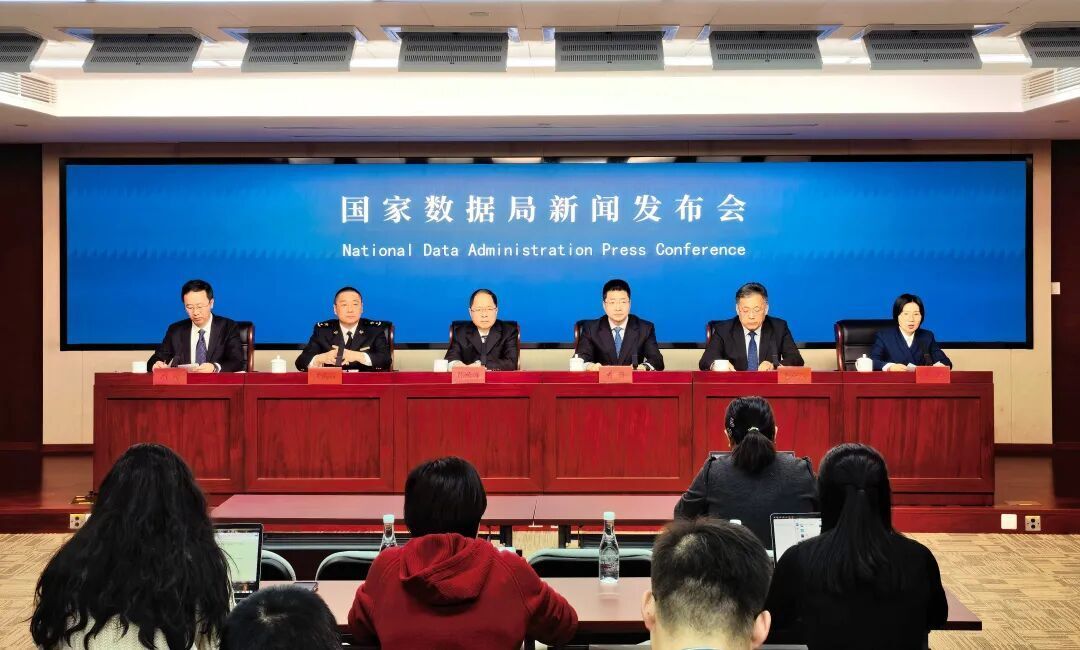
武汉市受邀参加国家数据局新闻发布会,推介物流数据开放互联试点经验
Chang Jiang Ri Bao· 2025-12-23 12:58
Core Viewpoint - The National Data Bureau held a press conference to discuss the latest progress and achievements in the construction of public data demonstration scenarios, highlighting Wuhan's experience in logistics data openness and interconnectivity [1][4]. Group 1: Data Utilization and Efficiency - The value of data is reflected in cost reduction and efficiency improvement for enterprises, as emphasized by the 20th National Congress of the Communist Party of China [2]. - Wuhan was selected as one of the first pilot cities for "logistics data openness and interconnectivity," aiming to eliminate "information silos" and promote data sharing across various sectors [2]. Group 2: Implementation and Achievements - Wuhan established a "five-in-one" work system to implement pilot tasks, which includes forming a mechanism, developing a plan, issuing standards, building a platform, and creating scenarios [2]. - During the pilot period, Wuhan advanced five key construction projects, shared over 20 logistics-related data items, and improved multi-modal transport efficiency by over 5% [2]. Group 3: Sector-Specific Innovations - In the biopharmaceutical industry, data integration led to a 30% increase in delivery efficiency and a 10% improvement in timeliness [6]. - In the commercial logistics sector, data connectivity between Wuhan Port and Shanghai Yangshan Port enabled significant cost savings, with logistics expenses reduced by 50% for specific shipments [6]. Group 4: Future Directions - The Wuhan Data Bureau plans to continue enhancing logistics data interconnectivity and promote innovative applications, aiming to set benchmarks for data utilization across various industries [6].
新宁物流:公司目前经营正常
Zheng Quan Ri Bao· 2025-12-23 12:16
Core Viewpoint - The company, XinNing Logistics, confirmed that its controlling shareholder has not changed any commitments and is fulfilling them normally, indicating stable operations and management focus on optimizing efficiency and performance [2] Group 1 - The company management is dedicated to continuously improving operational efficiency and enhancing performance levels [2] - The company is currently operating normally, reassuring investors about its stability [2] - Investors are advised to refer to the company's announcements on designated information disclosure media for official updates [2]
裕程物流股东将股票存入元库证券 存仓市值3532.50万港元
Zhi Tong Cai Jing· 2025-12-22 00:32
财报显示,2025年上半年,裕程物流实现收益3.3亿港元,同比减少22.58%;实现亏损3573.4万港元, 同比扩大223.27%;每股基本亏损11.91港仙。 香港联交所最新资料显示,12月19日,裕程物流(08489)股东将股票存入元库证券,存仓市值3532.50万 港元,占比75%。 ...
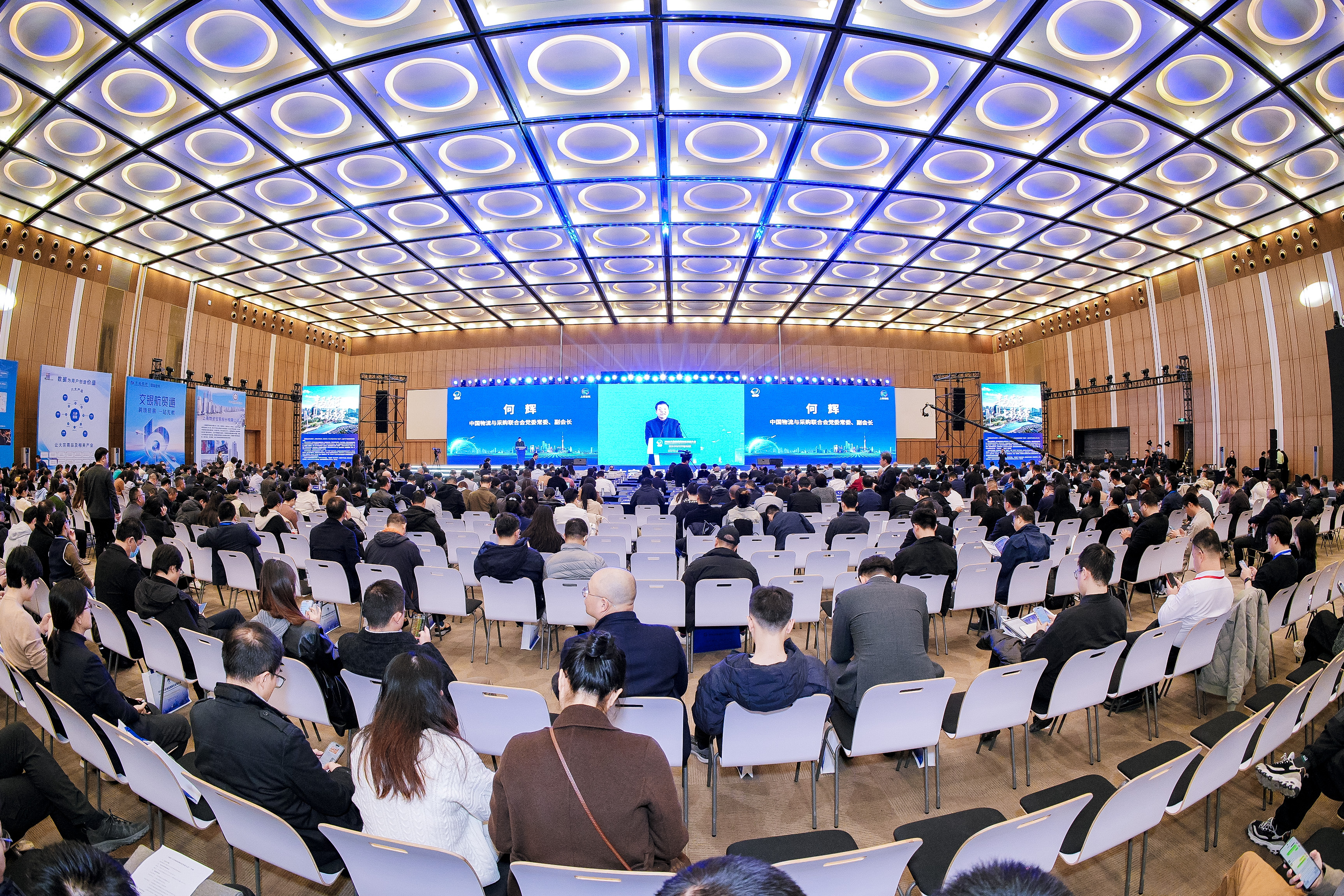
中物联何辉:2025年全社会物流总额预计达380万亿元
Xin Hua Cai Jing· 2025-12-19 06:15
Core Insights - The total logistics volume in China is expected to reach approximately 380 trillion yuan by 2025, with the sales of bulk commodity production materials projected to exceed 1 trillion yuan for the first time, highlighting the market's resilience against external risks and its role as a core engine for global bulk commodity trade growth [1][4]. Group 1: Current Logistics Performance - From January to October this year, China's total social logistics volume reached 293.7 trillion yuan, marking a year-on-year increase of 5.1%, indicating steady expansion in logistics demand and ongoing structural optimization [4]. - The total revenue of the logistics industry was 11.8 trillion yuan, reflecting a year-on-year growth of 4.5%, demonstrating steady improvement in the quality and efficiency of industry development [4]. - The China Bulk Commodity Price Index (CBPI) stood at 114.1 points in November 2025, with a month-on-month increase of 0.8% and a year-on-year increase of 1.6%, indicating a recovery in supply-demand relationships and enhanced business confidence [4]. Group 2: Challenges and Opportunities - The global bulk commodity supply chain has developed an interdependent structure, but challenges from global economic uncertainties, geopolitical tensions, and financial market fluctuations remain significant [4]. - Trust deficits in trade are increasingly seen as a major constraint on global economic growth, necessitating a restructured international trade rule system centered on trust to promote sustainable global economic development [4][5]. Group 3: Future Development Strategies - To enhance the global bulk commodity supply chain, three key strategies are proposed: 1. Accelerate the development of new productive forces in bulk commodities, integrating modern supply chains and digital economies while fostering high-quality talent skilled in AI, big data, and blockchain [5][6]. 2. Improve global resource allocation capabilities by leveraging China's vast market advantages and enhancing the competitiveness of bulk commodity circulation enterprises through various financial strategies [6]. 3. Establish a fair, stable, and sustainable global supply chain by utilizing digital technologies to create new mechanisms for shared interests and risk-sharing, while promoting green and low-carbon development [6].
海南封关,这些“不变”蕴藏新机会
Ren Min Wang· 2025-12-19 03:38
Core Viewpoint - The official launch of the Hainan Free Trade Port's full island closure on December 18 is expected to enhance the region's attractiveness through institutional innovations, rather than reducing convenience for tourism, shopping, or logistics. Group 1: Personal Entry and Tourism - Personal entry policies remain unchanged, ensuring that travel to Hainan for business or leisure does not require additional documentation. Enhanced measures to improve tourism service quality will be implemented, including more international events and exhibitions, providing broader opportunities for professionals in planning, translation, and performance [2]. Group 2: Shopping and Duty-Free Policies - The annual duty-free shopping limit for departing travelers remains at 100,000 yuan per person, with no limit on the number of purchases. The number of duty-free product categories has increased from 45 to 47, adding items such as pet supplies and portable musical instruments. Additionally, six categories of domestic brand products, including scarves and clothing, will be available in duty-free stores [3]. Group 3: Logistics and Cross-Border Opportunities - Logistics convenience remains intact, with most goods allowed to exit the island through non-customs regulated channels, except for specific categories requiring regulatory passage. The closure presents significant opportunities for cross-border e-commerce, with potential for establishing specialized warehousing for returns and repairs aimed at the Southeast Asian market, potentially reducing return costs by 40% [4].