
设施农业

Search documents
乡村振兴丨西藏山南:高原上建起“数字农田”
Ke Ji Ri Bao· 2025-09-05 02:59
Core Insights - The article highlights the successful development of facility agriculture in Tibet's Shannan region, driven by technological advancements and research efforts from Huazhong Agricultural University [1][2][4]. Group 1: Technological Advancements - The project led by Professor Huang Yuan focuses on key technologies for facility vegetable and fruit production, utilizing IoT and simulation models [1][4]. - The introduction of multi-layer covering technology and a precision drip irrigation system has addressed challenges posed by the region's temperature fluctuations and humidity [4][5]. - The integration of IoT, AI, and big data in the newly constructed smart greenhouses represents a significant shift towards data-driven agricultural practices [5]. Group 2: Economic Impact - The facility agriculture initiative has resulted in a substantial yield, with 40 acres of melons producing an average of 3,000 kg per acre, leading to a potential gross income exceeding 3.6 million yuan per season [2][4]. - The establishment of 200 acres of facility greenhouses has not only filled market gaps with off-season produce but also created new employment opportunities in the local community [2][4]. Group 3: Future Prospects - The focus for the future includes advancements in intelligent water and fertilizer management, precise pest control, and further upgrades to the IoT management systems [6]. - The unique climatic and soil conditions in Tibet are seen as a competitive advantage for producing high-quality fruits and vegetables, with aspirations to expand market reach nationally and internationally [6].

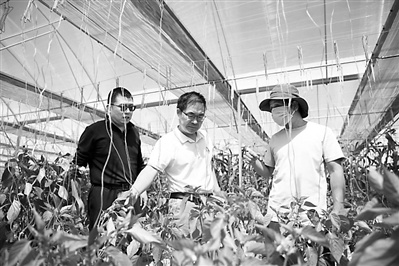
西藏山南:高原上建起“数字农田”
Ke Ji Ri Bao· 2025-09-05 01:28
Core Insights - The article highlights the successful implementation of advanced agricultural technologies in Tibet, particularly in the Naitong District of Shannan City, leading to significant agricultural yields and economic benefits [1][2]. Group 1: Agricultural Development - The project led by Professor Huang Yuan from Huazhong Agricultural University focuses on key technologies for facility vegetable and fruit production in Shannan, utilizing IoT and simulation models [1]. - The facility agriculture managed by Xizang Yue Lin Technology Co., Ltd. has successfully produced off-season melons and vegetables, filling market gaps and creating new employment opportunities [2]. - The 40 acres of melon cultivation achieved a yield of 3,000 kg per acre, with a potential gross income exceeding 3.6 million yuan per season [2]. Group 2: Technological Innovations - Huang Yuan's team has developed multi-layer covering technology to manage temperature and humidity challenges in Shannan's unique climate [2]. - The introduction of a precision drip irrigation system ensures efficient use of water and nutrients, contributing to high yield and ecological sustainability [2]. - The establishment of smart greenhouses in Qushong County integrates IoT, AI, and big data, transforming traditional farming into a data-driven, intelligent agricultural model [3]. Group 3: Future Prospects - The vision for future agricultural practices includes the integration of 5G and AI technologies, aiming to create "thinking farms" that optimize resource management [3]. - The unique climatic conditions of Tibet are seen as a competitive advantage for producing high-quality fruits and vegetables, with aspirations to expand market reach nationally and internationally [3].
温室“智”与“质”齐飞——走进水发浩海西吉智能温室
Qi Lu Wan Bao· 2025-09-01 10:25
Core Insights - The article highlights the integration of technology in agriculture through the example of a smart greenhouse in Xiji County, showcasing a modern approach to farming that emphasizes efficiency and quality [1][7]. Group 1: Digital Empowerment - The smart greenhouse operates with a sophisticated management system that utilizes real-time data from hundreds of sensors to monitor temperature, humidity, light intensity, and CO2 levels, leading to a 50% reduction in energy consumption and a 45% increase in production efficiency [4]. - Operations such as irrigation, lighting, and ventilation can be controlled remotely via a mobile platform, allowing for efficient management with only 25 staff members for a 55-acre facility [4]. Group 2: Quality Assurance - The implementation of intelligent temperature control and precise water and nutrient management results in uniform fruit size, bright color, and stable sugar content at 9.0%, with a product qualification rate of 97% and an average yield of 4,000 kg per acre [6]. - The greenhouse supplies high-quality fruits and vegetables directly to 13 major supermarkets and e-commerce platforms, achieving annual sales exceeding 4 million yuan [6]. Group 3: Agricultural Modernization - The smart greenhouse serves as a model for agricultural modernization in the region, creating jobs for 50 local farmers and promoting smart planting techniques across 2,000 acres of surrounding agricultural land [8]. - Farmers are transitioning from traditional labor roles to data-driven agricultural technicians, with an average annual income increase of 300% [9]. - The company is developing a comprehensive modern agricultural industry chain that includes research, production, processing, and sales, aiming for high efficiency, quality, and intelligence in agriculture [9].

革命热土换新颜 金融赋能启新程
Jin Rong Shi Bao· 2025-08-28 02:32
Core Viewpoint - The article highlights the revitalization of Chifeng City, an important revolutionary area in Inner Mongolia, through the integration of financial support and traditional industries, showcasing a blend of historical significance and modern economic development [1]. Financial Support and Development - The People's Bank of China Chifeng Branch has actively utilized monetary policy tools to support key sectors such as agriculture, small and micro enterprises, and green technology, resulting in significant loan growth [2]. - As of the end of May, the total loans for agriculture and small enterprises reached 34.4 million yuan and 29.7 million yuan respectively, with year-on-year growth rates of 7.21%, 10.33%, and 31.29% for various loan categories [2]. Agricultural Innovation and Economic Impact - The development of facility agriculture in Ningcheng County has led to increased income for farmers, with one farmer reporting an annual income increase of several tens of thousands of yuan due to improved financial services [4]. - The total area of facility agriculture in Ningcheng has reached 530,000 acres, producing 1.63 million tons of vegetables, significantly contributing to local economic growth [4]. Millet Industry Development - Chifeng City, known as the "Hometown of Millet," has seen the establishment of a stable planting area of 1 million acres, benefiting over 80,000 farming households with an average income increase of over 1,000 yuan per person [5]. - The local financial institutions have launched various financial products to support millet farmers, enhancing the overall agricultural productivity and brand recognition of Chifeng millet [6]. Industrial Transformation and Green Development - Chifeng City is focusing on high-quality industrial development, with companies like Chifeng Zhongse Zinc Industry implementing sustainable practices supported by tailored financial products [7][8]. - The establishment of a credit evaluation system for technology-based enterprises aims to channel more financial resources into innovation, fostering a synergistic relationship between technology, finance, and industry [9].
今年辽宁省新建和改造设施农业面积已达5万亩
Zheng Quan Shi Bao Wang· 2025-08-11 02:02
Core Viewpoint - The article highlights the efforts of the Liaoning Provincial Agricultural and Rural Affairs Department in promoting the development and enhancement of facility agriculture through various financial support programs and policies [1] Summary by Relevant Categories Financial Support Initiatives - The provincial government has organized the use of various funding sources, including facility agriculture loan interest subsidies, rural revitalization assistance funds, and subsidies for the purchase of steel structures for greenhouses [1] - Personal agricultural entrepreneurship guarantee loans and support for facility vegetable specialty industry clusters are also part of the financial initiatives [1] Agricultural Development Progress - As of this year, the newly constructed and renovated facility agriculture area has reached 50,000 acres [1] - The focus is on updating and optimizing greenhouse structures, enhancing basic equipment, and incorporating modern high-efficiency devices [1] Efficiency and Modernization - The initiatives aim to improve land utilization rates, structural safety, and levels of mechanization and automation in facility agriculture [1]
今年我省已新建和改造设施农业5万亩
Liao Ning Ri Bao· 2025-08-11 01:24
Core Insights - The newly established high-standard facility agriculture community in Sanjiazicun, Chaoyang Beipiao City, has successfully harvested its first batch of fruit tomatoes, which are being sold in surrounding markets including Beijing-Tianjin-Hebei [1] - The province has implemented supportive policies for facility agriculture construction and the production of specialty economic crops, acting as a "booster" for local facility agriculture development [1] - The province is a leading area for facility agriculture in Northeast China, with a production area expected to reach 2 million acres and a yield exceeding 13 million tons by the end of 2024, significantly contributing to the supply of essential agricultural products and farmers' income [1] Policy and Financial Support - The provincial agricultural and rural affairs department has organized the use of various financial support measures, including facility agriculture loan interest subsidies, rural revitalization funds, and subsidies for purchasing steel structures for greenhouses, to promote the construction and upgrading of facility agriculture [1] - This year, 50,000 acres of new and upgraded facility agriculture have been established across the province, enhancing land utilization, structural safety, and mechanization levels [1] Technical Support and Implementation - Local governments are facilitating the construction and upgrading of facility agriculture by coordinating construction units and agricultural technology promotion departments to ensure comprehensive service from construction to production [2] - Key practical technologies such as factory seedling cultivation, multi-mode straw reactors, and precise pest control are being promoted to guide farmers in scientific planting and improve vegetable yields, ensuring stable supply of important agricultural products [2]
细算一个脱贫户的家庭收支账(不掉队 赶上来)
Ren Min Ri Bao· 2025-07-30 22:33
Core Points - The article highlights the successful poverty alleviation efforts in Haiyan Village, showcasing the improvement in residents' income and living conditions through modern agricultural practices and community support [4][5][6]. Group 1: Economic Improvement - Yang Shengmei's income from working in the agricultural park is 52,000 yuan annually, while her husband Ma Shoucheng earns 13,230 yuan from odd jobs [3]. - The net income from sheep farming is approximately 20,000 yuan, with additional income from land transfer (1,200 yuan), industry subsidies (10,000 yuan), and stable employment rewards (2,000 yuan) [3]. - The total family income for Yang Shengmei's household is around 120,000 yuan, with per capita income for poverty alleviation households increasing from 14,848 yuan in 2022 to 19,327 yuan in 2024 [3][8]. Group 2: Agricultural Development - The establishment of a 1,000-acre modern facility agricultural park in Haiyan Village has led to the introduction of 49 modern greenhouses, producing high-yield crops like peppers [7]. - The agricultural products are in high demand, with partnerships established with major retailers such as Hema Fresh and Yonghui Supermarket, allowing products to reach markets in Guangdong and Sichuan [8]. - Future plans include the construction of over 200 additional greenhouses to further enhance agricultural output [7]. Group 3: Community Support and Infrastructure - The village has seen significant improvements in infrastructure, including better living conditions, access to education, and healthcare facilities [9][10]. - Community support programs have provided various subsidies and assistance, contributing to the overall economic stability of the residents [6][12]. - The village collective economy has grown, with current assets exceeding 2 million yuan, indicating a shift from a previously stagnant economic state [12].
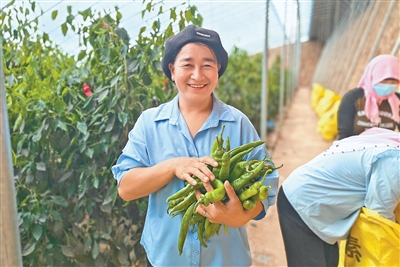
宁夏石嘴山市惠农区海燕村脱贫户收入连年上涨—— 细算一个脱贫户的家庭收支账(不掉队 赶上来)
Ren Min Ri Bao· 2025-07-30 22:03
Group 1 - The core viewpoint emphasizes the importance of consolidating and expanding the achievements of poverty alleviation to prevent large-scale return to poverty, which is a fundamental task for rural revitalization [1] - Over the past four years, the infrastructure and public services in poverty-stricken counties have continuously improved, with the per capita disposable income of rural residents in these areas growing faster than the national average for four consecutive years [1] - The income gap between poverty-stricken areas and other regions, as well as between the impoverished population and the national average for farmers, has been narrowing [1] Group 2 - Yang Shengmei, a resident of Haiyan Village, has seen her income increase significantly after relocating due to ecological migration policies, achieving poverty alleviation in 2020 [2][5] - In 2023, a modern facility agricultural park was established in the village, providing stable employment opportunities and increasing monthly wages to 4,500 yuan [2][3] - The village has introduced 49 modern greenhouses, with plans to build over 200 more in the coming years, producing high-demand crops that are marketed to major supermarkets [3][4] Group 3 - The village has implemented various subsidies and support measures, resulting in a total family income of approximately 120,000 yuan last year for Yang Shengmei's family [4] - The per capita income of poverty-stricken households in Haiyan Village has been steadily increasing, with figures of 14,848 yuan, 17,111 yuan, and 19,327 yuan for the years 2022, 2023, and 2024 respectively [4] - The village has made significant investments in improving living conditions, including infrastructure such as roads, streetlights, and public facilities [7] Group 4 - The collective economy of the village has grown from nearly zero five years ago to over 2 million yuan today, driven by the establishment of enterprises and workshops [7] - Future plans include expanding the scale of specialty agriculture and encouraging community participation in various agricultural activities [7][8] - The overall environment and living conditions in Haiyan Village have improved significantly, with increased greenery and better access to services [5][6]
大规模设备更新首批1730亿落地,哪些仪器/领域收益了?
仪器信息网· 2025-07-25 03:02
Core Viewpoint - The new large-scale equipment update and consumer goods replacement policy in China, initiated in 2024, is set to significantly boost economic development by expanding funding support and coverage areas, aiming for a 25% increase in equipment investment across seven major sectors by 2027 [1][5]. Group 1: Policy Dynamics and Key Points - The funding scale for equipment updates has been expanded to 200 billion yuan, with the first batch of approximately 173 billion yuan allocated to 7,500 projects across 16 sectors [2][5]. - The second batch of funding, amounting to 81 billion yuan, is being reviewed for projects focusing on consumer goods replacement and equipment updates [5]. - The 2025 policy introduces new support areas such as electronic information and safety production, creating a "16+N" coverage system [5][8]. Group 2: Implementation Mechanism Optimization - The policy has removed the previous investment threshold of 100 million yuan for projects, lowering the entry barrier for small and medium-sized enterprises [5][7]. - A dual review mechanism of "local audit + national review" has been established to streamline the approval process [5][7]. - New upgrade directions in the energy and power sector include ten specific areas, enhancing the efficiency and safety of energy facilities [8][9]. Group 3: Comparison of 2024 and 2025 Policies - The 2024 policy focused on seven key sectors, while the 2025 policy expands to 16 sectors with a dynamic expansion mechanism [7]. - The funding intensity has increased with an additional 81 billion yuan and a 1.5% interest subsidy on loans [7]. - The 2025 policy introduces 294 new national standards, enhancing the regulatory framework for project applications [7]. Group 4: Key Supported Areas and Renovation Focus - Major industrial sectors targeted for equipment updates include petrochemicals, steel, non-ferrous metals, and machinery, focusing on replacing outdated equipment and upgrading production lines [8][10]. - Energy facilities will see upgrades in areas such as high-efficiency energy motors and waste heat recovery systems, aimed at reducing energy consumption [8][10]. - Transportation infrastructure will undergo significant updates, including intelligent systems for railways and urban transit, enhancing operational efficiency [10][11].

铭记历史 缅怀先烈|产业集群加速崛起——河北革命老区发展新观察
Xin Hua She· 2025-07-14 08:36
Group 1: Steel Industry in Hebei - The high-end structural steel industry cluster in Shexian is thriving, achieving a transformation through green and intelligent production methods [1] - In the production workshop of Hebei Steel Group's Handan Steel New District, the energy consumption in the rolling process has been reduced by over 50%, and the discharge of major pollutants has decreased by 75% [1] - The recovery and utilization of low-temperature waste heat resources have reached 100%, contributing to the industrial transformation of the revolutionary old district [1] Group 2: Modern Agriculture in Jizhou - The Jizhou Modern Agricultural Integration Innovation Base showcases the development of facility agriculture with high-standard greenhouse structures [2] - The introduction of smart technology, such as IoT remote control systems, has improved production efficiency by 80% and saved water and fertilizer resources by 60% [2] - High-quality vegetables from Jizhou are increasingly entering markets in Beijing and Tianjin, reflecting the success of modern agricultural practices [2] Group 3: Food Industry in Qiuxian - Qiuxian has transformed from a traditional agricultural county to a national food industry stronghold, with over 200 food processing enterprises established [4] - The food industry cluster contributes 28.3% to the local GDP, with annual revenue exceeding 15 billion yuan [4] - The local employment generated by the food industry has surpassed 10,000 jobs, highlighting the economic impact of this sector [4]