量子计算

Search documents
华源晨会精粹20260128-20260128
Hua Yuan Zheng Quan· 2026-01-28 13:35
Group 1: New Consumption - Beauty Industry Insights - The GMV of cosmetics on WeChat Video Account is projected to reach 12.18 billion yuan in 2025, with domestic brands expected to dominate the channel [5][6] - In 2025, domestic brands are anticipated to hold an 80.4% market share on WeChat Video Account, with top brands like Zheng Mingming and Lin Qingxuan leading the sales [6][7] - Skincare products are expected to capture 68.9% of the market share in the WeChat Video Account channel, indicating a higher premium potential compared to other categories [6][7] Group 2: WeChat Video Account as a Competitive Platform - WeChat Video Account is seen as a new battleground for beauty brands, offering a unique advantage by integrating public and private domains, allowing brands to retain users for long-term engagement [7] - The beauty-related voice volume in the WeChat ecosystem reached 10.39 million from October 2024 to September 2025, marking a 48% year-on-year growth, with video account voice volume increasing by 121.9% [7] - The platform's clear commercialization logic and empowerment system provide beauty brands with sustainable growth opportunities, making it crucial for brands to establish a presence on this platform [7] Group 3: Pharmaceutical Industry - Fuyuan Pharmaceutical Overview - Fuyuan Pharmaceutical, established in 1999 and listed in 2022, focuses on generic drugs and is expanding into innovative drugs, with a robust portfolio of 209 domestic drug registrations [13][14] - The company reported a revenue of 3.209 billion yuan from drug formulations in 2024, with a compound annual growth rate (CAGR) of 7.75% from 2019 to 2024, indicating stable growth [14][15] - Fuyuan is strategically investing in small nucleic acid innovative drugs, with 23 patents filed, and its core pipeline includes FY101, which is in Phase I clinical trials, targeting a large market of patients with dyslipidemia [15][16] Group 4: Financial Projections for Fuyuan Pharmaceutical - The company is expected to achieve net profits of 465 million yuan, 481 million yuan, and 520 million yuan from 2025 to 2027, with growth rates of -5%, 4%, and 8% respectively [16] - The current price-to-earnings (PE) ratios for these years are projected at 30X, 29X, and 27X, indicating a favorable valuation compared to peers [16]

海外科技周报(26/01/19-26/01/23):特朗普对欧关税TACO黄金引领货币体系重构-20260128
Hua Yuan Zheng Quan· 2026-01-28 03:11
Group 1: AI Energy Sector - The AI energy sector has seen significant catalysts recently, with uranium prices continuing to rise, reaffirming investment opportunities in this sector. The World Nuclear Association's report indicates that if governments meet their nuclear power construction goals, global nuclear capacity could reach 1,446 GW by 2050, exceeding the previous target of 1,200 GW [5][11] - To achieve the 1,446 GW target by 2050, a structured annual grid connection rhythm is required, with specific capacity targets set for different periods: 14.4 GW from 2026 to 2030, 22.3 GW from 2031 to 2035 (a 55% increase), 49.2 GW from 2036 to 2040 (doubling), and 65.3 GW from 2046 to 2050 [12][11] - The report emphasizes that nuclear power and uranium are transitioning from "optional energy" to "strategic necessities," which is expected to enhance their long-term pricing power, cash flow stability, and capital attractiveness [12] Group 2: Financial Technology Sector - The financial technology sector experienced a downturn this week, with most stocks under pressure. Credicorp led the gains with a 7.0% increase, following the announcement that its digital banking subsidiary, Tenpo, received operational approval in Chile, making it the first licensed new bank under Chile's banking law [14][16] - Capital One announced plans to acquire fintech company Brex for approximately $5.15 billion, aiming to expand its presence in corporate payments and expense management, reflecting the trend of traditional financial systems integrating with new technologies [16][17] - Interactive Brokers reported Q4 2025 earnings that exceeded market expectations, with a 15.4% year-on-year revenue increase to $1.64 billion, and a non-GAAP EPS of $0.65, surpassing general market forecasts by 11% [17] Group 3: Quantum Computing Sector - D-Wave announced the completion of its acquisition of Quantum Circuits Inc., solidifying its position as the only dual-platform quantum computing company globally. This acquisition enhances D-Wave's capabilities in error correction, crucial for commercializing gate model quantum computers [21][22] - The market saw fluctuations, with top gainers including Oxford Instruments (+3.9%) and Microsoft (+1.3%), while D-Wave experienced a significant drop of 11.1% [19][20] - The report highlights that D-Wave's acquisition addresses a critical shortcoming in the gate model route, with the dual-track qubit being a key asset for accelerating error correction, indicating a clearer timeline for the gate model project's deliverables [22] Group 4: Commercial Aerospace Sector - The aerospace sector experienced a slight pullback this week, with major indices showing declines, including a 1.9% drop in the US Space Economy Index and a 3.2% decline in the S&P Aerospace and Defense Select Industry Index [24] - Blue Origin announced its TeraWave project, which aims to provide up to 6 Tbps of symmetrical data transmission rates globally, utilizing a constellation of 5,408 interconnected satellites. This project is designed to meet the connectivity needs of businesses and government users, particularly in remote areas [26][27] - GE Aerospace reported Q4 earnings that slightly exceeded market expectations, but the stock fell due to a notable decline in operating profit margins in its core commercial engine business [24]
马斯克:星舰V3版6周后发射;苹果发布新款AirTag
Sou Hu Cai Jing· 2026-01-28 03:03
Group 1 - Anta Sports plans to acquire 29.06% stake in PUMA SE for €1.5055 billion (approximately ¥12.278 billion) to enhance its global market position and brand influence [2] - Shandong Agricultural University Fertilizer Technology Co., Ltd. is set to be listed on the Beijing Stock Exchange on January 28, 2026, with an initial public offering of 16 million shares priced at ¥25.00 per share, raising a total of ¥400 million [2] Group 2 - DeepWay has completed a Pre-IPO financing round of ¥1.177 billion, marking the largest single financing in the autonomous driving new energy heavy truck sector [3] - Turing Quantum has secured several hundred million in Series B financing, continuing its trend of raising significant capital within six months [4] - AI medical innovation company Xu Zhi Shi has completed an A+ round of financing exceeding ¥50 million, with plans for a B round to be initiated after the Spring Festival [5] Group 3 - Elon Musk announced that SpaceX's Starship V3 will undergo its first flight test in six weeks, aiming to launch the next generation of Starlink V3 satellites [6] - Ying Shi Innovation is set to launch a dual-camera handheld gimbal camera, with product details leaked prior to the official announcement [7] - Apple has released a new version of AirTag, featuring a wider tracking range and louder speaker, priced at $29 for a single unit and $99 for a four-pack [10]




上海交大教授创业光量子计算,再获数亿融资,公司估值已近70亿|36氪独家
36氪· 2026-01-28 01:04
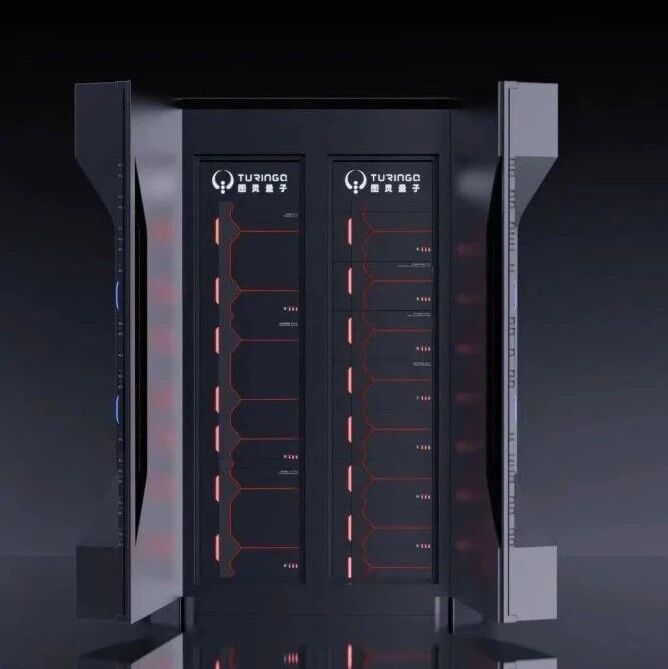
Core Viewpoint - TuringQ, a quantum computing company, has successfully completed a new round of financing amounting to several hundred million yuan, focusing on the development of practical quantum computers and core technology advancements [4][6]. Financing Information - Financing Amount: Several hundred million yuan - Financing Round: Series B - Leading Investors: Includes major state-owned capital, Sichuan Industrial Revitalization Group, Shenzhen Investment Control, Fosun, and SenseTime among others [6]. - Use of Funds: The funds will be primarily allocated to the research and development of domestically controlled practical quantum computers, core technology breakthroughs, and the establishment of a high-end R&D talent team [6]. Company Overview - Founded: 2021 - Headquarters: Shanghai - Core Products: TuringQ focuses on "photon chip + quantum computing" technologies, aiming to industrialize optical quantum computing with a comprehensive product system [8]. - Key Products: TuringQ Gen2 large-scale programmable optical quantum computing system and a full-stack controllable quantum-classical hybrid computing solution [8]. Technical Highlights - Full-Chain IDM Model: TuringQ has achieved a complete closed loop from design to system integration, establishing full controllable capabilities from chips to systems [10]. - Material and Process Leadership: The company is at the forefront of developing optical silicon-based photonic chips and has established the first domestic pilot line for photonic chips [10]. - Integration of Software and Hardware: TuringQ has launched a large-scale programmable optical quantum computer and a quantum AI programming framework, collaborating with domestic GPU companies [10]. Market Potential - Quantum computing is viewed as a strategic high ground in global technological competition, with the market expected to reach $811.7 billion by 2035 [12]. - TuringQ has overcome key technological bottlenecks in optical quantum computing, enabling mass production and scalability [12]. Company Performance - TuringQ has demonstrated strong commercial growth, with orders exceeding 100 million yuan by 2025 and a compound annual growth rate of over 200% in revenue [16]. Team Background - The founder, Jin Xianmin, is a distinguished professor with over 20 years of experience in the field, leading a team with over 70% holding master's or doctoral degrees from prestigious institutions [18][19]. Founder Insights - The company has built a full-chain autonomous capability, allowing for rapid and controllable responses to iterative demands, which is a significant engineering advantage [21]. - The growth strategy involves a pyramid structure, with a focus on practical quantum computing and the construction of a "quantum+" ecosystem [22]. Investor Perspectives - Investors recognize TuringQ's core advantages in photonic chip preparation and its potential to drive industrialization and market expansion [25].
深圳南山成为中国首个万亿GDP地市辖区;124亿现金!安踏成彪马最大股东;追觅CEO辟谣断指计划;Anthropic最新一轮融资超百亿美元丨邦早报
创业邦· 2026-01-28 00:24
Group 1: Economic Developments - Shenzhen's Nanshan District has become the first district in China to surpass a GDP of 1 trillion yuan, achieving an average annual growth rate of over 5.8% from 2016 to 2025, with a total economic output of 652.7 billion yuan at the end of the 13th Five-Year Plan [1] - The global electric vehicle market is projected to exceed 12.1 million units sold by 2025, driven by the decreasing costs of batteries and improved charging infrastructure, with a significant contribution from the entry-level market [27] - China's sports industry is expected to surpass 5 trillion yuan in total scale by 2025, with the sports goods market reaching 2.49 trillion yuan, reflecting a surge in domestic sports consumption [27] Group 2: Corporate Actions and Strategies - Anta Sports has agreed to acquire approximately 29% of Puma's shares for 1.5 billion euros, becoming the largest shareholder of the German sports brand [3] - Ideal Auto plans to close a small number of inefficient retail stores this year, clarifying that this is a normal operational adjustment and not indicative of a significant change in business operations [11] - BYD has abandoned its plan to invest 290 million dollars in a lithium project in Chile due to slow government responses and declining lithium prices [11] Group 3: Market Trends and Performance - Tesla's vehicle registrations in Europe dropped by 20% year-on-year in December, with a total annual decline of 27%, while BYD's registrations surged over twofold in the same period [11][13] - Nike plans to lay off 775 employees to enhance profitability and accelerate automation, amid ongoing challenges with sales growth and profit margins [11] - OpenAI's advertising prices for ChatGPT are three times higher than those on Meta platforms, with projected advertising revenue exceeding 10 billion dollars by 2027 [11]

美国引爆地缘危机之际,欧盟正式启动各成员国政府卫星通信计划;国产超导量子计算机“本源悟空”全球访问量突破4000万次——《投资早参》
Mei Ri Jing Ji Xin Wen· 2026-01-28 00:18
每经记者|杨建 每经编辑|彭水萍 (一)重要市场新闻 点评:量子计算是遵循量子力学规律来操控信息单元的一种全新计算模式。作为下一代信息技术的核心 驱动力,量子计算能够有效解决传统计算算力不足的难题,被视作引领下一代产业变革的颠覆性技术, 也成为全球科技竞争的战略焦点。技术突破、政策支持与市场需求共同驱动产业快速发展,其应用场景 从专用计算向通用计算拓展,推动金融、医药、能源等领域深度变革。量子计算产业正处于"技术驱动 向应用牵引"的关键转折期,2025-2030年将是商业化落地的黄金窗口,有望迈进千亿美元市场规模。概 念股包括科大国创、迪普科技、国盾量子等。 1、美股三大指数收盘涨跌不一,道指跌0.83%,纳指涨0.91%,标普500指数涨0.41%;科技股普涨,英 特尔涨超3%,亚马逊涨超2%。医疗保险股普跌,标普1500管理型医疗指数下跌18%,创下自1997年以 来的最大跌幅;联合健康跌超19%,CVS跌超14%。中概股涨跌不一,纳斯达克中国金龙指数涨 0.48%,爱奇艺、哔哩哔哩涨超3%,携程集团跌逾2%,小鹏汽车、理想汽车跌超1%。欧洲主要股指收 盘涨跌不一,英国富时100指数上涨0.58%,德国D ...
国盾量子发预盈,预计2025年年度归母净利润500万元左右
Zhi Tong Cai Jing· 2026-01-27 10:59
国盾量子(688027.SH)发布2025年年度业绩预告,预计2025年年度实现归属于母公司所有者的净利润与 上年同期(法定披露数据)相比,将实现扭亏为盈,实现归属于母公司所有者的净利润为500万元左右。 报告期内,公司量子计算领域营业收入增长。 ...

国盾量子:预计2025年净利润500万元左右 量子计算领域营业收入增长
Xin Lang Cai Jing· 2026-01-27 09:09
转自:智通财经 【国盾量子:预计2025年净利润500万元左右 量子计算领域营业收入增长】智通财经1月27日电,国盾 量子(688027.SH)公告称,预计2025年归属于上市公司股东的净利润为500万元左右,上年同期为亏损 3184.14万元,同比扭亏为盈。报告期内,公司量子计算领域营业收入增长。 ...
超导量子计算机“本源悟空”全球访问量突破4000万次
Zhong Guo Xin Wen Wang· 2026-01-27 08:04
来源:中国新闻网 超导量子计算机"本源悟空"全球访问量突破4000万次 中新网合肥1月27日电 (记者 张俊)记者27日从安徽省量子计算工程研究中心获悉,中国第三代自主超导 量子计算机"本源悟空"全球访问量突破4000万次,服务网络覆盖163个国家和地区。 "本源悟空"自2024年1月6日上线以来,构建了六大核心能力。其中,量子芯片、测控系统、环境支撑系 统筑牢算力底座,操作系统、云平台、应用软件拓展应用生态。科研团队依托全链条自主技术,实现了 量子算力的商业化出口。 截至目前,"本源悟空"累计完成超76万个全球量子计算任务,广泛应用于金融、生物医药、教育等关键 领域:科研团队通过北京金融科技产业联盟授权接入金融量子云实验平台,助力金融科技创新;与复旦 大学、蚌埠医科大学等单位合作探索晶体结构预测、小分子药物设计等应用;为北京大学、厦门大学等 70余所高校提供科研教学支撑,加速量子人才培养。 "本源悟空"科研团队总负责人、中国科学技术大学教授郭国平说:"4000万次访问不仅是数字的突破, 更是中国量子计算全链条自主可控技术体系的全球验证。"(完) 编辑:付健青 广告等商务合作,请点击这里 本文为转载内容,授权 ...
图灵量子再获数亿B轮融资 光量子计算产业化进程提速
Xin Hua Cai Jing· 2026-01-27 07:25
Core Insights - Turing Quantum has secured several rounds of financing, with the latest B round raising hundreds of millions, involving investors such as Shenzhen Investment Holdings, Fosun Capital, SenseTime, and Sichuan Industrial Revitalization Group [1] - The company has reported that its order volume for 2025 has exceeded 100 million yuan, focusing on scaling the application of photonic quantum computers and deploying "quantum-super fusion" intelligent computing centers nationwide [1] - Turing Quantum's technology originates from the Shanghai Jiao Tong University Integrated Quantum Information Technology Research Center, and it has established a comprehensive industrial development layout across research, pilot testing, and manufacturing [1] Company Development - Turing Quantum is developing a pyramid-like technology system that includes a general quantum computer at the top, specialized quantum processors in the middle, and a rapidly deployable product system at the base, which encompasses quantum security, optical connectivity, and optical computing [2] - The company's growth momentum has shifted from delivering complete photonic quantum computers to deploying quantum intelligent computing clusters and building a "quantum + ecosystem," which is expected to contribute 70-80% of future revenue [2] Industry Context - Quantum technology's strategic importance has been rising, with China's 14th Five-Year Plan incorporating quantum technology into future industry planning [4] - The Ministry of Industry and Information Technology has launched 17 key tasks focused on quantum computing, quantum communication, and quantum precision measurement, aiming to enhance public service capabilities and promote the application of quantum technology in various sectors such as healthcare, transportation, energy, and finance [4]