自动驾驶

Search documents
老黄All in物理AI!最新GPU性能5倍提升,还砸掉了智驾门槛
量子位· 2026-01-06 01:01
Core Viewpoint - NVIDIA is shifting its focus entirely towards AI, as evidenced by its absence of gaming graphics cards at CES 2026 and the introduction of new AI products and architectures [2][10]. Group 1: AI Product Launches - NVIDIA unveiled the next-generation Rubin architecture GPU, which boasts inference and training performance that are 5 times and 3.5 times better than the Blackwell GB200, respectively [4][17]. - The company introduced five new product families targeting various AI applications, including the NVIDIA Nemotron for Agentic AI, NVIDIA Cosmos for physical AI, and NVIDIA Alpamayo for autonomous driving [6][8][39]. - The Vera Rubin NVL72 architecture was officially launched, featuring six core components designed to enhance AI data center capabilities [14][15]. Group 2: Performance Metrics - The Rubin GPU achieves an inference performance of 50 PFLOPS and a training performance of 35 PFLOPS under the NVFP4 data type, significantly surpassing its predecessor [17]. - Each Rubin GPU is equipped with 288GB of HBM4 memory and offers a bandwidth of 22 TB/s, supporting the high computational demands of modern AI models [18]. - The overall architecture of the Vera Rubin NVL72 can deliver 3.6 exaFLOPS of NVFP4 inference performance and 2.5 exaFLOPS of training performance [37]. Group 3: Networking and Connectivity - The introduction of NVLink 6 enhances interconnect bandwidth to 3.6 TB/s per GPU, with a total bandwidth of 260 TB/s across the entire NVL72 rack [20][21]. - The Vera CPU integrates 88 custom Arm cores and features a bandwidth of 1.8 TB/s for NVLink C2C interconnect, facilitating efficient communication between CPU and GPU [22]. Group 4: AI Model Developments - The Alpamayo model, a large-scale open-source visual-language-action model for autonomous driving, was launched with 10 billion parameters [41]. - The Nemotron series expanded to include specialized models for speech recognition, visual-language processing, and safety, enhancing AI applications across various sectors [49][51]. - The Cosmos model for robotics was upgraded to generate synthetic data that adheres to real-world physical laws, aiding in the development of AI agents [54][58]. Group 5: Industry Impact and Future Outlook - NVIDIA's comprehensive approach to AI, integrating models, data, and tools, is expected to strengthen its competitive edge and ecosystem lock-in [10]. - The company plans to begin mass production of the Vera Rubin NVL72 in the second half of 2026, indicating a strong commitment to advancing AI infrastructure [38].



李弘扬团队最新!SimScale:显著提升困难场景的端到端仿真框架......
自动驾驶之心· 2026-01-06 00:28
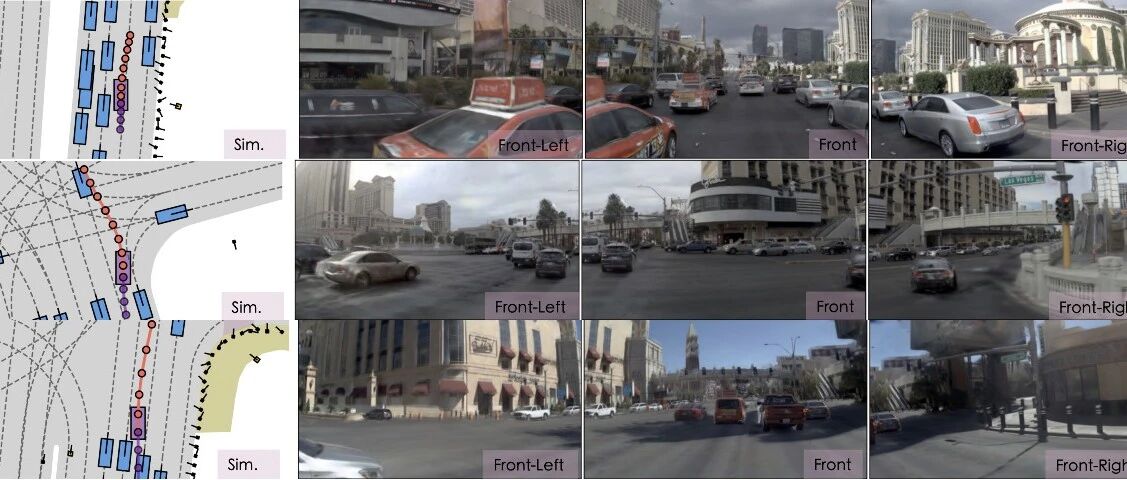
点击下方 卡片 ,关注" 自动驾驶之心 "公众号 戳我-> 领取 自动驾驶近30个 方向 学习 路线 >>直播和内容获取转到 → 自动驾驶之心知识星球 点击按钮预约直播 李弘扬老师团队的新工作 - SimScale,中科院、港大OpenDriveLab和小米汽车联合完成。 近年来,大模型领域背靠 Data Scaling 取得了前所未有的突破,但到了自动驾驶,这套方法却突然失灵了。不是因为模型不够大,而是现实世界根本给 不了足够多的关键场景。 现实道路中的绝大多数驾驶片段都是重复而安全的"常态行为",真正决定策略能力上限的高风险、长尾、极端场景却往 往难以遇见,更难以大规模收集。因此自动驾驶不是缺数据,而是缺"对的"数据,行业亟需一种能系统性生成大量关键 场景、并规模化训练的新路径。 针对这些问题,SimScale应运而生,SimScale探索了在scalable的3DGS交互式仿真下,生成reward、recovery等多种数据, 进行联合训练以最大化现有训练数据的利用效率。 最终在NavSim leaderboard 上取得了新的 SOTA,并在多类主流 E2E planner 上带来了显著提升! 今天自 ...
物理AI的ChatGPT时刻!英伟达“内驱”无人驾驶汽车将至,发布首个链式思维推理VLA模型
美股IPO· 2026-01-05 23:38
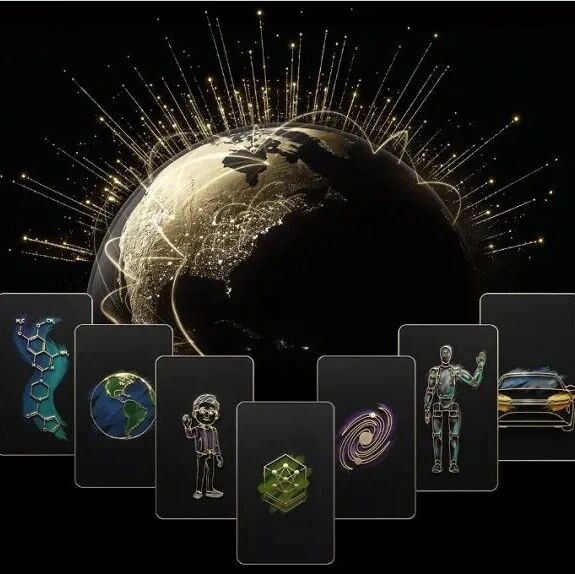
Core Viewpoint - Nvidia has announced the open-source release of its first inference VLA (Vision-Language-Action) model, Alpamayo 1, aimed at enhancing autonomous vehicle capabilities to "think" and solve problems in unexpected situations, utilizing a 10 billion parameter architecture [1][3][4]. Group 1: Model and Technology Overview - The Alpamayo model is designed to process complex driving scenarios using human-like reasoning, providing new pathways to address long-tail issues in autonomous driving [1][3]. - The model integrates three foundational pillars: open-source models, simulation frameworks, and datasets, creating a comprehensive open ecosystem for automotive developers and research teams [4]. - The model is now available on the Hugging Face platform and allows developers to adapt it for smaller runtime models or as a foundational tool for autonomous driving development [4][10]. Group 2: Industry Support and Collaboration - Major companies in the mobility sector, including Jaguar Land Rover, Lucid, and Uber, have expressed strong interest in utilizing the Alpamayo model to develop inference-based autonomous driving technology stacks [3][11]. - Nvidia's CEO highlighted the importance of the Alpamayo model in enabling autonomous vehicles to navigate rare scenarios safely and explain their driving decisions, which is crucial for scalable autonomous driving [6][11]. Group 3: Simulation and Data Resources - Alongside the Alpamayo model, Nvidia has released AlpaSim, a fully open-source end-to-end simulation framework for high-fidelity autonomous driving development, available on GitHub [9][10]. - Nvidia provides a large-scale open dataset containing over 1,700 hours of driving data, covering a wide range of geographical locations and conditions, essential for advancing inference architectures [9][10]. Group 4: Broader AI Model Releases - Nvidia has also launched several new open-source models, data, and tools across various industries, including the Nemotron family for agent AI, the Cosmos platform for physical AI, and the Isaac GR00T for robotics [12][14]. - These models include extensive datasets, such as 100 trillion language training tokens and 100TB of vehicle sensor data, aimed at accelerating AI development across sectors [14][15].
物理AI的ChatGPT时刻!英伟达“内驱”无人驾驶汽车将至,发布首个链式思维推理VLA模型
Xin Lang Cai Jing· 2026-01-05 23:14
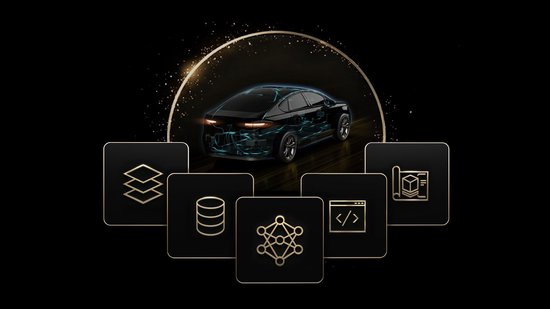
Core Insights - Nvidia has made a significant advancement in the autonomous driving sector by open-sourcing its first reasoning VLA (Vision-Language-Action) model, Alpamayo, aimed at accelerating the development of safe autonomous driving technology [1][16][13] - The model processes complex driving scenarios using human-like reasoning, providing a new pathway to address the long-tail problem in autonomous driving [1][14] Model Release and Features - The Alpamayo platform was unveiled by Nvidia CEO Jensen Huang at CES, with the first vehicles equipped with Nvidia technology expected to hit the roads in the U.S. in Q1 [3][16] - The Alpamayo model is free for potential users to retrain, designed to enable vehicles to "think" and propose solutions in unexpected situations, such as traffic signal failures [3][16] - The model features a 10 billion parameter architecture, utilizing video input to generate trajectories and reasoning paths, showcasing the logic behind each decision [4][17] Ecosystem and Support - Nvidia has created a comprehensive open ecosystem that includes the Alpamayo model, simulation frameworks, and datasets for any automotive developer or research team [3][16] - The open-source initiative has garnered widespread support from industry leaders, including Jaguar Land Rover, Lucid, Uber, and the University of California, Berkeley's DeepDrive, who plan to utilize Alpamayo for developing reasoning-based autonomous driving technology stacks [3][8][21] Technical Principles - The reasoning VLA model integrates visual perception, language understanding, and action generation with step-by-step reasoning capabilities, distinguishing it from standard VLA models [5][19] - It breaks down complex tasks into manageable sub-problems and provides interpretable reasoning processes, enhancing accuracy in problem-solving and task execution [5][19] Simulation Tools and Datasets - Alongside the Alpamayo model, Nvidia released AlpaSim, an open-source end-to-end simulation framework for high-fidelity autonomous driving development, available on GitHub [20] - The company also offers a large-scale open dataset with over 1,700 hours of driving data, covering diverse geographical locations and conditions, crucial for advancing the reasoning architecture [20] Industry Reactions - Industry leaders have expressed strong interest in Alpamayo, highlighting the growing need for AI systems to reason about real-world behaviors rather than merely processing data [21] - The open-source nature of Alpamayo is seen as a catalyst for innovation in the autonomous driving ecosystem, providing developers and researchers with new tools to safely navigate complex real-world scenarios [21][8]
H股“扎堆”递表 自动驾驶行业迎来淘汰赛
Xin Lang Cai Jing· 2026-01-05 20:03
来源:滚动播报 (来源:经济参考报) 2025年12月29日,中国L4级高度自动驾驶卡车及解决方案提供商主线科技(北京)股份有限公司(简 称"主线科技")披露H股IPO申报材料,成为2025年H股自动驾驶行业扎堆递表、集中上市的15家公司之 一。据《经济参考报》记者不完全统计,2025年1月至11月,国内自动驾驶领域融资金额已超380亿元, 超过该领域2024年全年的融资额。 业内人士表示,2025年,自动驾驶赛道在港股出现"扎堆上市"的火爆现象,本质上是"政策窗口期、资 本退出压力、商业化拐点、市场制度红利"四重因素共振的结果。头部企业通过双重上市抢占资本高 地,中小型企业则在商业化验证压力下艰难闯关。随着2026年L3/L4级自动驾驶商业化节点临近,预计 还将有更多公司递表,自动驾驶行业正从"技术叙事"转向"场景落地",应用场景梯度分化明显,资本市 场反应更加理性,无明确订单和营收支撑的纯技术公司将被市场冷落。 企业扎堆递表港交所 2025年12月15日,工业和信息化部正式公布我国首批L3级有条件自动驾驶车型准入许可,两款分别适 配城市拥堵、高速路段的车型将在北京、重庆指定区域开展上路试点。此举被业界视为 ...
智驾系列-2026迎-城区智驾-平权
2026-01-05 15:42
Summary of Conference Call Records Industry Overview - The focus is on the autonomous driving industry, particularly the trend towards urban autonomous driving democratization by 2026, with companies like BYD leading the charge [1][5]. Key Points and Arguments - **Urban Autonomous Driving Democratization**: - BYD is expected to increase the sales proportion of high-end urban autonomous driving models from 10% in 2025 to around 40% in 2026 [1][9]. - Other companies such as Chery and Geely, along with joint venture brands, are anticipated to follow suit [1][9]. - **Growth in Autonomous Logistics and Mining**: - Companies like New Stone and White Rhino are projected to experience rapid growth in autonomous logistics by 2026, with significant revenue potential [1][7]. - Companies like Xidi Zhijia and Zhongyou Technology are showing promising commercialization progress in mining automation [1][7]. - **Technological Synergy**: - There is a strong correlation between autonomous driving technology and robotics, with companies developing algorithms for autonomous driving also having competitive advantages in robotics [1][8]. - **Hardware Solutions for Cost Reduction**: - To achieve broader urban autonomous driving capabilities, companies need to adjust hardware solutions to lower costs, with solutions like cockpit integration being explored [1][10]. - **Autonomous Driving Chip Market Growth**: - The autonomous driving chip market is expected to grow rapidly, with Horizon Robotics projected to sell approximately 2 million low-end chips and 2 million G6M high-performance chips by the end of 2025, generating around 3.5 billion RMB in revenue [1][11]. Potential Companies in Investment Directions - **Core Algorithms and Chips**: - Companies such as Horizon Robotics, Xiaopeng Motors, and Li Auto are highlighted as having strong potential in core algorithms and chips [4]. - **Steering and Braking Control**: - Zhejiang Shibao, Nissin, and Wanlong Magnetic Plastic are noted for their performance in steering control, while Bertley and Asia-Pacific Holdings are recognized in braking control [4]. - **RoboTaxi and L4 Operators**: - Companies like WeRide, Pony.ai, and Qianli Technology are noted for their strong technical capabilities and potential for rapid fleet expansion in the RoboTaxi and L4 autonomous driving sectors [4]. Additional Important Insights - **Impact of Urban Autonomous Driving on User Experience**: - The democratization of urban autonomous driving is crucial as it allows more users to experience the benefits of smart driving technology beyond just highway scenarios [5]. - **Localization of Tesla's FSD in China**: - Tesla is accelerating its localization efforts in China by recruiting HPC talent to enhance its FSD system's performance on local roads [3][12][13]. - **Robot Taxi Developments**: - Tesla has introduced a cleaning fee policy for its Robot Taxi service, indicating preparations for large-scale deployment in multiple cities by 2026 [3][14]. - **Integration of Language Models in Autonomous Driving**: - The Grok model is being integrated with Tesla's FSD, allowing for enhanced interaction and environmental feedback, with further developments expected in future versions [3][15]. - **Waymo's Innovations**: - Waymo is integrating its Gemini language model into its autonomous taxi service, showcasing the potential for combining language and driving models [16]. - **Future Influences on Autonomous Driving Technology**: - The development of autonomous driving technology will depend on the integration of large language models and physical world understanding, alongside ongoing industry innovations [17].



佑驾创新:多名股东自愿延长限售期 董事长刘国清个人增持5万股
Zheng Quan Shi Bao Wang· 2026-01-05 15:30
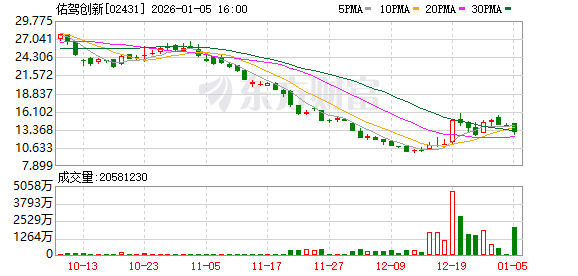
Core Viewpoint - Youjia Innovation (02431.HK) demonstrates strong confidence in its business prospects through voluntary extension of share lock-up periods by major shareholders and the chairman's share purchase, signaling positive market sentiment and shareholder protection [2] Group 1: Shareholder Actions - Major shareholders, including executive directors Liu Guoqing, Yang Guang, Zhou Xiang, Wang Qicheng, and individual shareholders Yan Shengye and Wu Jianxin, voluntarily extended their share lock-up periods, with four executive directors holding a total of 18.42% of shares extending their lock-up until December 27, 2026 [2] - Chairman Liu Guoqing purchased a total of 50,000 H-shares at an average price of approximately HKD 12.60 per share on January 5, 2026 [2] Group 2: Business Performance - Youjia Innovation has achieved a compound annual growth rate of over 50% in revenue, indicating a strong business momentum and deepening competitive moat [2] - The company has successfully delivered mass production to 42 automotive manufacturers, expanding its customer base across leading domestic and luxury brands, and is accelerating its international expansion [3] Group 3: Future Prospects - The company has entered the commercialization phase for its L4 autonomous driving business, with its unmanned buses operating in multiple cities and securing significant orders in the logistics market [3] - Youjia Innovation's comprehensive technology layout from L1 to L4, along with its strong engineering and mass production capabilities, positions it well to benefit from the accelerating industry upgrades and market opportunities [4] - The recent inclusion in the Hang Seng Stock Connect Electronic Theme Index reflects the capital market's recognition of the company's industry position and growth potential [4]
佑驾创新:多名股东自愿延长限售期,董事长刘国清个人增持5万股
Zheng Quan Shi Bao Wang· 2026-01-05 15:24
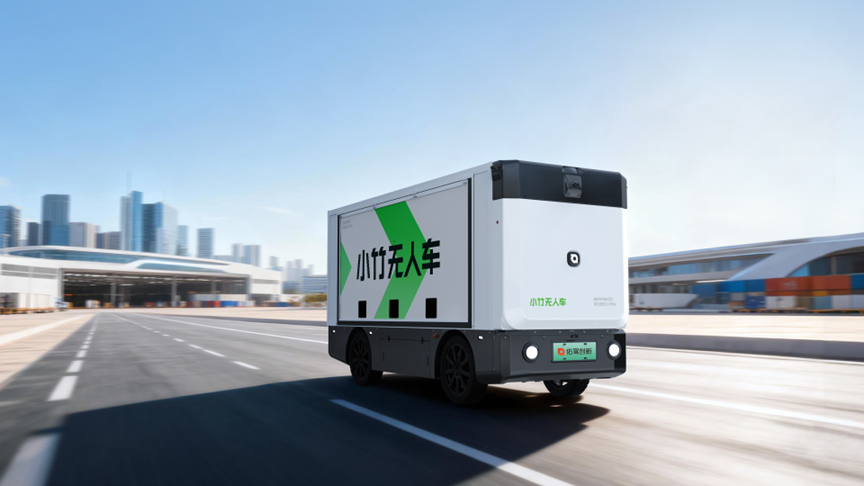
Group 1 - The core point of the news is that Youjia Innovation (02431.HK) has announced voluntary extensions of the lock-up period for major shareholders and a share purchase by Chairman Liu Guoqing, reflecting confidence in the company's business prospects [1] - Major shareholders, including four executive directors, will extend their lock-up period until December 27, 2026, while individual shareholders Yan Shengye and Wu Jianxin will extend theirs until June 27, 2026 [1] - Liu Guoqing purchased a total of 50,000 H-shares at an average price of approximately HKD 12.60 per share on January 5, 2026, signaling strong support from the leadership [1] Group 2 - Youjia Innovation has achieved significant growth in its L2 pre-installation business, delivering to 42 automakers and expanding its customer base, including top domestic and luxury brands [3] - The company has entered the commercialization phase for its L4 autonomous driving business, with successful deployments in multiple cities and high-profile scenarios, validating its technology and operational capabilities [3] - The introduction of the new unmanned vehicle, Xiaozhu, aims to penetrate the billion-level unmanned logistics market, with over a thousand bulk orders already secured [3] Group 3 - The opening of L3 autonomous driving in China accelerates industry upgrades, creating opportunities for high-level intelligent driving and L4 mass production [5] - Youjia Innovation has established a comprehensive competitive advantage through its full-dimensional technology layout and strong engineering capabilities [5] - The company's inclusion in the Hang Seng Hong Kong Stock Connect electronic theme index reflects market recognition of its industry position and growth potential [5]
美股盘前丨美股指期货涨跌不一 能源股盘前普涨
Xin Lang Cai Jing· 2026-01-05 14:06
Company News - Mobileye Global, an autonomous driving technology company under Intel, saw its stock rise over 8% in pre-market trading after securing a deal with a major U.S. automaker [1] - Tesla's Shanghai Gigafactory is projected to contribute over half of Tesla's global delivery volume by 2025 [1] - Xpeng Motors announced that the new Xpeng P7+ has completed trial production at its Graz factory in Austria [1] Market Dynamics - U.S. stock index futures showed mixed results, with Dow futures down 0.06%, S&P 500 futures up 0.25%, and Nasdaq futures up 0.64% [1] - Major European stock indices strengthened, with the FTSE 100 up 0.26%, CAC 40 up 0.02%, DAX 30 up 0.61%, and the Euro Stoxx 50 up 0.64% [1] - Energy stocks in the U.S. saw pre-market gains, with Schlumberger up over 8%, Halliburton and Valero Energy up over 7%, Chevron and ConocoPhillips up over 6%, and ExxonMobil up nearly 3% [1]
2026:你的同事可能不是人,你的文凭可能是废纸?
虎嗅APP· 2026-01-05 13:28
Core Insights - The article presents ten disruptive predictions for 2026 from prominent figures in Silicon Valley, focusing on the themes of intelligence, economy, and physical advancements [4][6]. Group 1: Intelligence - Prediction 1: AI model sizes will increase by 100 times due to advancements in software and algorithms, particularly through a technique called "quantization" [9][12]. - Prediction 2: AI may solve one of the Millennium Prize Problems, enhancing our understanding of complex physical systems like fluid dynamics [14][17]. - Prediction 3: New AI terminologies will emerge, creating opportunities for young entrepreneurs to build billion-dollar companies with minimal resources [19][23]. Group 2: Economy - Prediction 4: The concept of "digital transformation" will become obsolete, as companies will need to rebuild their capabilities from scratch using AI, potentially reducing workforce size by 10 to 20 times [27][29]. - Prediction 5: Automation will achieve a 90% competency rate in high-value tasks, leading to a significant shift in job roles and the value of human labor [32][34]. - Prediction 6: The emergence of full-stack AI employees will challenge traditional workplace trust, as AI could perform roles typically held by humans at a fraction of the cost [36][37]. Group 3: Physical - Prediction 8: Space exploration will advance significantly, with potential commercial activities like mining water ice on the Moon becoming a priority [46][50]. - Prediction 9: The development of Level 5 autonomous driving and humanoid robots will revolutionize urban environments, transforming how cities are designed and function [53][55]. - Prediction 10: Advances in biotechnology may lead to breakthroughs in reversing aging, marking a potential turning point in human longevity [56][60].