
软件

Search documents
日韩科技电子股大跌,软银跌4%,SK海力士跌近5%
2 1 Shi Ji Jing Ji Bao Dao· 2026-02-05 00:55
Market Overview - Following the overnight decline in US stocks, Japanese and South Korean markets opened lower, with technology and electronics stocks experiencing significant drops [1] - As of around 8:20 AM Beijing time, the Nikkei 225 index fell approximately 0.4%, with declines in tech and electronics stocks offsetting gains in automotive and pharmaceutical sectors [1] Company Performance - SoftBank Group saw a decline of over 4%, following a drop in its subsidiary Arm Holdings' stock price overnight [1] - NEC Corporation experienced a nearly 5% drop, while Advantest Corporation fell by 4% [1] - In South Korea, the KOSPI index dropped nearly 2%, with major chipmaker SK Hynix down by 4.89% and Samsung Electronics falling over 3.6%, contributing significantly to the index's decline [1] Broader Impact - The global sell-off in software stocks also affected Chinese concept stocks, with the Nasdaq Golden Dragon China Index closing down by 1.95% on Wednesday [1]
美国软件业贷款坏账激增,一场“软件-PE”死亡循环正上演
Hua Er Jie Jian Wen· 2026-02-05 00:55
Core Insights - The U.S. software industry is facing a credit crisis triggered by concerns over AI disrupting traditional software business models [1][2] - The crisis, referred to as the "SaaS apocalypse," has led to a significant increase in bad debt within the tech sector, reaching approximately $46.9 billion, the highest level since October 2022 [1] - The impact of this crisis is spreading from the stock market to the private credit sector, with a notable percentage of leveraged loans exposed to the tech industry [1][3] Group 1: Debt Deterioration - Over the past four weeks, $17.7 billion in tech company loans have fallen into bad debt, primarily within the Software as a Service (SaaS) sector [2] - Bad loans are defined as those yielding more than 10 percentage points above the benchmark Secured Overnight Financing Rate (SOFR) [2] - Many software company loans are nearing distress levels, with specific examples including Dayforce and Calabrio, which are approaching crisis thresholds [2] Group 2: Private Credit Market Challenges - The software industry's troubles are transmitting shockwaves to the private credit market, with alternative lenders' stock prices plummeting in tandem with software companies [3] - Analysts indicate that software represents one of the largest industry exposures for Business Development Companies (BDCs), potentially higher than reported due to misclassification of loans [3] - The logic behind lending to software companies has collapsed, as the predictability of subscription revenue is now questioned due to the risk of obsolescence [3][4] Group 3: Market Dynamics - The appeal of private credit is diminishing as public market yields rise, making the promised "liquidity premium" less attractive [4] - The current market environment is characterized by panic selling, with no signs of stabilization, leading to a "death spiral" for software companies [5] - A dangerous feedback loop is forming, where falling software equity valuations pressure private credit institutions to reassess their balance sheets, tightening credit conditions further [5]
中信证券:预计美股软件板块当下痛苦状态仍可能持续一段时间
Di Yi Cai Jing· 2026-02-05 00:36
Group 1 - The core viewpoint of the article is that the U.S. software sector is currently facing severe selling pressure, and the best response to skepticism about the tech wave is through corporate performance, similar to past tech cycles [1] - Traditional software companies have significant advantages over AI startups in terms of customer resources, delivery services, domain knowledge, and data accumulation, and they are actively responding to potential AI disruptions and opportunities through M&A and adjustments in products and business models [1] - The current "risk-off" sentiment in the U.S. market and the slow improvement in the performance of software companies suggest that the painful state of the software sector may persist for some time [1] Group 2 - In the medium to long term, considering the underlying logic of AI and corporate valuation levels, it is an optimal time to invest in companies with robust balance sheets, platform-based application software, information security firms, and foundational software vendors that benefit from computing infrastructure [1]

去年4月以来最大跌幅,纳指“两连跌”:软件“失火”、芯片“遭殃”、科技“跳水”
Hua Er Jie Jian Wen· 2026-02-05 00:32
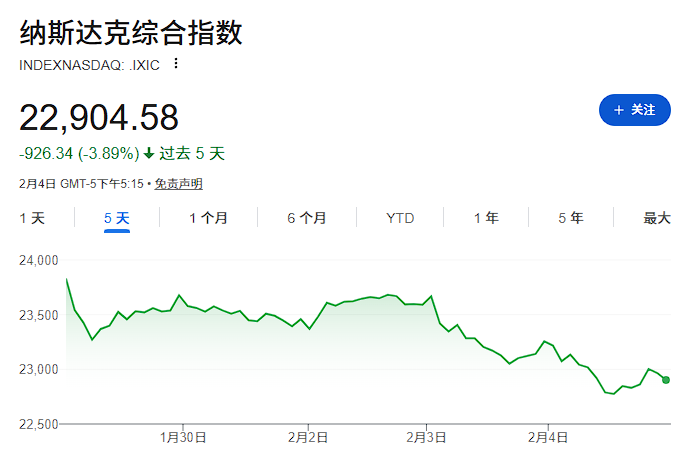
Core Viewpoint - Concerns in the software industry are rapidly evolving into a broader sell-off in the technology sector, with significant pressure on tech stocks as market panic spreads from the SaaS sector to semiconductors and AI infrastructure [1] Group 1: Market Reactions - The Nasdaq Composite Index experienced a decline, marking its first consecutive two-day drop of 1% since April of the previous year, driven by shaken investor confidence in the software industry's outlook [1] - Following the release of disappointing earnings, AMD's stock plummeted by 17%, marking its worst single-day performance since 2017 [4] - Palantir's stock fell by 12%, and SanDisk's stock dropped by 16%, with major AI companies like Meta and Nvidia also experiencing declines of 6.6% and 8.9%, respectively [7] Group 2: Valuation Concerns - High valuations are exacerbating market reactions, with current expectations being extremely high, leading to severe market responses [10] - The average price of loans for software companies has decreased from 94.71 cents at the end of last year to 91.27 cents, indicating a shift in investor sentiment [10] - Approximately $25 billion in software loans are classified as non-performing, representing nearly one-third of all bad loans [10] Group 3: AI Disruption and Overreaction - The market volatility reflects a reassessment of companies facing potential disruption from AI technologies, with the software industry perceived as having the highest risk exposure [11] - Some industry executives and strategists argue that the sell-off may be overblown, suggesting that fears of AI replacing software companies are unfounded [12] Group 4: Capital Rotation - Despite the turmoil in tech stocks, the market is not experiencing a broad retreat but rather a clear trend of capital rotation from chip stocks and large tech winners to more traditional sectors [13] - On the same day the S&P 500 index fell by 0.5%, 92 stocks reached 52-week highs, the highest number of new highs since November 2024 [13]


AI次生影响担忧扩散,美股板块轮动加剧
Xin Lang Cai Jing· 2026-02-05 00:31
Group 1 - The core viewpoint of the articles highlights the significant market sell-off in the software sector, with a total market value loss of $1 trillion, driven by concerns over the sustainability of the AI hype and its potential disruption to existing business models [1] - The Nasdaq and S&P 500 indices have further declined from historical highs, indicating a broader market reaction to the pressures faced by growth sectors, particularly software and large tech stocks [1] - There is a notable shift in investor sentiment, with funds moving away from software stocks towards safer sectors like industrials and transportation, as they await clearer market conditions [1] Group 2 - Hedge funds are reportedly increasing their short positions on software stocks, contributing to the severe sell-off in the sector, with S3 Partners noting that short sellers have profited $24 billion from software stock trades this year [1] - Nvidia's CEO, Jensen Huang, countered the narrative that AI is causing market panic, arguing that software products are tools that AI will utilize rather than replace, suggesting a misunderstanding of the relationship between AI and existing software [2] - Nomura's cross-asset strategist, Charlie McElligott, indicated that investors were prepared for headwinds in the AI sector but were caught off guard by the emergence of secondary challenges sooner than expected [2]
芯片短缺或延至2028年,微信出手限制元宝红包 | 财经日日评
吴晓波频道· 2026-02-05 00:30
Group 1 - The central government's focus on agricultural and rural issues continues with the release of the 14th guiding document on "Three Rural Issues," emphasizing rural revitalization as a key theme [2] - The document introduces new initiatives such as the "grain circulation quality improvement project" and the concept of "normalized precise assistance" for the first time in a decade, reflecting a shift towards sustainable agricultural development [2][3] - The integration of advanced technologies like drones and robots into agriculture is encouraged, aiming to enhance efficiency and reduce costs in agricultural practices [3] Group 2 - Intel's CEO predicts that the shortage of storage chips will persist until 2028, primarily driven by the high demand for high-bandwidth memory (HBM) from AI applications [4] - The ongoing AI boom is expected to significantly impact the storage chip market, with major players like Samsung, SK Hynix, and Micron maintaining a dominant position due to the long construction cycles of new production lines [4][5] - The software sector is experiencing a sell-off, with a total market value loss of approximately $285 billion, as traditional software companies face competition from AI applications that can replace human tasks [15][16] Group 3 - Walmart's stock has surged, making it the first traditional retailer to surpass a market capitalization of $1 trillion, reflecting its successful transition to e-commerce and competitive positioning against Amazon [6][7] - The company has invested heavily in its e-commerce operations, achieving profitability in its online business for the first time last year, which has attracted a new customer base [6][7] - Despite its success, Walmart faces challenges from tightening consumer spending among low-income households and must continue to innovate to maintain its market position [7] Group 4 - Gao Xin Retail, the parent company of RT-Mart, is facing management instability as its CEO has gone missing, prompting the board to appoint a new interim leader [8][9] - The company is undergoing significant changes amid a strategic shift away from Alibaba, with a focus on stabilizing operations and reversing financial losses [9] - The banking sector is adjusting its SMS notification services, with招商银行 (China Merchants Bank) raising the threshold for free transaction alerts, reflecting a broader trend of banks reducing free services to cut costs [12][14]


市值蒸发超万亿!AI次生影响担忧扩散 美股板块轮动加剧
Di Yi Cai Jing· 2026-02-05 00:19
Core Viewpoint - The rapid development of artificial intelligence (AI) technology is causing significant disruptions in various industries, leading to concerns about the sustainability of the related market trends, as evidenced by the decline of the Nasdaq and S&P 500 indices from historical highs [1] Market Pressure - The software sector and large tech stocks are experiencing substantial selling pressure, primarily due to the introduction of a new AI model by Anthropic, which threatens existing business models [2] - Concerns about concentration risk in large tech stocks and the inflated valuations driven by the hype around AI have intensified, leading to a nearly 8% drop in the SPDR S&P Software & Services ETF over two days, with a total decline of 15% over the past two weeks [2] - Hedge funds are increasing short positions in software stocks, contributing to a significant sell-off in the sector, which has seen a total market cap loss of $1 trillion [2] - Nvidia's CEO dismissed fears that AI would replace existing software tools, arguing that AI will utilize these tools rather than render them obsolete [2] Secondary Concerns - Nomura's strategist highlighted that the disruptive impact of AI is being felt earlier than expected, affecting not only software companies in the legal sector but also financial services and asset management firms [3] - High-growth software companies are facing a "disruptive collapse," raising concerns in the credit market regarding lending to these firms [3] - The market is becoming increasingly critical of the monetization capabilities of AI companies, as evidenced by Oracle's debt issuance plans and Nvidia's reduced investment targets for OpenAI [3][4] Profitability Issues - OpenAI's business model is deemed unsustainable, with significant infrastructure costs for AI capabilities that may not yield profitable returns [4] - AMD's stock dropped 17%, negatively impacting the AI sector, as analysts expressed concerns over the company's rising operational expenses and its ability to compete effectively in the AI market [4] Economic Concerns - Despite economic growth supporting the stock market, there are fears about the fragility of this growth, which is heavily reliant on AI investments and high-income consumer spending [5] - If the stock market experiences a significant downturn, the wealth effect could diminish, adversely affecting consumer spending, which is crucial for economic growth [5] Sector Rotation - As the tech sector weakens, the industrial sector is benefiting from capital outflows, with several defense and transportation stocks reaching historical highs [6] - The S&P 500 index saw 82 stocks hit 52-week highs, driven by renewed government spending on defense technologies and expectations of a bottoming out in the freight industry [6] - However, the strong performance of industrial stocks may not reflect a fundamental improvement, as expectations for earnings growth in this sector have been downgraded [7] Investment Shifts - Investors are rapidly moving from traditional growth stocks to defensive and cyclical stocks perceived as undervalued [8] - There is a growing interest in physical assets like gold and real estate, while assets linked to the dollar are losing appeal [8] - The market is closely monitoring OpenAI's unstable financing needs, which could become a critical factor in future market dynamics [8]
人类史上最富!马斯克身家超8000亿美元
Zhong Guo Ji Jin Bao· 2026-02-05 00:19
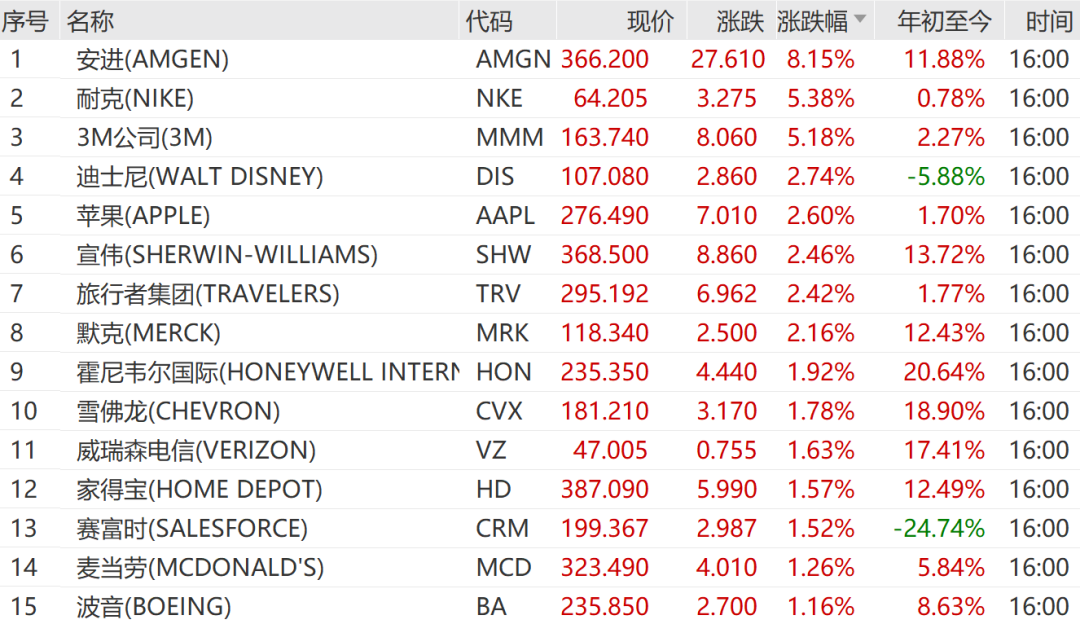
Market Overview - The three major U.S. stock indices closed mixed, with the Dow Jones up by 0.53%, while the S&P 500 and Nasdaq fell by 0.51% and 1.51% respectively [2] - Major technology stocks mostly declined, with the U.S. Tech Giants Index down by 1.32% [4] Notable Stock Movements - Amgen saw a significant increase of over 8%, while Nike rose by more than 5%, leading the Dow [2] - Tesla dropped by 3.78%, Nvidia by 3.41%, and Facebook by 3.28%, leading the declines among major tech stocks [4][5] Hedge Fund Activity - Hedge funds are significantly shorting software stocks, with short sellers profiting $24 billion this year, while the sector's overall market value has shrunk by $1 trillion [9] - The iShares Expanded Tech Software ETF (IGV) has fallen by over 21% year-to-date, with a 30% decline since its peak in September of the previous year [9] Chinese Stocks Performance - Chinese stocks generally fell, with the Nasdaq Golden Dragon China Index down by 1.95% and the Chinese Tech Leaders Index down by 2.80% [7] - Notable declines included NetEase down by 5.41%, Baidu down by 4.77%, and Tencent down by 4.14% [7][8] Elon Musk's Wealth - Elon Musk has become the first person in history to surpass a net worth of $850 billion (approximately 5.92 trillion RMB), primarily due to the acquisition of AI startup xAI by SpaceX, which is valued at $1.25 trillion [6] Gold and Silver Market - Gold futures experienced volatility, initially rising by 3.63% before settling at $4986.40 per ounce, a 1.04% increase [11] - Silver futures surged by 10.46% to $92.02 per ounce before closing at $87.77 per ounce, reflecting a 5.36% increase [12]





2月5日早餐 | 美股科技股继续走弱;谷歌资本开支超预期
Xuan Gu Bao· 2026-02-05 00:12
Market Overview - US economic data shows mixed results, with a strong services PMI and weak ADP employment figures. This has led to a sell-off in software stocks, which has spread to semiconductor and AI sectors. Funds are rotating into energy and materials sectors. The Nasdaq closed down 1.51%, while the Dow Jones rose 0.53% and the S&P 500 fell 0.51% [1] - The semiconductor index dropped 4.4%, with AMD experiencing a post-earnings plunge of 17%, marking its largest single-day drop in eight years. Other notable declines include Nvidia down 3.4% and Tesla down 3.78%, while Apple rose over 2% [1] Semiconductor Industry - Samsung Electronics is considering a price increase of about 10% for 4nm and 8nm processes, while TSMC has also been raising prices due to increased demand from AI. Reports suggest that some processes could see price hikes of up to 20% [10] - TSMC has raised its capital expenditure forecast for capacity expansion from $40.9 billion in 2025 to between $52 billion and $56 billion in 2026, reaching a historical high [10] AI and Technology - Alphabet, Google's parent company, plans to increase capital expenditures to between $175 billion and $185 billion, nearly double the total for 2025 [4] - Tencent has launched its first independent app for AI short dramas, indicating a growing trend in the digital entertainment sector [13][14] Financial Market Developments - The Nasdaq Golden Dragon China Index fell by 1.95%, with notable declines in companies like Kingsoft Cloud down over 7% and Alibaba down about 3%. JinkoSolar saw an increase of over 8% [2] - The US Treasury's quarterly refinancing plan met expectations, with the 30-year Treasury yield rising by 2 basis points to 4.92% [2] Commodities - Bitcoin dropped over 5% to around $72,000, while Ethereum fell more than 5%, reaching a nine-month low. COMEX gold futures rose by 0.98% to $4,984.20 per ounce, and WTI crude oil futures increased by 3.05% to $65.14 per barrel [3]
软件股崩了,没人“敢接飞刀”
Hua Er Jie Jian Wen· 2026-02-05 00:11
美国软件板块周三遭遇2022年以来最严重的抛售,但往常在科技股暴跌时迅速入场的"抄底资金"却集体 缺席。 此次软件板块的抛售是自2022年以来最严重的一次。2022年利率上升曾重创软件股,但当前的市场情绪 已从彼时的估值担忧演变为对AI技术可能颠覆传统软件商业模式的深层焦虑。投资者对逢低买入的集 体回避,表明市场对软件板块的看法可能从短期调整转向结构性重估。 抄底资金集体失踪 Interactive Brokers首席策略师Steve Sosnick表示,与贵金属和半导体板块形成鲜明对比,该公司客户对 软件股的抄底热情明显不足。"总体而言,我们的客户对软件股的抄底意愿远不如贵金属和半导体,"他 说,"虽然可能有客户在买入软件股,但这绝不是他们交易活动的重点。" 微软成唯一亮点,但卖空者蜂拥而至 标普500软件与服务指数周二暴跌近4%后,周三再度下挫1%,连续第六个交易日下跌。与以往市场回 调不同,此次抛售未能吸引任何明显的抄底买盘。 Sosnick指出,微软是该板块少数例外之一,尽管该公司并非纯粹的软件企业,但仍吸引了部分买家。 自1月28日公布财报以来累计下跌约15%的微软股价,周三小幅上涨约1%。 期权交 ...