天然气

Search documents
国际能源署发布最新报告显示——可再生能源需求增长加速
Jing Ji Ri Bao· 2026-01-14 08:13
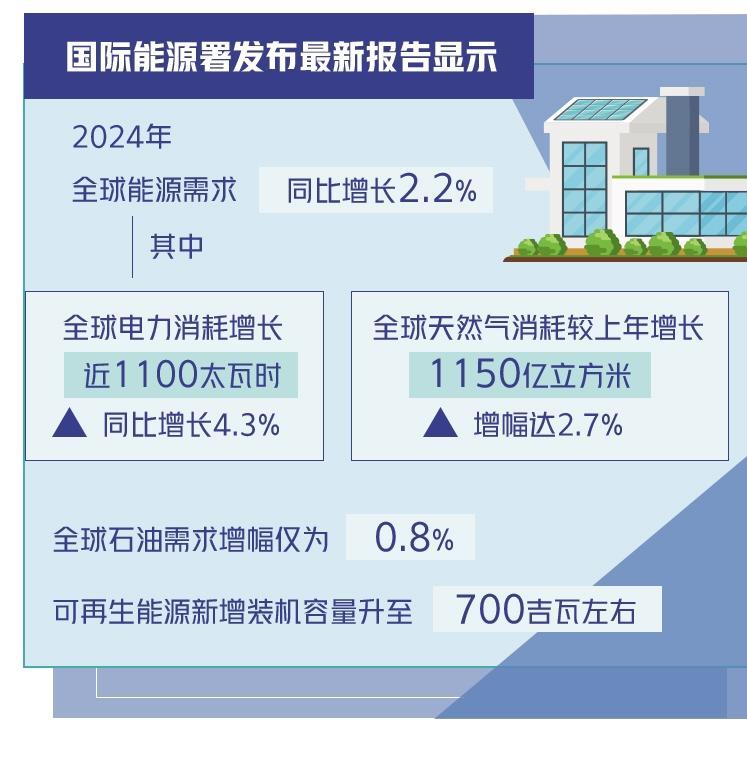
Core Insights - The International Energy Agency (IEA) has released its latest report on global energy trends for 2024, highlighting significant growth in energy demand and the role of renewable energy in meeting this demand [2][3] Energy Demand Growth - Global energy demand is projected to grow by 2.2% in 2024, surpassing the average annual growth rate of 1.3% from 2013 to 2023 [2] - Emerging markets and developing economies account for 80% of the increase in energy demand, while developed economies show signs of recovery with nearly 1% growth after years of decline [2] Electricity Consumption - Global electricity consumption is expected to increase by nearly 1,100 terawatt-hours (TWh), representing a 4.3% year-on-year growth, which is double the average annual growth rate over the past decade [2] - Factors driving this surge include record high temperatures, increased industrial electricity use, accelerated electrification of transportation, and rapid growth in data centers and AI industries [2] Renewable Energy Capacity - Renewable energy is set to dominate the new electricity capacity additions, with an expected increase of around 700 gigawatts (GW) in 2024, marking the 22nd consecutive year of record growth [2] - In 2024, 80% of the increase in global electricity generation will be met through renewable energy and nuclear power, with both sources collectively surpassing a 40% share for the first time [3] Fossil Fuel Consumption Trends - Natural gas consumption has seen the highest growth among fossil fuels, with a year-on-year increase of 115 billion cubic meters, reflecting a 2.7% rise, significantly above the average growth of 75 billion cubic meters over the past decade [3] - In contrast, oil demand growth has slowed to just 0.8%, with its share of global energy demand falling below 30% for the first time, largely due to the active electric vehicle market [3] - Coal demand growth has also decreased to 1% in 2024 [3] Carbon Emissions and Clean Technology - The acceleration of clean energy technologies has effectively suppressed the growth of energy-related carbon dioxide emissions, with a slight increase of 0.8% in 2024, totaling 3.78 billion tons [4] - Since 2019, the large-scale adoption of technologies such as solar, wind, nuclear, electric vehicles, and heat pumps has led to an annual reduction of 2.6 billion tons of CO2, equivalent to 7% of global emissions [4] - Structural changes in global energy demand, including the slowdown in oil demand growth and the strengthening role of electricity, are reshaping the energy landscape and highlighting the impact of the clean technology revolution on traditional energy systems [4]

5300米!中国石化刷新页岩气井垂深纪录
Xin Hua Wang· 2026-01-14 08:13
Group 1 - China Petroleum & Chemical Corporation (Sinopec) achieved a significant breakthrough in shale gas exploration with the successful daily production of 314,500 cubic meters from the Tiebei 1 side HF well in the Sichuan Basin, setting a new record for well depth in China at over 5,300 meters [1] - The successful drilling of the Tiebei 1 side HF well is expected to enhance the resource accumulation and production capacity in the Puguang area, contributing to the development of ultra-deep shale gas in the Sichuan Basin [1][2] - Sinopec has been actively seeking new resource supplements to maintain stable production, focusing on the rich shale gas resources in the Puguang second member of the Permian system, which are primarily located at depths exceeding 4,500 meters [1][3] Group 2 - The company has developed its own high-pressure fracturing equipment, capable of creating complex "artificial gas pathways" in high-pressure geological formations, which aids in maximizing resource extraction from the shale gas reservoirs [2] - Sinopec is currently preparing a comprehensive exploration and development plan for the Puguang second member shale gas, aiming to enhance resource conversion efficiency and accelerate the transformation of the "deep earth forbidden zone" into a "deep earth granary" [2] - The development of shale gas is strategically significant for China's energy landscape, as the country has historically been a major oil and gas importer, and Sinopec has played a crucial role in the commercialization of shale gas in China since the discovery of the Fuling shale gas field in 2012 [3]

中国12月钢铁出口创新高、稀土同比大增32%,全年大豆、铁矿石、原油进口齐破纪录
Hua Er Jie Jian Wen· 2026-01-14 07:58
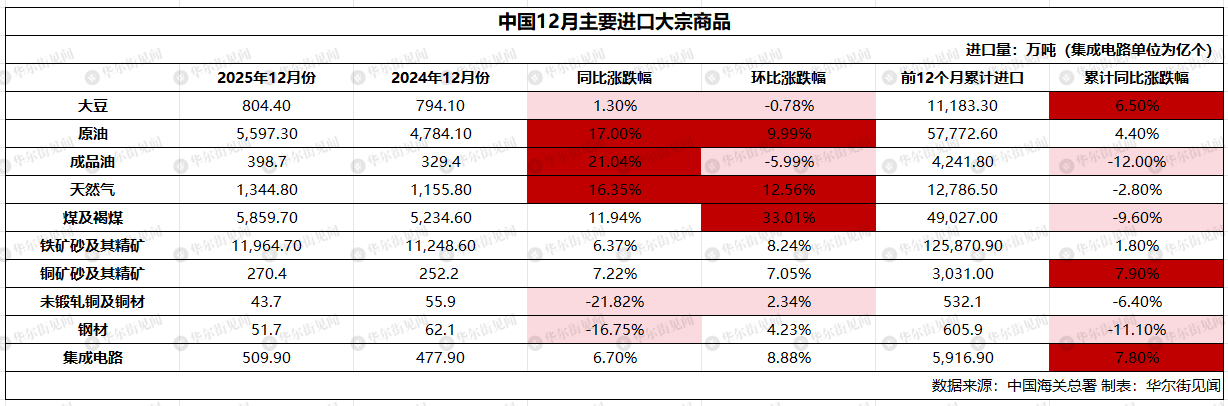
Core Insights - In 2025, China's soybean imports reached a record high of 111.8 million tons, marking the third consecutive year of growth, with a 6.5% increase from 2024 [1][3] - Iron ore imports also hit a historical peak, growing by 1.8% to 1.26 billion tons, continuing a three-year growth trend [6] - Coal imports saw the largest decline in a decade, dropping by 9.6% to 49 million tons [6][13] - December exports of rare earths surged by 32% year-on-year to 4,392 tons, while steel product exports exceeded the previous peak in 2015, reaching 11.3 million tons [2][1] Import and Export Data - December soybean imports were 8 million tons, a 1.3% increase year-on-year, while the total for the year was 111.83 million tons [3][13] - December iron ore imports were 11.96 million tons, a 6.37% increase from the previous year [9] - December crude oil imports reached 55.97 million tons, a 17% increase year-on-year, with an annual total of 57.77 million tons [4][12] - December natural gas imports rose by 16.35% to 1.34 million tons, but the total for the year fell by 2.8% to 12.79 million tons [7][13] Market Analysis - The increase in crude oil imports is attributed to stronger refining activity and robust stockpiling demand, with processing volumes expected to reach 15.38 million barrels per day in 2025 [5] - The decline in coal imports is linked to rising domestic production and the rapid adoption of clean energy, which is reducing coal demand [7] - The surge in rare earth exports indicates a solid demand foundation, despite a 20% month-on-month decline in December due to pre-holiday stockpiling by overseas buyers [2]
美国页岩气革命重塑全球天然气供需格局
Qi Huo Ri Bao Wang· 2026-01-14 02:54
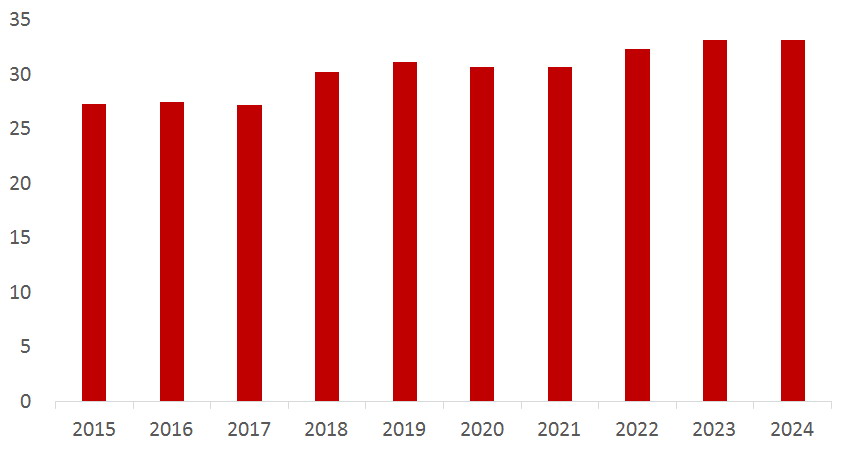
Core Insights - The United States is the world's largest producer and consumer of natural gas, significantly influencing the global LNG market. The shale gas revolution has transformed the supply-demand dynamics, shifting the U.S. from a net importer to a net exporter of natural gas [1] Production Overview - U.S. natural gas production has steadily increased, surpassing Russia since 2011, with a global share of over 20% from 2015 to 2024, projected to reach approximately 25% in 2024 [2] - From 2014 to 2023, U.S. natural gas production rose from 27.1 trillion cubic feet to 37.8 trillion cubic feet, with a compound annual growth rate (CAGR) of 3.4% [2] - The shale gas revolution began in the late 1990s, making shale gas the largest source of U.S. natural gas, accounting for 77% of production in 2024 [3] Regional Production - Major U.S. natural gas production regions include the Appalachian, Permian, and Haynesville areas, contributing approximately 68% of total U.S. production in the first half of 2025 [4] - In 2023, the Appalachian region produced 33 billion cubic feet per day, ranking second globally, while the Permian and Haynesville regions ranked fifth and eighth, respectively [4] Import Dependency - The U.S. has reduced its natural gas import dependency to 7%-11% from 2015 to 2024, primarily importing pipeline gas from Canada and Mexico [5][6] - Canada remains the largest source of U.S. natural gas imports, accounting for over 96% of total imports, mainly through pipelines [6] Consumption Trends - The U.S. is also the largest consumer of natural gas, with consumption accounting for about 21% of global totals from 2015 to 2024 [7] - U.S. natural gas consumption grew from 27.2 trillion cubic feet in 2015 to 33.1 trillion cubic feet in 2024, with a CAGR of 2%, driven mainly by increased demand for natural gas in power generation [8] LNG Export Growth - Since 2017, the U.S. has become a net exporter of natural gas, with exports rising from 4.5% in 2010 to 18.9% in 2024, and total exports reaching a record 7.7 trillion cubic feet in 2024 [12] - LNG exports have surged, with volumes increasing from 16.7 billion cubic feet in 2015 to 4.37 trillion cubic feet in 2023, reflecting a CAGR of 74.4% [13] - In 2024, LNG exports accounted for 57% of total U.S. natural gas exports, with Europe being the primary destination, comprising 53% of LNG exports [14][15]
ADNOC确定SARB深层气田投资方案
Zhong Guo Hua Gong Bao· 2026-01-14 02:48
Ghasha特许区是阿布扎比天然气综合开发计划的核心区域,其Hail和Ghasha气田预计到2050年总产量将 达日均18亿标准立方英尺。SARB项目的最终投资决定也为该区域进一步的许可与勘探活动奠定了基 础。 ADNOC上游首席执行官穆萨贝·卡比表示,该项目是全面开发阿布扎比优质天然气资源、支持阿联酋天 然气自给自足战略的一部分。该区域深层天然气储藏在4500米以下的高温高压岩层中,需采用特种钻井 与完井技术。项目将新建一座海上平台,并依托现有海底管网的剩余输送能力,以控制成本。平台将由 阿尔扎纳岛远程操控,体现了海上作业数字化发展趋势。 中化新网讯 1月7日,阿布扎比国家石油公司(ADNOC)宣布,已就SARB深层天然气开发项目作出最终 投资决定。该项目位于阿布扎比近海的Ghasha特许区,目标是从4口井中实现日均2亿标准立方英尺的天 然气产量,所产天然气将输送至达斯岛进行处理。 ...
跨亚得里亚海天然气管道将扩大对欧输气
Shang Wu Bu Wang Zhan· 2026-01-13 15:21
阿塞拜疆"趋势"网1月7日报道,跨亚得里亚海天然气管道(TAP)财团对 外表示,根据新的天然气运输协议,自2026年1月起TAP将扩大输气能力,提 供额外长期输气,输气量为根据2021年市场测试后所定限额。 (原标题:跨亚得里亚海天然气管道将扩大对欧输气) TAP全长3500公里,将阿塞拜疆里海沙赫丹尼兹气田的天然气送至欧洲。 此次新增输气能力再次印证该管道的可靠性及对欧洲能源供应多元化的重要 性。启用TAP五年来,阿通过TAP对欧出口天然气超540亿方。 ...
阿塞拜疆和土耳其签署330亿立方天然气供应协议
Shang Wu Bu Wang Zhan· 2026-01-13 15:21
阿塞拜疆"趋势"网1月4日报道,土耳其能源和自然资源部长巴伊拉克塔尔 宣布,阿塞拜疆和土耳其签署了新天然气供应协议。根据协议,阿将从里海的 阿布歇隆气田,通过巴库-第比利斯-埃尔祖鲁姆管道向土输送天然气,每年供 应22.5亿方。该协议将于2029年生效,有效期15年。 阿布歇隆气田位于里海水域,巴库东南约100公里,沙赫丹尼兹气田东北 约25公里。该气田自2023年7月起生产凝析油和天然气。 (原标题:阿塞拜疆和土耳其签署330亿立方天然气供应协议) ...
媒体报道丨能源保供稳步推进 各地夯实冬日温暖底座
国家能源局· 2026-01-13 13:59
Group 1 - The article emphasizes the importance of ensuring stable energy supply during the winter peak, which is crucial for both economic development and residents' heating needs [2][5] - Coal and electricity play a foundational role in energy supply during the winter, acting as a stabilizing force and peak-shaving resource [2] - A new 2×1000 MW power generation unit in Jiangxi has been commissioned, which is expected to generate 10 billion kWh annually, significantly enhancing the stability and reliability of electricity supply in the northeastern region of Jiangxi [2] Group 2 - Natural gas is becoming an increasingly important heating energy source as part of the "dual carbon" initiative, with oil and gas companies improving extraction and transportation efficiency [3] - A gas field in the Ordos Basin is projected to produce 51.42 billion cubic meters of natural gas annually by 2025, with daily supply exceeding 16 million cubic meters during peak heating periods [3] - A deep-sea gas field has achieved a total oil and gas output of over 4.5 million tons of oil equivalent by 2025, with daily production of 15 million cubic meters of natural gas [3] Group 3 - The construction and operation of clean energy projects are accelerating, contributing to a significant increase in installed power generation capacity, which reached 3.79 billion kW by the end of November 2025, a 17.1% year-on-year increase [4] - Solar power capacity has grown by 41.9% to 1.16 billion kW, while wind power capacity has increased by 22.4% to 600 million kW [4] - The article highlights various clean energy projects, including a wind farm in Jilin and a nuclear power plant in Fujian, which are expected to provide substantial clean energy and reduce carbon emissions [4] Group 4 - The National Development and Reform Commission is actively working to enhance peak supply capabilities for electricity and natural gas, addressing regional imbalances and ensuring resource reserves are adequate [5] - Continuous monitoring and preparedness for adverse weather conditions are being emphasized to maintain stable energy supply across the country [5]

首华燃气:截至2026年1月9日股东总数为19629户
Zheng Quan Ri Bao Wang· 2026-01-13 12:45
证券日报网讯1月13日,首华燃气(300483)在互动平台回答投资者提问时表示,截至2026年1月9日, 首华燃气普通股股东总数为19629户。 ...

2026全球能源展望:能源韧性、AI、务实转型深度交织
中国能源报· 2026-01-13 11:04
Core Viewpoint - The energy sector will continue to be a crucial arena for global economic development, geopolitical competition, and technological rivalry in the coming year [3]. Group 1: Energy Security - Energy security is a top priority, with "growth, resilience, and competition" identified as key themes for the global energy market in 2026 [5]. - The ongoing geopolitical risks, such as the Russia-Ukraine conflict, have brought energy security back to the forefront, particularly for Europe, which is increasingly focused on reducing dependence on Russian oil and gas [5]. - The International Energy Agency predicts that global crude oil supply will exceed demand by 385,000 barrels per day in 2026, indicating a potential oversupply in both oil and natural gas markets [5][6]. Group 2: AI and Power Demand - The explosive growth of AI will significantly increase electricity demand, with global data center power needs expected to rise by 17% in 2026 [9]. - The accessibility of electricity has become a primary consideration for data center site selection, surpassing traditional factors like network connectivity [8]. - The rapid expansion of data centers driven by AI will create pressure on the power industry, leading to competition for utility capacity and potential delays in grid integration [9]. Group 3: Grid Modernization - Modernizing the grid is essential for ensuring energy security and facilitating energy transition, as outdated infrastructure poses a significant bottleneck [11]. - In the U.S., the surge in data center power demand is straining the existing grid, necessitating urgent investments and smarter planning to avoid capacity crises [11]. - The European Union also faces challenges with aging grid infrastructure, requiring substantial capital investments estimated at €584 billion by 2030 to enhance reliability and reduce gas dependency [11]. Group 4: Energy Transition - The global energy transition is expected to slow down, with a more pragmatic and localized approach emerging in response to energy security and affordability constraints [12][14]. - Renewable energy capacity growth is projected to decelerate, with solar energy installations expected to decline for the first time, indicating a shift in the industry's dynamics [12][14]. - The stability and localization of supply chains for critical minerals like lithium, cobalt, and nickel are becoming strategic priorities to ensure the sustainability of the energy transition [14].