
玉米种植

Search documents
上游供应充足,猪价继续走弱
Zhong Xin Qi Huo· 2026-01-28 01:13
1. Report Industry Investment Ratings - The report does not explicitly provide an overall industry investment rating. However, it gives individual outlooks for different agricultural products: - Oils and fats: Bullish with oscillations [8] - Protein meal: Sideways movement [11] - Corn/starch: Sideways movement [14] - Hogs: Bearish with oscillations [16] - Natural rubber: Sideways movement within a range [20] - Synthetic rubber: Bullish with oscillations after adjustment [22] - Cotton: Bullish with oscillations [23] - Sugar: Bearish with oscillations [24] - Pulp: Bearish with oscillations [25] - Offset paper: Bearish with oscillations [27] - Logs: Sideways movement [28] 2. Core Views of the Report - The report analyzes the supply, demand, and market trends of various agricultural products. It points out that the hog market is under pressure due to oversupply in the short - to - medium term but may improve in the second half of 2026. Oils and fats are supported by factors such as palm oil production decline and export increase. Protein meal is affected by overseas supply and domestic inventory. Corn and starch markets are in a tight balance. Other products also have their own supply - demand characteristics and market trends [16][8][11]. 3. Summary by Relevant Catalogs 3.1 Oils and Fats - **View**: Bullish with oscillations. The overall trend of vegetable oils is bullish due to factors like the decline in Malaysian palm oil production and the increase in exports. The market is also affected by factors such as Trump's tariff remarks on canola and the expected bio - diesel policy in the US [8]. - **Logic**: In January 2026, Malaysian palm oil production decreased, while exports increased. The Canadian canola supply and demand situation has changed, and the US bio - diesel policy provides emotional support. The supply of soybeans and canola is relatively abundant, and palm oil is about to enter the production - reduction season with a de - stocking trend [8]. - **Outlook**: Bullish with oscillations. It is recommended to consider buying hedging after a pullback and a long - palm oil short - canola oil arbitrage strategy [9]. 3.2 Protein Meal - **View**: Sideways movement. The international soybean trade premium has increased, and the domestic soybean and soybean meal inventories are relatively high [11]. - **Logic**: Brazil's soybean harvest progress is normal, while Argentina may face potential production reduction risks. The US soybean supply is expected to increase, and the net long position of US soybean funds has decreased. In China, the inventory reduction of oil mills is slow, and the downstream pre - holiday stocking provides some support, but the increase in the oil mill operating rate suppresses the upward movement of the price [11]. - **Outlook**: Sideways movement. The soybean meal will continue to trade in a low - level range, and the canola meal is expected to move sideways [11]. 3.3 Corn/Starch - **View**: Sideways movement. The spot price is firm, and the futures price is adjusting [13]. - **Logic**: The supply in the upstream is slightly loose, but the overall situation is still tight. The selling pressure before the Spring Festival is not large, and the feed enterprises maintain a certain inventory. The deep - processing enterprises' inventory has increased, but the subsequent upward momentum is limited. The substitute grains and policy grains also affect the market [14]. - **Outlook**: Sideways movement. The market is in a state with a ceiling and a floor in the short term [14]. 3.4 Hogs - **View**: Bearish with oscillations. The upstream supply is sufficient, and the hog price continues to weaken [15]. - **Logic**: In the short term, the slaughter rhythm is slow at the beginning of the month and may accelerate at the end of the month. In the medium term, the supply will be in surplus until April 2026. In the long term, the sow capacity started to decline in the third quarter of 2025, and the supply pressure is expected to ease after May 2026. The demand is shrinking, and the inventory has increased [16]. - **Outlook**: Bearish with oscillations. There is a risk of concentrated inventory release before the Spring Festival, and the fundamentals will remain weak after the festival. It is recommended to consider short - selling hedging opportunities in the first half of the year. The hog cycle is expected to bottom out and recover in the second half of 2026 [16]. 3.5 Natural Rubber - **View**: Sideways movement within a range. The price is affected by factors such as raw material prices and downstream demand [19]. - **Logic**: The natural rubber price has been oscillating at a high level. The overseas supply is relatively abundant, and the demand from tire enterprises before the festival provides some support, but the inventory is increasing rapidly. The short - term fundamental driving force is insufficient, but the rubber is supported by the bullish trend of the chemical sector [20]. - **Outlook**: Sideways movement. It is recommended to adopt a long - position strategy on pullbacks in the medium term, and the short - term price may return to a wide - range oscillation [20]. 3.6 Synthetic Rubber - **View**: There is a need for adjustment. The price of butadiene rubber has increased rapidly and needs to be adjusted [21]. - **Logic**: The BR futures price has fallen after a sharp rise. The overall chemical sector has seen a large outflow of funds, but the medium - term core logic of tight butadiene supply in the first half of 2026 remains unchanged. The price of butadiene has continued to rise, and the market sentiment is bullish [22]. - **Outlook**: Bullish with oscillations after adjustment. The butadiene supply - demand pattern is expected to improve, but short - term adjustment is needed [22]. 3.7 Cotton - **View**: Bullish with oscillations. The price is adjusting, and attention should be paid to the lower support [23]. - **Logic**: The cotton inspection is nearing completion, the cotton import has increased, and the downstream pre - holiday stocking has increased. The cotton fundamentals are healthy, but there is a lack of new positive factors in the short term. In the medium and long term, the cotton supply may be in a tight - balance situation, and the price is expected to rise [23]. - **Outlook**: Bullish with oscillations. It is recommended to buy on pullbacks [23]. 3.8 Sugar - **View**: Bearish with oscillations. The sugar price is oscillating [24]. - **Logic**: The global raw sugar market is expected to have a surplus in the 2025/26 season, and the prices of domestic and international sugar have fallen to a relatively low level. The production in major producing countries is increasing, and the domestic supply is also increasing [24]. - **Outlook**: Bearish with oscillations. It is recommended to short on rebounds [24]. 3.9 Pulp - **View**: Bearish with oscillations. The broad - leaf pulp price is falling, and the pulp fundamentals are weak [25]. - **Logic**: The demand for pulp is decreasing due to the decline in downstream production. The broad - leaf pulp has weakened significantly, while the impact on coniferous pulp is relatively small. The import cost provides some support, but there are many negative factors such as seasonal demand decline and abundant inventory [25]. - **Outlook**: Bearish with oscillations. The pulp futures price is expected to move weakly in the short - term range [25]. 3.10 Offset Paper - **View**: Bearish with oscillations. The offset paper is trading in a range [27]. - **Logic**: The offset paper market is stable, but the supply pressure still exists. The downstream demand is weak, and the paper mills' price - increase efforts are difficult to pass on. The industry's operating rate is expected to decline, and the market trading volume is expected to decrease [27]. - **Outlook**: Bearish with oscillations. The spot price is expected to be stable before the Spring Festival, and the futures price will oscillate weakly in the range [27]. 3.11 Logs - **View**: Sideways movement. Attention should be paid to breaking through the upper pressure level [28]. - **Logic**: The log futures price has been oscillating around 770 - 780 yuan/cubic meter. The next pressure level is around 800 yuan/cubic meter. The negative factors in the market have been digested, and the spot price has increased, which may drive the market sentiment. The 03 contract can be traded in the range of 760 - 800 yuan/cubic meter [28]. - **Outlook**: Sideways movement. The market is expected to trade in a short - term range [28].
仔猪价格上涨,情绪带动近月反弹
Zhong Xin Qi Huo· 2026-01-15 00:30
1. Report Industry Investment Ratings - Oils: Soybean oil and palm oil are rated as "sideways", while rapeseed oil is rated as "sideways with a downward bias" [7]. - Protein meals: Soybean meal is rated as "sideways", and rapeseed meal is rated as "sideways with a downward bias" [9]. - Corn and starch: Rated as "sideways" [11]. - Hogs: Rated as "sideways" [13]. - Natural rubber: Rated as "sideways with a bullish bias" [15]. - Synthetic rubber: Rated as "sideways with a bullish bias" [18]. - Cotton: Rated as "sideways with a bullish bias" [19]. - Sugar: Rated as "sideways with a downward bias" [20]. - Pulp: Rated as "sideways" [21]. - Offset paper: Rated as "sideways" [22]. - Logs: Rated as "sideways" [24]. 2. Core Views of the Report - The overall agricultural market shows a mixed performance, with different commodities having their own supply - demand fundamentals and price trends. For example, in the hog market, short - term supply pressure remains, but long - term supply may gradually ease; in the oil market, although there are some policy and supply - demand changes, the overall supply is relatively abundant [14][7]. 3. Summary by Relevant Catalogs 3.1. Market Views 3.1.1. Hogs - **Logic**: Short - term supply pressure is small in early January, but some February hogs may be sold in advance in mid - to - late January. Medium - term supply will be excessive until April 2026. Long - term supply pressure may ease after May 2026. Demand declines after New Year's Day, and the average weight of hogs decreases but is still higher than the same period last year. - **Outlook**: The near - term price is expected to be in a weak sideways range, while the far - term price may rise in the second half of 2026, but currently, the production cut is insufficient, so far - term positions should be cautiously taken on dips [14]. 3.1.2. Oils - **Logic**: Indonesia cancels the B50 biodiesel plan, and raises the export tax on palm oil. The domestic soybean market has active auctions, and the supply of rapeseed oil may change due to trade relations. - **Outlook**: Soybean oil, palm oil are sideways, and rapeseed oil is sideways with a downward bias. It is recommended to consider buying on dips and palm oil - rapeseed oil spread trading [7]. 3.1.3. Protein Meals - **Logic**: International factors such as the USDA's report, Brazilian soybean production, and the probability of El Niño affect the market. Domestically, soybean auctions are active, and the supply and demand of soybean meal and rapeseed meal are affected by trade and consumption. - **Outlook**: US soybeans, domestic soybean meal are sideways, and rapeseed meal is sideways with a downward bias [9]. 3.1.4. Corn and Starch - **Logic**: The increase in supply due to smooth selling restricts price increases. However, factors such as farmers' reluctance to sell, the time required for imported grains, and downstream replenishment demand support prices. - **Outlook**: Sideways in the short - term [12]. 3.1.5. Natural Rubber - **Logic**: The market has a bullish atmosphere, mainly driven by macro factors. The supply is seasonally increasing, and the raw material price is firm, but the downstream demand is weak after the price increase. - **Outlook**: Sideways with a bullish bias in the short - term [17]. 3.1.6. Synthetic Rubber - **Logic**: The price trend is bullish, mainly due to the expected improvement in the butadiene market and the possible impact of policies on supply. - **Outlook**: Sideways with a bullish bias in the medium - term [19]. 3.1.7. Cotton - **Logic**: The long - term driving factors are the expected "tight balance" in the 2025/26 season and the possible reduction in planting area in 2026. The short - term adjustment space is limited. - **Outlook**: Sideways with a bullish bias in the long - term [19]. 3.1.8. Sugar - **Logic**: The global sugar market is expected to have a surplus in the 25/26 season, with most major producers expected to increase production. - **Outlook**: Sideways with a downward bias in the medium - to - long - term [20]. 3.1.9. Pulp - **Logic**: There are both bullish and bearish factors. Bullish factors include rising import costs and high downstream paper production. Bearish factors include difficult cost transfer, seasonal demand decline, and sufficient supply. - **Outlook**: Sideways [21]. 3.1.10. Offset Paper - **Logic**: The market is affected by factors such as new warehouse receipts, industry profitability, supply and demand, and downstream consumption. - **Outlook**: There may be pressure in the late period, and attention should be paid to the risk of correction [22]. 3.1.11. Logs - **Logic**: The supply pressure will be marginally relieved in January - February. The price has support due to the inverted price difference, and there are some game points in the 03 contract. - **Outlook**: Sideways within a range [24]. 3.2. Variety Data Monitoring - The report lists the monitoring categories including oils and fats, corn and starch, hogs, cotton and cotton yarn, sugar, pulp and offset paper, logs, etc., but specific data details are not provided in the content [25][57][75]. 3.3. Commodity Index - On January 14, 2026, the comprehensive index, characteristic index (including commodity 20 index, industrial products index, PPI commodity index) all showed an upward trend. The agricultural product index also had a certain increase, with a daily increase of 0.20%, a 5 - day increase of 0.44%, a 1 - month increase of 2.30%, and a year - to - date increase of 1.29% [183][184].
日本教授坦言:这场关说战让日本发现,与中国合作多么重要!
Sou Hu Cai Jing· 2025-12-23 22:10
Group 1 - The Trump administration's tariffs on Japanese automobiles have escalated from an initial 27.5% to 50%, significantly impacting Japan's economy, as automobile exports account for nearly 20% of its GDP and 30% of exports to the U.S. [1] - Japan's Prime Minister Kishi Nobuo's team has proposed to increase purchases of U.S. natural gas and corn, as well as to contribute more to the costs of U.S. military presence in Japan, but the U.S. response has been vague [1] - Internal discussions within the Japanese government suggest using its substantial holdings of U.S. Treasury bonds as leverage, with proposals to sell some to pressure the U.S. [3] Group 2 - The trade conflict has highlighted the fragility of U.S.-Japan relations, with experts suggesting Japan should adopt a more assertive stance similar to China's approach in its trade disputes with the U.S. [3] - Japan is reevaluating its trade policies towards China, with calls for a "zero tariff" approach and renewed discussions on the trilateral free trade agreement with China and South Korea [7] - Japan's commitment to participate in China's Belt and Road Initiative, including infrastructure projects, is seen as a strategy to stabilize resource supply and enhance economic cooperation [7] Group 3 - Tensions have escalated following remarks by Japan's Prime Minister regarding China's actions towards Taiwan, leading to a deterioration in trade relations and the cancellation of cultural meetings [9] - Japan's reliance on the U.S. has been questioned, as the country risks becoming a pawn in U.S.-China tensions, with the U.S. emphasizing its priorities in the region [11] - Japan's economic strategy must adapt to the growing influence of China, with calls for deeper cooperation in high-end manufacturing to ensure mutual benefits [13]


技术变革在田间,广东甜玉米种植新实践
Nan Fang Nong Cun Bao· 2025-12-17 06:34
Core Viewpoint - The article discusses the transformation of the sweet corn industry in Guangdong, emphasizing a shift from quantity-driven production to a focus on quality and premium pricing in response to market demands [5][10][60]. Group 1: Industry Transformation - The sweet corn industry in Guangdong has shifted towards a "quality over quantity" approach, aiming to enhance the "Yue Sweet" brand and improve profitability [10][13]. - The introduction of the "Yue Double 118" variety, which is not yet officially approved, is being promoted for its higher market value, fetching prices that are 0.5 to 0.6 yuan per jin higher than traditional varieties [18][21]. - The industry has developed a regional layout, with specific areas specializing in different corn varieties based on climate, soil, and consumer preferences [21][24]. Group 2: Technological Advancements - The article highlights the importance of precise management techniques for high-quality sweet corn, including spatial and temporal isolation to prevent cross-pollination with other corn types [37][41]. - A "three new" technology approach, focusing on new products, techniques, and machinery, is essential for enhancing quality and achieving sustainable development in the industry [44][45]. - Soil testing and tailored fertilization strategies have shown to increase yields by over 10% compared to traditional methods, demonstrating the effectiveness of scientific farming practices [49][50]. Group 3: Market Dynamics - The increasing consumer preference for high-quality, visually appealing corn varieties is reshaping the market, with farmers adapting to these demands by adopting advanced agricultural techniques [32][58]. - The article illustrates how modern agricultural practices, such as water-fertilizer integration and green pest control, are becoming standard as farmers recognize the value of quality-driven production [59][60]. - The shift towards premium products is not only about yield increase but also about enhancing the overall value chain of the agricultural industry, positioning it for future competitiveness [64].

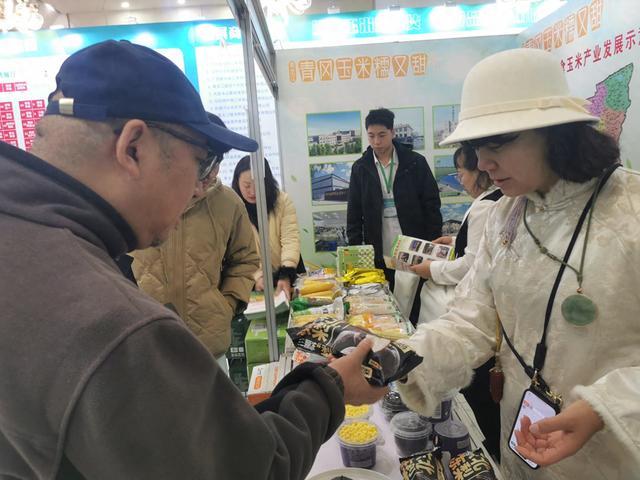
中国鲜食玉米大会常驻会址落地平谷,千余亩玉米大观园正在建设中
Bei Jing Ri Bao Ke Hu Duan· 2025-12-02 08:48
Core Insights - The 44th China Fresh Corn Conference has opened in Beijing Pinggu, establishing a permanent venue for the event, which will focus on agricultural innovation and development in the region [1][3] Group 1: Industry Overview - Fresh corn has evolved from a coarse grain to a sweeter and more palatable option, contributing to its growing popularity [3] - China has become the world's largest producer of fresh corn, with a planting area of nearly 30 million acres [3] - The China Fresh Corn Conference has been held annually since 2005, becoming a significant platform for the fresh corn industry, with 43 previous sessions across over 20 major production areas [3] Group 2: Regional Development - Pinggu District's Yuko Town is designated as the core area for building an agricultural innovation hub, focusing on fresh corn [5] - The establishment of a modern agricultural service center will support breeding, planting, processing, and sales of fresh corn, aiming to create a closed-loop industry development model [5] - The initiative will enhance product quality, improve delivery speed, and ensure food safety through standardized management and certification processes [5] Group 3: Agricultural Innovation - A corn garden covering over 1,000 acres is under construction, featuring 132 corn varieties from across the country [7] - The garden will implement a closed-loop system combining laboratory breeding, field trials, and demonstration promotion, utilizing a digital management platform to track growth data [7] - Visitors will have the opportunity to experience and taste high-quality sweet corn and other specialty varieties at the corn garden [7] Group 4: Conference Activities - The conference includes parallel activities such as site visits to the agricultural innovation hub, product exhibitions, and investment discussions for agricultural development projects [9]
(乡村行·看振兴)山西高平:抢收抢烘保收成 守护民众“粮袋子”
Zhong Guo Xin Wen Wang· 2025-10-17 04:40
Core Points - The article highlights the efforts in Shanxi's Gaoping City to ensure timely harvesting of crops, particularly sweet potatoes and apples, in response to recent heavy rainfall that threatens crop quality and storage [1][3][4] - Local authorities and businesses are collaborating to mobilize resources, including machinery and labor, to expedite the harvesting process and safeguard the agricultural yield [1][6] Group 1: Sweet Potato Harvesting - In Dongzhou Village, 500 acres of sweet potatoes are being harvested using excavators and a team of over 40 volunteers to enhance efficiency and minimize damage [1][3] - The local government is coordinating efforts to ensure that sweet potatoes are dried and stored properly, while also monitoring weather conditions to assist farmers with other crops like corn and soybeans [1][4] Group 2: Apple Harvesting - In Houzhuang Village, villagers are actively engaged in apple harvesting, taking advantage of dry weather to prevent fruit from cracking and rotting [3][4] - The Minfeng Fruit Cooperative manages 550 acres of apple trees, ensuring that harvested apples are sorted, transported, and stored to maintain quality and maximize farmer profits [4] Group 3: Corn Harvesting and Drying - Gaoping City has planted 443,000 acres of corn, with ongoing efforts to harvest and dry the crop efficiently [6] - The city has established five technical support teams and coordinated seven grain drying points, deploying over 500 agricultural machines to assist farmers [6] - As of now, 110,000 acres of corn have been harvested, with over 350 tons of grain dried to prevent spoilage [6]

美国农民:形势严峻,来自中国的大豆订单为零
财富FORTUNE· 2025-09-15 13:04
Core Insights - The U.S. soybean farmers are facing a crisis due to a lack of orders from China, which historically has been their largest customer, raising concerns about the stability of the agricultural sector and the broader U.S. economy [2][4] - The absence of Chinese orders deviates significantly from normal trading patterns, with approximately 8% to 9% of expected soybean sales to China currently at zero [2][4] Group 1: Financial Crisis for Farmers - Soybean prices have dropped by 40% compared to three years ago, while production costs and interest rates have risen, leading to potential losses for farmers [4] - Current soybean futures are around $10.10 per bushel, below the estimated production cost of $11.03 per bushel, resulting in significant financial strain [4] - Farmers are facing limited budget flexibility, with many relying on loans to cover losses, indicating a widespread financial crisis among the 500,000 soybean growers [4][5] Group 2: Economic Impact Beyond Agriculture - Agriculture contributes $9.5 trillion annually to the U.S. economy, accounting for 18.7% of total economic output, and supports over 1 million jobs [5] - The disruption in soybean trade could have a multiplier effect, impacting manufacturing, logistics, and rural communities across the nation [5] Group 3: Trade Tensions Reshaping Global Markets - Ongoing U.S.-China trade tensions have altered global soybean trade dynamics, with U.S. soybeans facing a 20% retaliatory tariff disadvantage compared to South American competitors [6][7] - China has significantly increased its soybean imports from Brazil, with 71% of its total soybean imports in 2024 coming from Brazil, up from previous years [7] Group 4: Urgency for Resolution - The seasonal nature of agriculture creates urgency for resolving trade issues, as farmers may be forced to sell crops at steep discounts if market conditions do not improve before harvest [9] - Despite a recent extension of the tariff ceasefire, progress on specific agricultural concerns remains limited, highlighting the need for immediate action [9]
九月出栏继续增加,猪价压力持续
Zhong Xin Qi Huo· 2025-09-03 07:01
1. Report Industry Investment Ratings - **Oils and Fats**: Oscillation [6] - **Protein Meal**: Oscillation [6] - **Corn/Starch**: Weak oscillation [7] - **Live Pigs**: Oscillation [8] - **Natural Rubber**: Oscillation [9] - **Synthetic Rubber**: Oscillation [12] - **Cotton**: Oscillation with a slight upward trend [13] - **Sugar**: Weak oscillation [15] - **Pulp**: Oscillation [16] - **Logs**: Weak oscillation [16] 2. Core Views of the Report - The supply of live pigs is expected to increase in the second half of 2025, and the pig price is under pressure. However, the "anti - involution" policy may lead to a turnaround in the pig cycle in 2026 [1][8]. - Oils and fats may continue to oscillate and adjust in the short term, but have a high probability of running strongly in the medium term [6]. - Protein meal is expected to continue to oscillate within a range, and attention should be paid to the support at the lower edge [6]. - The market sentiment for corn should not be overly pessimistic. Traders are pre - arranging to stock up, and there are opportunities for short - term profit - taking and long - term low - buying [7][8]. - The upward driving force of rubber prices is limited, but the downside support is strong, and the short - term trend is expected to be oscillating and slightly stronger [9][11]. - Synthetic rubber follows the oscillation of natural rubber, and the short - term trend is expected to be oscillating and slightly stronger [12]. - Cotton prices are expected to be oscillating and slightly stronger from now to early October, with the key to upward breakthrough being the purchase price. After the large - scale listing of new cotton, prices may be under pressure [13]. - Sugar prices are under increasing supply pressure and are expected to run weakly [15]. - The core driving force of pulp futures is difficult to determine, and the trend is expected to be oscillating [16]. - The log market is in a game between weak reality and peak - season expectations, and the short - term trend is expected to be weakly oscillating [16]. 3. Summary by Related Catalogs 3.1 Live Pigs - **Supply**: In the short term, the planned slaughter volume in September is expected to increase. In the medium term, the supply of commercial pigs in the second half of the year is expected to increase. In the long term, the "anti - involution" policy aims to eliminate excess capacity, but there are resistance to active production cuts [1][8]. - **Demand**: The temperature is getting cooler, the price difference between fat and lean pigs is expanding, and the price ratio of meat to pigs is stable [1][8]. - **Inventory**: The average slaughter weight decreased slightly this week, and the weight inventory is higher than the same period last year, with the main goal of destocking before the National Day [1][8]. - **Outlook**: Before the National Day, the spot and near - month pig prices are expected to remain weak. The far - month contract prices are supported by the expectation of supply - side capacity reduction, presenting a pattern of "weak reality + strong expectation" [2][8]. 3.2 Oils and Fats - **Macro Environment**: The market focuses on the Fed's September monetary policy expectations, and the US dollar is oscillating weakly. Attention should be paid to geopolitical situations and US crude oil supply and demand [6]. - **Industrial End**: The drought - affected area of US soybeans is expanding, and the export demand of US soybeans is affected by Sino - US trade relations. The inventory of domestic soybeans and rapeseed has different trends, and attention should be paid to trade negotiations and policies [6]. - **Outlook**: In the short term, oils and fats may continue to oscillate and adjust. In the medium term, they are more likely to run strongly [6]. 3.3 Protein Meal - **International Situation**: The excellent rate of US soybeans is high, and attention should be paid to weather changes. The discount of Brazilian soybeans has been adjusted, and the export of US soybeans is affected by the trade war [6]. - **Domestic Situation**: The spot price is stable, and the downstream demand is expected to improve. There is no supply gap before December, and attention should be paid to trade relations and national reserve auctions [6]. - **Outlook**: The internal - external price difference may be repaired, and it is expected to oscillate within a range [6]. 3.4 Corn/Starch - **Supply**: The inventory of old - crop corn is decreasing, and new - crop corn is about to be listed. There are doubts about whether there will be a supply gap during the transition period [7][8]. - **Demand**: The downstream inventory is seasonally low, and the procurement intention of large feed enterprises is low, but small enterprises in South China are replenishing stocks [8]. - **Outlook**: In the short term, short - term short positions are recommended to take profits, and opportunities to short on rebounds can be waited for. In the long term, there is a low - buying opportunity [7][8]. 3.5 Natural Rubber - **Market Information**: The prices of various rubber products and raw materials have different changes, and the global natural rubber production and consumption have different trends [9]. - **Logic**: The upward driving force of rubber prices is limited, but the downside support is strong. There are many speculative themes, and the short - term supply may decrease while the demand is rigid [9][11]. - **Outlook**: The short - term trend is expected to be oscillating and slightly stronger [11]. 3.6 Synthetic Rubber - **Market Information**: The prices of butadiene rubber and butadiene have different trends [12]. - **Logic**: The synthetic rubber market follows the natural rubber market, and the short - term tightness of raw material butadiene provides cost support [12]. - **Outlook**: The short - term trend is expected to be oscillating and slightly stronger [12]. 3.7 Cotton - **Supply**: The commercial inventory of cotton is at a low level in the same period, and the supply pattern is tight before the new cotton is listed [13]. - **Demand**: The downstream demand is gradually picking up, and the orders are increasing [13]. - **Purchase**: The expected purchase price of seed cotton by ginners may increase, but the expected large increase in new cotton production will suppress the increase [13]. - **Outlook**: From now to early October, it is expected to be oscillating and slightly stronger, and the key to upward breakthrough is the purchase price. After the large - scale listing of new cotton, prices may be under pressure [13]. 3.8 Sugar - **International Market**: In the new crushing season, the sugar production in Brazil, Thailand, and India is expected to increase [15]. - **Domestic Market**: The domestic sugar is in the pure sales period, and the import volume is increasing [15]. - **Outlook**: The supply pressure is increasing, and the sugar price is expected to run weakly [15]. 3.9 Pulp - **Market Situation**: The pulp futures have been weak, and the main reason for the decline is the low market acceptance of Brilliant Needle pulp [16]. - **Outlook**: The internal contradictions of the pulp market are divided, and the trend is expected to be oscillating [16]. 3.10 Logs - **Market Situation**: The log market is in a game between weak reality and peak - season expectations, with some positive factors such as cost support and reduced supply pressure [16]. - **Outlook**: The short - term trend is expected to be weakly oscillating [16].
减产预期扰动,生猪盘面反弹
Zhong Xin Qi Huo· 2025-08-07 02:37
1. Report Industry Investment Ratings - **Oils and Fats**: Oscillating with a slight upward bias [8] - **Protein Meal**: Oscillating [9] - **Corn/Starch**: Oscillating with a slight downward bias [10] - **Hogs**: Oscillating [11] - **Natural Rubber**: Oscillating [13] - **Synthetic Rubber**: Oscillating [15] - **Cotton**: Oscillating [16] - **Sugar**: Long - term: oscillating with a downward bias; Short - term: maintain the view of shorting on rebounds [17] - **Pulp**: Oscillating [18] - **Logs**: Oscillating with a slight downward bias [19] 2. Core Views of the Report The report analyzes multiple agricultural products, including oils and fats, protein meal, corn/starch, hogs, rubber, cotton, sugar, pulp, and logs. It provides insights into their market trends, supply - demand relationships, and price outlooks. For example, the hog market shows a pattern of "weak present + strong future" due to policy - induced production - cut expectations; the oils and fats market is expected to be oscillating with a slight upward bias considering overseas bio - diesel demand and domestic export expectations [11][8]. 3. Summary According to Relevant Catalogs 3.1 Market Views 3.1.1 Oils and Fats - **Industry Information**: MPOA data shows a 9.01% month - on - month increase in estimated Malaysian palm oil production in July. The overall estimated production is 1.84 million tons. ITS and AmSpec data indicate a decline in July's Malaysian palm oil exports [8]. - **Logic**: Due to the expected high yield of US soybeans and concerns about demand, US soybeans fell on Tuesday. Domestic oils showed a differentiated trend, with soybean oil being stronger. The global and domestic supply - demand situation of different oils varies, with soybean oil having inventory increases and export expectations, palm oil facing inventory pressure, and rapeseed oil having high inventory [8]. - **Outlook**: In the short - term, palm oil and soybean oil are likely to be stronger, influenced by the expected increase in overseas bio - diesel demand and domestic soybean oil export expectations [8]. 3.1.2 Protein Meal - **Industry Information**: On August 6, 2025, international soybean trade premiums and discounts showed different trends. The average profit of Chinese imported soybean crushing increased [9]. - **Logic**: Internationally, the good growth of US soybeans and the expected high yield, along with changes in trade relations and CFTC net short positions, affect the market. Domestically, in the short - term, due to the peak season of aquaculture, rapeseed meal is stronger than soybean meal. In the long - term, there is a potential supply gap in the fourth quarter [9]. - **Outlook**: In the next two weeks, the inventory of soybean meal may reach a peak. Spot and basis prices may oscillate at a low level. The far - month contracts are expected to strengthen [9]. 3.1.3 Corn/Starch - **Industry Information**: The average domestic corn price and the closing price of the main contract decreased [10]. - **Logic**: On the supply side, there are differences in the judgment of channel inventory, and the auction transaction rate of imported corn is low. On the demand side, downstream acceptance of high - priced grains is low. Policy - wise, the transaction rate and premium of imported corn are decreasing [10]. - **Outlook**: In the short - term, there is uncertainty in the old - crop inventory reduction. After the new - crop is listed, there is a downward pressure on prices [10]. 3.1.4 Hogs - **Industry Information**: On August 6, the spot price of hogs in Henan decreased slightly, while the futures closing price increased [11]. - **Logic**: The proposed meeting by the China Animal Husbandry Association to discuss sow production cuts triggered market sentiment. In the short - term, large - scale farms are actively reducing weight and inventory, but the inventory of secondary - fattening by smallholders is high. In the medium - term, the supply is expected to increase. In the long - term, policies may lead to a reduction in production capacity [11]. - **Outlook**: The hog market shows large fluctuations. The spot and near - month contracts are under pressure, while the far - month contracts are influenced by production - cut expectations [11]. 3.1.5 Natural Rubber - **Industry Information**: The prices of various rubber products in Qingdao Free Trade Zone remained stable, and the prices of raw materials in the Thai market increased slightly [13]. - **Logic**: The macro - environment is favorable, and there is some speculative sentiment in the market. The supply is limited due to the rainy season, and the demand is relatively stable in the short - term [13]. - **Outlook**: In the short - term, it follows the overall commodity sentiment, and attention should be paid to capital sentiment [13]. 3.1.6 Synthetic Rubber - **Industry Information**: The prices of butadiene rubber and butadiene showed different trends [15]. - **Logic**: The BR futures rose slightly, driven by natural rubber and the macro - environment, and supported by the tight supply of butadiene. However, the fundamental driving force is not clear [15]. - **Outlook**: It will generally maintain an oscillating range, and attention should be paid to device changes [15]. 3.1.7 Cotton - **Industry Information**: As of August 6, the number of registered warrants and the closing price of Zhengzhou cotton increased slightly [16]. - **Logic**: In the 2025/2026 season, the global cotton supply is expected to be abundant. The downstream demand is in the off - season, and the inventory is at a low level compared to the same period. The price is oscillating within a range [16]. - **Outlook**: It will oscillate within the range of 13,500 - 14,300 yuan/ton, and attention should be paid to the 11 - 1 reverse spread [16]. 3.1.8 Sugar - **Industry Information**: On August 6, the closing price of Zhengzhou sugar decreased [17]. - **Logic**: In the long - term, the new season is expected to have a loose supply. In the short - term, the supply pressure will increase due to the peak production and export season in Brazil and the concentrated import in China [17]. - **Outlook**: In the long - term, the price is expected to oscillate with a downward bias. In the short - term, it is recommended to short on rebounds [17]. 3.1.9 Pulp - **Industry Information**: The prices of various pulp products in Shandong remained stable or decreased slightly [18]. - **Logic**: The futures price fluctuated at a low level. The supply of broad - leaf pulp is abundant, the demand is weak, and the overseas market is also weak. However, the recent increase in domestic broad - leaf pulp prices is worth noting [18]. - **Outlook**: It is expected to oscillate widely, and attention can be paid to the low - absorption long - matching opportunity when the main contract falls to 5,200 - 5,250 yuan/ton [18]. 3.1.10 Logs - **Industry Information**: After the first - month delivery of logs, the short - term fundamentals changed little [19]. - **Logic**: The new foreign quotation has increased, but the domestic market is in the off - season. There are both positive and negative factors in the market, and the supply pressure is gradually easing [19]. - **Outlook**: The market is intertwined with multiple factors. It is recommended to operate within the range of 800 - 850, and the industrial side can participate in hedging according to its own costs [19]. 3.2 Variety Data Monitoring The report also mentions data monitoring for various products such as oils and fats, corn/starch, hogs, rubber, cotton, sugar, pulp, and logs, but specific data details are not provided in the text [22][53][72].
反内卷情绪交易,生猪远月拉涨
Zhong Xin Qi Huo· 2025-07-24 02:22
1. Report Industry Investment Ratings | Variety | Rating | | --- | --- | | Oils and Fats | Oscillating [5] | | Protein Meal | Oscillating [5] | | Corn/Starch | Oscillating [6][7] | | Live Pigs | Oscillating Strongly [7] | | Natural Rubber | Oscillating [8] | | Synthetic Rubber | Oscillating [11] | | Cotton | Oscillating [11] | | Sugar | Oscillating Weakly in the Long - Term, Oscillating in the Short - Term [13] | | Pulp | Oscillating Strongly [14][15] | | Logs | Oscillating Weakly [16] | 2. Core Viewpoints of the Report The report analyzes the market conditions of various agricultural products, including supply, demand, inventory, and price trends. It also evaluates the impact of policies, weather, and other factors on these products. Overall, the market shows a mixed trend with some products expected to be strong, some to oscillate, and some to be weak in different time frames [1][5][7]. 3. Summaries According to Relevant Catalogs 3.1 Market Views - **Oils and Fats**: Yesterday, it oscillated and diverged, with a strong production increase expectation for Malaysian palm oil in July. International data shows a production increase in Malaysian palm oil from July 1 - 20, while exports decreased. The market is influenced by factors such as US soybean weather, trade agreements, and biodiesel demand [5]. - **Protein Meal**: Spot prices lagged behind the futures, and the market fluctuated more. Internationally, US soybeans are expected to oscillate due to mixed factors. Domestically, there is a short - term adjustment risk, but it is expected to be strong in the long run [5]. - **Corn/Starch**: Affected by the market atmosphere, both futures and spot prices oscillated strongly. Supply may tighten in July - August, but demand is weak due to low livestock and poultry breeding profits and losses in the deep - processing industry [6][7]. - **Live Pigs**: Driven by anti - involution sentiment, far - month futures rose. Supply is under pressure in the short, medium, and long terms, but demand and inventory show some changes. The market is expected to oscillate strongly in the short - term with policy influence [1][7]. - **Natural Rubber**: Market bullish sentiment persists, and rubber prices oscillate at a high level. The rubber market is affected by the overall commodity market sentiment, with short - term supply limited and demand relatively stable [8][9]. - **Synthetic Rubber**: The market has entered an adjustment stage. Although it was affected by the overall commodity market adjustment, the price center may rise slightly in the short - term [11]. - **Cotton**: Cotton prices oscillated strongly. In the short - term, low inventory supports prices, but upward momentum may be insufficient. In the medium - term, prices may be under pressure due to expected increased production [11]. - **Sugar**: Sugar prices continued to rebound, and attention should be paid to the upper pressure. In the long - term, prices are expected to be weak due to expected supply increase, while in the short - term, they are expected to oscillate [13]. - **Pulp**: Driven by the macro - environment, it is recommended to go long. Although there are supply pressures in the medium - term, the macro - environment remains favorable [14][15]. - **Logs**: The market adjusted downward as the overall market adjusted. The short - term fundamentals are weak, and the market is expected to maintain a supply - demand weak pattern in the medium - term [16]. 3.2 Variety Data Monitoring The report provides data on various agricultural products, including prices, production, inventory, and other aspects, to help analyze the market trends of these products [20][52][82][108][121][142][160]. 3.3 Rating Standards The report defines different rating standards, such as "strongly bullish", "oscillating strongly", "oscillating", "oscillating weakly", and "weakly bearish", along with the corresponding expected price change ranges and time periods [174].