农产品加工

Search documents
吉林辽源15条措施服务保障现代产业体系
Ren Min Wang· 2025-12-21 01:10
Core Viewpoint - The Liao Yuan Intermediate People's Court in Jilin Province has announced 15 work measures and 11 typical cases to support the construction of a "5+2" modern industrial system, focusing on providing judicial guarantees for various market entities and promoting the development of a modern industrial system with Liao Yuan characteristics [1][2]. Group 1: Traditional Industries - The measures emphasize the need for proper handling of major commercial disputes arising from industrial structure adjustments, technology development, and the ownership of scientific and technological achievements [2]. - There is a focus on improving the integrated enforcement mechanism and applying procedures such as reorganization, reconciliation, and liquidation to assist traditional industries in their transformation and upgrading [2]. Group 2: Characteristic Industries - The measures aim to strengthen the protection of intellectual property rights for geographical indication trademarks, well-known trademarks, and traditional brands, while cracking down on counterfeit and inferior products [2]. - A regular communication and collaboration mechanism with market supervision departments will be established to address issues related to the development of sock e-commerce and compliant transactions in agricultural products [2]. Group 3: Emerging Industries - The focus is on enhancing judicial protection for land use, construction, and operation of new energy and new cultural tourism projects, establishing a rapid response mechanism [2]. - The court plans to explore the establishment of "weekend courts" and "holiday courts" to proactively serve and efficiently resolve tourism-related disputes, thereby supporting the vigorous development of emerging industries [2].
广东江门:警方已介入调查
Xin Lang Cai Jing· 2025-12-20 15:58
Core Viewpoint - The report highlights issues in the Chenpi market, including false labeling of age, origin, and production methods, leading to significant price discrepancies between genuine and counterfeit products [1][6]. Group 1: Investigation and Enforcement Actions - Following the exposure of fraudulent practices in the Chenpi market, a joint investigation team was established in Guangxi Pu Bei County, and the local government in Jiangmen City initiated a special enforcement action against six implicated companies [1][3]. - The Jiangmen City and Xinhui District market supervision authorities reported that two companies were found to be selling counterfeit products, while four others were suspected of illegally using the "Xinhui Chenpi" geographical indication [1][6]. Group 2: Regulatory Measures and Industry Response - A year-long special action for the protection of the Xinhui Chenpi geographical indication has been launched, with strict measures against the production and sale of counterfeit products [3][5]. - Major e-commerce platforms, including Taobao, JD.com, Pinduoduo, Douyin, and Tencent, were convened for an administrative guidance meeting to ensure compliance with geographical indication protection laws and to prevent the sale of counterfeit goods [3][5]. Group 3: Future Actions and Collaboration - A dedicated "Pu Bei Working Group" was formed to investigate the local Dahuanggan planting, initial processing, and circulation of Chenpi, particularly focusing on suspected counterfeit products [5]. - The enforcement agencies plan to impose strict penalties on the six companies involved and will continue to conduct a year-long special rectification campaign to maintain the reputation and market order of the "Xinhui Chenpi" brand [6].

加油站偷油偷税、检测公司出假报告……广西多家公司被列入严重违法失信名单
Xin Lang Cai Jing· 2025-12-20 14:59
Group 1 - A gas station in Baise was found using a cheating system to manipulate fuel measurement and tax data, leading to severe penalties and being listed as a serious violation [2] - A vehicle inspection company in Guangxi was discovered to have issued 254 false vehicle emission reports by tampering with the onboard diagnostic system, resulting in the cancellation of its inspection qualifications [3] - A gas company in Baise was penalized for using uninspected gas pressure pipelines, posing significant safety risks, and was also listed as a serious violation [4] Group 2 - A food company in Guilin was found to be using excessive food additives and obstructing regulatory investigations, leading to heavy fines and being listed as a serious violation [5] - A bun shop in Fangchenggang was found to have excessive sweetener levels in its products, refused to comply with administrative penalties, and was subsequently listed as a serious violation [6][7]
江门通报:从严从速处理6家涉假冒“新会陈皮”经营主体
21世纪经济报道· 2025-12-20 13:32
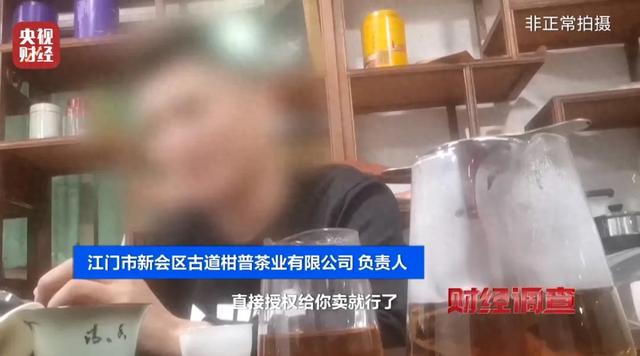
12月20日,江门市新会区市场监督管理局发布情况通报称,经江门市、新会区两级联合执法组 核查,央视《财经调查》栏目曝光的6家涉事经营主体涉嫌存在销售假冒伪劣商品、擅自使 用"新会陈皮"地理标志产品名称等违法行为,执法部门将依法从严从快对6家企业作出处理。 编辑丨江佩佩 通报称,12月14日晚,央视《财经调查》栏目曝光陈皮产地造假等问题。江门市委市政府、新 会区委区政府高度重视,市区两级联合执法组共同推动案件查办。 经核查,6家涉事经营主体涉嫌存在销售假冒伪劣商品、擅自使用"新会陈皮"地理标志产品名 称等违法行为。其中,新会区老粤匠健康产业有限公司、江门市新会区精选陈皮店等2家企业 涉嫌存在销售假冒伪劣商品的违法行为,市区两级公安机关已介入调查;新会区懂润农业有限 公司、新会区芯荟陈皮农业有限公司、新会区宝福林茶业有限公司、新会古道柑普茶业有限公 司等4家企业存在涉嫌擅自使用"新会陈皮"地理标志产品名称的违法行为。 执法部门将依法从严从快对6家企业作出处理,对违法犯罪行为严肃惩处,并举一反三持续开 展为期一年的专项整治行动,对违法犯罪行为实行"零容忍",坚决维护"新会陈皮"品牌声誉与 市场秩序。 记者丨 毕凤至 ...

五大百亿过大年,暖冬消费到清远
Nan Fang Nong Cun Bao· 2025-12-20 12:34
Core Viewpoint - The "Five Billion" agricultural event in Qingyuan aims to integrate local agricultural products into the Greater Bay Area market, showcasing the region's agricultural strengths and promoting consumption during the winter season [5][10][12]. Group 1: Event Overview - The "Five Billion" agricultural event is part of Qingyuan's strategy to leverage the "Warm Winter Consumption Season" and "Come to Guangdong for the New Year" initiatives [10][11]. - This marks the third consecutive year that Qingyuan has hosted the "Over New Year" event at a major landmark in Guangzhou, enhancing its brand recognition [6][7]. - The event features a variety of activities including product showcases, investment promotions, and cultural performances, aimed at attracting business from the Greater Bay Area and beyond [11][12][19]. Group 2: Agricultural Highlights - The event prominently displayed Qingyuan's five major agricultural products: Qingyuan chicken, Yingde black tea, Qingyuan silk rice, Xiniu bamboo shoots, and Lianzhou vegetable heart, along with other local specialties [17][18][37]. - Qingyuan's agricultural industry has seen significant growth, with the total output value projected to increase from 19.2 billion yuan in 2021 to 45.8 billion yuan by 2025, representing a growth of 138.5% [99]. - The event also facilitated direct interactions between local farmers and businesses from the Greater Bay Area, fostering immediate sales and long-term partnerships [19][30][90]. Group 3: Economic Impact - The event resulted in over 300 million yuan in signed contracts, indicating a strong connection between Qingyuan's agricultural sector and the broader market [86][90]. - Qingyuan's agricultural development has positively impacted over 200,000 farming households and 600,000 individuals, sharing the benefits of economic growth [100]. - The integration of agriculture with tourism and cultural experiences is a key strategy for enhancing the value of local products and promoting rural revitalization [78][80][120]. Group 4: Future Prospects - Qingyuan aims to continue its agricultural development by focusing on a comprehensive industrial chain, enhancing product branding, and fostering collaboration across various sectors [68][74]. - The event serves as a model for other regions in transforming ecological and locational advantages into competitive industrial strengths [112]. - Qingyuan's commitment to high-quality agricultural development is expected to further strengthen its position as a key player in the Greater Bay Area's agricultural landscape [121][123].

1—10月,吉林省规模以上农产品加工业产值达2370.99亿元
Xin Lang Cai Jing· 2025-12-20 11:52
Core Insights - Jilin Province has focused on deep processing of agricultural products and food processing since 2025, leading to strong growth in the agricultural processing industry, with a total output value of 237.099 billion yuan from January to October, representing a year-on-year increase of 5.34% [1]. Group 1: Key Measures for Industry Improvement - Jilin Province has introduced six key measures to enhance the quality and efficiency of the industry [3]. - The provincial government has launched a three-year action plan (2025-2027) to promote high-quality development in the agricultural processing industry, coordinating efforts from 14 provincial departments and state-owned enterprises [5]. - Financial support includes 40 million yuan in central government funding for four towns approved for national agricultural industry strong town projects, and 60 million yuan for a corn industry cluster, leveraging over 400 million yuan in social capital [5]. Group 2: Project Development and Support - A project list for the agricultural processing industry has been established for 2025, with 259 projects, including a 600,000-ton amino acid project, expected to generate an additional output value of 21.5 billion yuan once fully operational [5]. - The province has cultivated 106 new provincial-level agricultural industrialization leading enterprises, with a total of 736 such enterprises now operating, including 71 national-level enterprises [6]. - Collaborative efforts with the provincial science and technology department have led to the promotion of 246 technology achievements, resulting in multiple project signings [6]. Group 3: Financial and Market Expansion - A platform for financial and enterprise collaboration has been established, with 116 quality rural industry projects requiring nearly 3 billion yuan in financing [6]. - Jilin Province has organized field visits for agricultural processing enterprises to Shandong and Henan, resulting in 15 signed cooperation projects worth approximately 2.3 billion yuan [6].


漫解税收 | 辣椒成长记
蓝色柳林财税室· 2025-12-20 05:58
Group 1 - The article discusses the process for reporting cross-regional tax matters through the electronic tax bureau, emphasizing the steps for businesses to follow when engaging in temporary production and operation activities across provinces or municipalities [10] - It highlights the importance of submitting a cross-regional tax matter report, detailing the necessary information required, such as basic operational details and contracts [10] - The article provides a reminder for businesses to verify their reports at their operating locations after submission [10] Group 2 - The article addresses a common issue faced by enterprises regarding the inability to retrieve insurance information for certain months during the declaration process, explaining the integration of different insurance systems [12] - It clarifies that the transition to a unified social insurance system has resulted in the separation of insurance information into different segments, requiring businesses to select the appropriate insurance agency for operations [12]

南昌深入推进“四融一共”和美乡村建设
Xin Lang Cai Jing· 2025-12-20 05:46
Core Viewpoint - The article highlights the progress and initiatives in rural revitalization in Nanchang, focusing on agricultural development, improved living conditions, and cultural enrichment for local communities [3][4][7][17]. Agricultural Development - Nanchang has increased investment in agricultural technology and developed specialty industries, enhancing agricultural mechanization [3]. - The area has seen a significant rise in the production of local specialties, such as "Huangzhou water chestnuts," with an expected total output value exceeding 10 million yuan this year [6]. - The city aims to maintain a stable grain production of over 4.2 billion jin for 15 consecutive years, with a planned grain sowing area of 5.1179 million mu by 2025 [7]. Improvement of Living Conditions - Nanchang is actively enhancing rural living environments through infrastructure improvements, including road construction and sanitation facilities [9]. - The city has initiated projects to beautify villages, with 98 rural areas selected for environmental improvement, focusing on waste management and road upgrades [9]. - Community initiatives, such as "Happiness Canteens," provide nutritious meals for the elderly, improving their quality of life [11]. Economic Growth and Employment - The collective economy in Nanchang has seen significant growth, with 1,153 administrative villages generating a total operating income of 1.431 billion yuan, averaging 1.2414 million yuan per village [13]. - The "company + cooperative + poverty alleviation household" model has created job opportunities for villagers, allowing them to work locally while supporting their families [13]. Cultural Enrichment - Nanchang has been promoting cultural activities in rural areas, such as sports events and film screenings, to enhance the spiritual and cultural life of residents [17]. - The city plans to continue its efforts in food security, poverty alleviation, and high-quality rural industry development to ensure comprehensive rural revitalization [17].
乡村振兴齐鲁新实践:片区推进,协同共赢
Xin Hua Wang· 2025-12-20 02:40
Core Viewpoint - The article discusses the transformation of rural areas in Shandong Province, China, through the establishment of integrated rural revitalization zones that leverage local resources and promote industrial development, resulting in significant economic growth and improved living standards for residents [1][3][12]. Group 1: Industrial Development - Shandong has established 2,070 rural revitalization zones, covering approximately one-third of its administrative villages, creating a "Qilu model" for rural revitalization [3][11]. - The integration of industries, such as the "colorful tomato" initiative in Shouguang, has led to increased market bargaining power and significant sales growth, with one village achieving a transaction volume exceeding 60 million yuan from 500,000 jin of tomatoes [2][3]. - The development of specialized agricultural zones has resulted in substantial income increases for farmers, with average annual incomes in some villages rising from less than 50,000 yuan to over 200,000 yuan [2][3]. Group 2: Resource Optimization - The article highlights the importance of resource integration across villages to enhance efficiency and service delivery, with examples of successful collaborations leading to increased collective income [6][7]. - The establishment of cooperative models, such as the "rural revitalization partner" initiative, has facilitated the development of new business ventures and job creation in rural areas [10][11]. - The integration of cultural and natural resources in areas like Yangjiashan has attracted significant tourism, generating over 100 million yuan in annual revenue [5][11]. Group 3: Policy and Governance - Shandong's government has implemented policies to support the development of rural revitalization zones, including financial incentives and a structured policy framework to guide local initiatives [11][12]. - The establishment of a "development community" model aims to create self-sustaining rural economies by fostering collaboration among neighboring villages [11][12]. - The focus on coordinated development within rural revitalization zones addresses challenges related to infrastructure, public services, and resource management, promoting a holistic approach to rural growth [11][12].
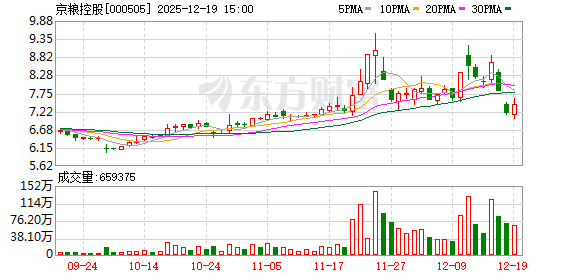
京粮控股:2025年第三次临时股东会决议公告
Zheng Quan Ri Bao· 2025-12-19 15:21
(文章来源:证券日报) 证券日报网讯 12月19日晚间,京粮控股发布公告称,公司2025年第三次临时股东会审议通过《关于 2026年度关联交易预计的议案》等多项议案。 ...