可再生能源

Search documents
国家发改委公开征求意见
中国能源报· 2025-10-14 04:05
Core Points - The article discusses the implementation of the "Minimum Proportion Target for Renewable Energy Consumption and the Responsibility Weight System for Renewable Energy Power Consumption" to promote high-quality development of renewable energy and achieve carbon peak and carbon neutrality goals [2][3]. Group 1: Renewable Energy Consumption Minimum Proportion Target - The minimum proportion target for renewable energy consumption refers to the share of renewable energy in the total energy consumption of energy users, divided into electricity and non-electric consumption categories [5][7]. - The government will set minimum proportion targets for key energy-consuming industries and monitor their progress, encouraging regions to establish their own targets [7][8]. - The completion of the minimum proportion targets will be verified using renewable energy green power certificates [8][9]. Group 2: Renewable Energy Power Consumption Responsibility Weight - The responsibility weight for renewable energy power consumption is defined as the proportion of renewable energy consumed in a region compared to the total electricity consumption [9][10]. - The government will calculate and assign these responsibility weights annually, with local energy departments responsible for implementation [10][12]. - Electric grid companies are required to support the implementation of renewable energy consumption plans and enhance their capacity to absorb renewable energy [10][11]. Group 3: Monitoring and Evaluation - The government will conduct quarterly monitoring and annual evaluations of the implementation of the minimum proportion targets and responsibility weights, with results published [12][14]. - Local energy departments must report on the completion status of these targets annually, and any failures to meet the targets will lead to regulatory actions [16][14]. Group 4: Implementation Timeline - The new measures are set to take effect from a specified date in 2026, with additional regulations for sustainable aviation fuel consumption to be developed separately [18][19].

国家发改委公开征求意见
Zhong Guo Dian Li Bao· 2025-10-14 03:17
Core Points - The article discusses the implementation of a draft regulation aimed at establishing minimum consumption targets for renewable energy and a responsibility weight system for renewable energy power consumption in China, in line with the Energy Law of the People's Republic of China [1][2][3] Group 1: Renewable Energy Consumption Targets - The minimum consumption target for renewable energy refers to the proportion of renewable energy consumed by energy users in their total energy consumption [3] - The targets are divided into two categories: minimum targets for renewable energy electricity consumption and non-electric consumption [3] - The electricity consumption target includes all types of renewable energy generation, while the non-electric consumption target includes renewable heating, hydrogen production, and biofuels [3] Group 2: Implementation and Monitoring - The State Council's energy authorities will determine key energy-consuming industries and set specific minimum consumption targets and transition periods, with ongoing monitoring and evaluation [4] - The annual targets for renewable energy electricity consumption and non-electric consumption will be issued by the State Council's energy authorities, with provincial energy departments responsible for implementation [6][12] - Compliance with the minimum consumption targets will be verified using renewable energy green power certificates [5][9] Group 3: Responsibility Weight for Renewable Energy Consumption - The responsibility weight for renewable energy consumption is defined as the proportion of renewable energy consumed in each provincial region relative to the total electricity consumption [8] - The State Council's energy authorities will conduct unified calculations of the responsibility weights for each province and issue them annually [11] - Provincial energy departments will develop implementation plans to ensure the stable utilization of wind and solar power [12] Group 4: Evaluation and Accountability - The State Council's energy authorities will conduct quarterly monitoring and annual evaluations of the implementation of the minimum consumption targets and responsibility weights [10][11] - Enterprises that fail to meet the minimum consumption targets will be required to make up the shortfall through green certificate trading or other market-based methods within three months [12][13] - Non-compliance may result in increased scrutiny and potential penalties for the responsible enterprises [12][13]
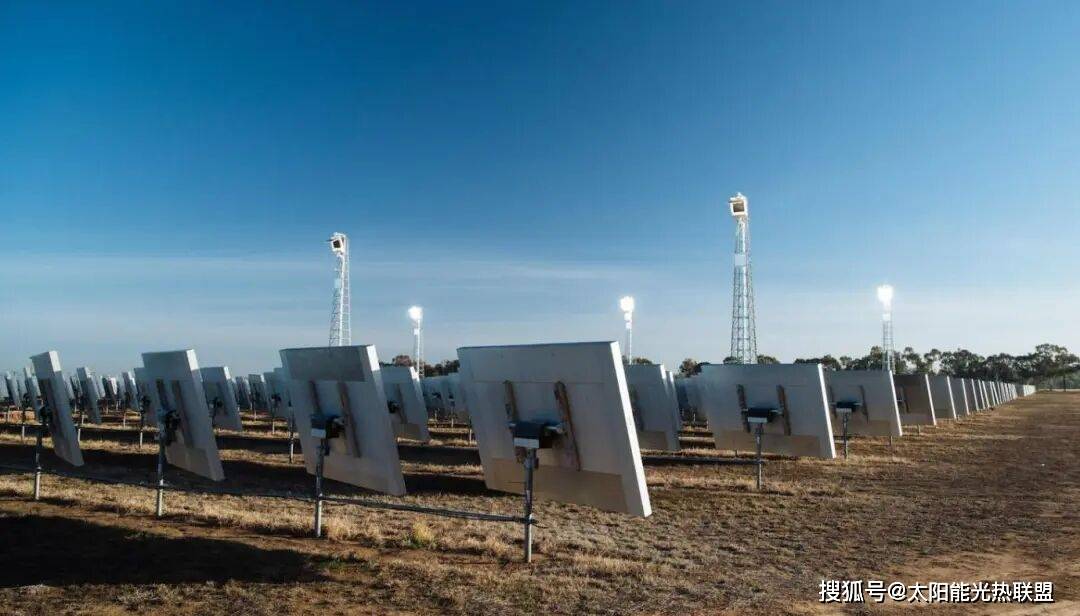
澳大利亚Vast完成350万美元融资,加速30MW/10h光热项目落地
Sou Hu Cai Jing· 2025-10-14 01:53
Core Insights - Vast Renewables successfully raised $3.5 million through convertible bond placement to support its Augusta Port green energy center and international project development [1][2] - The flagship project, Vast Solar 1 (VS1), is a 30MW solar thermal power plant utilizing proprietary CSP 3.0 technology, aiming for final investment decision by the end of 2025 [2][4] - The project has received significant funding support from the Australian government, totaling AUD 290 million, with AUD 180 million from ARENA [2][4] Group 1 - The financing reflects market recognition of Vast's differentiated CSP technology and its commercial maturity [2] - VS1 will feature a 10-hour thermal energy storage capability, addressing the intermittency issues of traditional renewable energy sources [2][4] - The Augusta Port green energy center will also include a 140MW/2h lithium-ion battery project, enhancing grid stability and responsiveness [4] Group 2 - The company plans to hold its annual general meeting on November 14, 2025, to review progress and share future development plans [4] - The successful financing indicates global capital market confidence in clean power and long-duration storage sectors amid energy transition [4] - CSP 3.0 technology offers scalable modular design and improved thermal efficiency, catering to diverse energy needs and supporting decarbonization in hard-to-abate sectors [6][7]
NextEra Energy (NYSE:NEE) Analyst Price Target and Market Outlook
Financial Modeling Prep· 2025-10-13 18:06
Core Insights - NextEra Energy (NYSE: NEE) is a leading clean energy company focused on renewable energy generation from wind and solar projects, and it operates one of the largest electric utility companies in the U.S. [1] - The stock is currently trading at $83.84, with a slight change of $0.49 or 0.59% from the previous session, and has shown volatility over the past year with a high of $86 and a low of $61.72 [3] - The company has a market capitalization of approximately $172.65 billion, indicating its significant presence in the energy sector [4][5] Analyst Recommendations - An analyst from New Street has set a price target of $84 for NEE, suggesting a slight upside potential from the current trading price [1][5] - The average brokerage recommendation (ABR) for NEE is 1.95 on a scale from 1 to 5, indicating a sentiment between Strong Buy and Buy, with 57.1% of recommendations being Strong Buy from 21 brokerage firms [2][5] Market Activity - Today's trading volume for NEE is 1,179,437 shares, reflecting active investor interest in the stock [4]

“含绿量”不断提升!能源发展“十四五”成绩瞩目
Yang Shi Wang· 2025-10-13 08:05
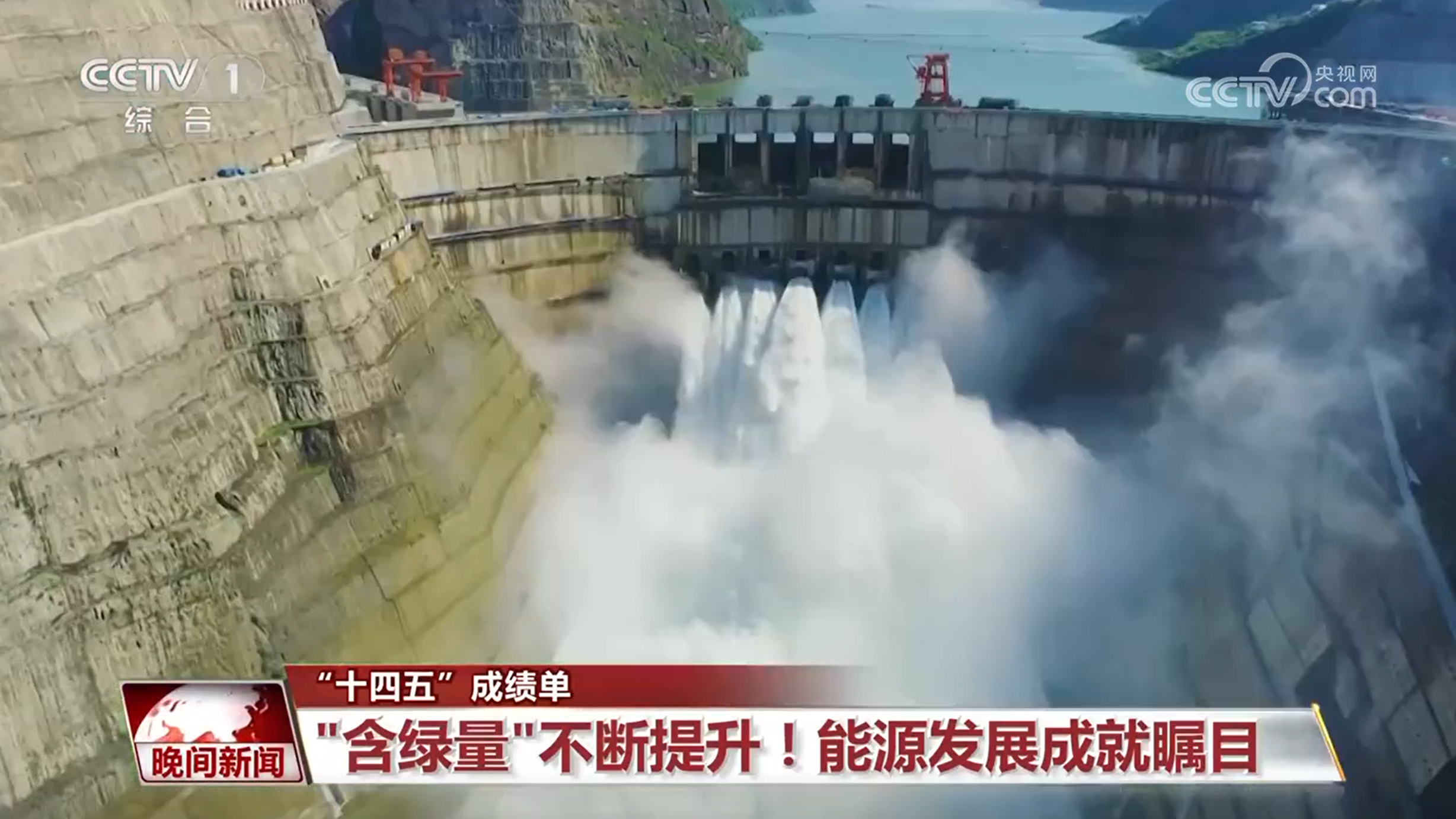
Core Insights - The "14th Five-Year Plan" emphasizes the importance of renewable energy as a key component for national energy security and economic stability [1][3][8] Group 1: Renewable Energy Development - During the "14th Five-Year Plan" period, China has built the world's largest and fastest-growing renewable energy system, with new energy storage capacity reaching approximately 95 million kilowatts, a nearly 30-fold increase over five years [3] - The proportion of renewable energy generation capacity has increased from 40% to around 60% [3] Group 2: Energy Consumption and Supply - The "14th Five-Year Plan" has seen energy consumption increase by 1.5 times compared to the total of the previous five years, while maintaining a stable energy self-sufficiency rate of over 80% [5] - The development of green energy has led to a significant shift in energy consumption, with one-third of electricity now generated from renewable sources [5] Group 3: Infrastructure and Technological Advancements - China has established the world's largest electric vehicle charging network, with two charging stations for every five electric vehicles, enhancing energy infrastructure [7] - The "14th Five-Year Plan" has positioned China as a global leader in renewable energy technologies and low-carbon development [8]
山东港口获超2.4万张“绿证”,预计可核减约12477吨碳排
Qi Lu Wan Bao Wang· 2025-10-13 07:33
Core Insights - Shandong Port has achieved a significant milestone in the green energy sector by obtaining 24,954 renewable energy green power certificates (green certificates) from the National Energy Administration, which is expected to reduce carbon emissions by approximately 12,477 tons [1][2] - Each green certificate corresponds to 1,000 kilowatt-hours of green electricity, enabling the consumption of 24.954 million kilowatt-hours of green electricity, equivalent to replacing the transport capacity of 5 million tons of trucks [1][2] Group 1 - The acquisition of green certificates marks the first such honor for Beijing Lugang Company, contributing to the construction of a green port and the implementation of the "carbon peak and carbon neutrality" strategy [1][3] - Green certificates serve as the official proof of renewable energy consumption, empowering enterprises to fulfill their environmental responsibilities and enhance their green brand image, thus creating a competitive advantage in the market [2] - The green certificates facilitate international trade by meeting the increasing green procurement demands of global supply chains, acting as a "hard pass" for enterprises to integrate into the global green industry chain [2] Group 2 - The successful certification reflects the internal collaboration and resource integration within Beijing Lugang Company and its partnership with Shandong Port Bohai Bay Port Group, demonstrating a unified effort towards green transformation [3] - Looking ahead, Beijing Lugang Company aims to further invest in renewable energy sectors such as wind and solar power, optimizing the energy consumption structure of the port and contributing to the national "dual carbon" goals [3] - The company intends to explore replicable and scalable green development pathways, striving to provide a "Shanport model" for the clean energy transition in the national port sector [3]

每3度电就有1度是绿电 我国能源含“绿”量不断提升
Yang Shi Xin Wen· 2025-10-13 04:49
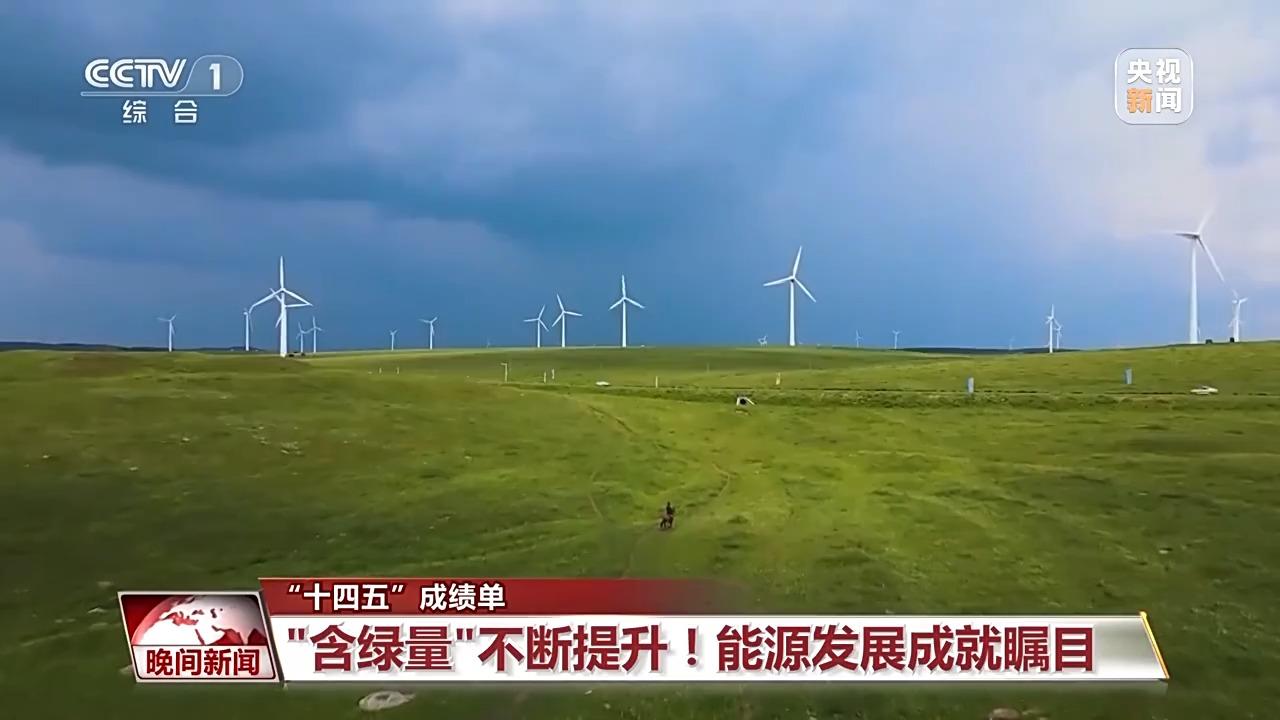
Core Insights - The "14th Five-Year Plan" emphasizes the importance of renewable energy as a crucial component for national energy security and economic stability [1][9] - China has established the world's largest and fastest-growing renewable energy system, with significant increases in installed capacity and energy supply resilience [3][4] Group 1: Renewable Energy Development - During the "14th Five-Year Plan" period, China's renewable energy capacity has grown significantly, with new energy storage installations reaching approximately 95 million kilowatts, a nearly 30-fold increase over five years [3] - The share of renewable energy generation capacity has increased from 40% to around 60% [3] - The "Shago Desert" has emerged as a new frontier for renewable energy construction, adding over 130 million kilowatts of installed capacity [4] Group 2: Energy Consumption and Supply - The overall electricity consumption in China has increased, with the growth in energy consumption during the first four years of the "14th Five-Year Plan" reaching 1.5 times the total growth during the "13th Five-Year Plan" [4] - Despite the rising demand, China's energy supply and security have remained stable, with a self-sufficiency rate consistently above 80% [4] Group 3: Infrastructure and Technological Advancements - China has built the world's largest electric vehicle charging network, with two charging stations for every five electric vehicles [6] - Efforts have been made to overcome challenges in power transmission in remote and high-altitude areas, exemplified by the "Xinjiang Power Transmission to Chongqing" project [7] Group 4: Global Leadership in Energy Transition - With over 1.4 billion people benefiting from enhanced energy security, China is recognized as a global leader in renewable energy technology and low-carbon development [9] - The country is positioned as a significant driver of global energy transition efforts [9]
“十四五”成绩单 | 央视新闻 保供应、强民生、转低碳 能源强国之路越走越宽广
国家能源局· 2025-10-13 04:35
Core Viewpoint - The article emphasizes the significant advancements in China's renewable energy sector during the "14th Five-Year Plan" period, highlighting the transition towards a clean, low-carbon, and efficient energy system that ensures energy security and supports economic growth [2][4]. Group 1: Renewable Energy Development - China has constructed the world's largest and fastest-growing renewable energy system, with new energy storage capacity reaching approximately 95 million kilowatts, a nearly 30-fold increase over five years, and the share of renewable energy generation capacity rising from 40% to around 60% [6]. - The "Shagao Desert" has emerged as a new frontier for renewable energy construction, adding over 130 million kilowatts of installed capacity, transforming previously barren land into an "energy oasis" [8]. Group 2: Energy Supply and Consumption - During the "14th Five-Year Plan," energy consumption in China increased by 1.5 times compared to the total consumption during the "13th Five-Year Plan," while maintaining a stable energy self-sufficiency rate of over 80% [10]. - The country has effectively addressed challenges in electricity transmission in weak grid areas and high-altitude regions, exemplified by the "Xinjiang Power to Chongqing" project, which can transmit electricity over 2,000 kilometers in just 0.007 seconds [10]. Group 3: Infrastructure and Electric Vehicles - China has built the world's largest electric vehicle charging network, with two charging stations for every five electric vehicles, enhancing the energy infrastructure [12]. Group 4: Global Leadership in Energy Transition - With over 1.4 billion people's energy security effectively guaranteed, China is recognized as a global leader in renewable technologies and low-carbon development, positioning itself as a key driver of the global energy transition [14].
为中国式现代化注入强劲绿色动能
Zhong Guo Neng Yuan Wang· 2025-10-13 02:07
Core Viewpoint - The article emphasizes that green development is a key pathway to address global challenges, with China committing to a comprehensive green transformation of its economy and society, thereby injecting vitality into global sustainable development [1] Group 1: Green Development as a Concept - The new development philosophy of innovation, coordination, green, openness, and sharing provides fundamental guidance for China's economic transformation [1] - Since the 18th National Congress, China has firmly established the concept that "lucid waters and lush mountains are invaluable assets," and has made significant progress in environmental protection and carbon reduction [1] Group 2: Energy Consumption and Production - Since 2012, China's energy intensity has decreased by over 26%, equivalent to saving 1.4 billion tons of standard coal and reducing carbon dioxide emissions by approximately 3 billion tons [2] - During the 14th Five-Year Plan's first four years, energy intensity decreased by 11.6%, resulting in a reduction of carbon dioxide emissions by 1.1 billion tons [2] - By 2024, renewable energy generation capacity in China is expected to account for 60% of total capacity, with wind and solar installations projected to reach 47% of global totals [3] Group 3: Green Energy Transition - Currently, one-third of China's electricity consumption is from green energy, with non-fossil energy consumption increasing by 1 percentage point annually, expected to exceed the 20% target set for the 14th Five-Year Plan [4] - The transition from fossil fuels to green energy is evident, with coal consumption decreasing by 1 percentage point each year [4] Group 4: Innovative Practices in Green Development - Innovative practices are reshaping development logic, with projects like the first renewable energy "carbon-neutral" park in Beijing demonstrating the feasibility of decoupling economic growth from carbon emissions [4] - The world's first super-heavy oil solar thermal extraction project in Xinjiang showcases the use of solar technology to achieve zero-carbon oil extraction, replacing traditional heating methods [5] - The first hydrogen metallurgy demonstration project in Zhangjiakou represents a shift from traditional carbon metallurgy to hydrogen-based processes, creating economic benefits while reducing carbon emissions [5] Group 5: Economic Transformation through Energy Reform - The energy transformation is not just about optimizing energy structure but also fundamentally transforming economic development models from fossil fuel dependency to innovation-driven green prosperity [5] - This systemic change aims to anchor economic growth on a sustainable path, injecting strong green momentum into China's modernization efforts [5]
为中国式现代化注入强劲绿色动能
中国能源报· 2025-10-13 01:46
Core Viewpoint - The article emphasizes that green development is a key pathway to address global challenges, with China committing to a comprehensive green transformation of its economy and society to achieve its "dual carbon" goals, thereby injecting certainty into global economic development and vitality into sustainable development [1]. Group 1: Green Development as a Concept - The new development philosophy of innovation, coordination, green, openness, and sharing provides fundamental guidance for China's economic transformation [1]. - Since the 18th National Congress, China has firmly established the concept that "lucid waters and lush mountains are invaluable assets," actively promoting the protection of blue skies, clear waters, and clean land [1]. Group 2: Green Development as Momentum - China has seen a cumulative reduction in energy intensity of over 26% since 2012, equivalent to saving 140 million tons of standard coal and reducing carbon dioxide emissions by approximately 3 billion tons, making it one of the fastest countries in energy intensity reduction [2]. - The focus on green manufacturing in traditional industries is driving a comprehensive green transformation of the economy and society [2]. Group 3: Energy Production and Consumption - During the 14th Five-Year Plan period, the proportion of renewable energy generation capacity in China increased from 40% to 60%, with annual new installations of wind and solar power exceeding 100 million, 200 million, and 300 million kilowatts [3]. - Currently, one-third of the total electricity consumption in China is green electricity, with non-fossil energy consumption increasing by 1 percentage point annually [3]. Group 4: Practical Applications of Green Development - The first renewable energy "carbon-neutral" park in Beijing has achieved self-supply of green electricity, reducing total carbon emissions by 6,158 tons annually [4]. - The world's first ultra-heavy oil solar thermal extraction project in Xinjiang replaces traditional heating methods with solar technology, achieving zero-carbon oil extraction and reducing carbon emissions by 0.85 million tons annually [4]. Group 5: Economic Transformation through Energy Reform - Energy reform is not just about optimizing energy structure but also fundamentally transforming the economic development model from fossil fuel-dependent "black growth" to innovation-driven "green prosperity" [5]. - This systemic transformation aims to anchor economic growth on a sustainable development path, injecting strong green momentum into China's modernization [5].