
家具制造

Search documents
梦百合:拟以0.85亿元至1.7亿元回购股份
news flash· 2025-05-09 10:36
梦百合(603313)公告,公司拟以0.85亿元至1.7亿元资金回购股份,回购价格不超过人民币10.9元/股 (含)。本次回购股份的资金来源为公司自有资金及回购专项贷款,公司已取得浦发银行嘉定支行出具的 《贷款承诺函》,承诺给予公司不超过人民币1.5亿元的股票回购专项贷款,具体股票回购专项贷款提 用金额不得高于股票回购资金的90%。本次回购股份将全部用于实施员工持股计划或者股权激励,若未 能在法律法规规定的期限内用于上述用途,将依法予以注销。回购期限为董事会审议通过之日起不超过 12个月。 ...

曲美家居: 华泰联合证券有限责任公司关于曲美家居集团股份有限公司2024年持续督导年度报告书
Zheng Quan Zhi Xing· 2025-05-09 09:01
Summary of Key Points Core Viewpoint - The report outlines the continuous supervision activities conducted by Huatai United Securities for Qu Mei Home Group Co., Ltd. in 2024, confirming compliance with regulatory requirements and the absence of significant violations. Group 1: Continuous Supervision Activities - Huatai United Securities has established and effectively implemented a continuous supervision work system and corresponding work plan [1] - The sponsor has signed a continuous supervision agreement with the company, clarifying rights and obligations during the supervision period [1] - During the supervision period, there were no violations or illegal activities reported by Qu Mei Home [1][2] Group 2: Internal Control and Governance - The company has been urged to establish and effectively implement internal control systems, including financial management and accounting [2] - Continuous supervision has ensured that the company and its management comply with laws, regulations, and commitments made [1][2] - The governance structure, including rules for shareholder meetings and board meetings, has been effectively established and executed [2] Group 3: Information Disclosure - Huatai United Securities has reviewed the company's information disclosure documents, ensuring they are truthful, accurate, and complete without any misleading statements or omissions [4] - The company has adhered to the relevant regulations for information disclosure, ensuring timely and effective public reporting of significant information [4] - There were no instances requiring reporting to the China Securities Regulatory Commission or the Shanghai Stock Exchange regarding violations of disclosure regulations [4]

如何破冰内销困境?看“持久战”背后的创新突围
Yang Shi Wang· 2025-05-09 07:57
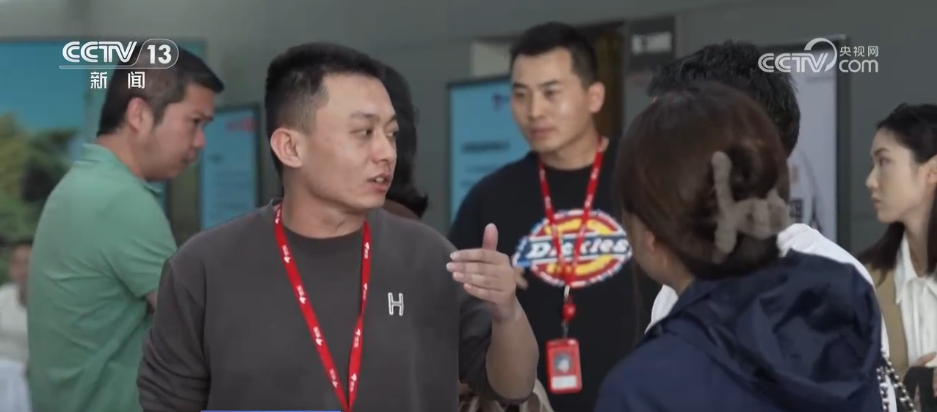
Core Viewpoint - The article discusses how Huzhou, a major foreign trade city in Zhejiang, is adapting to the challenges posed by U.S. tariffs by shifting focus to domestic markets, highlighting the difficulties faced and the strategies employed to overcome them [1][5]. Group 1: Market Transition - Huzhou's foreign trade enterprises are actively seeking to expand into domestic markets due to the impact of U.S. tariffs, which have affected over 14% of their exports [1][5]. - A recent event aimed at facilitating the transition to domestic sales attracted over 100 companies, exceeding initial expectations of 70 participants, indicating strong interest in exploring e-commerce channels [3][5]. - The local business department has initiated efforts to identify export companies facing challenges and has created a supply-demand matching platform to assist them in entering the domestic e-commerce market [5][11]. Group 2: Standardization Challenges - The transition from foreign trade to domestic sales is hindered by a lack of unified standards, which complicates the process of listing products on various e-commerce platforms [8][11]. - Huzhou's market regulatory authorities are providing one-on-one guidance to companies seeking "same line, same standard, same quality" certification, which facilitates quicker product listings [11][15]. Group 3: Innovation and Development - Companies are recognizing the need for innovation to thrive in the domestic market, with some reporting a 40% increase in efficiency due to improved product line management [13][21]. - A company specializing in fans and heat sinks has leveraged its proprietary chip technology to expand into new markets, achieving a 20% increase in profit margins [19]. - Another green home furnishings company has diversified its product range to over 1,000 styles and invests more than 20 million yuan annually in R&D to avoid homogenization in products [21][23].

BKT护腰椅“爆火”:买量造势、效果存疑、平替围剿……还能火多久? | BUG
Xin Lang Cai Jing· 2025-05-09 00:28
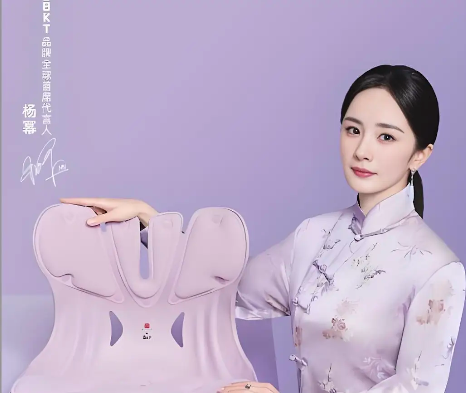
文 | 《BUG栏目》 闫妍 "久坐怕腰酸,BKT为你撑腰",当杨幂代言BKT护腰椅的广告刷屏社交平台时,这个靠营销疯狂破圈的 品牌再次站上了流量巅峰。 作为BKT品牌"全球首席代言人",杨幂的加入也让BKT家居的明星矩阵再添筹码——此前,该品牌还陆 续官宣过金晨、林更新等明星代言人,而陈赫、罗永浩直播间里"秒光"的销售神话,更让BKT护腰椅成 为办公室白领的新宠,并推上了年销25亿的神坛。 然而,与品牌营销的狂热形成鲜明对比的,是消费者端持续发酵的质疑声。黑猫投诉 【下载黑猫投诉 客户端】平台上,上百条投诉直指产品存在"效果夸大""腰托容易断裂"等硬伤;社交媒体上,"几百块 钱的护腰椅还不如靠垫""一个曲线刁钻坚硬无比的塑料片子"等吐槽屡见不鲜。 当BKT品牌高调宣布2025年冲刺百亿目标时,一个个尖锐的问题已然浮出水面:号称拥有六大专利的 BKT护腰坐姿椅,是黑科技还是智商税?凭借顶流明星和营销轰炸堆砌的销量帝国,究竟能撑多久? 塑料椅,横扫各大直播间 "很低的成本,让一个平庸甚至廉价的椅子,瞬间变成人体工学椅。""这个产品只要有货的时候,是横 扫各大网红直播间的",罗永浩曾在交个朋友直播间,多次推荐BK ...
保持“不慌张、不懈怠”的定力(现场评论)
Ren Min Ri Bao· 2025-05-08 21:50
Group 1 - The international trade situation is complex and variable, yet companies like Henan Steel Beauty Technology Co., Ltd. maintain a calm and determined approach despite facing order cancellations worth millions [1] - The company has adapted by expanding its market reach, securing new orders in Europe and South America, and identifying new business opportunities, such as pet furniture stores in Europe [1] - Henan's GDP reached 14,945.58 billion yuan in the first quarter, reflecting a year-on-year growth of 5.9%, indicating a strong economic performance [1] Group 2 - The stability of companies comes from high-level strategic planning and timely actions, as demonstrated by Henan's initiatives to integrate into the national unified market [2] - The province has launched a series of projects with a total investment exceeding 404.4 billion yuan, focusing on early project initiation to lay a solid foundation for future development [2] - There is a strong entrepreneurial atmosphere in many regions, encouraging proactive measures to tackle challenges and seize opportunities [2] Group 3 - Effective implementation of policies has led to increased cross-border transportation, with trucks frequently departing from Zhengzhou to destinations like Moscow and Tashkent [3] - Despite some existing challenges in policy execution, there is a collective effort to address issues and enhance productivity by focusing on specific projects and individual responsibilities [3] - The sentiment among business leaders emphasizes the importance of maintaining a proactive and diligent approach to ensure a better future [3]
志邦家居20250508
2025-05-08 15:31
Summary of Zhibang Home's Conference Call Company Overview - **Company**: Zhibang Home - **Industry**: Home Furnishing and Interior Design Key Points and Arguments Domestic Retail Business - In Q1 2025, domestic retail business continued to decline, but the rate of decline narrowed both year-on-year and month-on-month due to management adjustments and a flattened organizational structure implemented in 2024 [2][4] - The company has adjusted the pricing system for franchisees based on province-level management, improving store quality [2][4] - Retail orders in April showed a reduced decline, primarily driven by retail contributions, although the mass market remains a significant drag [2][11] Domestic Real Estate Engineering Business - The domestic real estate engineering business saw a significant drop in signed orders in Q1 and April due to order reassessment and changes in payment conditions [2][5] - The company is exploring a shift towards corporate clients, apartments, and other sectors to mitigate the decline [5][6] Overseas Business - The overseas business is impacted by US-China tariffs, but the Middle East market is developing rapidly, with expected growth exceeding initial estimates [2][7] - The Australian market remains stable, contributing positively to overall overseas business growth [2][7] National Subsidy Policy - National subsidy policies primarily benefit franchisees with local subsidies, while inter-provincial subsidies are limited and discreet [2][8] - The company has confirmed sufficient total subsidy quotas for the year, but the release pace will be adjusted based on government assessments [8] Market Competition and Pricing - The industry is experiencing intense price competition, but national subsidy policies are expected to stabilize prices after a rebound in sales [3][13] - Economic downturn has led to a decline in unit prices for cabinets and wardrobes, with the company aiming to increase average transaction value and customer traffic to achieve revenue growth in 2025 [3][20] Franchisee Participation and Challenges - In Hefei, the subsidy policy is not fully open, leading to about 50% participation from franchisees, with some opting for other companies' policies [9][10] - Franchisees are considering costs and may withdraw from inter-provincial subsidy policies if local order issues can be resolved [10] Profitability and Margin Analysis - Q1 gross margin fluctuations were linked to store adjustments and support measures, with full payment contracts leading to lower gross margins [12] - Despite sales price stability, increased revenue has resulted in lower gross margins, but net profit levels remain unchanged [12] Strategic Initiatives - The company is focusing on enhancing core competitiveness through internal improvements, business structure adjustments, and expanding product categories [27][28] - Efforts are being made to improve the quality of stores and restore franchisee confidence while accelerating overseas market expansion [27][28] Future Outlook - The company is optimistic about future growth despite current challenges, believing that adjustments in B-end business structure and enhancements in C-end business will lead to improved operational quality and reduced risk exposure [28] - Plans for 2025 include increasing retail revenue through higher average transaction values and customer traffic, with a focus on integrated store layouts [20] Supply Chain Collaboration - Zhibang Home is open to sharing supply chain resources with capable partners to enhance market competitiveness and drive overall performance growth [29][30]

深度AI如何赋能高质量睡眠?慕思床垫+喜马拉雅共赴晚安之旅
Cai Fu Zai Xian· 2025-05-07 06:15
Core Insights - The modern lifestyle has made quality sleep a luxury, with the average sleep duration in China decreasing from 7.02 hours to 6.67 hours, highlighting the importance of sleep quality over quantity [3] - Mousse Co. launched the AI-powered T11+ smart mattress, which utilizes advanced algorithms and real-time data to enhance sleep quality, showing significant improvements in sleep metrics [3][6] - The collaboration with Ximalaya has led to the creation of an upgraded "Mousse Goodnight Radio," integrating AI technology to provide a comprehensive sleep solution that combines sound and sleep experience [5][6] Group 1 - The launch of the "Deep AI Sleep Revolution" event by Mousse Co. aims to address the sleep challenges faced by modern individuals [1] - The T11+ mattress features the Mousse Tide Algorithm 2.0, which is based on extensive ergonomic data to manage sleep through real-time assessments and health reports [3] - Clinical tests indicate that users of the T11+ mattress experience a nearly 50% improvement in sleep onset speed, a 14.6% reduction in tossing and turning, and a 38% increase in sleep duration [3] Group 2 - The upgraded "Mousse Goodnight Radio" incorporates AI-driven sound elements, enhancing the sleep experience by providing tailored audio interventions [5] - The content of the radio has been updated to meet the needs of a new generation, offering professional sleep knowledge, humanistic care, and innovative AI poetry therapy modules [6] - The collaboration between Mousse and Ximalaya creates a synergistic effect between sound and sleep, transforming sleep from a mystical concept into a quantifiable science [6]
慕思健康睡眠股份有限公司关于以集中竞价交易方式回购公司股份比例达到1%的进展公告
Shang Hai Zheng Quan Bao· 2025-05-06 21:08
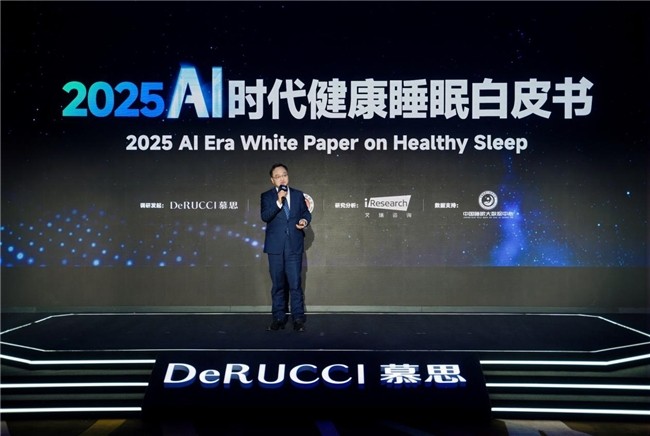
登录新浪财经APP 搜索【信披】查看更多考评等级 慕思健康睡眠股份有限公司 关于以集中竞价交易方式回购公司股份比例达到1%的进展公告 证券代码:001323 证券简称:慕思股份 公告编号:2025-031 慕思健康睡眠股份有限公司 关于以集中竞价交易方式回购公司股份比例达到1% 的进展公告 (1)自可能对本公司证券及其衍生品种交易价格产生重大影响的重大事项发生之日或者在决策过程 中,至依法披露之日内; (2)中国证监会和深圳证券交易所规定的其他情形。 本公司及董事会全体成员保证信息披露的内容真实、准确、完整,没有虚假记载、误导性陈述或重大遗 漏。 慕思健康睡眠股份有限公司(以下简称"公司")于2024年7月2日召开第二届董事会第七次会议和第二届 监事会第五次会议,并于2024年7月19日召开2024年第一次临时股东大会,审议通过了《关于以集中竞 价交易方式回购公司股份方案的议案》,同意公司使用自有资金通过深圳证券交易所交易系统以集中竞 价交易方式回购部分公司股份,本次回购股份将全部用于注销以减少注册资本。本次回购股份的种类为 公司发行的A股社会公众股份,回购资金总额不低于人民币12,000万元(含),不超过人 ...
迫于库存压力,沃尔玛选择自行吸收关税、恢复中国进货;关税压顶,美快递巨头宣布裁员上万人丨Going Global
创业邦· 2025-05-05 10:08
Key Points - Temu has stopped direct shipments from China to the US due to the cancellation of the small package tax exemption, leading to increased import fees of 130% to 150% for US customers [4][6] - TikTok has reported significant revenue growth in Australia, with annual revenue reaching AUD 679 million (approximately USD 440 million), up from AUD 375 million (approximately USD 260 million) the previous year [7][9] - Didi has launched overseas ride-hailing services in 11 countries and 26 cities, enhancing its international presence [13][15] - Wangba Tea has appointed a former McDonald's executive to oversee its brand and business growth in the Asia-Pacific region [10][12] - East China Home's revenue has surpassed CNY 10 billion for the first time, achieving CNY 11.03 billion in 2024, a year-on-year increase of 34.59% [16][18] - Sweet Lala plans to open over 200 new stores globally by 2025, expanding its presence in Southeast Asia, Europe, North America, and the Middle East [19] - Worth Buying aims to synchronize its consumer content and marketing services overseas, targeting five countries by the end of the year [21][24] - WeChat Pay has been integrated into Busan's subway system, allowing Chinese tourists to purchase electronic tickets easily [25][27] - Walmart has decided to absorb tariffs and resume imports from China, reversing its previous stance due to inventory pressures [29][31] - Many retailers have halted shipments to the US following the end of the small package tax exemption, impacting cross-border e-commerce [32][40] - FedEx has invested in Nimble to enhance its logistics automation capabilities [51][52] - MercadoLibre is considering relocating its US headquarters from Delaware to Texas to benefit from a more predictable legal environment [38][40] - Foodpanda has exited the Thai market after 13 years of operation due to declining market share [43][44]

一座革命老区陆港的“开放密码”
Xin Hua She· 2025-05-05 07:58
Core Insights - The Ganzhou International Land Port is the only open port in China's revolutionary old areas, facilitating global trade and attracting investment to the region [1][3] - The port has significantly improved logistics efficiency and reduced costs for local businesses, particularly in the furniture and machinery sectors [2][3] - The port's operations have led to a notable increase in the number of trains and exports, with a 54.6% year-on-year growth in China-Europe freight trains [1][3] Group 1: Logistics and Trade Efficiency - The port has established a comprehensive logistics network, offering customized transportation solutions and reducing logistics costs by at least 10% compared to road transport [2] - The Ganzhou Customs has optimized clearance processes, implementing 24-hour appointment services and green channels to significantly reduce clearance times [2][3] - The establishment of a comprehensive bonded zone has allowed for various tax benefits and streamlined processes for local enterprises [2][3] Group 2: Economic Impact and Investment Attraction - The Ganzhou International Land Port has become a crucial node connecting inland markets with international ones, promoting cross-border e-commerce and attracting investments [3] - Local companies, such as Jiangxi Yupai Furniture Co., have benefited from the port, saving logistics costs and expanding their overseas markets [1][3] - The port's development has encouraged companies like Guangdong Yufu Manufacturing to invest in the region, enhancing local production capabilities and export volumes [3]