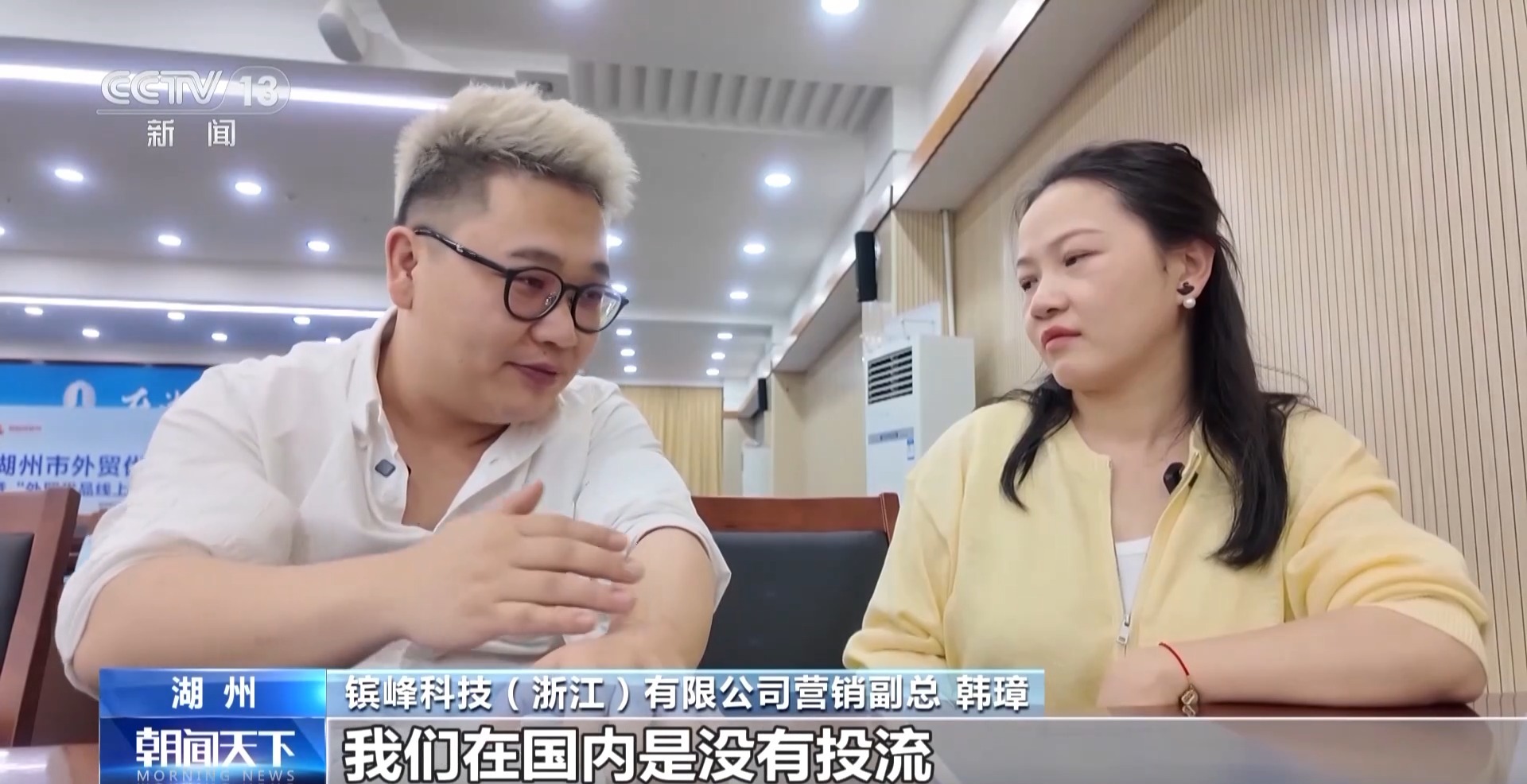
同线同标同质

Search documents
完善“内卷式”竞争长效治理机制
Xin Lang Cai Jing· 2026-01-13 21:58
Core Viewpoint - The State Administration for Market Regulation has announced ten major achievements in the comprehensive rectification of "involution" competition by 2025, which includes the enhancement of laws and regulations, detailed departmental rules, and a governance loop covering all stages of market operations, providing a solid institutional guarantee for innovation and development of various business entities [1][2][3][4]. Group 1: Legal and Regulatory Framework - The revised Anti-Unfair Competition Law strengthens regulations against practices such as fake reviews, exploiting platform rules, and maliciously harming competitors, expanding the definition of commercial defamation to include "other operators" [1]. - The implementation of the Mandatory Company Deregistration System aims to streamline the deregistration process for untrustworthy entities, enhancing market exit quality and efficiency, with 294,900 companies initiated for mandatory deregistration by the end of December 2025 [1]. Group 2: Fair Competition and Market Standards - The Fair Competition Review Regulations require local governments and departments to ensure fair competition in policies related to industrial development, investment attraction, and government procurement [2]. - The Internet Platform Antitrust Compliance Guidelines encourage platform companies to enhance antitrust compliance management and identify new monopoly risks [2]. - The Guidelines for Improving Product and Service Quality on Online Trading Platforms focus on product innovation and service standardization, enhancing the responsibilities of platforms and operators [2]. Group 3: Quality and Safety Standards - The Regulations on Quality and Safety Supervision of Key Industrial Products sold online clarify the responsibilities of e-commerce operators regarding product quality and safety, institutionalizing quality control measures [3]. - The Action Plan for Enhancing Standards in New Energy Vehicles, Lithium Batteries, and Photovoltaic Industries outlines the development of 167 national standards to combat "involution" competition, with 57 standards already published [3]. Group 4: International Standards and Market Integration - Measures to Gradually Expand Standard System Opening aim to improve the consistency of standards in key service areas and promote international standard-setting in the digital economy [4]. - The announcement on advancing "same line, same standard, same quality" for domestic and foreign trade products encourages the integration of domestic and international certification processes to reduce low-quality "involution" competition [4]. - The initial effects of these regulations have shown a positive trend in curbing phenomena like "subsidy wars" and "lowest prices," facilitating smoother market exits and accelerating the construction of the "new three samples" standard system [4].
完善长效治理机制整治“内卷式”竞争
Zheng Quan Ri Bao· 2026-01-09 22:52
Core Viewpoint - The National Market Supervision Administration is implementing a comprehensive reform to address "involutionary" competition by establishing a robust regulatory framework aimed at promoting high-quality competition and optimizing industrial structure [1][2]. Group 1: Overview of New Regulations - The ten key regulatory achievements include the new Anti-Unfair Competition Law, implementation measures for mandatory company deregistration, fair competition review regulations, draft guidelines for antitrust compliance in internet platforms, and various standards aimed at enhancing product and service quality in online transactions and specific industries [2][3]. - The regulations are designed to guide platform enterprises in managing antitrust risks and ensuring fair competition, thereby fostering innovation and healthy development within the platform economy [2]. Group 2: Characteristics of the New Regulations - The new regulations exhibit three distinct characteristics: they are problem-oriented, address societal concerns; they emphasize systematic integration to create a closed-loop governance model; and they reflect a tailored approach that balances regulation with development [2]. - The regulations form a comprehensive governance system that includes preventive measures, regulatory actions during operations, and post-event cleanup of dishonest entities, thereby creating a synergistic effect to foster a fair competitive market environment [3].
十大制度重拳出击!专治“内卷式”竞争
Xin Lang Cai Jing· 2026-01-09 13:36
Core Insights - The article discusses the introduction of ten regulatory measures aimed at addressing "involutionary" competition in various industries by the State Administration for Market Regulation (SAMR) in China, providing a comprehensive governance framework for innovation and development [1] Group 1: Regulatory Measures - The revised Anti-Unfair Competition Law enhances the identification rules for commercial defamation and includes regulations against malicious competition behaviors such as forcing platform operators to sell below cost and engaging in false transactions [3] - The implementation measures for compulsory company deregistration aim to systematically clean up dishonest entities and improve market exit quality and efficiency [3] - The Fair Competition Review Regulation requires local governments and departments to ensure fair competition in policies related to industrial development, investment attraction, and procurement [3] Group 2: Industry-Specific Guidelines - The draft guidelines for antitrust compliance for internet platforms encourage companies to manage antitrust risks effectively, promoting fair competition and innovation [3] - Guidelines for improving product and service quality on online trading platforms focus on product innovation and standardization, enhancing consumer trust and shifting industries from "involutionary competition" to quality improvement [4] - Basic requirements for managing food delivery platforms are established to enhance service quality and reduce disorderly competition [4] Group 3: Quality and Standards - Regulations for the quality and safety supervision of key industrial products sold online clarify the responsibilities of e-commerce operators, ensuring better consumer protection [4] - The action plan for enhancing standards in the new energy vehicle, lithium battery, and photovoltaic industries includes the development of 167 national standards to promote high-quality industry development [4] - Measures to expand standard system openness aim to improve the consistency of standards in key service areas and promote international standard-setting in the digital economy [4] - The announcement on promoting "same line, same standard, same quality" for domestic and foreign trade products encourages collaboration in certification processes to reduce low-quality competition and support high-quality enterprise development [4]

全国统一大市场建设向纵深推进(奋勇争先,决战决胜“十四五”)
Ren Min Ri Bao· 2025-12-25 22:27
Group 1 - The construction of a unified national market is essential for building a new development pattern and promoting high-quality development, as well as gaining an advantage in international competition [1] - The implementation of measures to accelerate the construction of a unified national market has led to clearer regulatory requirements and positive progress during the 14th Five-Year Plan period [1] - The State Administration for Market Regulation has launched multiple special actions to rectify the abuse of administrative power and limit competition, focusing on key issues and making significant efforts to eliminate persistent problems [1] Group 2 - In October, the monthly sales of new energy vehicles exceeded 50% of total new car sales for the first time, with production and sales reaching 14.907 million and 14.78 million units respectively, marking year-on-year growth of 31.4% and 31.2% [2] - The automotive sector has seen significant profit growth, with 6 out of 23 listed companies reporting a year-on-year net profit increase of over 30% [2] - The rectification of chaotic low-price competition in the new energy vehicle industry has led to a shift in focus from price competition to value and innovation [2] Group 3 - The establishment of a benefit-sharing mechanism and collaborative development between regions, such as the cooperation between Shanghai and Yunnan, aims to enhance economic growth without detracting from each other [3] - Various regions are implementing benefit-sharing mechanisms to promote the development of "flying economy" and cross-regional cooperation, with examples from Hunan and Anhui [3] - The unified market's foundational systems and infrastructure are being actively implemented across regions to enhance openness and cooperation [3] Group 4 - Jiangsu Sumeida Textile Co., Ltd. has successfully connected domestic and international markets through its production line, emphasizing the importance of technology research and development [4] - The State Administration for Market Regulation has introduced measures to promote "same line, same standard, same quality" products, encouraging companies to develop these products and providing technical and policy support [4] - During the 14th Five-Year Plan period, 22 pilot free trade zones have aligned with international high-standard economic and trade rules, resulting in nearly 200 institutional innovations [4] Group 5 - The "15th Five-Year Plan" emphasizes the continuous emergence of advantages from a super-large market, with a focus on deepening the construction of a unified national market [5] - Implementing the directives from the central government is expected to effectively facilitate economic circulation and enhance the internal driving force and vitality of economic development [5]
10月20日至26日展会活动预告
Zhong Guo Jing Ji Wang· 2025-10-19 23:47
Key Points - The article highlights the significance of the "Golden September and Silver October" period for trade exhibitions in China, with numerous major events scheduled to stimulate economic activity through innovation and creativity [1] Group 1: Upcoming Major Exhibitions - The 32nd Yangling Agricultural High-tech Achievements Fair will take place from October 25 to 29, covering an exhibition area of 140,000 square meters and featuring over 50 participating countries and international organizations [1] - The 2025 (Beijing) Integrated Trade Expo will occur from October 24 to 26, focusing on creating a national-level platform for integrated domestic and foreign trade [2] - The 30th Macao International Trade and Investment Fair is set for October 22 to 25, with over 40 participating countries and regions, aiming to enhance Macao's role as a regional economic platform [3] - The 22nd China (Shanghai) International Musical Instruments Exhibition will be held from October 22 to 25, promoting the integration of technology and cultural heritage in the musical instruments industry [4][5] - The 33rd Shenzhen International Gifts and Home Products Exhibition will take place from October 20 to 23, featuring 4,800 exhibitors across 16 exhibition halls, covering over 30 consumer product categories [5] - The 2025 National Auto Parts Trade Fair will be held from October 23 to 25, expecting over 800 exhibitors and showcasing a total exhibition area of 60,000 square meters [6]
深圳市市场监督管理局举办世界认可日主题活动
Sou Hu Cai Jing· 2025-06-06 21:32
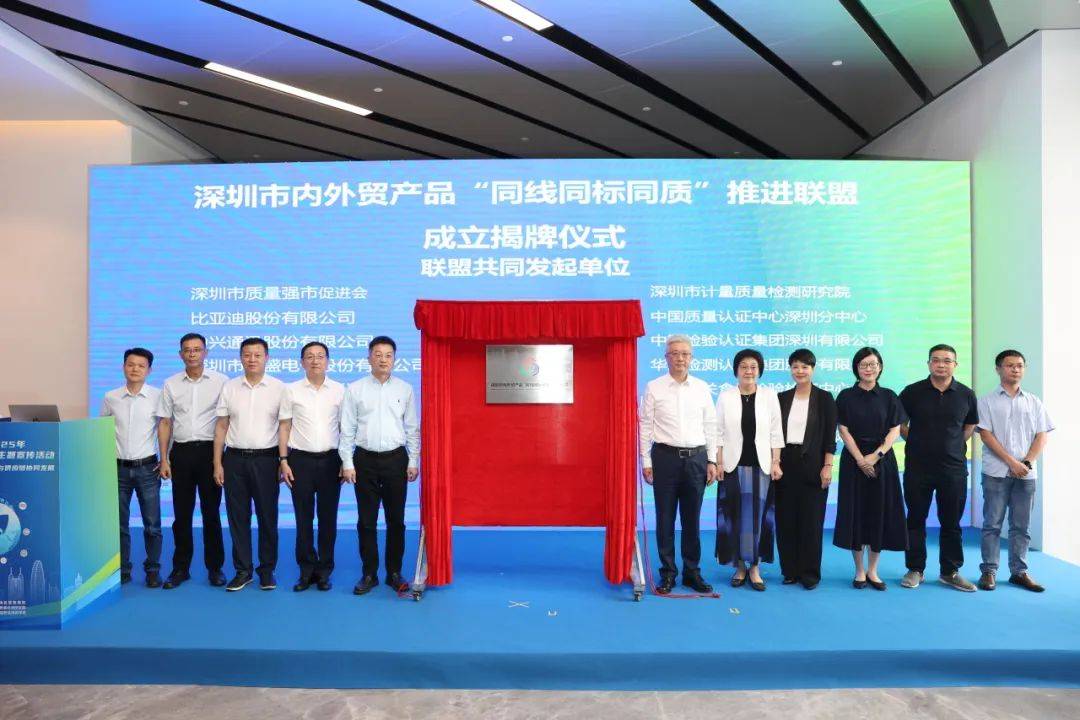
Group 1 - The Shenzhen Municipal Market Supervision Administration hosted a series of events themed "Certification and Accreditation: Collaborative Development of Supply Chains" on June 6, 2025, emphasizing the critical role of certification and accreditation in enhancing supply chain resilience and promoting integrated development of domestic and foreign trade [1] - The "Same Line, Same Standard, Same Quality" initiative aims to produce goods that meet both domestic and international market standards, facilitating the integration of production and inspection resources to help companies overcome international trade barriers [3] - The establishment of the alliance is a significant step towards promoting the coordinated development of domestic and foreign trade in Shenzhen, contributing to the city's higher level of openness and quality development, and enhancing its status as a global consumption center [3] Group 2 - The event launched the province's first quality certification popularization base, aiming to deepen public understanding of quality certification and foster a societal atmosphere of awareness and trust in certification [5] - Shenzhen has issued 486 carbon footprint certification certificates and 257 green product certification certificates, covering 168 and 107 enterprises respectively, with experiences being promoted nationwide by the National Development and Reform Commission [5] - The Shenzhen Municipal Market Supervision Administration plans to strengthen the core functions of certification and accreditation as tools for market credit, quality management, and trade facilitation, aiming to elevate the certification and accreditation sector to new heights [6]
中山出台十项措施促进外贸企业拓内销市场
Guang Zhou Ri Bao· 2025-05-15 20:13
Core Viewpoint - Zhongshan is implementing ten measures to promote foreign trade enterprises to expand into the domestic market in response to changing external economic and trade environments [1][2]. Group 1: Market Access Optimization - Zhongshan will support the production of export products that meet the standards of the destination country and comply with China's mandatory standards for domestic sales [1]. - The city promotes the development of "same line, same standard, same quality" products, allowing foreign trade enterprises to produce goods that can be both exported and sold domestically, thereby reducing costs and facilitating the transition between domestic and foreign sales [1]. Group 2: Support for Domestic Market Expansion - Zhongshan will incentivize foreign trade enterprises to grow their domestic sales market by providing one-time rewards for newly established independent legal entities or industrial activity units that meet certain retail sales thresholds after 2025 [1]. - Retail and wholesale market operators achieving specific growth targets in retail sales will receive rewards based on incremental sales [1]. Group 3: E-commerce Development - Zhongshan will support foreign trade manufacturing enterprises that wish to transition to domestic sales through e-commerce platforms, providing assistance based on the sales volume of exported products sold domestically [1]. - The city aims to cultivate e-commerce brands and will offer one-time rewards to recognized live-streaming e-commerce brand enterprises [1]. Group 4: E-commerce Resource Integration - Zhongshan will collaborate with major e-commerce platforms to organize supply-demand matching activities for products transitioning from export to domestic sales [2]. - The city will include eligible foreign trade products in the consumer goods recycling policy to promote local foreign trade enterprises' participation in sales expansion [2]. - Efforts will be made to enhance publicity and ensure that policy benefits are fully realized for the public [2].
山东青岛推动出口企业内外销同线同标同质 一条生产线,对接两种市场标准(经济聚焦·加快推动内外贸一体化)
Ren Min Ri Bao· 2025-05-14 22:15
Core Viewpoint - The article highlights the successful adaptation of Qingdao Wanjiman Tool Co., Ltd. in balancing both domestic and international markets through the implementation of the "same line, same standard, same quality" initiative, which allows the company to produce products that meet both export and domestic standards [2][3]. Group 1: Company Adaptation and Strategy - Qingdao Wanjiman Tool Co., Ltd. has shifted its focus to the domestic market due to declining international demand, capitalizing on the growing need for grinding wheels in domestic industries such as automotive and electrical [2][3]. - The company faced initial challenges in the domestic market, including a high defect rate of 15%-20% and customer complaints, which negatively impacted its reputation [2][3]. - After collaborating with local market supervision authorities and experts, the company improved its product quality by adjusting raw material formulations and production processes, achieving compliance with both domestic and international standards [3]. Group 2: Industry Standards and Certification - The "same line, same standard, same quality" initiative was introduced by the Shandong Provincial Market Supervision Administration to help export enterprises meet both domestic and international standards [2][4]. - Qingdao Wanjiman successfully obtained the "three same" industrial product certification, reducing its defect rate to below 1% and becoming a designated supplier for several domestic automotive companies [3]. - The initiative is expanding from food and agricultural products to general industrial products, encouraging companies to pursue certification that aligns with both domestic laws and international standards [4]. Group 3: Market Dynamics and Future Outlook - The domestic market share for Qingdao Wanjiman is steadily increasing, with monthly sales surpassing 1.2 million yuan, indicating a balanced market presence between domestic and international sales [3]. - The Qingdao Municipal Market Supervision Administration emphasizes the importance of standard unification, technological innovation, and leveraging policy resources to help companies break market barriers and seize opportunities in the upgrading consumer market [4].
如何破冰内销困境?看“持久战”背后的创新突围
Yang Shi Wang· 2025-05-09 07:57
Core Viewpoint - The article discusses how Huzhou, a major foreign trade city in Zhejiang, is adapting to the challenges posed by U.S. tariffs by shifting focus to domestic markets, highlighting the difficulties faced and the strategies employed to overcome them [1][5]. Group 1: Market Transition - Huzhou's foreign trade enterprises are actively seeking to expand into domestic markets due to the impact of U.S. tariffs, which have affected over 14% of their exports [1][5]. - A recent event aimed at facilitating the transition to domestic sales attracted over 100 companies, exceeding initial expectations of 70 participants, indicating strong interest in exploring e-commerce channels [3][5]. - The local business department has initiated efforts to identify export companies facing challenges and has created a supply-demand matching platform to assist them in entering the domestic e-commerce market [5][11]. Group 2: Standardization Challenges - The transition from foreign trade to domestic sales is hindered by a lack of unified standards, which complicates the process of listing products on various e-commerce platforms [8][11]. - Huzhou's market regulatory authorities are providing one-on-one guidance to companies seeking "same line, same standard, same quality" certification, which facilitates quicker product listings [11][15]. Group 3: Innovation and Development - Companies are recognizing the need for innovation to thrive in the domestic market, with some reporting a 40% increase in efficiency due to improved product line management [13][21]. - A company specializing in fans and heat sinks has leveraged its proprietary chip technology to expand into new markets, achieving a 20% increase in profit margins [19]. - Another green home furnishings company has diversified its product range to over 1,000 styles and invests more than 20 million yuan annually in R&D to avoid homogenization in products [21][23].
转内销观察丨解决外贸转内销卡点 看湖州如何破题
Yang Shi Xin Wen· 2025-05-09 02:34
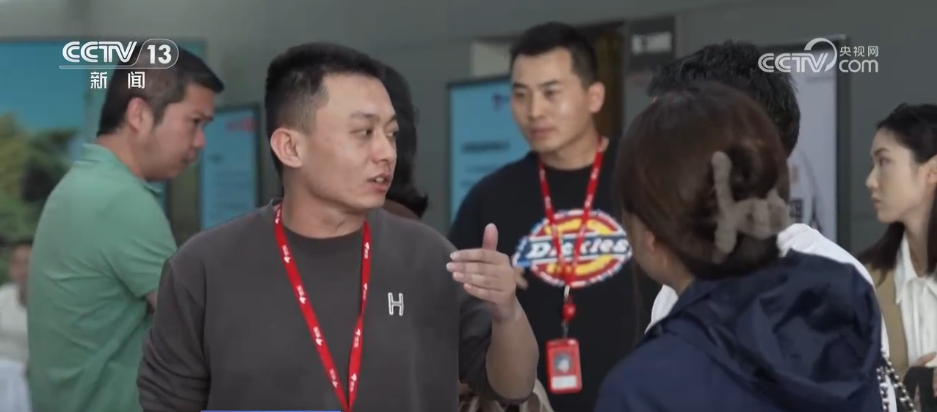
Core Viewpoint - Huzhou, a major foreign trade city in Zhejiang, faces challenges in transitioning from export to domestic sales due to U.S. tariffs, prompting local businesses to seek solutions for market expansion and channel access [1][10]. Group 1: Market Transition Challenges - Huzhou's foreign trade enterprises are actively exploring domestic markets, with over 100 companies participating in a recent event aimed at enhancing e-commerce channels for domestic sales [2]. - Many companies, previously focused solely on exports, lack brand recognition and advertising in the domestic market, making the transition challenging [4]. - The local government has initiated efforts to assist businesses in overcoming channel barriers by creating supply-demand matching platforms and providing hands-on guidance for entering the domestic e-commerce market [6][8]. Group 2: Standardization Issues - A significant challenge for foreign trade products transitioning to domestic sales is the lack of unified standards, which complicates the listing of products on e-commerce platforms [13][17]. - The local government is working on "Three Consistencies" certification (same line, same standard, same quality) to help businesses align their products with domestic standards, facilitating quicker market entry [19][21]. - The certification process can be completed in about five working days, allowing products to be listed rapidly on e-commerce platforms [24]. Group 3: Innovation and Adaptation - Companies are recognizing the need for innovation and adaptation to thrive in the changing market landscape, with some investing heavily in R&D and new product development [39][41]. - A company specializing in fans has leveraged its core technology to expand into new markets, achieving a 20% increase in profit margins [35]. - Another company has diversified its product offerings to over 1,000 styles, with annual R&D investments exceeding 20 million yuan, focusing on avoiding homogenization in the market [41][48]. Group 4: Growth in Domestic Market - The domestic market for high-end customized and engineering products is experiencing annual growth rates of approximately 20% [48]. - Companies are expanding their production facilities to accommodate the growing demand for customized products, reflecting a strategic shift from traditional export-oriented production [50].