采矿业

Search documents
特朗普关税阴霾笼罩,美国企业招聘踩下“刹车”
Hua Er Jie Jian Wen· 2025-09-15 03:37
Group 1 - The U.S. labor market is experiencing stagnation, with only 22,000 jobs added in August, indicating a slowdown in hiring due to trade tensions [1] - Manufacturing, wholesale retail, and energy sectors are particularly affected, with significant job losses reported [2] - Companies like John Deere have reported substantial financial losses due to tariffs, with a projected loss of $300 million by 2025, leading to layoffs [2] Group 2 - Uncertainty from fluctuating policies is causing companies to adopt a cautious approach, often leading to hiring freezes [3] - Executives from various sectors express that without stable policies and predictable costs, recruitment and expansion plans are on hold [3] - The Trump administration maintains that tariffs will ultimately boost employment by encouraging businesses to relocate operations back to the U.S. [4] Group 3 - Some companies report benefits from tariffs, claiming they help their business, while others highlight the negative impact on hiring and growth [4] - Economic experts argue that the manufacturing sector's struggles are due to demand slowdown and unresolved policy shifts rather than labor supply issues [4]

8月工业生产保持较快增长,高技术制造业表现亮眼
Xin Lang Cai Jing· 2025-09-15 03:23
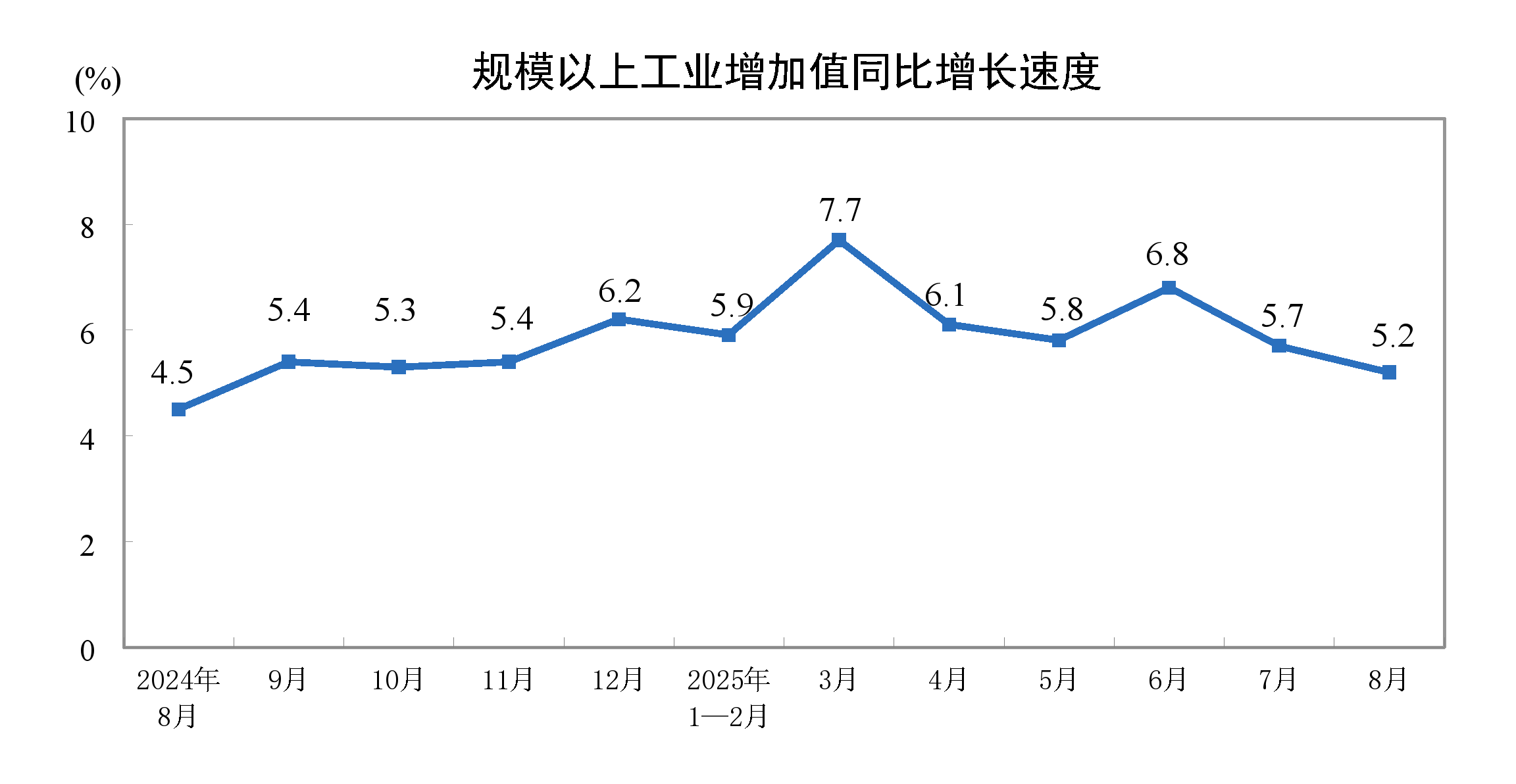
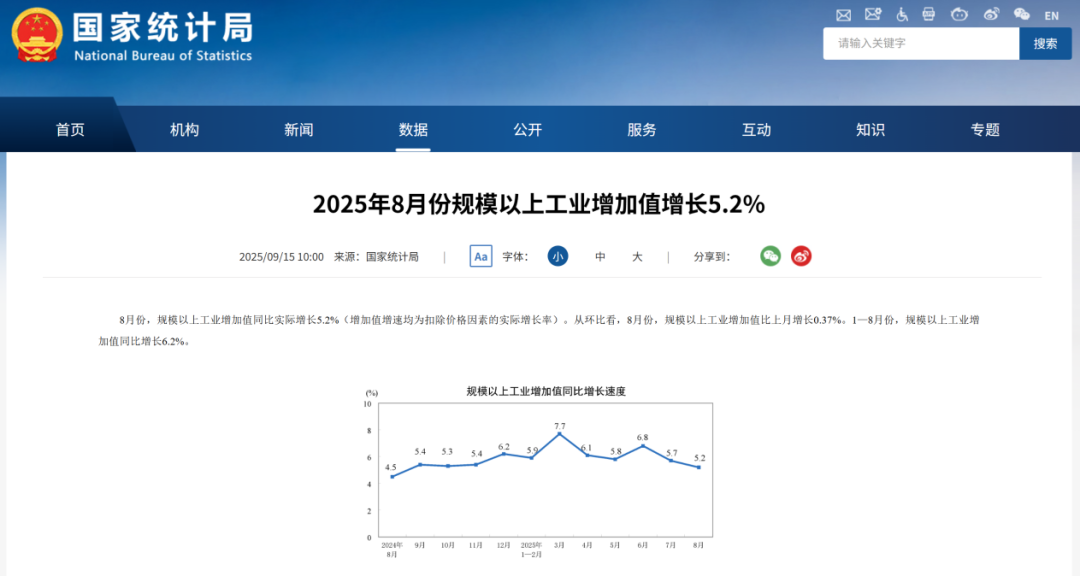
Core Insights - The industrial added value in August increased by 5.2% year-on-year, showing a slight decline of 0.5 percentage points compared to the growth rate from January to July [1] - From January to August, the industrial added value grew by 6.2% year-on-year [1] Group 1: Industry Performance - In August, the mining industry added value increased by 5.1%, manufacturing by 5.7%, and the production and supply of electricity, heat, gas, and water by 2.4% [2] - Among 41 major industries, 31 maintained year-on-year growth in added value in August, with notable increases in sectors such as non-ferrous metal smelting and rolling (9.1%), general equipment manufacturing (7.3%), and automotive manufacturing (8.4%) [2] - High-tech manufacturing continued to perform well, with a year-on-year growth of 9.3% in August [3] Group 2: Economic Outlook - Analysts predict that the industrial production growth rate for the year will be around 5.0%, a decrease of 0.8 percentage points from the previous year [5] - There are expectations for increased domestic consumption and investment efforts, which may support industrial production despite external demand pressures [3][5] - The Ministry of Industry and Information Technology has introduced a plan for the electronic information manufacturing industry, outlining 16 specific measures to promote growth [6]

5.2%
Zhong Guo Ji Jin Bao· 2025-09-15 03:18
Economic Overview - In August, the industrial added value of large-scale enterprises increased by 5.2% year-on-year, with a month-on-month growth of 0.37% [1][3] - The total retail sales of consumer goods reached 39,668 billion yuan in August, growing by 3.4% year-on-year [1][5] - Fixed asset investment (excluding rural households) amounted to 326,111 billion yuan from January to August, with a year-on-year increase of 0.5% [1][7] - The real estate development investment from January to August was 60,309 billion yuan, showing a decline of 12.9% [1][7] Industrial Production - The manufacturing sector saw a year-on-year growth of 5.7%, while the equipment manufacturing and high-tech manufacturing sectors grew by 8.1% and 9.3% respectively [3] - The production index for the service industry increased by 5.6% in August, with significant growth in information transmission, software, and financial services [4] Consumer Market - The online retail sales reached 99,828 billion yuan from January to August, with a year-on-year growth of 9.6% [5] - The retail sales of essential and upgraded consumer goods showed positive growth, with furniture and home appliances retail sales increasing by 18.6% and 14.3% respectively [5] Investment Trends - Manufacturing investment grew by 5.1%, while real estate investment saw a decline of 12.9% [7] - Infrastructure investment increased by 2.0%, indicating a focus on enhancing public facilities [7] Trade Performance - The total import and export value in August was 38,744 billion yuan, with exports growing by 4.8% [8] - Private enterprises accounted for 57.1% of total imports and exports, reflecting their increasing role in the economy [8] Employment and Prices - The urban unemployment rate was stable at 5.3% in August, with a slight seasonal increase [9] - The Consumer Price Index (CPI) decreased by 0.4% year-on-year, while the core CPI rose by 0.9% [10]
中国1-8月全国固定资产投资增长0.5%,制造业投资增长5.1%
Hua Er Jie Jian Wen· 2025-09-15 02:37
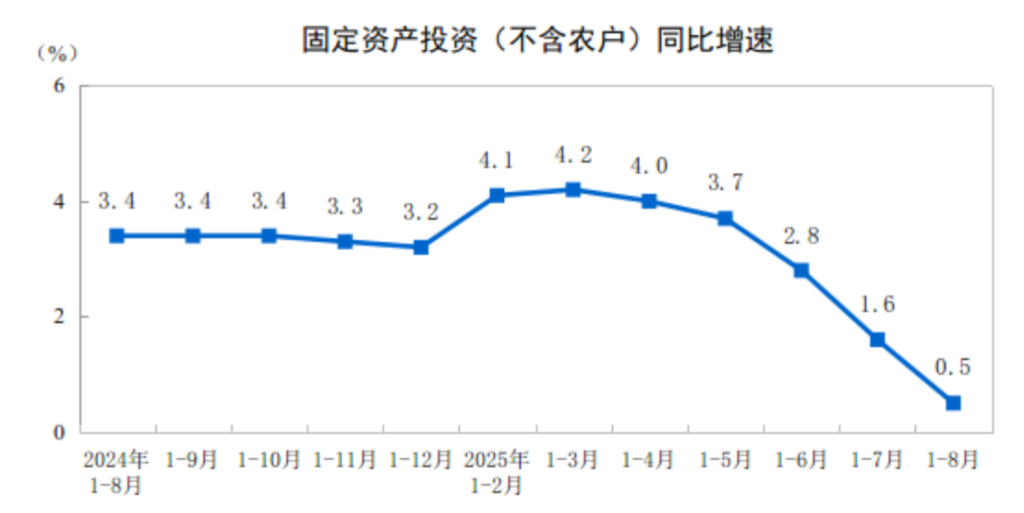
Core Insights - National Bureau of Statistics reported that from January to August 2025, fixed asset investment (excluding rural households) reached 326.111 billion yuan, with a year-on-year growth of 0.5% [1] - Private fixed asset investment saw a year-on-year decline of 2.3% [1] Investment by Industry - Investment in the primary industry was 64.61 billion yuan, with a year-on-year increase of 5.5% [3] - Investment in the secondary industry reached 1182.46 billion yuan, growing by 7.6% [3] - Investment in the tertiary industry totaled 2014.04 billion yuan, showing a decline of 3.4% [3] - Within the secondary industry, industrial investment grew by 7.7%, with mining investment increasing by 3.0%, manufacturing investment by 5.1%, and investment in electricity, heat, gas, and water production and supply rising by 18.8% [3] - In the tertiary industry, infrastructure investment (excluding electricity, heat, gas, and water production and supply) grew by 2.0%, with water transport investment increasing by 15.9%, water conservancy management investment by 7.4%, and railway transport investment by 4.5% [3] Regional Investment Analysis - Eastern region investment declined by 3.5%, while the central region saw a growth of 2.5%, the western region increased by 2.3%, and the northeastern region experienced a decline of 6.0% [3] Investment by Registration Type - Domestic enterprises' fixed asset investment grew by 0.5%, while investment from Hong Kong, Macau, and Taiwan enterprises increased by 2.3%. However, foreign enterprises' fixed asset investment declined by 15.4% [4]
国家统计局:1—8月全国固定资产投资同比增长0.5%
Guo Jia Tong Ji Ju· 2025-09-15 02:31
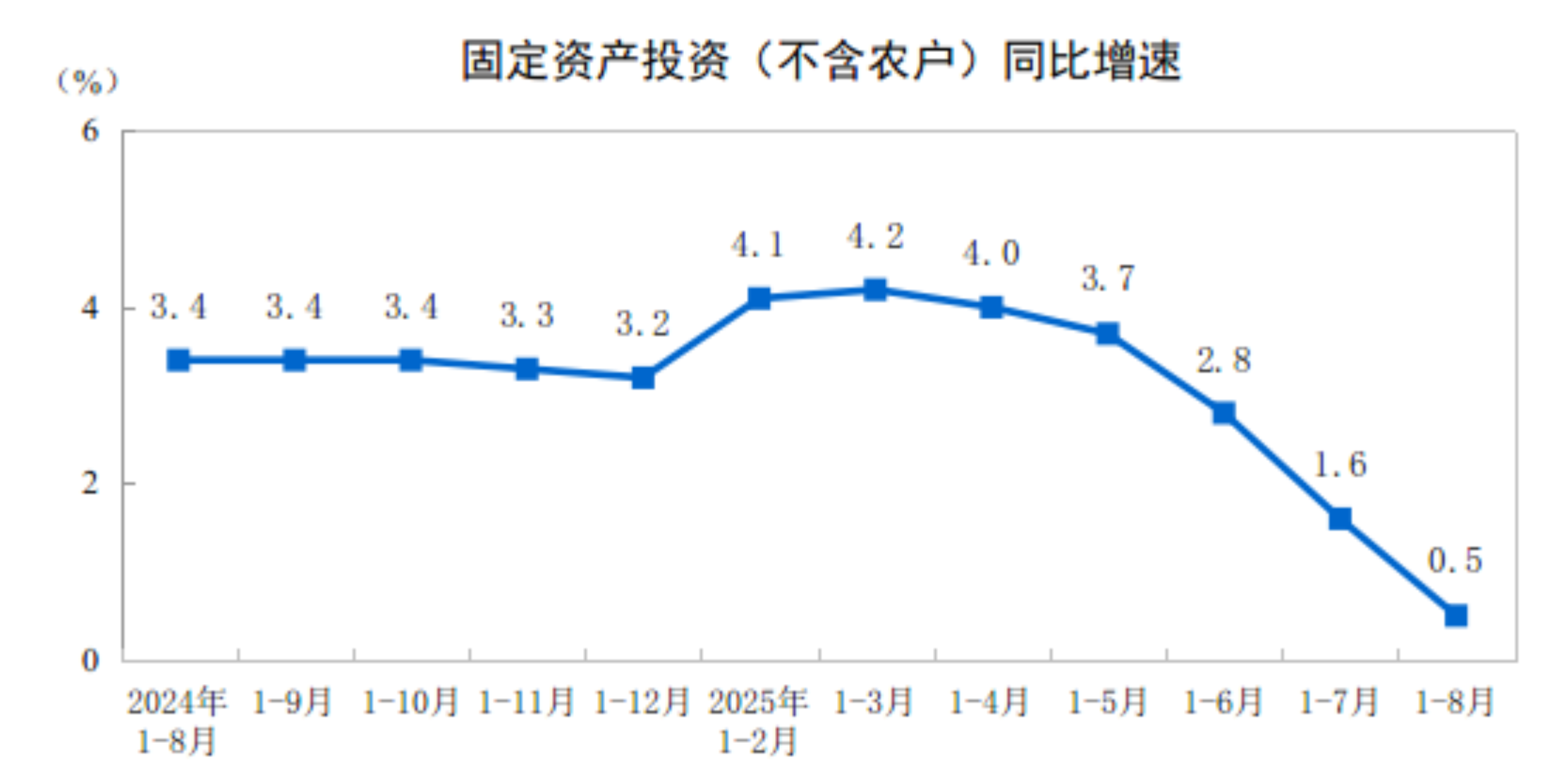
Core Insights - National fixed asset investment (excluding rural households) reached 32,611.1 billion yuan from January to August 2025, showing a year-on-year growth of 0.5% [1][3] - Private fixed asset investment experienced a year-on-year decline of 2.3% [3][4] - In August, fixed asset investment (excluding rural households) decreased by 0.20% month-on-month [1][3] Investment by Industry - First industry investment totaled 646.1 billion yuan, with a year-on-year increase of 5.5% [3][4] - Second industry investment reached 1,182.46 billion yuan, growing by 7.6% [3][4] - Third industry investment was 2,014.04 billion yuan, showing a decline of 3.4% [3][4] - Within the second industry, industrial investment grew by 7.7%, with mining investment increasing by 3.0%, manufacturing investment by 5.1%, and investment in electricity, heat, gas, and water production and supply rising by 18.8% [3][4] Infrastructure and Regional Investment - Infrastructure investment (excluding electricity, heat, gas, and water production and supply) in the third industry grew by 2.0% [3][4] - Investment in water transportation increased by 15.9%, water conservancy management by 7.4%, and railway transportation by 4.5% [3][4] - By region, eastern investment declined by 3.5%, while central and western regions saw increases of 2.5% and 2.3%, respectively; northeastern investment fell by 6.0% [3][4] Investment by Registration Type - Domestic enterprise fixed asset investment grew by 0.5%, while investment from Hong Kong, Macau, and Taiwan enterprises increased by 2.3% [3][4] - Foreign enterprise fixed asset investment saw a significant decline of 15.4% [3][4]

国家统计局:8月规模以上工业增加值同比增长5.2% 消费品零售总额增长3.4%
Guo Jia Tong Ji Ju· 2025-09-15 02:19
Economic Overview - In August, under the strong leadership of the Central Committee, the national economy maintained overall stability with a steady development trend, supported by macro policy adjustments and the promotion of a unified national market [1][9]. Industrial Production - In August, the industrial added value of large-scale enterprises increased by 5.2% year-on-year and 0.37% month-on-month. The mining industry grew by 5.1%, manufacturing by 5.7%, and electricity, heat, gas, and water production and supply by 2.4% [2][18]. - The equipment manufacturing industry saw an 8.1% increase, while high-tech manufacturing grew by 9.3%, outperforming the overall industrial growth by 2.9 and 4.1 percentage points respectively [2][18]. - From January to August, the industrial added value increased by 6.2% year-on-year [2][18]. Service Sector - The service production index rose by 5.6% year-on-year in August, with significant growth in information transmission, software, and IT services (12.1%), finance (9.2%), and leasing and business services (7.4%) [3][18]. - For the first eight months, the service production index increased by 5.9% year-on-year [3][18]. Retail Sales - In August, the total retail sales of consumer goods reached 39,668 billion yuan, a year-on-year increase of 3.4% [4][18]. - Online retail sales amounted to 99,828 billion yuan, growing by 9.6% year-on-year, with physical goods online retail sales at 80,964 billion yuan, a 6.4% increase [4][18]. Fixed Asset Investment - From January to August, fixed asset investment (excluding rural households) totaled 326,111 billion yuan, a year-on-year increase of 0.5% [5][18]. - Manufacturing investment grew by 5.1%, while real estate development investment fell by 12.9% [5][18]. Trade and Exports - In August, the total value of goods imports and exports reached 38,744 billion yuan, a year-on-year increase of 3.5%, with exports at 23,035 billion yuan (up 4.8%) and imports at 15,709 billion yuan (up 1.7%) [6][18]. - From January to August, the total value of goods imports and exports was 295,696 billion yuan, also a 3.5% increase year-on-year [6][18]. Employment - The urban surveyed unemployment rate in August was 5.3%, a slight increase of 0.1 percentage points from the previous month [7][18]. - The average working hours for employed persons were 48.5 hours per week [7][18]. Price Trends - In August, the Consumer Price Index (CPI) decreased by 0.4% year-on-year, with food prices down by 2.5% [8][18]. - The Producer Price Index (PPI) for industrial producers fell by 2.9% year-on-year, with the decline narrowing by 0.7 percentage points from the previous month [8][18].
1—8月份,全国固定资产投资(不含农户)同比增长0.5%
Di Yi Cai Jing· 2025-09-15 02:19
Core Insights - National fixed asset investment (excluding rural households) reached 32.6111 trillion yuan from January to August 2025, showing a year-on-year growth of 0.5% [1] - Private fixed asset investment experienced a year-on-year decline of 2.3% [1] Investment by Industry - First industry investment totaled 646.1 billion yuan, with a year-on-year increase of 5.5% [3] - Second industry investment amounted to 11.8246 trillion yuan, growing by 7.6% [3] - Third industry investment was 20.1404 trillion yuan, reflecting a decline of 3.4% [3] - Within the second industry, industrial investment grew by 7.7%, with mining investment increasing by 3.0%, manufacturing investment by 5.1%, and investment in electricity, heat, gas, and water production and supply rising by 18.8% [3] - In the third industry, infrastructure investment (excluding electricity, heat, gas, and water production and supply) grew by 2.0%, with water transport investment increasing by 15.9%, water conservancy management investment by 7.4%, and railway transport investment by 4.5% [3] Investment by Region - Eastern region investment declined by 3.5% year-on-year [3] - Central region investment increased by 2.5% [3] - Western region investment grew by 2.3% [3] - Northeastern region investment saw a decline of 6.0% [3] Investment by Registration Type - Domestic enterprises' fixed asset investment increased by 0.5% year-on-year [4] - Investment from Hong Kong, Macau, and Taiwan enterprises grew by 2.3% [4] - Foreign enterprises' fixed asset investment decreased by 15.4% [4]
国家统计局:8月规模以上工业增加值增长5.2% 国民经济运行总体平稳、稳中有进
Guo Jia Tong Ji Ju· 2025-09-15 02:17
Economic Overview - In August, the national economy maintained overall stability and progressed steadily, with a focus on implementing the decisions of the central government and enhancing macro policy adjustments [30][38] - The industrial added value above designated size increased by 5.2% year-on-year in August, with a month-on-month increase of 0.37% [31][38] - From January to August, the industrial added value grew by 6.2% year-on-year [31][38] Industrial Performance - The mining industry saw a year-on-year increase of 5.1%, while the manufacturing sector grew by 5.7%, and the electricity, heat, gas, and water production and supply industry increased by 2.4% in August [31][38] - High-tech manufacturing and equipment manufacturing industries performed well, with growth rates of 9.3% and 8.1% respectively, surpassing the overall industrial growth [31][38] Product Output - Among 623 industrial products, 319 saw year-on-year output growth in August, including steel (12.3 million tons, +9.7%), ethylene (314,000 tons, +10.4%), and automobiles (2.752 million units, +10.5%) [7][31] - New energy vehicles experienced significant growth, with production increasing by 22.7% [31][38] Service Sector Growth - The service sector production index rose by 5.6% year-on-year in August, with notable growth in information transmission, software, and financial services [32][38] - The business activity index for the service sector was at 50.5, indicating expansion [32][38] Investment Trends - Fixed asset investment (excluding rural households) reached 326.111 billion yuan from January to August, with a year-on-year increase of 0.5% [34][38] - Manufacturing investment grew by 5.1%, while real estate development investment declined by 12.9% [34][38] Trade Performance - In August, the total value of goods imports and exports was 38,744 billion yuan, a year-on-year increase of 3.5%, with exports growing by 4.8% [35][38] - From January to August, the total value of goods imports and exports reached 295,696 billion yuan, with exports increasing by 6.9% [35][38] Employment and Price Trends - The urban survey unemployment rate was 5.3% in August, showing a slight increase from the previous month [36][38] - The Consumer Price Index (CPI) decreased by 0.4% year-on-year in August, while the industrial producer prices fell by 2.9% [37][38]
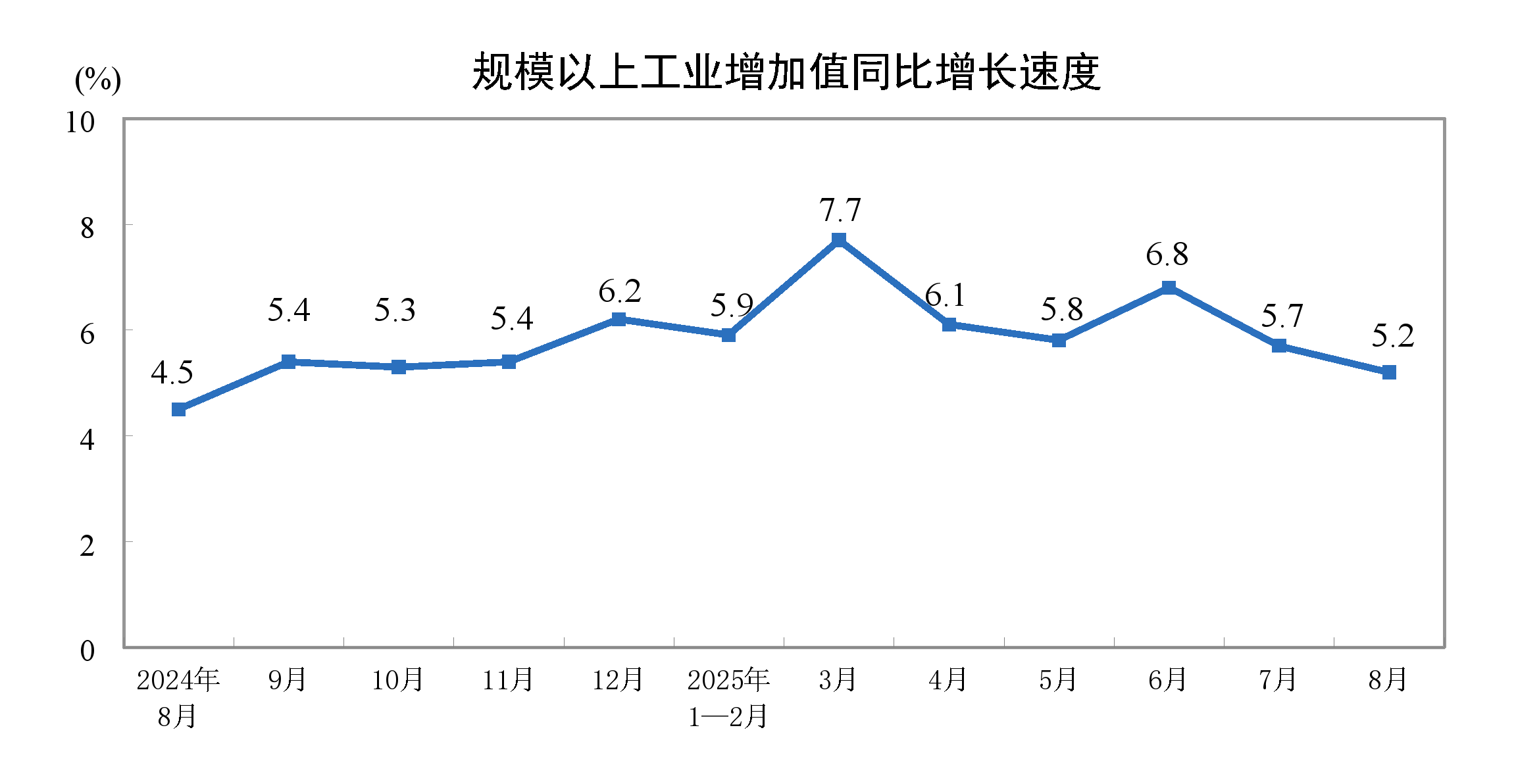
8月份规模以上工业增加值同比增长5.2%
Di Yi Cai Jing· 2025-09-15 02:17
Group 1 - In August, the industrial added value of enterprises above designated size increased by 5.2% year-on-year, with a month-on-month growth of 0.37% [1] - From January to August, the industrial added value increased by 6.2% year-on-year [1] Group 2 - In August, the mining industry added value grew by 5.1%, manufacturing by 5.7%, and the production and supply of electricity, heat, gas, and water by 2.4% [3] - By economic type, state-controlled enterprises saw a 4.7% increase, joint-stock enterprises 6.0%, foreign and Hong Kong, Macao, and Taiwan-invested enterprises 2.3%, and private enterprises 4.6% [3] Group 3 - Among 41 major industries, 31 reported year-on-year growth in added value in August [3] - Notable growth sectors included chemical raw materials and chemical products manufacturing at 7.6%, non-ferrous metal smelting and rolling at 9.1%, and automobile manufacturing at 8.4% [3] Group 4 - In August, out of 623 industrial products, 319 saw year-on-year production growth [4] - Steel production reached 12.277 million tons, up 9.7%, while cement production fell by 6.2% to 14.802 million tons [4] - The production of new energy vehicles increased by 22.7% to 1.333 million units [4] Group 5 - The product sales rate for industrial enterprises above designated size was 96.6%, a decrease of 0.1 percentage points year-on-year [5] - The export delivery value of industrial enterprises reached 1.3029 trillion yuan, a nominal year-on-year decline of 0.4% [5]
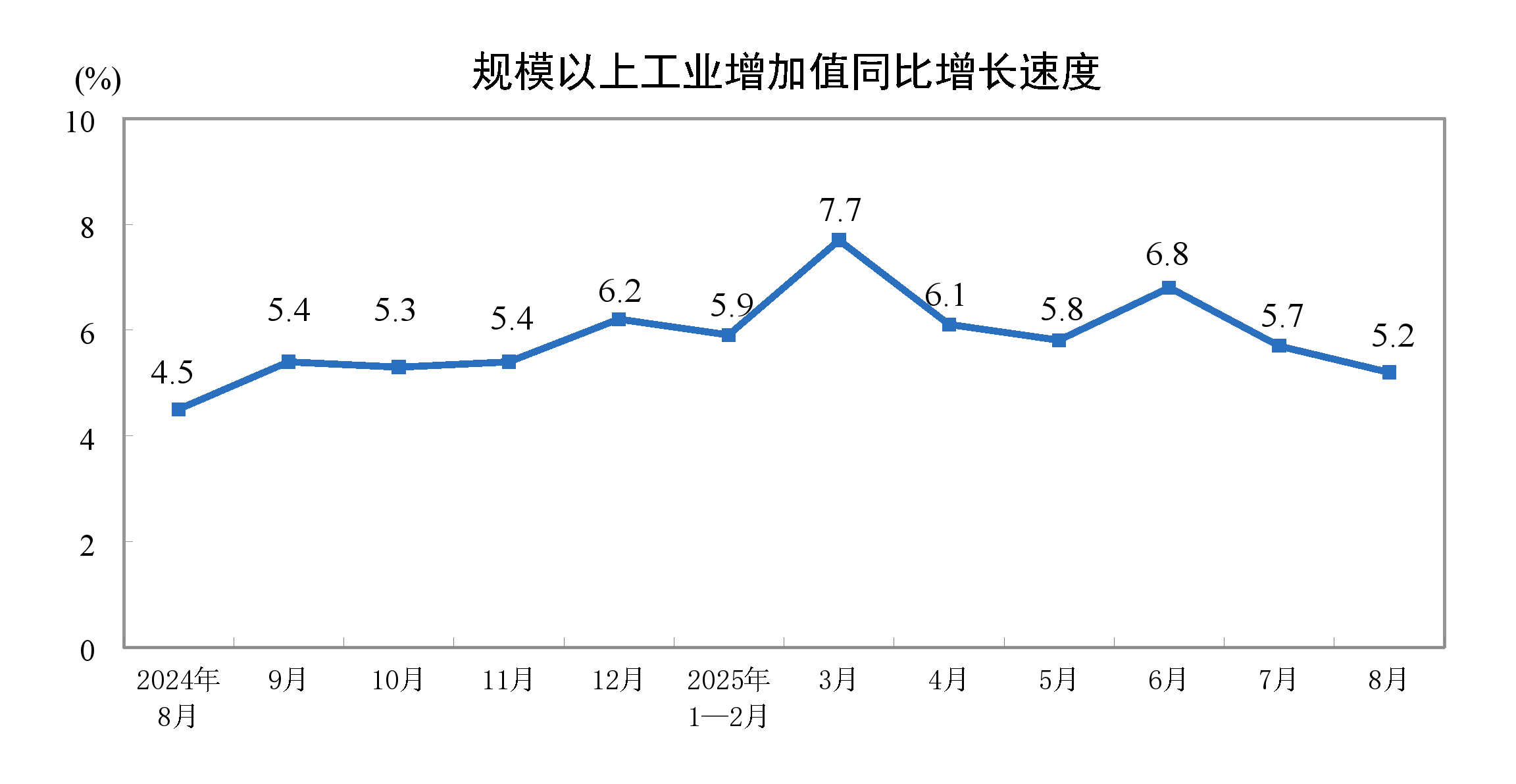
国家统计局:8月电力、热力、燃气及水生产和供应业增加值增长2.4%
Guo Jia Tong Ji Ju· 2025-09-15 02:16
8月份,规模以上工业增加值同比实际增长5.2%(增加值增速均为扣除价格因素的实际增长率)。从环比看,8月份,规模以上工业增加值比上月增长 0.37%。1—8月份,规模以上工业增加值同比增长6.2%。 分三大门类看,8月份,采矿业增加值同比增长5.1%,制造业增长5.7%,电力、热力、燃气及水生产和供应业增长2.4%。 分经济类型看,8月份,国有控股企业增加值同比增长4.7%;股份制企业增长6.0%,外商及港澳台投资企业增长2.3%;私营企业增长4.6%。 分行业看,8月份,41个大类行业中有31个行业增加值保持同比增长。其中,煤炭开采和洗选业增长5.1%,石油和天然气开采业增长4.7%,农副食品加工业 增长4.7%,酒、饮料和精制茶制造业下降2.4%,纺织业增长1.5%,化学原料和化学制品制造业增长7.6%,非金属矿物制品业增长0.5%,黑色金属冶炼和压 延加工业增长7.3%,有色金属冶炼和压延加工业增长9.1%,通用设备制造业增长7.3%,专用设备制造业增长4.0%,汽车制造业增长8.4%,铁路、船舶、航 空航天和其他运输设备制造业增长12.0%,电气机械和器材制造业增长9.8%,计算机、通信和其他电子设备 ...