
网约车

Search documents
科技周报| 阿里重新归纳业务板块,智元称现金流至少能撑三年
Di Yi Cai Jing· 2025-08-24 04:23
Group 1 - Ride-hailing platforms including Didi and T3 have collectively announced a reduction in commission rates to protect driver rights, with Didi lowering its maximum commission from 29% to 27% by year-end [7] - Apple is facing a lawsuit from Apple against a former employee who allegedly stole trade secrets before joining OPPO, highlighting the intense competition in the wearable technology sector [5] - Honor has launched the Magic V Flip2, expanding its presence in the foldable smartphone market, where it holds a 7.6% market share, second only to Huawei [6] Group 2 - Alibaba has restructured its business segments on its official website, reflecting a strategic realignment of its resources amid changing market conditions, with a clearer distinction between core and non-core businesses [2] - Zhiyuan Robotics claims its cash flow can sustain operations for three years without revenue, indicating a significant investment in early-stage projects to build an industrial ecosystem [3] - TCL Electronics reported a 67.8% increase in net profit for the first half of 2025, driven by a strong performance in its television business, which saw a 20.4% revenue growth [14][15] Group 3 - Jinshan Office reported a 10.12% year-on-year increase in revenue for the first half of 2025, with AI monthly active users reaching 29.51 million, up from 19.68 million in 2024 [12] - Deep Tianma achieved profitability in the first half of 2025, with a revenue increase of 9.93% and a net profit of 206 million yuan, supported by a strong position in the small and medium-sized display panel market [17] - The gaming industry is witnessing a surge in interest with the release of the new game "Black Myth: Zhong Kui," which has quickly gained popularity on social media [8]


汽车视点 | 网约车平台集体下调抽成比例 司机缘何体感不一
Xin Hua Cai Jing· 2025-08-24 03:16
Core Viewpoint - The competitive ride-hailing market is witnessing a shift as multiple platforms announce reductions in commission rates, with a focus on improving drivers' hourly income as a key to sustainable industry development [1][2][3] Group 1: Commission Rate Reductions - Didi Chuxing announced it will lower the maximum commission rate from 29% to 27% by the end of the year, with excess amounts returned to drivers [2] - T3 Mobility will also cap its commission at 27% and reduce the proportion of orders with a 26%-27% commission from 21% to 17%, while offering a 25% cap for drivers with over 50 monthly orders [2] - Cao Cao Mobility has decreased its commission from 22.7% to 22.5%, and Gaode Dache will support driver rights by ensuring that no more than 80 partner platforms exceed a 27% commission cap [2] Group 2: Driver Concerns and Market Dynamics - Drivers express that their primary concern is not the commission rate but their actual hourly income, which is crucial for the industry's sustainable development [1][3] - The industry faces a "supply exceeds demand" situation, with 389 ride-hailing platforms licensed as of June 2025, leading to declining driver incomes [4] - A Shanghai driver reported a drop in monthly income from around 12,000 yuan to over 8,000 yuan despite working longer hours [4] Group 3: Industry Challenges and Practices - Issues such as "layered reselling" of orders persist, where platforms sell orders to other platforms, leading to multiple commission deductions and significantly reducing drivers' earnings [5] - Some platforms have introduced "commission-free cards," but drivers report mixed results, with concerns that these cards may lead to fewer orders or less favorable assignments [6] Group 4: Recommendations for Improvement - The industry should focus on improving drivers' hourly income and working conditions, as this is more critical than just reducing commission rates [7] - There is a need for diversified business growth within the industry to enhance overall market size and create a better environment for driver income [8] - Establishing a comprehensive rights protection system for drivers, including income guarantees based on local minimum wage standards, is essential for safeguarding their interests [8]
网约车集体降抽成,司机每单多赚几毛钱
吴晓波频道· 2025-08-24 00:31
Core Viewpoint - The recent reduction in commission rates by major ride-hailing platforms is unlikely to significantly increase drivers' incomes, as the actual financial benefit is minimal for most drivers [8][10][12]. Group 1: Impact on Drivers - Drivers in Beijing report that their monthly income, after platform deductions, remains largely unchanged despite a 2% reduction in commission rates, translating to an approximate increase of only 200 yuan per month [8][10]. - Many drivers express skepticism about the effectiveness of the commission reduction, noting that short-distance rides yield slightly higher earnings, while long-distance rides may result in lower net income [8][9]. - The overall sentiment among drivers is that the commission reduction is insufficient to address the underlying issues of low earnings due to oversupply and intense competition in the market [19][20]. Group 2: Impact on Passengers - The price competition among platforms has led to lower fares for passengers, but regulatory actions against low-price competition may result in increased fares in the future [9][12]. - Passengers may experience a mixed impact, with some enjoying lower fares while others may face higher costs as platforms adjust their pricing strategies in response to regulatory pressures [9][31]. Group 3: Industry Dynamics - The ride-hailing market is characterized by intense competition and oversupply, with the number of active drivers significantly exceeding the demand for rides, leading to low average daily earnings for drivers [12][19]. - Regulatory measures are being implemented to curb predatory pricing practices and ensure fair earnings for drivers, indicating a shift towards a more sustainable market structure [13][21]. - The reduction in commission rates may pressure platforms' profitability, prompting them to adopt more refined operational strategies rather than relying solely on ride-hailing for growth [10][20]. Group 4: Regulatory Environment - Recent legal frameworks aim to regulate commission rates and prevent platforms from engaging in unfair pricing practices, which could enhance drivers' earnings and improve market conditions [13][21]. - The introduction of new laws, such as the revised Anti-Unfair Competition Law, seeks to establish clearer guidelines for pricing and commission structures within the ride-hailing industry [13][14]. - The ongoing regulatory efforts are expected to lead to a consolidation of the market, with smaller platforms likely to be phased out as the industry moves towards a more organized and competitive landscape [29][31].


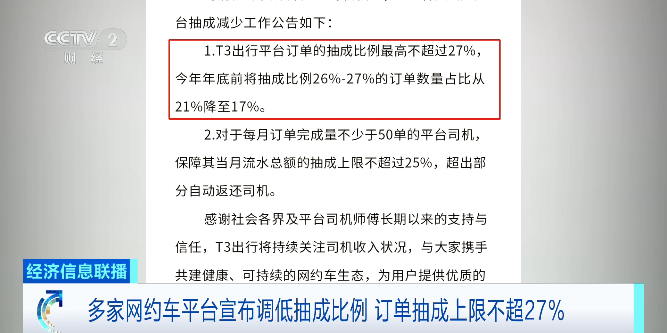
多家网约车平台宣布调低抽成比例,订单抽成上限不超27%
Qi Lu Wan Bao· 2025-08-23 06:45
Core Viewpoint - The recent reduction in commission rates by multiple ride-hailing platforms aims to improve driver earnings and enhance their experience, responding to ongoing concerns about high commission rates impacting driver income [1][3][9]. Group 1: Commission Rate Changes - Didi Chuxing and T3 have lowered their maximum commission rates from 29% to 27%, while Cao Cao Chuxing has reduced its rate to 22.5% [1]. - Gaode Dache plans to push for a maximum commission rate of no more than 27% across at least 80 partner ride-hailing platforms [1]. Group 2: Impact on Drivers - Many ride-hailing drivers have experienced a decline in income due to various factors, including reduced ride volume and changes in pricing rules, making the reduction in commission rates a positive development for them [5]. - A driver reported that after working long hours, their net earnings were around 300 to 400 yuan, indicating that lower commission rates would lead to higher take-home pay [7]. Group 3: Expert Opinions - Experts believe that the adjustment in commission rates could alleviate the long-standing issue of high commission rates affecting drivers [9]. - A transportation research expert from Tsinghua University noted that while the direction of reducing commission rates is positive, there is still room for further reductions to better protect driver rights [11].
沪指创10年新高,鲍威尔发出降息信号丨一周热点回顾
Di Yi Cai Jing· 2025-08-23 03:09
Group 1: A-Share Market Performance - The A-share market has seen a significant milestone with all three major indices reaching new highs, and the total market capitalization surpassing 100 trillion yuan for the first time [2] - The Shanghai Composite Index hit a peak of 3759.1 points, breaking the previous high of 3731.69 points from February 2021, marking the highest level since August 2015 [2] - The trading volume in the A-share market exceeded 2 trillion yuan for eight consecutive trading days, indicating strong market activity [2] Group 2: Fiscal Revenue and Economic Recovery - The fiscal revenue for the first seven months of the year reached 135839 billion yuan, showing a year-on-year growth of 0.1%, with July's revenue growth at 2.6%, the highest this year [3][4] - Tax revenue showed signs of recovery, with a 5% increase in July, and the four major tax categories all improved, particularly personal income tax which grew by 8.8% [3] - Government spending for the same period was 160737 billion yuan, up 3.4%, with significant increases in social security, education, and healthcare expenditures [3] Group 3: Personal Pension Policy Changes - New regulations allow for additional circumstances under which individuals can withdraw personal pensions, including major medical expenses, unemployment, and low-income support [5] - This adjustment aims to address the urgent needs of citizens and improve the accessibility of personal pension funds [5] Group 4: Real Estate Market Stabilization - The State Council emphasized the need to consolidate the stabilization of the real estate market and promote urban renewal projects [6][7] - The focus is on enhancing domestic circulation to counteract uncertainties in international markets, with measures to stimulate consumption and investment [6] Group 5: Ride-Hailing Platforms Adjusting Commission Rates - Major ride-hailing platforms have announced reductions in commission rates to enhance driver earnings, with Didi lowering its maximum commission from 29% to 27% [8][9] - This collective action is in response to regulatory pressures aimed at improving driver rights and ensuring fair compensation [8] Group 6: Pop Mart's Financial Performance - Pop Mart reported a revenue of 138.8 billion yuan for the first half of the year, a 204.4% increase year-on-year, with a net profit of 47.1 billion yuan, up 362.8% [10][11] - The company achieved significant growth across various regions, particularly in the Americas with a staggering 1142.3% increase in revenue [10] Group 7: PPP Project Regulation - New guidelines have been issued to regulate the construction and operation of existing Public-Private Partnership (PPP) projects, focusing on prioritizing economically viable projects [12][13] - The aim is to prevent project delays and ensure effective investment, addressing issues that have arisen since the promotion of the PPP model in 2014 [12]
多家网约车平台集体官宣:降低!
Sou Hu Cai Jing· 2025-08-23 00:51
Core Viewpoint - The recent decision by multiple ride-hailing platforms to lower commission rates is aimed at improving driver earnings and addressing long-standing issues within the industry [1][3]. Group 1: Commission Rate Changes - Major ride-hailing platforms such as Didi Chuxing, Cao Cao Mobility, and T3 Mobility have announced reductions in their maximum commission rates, with Didi and T3 lowering it from 29% to 27%, and Cao Cao reducing it to 22.5% [1]. - Gaode Dache has committed to ensuring that at least 80 partner ride-hailing platforms will have a commission cap of no more than 27% [1]. Group 2: Impact on Drivers - The reduction in commission rates is seen as a positive development for drivers, who have been experiencing declining incomes due to various factors, including reduced ride volumes and changes in pricing rules [3][5]. - Experts believe that this adjustment could alleviate the long-standing issue of high commission rates that have troubled drivers [5]. Group 3: Industry Response - The move to lower commission rates is viewed as a proactive step by ride-hailing platforms to share development benefits with drivers and improve their overall experience [3]. - There is a call for further reductions in commission rates, as the current decreases are not substantial enough, indicating that more room for improvement exists [7].
新华财经早报:8月23日
Zhong Guo Jin Rong Xin Xi Wang· 2025-08-23 00:27
Group 1 - The State Council of China is focusing on implementing large-scale equipment updates and a trade-in policy for consumer goods to boost sports consumption and advance the high-quality development of the sports industry [1][1] - The Ministry of Finance and the State Taxation Administration announced a policy to fully refund the end-of-period VAT credits on a monthly basis for four industries, including manufacturing and technology services [1][1] - The People's Bank of China will conduct a 600 billion yuan medium-term lending facility operation to maintain liquidity in the banking system, marking a net injection of 300 billion yuan for the sixth consecutive month [1][1] Group 2 - Ping An Bank reported a 10% decline in revenue to 69.385 billion yuan and a 3.9% decrease in net profit to 24.87 billion yuan for the first half of 2025 [2][2] - Several ride-hailing companies, including Didi Chuxing, announced a reduction in commission rates, with Didi and T3 lowering their maximum commission to 27% and Cao Cao Chuxing to 22.5% [2][2] Group 3 - The Hang Seng Index Company announced changes to the Hang Seng Index, with China Telecom, JD Logistics, and Pop Mart being added to the index, increasing the number of constituent stocks from 85 to 88 [1][1] - The A-share market continued its upward trend, with the Shanghai Composite Index surpassing 3,800 points, marking a ten-year high, and a trading volume of 2.58 trillion yuan, setting a historical record [1][1]

约车平台真的降佣了吗?
Hu Xiu· 2025-08-22 23:34
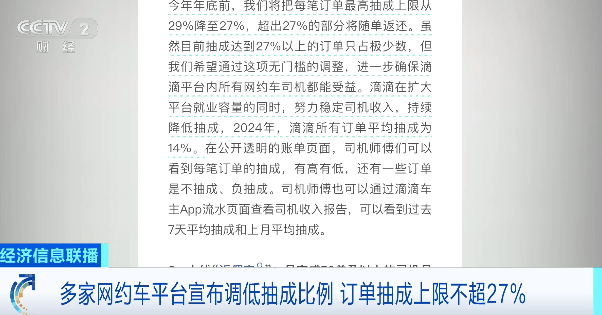
Core Viewpoint - The ride-hailing industry is experiencing significant changes as multiple platforms announce adjustments to their commission rates, reflecting both regulatory pressures and competitive dynamics [2][4][21]. Group 1: Commission Rate Adjustments - Several ride-hailing platforms, including Didi, have announced a reduction in their maximum commission rates to 27% by the end of the year, with Didi reporting an average commission of 14% for all orders last year [2][6]. - The current commission for "ordinary fast car" orders is approximately 21% to 24%, with potential reductions through rebates or waivers based on driver performance and passenger discounts [3][5][8]. - Didi's "Rebate Treasure" program ensures that drivers completing over 50 rides per month will have their average commission capped at 25%, with excess amounts refunded in the following month [6][9]. Group 2: Regulatory Influence - The adjustment in commission rates is not the first for the industry; regulatory bodies have been actively promoting lower commission rates and greater transparency in pricing mechanisms over the past two years [4][15]. - Policies have been implemented to ensure that platforms publicly disclose their commission structures and adhere to maximum commission limits, which have been set at 30% in previous years [16][17]. - The latest regulatory guidance encourages platforms to provide benefits to smaller operators and ensure compliance with fair pricing practices [20]. Group 3: Industry Trends and Future Outlook - The collective action of major platforms to lower commission rates indicates a shift from a price war to a focus on service quality and ecosystem development [4][22]. - Analysts suggest that reducing the commission rate to around 20% could significantly improve driver earnings, highlighting the need for a balanced approach that considers all stakeholders involved [4][22]. - The industry is moving towards a model where platforms diversify their revenue streams beyond commissions, focusing on service quality and customer experience [25][26].
约车平台真的降佣了吗?实探:“普通快车”单笔佣金21%-24%
Mei Ri Jing Ji Xin Wen· 2025-08-22 23:17
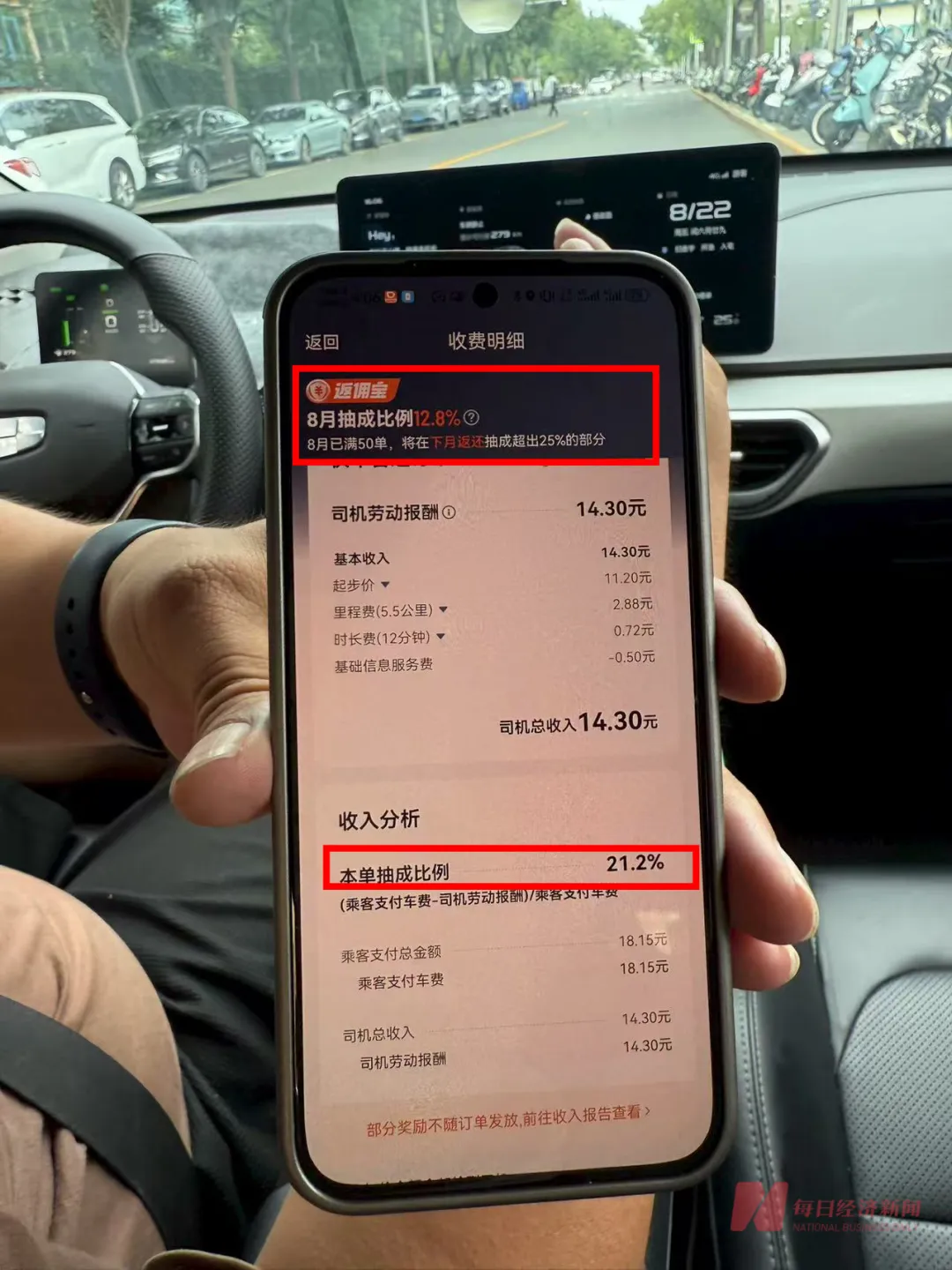
网约车行业再起波澜。 近期,多家网约车平台宣布调整抽成比例。滴滴宣布,今年年底前将订单最高抽成上限降至27%,同时披露去年所有订单平均抽成为14%。高德表示,将 推动不少于80家合作网约车平台的抽成比例上限不超过27%。T3出行表示,平台订单的抽成比例最高不超过27%。 8月22日,《每日经济新闻》记者通过打车体验与采访网约车司机发现,当前"普通快车"订单单笔抽成约为21%~24%,但也有部分订单因司机当月跑满 一定单数会在下月返还部分佣金,还有乘客使用大额优惠券等原因会对司机免佣,使得月平均抽成比例进一步下降。 值得关注的是,这并非行业首次调整抽成比例。近两年来,国家多部门持续出台政策规范抽成机制,从要求公开计价规则到推动降低过高抽成,政策导向 不断明晰。此次多平台集体行动背后,既有政策推动的因素,也折射出行业竞争从"价格战"向"服务与生态"转型的新趋势。 北方工业大学汽车产业创新研究中心主任纪雪洪在接受《每日经济新闻》记者采访时表示,从抽成比例来看,如今头部网约车平台限制的最高比例 (27%)还是相对较高,如果能降到20%,司机收入会有明显改善。不过他也提到,抽成比例需要兼顾多个参与方,包括流量平台、Sa ...
“反内卷”别只跟价格较劲
Jing Ji Guan Cha Wang· 2025-08-22 23:15
Group 1 - The recent halt of low-price marketing strategies in Xi'an's ride-hailing industry reflects a broader trend across various sectors to resist low-price competition and malicious underpricing practices [1][2] - Industry associations and government bodies are increasingly advocating for price increases as part of the "anti-involution" movement, which is seen as a positive development by some commentators [1][2] - The concept of "anti-low-price competition" is becoming a priority for various industries in addressing "involution," with immediate effects expected from interventions by government and associations [1][2] Group 2 - Not all price competition is considered "involutionary," as economic theory recognizes price as a crucial dimension of market competition; only "below-cost" pricing is typically opposed [2][3] - The enforcement of "anti-low-price competition" must align with fair competition reviews, price laws, and antitrust regulations to avoid unintended consequences such as price cartels [2][3] - The current economic climate in China, characterized by insufficient demand, complicates the sustainability of non-market price increases across industries [2][3] Group 3 - The emphasis on "anti-low-price competition" aims to restore fair market competition rather than simply increase prices; enhancing market mechanisms can lead to higher prices and improved profit margins for companies [3][4] - A simplistic approach of merely raising prices may backfire, as price is a signal of market supply and demand, and improper interventions can disrupt market dynamics [3][4] - Addressing "involution" requires systemic adjustments to tackle issues like unfair competition, unreasonable government subsidies, and restrictive industry entry barriers, which necessitates time and comprehensive strategies [3][4]