厨电

Search documents
华帝营销高层调整,透露了哪些信号?
Zhong Jin Zai Xian· 2025-11-19 01:44
Core Insights - Vatti has announced a strategic integration of its marketing system, appointing Han Wei as Vice President to replace the previous heads of offline and online marketing [1][2] - The strategic upgrade reflects a shift in the kitchen appliance industry from competition based on "internal competition," "parameters," and "price wars" to a focus on "value wars" and user experience [1][2] Company Strategy - The adjustment aims to break down channel barriers and provide consumers with a seamless, efficient, and convenient shopping experience, which is crucial for industry upgrades [1] - Vatti's recent organizational adjustments around "channel integration and product-sales unity" are seen as a deep response to the challenges posed by the evolving market [1] Leadership and Experience - Han Wei's appointment is significant as it marks his second term as Vice President at Vatti, showcasing his deep understanding of user needs and strategic execution capabilities [1] - His previous success in leading the brand's youth transformation and innovative marketing strategies has helped Vatti gain trust among younger consumers [1] Market Positioning - The integration of the marketing system will enable Vatti to quickly capture market feedback and enhance product development and service upgrades [2] - The "channel integration and product-sales unity" strategy will eliminate information barriers between online and offline channels, allowing consumers to experience products in-store after being attracted online [2] Industry Context - The strategic upgrade serves as a valuable example for the kitchen appliance industry, which is currently undergoing significant adjustments [2] - As the industry shifts from incremental growth to stock competition, focusing on user value and enhancing customer satisfaction throughout the user lifecycle will be key for brands to build long-term competitive advantages [2] Future Outlook - With the deepening of the strategy, Vatti is expected to strengthen the value connection between users and the brand, positioning itself as a leading high-end kitchen appliance brand [2]

老板电器食神大模型成功斩获“备案大满贯”,再添国家级认证 !
Jing Ji Guan Cha Wang· 2025-11-15 05:37
Core Insights - Boss Electric's Shishen large model has officially passed national large model registration, achieving a "full registration" status, which signifies comprehensive recognition at the national level for compliance, safety, and technological advancement [1] Group 1: Regulatory Achievements - The company has successfully obtained three key qualifications: safety registration, algorithm registration, and large model registration, demonstrating its capability in technology development and compliance construction [1] - The completion of these registrations reflects the company's breakthrough in meeting stringent regulatory requirements, showcasing its hard power in technological research and development [1] Group 2: Industry Impact - The Shishen large model is the only one in the kitchen appliance industry to achieve "full registration," setting a high standard for development within the sector [1] - With this comprehensive qualification system and leading technological capabilities, the Shishen large model is expected to continuously deliver value in smart kitchen appliances and personalized nutrition, contributing to improved quality of life and industry upgrades [1]

家电行业2025年三季报综述:收入韧性,盈利优化
Changjiang Securities· 2025-11-14 05:12
Investment Rating - The report maintains a "Positive" investment rating for the home appliance industry [11] Core Insights - The home appliance sector shows strong profitability resilience despite challenges from domestic subsidy reductions and external tariff impacts. The overall valuation remains at a reasonable low level, suggesting opportunities for growth in high-performing leaders and stable value recovery in established companies [2][10] Overall Industry Summary - The home appliance industry achieved a revenue growth of 7.52% year-on-year in the first three quarters of 2025, with quarterly growth rates of +13.97%, +5.46%, and +3.59% respectively. The growth trend is expected to slow down due to subsidy reductions and diminishing marginal effects [4][21] - The gross profit margin for the industry in Q3 2025 was 24.75%, reflecting a slight year-on-year decrease of 0.54 percentage points, while the gross sales difference improved by 0.64 percentage points to 16.35% [31][39] - The net profit attributable to shareholders for the first three quarters of 2025 reached 1,048.77 billion, marking a year-on-year increase of 9.76%, with Q3 net profit growing by 4.22% [38][44] White Goods - The white goods sector reported a revenue growth of 9.06% year-on-year in the first three quarters of 2025, with Q3 growth at 5.29%. The sector benefits from a reduction in domestic price competition, leading to a recovery in gross profit margins [5][27] - The net profit for the white goods sector increased by 11.32% year-on-year in the first three quarters, with Q3 showing a growth of 3.50% [43][44] Black Goods - The black goods sector experienced a revenue growth of 3.09% year-on-year in the first three quarters, but Q3 saw a decline of 2.64%. The sector's performance is influenced by a low base effect and increased non-recurring gains [6][24] - The net profit for the black goods sector surged by 37.26% in Q3, reflecting a strong recovery [42][43] Kitchen Appliances and Post-Cycle - The kitchen appliance sector faced a revenue decline of 4.09% in Q3 2025, attributed to a downturn in the real estate market and cautious consumer spending [7][25] - The net profit for the kitchen appliance sector decreased by 12.73% year-on-year in Q3 [42][43] Small Appliances - The small appliances sector achieved a revenue growth of 5.92% in Q3 2025, with the cleaning segment showing a remarkable growth of 30.70% [8][24] - The net profit for the small appliances sector increased by 16.52% year-on-year in Q3 [42][43] Upstream Components - The upstream components sector reported a revenue growth of 8.13% year-on-year in the first three quarters, with Q3 growth at 3.31%. The sector's profitability significantly improved due to order and business structure optimization [9][26] - The net profit for the upstream components sector grew by 30.29% in Q3 [42][43] Investment Recommendations - The report suggests focusing on high-growth leaders with strong organizational, technological, and brand capabilities, such as Anker Innovations, Roborock, and Ninebot. Additionally, it recommends paying attention to stable leaders like Midea Group, Haier Smart Home, and Gree Electric for value recovery opportunities [10]





浙江美大荣获“高质量发展典型案例” 以创新科技和智能智造树立行业标杆
Quan Jing Wang· 2025-11-13 02:06
Core Insights - The Zhejiang Province Gas Appliances and Kitchenware Industry Association held its fifth third member conference and the 2025 Kitchenware Industry Innovation Development Forum from November 5 to 7, where Zhejiang Meida (002677) was awarded two "High-Quality Development Model Cases" in the gas appliances and kitchenware industry [1][4] - The conference aimed to discuss the achievements, new technology applications, and future development directions of the Zhejiang gas appliances and kitchenware industry, focusing on high-quality development and industry transformation [1][2] Group 1 - Zhejiang Meida was recognized for its breakthroughs in integrated stove product installation technology and the transformation of its smart factory, highlighting its commitment to high-quality development [1][4] - The company's modular design and standardized embedded interface have improved installation efficiency and shifted kitchen appliances towards a more aesthetic integration, setting a standard for kitchen appliance installation [2][4] - The smart manufacturing base, recognized as a demonstration base for intelligent manufacturing in Zhejiang Province, integrates key technologies such as IoT, big data, and AI, enhancing production control and quality traceability [2][3] Group 2 - The recognition of Zhejiang Meida's dual cases reflects its long-term commitment to technological research and smart manufacturing reforms [4] - The company aims to continue leading innovation and strengthening its manufacturing foundation to provide smarter, more aesthetically pleasing, and greener kitchen solutions [4]

超越厨房的边界:浙江美大借力创投基金 锚定未来产业新高地
Quan Jing Wang· 2025-11-12 09:19
Core Insights - Zhejiang Meida Industrial Co., Ltd. is strategically investing in emerging industries such as semiconductor, robotics, new energy storage, and new materials through its partnership in Haining High-Quality Chuangtuo Equity Investment Partnership [1][2][4] - The company aims to expand its business layout and enhance its competitive edge by leveraging its resources and collaborating with professional investment institutions [4] Investment Strategy - Zhejiang Meida has invested 150 million yuan, accounting for 21.43% of the total contributions to the Haining High-Quality Chuangtuo Equity Investment Partnership, marking a significant step in its strategy to expand the industrial value chain [2] - The investment aligns with national and local policies that support emerging industries, particularly in the fields of robotics and new energy storage [2][3] Market Potential - The demand for energy storage batteries is projected to reach 1384.00 GWh by 2028, with a compound annual growth rate of 39.07% from 2024 to 2028, indicating substantial market potential in the new energy storage sector [3] - The company’s strategic investments are in line with the Zhejiang provincial government's plan to cultivate and expand emerging industries, particularly in artificial intelligence and robotics [3] Business Transformation - By investing in cutting-edge sectors, Zhejiang Meida is transitioning from a traditional kitchen appliance manufacturer to a diversified technology investor, positioning itself to capture new growth opportunities [4] - The company demonstrates strategic resilience by not solely relying on its traditional business but actively pursuing investments that align with future industry trends [4]
家电行业财报综述暨 11 月投资策略:白电及小家电板块增长良好,龙头韧性充足
Guoxin Securities· 2025-11-11 10:00
Core Insights - The home appliance industry shows resilient growth with a 3.6% year-on-year revenue increase in Q3, totaling 366.3 billion yuan, despite external pressures from reduced government subsidies and high export bases [13][14][22] - The overall net profit for the industry increased by 4.4% year-on-year, reaching 30.1 billion yuan, with a slight improvement in net profit margin by 0.1 percentage points [13][14][22] Segment Analysis White Goods - The white goods segment reported a revenue of 268.7 billion yuan in Q3, reflecting a 5.0% year-on-year growth, with a net profit margin of 9.5% [30][31] - Major players like Midea and Haier showed strong performance, with Midea's revenue growing by 9.9% and Haier's by 9.5% [33][34] Kitchen Appliances - The kitchen appliance segment experienced a revenue decline of 4.8% in Q3, totaling 5.96 billion yuan, with a net profit margin of 8.4% [37][44] - Traditional kitchen appliance companies like Boss and Vanward maintained relatively stable performance, while integrated stove manufacturers faced significant pressure [43][44] Black Goods - The black goods segment saw a revenue decrease of 3.6% in Q3, amounting to 47.29 billion yuan, but net profit increased by 41.9% to 1.4 billion yuan [45][53] - Companies like Hisense maintained stable growth, benefiting from balanced domestic and international operations [52][53] Small Appliances - The small appliance segment achieved a revenue growth of 6.3% in Q3, reaching 30.62 billion yuan, with a net profit margin of 6.7% [54][59] - Emerging categories within small appliances, such as robotic vacuum cleaners, contributed significantly to revenue growth [59] Lighting and Components - The lighting and components segment reported stable revenue of 13.73 billion yuan, with a slight year-on-year increase of 0.1%, but faced profit pressure with a net profit margin of 4.6% [3][28]

家电行业财报综述暨11月投资策略:白电及小家电板块增长良好,龙头韧性充足
Guoxin Securities· 2025-11-11 07:38
Core Insights - The home appliance industry shows resilient growth with a 3.6% year-on-year revenue increase in Q3, totaling 366.3 billion yuan, despite a slowdown due to the reduction of national subsidies and high export bases [13][14][22] - The overall net profit for the industry increased by 4.4% year-on-year, reaching 30.1 billion yuan, with a slight improvement in net profit margin by 0.1 percentage points [13][14][22] Segment Analysis White Goods - The white goods segment reported a revenue of 268.7 billion yuan in Q3, reflecting a 5.0% year-on-year growth, with a net profit margin of 9.5% [30][31] - Major players like Midea and Haier showed strong performance, with Midea's revenue growing by 9.9% and Haier's by 9.5% [33][34] Kitchen Appliances - The kitchen appliance segment experienced a revenue decline of 4.8% in Q3, totaling 5.96 billion yuan, with a net profit margin of 8.4% [37][44] - Traditional kitchen appliance companies like Boss and Vanward maintained relatively stable performance, while integrated stove companies faced significant pressure [43][44] Black Goods - The black goods segment saw a revenue decrease of 3.6% in Q3, amounting to 47.29 billion yuan, but net profit increased by 41.9% to 1.4 billion yuan [45][53] - Companies like Hisense maintained stable growth, benefiting from balanced domestic and international operations [52][53] Small Appliances - The small appliance segment achieved a revenue growth of 6.3% in Q3, reaching 30.62 billion yuan, with a net profit margin of 6.7% [54][59] - Emerging categories within small appliances contributed significantly to revenue growth, with companies like Roborock and Xiaobear showing strong performance [59] Lighting and Components - The lighting and components segment reported stable revenue of 13.73 billion yuan in Q3, with a slight decline in net profit margin to 4.6% [3][28] - The segment faced challenges due to declining downstream demand and tariff impacts [3][28] Investment Recommendations - Recommended stocks include Midea Group, Haier, TCL, and Gree in the white goods sector, while Hisense is suggested for black goods, and Roborock and Xiaobear for small appliances [4][5] Key Data Tracking - The home appliance sector's relative return in October was +0.70%, indicating positive market performance [3][4] - Raw material prices showed increases in October, with copper and aluminum prices rising by 5.7% and 7.6% respectively [3][4]
突发,赖育文辞职!
中国基金报· 2025-11-10 16:20
Core Viewpoint - The resignation of Lai Yuwen, the president of Wanhe Electric, just over a month after being appointed as a non-independent director, raises questions about the company's governance and leadership stability [2][8]. Group 1: Resignation Details - Lai Yuwen resigned from his positions due to personal reasons and will no longer hold any roles within the company or its subsidiaries [2][3]. - The company stated that the work Lai was responsible for has been handed over smoothly, and his resignation will not impact normal operations [3]. - Lai was elected as a non-independent director on September 17, with 96.08% of votes in favor, indicating strong shareholder support for his appointment [5][6]. Group 2: Background of Lai Yuwen - Lai Yuwen was the first professional manager to join the board of Wanhe Electric, marking a significant step in the company's governance structure [7][9]. - Before joining Wanhe in 2022, Lai had nearly 10 years of experience at Midea, where he held various positions, demonstrating a strong background in management [10][11]. Group 3: Company Performance - Despite challenges in the kitchen appliance industry, Wanhe Electric reported revenue and net profit growth. For the first three quarters of 2025, the company achieved total revenue of 5.524 billion yuan, a year-on-year increase of 5.54%, and a net profit of 479 million yuan, up 5.57% [14][15]. - The growth is attributed to an increase in overseas market sales, with export revenue rising over 26% and accounting for more than 40% of total revenue [15].



长期主义驱动高质量发展 华帝重塑厨电行业新坐标
Xin Lang Zheng Quan· 2025-11-10 08:45
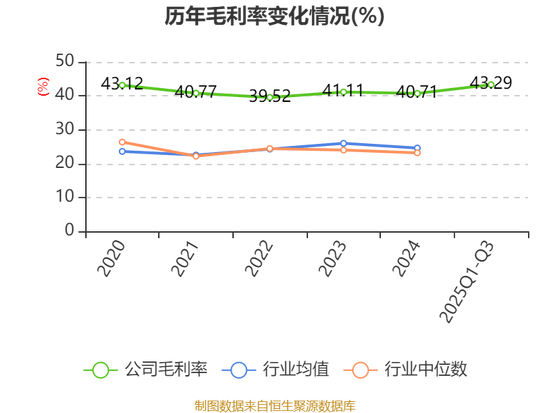
Core Insights - The kitchen appliance industry is transitioning from a growth-driven model to one focused on enhancing consumer experience and quality of life, moving beyond mere data metrics to value creation [1] - Companies are now prioritizing brand premium, technological innovation, and long-term value over traditional growth metrics [1] Company Performance - Vatti has successfully transitioned from a scale-driven enterprise to a brand-focused company, emphasizing long-term growth strategies as reflected in its recent Q3 financial report [2] - For the first three quarters of 2025, Vatti reported revenue of 4.158 billion and a net profit of 356 million, with a notable gross margin increase of 2.79 percentage points year-on-year, reaching 43.29% [2] Operational Strategy - Vatti maintains a robust operational foundation, balancing research and development investments with market expansion while ensuring a healthy cash flow of nearly 300 million [6] - The company has avoided inventory buildup risks, reflecting strong management and a growth model based on brand trust and product value rather than price competition [6] Long-term Value Focus - In a challenging market characterized by consumer fatigue and intense competition, Vatti emphasizes the importance of long-term strategies over short-term growth, avoiding reliance on market booms or low-price strategies [8] - Vatti's transformation involves redefining its value system through product innovation and channel restructuring, aiming to evolve from a kitchen appliance manufacturer to a lifestyle brand [8][10] Product and Marketing Innovation - Vatti has significantly increased its R&D investment, with approximately 170 million allocated in the first three quarters of 2025, and holds a total of 4,690 patents as of mid-2025 [10] - The company is upgrading its product structure towards integration, intelligence, and systematization, enhancing kitchen aesthetics and social functionality [10] - Vatti's marketing strategy has shifted from mere promotional activities to creating emotional connections and cultural resonance with consumers, particularly targeting younger demographics [12] Social Responsibility - Vatti integrates social responsibility into its business model, engaging in initiatives like autism support and promoting energy conservation, which enhances its public recognition and aligns with consumer values [12] - The brand's focus on "good feelings" alongside product functionality reflects a broader trend towards emotional engagement in consumer preferences [12]

告别价格战,迈向价值战!从华帝三季报看厨电行业生存新法则
Xin Lang Zheng Quan· 2025-11-10 08:42
Core Insights - The kitchen appliance industry is undergoing a "winter," which is not the end but a deep reshuffling pointing towards "value reconstruction" [1] - The competitive logic in the industry is shifting from "scale expansion" to a focus on "user value" [1] Financial Performance - Vatti's Q3 2025 report shows a revenue of 4.158 billion yuan and a net profit of 356 million yuan, indicating a year-on-year decline, but the gross margin has increased [1] - The overall gross margin for the first three quarters reached 43.29%, up by 2.79 percentage points year-on-year, with Q3 maintaining a high margin of 42.79% [1][3] Operational Resilience - Vatti's performance demonstrates operational resilience amidst industry challenges, with a 23.9% decline in real estate completions and weak consumer confidence affecting the kitchen appliance market [3] - The company's strategy of "quality improvement and efficiency enhancement" has allowed it to avoid the pitfalls of price wars and focus on product upgrades and brand high-end positioning [3] Product Innovation - Vatti's gross margin improvement is attributed to its ongoing high-end, intelligent, and youthful product strategies [6] - The company has transitioned its products from "kitchen tools" to "quality lifestyle carriers," leveraging technological breakthroughs to meet high-end user demands [6][8] Product Categories - The full-hidden zero-embedded range of smoke machines and the B7Pro dishwasher have achieved significant technological advancements, enhancing cleaning efficiency and aesthetic appeal [8][10] - The comprehensive product suite creates a value moat, aligning with the trend of integrated kitchen aesthetics and increasing user loyalty [8] Research and Development - Vatti has invested heavily in R&D, with a total of 4,690 patents, including 835 invention patents, positioning it among industry leaders [10] - The company’s R&D investment for the first three quarters was approximately 170 million yuan, supporting a continuous innovation rhythm [10] Channel Strategy - Vatti's channel strategy combines offline experiences with online engagement, creating a robust network that supports high-margin structures [11] - The company has opened over 1,000 new retail stores in the first half of 2025, enhancing brand value through immersive consumer experiences [11] Market Adaptation - Despite challenges such as slow consumer recovery and changing policy environments, Vatti has built product barriers through technology and fortified its value defense through experiential channels [12] - The company's practices offer insights for the kitchen appliance industry, emphasizing the importance of returning to user value and responding to real demands through continuous innovation [13]