打印机

Search documents
爱普生(中国)总裁石桥响介:以科技与本地化应对中国市场变化
2 1 Shi Ji Jing Ji Bao Dao· 2025-07-31 11:27
Core Insights - The Chinese printer and projector market is undergoing significant structural changes driven by digital transformation, consumption upgrades, and the demand for efficient, low-carbon, and intelligent products [1][2] - Epson's strategy in China focuses on "technology + localization" to provide high-quality products and services, positioning the market as a key growth engine for the company [1][2] Market Trends - The market has shifted from scale-driven growth to quality-driven development, necessitating brands to adapt to changing consumer needs [1] - The printer market is expected to see a 12.5% year-on-year decline in shipment volume in 2024, attributed to economic fluctuations and a rebound in demand following the pandemic [2] Company Strategies - Epson is restructuring its value chain to address changes in home printing demand, utilizing its "technology + localization" strategy and partnerships to enhance product appeal [2] - The "Epson Cloud Printing" WeChat mini-program has over 8.39 million registered users, and collaborations with Disney have introduced themed printers to attract family consumers [2] Technological Innovations - Epson's inkjet multifunction printers utilize "cold printing technology," which improves efficiency and reduces energy consumption, aligning with the growing emphasis on sustainability [5] - The company is also focusing on digitalization in commercial and industrial printing to enhance customer convenience while minimizing environmental impact [5] Competitive Landscape - New entrants in the market are viewed as a driving force for Epson's progress rather than mere competition [4] - The rise of large-screen LCD TVs is impacting the projector market, but Epson sees projectors as complementary solutions rather than direct substitutes [6] Smart Transformation - Digital transformation is identified as a critical challenge and a key to exponential growth, with Epson leveraging core hardware technology and partnerships across various sectors [7] - The "Epson Carrot Shared Printing" service allows users to print without owning a printer, meeting the demand for convenient, on-the-go printing [7] Collaborative Efforts - Epson is actively pursuing partnerships to build smart scene ecosystems, exemplified by collaborations with Tencent to enhance smart projection solutions [8] - The joint marketing efforts with Tencent Video aim to popularize smart projection products in the home market, targeting the "large-screen smart entertainment" segment [8]
纳思达(002180):携手华为鸿蒙,定义中国打印
Shenwan Hongyuan Securities· 2025-07-23 13:44
Investment Rating - The report maintains a "Buy" rating for the company [3][6] Core Insights - The company has successfully signed a strategic cooperation agreement with Huawei for the HarmonyOS, marking it as the first printer company to adapt and receive certification for the HarmonyOS [1][6] - The company is focusing on domestic printer production, which is expected to accelerate due to the partnership with Huawei and the increasing demand for localized products [6] - The sale of overseas assets has been completed, which is expected to help the company concentrate on its core brand and reduce debt, thereby improving its financial stability [6][7] Financial Data and Profit Forecast - Total revenue for 2024 is projected at 26,415 million, with a year-on-year growth rate of 9.8%. However, revenue is expected to decline to 19,312 million in 2025, reflecting a decrease of 26.9% [2][11] - The net profit attributable to the parent company is forecasted to be 749 million in 2024, dropping to 288 million in 2025, a decline of 61.6% [2][11] - The company anticipates a recovery in net profit to 1,359 million in 2026 and 1,889 million in 2027, with a compound annual growth rate (CAGR) of 42% from 2025 to 2027 [2][6][7] Market Data - As of July 23, 2025, the closing price of the company's stock is 24.46 yuan, with a market capitalization of 33,390 million [3][6] - The company has a price-to-earnings (PE) ratio of 46 for 2025, which is expected to decrease to 18 by 2027 [2][8] Valuation Analysis - The company is positioned in a growth phase within the domestic printer market, especially after the sale of overseas assets, which allows for strategic focus [7] - The report suggests a conservative PEG ratio of 1.1x, with a target market value of approximately 431 billion yuan, indicating a potential upside of 24% [7][8]

老牌巨头看不上的细分赛道,一家珠海3C公司年营收18亿|Insight全球
3 6 Ke· 2025-07-21 02:24
Core Insights - The article highlights the success of QuYin Technology, a company based in Zhuhai, which has transformed from producing printing consumables to developing portable printers, achieving a revenue growth from 4 million to 1.8 billion yuan in 11 years, marking a 449-fold increase [1][4]. Group 1: Company Overview - QuYin Technology, originally known as AiMo Technology, started by producing label ribbons and faced significant challenges, including three consecutive years of losses [3][1]. - The company has become a leading player in the portable printer market, with its brands such as Phomemo and AiMo, and has been recognized as the global sales leader in portable printers since 2022 [4][1]. Group 2: Market Context - Zhuhai is a major production hub for printer consumables, supplying 80% of the global market for printer ribbons, while the printer market itself is dominated by Japanese and American companies, which control nearly 80% of the market [2][1]. - The global printer market is characterized by saturation and declining shipment volumes due to economic instability and tightening user budgets [2]. Group 3: Product Development - QuYin Technology identified a niche in the portable printer market, launching a lightweight A4 printer aimed at frequent travelers, which weighs only 285 grams [6][1]. - The company has successfully expanded its product line from label printers to various portable printing solutions, focusing on specific consumer needs in different scenarios [11][1]. Group 4: Consumer Engagement - QuYin Technology has tapped into the DIY creative market, recognizing a significant demand for personalized printing solutions among overseas consumers, particularly in the U.S. [13][1]. - The company has developed multiple mobile applications to enhance user experience, offering various content services and engaging with consumers through social media and community events [14][1].


纳思达: 2025年半年度业绩预告
Zheng Quan Zhi Xing· 2025-07-14 16:28
Performance Forecast - The company expects a net loss attributable to shareholders of 200 million to 400 million yuan for the first half of 2025, compared to a profit of 973.64 million yuan in the same period last year [1][2] - The net profit after deducting non-recurring gains and losses is projected to be a loss of 100 million to 200 million yuan, down from a profit of 623.52 million yuan year-on-year [1][2] - Basic earnings per share are expected to be a loss of 0.1406 to 0.2813 yuan, compared to earnings of 0.6891 yuan per share in the previous year [1][2] Business Segments Printer Business - The sales volume of printers in the Xinchuang market has significantly increased, with a year-on-year growth of approximately 65% in the first half of the year [1] - The sales volume of A3 copiers increased by about 115% year-on-year, with a quarter-on-quarter growth of approximately 30% in the second quarter [1] Integrated Circuit Business - Revenue from non-consumable chips reached approximately 254 million yuan, a year-on-year increase of about 52% [2] - The total shipment of chips was 168 million units, with a quarter-on-quarter growth of about 34% [2] General Consumables Business - Revenue from general consumables decreased by approximately 61% year-on-year, while total sales volume remained flat [2] Asset Disposal Impact - The company completed the major asset sale on July 1, 2025, which has significantly impacted the net profit and net profit after deducting non-recurring gains and losses [2] - The final confirmation of the transaction amount may be adjusted, potentially affecting the performance forecast data [2]
珠海老板断腕,清仓200亿美国资产
商业洞察· 2025-07-11 08:38
Core Viewpoint - The article discusses the strategic decision of Nasda to sell Lexmark International to Xerox for approximately $90 million, highlighting the challenges faced by Lexmark in the current geopolitical environment and the company's shift towards focusing on its own brand, Pantum [2][3][6][21]. Group 1: Sale of Lexmark International - Nasda completed the sale of Lexmark International for about $90 million, with the transaction involving the transfer of 100% equity to Xerox [3][16]. - Prior to the sale, Nasda held a 63.59% stake in Lexmark through Ninestar Holdings [10]. - Lexmark contributed $2.24 billion in revenue to Nasda last year, accounting for 60% of the parent company's total revenue [13]. Group 2: Reasons for the Sale - The management cited increasing external complexities and regulatory pressures on Lexmark's overseas operations as key reasons for the sale [6][17]. - The company faced significant financial strain, with a goodwill impairment of 7.88 billion yuan related to the acquisition of Lexmark, leading to a loss of nearly 6.2 billion yuan [20]. - The sale is expected to optimize Nasda's financial structure and enhance its risk management capabilities [21]. Group 3: Focus on Pantum - Following the sale, Nasda aims to concentrate on developing its own printer brand, Pantum, which has sold over 20 million units [7][22]. - Pantum's R&D expenses increased by 42% year-on-year, with plans to reach 14% of revenue by 2025 [27]. - The company is positioned to capture opportunities in the domestic market, particularly in sectors like finance, with a 50% year-on-year increase in shipments in the信创 market [32]. Group 4: Competitive Landscape - Pantum is currently the fourth largest in the global laser printer market, competing against major players like HP, Epson, and Canon [50]. - The company has expanded its international presence, exporting to over 110 countries, which constitutes about half of its total shipments [51]. - Management plans to enhance global market share and profitability in the printer and consumables sectors by 2025 [52].

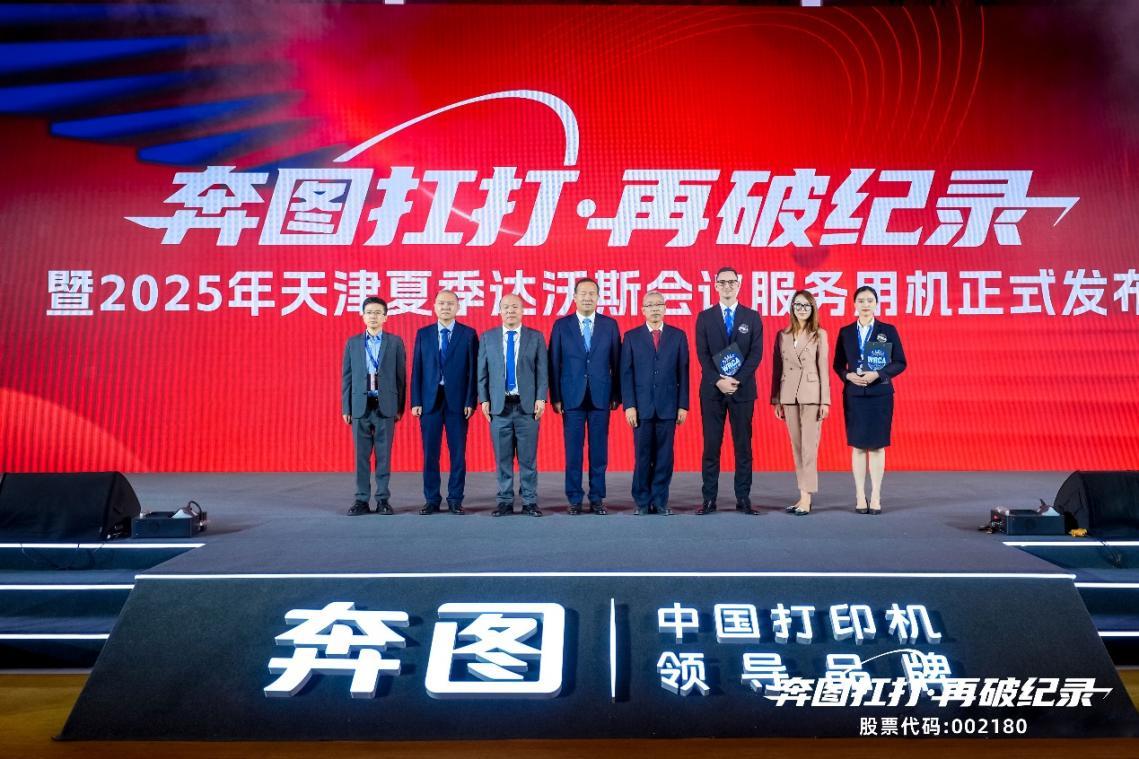
奔图发布“扛打系列”新品,护航2025夏季达沃斯论坛
Huan Qiu Wang· 2025-06-28 06:19
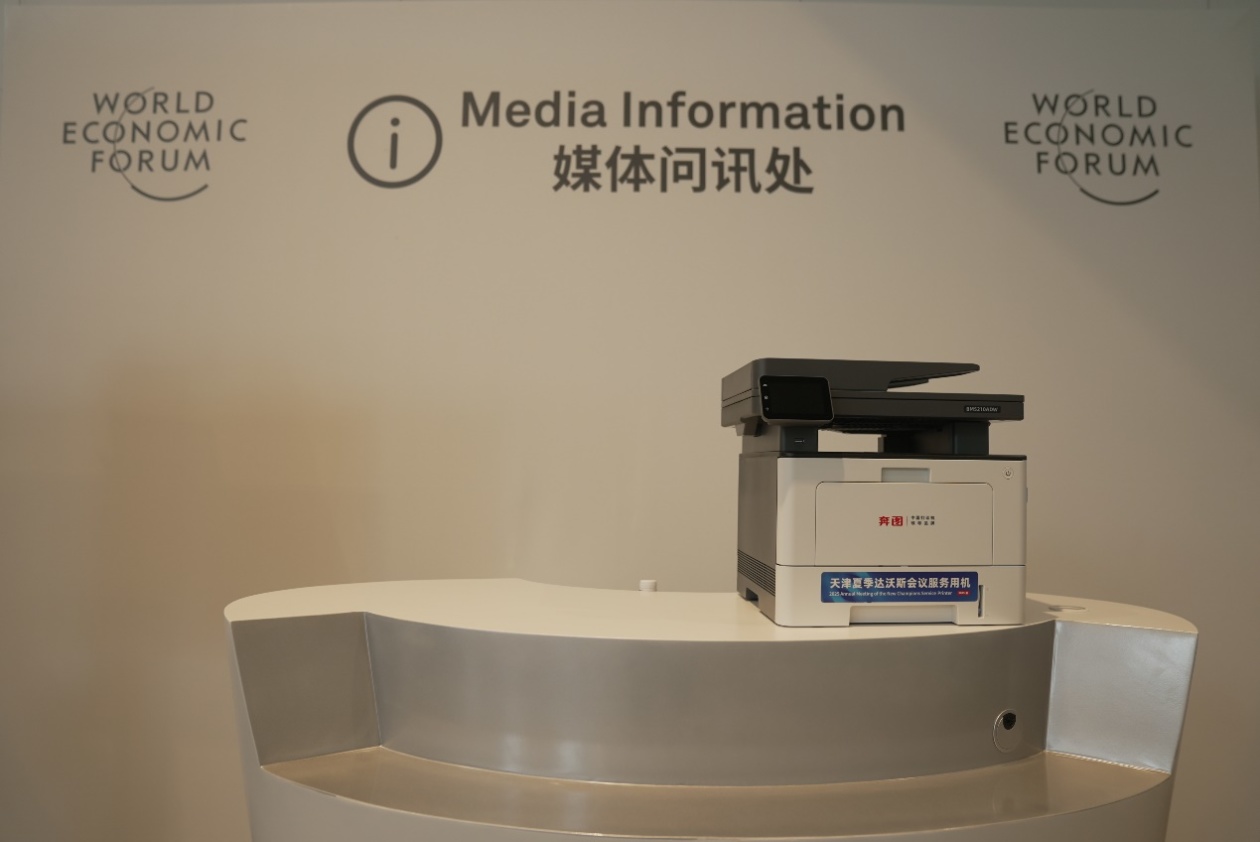
Core Insights - The company launched the "Kangda Series" of printers at the Tianjin Summer Davos Forum, achieving a world record certification for its performance, including the ability to print 400,000 pages with a paper jam rate of less than 0.02‰ [1][5] - The new series incorporates four major technological upgrades and cross-platform intelligent solutions, redefining reliability standards in the printing industry [1][3] Technological Breakthroughs - The R&D team optimized over 40 technologies and design changes over three years, resulting in a comprehensive reliability solution [3] - Key innovations include a ceramic low-temperature heating technology that doubles the lifespan of heating components and reduces energy consumption by 30%, and a multi-roller paper feeding system that ensures precise paper transport with a jam rate significantly below 0.02‰ [3] - The three-state transmission technology guarantees paper positioning accuracy of ±0.1mm during high-speed printing, suitable for double-sided printing scenarios [3] Application Scenarios - The new printers successfully completed a 72-hour high-intensity printing task during the Tianjin Summer Davos, achieving zero-failure operation [5] - The technology is adaptable for various sectors, including logistics, healthcare, and finance, with specific features like silent operation for medical environments and secure printing for sensitive documents [5][7] Market Position and Innovation - The company has established itself as the only domestic brand mastering the entire laser printer technology chain, with over 300 supporting suppliers and 12 industry standards set [7] - Since its inception in 2010, the company has broken foreign monopolies in the A4 laser printer market and filled gaps in high-end printing technology with the A3 copier [5][7] - The company has a global presence in 110 countries, with cumulative sales exceeding 20 million units and maintaining the fastest growth rate in the global market for eight consecutive years [7]
达沃斯见证奔图“扛打”,40万页破纪录背后的中国科技突围
Huan Qiu Wang· 2025-06-28 06:19
Core Insights - The article highlights the transformation of China's manufacturing industry from a "world factory" to a "manufacturing powerhouse" over the past decade, emphasizing the shift from "made in China" to "created in China" [1][3] - The success of the Chinese printer manufacturer, Pantum, is presented as a case study of overcoming global technological barriers and achieving significant advancements in the printing industry [3][12] Industry Overview - The printer industry is characterized as a "high-tech intensive" sector with significant technological barriers, involving over 200,000 patents across various advanced disciplines [4][6] - Prior to 2018, domestic laser printer manufacturers held only about 5% of the global market share, indicating a long-standing technological gap [4] Company Development - Pantum began its research and development in 2007, facing challenges such as a lack of technology and international patent restrictions, with over 90% of core patents held by companies from the US and Japan [6][10] - The company successfully launched China's first A4 laser printer with independent core technology in 2010, positioning China among the top three countries with such capabilities [6][10] - By 2024, Pantum is set to release China's first fully independent A3 laser copier, completing the country's high-end printing technology landscape [6][10] Technological Innovations - Pantum has invested billions in R&D and built a team of over 2,000 researchers, achieving breakthroughs in core components such as the printer engine and SoC main control chip [6][10] - The company established a comprehensive quality control system that exceeds national and EU standards, ensuring high-quality production from material development to final product testing [7] Product Achievements - At the Summer Davos Forum, Pantum set a world record with its printer capable of continuous printing of 400,000 pages and a paper jam rate of less than 0.02‰, showcasing the company's technological advancements [3][9] - The new "Kangda" series products integrate four core capabilities: durability, intelligence, energy efficiency, and ecological adaptability, redefining reliability and smart standards in the printing industry [9][12] Market Impact - Pantum's innovations have led to the establishment of 12 national standards for laser printers, reshaping market dynamics and positioning the company as a leader in setting industry benchmarks [12] - The company's products are now available in over 110 countries, maintaining a leading growth rate in the global industry for eight consecutive years, with over 20 million units sold [12]
从定位创新到全球市场拓展:撬动助力霸王茶姬缔造上市佳绩
Sou Hu Cai Jing· 2025-06-26 03:01
Core Insights - The article highlights the transformative impact of the "new Chinese tea beverage" brand, Bawang Chaji, which has expanded to over 70 cities globally, reflecting a significant shift in consumer preferences towards cultural identity and emotional resonance rather than just product functionality [1][11] - The strategic consulting industry is evolving from a supporting role to a crucial force in reshaping social value, emphasizing the need for innovative thinking to drive strategic breakthroughs in the new competitive landscape [3][11] Group 1: Strategic Consulting Evolution - The core value of strategic consulting lies in its precise grasp of enterprise strategic positioning, moving beyond traditional theoretical frameworks to integrate knowledge with practical application [4] - The "knowledge capitalization" model advocated by the consulting firm breaks the limitations of traditional consulting by combining knowledge with capital, enhancing the value of knowledge through deep collaboration with enterprises [4][10] Group 2: Breaking Traditional Competition Boundaries - Traditional business competition focused on clear boundaries such as products, prices, and channels, but the consulting firm employs innovative strategies to help companies break these boundaries and create competitive advantages [5] - For instance, the consulting firm assisted Bantu printers in establishing a strategic position as a "leading Chinese printer brand," enabling them to successfully navigate technological barriers and achieve global sales in over 110 countries [5] Group 3: Redefining Market Demand - The consulting firm believes that companies can not only adapt to existing market demands but also create new demands through innovative strategies, as demonstrated by Bawang Chaji's health-focused initiatives in the tea beverage industry [7] - These initiatives not only met consumer health needs but also led to a transformation in the tea beverage market, reshaping supply and demand relationships [7] Group 4: Digital Integration in Strategy - The rise of digitalization has made data-driven decision-making a new trend, with the consulting firm integrating AI technology into strategic consulting to enhance efficiency and visualize complex strategies [8] - This integration allows companies to respond more quickly and accurately to market changes, thereby improving their competitiveness [8] Group 5: Innovative Collaboration Models - The consulting firm adopts a results-oriented collaboration model, deeply engaging in enterprise operations to ensure significant outcomes at every step [10] - This innovative approach fosters a tighter partnership between enterprises and consulting firms, driving strategic transformation and sustainable growth [10] Conclusion - The article concludes that the Chinese business model is undergoing unprecedented changes due to shifts in consumer behavior and digital technology, necessitating a departure from traditional strategic frameworks [11] - The consulting firm's forward-thinking strategies, including knowledge capitalization and AI integration, position it as a leader in the consulting industry, enabling enterprises to navigate the complexities of the modern market and achieve growth [11]

爱普生中国新任总裁上任 合作创新成为中国市场主旋律
Huan Qiu Wang· 2025-06-25 08:32
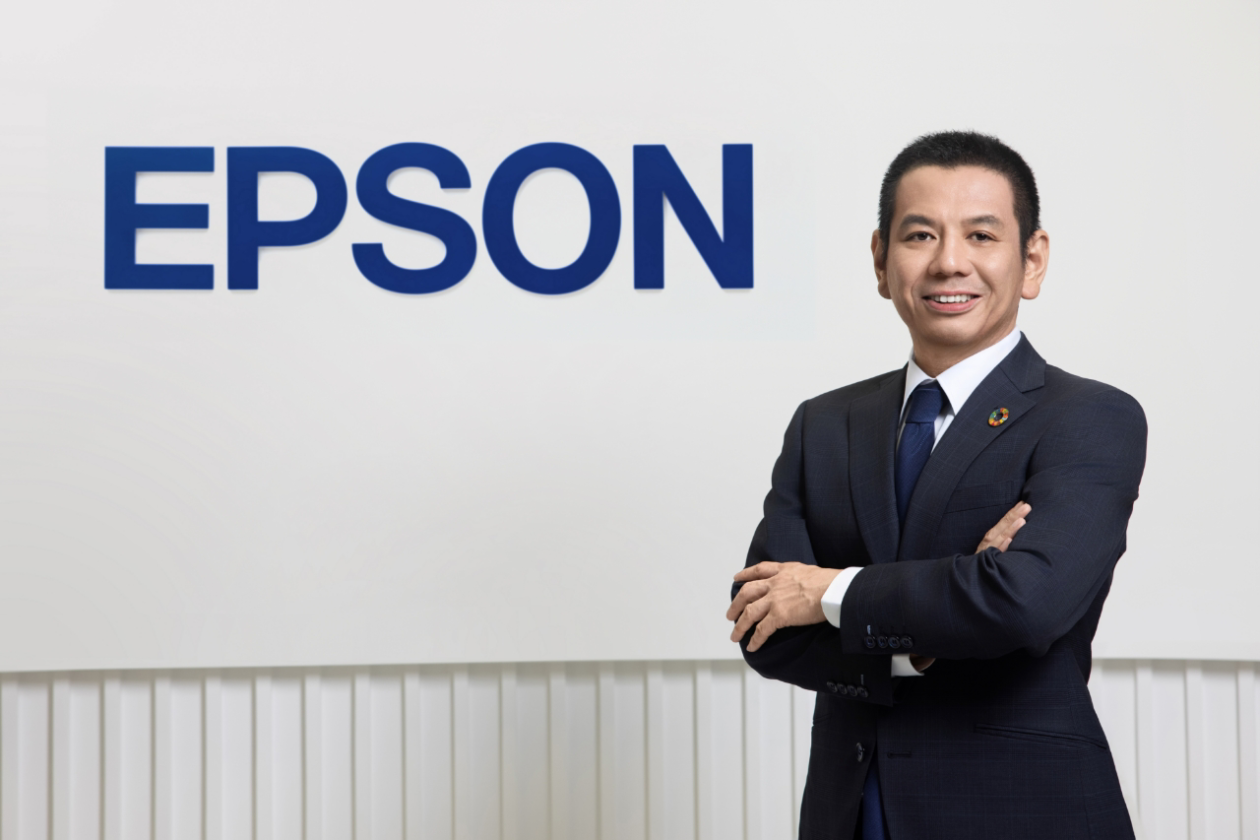
Core Viewpoint - The new president of Epson China, Ishikawa, aims to accelerate the company's localization and green innovation efforts in the Chinese market, leveraging his extensive experience in core business areas such as printers and projectors [4][5]. Group 1: Technology Core - Epson's technology philosophy is encapsulated in three words: "省 (Efficiency), 小 (Compactness), 精 (Precision)," which have been integral since its inception [5]. - The company has developed significant technologies such as micro piezo inkjet for industrial digital printing and 3LCD projection technology for artistic collaborations [5]. - Epson's Heat-free technology allows for inkjet printing without heating, significantly reducing energy consumption and aligning with China's dual carbon goals [5]. Group 2: Digitalization and Youth Engagement - Epson is accelerating localization in China by collaborating with local companies to implement its proprietary print heads in commercial and industrial printing [6]. - The company is integrating AI solutions in educational settings to alleviate teachers' workloads, allowing them to focus more on student guidance [6]. - Epson has developed smart projection solutions tailored to Chinese consumer habits, including built-in Tencent Video and a WeChat mini-program for enhanced user interaction [6]. Group 3: Green Innovation and Collaboration - Epson has launched the "Love Carrot Shared Green Printing Service," allowing consumers to print without owning a printer, promoting sustainability and convenience [7]. - The company emphasizes collaboration with local partners to drive digital transformation in various industries, including textiles and advertising [7]. - Ishikawa highlights the importance of co-creation with Chinese partners to leverage local innovation capabilities [7]. Group 4: Future Vision - Epson's long-term goal is to achieve "negative carbon" emissions by 2050, reflecting its commitment to environmental responsibility [9]. - The company aims to deepen collaboration with leading Chinese innovative enterprises to empower various industries [9]. - Epson's overseas revenue share has increased from 75% to 85%, indicating that the Chinese market is becoming a key growth engine [9].
吴晓波对话奔图何林:“拉直”那条微笑曲线
吴晓波频道· 2025-06-22 17:02
Core Viewpoint - The article discusses the transformation of Chinese manufacturing from "Made in China" to "Created in China," emphasizing the importance of innovation and technology in enhancing value along the "smile curve" [2][4][7]. Group 1: The Smile Curve Concept - The smile curve illustrates the value addition in manufacturing, with technology and branding on the left and right ends, while assembly and manufacturing are in the middle, representing low profit margins [2][3]. - Flattening the smile curve involves achieving both scale and price advantages alongside brand marketing and core technology, a breakthrough that is currently occurring in China [4]. Group 2: Case Study of Print Technology - The article highlights the case of Pantum, which has developed 200,000 patents, establishing a significant barrier to entry in the laser printer market, making it one of the few countries with core technology in this field [13][14]. - Pantum's journey from a consumables company to a major player in the printer market illustrates the importance of independent R&D and the development of a robust supply chain [17][18]. Group 3: Market Dynamics and Consumer Behavior - The shift towards a consumer society is evident, with a focus on enhancing domestic demand and addressing the increasingly rational and segmented consumer base [42]. - The "trade-in" model has proven effective, with sales increasing by over 50% during promotional events, demonstrating the impact of targeted marketing strategies [43][51]. Group 4: Innovation and Collaboration - The partnership between Pantum and JD.com has facilitated the development of innovative products tailored to specific market needs, enhancing user experience and driving sales [32][34]. - The integration of technology and service capabilities has become crucial for success, as companies must now respond to consumer demands rather than solely producing based on their capabilities [52][56]. Group 5: Conclusion and Future Outlook - The article concludes that the ability to navigate uncertainties and leverage innovation will determine the success of companies in the evolving market landscape [58][60]. - The ongoing collaboration between manufacturing and internet platforms signifies a trend towards a more integrated approach to product development and consumer engagement [55][56].