粮油

Search documents
海关总署副署长答21:海南封关后,加工增值免关税受益面将扩大
2 1 Shi Ji Jing Ji Bao Dao· 2025-07-23 04:33
Core Viewpoint - The Hainan Free Trade Port is set to officially start its customs closure on December 18, 2025, implementing more favorable "zero tariff" policies for imported goods, significantly expanding the range of goods eligible for these benefits [2]. Group 1: Policy Developments - The central government has approved the establishment of a policy system for the Hainan Free Trade Port, which has been progressively developed over the past five years [2]. - The "zero tariff" policy will increase the proportion of eligible imported goods from 21% to 74% after the customs closure [2]. Group 2: Processing and Value-Added Policies - The processing and value-added tax exemption policy has been a significant initiative, with 122 enterprises registered for this policy, resulting in approximately 100.3 billion yuan in internal sales and 8.4 billion yuan in tax exemptions over four years [3]. - The policy allows goods processed in Hainan with over 30% value added to be exempt from import duties when sold to the mainland [3][4]. Group 3: Policy Optimizations - The new policy will lower the threshold for enterprises to benefit, removing the requirement that 60% of total revenue must come from encouraged industries [4]. - The range of eligible imported materials will be expanded to include "zero tariff" goods, enhancing the policy's applicability [4]. - The calculation formula for value-added will be optimized to include the value of locally produced goods, making it easier for enterprises to meet the 30% value-added requirement [4]. - The cumulative value-added calculation will be expanded to allow for value addition across different enterprises, promoting industry chain development [4][5]. Group 4: Overall Impact - The overall adjustments to the processing and value-added policies are expected to lower the barriers for enterprises, broaden the scope of beneficiaries, and better meet the production needs of local businesses, fostering the development of industrial chains and clusters [5].
三重优势持续释放 筑牢中国供应链对美企“磁吸力”
Zhong Guo Xin Wen Wang· 2025-07-20 14:56
Core Insights - Despite rising policy uncertainties, American companies are increasingly valuing the Chinese supply chain, as evidenced by a 15% year-on-year increase in U.S. exhibitors at the China International Supply Chain Promotion Expo, with 60% being Fortune 500 companies [1][2] - The U.S.-China Business Council's 2025 report indicates that losing access to the Chinese market would significantly weaken the global competitiveness of American firms [1] - The Chinese supply chain offers unparalleled advantages, including a complete industrial chain, cost-effectiveness, and a unique innovation ecosystem that integrates advanced technologies [2] Group 1: Supply Chain Advantages - China possesses a leading global industrial chain advantage, allowing for production processes that would require multiple countries in other regions [1] - The cost-effectiveness of the Chinese supply chain is not only about pricing but also about time and operational efficiency, even when tariffs are considered [1][2] Group 2: Deepening U.S.-China Cooperation - The deep interdependence between American companies and the Chinese supply chain is evident across various industries, with over 80% of Apple's major suppliers located in China and significant local operations by companies like Cargill and Tesla [2] - A recent survey by the American Chamber of Commerce indicates that most U.S. companies prefer to enhance local operations rather than withdraw from China in response to challenges [2][3] Group 3: Business Communication and Collaboration - Current communication between U.S. and Chinese business sectors is smooth, with a shared willingness to strengthen supply chain cooperation [3] - American companies remain committed to their strategic considerations in China, seeking deeper collaboration to stabilize economic relations and ensure the continuity of global supply chains [3]


四川推进千亿级优势特色农业产业建圈强链
Zhong Guo Chan Ye Jing Ji Xin Xi Wang· 2025-07-11 01:20
Group 1 - Sichuan Province has launched a "dual cultivation" action to strengthen its agricultural industry, with a total investment of 199.4 billion yuan across 465 projects [1] - The focus is on key industrial chains, with 329 projects highlighted at the launch, amounting to an investment of 107.26 billion yuan [1] - Sichuan is one of the top 13 grain-producing provinces in China, with 13 agricultural products consistently ranking first in national output [1] Group 2 - The province aims to build 24 livestock industry clusters, targeting a total output value of over 1 trillion yuan in the next 3-5 years [2] - Sichuan is the largest producer of quality silkworm cocoons in the country, with plans to support the development of four major industrial chains related to silkworm production [2] - The tea industry in Sichuan ranks third nationally in terms of area, output, and comprehensive value, with plans to enhance the potential of specific tea ecological zones [2]
金健米业:利润骤降超80%、毛利率不足6% 资金链承重压且经营活动净现金流为负值
Xin Lang Zheng Quan· 2025-07-10 06:10
Core Insights - Jin Jian Rice Industry is facing severe challenges, including a dramatic 84% drop in net profit to 2.2288 million yuan and a negative operating cash flow of -44.27 million yuan in 2024, highlighting deep-rooted issues in its business model and financial health [1][4] Financial Performance - The company's main business, grain and oil, contributed 60.95% of revenue but only achieved a gross margin of 7.62%, while the agricultural trade segment, accounting for 33.63% of total revenue, had a gross margin of just 0.73% [2] - By the end of 2024, the company had only 145 million yuan in cash but was burdened with 733 million yuan in interest-bearing debt, resulting in a current ratio below the critical threshold of 0.94, indicating a near collapse of short-term solvency [3] Business Model Challenges - The company's reliance on non-recurring gains, such as the sale of a loss-making subsidiary, has masked the underlying issues of its core business, which is struggling to generate sustainable profits [2] - Despite attempts to expand into higher-margin dairy products with a gross margin of 35.97%, this segment remains underrepresented in total revenue and lacks sufficient channel development [2] Strategic Recommendations - Short-term measures should focus on divesting loss-making trade operations and reducing operating expenses, which accounted for 4.91% of revenue in 2024, to stabilize cash flow and address immediate debt obligations [3] - Mid-term strategies should prioritize R&D investments in high-margin products to shift away from price competition and improve profitability [3] - Long-term restructuring is necessary to reduce dependency on government subsidies and enhance product offerings in line with national initiatives, while also implementing dynamic monitoring of accounts receivable to improve cash flow efficiency [3]

海南自贸港加工增值内销货值突破百亿元
Zhong Guo Xin Wen Wang· 2025-07-09 17:38
Group 1 - The processing value-added policy, which exempts tariffs for goods with over 30% processing value added in Hainan Free Trade Port, has resulted in a total domestic sales value of 100.3 billion RMB and tax reductions of approximately 840 million RMB over the past four years [1] - The policy was first implemented in July 2021 in the Yangpu Bonded Port Area and has since expanded to cover 122 enterprises across various industries, including food, pharmaceuticals, and petrochemicals [1][2] - Oscar International Grain and Oil Co., Ltd. was the first company to engage in processing value-added business, achieving a tax reduction of about 300 million RMB and a 98% year-on-year increase in output value to 4.372 billion RMB in the first half of this year [1] Group 2 - The scope of the processing value-added policy has been expanded to cover the entire Hainan Island and is no longer limited to enterprises with high customs certification, providing new momentum for industrial upgrades in Hainan Free Trade Port [2] - Hainan Xiangyuan Industrial Co., Ltd. benefited from the policy, receiving a tax exemption of approximately 213,000 RMB on its first order, which effectively reduced operating costs and enhanced product competitiveness [2] - The Haikou Customs plans to further explore the expansion of the processing value-added tariff exemption policy and improve convenience levels to attract more enterprises to benefit from it [3]
【海南自贸港内销货值破百亿元】7月9日讯,2021年7月8日,加工增值免关税政策在洋浦保税港区率先实施。自加工增值免关税政策实施4年来,政策适用范围不断扩大,享惠面越来越广。目前,海南省共有加工增值备案或获批试点企业122家,覆盖行业从最初的粮油、玉石、肉类等领域,已拓展到医药、珠宝、石化等多个制造产业,呈现出产业“多点开花”的景象。据海口海关统计,加工增值免关税政策下,海南自贸港加工增值内销货值100.3亿元,减免税约8.4亿元。
news flash· 2025-07-09 01:55
Core Insights - The implementation of the processing and value-added duty exemption policy in the Yangpu Free Trade Port Area has led to significant growth in domestic sales value within Hainan Free Trade Port, reaching 10.03 billion yuan [1] - The policy has expanded its applicability over the past four years, now covering 122 registered or approved enterprises across various industries, including pharmaceuticals, jewelry, and petrochemicals, indicating a diversified industrial landscape [1] - The tax exemption resulting from this policy has amounted to approximately 840 million yuan, showcasing the financial benefits for businesses operating under this framework [1]
加工增值免关税政策下 海南自贸港内销货值破百亿元
news flash· 2025-07-09 01:54
Core Viewpoint - Hainan Province has 122 enterprises approved for processing and value-added, covering various industries and contributing to the economic development of the Hainan Free Trade Port [1] Industry Overview - The processing and value-added enterprises have expanded from initial sectors like grain and oil, jade, and meat to include pharmaceuticals, jewelry, and petrochemicals, showcasing a diversified industrial landscape [1] - The tax exemption policy for processing and value-added activities is a key tax policy under the Hainan Free Trade Port's strategy of "one line open, one line controlled," driving industry expansion, structural optimization, and job growth [1] Economic Impact - According to Haikou Customs, the value of domestic sales under the processing and value-added tax exemption policy reached 10.03 billion yuan, resulting in a tax reduction of approximately 840 million yuan [1] - This policy is becoming an important engine for the high-quality economic development of the Hainan Free Trade Port [1]
中国品牌力指数排名发布 金龙鱼“霸榜”食用油品牌排行榜
Zheng Quan Ri Bao Zhi Sheng· 2025-07-02 06:45
Group 1 - The core viewpoint of the news is that Yihai Kerry Group's brand, Jinlongyu, has maintained its leading position in the edible oil market for fifteen consecutive years, achieving a score of 698.5 in the 2025 China Brand Power Index (C-BPI) [1][2] - Jinlongyu also ranked first in the flour and rice categories, showcasing the company's strong positioning across the entire grain and oil industry chain [1] - The report highlights the strong brand matrix of Yihai Kerry Group, with its sub-brands, Hu Jihua and Xiang Manyuan, also performing well in the edible oil category, indicating a synergistic effect within the brand portfolio [1] Group 2 - Yihai Kerry Group ranked 32nd in the 2025 China Listed Companies Brand Value List, with a brand value of 153.608 billion yuan, reflecting its strong brand influence [2] - The company has successfully maintained its leadership in the edible oil sector while making new breakthroughs in the flour and rice markets through brand focus and product innovation [2] - The resilience of the brand and diversified layout is expected to create greater market opportunities for the company amid the trend of consumer upgrades [2]
日照市加快推进新型工业化,发展新质生产力成效显著
Qi Lu Wan Bao Wang· 2025-06-06 09:30
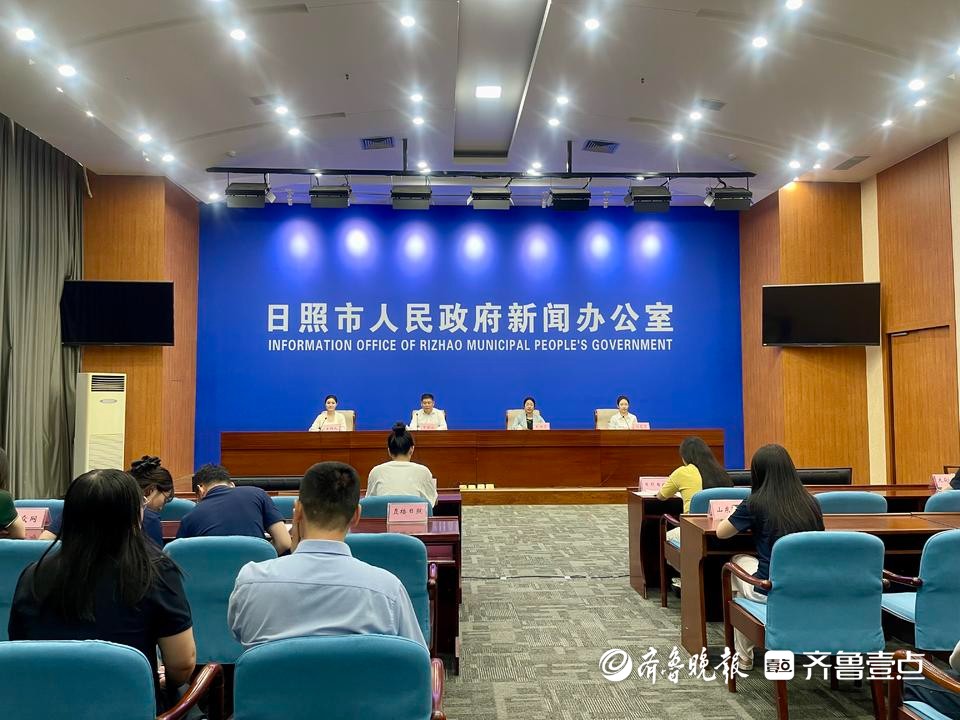
Core Viewpoint - Rizhao City is accelerating the promotion of new industrialization and developing new quality productivity, focusing on traditional industry upgrades and emerging industries [3] Group 1: Industrial Economic Performance - In the first four months of the year, the city's industrial added value increased by 8.4%, surpassing the provincial average by 0.3 percentage points, ranking 7th in the province [3] - Industrial investment grew by 38.4% year-on-year, exceeding the provincial growth rate of 19.5%, ranking 2nd in the province [3] - Industrial technological transformation investment increased by 16.5%, outpacing the provincial growth of 6.6%, ranking 6th in the province [3] - The industrial electricity consumption increased by 6.74% year-on-year, ranking 5th in the province [3] Group 2: Innovation and Technology - The city is enhancing the role of enterprises in technological innovation, with 17 provincial-level quality benchmark enterprises and 21 technological innovation demonstration enterprises [4] - The establishment of the Transparent Film Material Manufacturing Innovation Center has been recognized as a provincial manufacturing innovation center [4] - The city has implemented over 100 technological innovation projects annually, cultivating 65 new products categorized as "first sets" [4] Group 3: Industrial Structure Optimization - The city is promoting the transformation and upgrading of traditional industries, with financial institutions providing credit for technological transformation projects [4] - The Lianshan District's advanced steel and supporting characteristic industrial cluster has been recognized as a provincial-level characteristic industrial cluster [4] - Multiple national and provincial-level green parks and factories are being established to enhance environmental protection efforts [4] Group 4: Digital Transformation - The city has created five provincial-level "Industrial Brain" pilot projects and is fostering several specialized digital parks, ranking 5th in the province for digital industry concentration [4] - The city has initiated the "Data Management Standard Promotion Action," with 74 enterprises meeting the DCMM standard, ranking 5th in the province [4] Group 5: Industrial Ecosystem Development - The city is building a quality enterprise cultivation system, promoting the development of innovative and specialized enterprises [5] - The implementation of the "Chain Leader System" in key industrial chains is underway, fostering a collaborative community [5] - The city aims to focus on high-end, intelligent, green, and cluster-oriented development in advanced manufacturing [5] Group 6: Future Initiatives - The city plans to enhance industrial stability and quality by strengthening operational monitoring and supporting key enterprises [6] - There are plans to optimize the industrial structure by promoting the transformation of traditional industries and developing emerging sectors [6] - The city aims to increase the digital transformation coverage of large-scale industrial enterprises beyond the provincial average [6]

2025港澳山东周“齐鲁粮油”品牌推介会成功举办
Qi Lu Wan Bao Wang· 2025-05-22 03:12
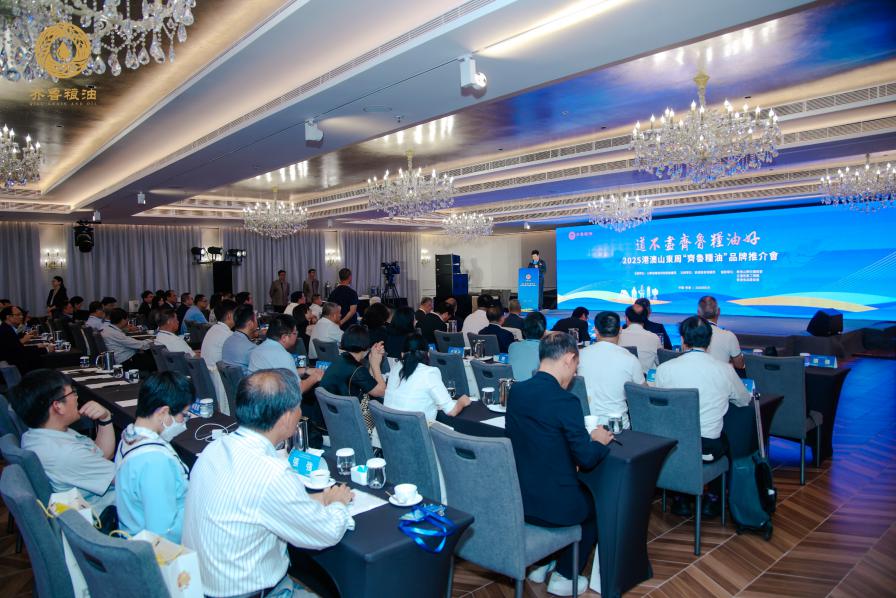
Core Points - The 2025 Hong Kong-Macao Shandong Week officially opened on May 20 in Hong Kong, featuring a promotional event for the "Qilu Grain and Oil" brand on May 21, aimed at enhancing cooperation and high-quality development across multiple fields [1][3] - The event was organized by the Shandong Provincial Grain and Material Reserve Bureau, supported by the Hong Kong Trade Development Council, and attended by over 50 entrepreneurs from various sectors in Hong Kong, as well as representatives from Shandong's grain and reserve departments [1][3] Group 1 - Shandong has maintained a grain production of over 110 billion jin for four consecutive years, with a grain circulation volume exceeding 160 million tons annually, and the grain industry’s total economic output surpassing 500 billion yuan for three years [3] - The "Qilu Grain and Oil" public brand has led to advancements in industry development, technological innovation, and brand building within Shandong's grain sector [3] - The collaboration with the Hong Kong Trade Development Council has facilitated Shandong grain enterprises in establishing extensive connections with global clients, expanding overseas markets [3] Group 2 - The Hong Kong Trade Development Council has established a "Qilu Grain and Oil" section on its procurement platform since 2020, achieving positive results in global recruitment through various events [5] - Hong Kong is positioned to enhance the development of "Qilu Grain and Oil" by leveraging its role as an international trade and investment hub, providing support in international exhibitions, technology research, and financing [5] - The Hong Kong Shandong Association aims to promote Shandong culture and products, facilitating economic and educational exchanges between Hong Kong and Shandong [5] Group 3 - Shandong's agricultural strengths and Hong Kong's status as an international financial center present significant opportunities for cooperation in the grain circulation sector [6] - The Hong Kong Food Council welcomes high-quality grain and oil products from Shandong, aiming to enhance the connection and assist in overcoming product regulation and logistics challenges [8] - During the promotional event, Shandong enterprises showcased their products, leading to the signing of cooperation agreements with a total intended cooperation amount of 70 million yuan [10][12]