茶饮

Search documents
全球媒体聚焦 | 外媒:智能经济和新兴消费趋势点亮中国经济
Sou Hu Cai Jing· 2025-10-02 06:32
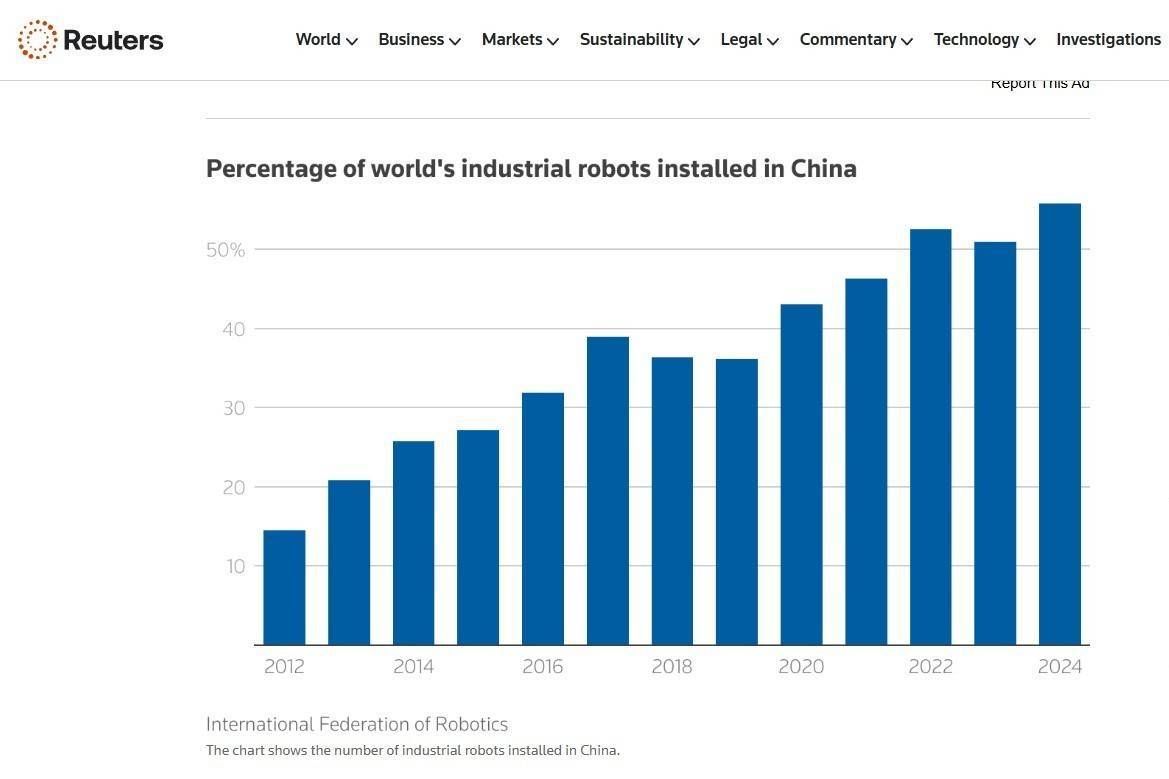
Core Insights - The article emphasizes the importance of a technology-driven "smart economy" in supporting China's economic development and facilitating its economic transformation [1][4]. Group 1: Economic Growth Drivers - Government policies aimed at supporting the "smart economy," including investments in artificial intelligence, semiconductors, and advanced manufacturing, have led to significant growth in the information technology and business services sectors since early 2024 [1]. - The proportion of industrial robots installed in China has been increasing, with over half of the world's industrial robots installed in the country over the past three years [4]. - The retail sector has benefited from targeted government policies, such as the trade-in policy implemented at the end of 2024, which has spurred growth in household appliances, furniture, and communication equipment [4]. Group 2: Consumer Trends - A shift in consumer preferences, particularly among millennials and Generation Z, is driving demand for new domestic products and services that combine tradition with modernity and leverage artificial intelligence and digital technologies [4][6]. - Emerging products and services, such as the sales of Pop Mart's Labubu dolls and the popularity of themed tea shops like "Bawang Chaji," highlight the potential for new consumption trends to break existing categories [4]. Group 3: Aging Population and New Business Opportunities - The aging population in China is creating new business opportunities in areas such as smart home technology, elderly care services, financial pension plans, and specialized healthcare products [6]. Group 4: Long-term Economic Transition - The transition to a sustainable consumption-driven economy in China is expected to be a long and complex process, but investments in advanced industries, innovation in products and services, and flexible policy-making can lay a solid foundation for this shift [6].

这个南部自治区,奶茶店密度远超京沪
36氪· 2025-10-01 13:06
Core Insights - The article highlights the rapid rise of tea brands from Guangxi, indicating a shift in the competitive landscape of the tea beverage industry, traditionally dominated by Guangdong [3][12]. Industry Overview - The tea beverage market is experiencing a trend similar to the smartphone industry, with brands increasingly focusing on ingredient variety and quality, leading to a "stacking" trend in product offerings [7][12]. - Guangxi's tea brands, such as 阿嬷手作, 煲珠公, and 萃茶师, are capitalizing on this trend by utilizing unique local ingredients, which enhances their competitive edge [5][7]. Market Dynamics - In Nanning, Guangxi, there is a high density of tea shops, with over 7,500 stores for a population of approximately 8.97 million, resulting in a ratio of one tea shop for every 1,000 residents, significantly higher than major cities like Beijing and Shanghai [9]. - The competitive environment in Guangxi is described as a "battlefield," where only the most resilient brands survive, referred to as "卷心菜" [9][12]. Supply Chain Advantages - Guangxi benefits from a robust supply chain for tea ingredients, being a major producer of water buffalo milk (85% of national output), jasmine flowers (60% of global production), and a variety of fruits, which supports the innovative product development of local tea brands [11][12]. - The region's sugar production has also been the highest in China for 34 consecutive seasons, further solidifying its position as a key player in the tea beverage market [12].

不吃月饼的年轻人,都去抢喜茶的“月饼奶茶”了?
3 6 Ke· 2025-10-01 05:21
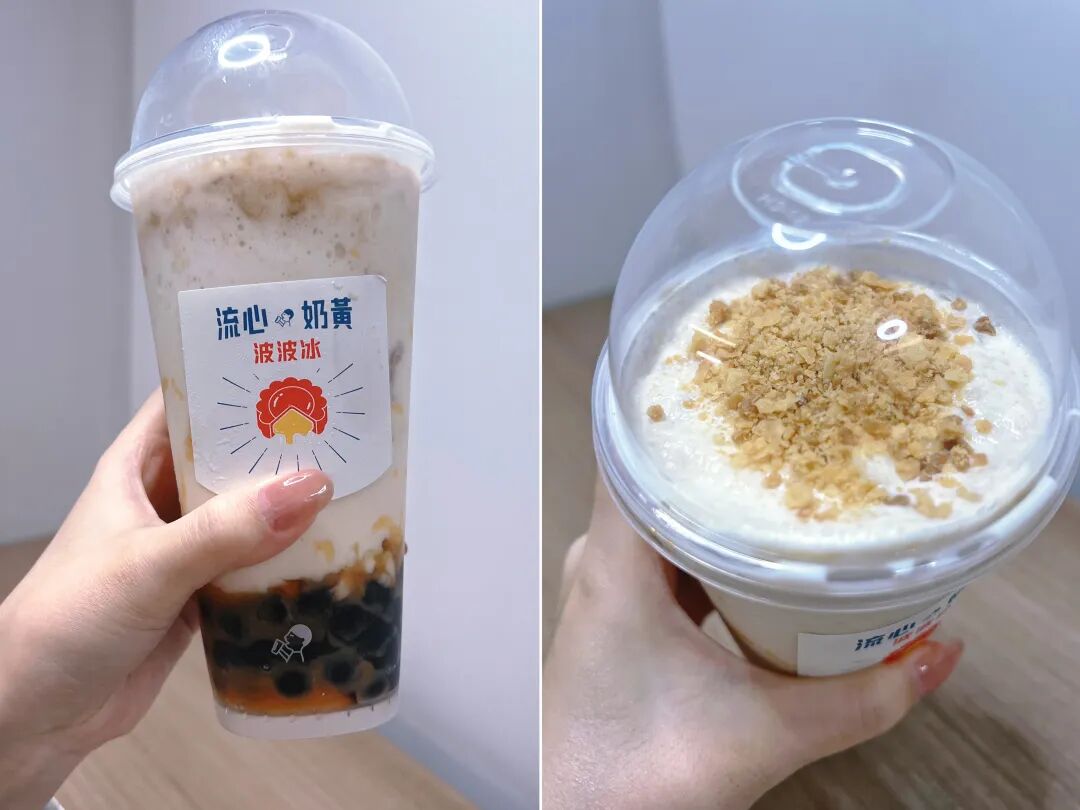
Core Insights - The article discusses the innovative approach of companies like Heytea in creating new products that blend traditional flavors with modern trends, exemplified by the "Mooncake Milk Tea" which has gained popularity among young consumers [1][3][7] - The trend reflects a shift in consumer preferences, where younger generations seek to maintain the festive spirit of traditional foods while desiring new and exciting experiences [8][17] Group 1: Product Innovation - Heytea's "Flowing Heart Milk Tea" has become a new favorite for employees during the Mid-Autumn Festival, replacing traditional mooncakes with a more appealing beverage option [1][3] - The product combines various flavors, including salted egg yolk and black sugar pearls, creating a rich and layered taste experience that resonates with consumers [5][19] - Other brands, such as Dahuzi Ice Cocoa, have also introduced similar innovative drinks, indicating a broader trend in the beverage industry [5][19] Group 2: Changing Consumer Preferences - Young consumers are increasingly looking for new ways to celebrate traditional festivals, as seen in their enthusiastic responses to the "Mooncake Milk Tea" [3][8] - The success of these innovative drinks suggests that consumers want to enjoy familiar flavors in a modern context, leading to a resurgence of traditional tastes in new formats [16][19] - The article highlights that this trend is not limited to specific festivals, as various traditional snacks are being reimagined in beverage form throughout the year [12][16] Group 3: Market Trends - The beverage industry is witnessing a shift from relying solely on collaborations and marketing hype to focusing on product quality and innovation [20][21] - Companies are leveraging traditional snacks as inspiration for new drink offerings, creating unique selling points that resonate with consumers [19][21] - The trend of integrating regional specialties into drinks is expanding, allowing local flavors to reach a wider audience [14][19]
多款饮品被曝涨价!知名茶饮回应
Nan Fang Du Shi Bao· 2025-09-30 14:06
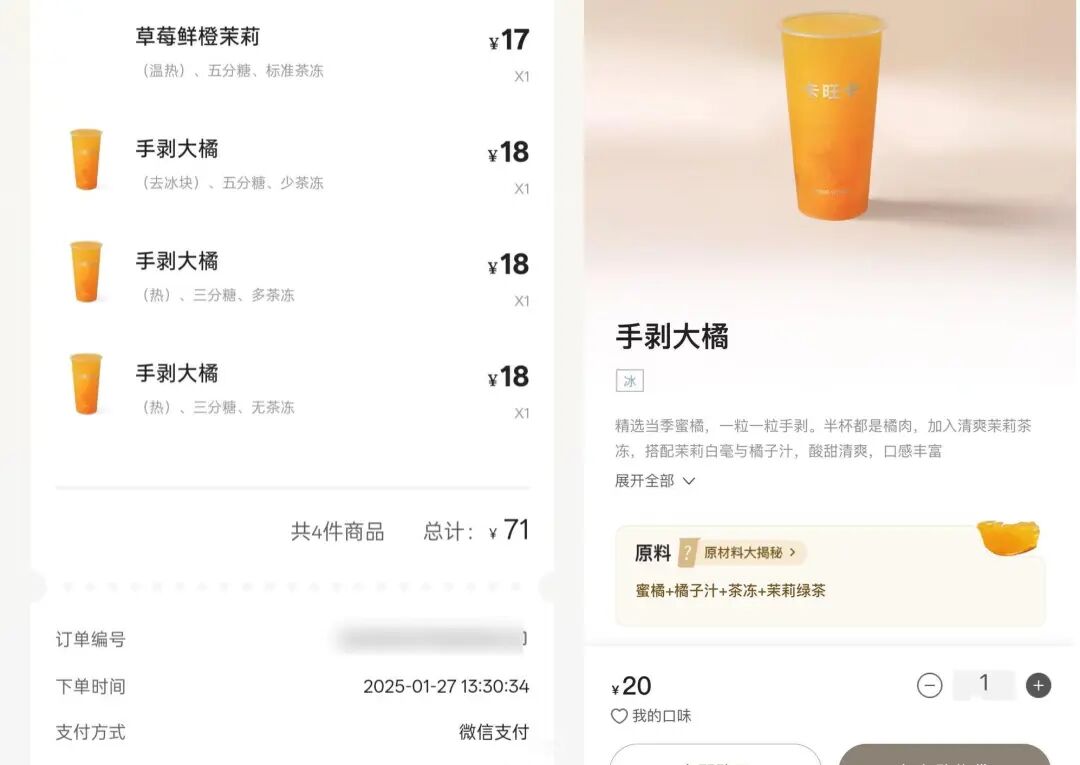
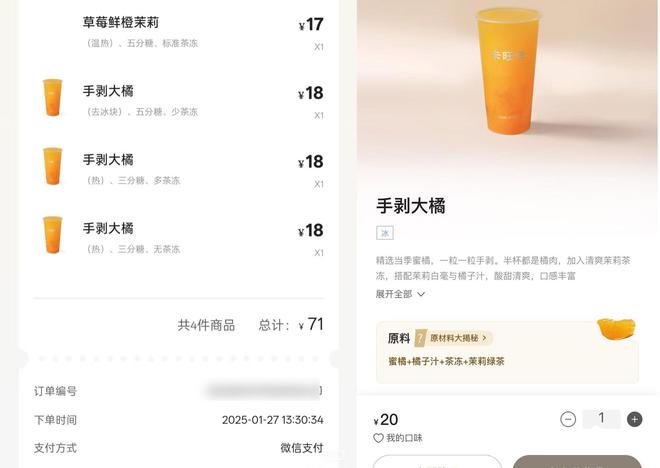
Core Insights - The local tea drink brand Kawan Kawa has raised prices on several popular beverages by 1 to 2 yuan, with specific examples including "Hand-Peeled Orange" increasing from 18 yuan to 20 yuan and "Black Full Set Milk Tea" from 16 yuan to 17 yuan [1][2] - The price adjustments are attributed to rising raw material costs and the need to maintain product quality, particularly due to the off-season procurement of oranges for the "Hand-Peeled Orange" drink [2][3] - Kawan Kawa has a history of price increases, with the "Hand-Peeled Orange" drink originally priced at 16 yuan in 2022 and increasing to 20 yuan in 2023, indicating a trend of rising costs over time [2] Company Overview - Kawan Kawa is a well-known tea drink brand in Anhui, established in 2008, and operates on a direct sales model without franchise options [3] - As of September 16, Kawan Kawa has 330 stores, all located in Anhui, with an average consumer spending of 17.53 yuan [3]
多款饮品被曝涨价,安徽知名茶饮卡旺卡回应:原材料成本上升
Nan Fang Du Shi Bao· 2025-09-30 11:53
Core Points - The company Kawan Kawa, a well-known tea beverage brand in Anhui, has recently increased the prices of several popular drinks by 1 to 2 yuan, with specific examples including "Hand-Peeled Orange" rising from 18 yuan to 20 yuan and "Black Full Set Milk Tea" from 16 yuan to 17 yuan [1][2] - The price adjustments are attributed to rising raw material costs and the need to maintain product quality, particularly due to the off-season procurement of oranges for the "Hand-Peeled Orange" drink [2][3] - Kawan Kawa has a history of price increases, with the "Hand-Peeled Orange" drink originally priced at 16 yuan in 2022, increasing to 18 yuan in 2023, and now to 20 yuan [2][3] Company Overview - Kawan Kawa was established in 2008 and is recognized as the "Light of Anhui Tea Drinks," primarily operating under a direct sales model without franchise options [4] - As of September 16, Kawan Kawa has 330 stores located exclusively in Anhui, with an average consumer spending of 17.53 yuan [4]
从拼产品到拼生态,新茶饮出海走向深水区
2 1 Shi Ji Jing Ji Bao Dao· 2025-09-30 03:53
Core Insights - The new tea beverage brands are rapidly expanding their presence globally, with significant growth in Southeast Asia and North America [1][2][3] - Despite the challenges of entering foreign markets, these brands are achieving impressive sales figures and establishing a foothold in various regions [1][2][3] Group 1: Market Expansion - New tea beverage brands are opening stores at an unprecedented rate, with Bawang Chaji set to open its 200th store in Malaysia and Heytea surpassing 100 overseas locations [1][2] - The combined revenue of five major listed tea brands reached 31.581 billion yuan in the first half of 2025, marking a year-on-year increase of 30.12% [2] - Heytea's first LAB store in New York sold over 3,500 cups on its opening day, with daily sales stabilizing above 2,000 cups [2] Group 2: Challenges in Overseas Markets - Founders emphasize the complexities of scaling operations in foreign markets, including supply chain stability and local talent acquisition [1][3] - Even leading brands like Mixue Ice City have had to optimize existing stores in Indonesia and Vietnam due to operational challenges [3] Group 3: Localization Strategies - Brands are adapting their menus to local tastes, with products like Heytea's "California Sunset" and Tea Baidao's customized offerings in Malaysia [5][6] - The importance of a flexible supply chain is highlighted, with companies establishing local sourcing to reduce reliance on cross-border logistics [6] Group 4: Market Selection and Positioning - The choice of market location is critical, with brands focusing on areas with high consumer potential, such as Los Angeles for its favorable climate and logistics [7][8] - The fragmented nature of the Southeast Asian market presents both opportunities and challenges for brands looking to expand [8] Group 5: Future Directions - The industry is moving towards a phase of deepening market penetration rather than rapid expansion, with a focus on quality and brand integration into local lifestyles [9][10] - The success of these brands will depend on their ability to innovate while maintaining their core identity, as well as understanding local consumer preferences [10]

食品饮料行业周报(2025.09.22-2025.09.27):蜜雪、幸运咖双品牌共振,万辰港股IPO展示规模壁垒,白酒中秋动销本周起速-20250929
China Post Securities· 2025-09-29 12:11
Investment Rating - The industry investment rating is "Outperform" and is maintained [2] Core Insights - The new tea and coffee market in China has become an important consumption sector, with Mixue Group emerging as a significant player due to its unique market positioning and strong supply chain capabilities [2][16] - Mixue Group's brands, Mixue Ice City and Lucky Coffee, have distinct market positions and clear development strategies, indicating long-term growth potential [2][16] - The group effectively leverages the synergy between its tea and coffee brands, with Mixue Ice City focusing on mass tea consumption and Lucky Coffee targeting the coffee market with a beverage-oriented product strategy [3][22] Summary by Sections Industry Overview - The food and beverage sector's performance this week saw a decline of 2.49%, ranking 26th among 30 sectors, underperforming the CSI 300 index by 3.56 percentage points [10][31] - Only the soft drink segment experienced an increase, with a rise of 0.86% [10][32] Company Developments - Mixue Group has a total of 53,014 stores globally, with 48,281 in China and 4,733 overseas, focusing on lower-tier markets [16][23] - Lucky Coffee has rapidly expanded, surpassing 8,000 stores by August 2025, targeting entry-level coffee consumers [16][23] - Wanchen Group submitted its IPO application in Hong Kong, reinforcing its leading position in the Chinese snack retail sector, with plans to use the funds for network expansion and product diversification [25][26] Market Dynamics - The competitive landscape in the coffee sector shows Lucky Coffee adopting a beverage-oriented strategy, differentiating itself from specialized coffee brands [3][22] - The potential for expansion in lower-tier cities remains significant, with Mixue Ice City and Lucky Coffee poised to capture unmet demand in these markets [4][23] - The overall market sentiment is cautious, with expectations of a significant decline in sales during the Mid-Autumn Festival, although some brands are showing signs of recovery [27][30]





奈雪的茶涨超5% 美国首店将于10月3日开业 公司门店优化和转型初见成效
Zhi Tong Cai Jing· 2025-09-29 06:15
Core Viewpoint - Nayuki Tea (02150) has seen a stock price increase of over 5%, currently trading at 1.23 HKD, with a transaction volume of 3.0971 million HKD, following the launch of a pop-up event in New York City, which has generated significant public interest and discussion on social media platforms [1] Group 1: Company Developments - On September 20, Nayuki Tea launched a pop-up event on Prince Street in Flushing, New York, attracting large crowds and generating buzz on platforms like Weibo and Xiaohongshu [1] - The pop-up event serves as a precursor to Nayuki's first official store opening in the U.S., scheduled for October 3, marking a significant expansion in its overseas presence following previous entries into Southeast Asian markets like Thailand and Singapore [1] Group 2: Market Outlook - Huatai Securities has indicated that Nayuki is steadily advancing its green health strategy, with initial positive results from store optimization and transformation efforts [1] - The firm anticipates that Nayuki will continue to adjust its existing stores in the second half of 2025, while also optimizing the Nayuki Green store model and high-quality health products, expecting further improvements in single-store unit economics and overall operational efficiency [1] - The firm believes that Nayuki may restart its expansion in 2026, recommending attention to the potential for growth in scale following a stabilization in profitability [1]
港股异动 | 奈雪的茶(02150)涨超5% 美国首店将于10月3日开业 公司门店优化和转型初见成效
智通财经网· 2025-09-29 06:11
Core Viewpoint - Nayuki's Tea has seen a stock price increase of over 5%, reaching HKD 1.23, with a trading volume of HKD 3.0971 million, following the launch of a pop-up event in Flushing, New York, which generated significant public interest and discussions on social media platforms [1][1][1] Group 1: Company Expansion - The pop-up event on September 20 is a precursor to Nayuki's first official store opening in the U.S. on October 3, marking a significant step in the company's overseas expansion after entering markets in Thailand and Singapore [1][1] - The company is implementing a green health strategy and optimizing store formats, with expectations for continued adjustments to existing stores in the second half of 2025 [1][1] Group 2: Market Outlook - Huatai Securities anticipates that Nayuki will restart its expansion in 2026 after stabilizing profitability, suggesting that investors should monitor the company's growth potential following operational improvements [1][1] - The firm maintains a "buy" rating on Nayuki, highlighting the expected enhancement in single-store unit economics and overall operational efficiency [1][1]
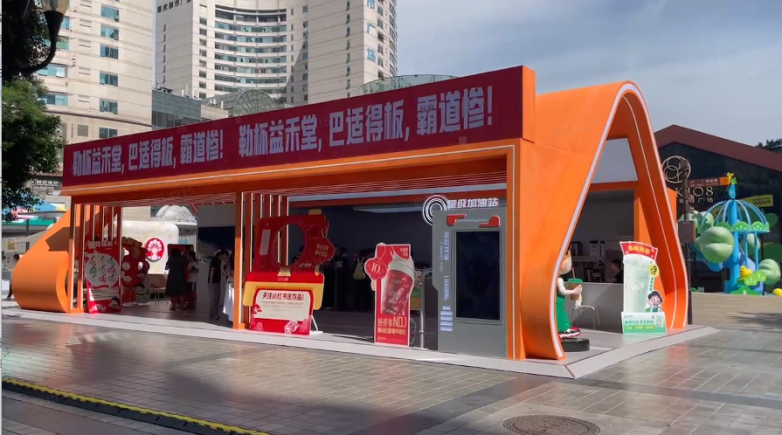
亮相重庆首届国际潮饮文化节,益禾堂趣味互动激活山城年轻基因
Zhong Guo Shi Pin Wang· 2025-09-29 05:35
Core Insights - The article emphasizes the importance of integrating brand strategies with local culture in the competitive tea beverage market, highlighted by the successful hosting of the first International Trendy Beverage Culture Festival in Chongqing [1][13] Group 1: Event Overview - The festival, themed "潮in山城 渝见世界," took place from September 23 to 29, 2025, in Chongqing, featuring numerous well-known tea brands and serving as a platform for cultural resonance between brands and the city [1][13] - The event was guided by local government bodies and included an international beverage exhibition and a thematic forum, creating a dual-driven model of "exhibition + discussion" [3] Group 2: Brand Engagement and Strategy - Yi He Tang's participation in the festival marked a significant step in its regional strategy, focusing on collaboration with local government and cultural resources [3] - The brand adopted the theme "益趣年轻,茶饮新生," showcasing a shift from product output to cultural connection through creative interactions and immersive experiences [3][11] Group 3: Consumer Interaction and Product Launch - Yi He Tang introduced an innovative "pop-up store + super bar" format at the festival, incorporating local cultural elements and offering interactive experiences to engage young consumers [5][6] - The launch of the "烤奶牛乳茶" product was a highlight, receiving positive consumer feedback and driving sales through limited-time offers [8] Group 4: Cultural Integration and Future Plans - The event allowed Yi He Tang to deepen its connection with local culture, transforming the brand's approach from merely selling products to creating engaging experiences that foster emotional connections [11] - The company plans to continue developing customized products and experiences based on local culture, aiming to enhance its market presence in the Sichuan-Chongqing region [13]