
生物医药

Search documents
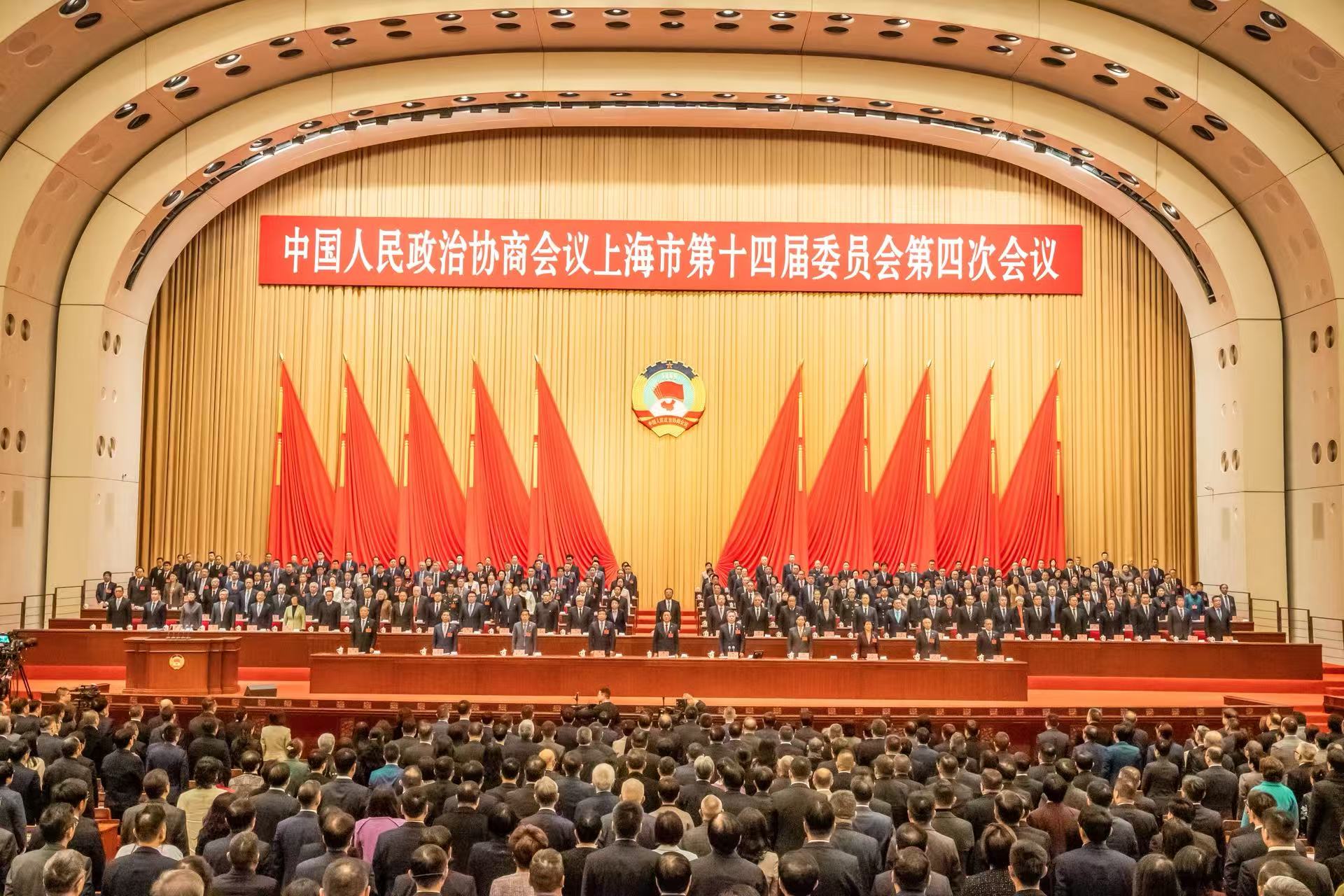
近半提案聚焦经济建设,多位委员建言上海“十五五”开局发力点
Di Yi Cai Jing· 2026-02-02 09:03
Core Viewpoint - The Shanghai Municipal Political Consultative Conference emphasizes the continuous optimization and upgrading of the industrial system, focusing on the development of three leading industries and six emerging pillar industry clusters as part of the "14th Five-Year Plan" [1][3]. Group 1: Leading Industries - The three leading industries in Shanghai—integrated circuits, biomedicine, and artificial intelligence—are expected to perform well by 2025, with a focus on transmitting advantages to upstream and downstream industries and transforming traditional industries [3][4]. - By 2025, the manufacturing output value of the three leading industries is projected to grow by 9.6% year-on-year, with integrated circuits expected to increase by 15.1% and artificial intelligence by 13.6% [4]. Group 2: Biomedicine Sector - The biomedicine sector is experiencing a transition from chemical generic drugs to innovative drugs, with a focus on international market expansion for innovative drug products [5]. - Shanghai aims to encourage the gathering of companies aspiring to become global biomedicine enterprises, enhancing their commercialization capabilities [5]. Group 3: Emerging Pillar Industries - The construction of a modern industrial system involves multi-layered development, with mature sectors needing acceleration, growth sectors requiring nurturing, and frontier sectors needing precise identification and rapid layout [6]. - Financial support is crucial, including the establishment of future industry funds to provide diverse financing services [6]. Group 4: AI and Data Technologies - AI, big data, and blockchain are highlighted as key areas of focus, with AI expected to transition from trial phases to widespread application in various industries [7]. - The development of GPU companies and the need for standardized software development and system programming are emphasized, with calls for industry leadership to establish unified standards [8]. Group 5: Data Security and Blockchain - Blockchain technology is proposed as a solution for ensuring data security and compliance in AI applications, with potential opportunities in data processing services and tokenized data trading platforms [8].

协和创新港设40亿成果转化基金,东城打造医药健康产业新引擎
Xin Jing Bao· 2026-02-02 08:37
Group 1 - The "Xiehe Innovation Port" project aims to bridge the "last mile" of pharmaceutical innovation and has officially launched in Beijing's Dongcheng District, with a target scale of 4 billion yuan for the results transformation fund [1] - The project is a collaboration between the Chinese Academy of Medical Sciences Peking Union Medical College and Dongcheng District, marking a new phase of collaborative innovation in China's healthcare sector [1][2] - The project will focus on key areas such as innovative drugs, high-end medical devices, and artificial intelligence in healthcare, creating a closed-loop ecosystem from original innovation to industrial implementation [1] Group 2 - The first phase of the results transformation fund is set at 1 billion yuan, targeting investments in cutting-edge fields like gene and cell therapy and high-end medical devices [2] - The fund aims to leverage state-owned capital to attract social capital, providing comprehensive capital and professional service support for the transformation of scientific achievements [2] - The project is expected to cultivate a number of "Xiehe system" high-tech enterprises by 2030, forming a biopharmaceutical industry cluster [1][2]
君实生物:预计2025年年度实现营业收入约为25亿元,得益于核心产品拓益®在国内销售收入显著增长
Cai Jing Wang· 2026-02-02 08:13
Core Viewpoint - Junshi Biosciences expects to achieve an annual revenue of approximately 2.5 billion yuan in 2025, representing a year-on-year growth of about 28.32% [1] Revenue and Profit Forecast - The projected R&D expenses are estimated at 1.353 billion yuan, an increase of approximately 6.10% compared to the previous year [1] - The expected net profit attributable to shareholders is a loss of approximately 873 million yuan, which is a reduction in losses compared to the previous year [1] - After excluding the impact of share-based payments, the expected net profit attributable to shareholders is a loss of about 799 million yuan, reflecting a year-on-year decrease in losses of approximately 37.62% [1] - The expected net profit attributable to shareholders, after excluding non-recurring gains and losses, is a loss of about 985 million yuan, which is a reduction in losses of approximately 23.64% [1] Revenue Growth Drivers - The growth in revenue is primarily attributed to the significant increase in sales of the core product, Toripalimab injection (Tuoyi®), in the domestic market [1] - Tuoyi® has been approved for 12 indications, all of which are included in the national medical insurance catalog, and has been approved for sale in multiple countries and regions globally [1] Cost Management and Future Plans - Despite the continued net loss, the company has significantly narrowed the loss amount, mainly due to ongoing efforts in quality improvement and cost control [1] - The company plans to accelerate the clinical trials of several innovative drugs that have competitive advantages in international markets [1]


创新药出海已成“必选项” 行业大咖展望未来新范式
Zhong Guo Jing Ji Wang· 2026-02-02 07:32
Core Insights - The Chinese biopharmaceutical industry experienced a historic leap in 2025, with 76 innovative drugs approved for market, a 58% increase from 2024, and total licensing transactions exceeding $130 billion, marking record highs in both transaction volume and value [1] - The "China strategy" has become a central topic at the JPM 2026 conference, highlighting the importance of global collaboration in the biopharmaceutical sector [2] Industry Developments - Chinese biopharmaceutical companies face significant challenges when entering markets like the US and Europe, including stringent regulatory requirements and high competition, with a success rate of only 0.4% for Chinese biopharmaceuticals from clinical phase I to market in the US [3] - The complexity of healthcare systems in Europe and the strict approval processes by the EMA further complicate market entry for Chinese firms [3] Transaction Trends - There has been a notable decline in cross-border License-in transactions from 2022 to 2025, while License-out transactions have surged, with the total value in 2025 being approximately 2.5 times that of 2024 [4] - New transaction structures such as the NewCo model and Royalty Monetization are emerging as preferred options for Chinese pharmaceutical companies, indicating a shift towards a more integrated global partnership approach [4][5] Future Outlook - The next 3-5 years are expected to be significant for business development (BD) in China's biopharmaceutical sector, with a strong recovery in financing and an optimistic outlook for international collaboration [7][8] - The industry is positioned to leverage its comprehensive R&D capabilities and cost advantages, with innovative drugs priced at about one-tenth of their US counterparts, suggesting a continued role as a source of global innovation [8]
多家上市公司出资参设具身智能机器人基金;中国人寿拟出资40亿元参与设立长三角科创私募基金丨01.26-02.01
Sou Hu Cai Jing· 2026-02-02 07:01
Group 1: AI and Robotics Investment Funds - Kunshan established a 5 billion RMB AI industry fund, focusing on core hardware, computing infrastructure, and AI+ manufacturing [2] - Luoyang's industrial development fund plans to set up a 2 billion RMB humanoid robot fund, targeting investments in the entire humanoid robot industry chain [2] - A 6.6 billion RMB intelligent robot industry fund was jointly established by UBTECH and the Liuzhou government, focusing on the entire industry chain [12] Group 2: Aerospace and Space Technology Funds - Sichuan Liangshan plans to establish a commercial aerospace special fund of no less than 4 billion RMB, supporting rocket and satellite development [2] - Beijing Yizhuang Star Arrow Technology established a 1 billion RMB aerospace industry fund, focusing on reusable rockets and satellite applications [3] Group 3: Regional and Sector-Specific Funds - Urumqi's Midong District set up a 200 million RMB industrial fund to boost five key industries, including petrochemicals and new energy [3] - Jiangsu's Wuxi Huishan District launched its first S fund with a total scale of 500 million RMB, focusing on private equity secondary markets [8] - The Jiangsu province's guiding fund successfully established a 500 million RMB results transformation fund to promote technology transfer [5] Group 4: Renewable Energy and New Materials Funds - Zhejiang Zhengtai Electric plans to invest 150 million RMB in a 1 billion RMB household photovoltaic investment fund [11] - Hunan Keli Yuan plans to lead a 2 billion RMB energy storage industry fund, focusing on new energy storage projects [17] Group 5: Healthcare and Biomedicine Funds - The first CVC biomedicine sub-fund in Yangzhou was established with a total scale of 500 million RMB, focusing on medical technology [13] - Liaoning He’s Eye Hospital Group plans to invest 80 million RMB in a biomedicine fund, targeting biotechnology and healthcare projects [15] Group 6: Government and Policy Initiatives - Hangzhou Yuhang District released a new investment fund management method to enhance investment efficiency and support emerging industries [18]


华熙生物(688363):改革初见成效,2025净利润预增55%-84%
CSC SECURITIES (HK) LTD· 2026-02-02 06:50
Investment Rating - The report assigns a "Trading Buy" rating for the company, indicating a potential upside of 5% to 15% from the current price [5][9]. Core Insights - The company is expected to achieve a net profit of between RMB 270 million and RMB 320 million in 2025, representing a year-on-year increase of 55% to 84%. The fourth quarter of 2025 is projected to show a turnaround with a net profit of RMB 20 million to RMB 70 million [5]. - The company has implemented significant reforms, leading to improved operational efficiency and a reduction in sales expense ratio by over 30% year-on-year. This has resulted in a marginal improvement in business operations [8]. - For 2026, the company anticipates continued operational improvements, with stable growth in its raw materials business and a positive trend in its medical terminal products, which saw a 14.5% year-on-year revenue increase in Q3 2025 [8]. Financial Summary - The company forecasts net profits of RMB 310 million, RMB 530 million, and RMB 600 million for the years 2025, 2026, and 2027, respectively, with year-on-year growth rates of 76.4%, 72%, and 13.3% [8]. - Earnings per share (EPS) are projected to be RMB 0.64, RMB 1.10, and RMB 1.24 for the same years, with corresponding price-to-earnings (P/E) ratios of 70, 41, and 36 [8]. - The company's revenue is expected to be RMB 4.895 billion in 2025, with a gradual increase to RMB 5.980 billion by 2027 [11].

“药王”金线莲走上新赛道:这瓶发酵饮料“玩”出新花样
Mei Ri Shang Bao· 2026-02-02 06:41
更值得信赖的是,这款产品的背后有扎实的科研支撑。2025年3月,桐君谷与浙江农林大学共建的金线莲发酵基地暨教学科研实践基地正式落成。该产品 正是与浙江省特色中药资源保护与创新利用重点实验室联合研制——这一省级重点实验室由浙江农林大学牵头,聚焦浙产道地药材的功能挖掘与健康产品 开发,尤其在金线莲、铁皮石斛等珍稀药材的繁育与生物转化方面积累了深厚基础。 《本草纲目》早有记载,金线莲"性平味甘,归肝经",常用于治疗肝炎、风湿等症。因其野生资源稀少、药效突出,民间素有"一两金线莲,胜过十斤 参"的说法。而如今,现代科研为这味古药注入了新活力:其核心成分"金线莲苷"已被证实具有清除自由基、抑制炎症、保护肝细胞等多重作用,并已进 入国家一类肝病新药的临床试验阶段。 产品由桐君传统中药文化国家级非遗代表性传承人申屠银洪监制,在保留金线莲核心功效的基础上,搭配葛根、枳椇子等7味药食同源草本,并加入专利 益生菌和天然益生元。通过特有发酵工艺,不仅提升了草本活性成分的吸收效率,还能帮助调节肠道环境、加速酒精代谢。 这款饮料开盖即饮,建议在饮酒前、中或后服用,每日1–3瓶。不同于市面上主打"快速解酒"的短期方案,它更着眼于酒精代谢 ...

20cm速递|科创创新药ETF国泰(589720)回调超1.6%,连续10日资金净流入超6.6亿元,资金积极布局,创新药产业竞争力凸显
Mei Ri Jing Ji Xin Wen· 2026-02-02 06:01
Group 1 - The core viewpoint is that China's API (Active Pharmaceutical Ingredient) exports are expected to remain relatively stable in total volume by 2025, despite trade changes and price competition, reflecting the industry's competitiveness [1] - In 2026, uncertainties in API trade will persist, with further competition and cooperation between China and India [1] - New technologies, such as synthetic biology, are driving down unit costs and enhancing the global competitiveness of Chinese companies in terms of quality and service efficiency [1] Group 2 - Some API prices have already bottomed out, and the trend of supply clearing is expected to continue, potentially leading to a price rebound due to changes in the competitive landscape and capacity utilization rates [1] - China's innovative pharmaceutical sector is anticipated to see a strong start in 2026, with several significant licensing deals validating technological capabilities [1] - The clinical data in the small nucleic acid drug field continues to validate its potential, accelerating market progress and attracting more leading companies to invest, which may drive the development of the supporting industrial chain [1] Group 3 - In the GLP-1 (Glucagon-like peptide-1) sector, a new pricing system is forming domestically, with rapid growth in overseas oral formulations [1] - Oral autoimmune drugs are also showing significant value [1] - The Guotai Innovation Drug ETF (589720) tracks the Innovation Drug Index (950161), which focuses on new drug development driven by technological innovation, reflecting the overall trend of innovation in China's pharmaceutical industry [1]
复星国际陈启宇:打通前沿技术转化通道,赋能药物研发范式变革
2 1 Shi Ji Jing Ji Bao Dao· 2026-02-02 05:53
Group 1: Core Insights - Shanghai is positioned to build a globally influential technology innovation center and health city, with a focus on the "Three Medical Collaborations" in the health industry [1] - The biopharmaceutical industry in Shanghai is transitioning from "following" to "running alongside" and "leading," but faces challenges such as disconnection between innovation and industry chains, and imbalances in supply and demand due to aging [1] - The implementation of new regulations and policies, such as the "818 Regulation" and the first version of the "Commercial Health Insurance Innovative Drug Directory," presents opportunities for Shanghai to leverage its role as a pioneer in reform and opening up [1] Group 2: Biopharmaceutical Technology Transfer - The rapid advancement of technology and interdisciplinary integration in life sciences and biotechnology presents unprecedented opportunities for biopharmaceutical development [2] - Despite significant progress in patent applications and high-quality publications, China's source innovation capability remains weak, and resource allocation needs improvement [2] Group 3: Regulatory Challenges - The "death valley" of biopharmaceutical technology transfer remains a challenge, with the need for more refined and scientific regulation of new biomedical technologies [3] - The "818 Regulation" lacks clarity on pricing standards for approved biomedical technologies, which could lead to inefficiencies in resource allocation [3] Group 4: Dual-Track System - The current dual-track system for biomedical technologies lacks clear pathways for integration between technology and drug approval processes [4] - Recommendations include piloting refined regulatory practices in Shanghai and establishing mechanisms for data sharing and integration between different regulatory pathways [4][5] Group 5: High-Value Drug Accessibility - High costs of innovative therapies and limited access to specialty drugs are ongoing issues, prompting suggestions to expand commercial health insurance coverage and optimize reimbursement levels [6][7] - The 2025 National Medical Insurance Directory will include 114 new drugs, significantly enhancing medication security in key areas [7][8] Group 6: AI in Drug Development - The average R&D cost for new drugs has risen to $2.229 billion, with development cycles exceeding 100 months, necessitating a shift towards digital transformation and AI integration in pharmaceutical companies [9][10] - Major pharmaceutical companies are investing heavily in AI to enhance drug development efficiency and reduce time to market [10] Group 7: Data Infrastructure for Biomedicine - Recommendations include establishing a "data factory" for biomedicine in Shanghai to integrate clinical data and enhance research capabilities [11] - The goal is to create a world-class biomedicine database by 2030, aiming to shorten preclinical research cycles by over 30% [11]

2026年第18期:晨会纪要-20260202
Guohai Securities· 2026-02-02 05:51
Group 1: Automotive Industry - The ultra-luxury market has significant potential for domestic alternatives, with the Jianghuai brand expected to improve profitability through increased sales of the Zun Jie model [4][5] - The ultra-luxury car market has historically sold between 150,000 to 200,000 units annually, with domestic brands currently holding a low market share, indicating substantial future growth opportunities [4] - Jianghuai's Q3 2025 financial report shows a notable improvement in revenue and gross margin, with expectations for continued growth as the Zun Jie model begins larger-scale deliveries [5][6] Group 2: Paper Industry - The price of white cardboard is set to increase by 200 RMB per ton starting March 1, 2026, following a previous increase in January, which is expected to positively impact profitability for leading companies in the sector [7][8] - The average price of white cardboard rose by 291.05 RMB per ton from August 2025 to December 2025, indicating a recovery trend in the industry [8] - The company reported a revenue of 14.45 billion RMB in the first three quarters of 2025, with a year-on-year increase of 3.46%, and a production increase of 12.39% in the same period [9] Group 3: Organic Silicon Industry - The demand for organic silicon is steadily increasing, particularly in sectors such as electronics, construction, and renewable energy, with projected consumption growth rates of 8.0% to 8.8% from 2025 to 2027 [11][12] - The expansion of organic silicon supply is slowing, with new capacity expected to be limited in the coming years, which may help stabilize prices [12] - The "anti-involution" consensus among industry leaders is expected to positively influence pricing and market conditions, aiding in the recovery of the industry's profitability [12][13] Group 4: Food Processing Industry - The company anticipates a core operating profit growth of 44.8% to 51.2% for 2025, with projected revenues of approximately 7.75 to 7.85 billion RMB, reflecting a significant increase from the previous year [17][18] - The expansion of store numbers and market penetration in rural areas is driving revenue growth, with a total of 11,566 stores expected by the end of 2025 [19] - The company is focusing on building a membership system and enhancing online sales channels, which are expected to strengthen its market position [19] Group 5: Military Electronics Industry - The company forecasts a net profit of 338 to 388 million RMB for 2025, marking a significant turnaround from previous losses, driven by demand for AI and cloud computing technologies [20][22] - The company is actively collaborating with major tech firms and expanding its product offerings in AI and data center infrastructure, which are expected to contribute to revenue growth [23][24] - The company plans to invest in expanding its production capacity in key technology areas, including AI and defense applications, to capitalize on market opportunities [24][25] Group 6: AI and Software Development Industry - The company expects a net profit of 785 to 950 million RMB for 2025, with a growth rate of 40% to 70%, driven by advancements in AI models and increased sales [26][27] - The launch of the new AI model "Xunfei Starfire X1.5" is expected to enhance the company's competitive edge in the AI market, with significant project wins reported [28][30] - The company is expanding its B2B AI applications and has achieved notable sales success in consumer AI hardware, indicating strong market demand [30][31] Group 7: Biopharmaceutical Industry - The ADC drug market is experiencing rapid growth, with global sales expected to reach 66.2 billion USD by 2030, driven by increased R&D efforts from domestic companies [32][34] - Domestic companies are leveraging existing technologies to optimize ADC drugs, with several products showing potential to become best-in-class [33][34] - The increasing number of ADC drug pipelines in China is expected to lead to a significant number of new drug approvals in the coming years, enhancing market competitiveness [35] Group 8: Automotive Components Industry - The domestic electric vehicle market is projected to grow by 28.2% in 2025, with the company focusing on high-voltage power supply solutions for electric vehicles [37][38] - The company has established partnerships with major automotive manufacturers and is expanding its international client base, which is expected to enhance profitability [38][39] - The company anticipates a net profit of 210 to 250 million RMB for 2025, driven by increased demand in the electric vehicle sector and successful capacity expansion [39][41]