
水电

Search documents
新华社丨扩大清洁用能,让绿色能源点亮万家灯火
国家能源局· 2025-08-11 09:13
Core Viewpoint - The article emphasizes China's rapid transition towards renewable energy, highlighting the significant advancements in clean energy technologies and the establishment of a comprehensive renewable energy system, which is crucial for sustainable economic development [2][5][12]. Group 1: Renewable Energy Development - China's energy transition is characterized by the implementation of renewable energy alternatives, technological innovation, and market reforms, providing continuous "green" power for economic and social development [2]. - The Hainan Changjiang Nuclear Power Base's second phase project is a key example, with the successful pressure test of unit 3 marking a significant step towards its first grid connection, expected to deliver over 18 billion kWh of clean electricity annually, reducing coal consumption by 6.326 million tons and CO2 emissions by 11.68 million tons [4]. - The "14th Five-Year Plan" outlines the goal of building a clean, low-carbon, safe, and efficient energy system, with non-fossil energy generation capacity doubling since the plan's initiation, making China a leader in solar, wind, hydro, nuclear, and new energy storage [5][8]. Group 2: Technological Innovation and New Models - The article highlights the rapid advancements in energy technology, with China leading in solar conversion efficiency, wind turbine capacity, and new energy storage scale, supporting the energy transition [8]. - New products and technologies are emerging, such as the zero-carbon demonstration microgrid in Xiyang Island, which has met the island's electricity needs and allowed surplus power to be sent to the mainland grid [9]. - The integration of digital technology with the energy sector is fostering new technologies and business models, enhancing the modernization of the energy industry [10]. Group 3: Market Reforms and Policy Support - The "14th Five-Year" period is crucial for reforming the energy market, with efforts to eliminate barriers and create a conducive environment for green energy transition [12]. - Recent policies have established a normalized electricity trading mechanism across grid operating areas, facilitating the purchase of green electricity from resource-rich regions, with a target for market-based trading to reach 63% of total electricity consumption by 2024 [13]. - The issuance of green certificates has surged, with 1.371 billion certificates issued in the first half of the year, reflecting the increasing greenness of China's energy landscape [13]. Group 4: Long-term Vision for Energy Transition - The energy transition is described as a profound systemic change requiring sustained efforts, with anticipated reforms expected to benefit businesses and consumers, enhancing electricity services from basic access to the use of green energy [14].

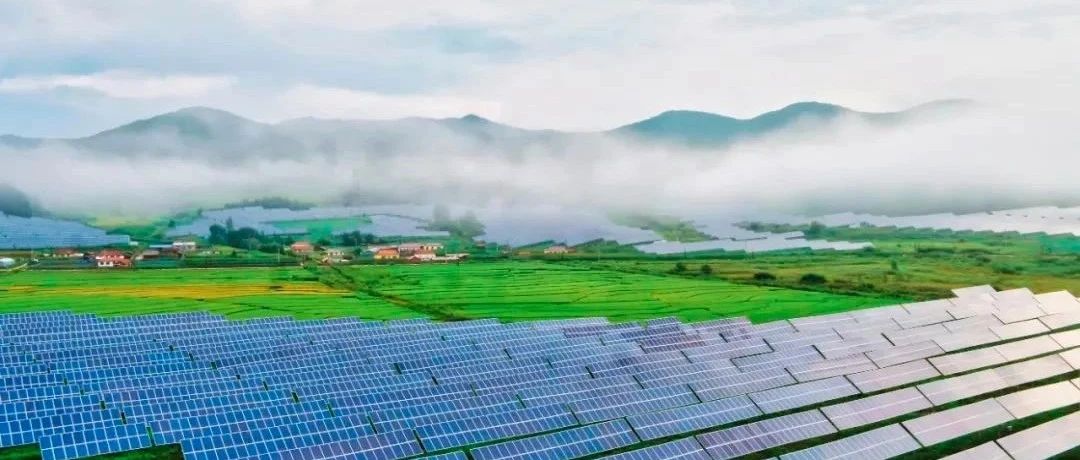
英大证券晨会纪要-20250811
British Securities· 2025-08-11 02:22
Market Overview - The market is currently experiencing a phase of consolidation, with the Shanghai Composite Index reaching new highs but failing to maintain those gains, indicating a need for time and space to digest recent movements [3][4][5] - The market sentiment is cautious, with a notable divergence between indices, particularly a stronger Shanghai index compared to weaker Shenzhen and ChiNext indices, reflecting internal market discrepancies [4][20] - Trading volume has decreased, with a total turnover of approximately 1.7 trillion, suggesting a lack of enthusiasm for chasing higher prices, which may hinder the ability to initiate a new upward trend [4][20] Sector Performance - Traditional sectors such as cement, engineering machinery, and hydropower have shown strong rebounds, while AI application sectors have collectively declined, negatively impacting market sentiment [3][19] - The military industry has seen significant gains, with a notable increase in stock prices, supported by government policies and geopolitical tensions that may act as catalysts for further growth [11][12] - The robotics sector has also experienced substantial growth, with a 60% increase in related stocks since early January, although a recent pullback suggests caution is warranted [12] - Precious metals have risen due to factors such as the onset of a rate-cutting cycle by the Federal Reserve and increased geopolitical tensions, which have driven demand for gold as a safe-haven asset [14] - The semiconductor sector remains a focal point for investment, with expectations of continued growth driven by government support and rising global demand for AI and high-performance computing [16] Investment Strategy - The report emphasizes the importance of selecting stocks with high certainty in performance and reasonable valuations, particularly those benefiting from policy support or industry trends [5][21] - Investors are advised to focus on sectors with structural opportunities, such as semiconductors, AI, and healthcare, while being cautious of stocks that have risen significantly without strong fundamental backing [5][21] - The outlook for the A-share market suggests a "slow bull" trend, with structural opportunities requiring enhanced stock-picking skills and timing [5][21]
刷新能源结构“含绿量” 打通能源市场“中梗阻”
Xin Hua She· 2025-08-11 00:37
Core Insights - China's energy transition is accelerating towards clean energy development, providing sustainable "green" power for economic and social growth [1][3][10] Group 1: Renewable Energy Development - The Hainan Changjiang Nuclear Power Base's Phase II project has successfully completed 42 out of 59 key milestones, aiming to deliver over 18 billion kWh of clean electricity annually, reducing coal consumption by 6.326 million tons and CO2 emissions by 11.68 million tons [2] - The "14th Five-Year Plan" emphasizes building a clean, low-carbon, safe, and efficient energy system, accelerating the development of non-fossil energy sources [3][5] - China's renewable energy capacity has doubled since the "14th Five-Year Plan," with solar, wind, hydro, nuclear, and new energy storage leading globally [3] Group 2: Technological Innovation - China is witnessing rapid advancements in renewable energy technologies, with world-leading solar conversion efficiencies and the largest scale of new energy storage [5][7] - The Baihetan Hydropower Station has generated over 200 billion kWh since its commissioning, showcasing China's enhanced capabilities in hydropower design and construction [4] Group 3: Market Reforms and Efficiency - The establishment of a unified national electricity market is underway, with cross-regional electricity trading expected to support green electricity consumption and enhance market efficiency [9] - In the first half of this year, 1.371 billion green certificates were issued, reflecting a 149% year-on-year increase, indicating a growing trend towards greener energy [9] Group 4: Future Outlook - The energy transition is a profound systemic change requiring sustained efforts, with anticipated reforms expected to benefit businesses and consumers, promoting the shift from "using electricity" to "using green electricity" [10]
让绿色能源点亮万家灯火
Ren Min Ri Bao Hai Wai Ban· 2025-08-10 23:18
Core Insights - China's energy transition is accelerating the development of clean energy, providing continuous "green" power for economic and social development [1] Group 1: Renewable Energy Development - The Hainan Changjiang Nuclear Power Phase II Project is the first nuclear power project started during the 14th Five-Year Plan, expected to deliver over 18 billion kilowatt-hours of clean electricity annually, reducing coal consumption by 6.326 million tons and CO2 emissions by 11.68 million tons [1] - China has built the world's largest and fastest-growing renewable energy system, with non-fossil energy generation capacity doubling since the 14th Five-Year Plan, leading in solar, wind, hydro, nuclear, and new energy storage [1] Group 2: Technological Innovation - The Baihetan Hydropower Station has achieved a cumulative power generation of over 200 billion kilowatt-hours, showcasing advancements in China's hydropower design, construction, and equipment manufacturing capabilities [2] - Innovations in renewable energy technologies include world-leading solar conversion efficiency, the largest single-unit wind power capacity, and the largest scale of new energy storage [2] Group 3: Market Reforms - The National Development and Reform Commission and the National Energy Administration have initiated a mechanism for regular cross-grid electricity trading, enhancing electricity supply during peak summer periods and exploring long-term green electricity contracts [4] - The issuance of green certificates has surged, with 1.371 billion green certificates issued in the first half of the year, reflecting a significant increase in the green energy landscape [5]
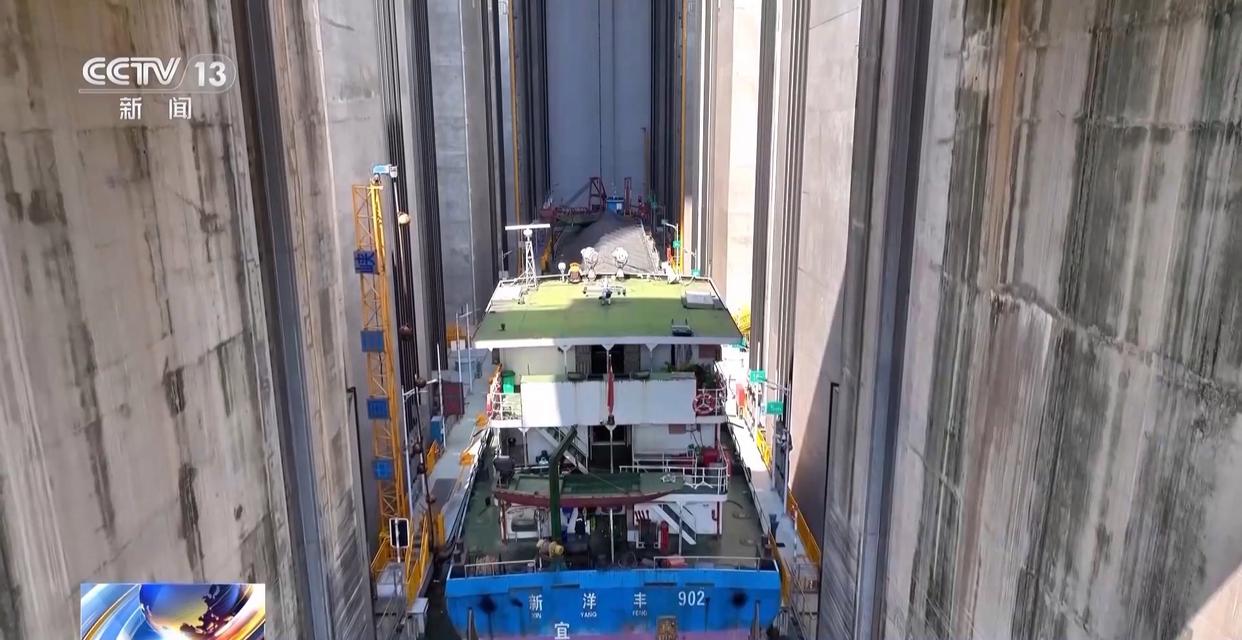
金沙江上的“巨型电梯”,向家坝升船机累计货物通过量突破千万吨
Qi Lu Wan Bao· 2025-08-10 14:11
Core Viewpoint - The Xiangjiaba ship lift has successfully transported over 10 million tons of cargo since its operation, significantly enhancing the shipping capacity and economic development of the Yangtze River basin [1][3]. Group 1: Operational Achievements - The Xiangjiaba ship lift, operational since May 2018, has completed over 23,900 trips and facilitated the passage of more than 23,000 vessels, with a maximum lifting height of 114.2 meters and a single lift capacity of approximately 8,150 tons [3][10]. - The annual cargo volume has increased from 170,000 tons to a peak of 1.95 million tons, with the time taken for vessels to pass through the lift reduced from 60 minutes to 40 minutes [5][11]. - The lift operates 24 hours a day, with a maximum of 339 operational days per year, extending the "golden waterway" of the Yangtze River by over 150 kilometers into the Jinsha River [5][7]. Group 2: Economic Impact - The ship lift has significantly improved shipping conditions in the reservoir area, providing a more efficient transportation channel for resource development and material transport, thus promoting coordinated economic development along the river [7][11]. - The logistics company reported that the lift allows larger vessels to load directly at the factory, increasing shipping frequency from two or three trips per month to five or six, greatly benefiting business operations [13]. Group 3: Technological Innovations - The Xiangjiaba ship lift is entirely designed and manufactured in China, marking a significant advancement in domestic engineering capabilities [8][10]. - Continuous technological innovations have led to the acquisition of 146 patents, enhancing the safety and efficiency of the lift's operations [11]. - The recent upgrades to the Xiangjiaba hydropower station's eight 800,000-kilowatt units have improved operational efficiency and reliability, incorporating smart online monitoring technologies [14][22].
决胜“十四五” 打好收官战丨扩大清洁用能,让绿色能源点亮万家灯火
Xin Hua She· 2025-08-10 01:59
Core Viewpoint - The article emphasizes the rapid advancement of clean energy development in China, highlighting the importance of renewable energy in driving economic and social progress while ensuring environmental sustainability [1][3]. Group 1: Renewable Energy Projects - The Hainan Changjiang Nuclear Power Phase II project has successfully completed 42 out of 59 key milestones, with an expected annual clean electricity output exceeding 18 billion kilowatt-hours, reducing coal consumption by 6.326 million tons and CO2 emissions by 11.68 million tons [2]. - The Baihetan Hydropower Station has achieved a cumulative electricity generation of over 200 billion kilowatt-hours, showcasing advancements in China's hydropower design and construction capabilities [4]. Group 2: Energy Transition and Technology - China's renewable energy system is the largest and fastest-growing globally, with non-fossil energy generation capacity doubling since the start of the 14th Five-Year Plan, leading in solar, wind, hydro, nuclear, and new energy storage [3][5]. - The integration of digital technology with the energy sector is fostering new technologies, business models, and operational modes, enhancing the modernization of the energy industry [7]. Group 3: Market Reforms and Policies - The 14th Five-Year Plan aims to create a clean, low-carbon, safe, and efficient energy system, with ongoing reforms to eliminate market barriers and promote efficient energy operation [8]. - The establishment of a national unified electricity market is underway, with cross-regional electricity trading expected to reach 63% of total electricity consumption by 2024, facilitating easier access to green electricity [9]. Group 4: Future Outlook - The energy transition is a profound systemic change requiring sustained efforts, with anticipated reforms expected to benefit businesses and consumers, transitioning electricity services from basic access to high-quality and green electricity [10].
扩大清洁用能,让绿色能源点亮万家灯火
Xin Hua Wang· 2025-08-10 01:42
Core Insights - China's energy transition is accelerating, focusing on renewable energy development to provide sustainable "green" power for economic and social growth [1][2][3] Group 1: Renewable Energy Development - The Hainan Changjiang Nuclear Power Base's Phase II project has successfully completed 42 out of 59 key milestones, aiming to deliver over 18 billion kWh of clean electricity annually, reducing coal consumption by 6.326 million tons and CO2 emissions by 11.68 million tons [2] - China has established the world's largest and fastest-growing renewable energy system, with non-fossil energy generation capacity doubling since the start of the 14th Five-Year Plan [3] - The Baihetan Hydropower Station has generated over 200 billion kWh since its commissioning, showcasing advancements in China's hydropower design and construction capabilities [4] Group 2: Technological Innovation - The trend of "technology as a resource" is becoming more evident, with China leading in renewable energy technology, including world-record photovoltaic conversion efficiencies and the largest scale of new energy storage [5] - New products and technologies are emerging rapidly, such as the zero-carbon microgrid on Xiyang Island, which generated 15 million kWh last year, meeting local electricity needs and supplying excess power to the mainland grid [6] Group 3: Market Reforms - The 14th Five-Year Plan emphasizes breaking down barriers in the energy market to create a conducive environment for green and low-carbon transitions [7] - A new mechanism for cross-grid electricity trading has been established, allowing for more efficient green electricity consumption and market-based purchasing [8] - The issuance of green certificates has surged, with 1.371 billion certificates issued in the first half of the year, reflecting a growing commitment to green energy [8] Group 4: Long-term Transformation - The energy transition is a profound systemic change requiring sustained efforts, with anticipated reforms expected to benefit businesses and consumers, enhancing electricity services from basic access to green energy usage [9]
攻克高寒高海拔建设难题 巴拉水电站全面投产发电
Si Chuan Ri Bao· 2025-08-10 01:23
Core Insights - The completion of the Bala Hydropower Station marks a significant milestone in China's western development strategy, with a total installed capacity of 746,000 kilowatts and an annual designed power generation of 2.553 billion kilowatt-hours, capable of meeting the basic electricity needs of approximately 1 million households [1][2] Group 1 - The Bala Hydropower Station is a key project in the national western development initiative, with a total installed capacity of 746,000 kilowatts and an annual designed power generation of 2.553 billion kilowatt-hours [1] - The station will significantly enhance the summer peak power supply capacity of the Sichuan power grid and improve regional power supply reliability [1] - The project is expected to save 1.16 million tons of standard coal annually and reduce carbon dioxide emissions by 3 million tons, equivalent to adding 85,000 acres of forest [1] Group 2 - The construction of the hydropower station set a new record for large-scale high-altitude hydropower projects, with all four units completed in less than 40 days [2] - The construction team overcame significant challenges, including winter construction difficulties on a 140-meter high dam, achieving a monthly filling strength record of 350,000 cubic meters in permafrost areas [2] - The station includes a 26,000-kilowatt ecological unit designed to ensure minimum ecological water flow and support fish spawning periods in downstream river sections [2]
东兴首席周观点:2025年第32周-20250809
Dongxing Securities· 2025-08-09 13:14
Group 1: Gold Supply Dynamics - The global mined gold supply has shown a declining trend since 2013, with an average annual production of approximately 3,574 tons over the past decade[2] - The average growth rate of mined gold production from 2015 to 2019 was +2.0%, but it has slowed to +0.5% from 2020 to 2024[2] - In 2024, the global mined gold production growth rate is expected to rebound to 0.7%, still remaining at a low level compared to the past decade[2] Group 2: Gold Recycling and Costs - The average growth rate of recycled gold supply over the past decade is 2.3%, with the highest growth of 15.5% in 2016 and the lowest at -12.2% in 2021[3] - In 2024, recycled gold production is projected to increase by 10.9% to 1,369 tons, accounting for 27.5% of total gold supply[3] - The global gold mining total sustaining cost reached a historical high of $1,456 per ounce in Q3 2024, with a year-on-year increase of 9%[3] Group 3: Gold Demand Trends - Global gold consumption has risen to an average of 4,338 tons over the past decade, with a significant increase of 6.4% to 4,616 tons in the last three years[4] - In 2023, total gold demand reached a historical high of 4,951 tons, reflecting a year-on-year growth of 3.8%[4] - The top five gold-consuming countries account for over 70% of total demand, with China and India contributing approximately 30% and 24% respectively[5] Group 4: Central Bank and ETF Demand - Central bank gold purchases increased by 140% in 2022 to 1,080 tons, marking a historical high, and continued to exceed 1,000 tons in 2023[6] - By May 2025, global central bank gold reserves reached 36,234 tons, with China's reserves at 2,292 tons, representing 6.5% of its total foreign reserves[6] - The total holdings of gold ETFs reached 3,560.4 tons by April 2025, with a potential recovery in annual growth expected[7]
气候变化威胁能源安全,如何应对和评估
Di Yi Cai Jing· 2025-08-09 08:34
Group 1 - Extreme weather poses systemic threats to energy systems, including reduced wind power efficiency due to weakened wind speeds and increased power supply tensions from high temperatures and droughts [1] - Climate change is a global challenge affecting energy security, social stability, and risk distribution, particularly impacting underdeveloped regions [1] - The IPCC report indicates that human activities have led to a 1.2°C increase in global average temperatures since pre-industrial times, with a high probability of exceeding the 1.5°C threshold in the next five years [1] Group 2 - Energy systems need to shift from "passive recovery" to "active transformation" through technological innovation, such as floating solar power stations that enhance land use and mitigate extreme temperature impacts on power generation [2] - A model shows that for every unit increase in the extreme climate risk index, total power generation significantly decreases, with wind power being the most affected by wind speed changes [2] - Four strategies proposed to address extreme climate impacts include establishing a climate risk monitoring and early warning system, optimizing diversified energy supply, creating emergency mechanisms for electricity markets under extreme weather, and innovating climate financial products [2] Group 3 - The existing global development indicator system, including the Human Development Index (HDI) and Sustainable Development Goals (SDGs), has significant limitations, such as contradictions between goals and data deficiencies [3] - The new Comprehensive Development Goals (CDGs) framework emphasizes a "bottom-up, practice-driven" approach, focusing on human development and social progress across five dimensions: innovation, coordination, green, openness, and sharing [3] - The CDGs report suggests incorporating natural capital into core indicators, enhancing spatial dimension analysis using satellite data, and utilizing AI technology for future trend predictions [3]