
食品生产

Search documents
【环球财经】调查显示日本今年有逾2万种食品涨价
Xin Hua She· 2025-12-01 04:36
Core Insights - A recent survey indicates that over 20,000 food items in Japan have increased in price this year, representing a 60% increase in the number of price hikes compared to last year [1] - The survey conducted by Teikoku Databank involved 195 major food and beverage manufacturers across Japan, revealing that 20,609 food items are set to increase in price, with significant hikes expected in December for products like chocolate pastries and soybean products [1] - The price surge is attributed to rising costs of raw materials, energy, and labor [1] Economic Indicators - The core Consumer Price Index (CPI) in Japan, excluding fresh food, rose by 3.0% year-on-year to 112.1 in October, marking the 50th consecutive month of year-on-year increases [1] - Notable price increases include a 39.6% rise in the price of ordinary japonica rice, and a 36.9% and 53.4% increase in the prices of chocolate and coffee beans, respectively [1]
市场监管总局:今年已完成食品安全抽检570万批次 不合格率2.74%
Ke Ji Ri Bao· 2025-11-26 08:12
Core Points - The National Market Supervision Administration held a press conference on food safety, highlighting the completion of 5.7026 million food safety inspections, with 156,000 non-compliant samples, resulting in an overall non-compliance rate of 2.74% [1] - Food safety inspections are crucial for identifying issues and risks, focusing on pesticide residue, food additive abuse, and microbial contamination [1] - The administration has expanded its inspection coverage to include all aspects of food production and sales, encompassing various enterprises and new business models [1] Group 1 - The total number of food safety inspections conducted is 5.7026 million, with 156,000 samples found to be non-compliant, leading to a non-compliance rate of 2.74% [1] - Risk monitoring has also been conducted, with 234,400 samples tested and 10,200 samples identified as risky, resulting in a risk detection rate of 4.36% [1] - The inspection scope covers 39 categories of food and includes 2,066 testing indicators, achieving comprehensive coverage of daily consumer food inspections [1] Group 2 - The administration has developed 106 supplementary testing methods to address challenges in detecting food adulteration, covering nearly 1,000 substances [2] - A collaborative approach is being promoted to enhance food safety regulation, shifting from reactive measures to proactive prevention [2] - The focus on key areas such as infant formula and school meals has led to monthly inspections, ensuring 100% coverage of production enterprises in these sectors [1][2]
市场监管总局:食品安全抽检已覆盖食品生产、经营各类主体和各种业态
Yang Guang Wang· 2025-11-26 01:52
Core Points - The National Market Supervision Administration of China has reported that food safety inspections now cover all types of food production and operation entities, addressing public concerns about food safety [1] - In 2023, over 170,000 cases of food safety inspection violations were handled, resulting in fines totaling approximately 420 million yuan [1] - The food safety inspection includes a wide range of entities, including supermarkets, convenience stores, and various food service providers, as well as new business models like food delivery and live-streaming sales [1] - The inspection covers 2,066 indicators as per food safety standards, including pesticides, veterinary drugs, microorganisms, and food additives [1] Group 1 - The inspection of infant formula production companies has achieved 100% coverage, with monthly inspections for infant formula milk powder [2] - Provincial market supervision departments are conducting bi-weekly inspections of campus meals and centralized procurement platforms, aiming for full coverage of all school canteens within a two-year cycle [2]
淮安市火辣食品生产有限公司成立 注册资本50万人民币
Sou Hu Cai Jing· 2025-11-25 23:46
天眼查App显示,近日,淮安市火辣食品生产有限公司成立,法定代表人为鲍春羽,注册资本50万人民 币,经营范围为许可项目:食品生产;食品销售;调味品生产;食品互联网销售(依法须经批准的项 目,经相关部门批准后方可开展经营活动,具体经营项目以审批结果为准)一般项目:食品销售(仅销 售预包装食品)(除依法须经批准的项目外,凭营业执照依法自主开展经营活动)。 ...
全国市场监管系统食品安全抽检不合格率为2.74%
Ren Min Ri Bao· 2025-11-25 22:42
Core Insights - The national market regulatory system has completed food safety inspections of 5.7026 million batches, with 156,000 non-compliant samples, resulting in a non-compliance rate of 2.74% [1] - Risk monitoring has been conducted on 234,400 batches, identifying 10,200 problematic samples [1] Group 1: Food Safety Inspections - The primary goal of food safety inspections is to identify issues, focusing on three key areas: children's food, problematic food products, and uncertain food safety [1] - 100% coverage of inspections for infant formula production enterprises is being implemented, with monthly inspections of all active infant formula producers [1] - Key problematic areas include campus food, counterfeit rural food products, misuse of food additives, and issues with edible vegetable oils [1] Group 2: Risk Monitoring - Special inspections are being conducted for live-streaming sales, fresh e-commerce, and food delivery services to address concerns about adulteration and misrepresentation [1] - Increased risk monitoring efforts are being directed towards socially concerning issues [1]
截至今年11月中旬 全国市场监管系统食品安全抽检不合格率为2.74%
Ren Min Ri Bao· 2025-11-25 22:17
Core Insights - The national market regulatory system has completed food safety inspections of 5.7026 million batches, detecting 156,000 non-compliant samples, resulting in a non-compliance rate of 2.74% [1] - A total of 234,400 risk monitoring batches were completed, with 10,200 problematic samples identified, primarily related to pesticide residue, food additive abuse, and microbial contamination [1] Group 1: Food Safety Inspections - The focus of food safety inspections is to identify issues, particularly emphasizing "food for children" with 100% coverage of inspections for infant formula production enterprises, conducting monthly inspections of all active infant formula production companies [1] - Inspections are also concentrated on "problematic" areas, targeting school food, counterfeit rural food products, food additive abuse, and issues with edible vegetable oils as part of this year's key rectification efforts [1] Group 2: Risk Monitoring - The regulatory body is prioritizing inspections in areas of high public concern, such as live-streaming sales, fresh e-commerce, and food delivery services, to address issues like adulteration and misrepresentation [1]
全国已完成食品安全抽检570多万批次
Ren Min Ri Bao· 2025-11-25 20:49
Group 1 - The core viewpoint of the articles emphasizes the comprehensive food safety inspection efforts undertaken by the market regulatory authorities, highlighting the significant number of inspections and the focus on various food categories [2][3][4] - During the "14th Five-Year Plan" period, a total of 1.07 million cases of non-compliant food were verified and dealt with, with a penalty amounting to approximately 4.3 billion yuan [4] - As of mid-November, the national market regulatory system completed 5.7026 million batches of food safety inspections, detecting 156,000 non-compliant samples, resulting in a non-compliance rate of 2.74% [2] Group 2 - The inspection efforts have expanded to cover 39 categories of food, including various agricultural products and processed foods, ensuring that most food items available to the public are included in the inspection scope [2] - The focus on infant formula production has led to a 100% inspection coverage of all production enterprises, with monthly inspections conducted [3] - The regulatory authorities are prioritizing inspections based on previous non-compliance rates and public concerns, enhancing the precision of risk detection [3][4] Group 3 - The introduction of 106 supplementary testing methods allows for the detection of nearly 1,000 substances across key food categories, addressing public concerns regarding food adulteration [4] - The establishment of a technical expert database has supported 11,525 food enterprises, aiming to promote high-quality development in the food industry [4] - The number of enterprises with multiple non-compliance cases has significantly decreased, with a nearly 50% reduction expected in 2024 compared to 2020, and a 57.47% decrease in the first three quarters of this year [4]

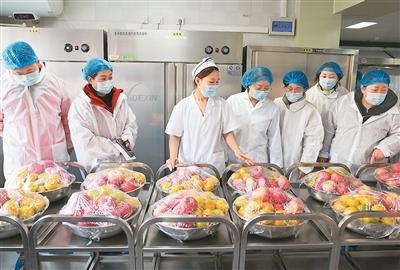
全国食品安全 抽检合格率超97%
Zheng Quan Shi Bao· 2025-11-25 18:26
11月25日,市场监管总局召开食品安全专题新闻发布会披露,截至今年11月中旬,全国市场监管系统已 完成食品安全抽检570.26万批次,不合格率仅为2.74%;风险监测发现率也控制在4.36%。"十四五"以 来,多批次不合格的企业数量已经呈大幅下降趋势,2024年与2020年相比下降了近50%,今年前三季度 同比又下降了57.47%,食品安全形势稳步向好。 科技创新与跨部门协同为监管增效。孙会川介绍,今年已研制106项食品补充检验方法,可检测近千种 物质,覆盖面制品、肉制品等多个品类;针对食品中潜在的非食用物质风险,将那非类、拉非类等物质 纳入监管名录并配套检验方法,查处一大批非法添加案件;67项食品快速检测方法在农贸市场、校园食 堂落地应用,提升了问题发现效率。 我国以全链条覆盖为核心,织密监管防护网。市场监管总局食品安全总监孙会川表示,生产环节"抓大 不放小",既实现所有在产生产企业全覆盖,也加大对加工小作坊抽检力度;经营环节"求全不漏项", 超市、便利店、农批市场等传统业态尽数纳入,餐饮外卖、直播带货、生鲜电商等新业态也纳入监管视 野,进口食品同样未缺席。目前,抽检已覆盖39大类食品,检验项目涵盖农药、兽 ...
覆盖39大类食品、2066项指标 市场监管总局介绍食品安全抽检最新情况
Xin Hua She· 2025-11-25 13:57
Core Insights - The article discusses the recent developments in food safety inspections in China, highlighting the comprehensive measures taken by the State Administration for Market Regulation to enhance food safety oversight and inspection coverage [1][2]. Summary by Sections Food Safety Inspection Overview - As of mid-November, the national market regulation system has completed 5.7026 million food safety inspections, identifying 156,000 non-compliant samples, resulting in a non-compliance rate of 2.74%. Additionally, 234,400 risk monitoring inspections were conducted, with 10,200 problematic samples found, leading to a risk detection rate of 4.36% [1]. Coverage of Food Types and Inspection Items - The food safety inspections cover 39 categories of food, including various agricultural products like vegetables and fruits, processed foods such as rice and oil, and food from restaurants. The inspections encompass 2,066 indicators as per food safety standards, including pesticides, veterinary drugs, microorganisms, and food additives [1][2]. Focus Areas for Inspections - The inspections prioritize children's food, achieving 100% coverage for infant formula manufacturers and conducting bi-weekly inspections for school canteens. The focus also includes problematic areas such as counterfeit food products and excessive use of food additives, with increased inspection frequency for previously non-compliant food types [2][3]. Technological Advancements in Inspections - To address challenges in food safety inspections, the market regulation authority has developed 106 supplementary testing methods for detecting adulteration in food, covering nearly 1,000 substances. Additionally, 67 rapid testing methods have been released to enhance efficiency in identifying issues in key locations like farmers' markets and school canteens [3]. Enforcement and Compliance Measures - The regulatory body has intensified efforts to address non-compliant food products, completing 1.07 million cases of non-compliant food disposal during the 14th Five-Year Plan period, with fines totaling approximately 4.3 billion yuan. The number of companies with multiple non-compliance cases has significantly decreased, with a nearly 50% reduction expected in 2024 compared to 2020, and a 57.47% decrease in the first three quarters of this year [4].
“十四五”期间全国完成不合格食品核查处置任务107万件
Zhong Guo Xin Wen Wang· 2025-11-25 12:49
Core Insights - During the "14th Five-Year Plan" period, the National Market Supervision Administration completed the verification and disposal of 1.07 million cases of substandard food, with fines totaling approximately 4.3 billion yuan and over 13,000 cases referred to law enforcement [1][2] Group 1: Food Safety Oversight - The market supervision authorities have intensified efforts to verify and dispose of substandard food, resulting in a significant decrease in the number of companies with multiple batches of non-compliant products [1] - Food safety inspections now cover various entities and business types involved in food production and distribution, encompassing 39 categories of food, including agricultural products and processed foods [1] - The inspection criteria include 2,066 indicators as stipulated by food safety standards, such as pesticide residues, veterinary drugs, microorganisms, and food additives [1] Group 2: Focus on Vulnerable Groups and Technological Innovation - The market supervision system prioritizes the safety of children's food, achieving 100% inspection coverage for infant formula production enterprises and conducting monthly inspections for infant formula milk powder [2] - Special inspections are conducted for live-streaming sales, fresh e-commerce, and food delivery services to address issues like adulteration and counterfeiting, with increased risk monitoring [2] - The system has published a total of 1,725 national standards in collaboration with other departments to enhance the comprehensive standard system from farm to table [2]