养老服务

Search documents
商务部等9部门发文支持一刻钟便民生活圈建设扩围升级
Di Yi Cai Jing· 2025-09-19 02:13
Core Viewpoint - The article discusses the "One-Quarter Hour Convenience Living Circle" initiative aimed at enhancing urban living conditions in China by 2030, with specific targets for community services and infrastructure development [1][2][4]. Group 1: Goals and Objectives - The initiative aims to establish 100 pilot cities for the convenience living circle by 2030, creating 10,000 well-structured and high-quality service areas, achieving over 90% resident satisfaction, and a 30% chain store rate [1][2]. - The plan includes integrating various service circles such as elderly care, shopping, fitness, and cultural activities to create a comprehensive living environment [2]. Group 2: Key Tasks and Innovations - The initiative emphasizes upgrading facilities, services, and management within the convenience living circles, extending coverage from cities to eligible county communities over three years [2]. - New planning strategies will incorporate convenience living circles into urban land use planning, focusing on community needs and resource allocation [3]. Group 3: Policy Integration and Support - The initiative includes policies to expand supply of essential facilities like supermarkets and pharmacies, and to integrate smart logistics services into public infrastructure [4]. - Financial incentives, tax benefits, and support for long-term care insurance are part of the policy framework to encourage the development of convenience living circles [4].
老有所养,中国式养老绘就最美“夕阳红”
Xin Hua Wang· 2025-09-19 01:32
Core Insights - The article highlights the continuous improvement of China's basic pension service system, with increasing supply capacity and enhanced cultural life for the elderly [1][2][3] Group 1: Pension Service System - By the end of 2024, nearly 1.073 billion people are participating in basic pension insurance, with 40,600 various pension institutions and facilities, and a total of 7.993 million beds available [1] - The elderly population aged 65 and above reached 220 million, accounting for 15.6% of the total population, marking a historical high in both scale and proportion [2] - The government has established a comprehensive pension service system, including material assistance, care services, and support services, with nearly 160,000 enterprises having set up enterprise annuities covering over 32 million employees [3] Group 2: Policy and Reform - The key to reform lies in improving the policy framework to address the shortcomings in pension services and enhance adaptability to aging and socio-economic development [3] - The government has issued guidelines to establish a three-tiered pension service network and has provided subsidies for elderly individuals with moderate to severe disabilities [3] Group 3: Quality Development of Pension Services - The development of high-quality pension services requires coordinated growth of home, community, and institutional care, with a focus on integrating medical and nursing services [4] - By the end of last year, there were 366,000 community pension service institutions and facilities, providing 2.915 million beds, and approximately 1.4 billion health management services for seniors aged 65 and above [4] Group 4: Social Participation and Cultural Life - The level of social participation and cultural life for the elderly is improving, with policies promoting elderly reading and access to discounted television services [5] - By the end of last year, the national elderly education public service platform had gathered 441,000 course resources, providing learning support services for 170 million instances [5] Group 5: Overall Progress - China's pension service supply capacity is continuously increasing, and the quality of services is improving, contributing to a more mature and comprehensive pension service system for millions of elderly individuals [6]
“物业+养老”,跨界先破界
Xin Hua Ri Bao· 2025-09-18 22:32
无锡熙怡健康养老公司员工上门为老人服务 作为南京最早"吃螃蟹"的企业,朗诗物业于2017年在南京朗诗国际街区开辟200平方米养老服务站点, 但经营6年后黯然离场。其在苏州相城区的站点,也以亏损50多万元告终。 "没有规模优势,一开始就触碰高技能的养老医护,让物业养老面临尴尬。"朗诗常青藤养老服务公司负 责人宋斐说,护理高龄失能老人,需要掌握鼻饲、造瘘口护理、换尿管等专业知识,物业员工短时间内 很难掌握这些技能,一旦遇到这类纠纷,"一单赔偿、全年白干"。 2021年,银城集团整合旗下银城物业和银城康养,合股成立"银城怡家养老服务公司",在南京市鼓楼区 江东街道的香榭里、银城花园等4个小区率先试点。"项目运营初期,32名经过培训的养老护理员为辖区 老人提供居家养老服务。"银城怡家居家事业部经理芦启新回忆道,然而老旧小区老人消费能力低、自 费项目少,加上新公司物业和养老两板块未能很好融合,物业本是微利经营,养老服务业又是高投入、 高风险、高技术行业,双方磨合了3年后,物业板块撤出。 银城怡家在社区支持下继续从事居家养老服务,在南京成立了10个养老服务站。记者在南京鼓楼区金舟 花园看到,由社区用房改造的银城怡家养老服 ...


黑龙江省大庆市大同区:产业先行促发展 多点开花结硕果
Xin Hua Wang· 2025-09-18 10:25
Group 1: Infrastructure and Development Projects - The Daqing City Datong District is witnessing the transformation of various projects from planning to execution, including standardized factory buildings and infrastructure for people's livelihoods [1] - The district is focusing on enhancing public service capabilities, particularly in elderly care and housing projects, to ensure that development benefits are equitably distributed among the population [5] Group 2: Agricultural and Technological Advancements - Daqing Dadong Agricultural Gene Technology Co., Ltd. is engaged in the development, production, and sales of single feed and mixed feed additives, utilizing traditional Chinese medicinal materials for innovative animal health products [3] - The district has 48,000 greenhouses covering 83,000 acres, producing 360,000 tons of fruits and vegetables annually, with a total output value of approximately 1.8 billion yuan [4] - New blueberry greenhouses are being established with advanced cultivation techniques, expected to yield significant profits, with a projected price of 150 yuan per pound at peak harvest [4] Group 3: Elderly Care and Community Improvement - The elderly care center project in Datong District aims to accommodate 288 nursing beds, addressing the needs of elderly individuals without children [5] - Ongoing renovations of old residential communities are enhancing living conditions, contributing to the overall well-being and satisfaction of residents [5] Group 4: Transportation Infrastructure - The renovation of Lanmin Road, a crucial transportation route, has been completed, widening the road to 10 meters to alleviate travel difficulties for residents and improve logistics [5]

21社论丨提升服务供给质量,激发更多消费新需求
21世纪经济报道· 2025-09-18 01:18
Core Viewpoint - The article emphasizes the importance of expanding service consumption to stimulate economic growth and enhance the quality of domestic demand, highlighting the need for structural improvements in service supply to meet evolving consumer needs [1][3]. Group 1: Economic Context - Domestic demand is identified as the fundamental driver of economic development, with a focus on boosting consumption to create a virtuous cycle within the national economy [1]. - In 2024, domestic demand is projected to contribute 69.7% to economic growth, with final consumption expenditure accounting for 44.5%, indicating a gap compared to the international average of 50% [1]. - The current service consumption rate in China is approximately 46.1%, suggesting significant room for growth given the country's GDP level [1]. Group 2: Service Consumption Trends - China's middle-income group is the largest globally and is shifting from goods consumption to service consumption, indicating a growing demand for higher-quality, personalized, and experiential services [2]. - There exists a structural contradiction in service supply, characterized by an oversupply of low-end and homogeneous services, while specialized and personalized offerings are insufficient [2]. Group 3: Quality of Service Supply - Enhancing the quality of service supply is crucial for stimulating new consumer demand, as the unique characteristics of service consumption, such as localization and high elasticity, create challenges in meeting market needs [3]. - The article suggests that relaxing entry barriers and regulatory policies in sectors like healthcare, education, and telecommunications can attract more investment and improve service quality [3]. Group 4: Trust Mechanisms in Service Consumption - Addressing trust issues in service consumption is essential, as the simultaneous production and consumption of services lead to reliance on reputation and reviews, which can deter consumer engagement if information costs are high [4]. - Promoting professionalization and standardization in the service industry can reduce perceived risks for consumers, while ensuring consumer rights protection can compel businesses to enhance service quality [4]. Group 5: Future Outlook - Service consumption is viewed as a key growth engine for the economy, with the potential to better meet the public's demand for improved living standards [5]. - The article advocates for greater internal and external openness, encouraging innovation and competition to drive high-quality development in the service sector [5].

21社论丨提升服务供给质量,激发更多消费新需求
2 1 Shi Ji Jing Ji Bao Dao· 2025-09-17 22:49
Core Viewpoint - The Ministry of Commerce, along with other government departments, has introduced a set of policies aimed at expanding service consumption to stimulate economic growth and enhance the quality of the economy [1] Group 1: Economic Context - Domestic demand is identified as the fundamental driving force for economic development, with a focus on boosting consumption to expand domestic demand and create a virtuous cycle in the national economy [1] - In 2024, domestic demand is expected to contribute 69.7% to China's economic growth, with final consumption expenditure contributing 44.5%, indicating a gap compared to the international average of 50% [1] Group 2: Service Consumption Trends - China has the largest and most dynamic middle-income group globally, shifting their consumption needs from goods to services, yet there exists a structural mismatch in service supply [2] - The service consumption supply is characterized by an oversupply of low-end and homogeneous services, while there is a lack of specialized and personalized offerings [2] Group 3: Quality of Service Supply - Enhancing the quality of service supply is crucial to meet and stimulate new consumer demands, as the unique characteristics of service consumption, such as localization and high operational costs, contribute to supply challenges [3] - The policies propose relaxing entry barriers and regulatory measures in sectors like telecommunications, healthcare, and education to attract more foreign and private investment [3] Group 4: Trust Mechanisms in Service Consumption - Addressing trust issues in service consumption is essential, as the simultaneous production and consumption of services lead to reliance on reputation and reviews, which can deter consumer willingness if information costs are high [4] - Long-term growth potential in service consumption is anticipated to be a major driver for future consumption growth, necessitating systemic reforms to promote professionalism and standardization in the service industry [4]
提升服务供给质量,激发更多消费新需求
2 1 Shi Ji Jing Ji Bao Dao· 2025-09-17 22:27
Group 1 - The core viewpoint of the article emphasizes the importance of expanding service consumption to stimulate economic growth and enhance domestic demand, with a focus on high-quality development [1] - The Chinese government has introduced 19 specific measures across five areas to boost service consumption, aiming to create new momentum for economic growth [1] - In 2024, domestic demand is projected to contribute 69.7% to China's economic growth, with final consumption expenditure accounting for 44.5%, indicating a gap compared to the international average [1] Group 2 - China's middle-income group is the largest and most dynamic globally, shifting their consumption needs from goods to services, yet there is a structural mismatch in service supply [2] - The service consumption supply is characterized by an oversupply of low-end and homogeneous services, while there is a lack of specialized and personalized offerings [2] - Examples include a surplus of basic housekeeping services that do not meet the demand for specialized services like nutrition and health care, and a mismatch in the supply of elderly care facilities [2] Group 3 - Enhancing the quality of service supply is crucial for stimulating new consumer demands and addressing the current issues of service consumption [3] - The unique characteristics of service consumption, such as localization and high operational costs, contribute to the challenges in meeting consumer needs [3] - The government aims to relax entry barriers and regulatory policies to attract more investment in high-quality service sectors, including healthcare and education [3] Group 4 - Addressing trust issues in service consumption is essential, as the simultaneous production and consumption of services create challenges in consumer confidence [4] - The article suggests promoting professionalization and standardization in the service industry to reduce perceived risks for consumers [4] - Long-term growth potential in service consumption is highlighted as a key driver for economic growth, necessitating systemic reforms and increased openness to foster innovation and competition [4]
“城心养老生态联盟”启动 解锁银发经济“大家方案”
Guo Ji Jin Rong Bao· 2025-09-17 19:29
Core Insights - The eighth China Elderly Care Industry Lujiazui Summit was held in Shanghai, highlighting the urgent need for high-quality elderly care services in the context of China's aging society [1] - The "City Heart Elderly Care" model by Dajia Insurance aims to transform elderly care needs into industrial upgrading momentum, showcasing the strategic determination and innovative potential of insurance companies [1] - Dajia Insurance's first City Heart Elderly Care community in Shanghai is set to open at the end of September, featuring various age-friendly designs and smart home systems [1] Group 1 - The current elderly care service supply in China is insufficient, lacking mature models for reference [1] - The "City Heart Elderly Care" community emphasizes seamless integration of elderly care services with urban resources, allowing seniors to enjoy city life while receiving top-notch medical care [1] - The concept of "New Main Stage of Life" proposed by Dajia Insurance reflects the evolving needs of seniors who seek to continue vibrant lives in familiar environments [1] Group 2 - Dajia Insurance's elderly care brand "Dajia's Home" has launched the "City Heart Elderly Care Ecological Alliance" to build a comprehensive platform for resource integration, technology sharing, market expansion, and brand co-construction [2] - The alliance aims to ensure high-quality products and services through close cooperation with quality supply chain partners and accelerate the research and application of elderly care technology through collaboration with innovative partners [2]
城市24小时 | 这座超一线城市 加速“融湾”
Mei Ri Jing Ji Xin Wen· 2025-09-17 16:11
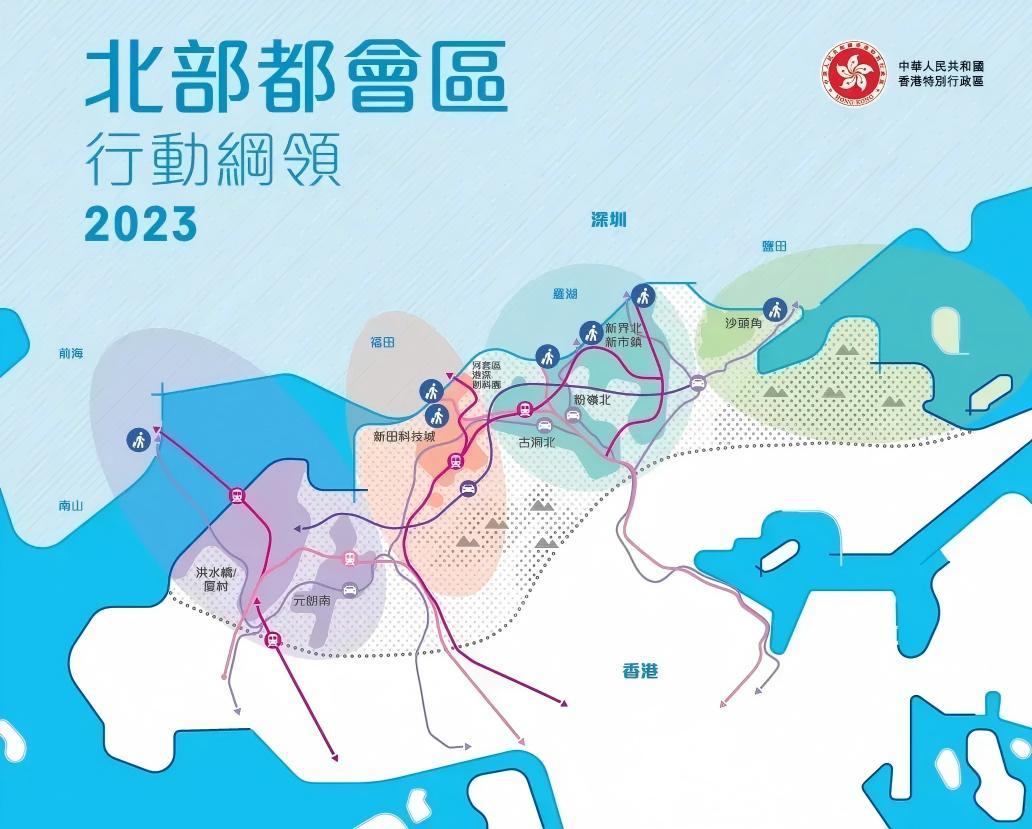
Core Points - The Hong Kong government is accelerating the development of the Northern Metropolis, establishing a dedicated committee led by Chief Executive John Lee to streamline administrative processes and enhance resource allocation [1][2] - The Northern Metropolis is expected to become a key area for urban construction and population growth over the next 20 years, with an estimated future population of around 2.5 million, accounting for one-third of Hong Kong's total population [2][5] - The region will enhance collaboration with the Greater Bay Area, particularly with Shenzhen and Guangzhou, improving technological and industrial integration [2][3] Group 1: Development Plans - The Northern Metropolis will be managed by a committee with three working groups focusing on development models, university city planning, and comprehensive planning and execution [1] - The area covers approximately one-third of Hong Kong's total land area, including developed towns and new development zones [1] Group 2: Economic Impact - The Northern Metropolis is viewed as a strategic development area with significant economic value and potential, aiming to address Hong Kong's spatial and resource constraints [2] - The establishment of the Hong Kong-Shenzhen Innovation and Technology Park is a key project, with the first phase already completed and various industries, including health tech and AI, set to establish a presence [2] Group 3: Population and Infrastructure - The government anticipates that the Northern Metropolis will house about 2.5 million residents by the end of 2024, based on current population statistics [5] - Infrastructure improvements will include simplified administrative measures and a phased development model to reduce costs and construction time [5]
城市24小时 | 这座超一线城市,加速“融湾”
Mei Ri Jing Ji Xin Wen· 2025-09-17 16:02
Core Viewpoint - The Chief Executive of Hong Kong, John Lee, announced the establishment of the "Northern Metropolis Development Committee" to accelerate the development of the Northern Metropolis, emphasizing its strategic importance and potential for economic growth [1][6]. Group 1: Development Plans - The Northern Metropolis covers approximately one-third of Hong Kong's total area, including Yuen Long and North District, with several new development areas and hubs at various planning and construction stages [2]. - The Northern Metropolis is expected to be the most active area for urban construction and population growth in Hong Kong over the next 20 years, with a projected population of about 2.5 million, accounting for one-third of Hong Kong's total population [6][7]. Group 2: Administrative Measures - The government plans to simplify administrative processes, including the introduction of a fast-track approval system and a phased development model, to reduce engineering costs and shorten construction timelines [7]. - The "Northern Metropolis Development Committee" will consist of three working groups focusing on development models, university town planning, and comprehensive management of planning and execution [1]. Group 3: Economic Integration - The development of the Northern Metropolis aims to enhance Hong Kong's integration with the Greater Bay Area, particularly with Shenzhen and Guangzhou, facilitating closer collaboration in technology and industry [6]. - The Lok Ma Chau Loop, a key area for innovation cooperation between Hong Kong and Shenzhen, is being developed with a focus on industries such as life sciences, microelectronics, new energy, and artificial intelligence [6].