
渔业

Search documents
惠农“税费通”|支持乡村振兴系列税费优惠政策(16)直接用于农、林、牧、渔业生产用地免征城镇土地使用税
蓝色柳林财税室· 2025-09-19 08:20
Core Viewpoint - The article discusses the tax exemption policy for land use in agricultural production, highlighting that land directly used for agriculture, forestry, animal husbandry, and fishery is exempt from urban land use tax [6][7]. Group 1: Tax Exemption Policy - Agricultural production land, including land used for planting, breeding, and feeding, is exempt from urban land use tax [6][7]. - The exemption does not apply to land used for processing agricultural products or for living and office purposes [7]. Group 2: Relevant Regulations - The policy is based on the "Interim Regulations on Urban Land Use Tax" and related notifications from the State Administration of Taxation [8].


阳江举行“数据要素×现代农业”决赛,数据驱动开启智慧农业新篇
2 1 Shi Ji Jing Ji Bao Dao· 2025-09-19 04:33
Core Insights - The "Data Element ×" competition in Guangdong aims to explore innovative applications of data elements in modern agriculture, with 19 teams competing in the finals [1] - The event is guided by the Guangdong Provincial Government and involves multiple local agencies, highlighting the importance of data-driven solutions in agriculture [1] Group 1: Competition Overview - The competition features 10 topics focused on enhancing agricultural production intelligence, improving product traceability, and fostering data integration within the industry [1] - A total of 48 project teams participated, with 19 advancing to the finals, showcasing their solutions through an 8-minute presentation and a 6-minute Q&A session [1] Group 2: Project Highlights - The project led by Guangdong Lansheng Marine Technology Co., Ltd. focuses on the application of trusted data in the marine fishery industry chain finance, addressing funding shortages and risk aversion in the sector [2] - The "Yue Shui An · Data Empowering Blue Ocean" project, spearheaded by China Unicom's Yangjiang branch, aims to leverage Yangjiang's marine resources and digital technology to enhance agricultural digital transformation [3] Group 3: Regional Significance - Yangjiang is positioned as a strategic point in Guangdong's coastal economic belt, with significant marine resources and a commitment to digital transformation in agriculture [3] - The competition serves as a catalyst for Yangjiang's ongoing reforms in market-oriented data element allocation, aiming to establish benchmarks for agricultural data applications [3]

2025年7月中国食用水产品进出口数量分别为39万吨和36万吨
Chan Ye Xin Xi Wang· 2025-09-19 03:46
Core Insights - The report by Zhiyan Consulting highlights the growth in China's seafood import and export market, indicating a positive trend in the industry [1] Import Data - In July 2025, China's edible seafood imports reached 390,000 tons, marking a year-on-year increase of 17.4% [1] - The import value for the same period was $1.691 billion, reflecting a year-on-year growth of 27.2% [1] Export Data - In July 2025, China's edible seafood exports totaled 360,000 tons, which is a year-on-year increase of 9.2% [1] - The export value during this period was $1.668 billion, showing a year-on-year growth of 4.1% [1] Industry Overview - Zhiyan Consulting is recognized as a leading industry consulting firm in China, specializing in in-depth industry research and providing comprehensive consulting services [1]

软通动力新设信息技术公司;欧森斯启动智慧渔业计划丨横琴财报
2 1 Shi Ji Jing Ji Bao Dao· 2025-09-19 01:15
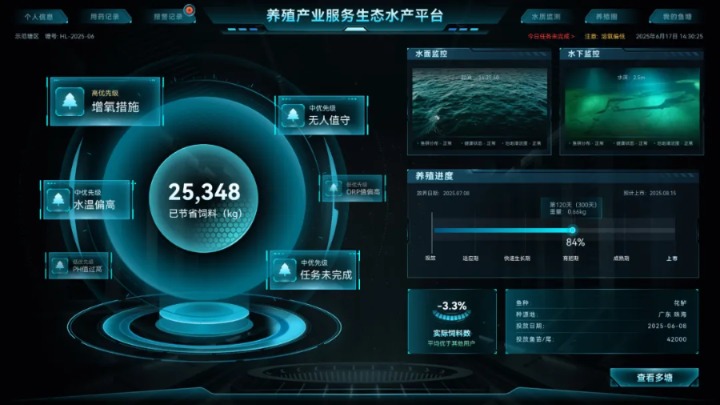
Group 1: Company Overview - Ousens Technology Co., Ltd. focuses on high-end testing equipment development and solutions in fields such as consumer electronics, semiconductor packaging, lithium batteries, and agricultural testing [2] - The company has developed core products like multifunctional integrated circuit boards and high-speed chip testing equipment, which are widely used in production lines [2] Group 2: New Product Launch - Ousens has launched a smart aquaculture information system to enhance the precision and intelligence of sea bass farming through IoT, AI, and big data technologies [1] - The system acts as a "data brain," enabling centralized, digital, and intelligent management of aquaculture, monitoring various water quality parameters and supporting automated feeding strategies [1] Group 3: Market Impact - The smart aquaculture system aims to reduce costs and increase efficiency for fishermen while transforming traditional fishing practices [1] - The system includes features like multi-level permission management, anomaly alerts, and integrated video monitoring to ensure farming safety [1]

软通动力新设信息技术公司;欧森斯启动智慧渔业计划丨横琴财报?
2 1 Shi Ji Jing Ji Bao Dao· 2025-09-19 01:13
Group 1: Company Initiatives - The smart feeding experiment for sea bass, led by Zhuhai Osenes Sensor Technology Co., aims to enhance precision and intelligence in aquaculture through IoT, AI, and big data technologies [1] - Osenes has launched a smart aquaculture information system that serves as the "data brain" for the experiment, enabling centralized, digital, and intelligent management of fish farming [1] - The system allows real-time monitoring of various water quality parameters and supports automated feeding strategies, enhancing decision-making and production efficiency for farmers [1] Group 2: Company Background - Osenes, established in 2015, is located in the Hengqin Guangdong-Macao Deep Cooperation Zone and focuses on high-end testing equipment for sectors like consumer electronics and agriculture [2] - The company has developed core products such as multifunctional integrated boards and high-speed chip testing equipment, which are widely used in production lines [2] Group 3: Market Developments - DataStory, since establishing its headquarters in Hengqin, has expanded its overseas business and built data centers, creating an "AI + big data cross-border e-commerce product selection center" [3] - The company offers a full-service chain from product selection to marketing and content production, leveraging both online and offline platforms [3] Group 4: Healthcare Innovations - A successful surgery using a puncture robot developed by True Health (Guangdong Hengqin) Medical Technology Co. marked a significant advancement in precision diagnosis for lung diseases [3] - The robot-assisted procedure was completed in 15 minutes with no complications, showcasing the potential for improved patient outcomes [3] Group 5: New Product Launches - Macau Beta International has launched a new series of beta acid products aimed at improving brain health, utilizing advanced synthetic biology technology [4] - The products focus on enhancing concentration, cognitive function, sleep regulation, and brain relaxation [4] Group 6: Financial Developments - As of July 2025, the Hengqin Guangdong-Macao Deep Cooperation Zone has opened over 70,000 digital RMB wallets, with nearly 1,800 stores participating and a total circulation amount of 1.8 billion RMB [6] - The zone has also facilitated the establishment of numerous green finance projects, contributing to low-carbon transformation efforts [6]
山东加快推进海参产业高质量发展
Da Zhong Ri Bao· 2025-09-19 00:55
Core Insights - The article discusses the implementation of a plan to accelerate the high-quality development of the sea cucumber industry in Shandong Province, aiming to establish a national production base for premium sea cucumbers [2][3] Group 1: Implementation Plan - The plan includes six major initiatives: seed industry enhancement, green farming, high-value utilization, quality management, brand cultivation, and financial empowerment [2] - The goal is to create a leading area for high-quality sea cucumber production and a model for the entire industry chain by 2030 [2] Group 2: Industry Goals - By 2030, the plan aims to cultivate 4-6 high-quality, resilient sea cucumber varieties and maintain an annual production of over 100,000 tons of premium sea cucumbers [2] - The initiative also targets the establishment of over 10 influential sea cucumber product brands and aims for the "Jiaodong Sea Cucumber" regional public brand to gain widespread recognition [2] Group 3: Development Strategy - The strategy focuses on utilizing the ecological resources of the Shandong Peninsula, particularly in the eastern and northern regions, to develop a national premium sea cucumber production base [3] - The plan emphasizes ecological farming as the primary production method and aims to leverage the saline-alkali land resources in the Yellow River Delta for pond-based ecological farming [3] - Key cities such as Yantai, Weihai, and Qingdao will be developed as national breeding bases for high-quality sea cucumber seedlings [3]
陈洁:深化国际渔业合作促互利共赢
Jing Ji Ri Bao· 2025-09-19 00:05
Core Viewpoint - China's distant water fisheries have developed significantly over the past 40 years, focusing on cooperation, safety, and sustainability, but still lag behind developed countries in technology and resource detection capabilities [1][2]. Group 1: Current State of Distant Water Fisheries - China's distant water fisheries began in the 1980s and have achieved notable results through strict management and controlled development [1]. - Compared to developed countries, China's fishing vessels are predominantly medium-sized, with over 90% of distant water operational vessels falling into this category, indicating a lack of large-scale, specialized vessels [1][2]. - Developed countries utilize advanced technologies for resource monitoring and management, while China faces challenges in resource investigation and technological advancement [2]. Group 2: Market Opportunities and Challenges - Global population growth and rising demand for high-quality seafood, particularly from emerging markets, present new opportunities for China's distant water fisheries [3]. - The international fisheries governance landscape is changing, offering both opportunities and challenges for China's participation in global resource allocation and rule-making [3]. Group 3: Recommendations for Development - Increase investment in technology to enhance equipment levels and promote the integration of digital technologies in distant water fisheries [4]. - Optimize logistics and market structures to create a modern supply chain that connects fishing, processing, and trade [4]. - Foster cultural integration with the fishing industry to develop tourism projects that promote fishing culture [4]. - Deepen international cooperation in fisheries management and actively participate in global governance initiatives [4].
推动远洋渔业绿色可持续发展
Jing Ji Ri Bao· 2025-09-18 21:59
Core Viewpoint - China's distant water fisheries have made significant achievements over decades, contributing positively to global fisheries development and seafood supply, while emphasizing green and sustainable development since the 18th National Congress of the Communist Party of China [1][2]. Development Stages - The development of China's distant water fisheries can be divided into four stages: 1. **Initial Stage (1985-1990)**: The industry began with a fleet of 13 fishing vessels, achieving a total output of nearly 200,000 tons by 1990 [3]. 2. **Rapid Development Stage (1990-2000)**: The implementation of the "going out" strategy led to a significant increase in production, surpassing 800,000 tons by 2000, with a competitive market emerging [4]. 3. **Adjustment and Regulation Stage (2000-2010)**: The focus shifted to adjusting the industrial structure, with production stabilizing above 1 million tons annually by 2010 [5]. 4. **High-Quality Development Stage (2010-Present)**: Emphasis on modernization and regulatory compliance, with total production reaching 2.0273 million tons in 2014, an increase of nearly 800 times since the start [6][7]. Recent Achievements - Since the 18th National Congress, significant progress has been made in enhancing comprehensive governance capabilities, improving management systems, and applying advanced technologies such as big data and artificial intelligence [6][7]. - China's international influence in fisheries has grown, with initiatives like autonomous fishing bans in international waters and active participation in global marine governance [7][8]. Modernization of Distant Water Fishing - The transition from traditional to modern distant water fishing is driven by multiple factors, including resource sustainability, economic efficiency, and technological advancements [10][11]. - Modern fishing practices emphasize value realization and sustainability, utilizing advanced equipment and management systems to enhance operational efficiency [11][12]. Challenges and Recommendations - The industry faces challenges such as rising compliance costs, labor costs, and competition, necessitating a shift towards automation and smart technologies [12][13]. - Recommendations for development include promoting energy-efficient vessels, enhancing the value chain, and strengthening international cooperation in fisheries management [13][14]. International Cooperation - China actively engages in global and regional fisheries cooperation, contributing to international agreements and enhancing its role in global fisheries governance [14][15]. - The country has established bilateral dialogues with various nations to promote sustainable fisheries practices and combat illegal fishing [15][16]. Conclusion - China's commitment to responsible fisheries management and sustainable development positions it as a key player in global fisheries governance, contributing to the establishment of a fair and reasonable global fisheries governance system [17][18].
世贸组织《渔业补贴协定》正式生效 有力促进全球渔业可持续发展
Shang Wu Bu Wang Zhan· 2025-09-18 16:33
Core Points - The WTO Fisheries Subsidies Agreement officially came into effect on September 15, 2025, after Brazil, Kenya, Vietnam, and Tonga submitted their ratification documents, meeting the legal requirement for the agreement to take effect [1] - The agreement is a significant achievement in recent WTO negotiations and reflects the majority of WTO members' support for the multilateral trading system, enhancing confidence in global governance [1][2] - The agreement aims to eliminate illegal, unreported, and unregulated (IUU) fishing subsidies, subsidies for overfished species, and unregulated high seas fishing subsidies, while incorporating elements of fisheries enforcement, resource sustainability assessment, policy transparency, and international cooperation [1] Industry Impact - The implementation of the agreement is expected to promote scientific and rational planning of fisheries subsidies among WTO members, improve fisheries management levels, and enhance the recovery capacity of fish populations [1] - The agreement will contribute to the sustainable development of global marine resources, ensuring biodiversity, the livelihoods of fishermen, and food security [1] - China, as a responsible developing country and major fishing nation, ratified the agreement on June 27, 2023, and aims to fulfill its obligations under the agreement to contribute to the sustainable development of global fishery resources [2]
“媒体+”喊大家品鉴港澳流动渔民海捕产品
Nan Fang Nong Cun Bao· 2025-09-18 16:01
Core Viewpoint - The article discusses the challenges and opportunities faced by the Hong Kong and Macau floating fishermen in marketing their deep-sea catches, emphasizing the need for brand development and market integration to enhance their income and sustainability [8][10][12]. Group 1: Current Situation and Challenges - The floating fishermen have improved their production conditions due to policy support and equipment upgrades, allowing them to catch higher quality fish [10][11]. - Despite the abundance of catches, fishermen struggle with low prices at the dock, receiving only 4-5 yuan per kilogram, while retail prices can be three to four times higher [15][18]. - The income of frontline fishermen is low compared to the entire industry chain, leading to concerns about the future of the fishing profession among younger generations [16][18]. Group 2: Brand Development and Market Integration - The Guangdong Provincial Floating Fishermen Association is working on creating a public brand for their products to improve market recognition and consumer awareness of "South China good fish" [24][26]. - Establishing a brand can enhance the connection between consumers and producers, adding cultural and trust value to the products [28][30]. - The "12221" market system is recognized as a potential model for expanding sales and improving income for floating fishermen by leveraging big data and market integration [45][47]. Group 3: Opportunities in the Prepared Food Industry - The rise of the prepared food industry presents new opportunities for floating fishermen, allowing them to transform their catches into ready-to-eat products, thus increasing their value [61][66]. - The prepared food market in China is projected to exceed 600 billion yuan by 2025, indicating significant growth potential for seafood products [64][65]. - Collaborations with prepared food factories and restaurants can help fishermen enter the food industry, providing more stable income streams [66][70]. Group 4: Cultural and Community Impact - The article highlights the cultural significance of floating fishermen, portraying their struggles and contributions as part of the national narrative [72][73]. - The integration of media and branding efforts aims to elevate the perception of floating fishermen and their products, promoting a cultural story alongside the seafood [41][42][75]. - The ongoing efforts to innovate and adapt to market demands reflect the resilience and importance of the floating fishermen community in Hong Kong and Macau [76][77].
