贸易

Search documents
浙江推动商事纠纷化解驶入“快车道”
Mei Ri Shang Bao· 2025-08-08 01:37
根据《实施意见》,该机制广泛适用于商事合同、电子商务、跨境贸易等各类商事贸易领域产生的纠 纷。当企业因上述纠纷诉至法院时,经登记立案后,承办法官将主动告知当事人可选择适用"总对总"机 制。当事人同意后,法院即可通过调解平台将案件材料推送至对口贸促会调解组织。 商报讯(记者杨伊琳)近日,为推动商事领域纠纷高效化解,浙江省贸促会与浙江省高级人民法院联合印 发《关于建立并推动商事纠纷"总对总"在线诉调对接机制的实施意见》(以下简称《实施意见》),标志 着浙江作为全国商事纠纷"总对总"在线诉调对接试点省份,率先构建起专业、便捷的线上解纷新通道, 为全省高水平对外开放和建设高能级开放强省注入法治新动能。 此次建立的"总对总"在线诉调对接机制,是落实最高人民法院与中国国际贸易促进委员会合作框架的重 要实践。该机制依托人民法院调解平台与中国贸促会调解中心在线调解平台实现无缝对接,为商事主体 提供涵盖在线调解、调解协议制作、司法确认或申请出具调解书等全流程高效解纷服务。作为全国试点 省份,浙江此举旨在发挥示范引领作用,推动商事纠纷化解驶入"快车道"。 为确保机制高效运转,《实施意见》明确了规范的操作流程:贸促会调解组织须在收 ...
苏州泰诺贸易有限公司成立 注册资本100万人民币
Sou Hu Cai Jing· 2025-08-08 00:03
天眼查App显示,近日,苏州泰诺贸易有限公司成立,法定代表人为唐双凤,注册资本100万人民币, 经营范围为一般项目:集成电路芯片及产品销售;半导体器件专用设备销售;电子元器件批发;电子元 器件零售;工业控制计算机及系统销售;工业自动控制系统装置销售;工业机器人销售;机械电气设备 销售;电子专用设备销售;电子元器件与机电组件设备销售;计算机软硬件及辅助设备零售;计算机软 硬件及辅助设备批发;软件销售;光电子器件销售;电子产品销售;电子专用材料销售;五金产品批 发;五金产品零售;机械零件、零部件销售;销售代理;技术服务、技术开发、技术咨询、技术交流、 技术转让、技术推广;工业设计服务;集成电路芯片设计及服务;通用设备修理;专用设备修理;电气 设备修理;计算机及办公设备维修(除依法须经批准的项目外,凭营业执照依法自主开展经营活动)。 ...
南京商旅收盘下跌1.40%,滚动市盈率110.52倍,总市值34.88亿元
Sou Hu Cai Jing· 2025-08-07 10:37
Company Overview - Nanjing Commercial Travel Co., Ltd. focuses on commercial trade and tourism, with main products including textiles, machinery, chemical raw materials, metal materials, non-metallic minerals, tourism services, and general retail [1] Financial Performance - For Q1 2025, the company reported revenue of 191 million yuan, a year-on-year decrease of 7.98%, and a net profit of 3.51 million yuan, down 80.03% year-on-year, with a gross profit margin of 22.30% [1] Market Position - As of August 7, the company's stock closed at 11.23 yuan, down 1.40%, with a rolling price-to-earnings (PE) ratio of 110.52, significantly higher than the industry average of 46.54 and the median of 38.52 [1][2] - The total market capitalization of Nanjing Commercial Travel is 3.488 billion yuan [1] Shareholder Information - As of March 31, 2025, the number of shareholders is 30,086, a decrease of 906 from the previous count, with an average holding value of 352,800 yuan and an average shareholding of 27,600 shares per shareholder [1]

新华财经晚报:人民银行连续第9个月增持黄金 前7个月我国货物贸易进出口同比增长3.5%
Xin Hua Cai Jing· 2025-08-07 09:52
Domestic News - The Ministry of Finance announced that the free childcare education policy will cover all kindergarten senior class children, benefiting approximately 12 million people in the upcoming autumn semester [1][2] - The Ministry of Finance expressed satisfaction with S&P's decision to maintain China's sovereign credit rating and stable outlook, highlighting recognition of China's economic resilience and debt management effectiveness [2] - The Ministry of Industry and Information Technology, along with six other departments, issued a plan to achieve breakthroughs in key brain-computer interface technologies by 2027, establishing an advanced technology, industry, and standards system [2] - The General Administration of Customs reported that China's total goods trade value reached 25.7 trillion yuan in the first seven months of the year, with a year-on-year growth of 3.5%, accelerating by 0.6 percentage points compared to the first half of the year [3] Economic Data - As of the end of July, China's gold reserves increased to 73.96 million ounces, marking a rise of 60,000 ounces and continuing a nine-month streak of gold accumulation [4] - The State Administration of Foreign Exchange reported that China's foreign exchange reserves stood at $32,922 billion at the end of July, a decrease of $25.2 billion or 0.76% from the end of June [4]

特朗普公布全球关税,美国这次要硬碰硬?美财长见完中方代表后,知道对中国已毫无办法
Sou Hu Cai Jing· 2025-08-07 05:47
Core Viewpoint - The exclusion of China from the recent global tariff list by the Trump administration indicates a significant shift in the U.S.-China trade dynamics, suggesting that China is no longer an easily manipulated entity in international trade negotiations [1][3][5]. Tariff Strategy - The global tariff list differentiates between trade surplus and deficit countries, imposing a 10% tariff on surplus countries and starting at 15% for deficit countries, with Canada facing the highest penalty of 35% [1][4]. - The absence of China from the tariff list, which would typically incur at least a 15% tariff, raises questions about the underlying strategic considerations of the U.S. [3][4]. Negotiation Dynamics - The recent U.S.-China trade talks in Stockholm featured a significant disparity in negotiation teams, with China sending a 75-member professional team, which placed the U.S. in a weaker negotiating position [3][4]. - U.S. Treasury Secretary's remarks post-negotiation reflect a strategic concession, acknowledging China's autonomy in energy imports and recognizing the U.S.'s lack of leverage on key issues [3][4]. Economic Implications - The U.S. faces three critical vulnerabilities: reliance on China for 90% of global rare earth resources, potential inflation from tariffs that could raise the U.S. CPI by 1.5%, and the risk of pushing China closer to Russia [4][5]. - The retaliatory measures from allies, such as Canada considering a 50% tariff on U.S. steel, highlight the backlash against U.S. tariff policies [4]. Historical Context - The previous imposition of a 25% tariff on China did not reduce the trade deficit but instead encouraged China to enhance self-sufficiency in critical technology sectors, indicating the ineffectiveness of tariff strategies against China [4].
新余市立昇工贸有限公司成立 注册资本100万人民币
Sou Hu Cai Jing· 2025-08-06 23:41
Group 1 - A new company named Xinyu Lisheng Industrial and Trade Co., Ltd. has been established with a registered capital of 1 million RMB [1] - The legal representative of the company is Yuan Qiuping [1] - The business scope includes sales of plastic products, daily necessities, labor protection products, high-quality special steel materials, construction decoration materials, chemical products (excluding licensed chemical products), metal ores, new ceramic materials, and manufacturing of plastic products [1]
国科恒泰股价微跌0.44% 公司涉诉金额达3.43亿元
Jin Rong Jie· 2025-08-06 19:57
Company Overview - As of August 6, 2025, Guoke Hengtai's stock price is 11.36 yuan, down 0.05 yuan or 0.44% from the previous trading day [1] - The company operates in the trade industry, focusing on medical device supply chain services, headquartered in Beijing [1] Legal Issues - Guoke Hengtai and its subsidiaries have been involved in 42 lawsuits and arbitrations over the past 12 months, with a total amount in dispute of 343 million yuan, representing 13.84% of the company's latest audited net assets [1] - The company is the plaintiff in 96.50% of these cases, with a disputed amount of 331 million yuan, while it is the defendant in 3.50% of the cases, amounting to 1.2037 million yuan [1] - Some cases are still pending trial or judgment, leading to uncertainty regarding their impact on the company's profits [1] Financial Performance - In 2024, Guoke Hengtai's net profit decreased by 15.09% year-on-year [1] - In the first quarter of 2025, the company reported a loss of 8.95 million yuan [1] Market Activity - On August 6, 2025, the net outflow of main funds from Guoke Hengtai was 667,500 yuan, with a cumulative net outflow of 28.0347 million yuan over the past five days [1]
美对印度加征25%额外关税!竟因俄罗斯?!
证券时报· 2025-08-06 15:03
Group 1 - The article discusses the recent decision by the U.S. government to impose a 25% additional tariff on goods imported from India in response to India's continued import of Russian oil [1][2] - India's Ministry of External Affairs stated that the accusations against India are unfair and emphasized that the country's purchase of Russian oil was a necessary measure to ensure affordable energy for its citizens amid global market fluctuations [2] - The article highlights the contradiction in the criticism of India, noting that the European Union's trade volume with Russia is significantly larger than India's, with projected trade figures for 2024 reaching €67.5 billion [2]
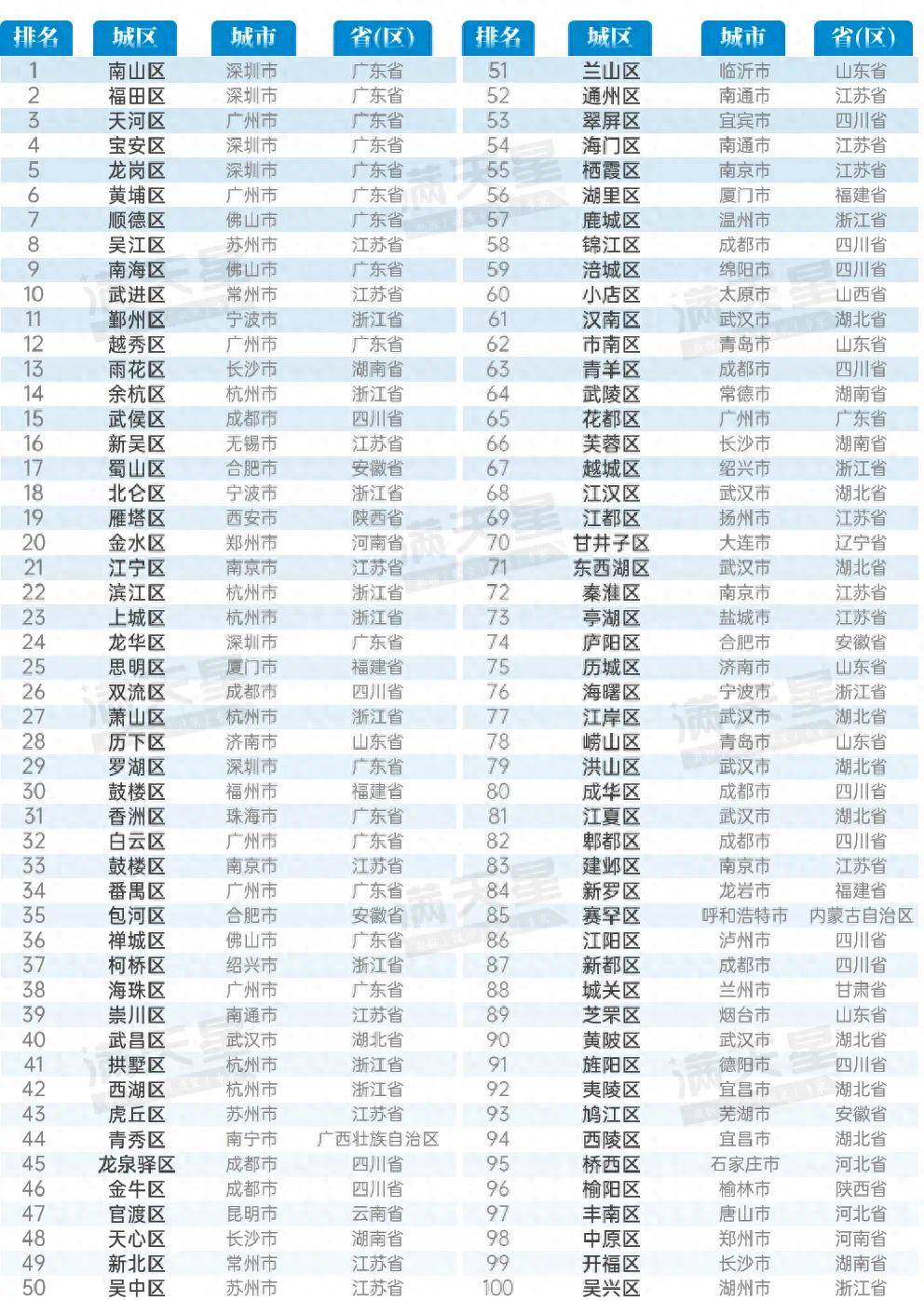
16城区首破千亿
Sou Hu Cai Jing· 2025-08-06 12:00
Group 1 - The 2025 CSDI Top 100 Districts list highlights changes in the economic landscape of China's urban areas, emphasizing that rankings consider various factors beyond GDP, such as economic strength, growth potential, and regional competitiveness [1][3] - The distribution of top districts shows a slight alleviation of the "East-West" imbalance, while the "South-North" disparity remains pronounced, with Guangdong having the highest representation with 17 districts in the top 100 [1][3] - The number of districts surpassing the 100 billion yuan GDP threshold has increased, with 171 districts now classified as "billion-yuan" districts, indicating a significant expansion in this category [3][4] Group 2 - Guangdong's economic strength is characterized by a notable "district strong, county weak" phenomenon, with 8 out of the top 10 districts in the national rankings coming from the province, particularly Shenzhen [5][6] - The competitive landscape among strong districts is intensifying, with Guangdong's urbanization process contributing to the rise of district-level economies while county-level economies lag behind [6][7] - Shandong has 6 districts in the top 100, with key industries such as modern medicine and logistics playing a crucial role in their economic development [7][8] Group 3 - The report emphasizes the importance of clear and upward-trending leading industries for district economic development, with examples from Shandong's leading districts showcasing their industrial strengths [7][8] - The CSDI suggests that for high-quality urban economic development, there should be a focus on integrating innovation with industry, advancing manufacturing, and promoting green transformation [8]
中长期资金对低估值红利资产配置需求明确,国企红利ETF(159515)冲击3连涨
Xin Lang Cai Jing· 2025-08-06 06:10
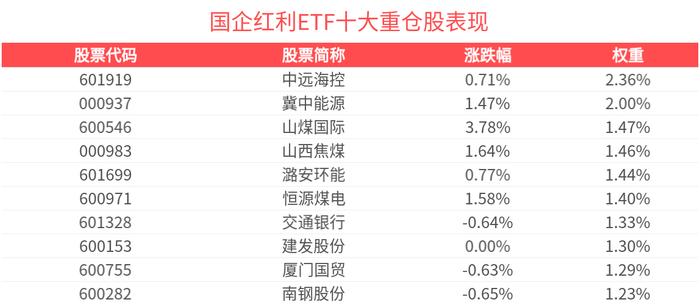
Core Viewpoint - The article discusses the performance of the China Securities State-Owned Enterprises Dividend Index and highlights the importance of stable dividend assets in the current market environment, suggesting a shift from style-driven to stock-driven investment logic in the dividend sector [1][2]. Group 1: Index Performance - As of August 6, 2025, the China Securities State-Owned Enterprises Dividend Index (000824) increased by 0.41%, with notable gains from constituent stocks such as Jinkong Coal Industry (601001) up 6.18%, Weifu High Technology (000581) up 4.99%, and Shaanxi Coal and Chemical Industry (601225) up 4.78% [1]. - The National Enterprise Dividend ETF (159515) rose by 0.35%, marking its third consecutive increase [1]. Group 2: Investment Insights - According to Kaiyuan Securities, the current market uncertainty necessitates a focus on high dividend yields, with stable dividend assets (like banks and public utilities) being more favorable than cyclical dividend stocks [1]. - Everbright Securities notes a transition in the investment logic of the dividend sector from style-driven to stock-driven, with high-quality stocks continuing to attract specific style funds [1]. - The banking sector has emerged as a highlight within high dividend stocks, frequently targeted by insurance and asset management companies, indicating a clear demand for undervalued dividend stocks [1]. Group 3: Index Composition - The China Securities State-Owned Enterprises Dividend Index comprises 100 listed companies selected for their high cash dividend yields, stable dividends, and sufficient scale and liquidity [2]. - As of July 31, 2025, the top ten weighted stocks in the index include COSCO Shipping Holdings (601919), Jizhong Energy (000937), and Lu'an Environmental Energy (601699), collectively accounting for 16.77% of the index [2].