
家电

Search documents
中国超大规模市场优势持续显现(锐财经)
Ren Min Ri Bao Hai Wai Ban· 2026-01-26 22:54
Core Insights - The core viewpoint of the article emphasizes the robust growth of China's consumer market, with a projected retail sales total of 50.1 trillion yuan in 2025, marking a 3.7% increase, and a contribution rate of consumption to economic growth reaching 52% [4][5]. Group 1: Consumer Market Growth - In 2025, China's total retail sales of consumer goods will exceed 50 trillion yuan for the first time, reaching 50.1 trillion yuan, with a growth rate of 3.7% [4]. - The contribution of consumption to economic growth is expected to be 52%, highlighting its role as a key driver of economic development [4]. - The retail sales of major durable goods, such as home appliances, communication equipment, and furniture, are projected to grow by 11%, 20.9%, and 14.6% respectively, driven by policies promoting the replacement of old consumer goods [5]. Group 2: New Consumption Trends - New consumption patterns, including digital, green, and health-related consumption, are on the rise, with online retail sales of physical goods increasing by 5.2% [6]. - The penetration rate of new energy passenger vehicles has reached 53.9%, indicating a shift towards more sustainable consumption [6]. - Rural consumption is also thriving, with retail sales in rural areas reaching 6.8 trillion yuan, growing by 4.1%, outpacing urban growth by 0.5 percentage points [6]. Group 3: Import and Export Balance - In 2025, China is expected to import 18.48 trillion yuan, maintaining its position as the world's second-largest import market for 17 consecutive years, with imports from over 130 countries increasing by 7% compared to 2024 [7]. - The growth of imports and exports is supported by platforms like the China International Import Expo, which enhances market access for products from countries like Rwanda and Nigeria [7][8]. - The Chinese government is actively promoting balanced development in trade, focusing on enhancing the quality and efficiency of foreign trade and investment [9][10]. Group 4: Policy Initiatives - The Chinese government plans to introduce more pragmatic measures to stabilize foreign trade, attract foreign investment, and promote consumption in response to complex external changes [9]. - In 2026, the focus will be on expanding domestic demand and implementing special actions to boost consumption, including optimizing policies for replacing old consumer goods [10]. - The government aims to enhance trade agreements with various countries and regions, emphasizing the importance of service sector openness and investment facilitation [10].

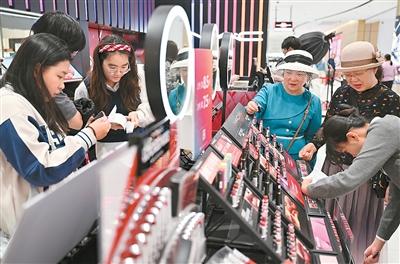
今年将优化实施消费品以旧换新 全力稳住外贸基本盘
Xin Lang Cai Jing· 2026-01-26 22:42
Core Viewpoint - The Ministry of Commerce of China is committed to implementing the decisions of the Central Committee and the State Council, focusing on high-quality business development to contribute positively to the economic recovery by 2025 [1][5]. Group 1: Domestic Circulation and Consumption Promotion - The Ministry will enhance domestic circulation, facilitate both domestic and international circulation, and expand international circulation to promote high-quality business development [1][5]. - To boost consumption in 2026, the Ministry will focus on three areas: policy issuance, event organization, and scenario optimization [2][5]. - Specific policies will include promoting the replacement of old consumer goods, reforming automobile circulation, and implementing reward invoice trials to stimulate consumption [2][5]. Group 2: Consumption Environment and Activities - The Ministry plans to organize over 20 "Buy in China" themed events and support local activities to create a vibrant consumption atmosphere [2][6]. - Efforts will be made to improve the consumption environment by accelerating the development of international consumption center cities and creating new consumption scenarios [6]. Group 3: Foreign Trade and Investment - The Ministry acknowledges the complex external environment affecting foreign trade, emphasizing the resilience and potential of the Chinese economy [6][7]. - In 2026, the Ministry aims to stabilize foreign trade and promote service market openness, including improving the management of cross-border service trade [6][7]. - The Ministry will also enhance policies to attract foreign investment, ensuring equal support for foreign enterprises participating in various economic activities [7].
打好促消费财政金融组合拳
Sou Hu Cai Jing· 2026-01-26 22:37
Core Viewpoint - The Chinese government emphasizes the need for financial and fiscal support to boost consumption, which is seen as a cornerstone for economic growth [1] Group 1: Financial Support for Consumption - The People's Bank of China is expanding support for service consumption and elderly care loans, including the health industry, to enhance supply-side services [2] - The Ministry of Finance is optimizing personal consumption loan interest subsidy policies, including credit card installment payments, to ease the financial burden on consumers [2] - Policies are focused not only on providing immediate financial resources but also on enhancing the "blood-making" capacity of consumers through support for entrepreneurship and small businesses [2] Group 2: Challenges and Opportunities - There are challenges in extending financial services to rural markets and individual businesses in urban areas, which are crucial for diversifying and energizing consumption supply [3] - The importance of ensuring that funds are directed towards consumer-oriented sectors and protecting consumer rights is highlighted as essential for effective policy implementation [3] - China's position as the largest and most potential consumer market provides a strong foundation for these initiatives, with a coordinated approach being necessary for successful policy execution [3]
2025年超1.29亿台家电换新
Xin Lang Cai Jing· 2026-01-26 22:09
Core Insights - The consumption policy promoting trade-in for old products is expected to drive retail sales of home appliances and communication equipment to exceed 1 trillion yuan each by 2025, marking a historical high [1] - A total of 12 categories of home appliances have seen over 129 million units traded in, while new purchases of digital products like smartphones have surpassed 91 million units [1] Group 1 - The trade-in policy is significantly impacting the retail market for home appliances and communication devices [1] - Retail sales in both categories are projected to break the 1 trillion yuan mark, indicating strong consumer demand and market growth [1] - The volume of traded-in home appliances and new digital product purchases reflects a robust consumer engagement in the market [1]
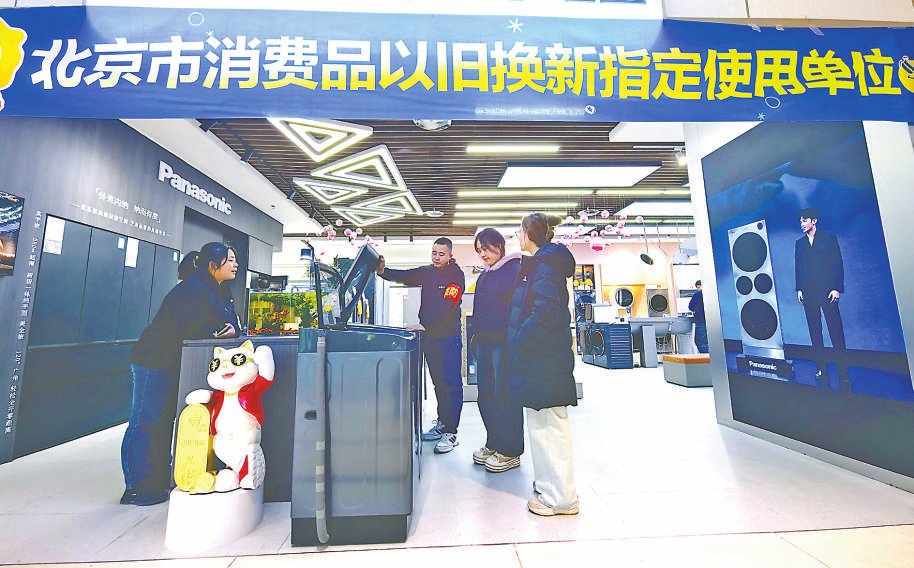
今年将优化实施消费品以旧换新,促进大宗耐用商品消费
Xin Lang Cai Jing· 2026-01-26 21:05
Core Viewpoint - The Chinese government is set to implement various measures in 2026 to boost consumption, support foreign trade innovation, and expand bilateral investment opportunities. Group 1: Foreign Trade Innovation - The establishment of a negative list management system for cross-border service trade and the construction of a national service trade innovation development demonstration zone will be prioritized [1][6] - A national digital trade demonstration zone will be initiated, along with the formulation of relevant standards for digital trade to promote the digital transformation of service outsourcing [1][6] Group 2: Consumption Promotion - The optimization of the old-for-new consumption policy will be implemented to stimulate the consumption of durable goods such as automobiles, home appliances, and digital products [2][5] - Pilot reforms in automotive circulation consumption will be conducted to further unleash the potential of automobile consumption [2][5] - The service consumption quality improvement initiative will continue, focusing on enhancing the supply levels in cultural entertainment, tourism, and healthcare sectors [2][5] Group 3: Investment Expansion - The government plans to gradually open up sectors such as telecommunications, healthcare, and education to foreign investment [7] - A national-level overseas comprehensive service platform will be established to support foreign investors and facilitate their participation in various economic activities [8] Group 4: International Trade Cooperation - The government aims to sign free trade agreements with more willing countries and establish trade facilitation working groups to enhance international economic cooperation [6][7] - The focus will be on expanding self-trade cooperation with countries in the Gulf Cooperation Council, Switzerland, South Korea, and others [7]
税收数据折射2025年消费市场新亮点
Zhong Guo Zheng Quan Bao· 2026-01-26 20:54
Group 1 - The core viewpoint of the articles highlights the significant growth and diversification of China's consumer market by 2025, driven by various policies and consumer trends [1][3] - The retail sales of daily household appliances, kitchenware, and communication devices are projected to increase by 17.4%, 12.9%, and 18.6% respectively in 2025 [1] - The sales of new energy vehicles are expected to rise, with a projected increase of 24.3% in unit sales and 21.1% in sales revenue [1] Group 2 - The integration of culture and tourism is expected to enhance consumer activity, with sales in cultural performances projected to grow by 17.3%, and travel-related services seeing increases of 11.2%, 26.1%, and 14.6% respectively [1] - Digital empowerment is driving new consumption patterns, with internet service platforms and food delivery services expected to grow by 9.4% and 13.3% respectively [2] - The digital cultural services sector is anticipated to see a 16.6% increase in sales revenue by 2025 [2] Group 3 - The sports and health industries are experiencing strong demand, with sports exhibition services and consulting services projected to grow by 12.2% and 27.8% respectively [2] - The consumption related to elderly care and childcare services is also on the rise, with elderly care services expected to grow by 24.9% [2] - The number of foreign travelers benefiting from tax refunds is expected to increase by 305%, with sales from tax refund items projected to grow by 95.9% [3]
今年将出台扩大入境消费政策措施
Zhong Guo Zheng Quan Bao· 2026-01-26 20:54
Group 1: Foreign Trade and Investment - The Ministry of Commerce aims to expand high-level foreign investment and enhance the "Invest in China" brand by 2026, amidst a complex external environment with both opportunities and challenges [1][2] - A comprehensive policy approach will be adopted to support foreign trade, including new policies and measures to assist enterprises in international exhibitions and trade promotion activities [1][3] - The Ministry will focus on optimizing foreign investment support policies, ensuring equal treatment for foreign enterprises in various economic activities [3] Group 2: Service Trade Development - The Ministry plans to improve the negative list management system for cross-border service trade and promote the opening of service markets, including the establishment of national service trade innovation development demonstration zones [2][3] - There will be an emphasis on enhancing the international service capabilities of professional service institutions and promoting traditional service exports such as Chinese medicine and cuisine [2] - A national-level overseas comprehensive service platform will be launched to provide a one-stop service for enterprises going abroad, covering various support areas [2] Group 3: Consumer Market and Domestic Demand - The Ministry will focus on expanding domestic demand as a strategic priority, with initiatives to promote the replacement of old consumer goods and stimulate consumption in durable goods like automobiles and electronics [4] - Efforts will be made to improve the consumption environment by developing international consumption center cities and creating new consumption scenarios [4] - The Ministry will also work on removing unreasonable restrictions in service consumption sectors to encourage fair competition and enhance service supply [4]
商务部:全力稳住外贸基本盘 优化实施消费品以旧换新
Xin Lang Cai Jing· 2026-01-26 17:57
Core Insights - The year 2025 was marked by significant achievements in China's commerce, including a total retail sales of social consumer goods exceeding 50 trillion yuan, a 5.5% increase in service retail, and a 3.8% growth in goods import and export [1] - The external trade environment is complex, with both strategic opportunities and risks present, but China's economic foundation remains strong, providing favorable conditions for foreign trade [1] - The Ministry of Commerce plans to enhance policy support, diversify markets, promote balanced development, and innovate in digital trade to stabilize the foreign trade landscape [1] Group 1: Service Trade Initiatives - The service trade sector will see improvements in the management of the negative list for cross-border service trade, with a focus on opening service markets and establishing national service trade innovation development demonstration zones [2] - There will be an emphasis on expanding the export of advantageous productive services and encouraging the internationalization of professional service institutions [2] - Policies to boost inbound consumption will be introduced, alongside the establishment of national digital trade demonstration zones and the formulation of relevant standards [2] Group 2: Consumer Promotion Strategies - The Ministry of Commerce will focus on policy deployment, event organization, and optimizing consumption scenarios to enhance consumer spending [3] - Efforts will be made to promote the replacement of old consumer goods, particularly in the automotive and durable goods sectors, to stimulate consumption [3] - A national-level overseas comprehensive service platform will be launched to support Chinese enterprises in their international ventures, providing a one-stop service for various business needs [3]

国家税务总局:2025年我国消费市场呈现多方面新亮点
Zheng Quan Ri Bao· 2026-01-26 16:29
Core Insights - The National Taxation Administration of China indicates that by 2025, the consumer market will exhibit new highlights driven by various policies, with significant demand in home appliances, smartphones, and new energy vehicles [1][2][4] Group 1: Consumer Trends - Home appliance consumption is expected to grow, with retail sales of refrigerators, kitchen appliances, and smartphones increasing by 17.4%, 12.9%, and 18.6% year-on-year respectively in 2025 [1] - New energy vehicle sales are projected to rise, with a year-on-year increase of 24.3% in volume and 21.1% in sales revenue [1] - The "old-for-new" policy has effectively stimulated large-scale consumer demand, aligning with the green consumption trend and promoting the automotive industry's transition to new energy [1] Group 2: Digital Empowerment - Digital technologies such as AI and VR are reshaping consumer behavior, leading to a year-on-year increase of 9.4% and 13.3% in internet life service platforms and food delivery sales respectively in 2025 [2] - The digital cultural consumption sector, represented by gaming and animation, is also showing potential, with a projected year-on-year sales growth of 16.6% [2] - The integration of online and offline services is becoming the norm, significantly enhancing the consumption ecosystem [2] Group 3: Cultural and Sports Consumption - The cultural tourism sector is experiencing revitalization, with sales in artistic performances increasing by 17.3% year-on-year, and related services such as travel agencies and scenic spots seeing growth of 11.2% and 26.1% respectively [2] - The sports and health industry is thriving, with sports exhibition services and consulting services growing by 12.2% and 27.8% year-on-year [3] - Health-related services are emerging as new consumer hotspots, with health consultation and wellness services increasing by 11.7%, 12%, and 16.5% respectively [3] Group 4: Senior and Youth Consumption - The aging population is driving demand for senior care services, with expenditures on elderly care and related services increasing by 24.9%, 23.1%, and 15.4% year-on-year [3] - The development of childcare services is also on the rise, with a year-on-year growth of 5.4% in nursery services [3] Group 5: Inbound Consumption - The expansion of tax refund policies for outbound tourists has significantly boosted inbound consumption, with the number of tourists benefiting from tax refunds increasing by 305% and the sales of tax refund goods rising by 95.9% [4] - The implementation of new tax refund policies has optimized the shopping experience for inbound tourists, with over 12,930 stores participating in the program [4] - The diverse highlights of the consumer market in 2025 reflect the effectiveness of targeted consumption stimulus policies [4]
商务部:今年将优化实施消费品以旧换新 全力稳住外贸基本盘
Zheng Quan Ri Bao· 2026-01-26 16:29
Group 1 - The core viewpoint of the news is that the Ministry of Commerce of China is committed to implementing the decisions of the central government to ensure stable and progressive business development, contributing positively to the economic recovery [1] - The Ministry of Commerce will focus on strengthening domestic circulation, facilitating domestic and international dual circulation, and expanding international circulation to promote high-quality business development [1] - In 2026, the Ministry of Commerce aims to enhance consumption through policy initiatives, activities, and improved consumption environments, including promoting the replacement of old consumer goods and supporting automotive consumption [2] Group 2 - The Ministry of Commerce acknowledges the complex external environment affecting foreign trade, highlighting both strategic opportunities and risks, while emphasizing China's strong economic fundamentals [2] - The Ministry plans to stabilize foreign trade and promote service market openness, including improving the management of cross-border service trade and expanding the export of productive services [2][3] - In 2026, China will continue to pursue high-level opening-up, aiming to attract foreign investment by enhancing the investment environment and supporting foreign enterprises in participating in various economic activities [3]