
氢能

Search documents
穗恒运A(000531) - 000531穗恒运A投资者关系管理信息20251104
2025-11-04 09:46
Group 1: Strategic Layout - The company is transforming from traditional small coal-fired units to clean energy units, focusing on "electricity, heat, hydrogen, and storage" [1] - The power sector includes a photovoltaic capacity of 1.05 million kW and gas-fired capacity of 962,000 kW, with an additional 1.84 million kW under construction [1][2] - The company plans to upgrade 1.08 million kW of small coal-fired units and develop new ultra-supercritical units [1] Group 2: Business Segments - Heat sector: Establishing a thermal energy group to integrate resources and expand quality energy supply projects [2] - Hydrogen sector: Collaborating with major companies to establish hydrogen energy companies and build integrated energy stations, with 5 stations completed, 4 operational [2] - Storage sector: Operating 27 storage power stations with a total capacity of 241 MWh and 6 projects under construction with a capacity of 140 MWh [3] Group 3: Financial Performance - In the first three quarters of 2025, net profit attributable to shareholders increased by 139.08%, with diluted earnings per share rising by 140.76% [4] - The increase in profitability is attributed to the successful commissioning of the Shantou photovoltaic project and higher electricity prices for gas-fired projects [4] Group 4: Fuel Procurement - The company emphasizes cost control in fuel procurement, focusing on strategic partnerships with major coal producers to secure low-cost, high-quality coal [5] - The procurement strategy aims to ensure stable supply and effective cost management [5] Group 5: Future Plans - The company is actively seeking new development projects in line with national energy policies, with ongoing projects in gas, photovoltaic, heat, hydrogen, and storage sectors [6] - Future project timelines and impacts will be determined based on actual conditions [6]

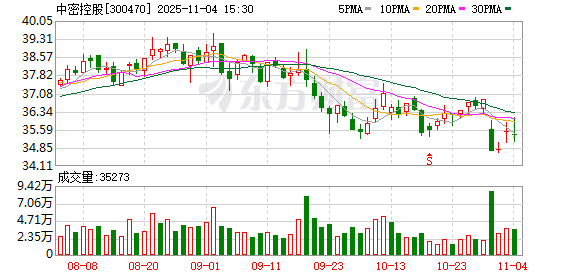
中密控股:目前公司已有产品应用于绿氢项目
Mei Ri Jing Ji Xin Wen· 2025-11-04 07:56
Group 1 - The company has a presence in the hydrogen energy sector, with products applicable to hydrogen production, storage, and transportation [2] - Specific products mentioned include dry gas seals, mechanical seals, special valves, and rubber-plastic seals, which are already utilized in green hydrogen projects [2]


多方聚力破局前行 锡林郭勒盟擘画绿色氢氨醇产业新蓝图
Zheng Quan Ri Bao· 2025-11-04 07:19
Core Viewpoint - The "Green Hydrogen and Ammonia Industry Cluster Promotion Conference" held in Xilin Gol League emphasizes the development of a green hydrogen and ammonia industry, leveraging the region's abundant resources and strategic location to enhance domestic and international market access [1][2]. Group 1: Resource and Infrastructure Advantages - Xilin Gol League has abundant water resources and biomass from agricultural and forestry waste, forming a strong foundation for the integrated development of green hydrogen and ammonia [2]. - The region has established over 23 million kilowatts of renewable energy capacity, generating 50 billion kilowatt-hours of green electricity annually, ranking first in Inner Mongolia and among the top in the country [2]. - The unique provincial management of the Mengxi power grid supports a stable and competitive green electricity advantage, essential for the development of green hydrogen and ammonia [2][3]. Group 2: Industry Development and Policy Support - The region is witnessing a growing industrial ecosystem, robust infrastructure, and substantial policy support for the development of green hydrogen and ammonia [2]. - The conference highlighted the importance of green hydrogen and ammonia as a link between renewable electricity and end-use applications, providing new pathways for renewable energy consumption [3][4]. Group 3: Challenges and Innovations - The hydrogen industry is still in its developmental phase, with significant potential and challenges, particularly in reducing the cost of green hydrogen from 21 yuan per kilogram to levels comparable to gray hydrogen [4]. - Innovations such as low-carbon methanol, which can serve as an effective carrier for hydrogen, were discussed as potential solutions to enhance economic viability and storage [4][5]. - The need to address bottlenecks in hydrogen storage and transportation was emphasized, with future plans to establish a liquid hydrogen-based energy system [5]. Group 4: Application and Market Expansion - The conference noted the expanding applications of clean liquid fuels, biomass co-firing, and green ammonia, driven by policy and market demands for low-carbon transitions in industries like shipping [6]. - Companies are focusing on engineering designs for alkaline electrolyzers to meet large-scale hydrogen production needs, with successful market entries in multiple countries [6]. - Local governments and enterprises signed 11 strategic cooperation agreements to promote the development of the green hydrogen and ammonia industry [6].
首张非生物来源可再生燃料氨证书颁发
Zhong Guo Hua Gong Bao· 2025-11-04 07:14
Core Insights - The Jilin Daan Wind-Solar Green Hydrogen Ammonia Integrated Demonstration Project (Phase I) by State Power Investment Corporation has received the world's first certification for "non-biological renewable fuel ammonia" from the International Sustainability and Carbon Certification (ISCC EU) [1][2] Group 1: Project Overview - The project produces "green ammonia" entirely from renewable energy sources such as wind and solar power, distinguishing it from traditional ammonia production methods that utilize biomass [1] - The Daan project has an annual capacity of 180,000 tons of ammonia and is the largest single-unit green ammonia project globally [1][2] - The project employs innovative "electric-hydrogen-ammonia" flexible control technology to address the challenges of renewable energy volatility and chemical production stability [1] Group 2: Industry Impact - The project is recognized as a significant achievement for China's entire green hydrogen industry chain, establishing a traceable and verifiable system from "green electricity" to "green hydrogen" and then to "green ammonia" [2] - It is part of China's clean low-carbon hydrogen demonstration project and one of the top 100 strategic emerging industry projects, with a total installed capacity of 800 megawatts (700 MW wind and 100 MW solar) [2] - The project has signed intention procurement agreements with multiple energy companies in Europe, Japan, and South Korea, indicating its potential for international collaboration and market expansion [2]

多重因素助推国内氢价下跌
Zhong Guo Hua Gong Bao· 2025-11-04 06:58
Core Insights - The hydrogen prices in China have been continuously decreasing in both production and consumption sides due to subsidy policies and storage and transportation upgrades [1][2] Group 1: Production Side - The expansion of production capacity and cost reduction have led to a decline in hydrogen prices on the production side, with the lowest price currently at approximately 22 yuan per kilogram in the Zhengzhou urban agglomeration [1] - Hydrogen supply companies are compressing effective costs and promoting supply chain scalability, which further drives down the production side hydrogen price index [1] Group 2: Consumption Side - Policy subsidies are the main driving force behind the decrease in hydrogen prices on the consumption side, with the government allocating approximately 2.8 billion yuan in fiscal funds for fuel cell vehicle application demonstrations and hydrogen station construction since the beginning of 2023 [1] - The efficiency of hydrogen storage and transportation is improving, leading to a narrowing of the price gap between production and consumption [2] Group 3: Renewable Hydrogen Development - The cost difference between renewable hydrogen and traditional hydrogen production is gradually decreasing as large-scale renewable energy hydrogen production bases are being established [2] - By the end of 2024, over 90 large-scale renewable hydrogen projects are expected to be built in China, with a cumulative renewable energy hydrogen production capacity exceeding 120,000 tons per year, reflecting an increase of approximately 50,000 tons per year compared to the end of 2023 [2]

佛山未来产业“场景突围”:让“高精尖”在车间“落地即用”
2 1 Shi Ji Jing Ji Bao Dao· 2025-11-04 05:37
Core Insights - The article highlights the emergence of Foshan as a key player in the production of embodied intelligent robots, with TianTai Robotics securing a landmark order for 10,000 humanoid robots, marking a significant milestone in China's industrialization efforts [1] - Foshan's approach emphasizes the importance of scalable implementation and the ability to adapt technology to local industrial needs, showcasing a model that other manufacturing cities can emulate [1][2] Group 1: Robotics Industry - Foshan's robotics industry is experiencing rapid growth, with an industrial robot output of 35,800 units in 2024, representing a year-on-year increase of 43.5%, accounting for 6.4% of the national total [3] - The city has over 3,000 robotics companies, creating a complete supply chain that includes core components, main bodies, and system integration, with related industry revenue nearing 60 billion yuan [3] - The government is actively supporting the robotics sector through initiatives such as the establishment of industrial parks and financial incentives, aiming to enhance technological breakthroughs and market competitiveness [9] Group 2: Hydrogen Energy Development - Foshan has established itself as a pioneer in hydrogen energy applications, with over 170 hydrogen enterprises forming a complete industrial chain covering hydrogen production, storage, transportation, and utilization [4] - The city is home to innovative projects like the world's first ammonia-hydrogen zero-carbon combustion demonstration line, which can produce approximately 1.5 million square meters annually and reduce carbon emissions by about 5,200 tons [4][5] - The local government is facilitating the growth of the hydrogen energy sector by building infrastructure and promoting collaboration among research institutions and enterprises [8] Group 3: Semiconductor Industry - Foshan is making strides in the semiconductor sector, with 336 large-scale semiconductor companies and an industrial output exceeding 90 billion yuan, establishing a complete supply chain from materials to manufacturing [5] - The recent establishment of a major optical chip project in Nanhai, with an investment of 6.3 billion yuan, is expected to generate nearly 10 billion yuan in annual output once operational [5] - The semiconductor industry in Foshan is evolving from isolated advancements to a more integrated ecosystem, enhancing its competitive edge in the region [6] Group 4: Innovation Ecosystem - Foshan's government is fostering a collaborative innovation ecosystem by integrating resources from government, enterprises, research institutions, and financial entities, which has led to significant advancements in sectors like semiconductors and hydrogen energy [8][9] - The city is focusing on creating a comprehensive innovation chain that includes basic research, technological breakthroughs, and commercialization, transitioning from a follower to a leader in certain high-tech fields [9][10] - Recommendations for further enhancing Foshan's innovation capabilities include forming alliances with universities and research institutions in the Greater Bay Area to leverage regional strengths [10]

中集集团:中集安瑞科在湛江建造华南首个规模5万吨/年的生物绿色甲醇示范工厂,预计今年第四季度投产
Mei Ri Jing Ji Xin Wen· 2025-11-04 01:22
Core Insights - The company has aligned its strategic transformation with the recently approved 14th Five-Year Plan, focusing on smart manufacturing, green manufacturing, and service-oriented manufacturing [1] - In the clean energy sector, the company is well-positioned to capitalize on emerging opportunities, particularly in hydrogen energy and other strategic new industries [1] Group 1: Manufacturing Strategy - The company is advancing its transformation strategy by implementing digital production lines and "lighthouse factories" to enhance smart manufacturing capabilities [1] - It has developed a range of smart manufacturing equipment, including intelligent welding robots and automated guided vehicles [1] - The company is pioneering green manufacturing practices, such as using environmentally friendly water-based paints and modular construction methods to reduce construction waste [1] Group 2: Clean Energy Initiatives - The company’s clean energy business encompasses green methanol, hydrogen, and energy storage, creating a synergistic effect across the clean energy value chain [1] - A significant project includes the construction of a 50,000-ton-per-year bio-green methanol demonstration plant in Zhanjiang, expected to commence production in Q4 of this year [1] - The collaboration with Ansteel on a coke oven gas hydrogen production project aims to produce 15,000 tons of hydrogen and 100,000 tons of LNG annually, reducing carbon emissions by 470,000 tons [1] - The company is enhancing its technological advantages in LNG and hydrogen, developing integrated solutions for production, storage, transportation, and usage [1] - In the energy storage sector, the company’s products cater to various applications, and it has partnered with Denmark's VESTAS to develop the world's first modular containerized wind turbine nacelle [1]

美国清洁能源风光不再
中国能源报· 2025-11-04 00:06
Core Viewpoint - The U.S. clean energy industry is experiencing significant changes due to a combination of policy shifts and declining investments, reflecting structural challenges in the energy transition process [1][3]. Investment Decline - As of September this year, investments in the U.S. clean energy sector have decreased by over $24 billion, resulting in approximately 21,000 job losses, with $1.6 billion in projects canceled and nearly 3,000 jobs lost in September alone [3][5]. - The U.S. Department of Energy has terminated financial support for 223 energy projects, affecting 321 funding programs, with an estimated budget cut of $7.56 billion [3][5]. Project Delays and Cancellations - The clean energy sector is facing significant challenges, particularly in Republican-led districts, which have seen investment losses of $12.4 billion and a reduction of about 15,000 jobs [5]. - Major projects in states like Kansas, Michigan, North Carolina, and Tennessee have been canceled or delayed, exacerbating the funding challenges for small to medium-sized developers reliant on public funding [5]. Market Stagnation - Despite the investment decline, some companies are still seeking new growth opportunities, with $542 million announced for electric vehicle components and solar manufacturing, expected to create around 985 long-term jobs [6]. - However, this new investment is insufficient to counteract the overall downward trend, as the U.S. clean energy market shows stagnation in new capacity installations [6][7]. Policy Changes Impact - A series of administrative orders and new regulations have been implemented, notably the "Big and Beautiful" Act, which accelerates the reduction of tax credits for clean energy projects, moving the application deadline from 2032 to the end of 2027 [7]. - The second quarter saw only 11.6 GW of new wind, solar, and storage capacity added, a mere 1% increase year-on-year, with overall capacity down compared to the previous year [7]. Industry Consolidation - The clean energy sector is undergoing rapid consolidation, with merger and acquisition activity in the first half of the year reaching $34 billion across 63 deals, driven by subsidy reductions and tightening credit [10]. - Companies like Sunnova are facing financial difficulties, prompting strategic restructuring and asset sales, while private capital and large utility companies are increasingly involved in acquisitions [10]. International Investment Concerns - Policy uncertainty is affecting foreign investor confidence, with companies like Bil a Solar and Heliene pausing or reevaluating their projects in the U.S. [11]. - The growth rate of clean energy installations in leading states like California and Texas has slowed to 8%, with other states also falling below the national average [11].
学习贯彻党的二十届四中全会精神·权威访谈丨奋力开创高质量发展高效能治理新局面——访濮阳市委书记万正峰
He Nan Ri Bao· 2025-11-04 00:01
Group 1: Economic Development and Industrial Strategy - Puyang City aims to strengthen its manufacturing backbone and solidify the foundation for high-quality development, focusing on the chemical new materials industry with 185 large-scale industrial enterprises and an output value of 85 billion yuan [1] - The city plans to enhance its green chemical and new materials industry to achieve an output value exceeding 200 billion yuan during the 14th Five-Year Plan, establishing itself as a leading domestic base for chemical new materials [1] - Puyang will also upgrade its modern home furnishings, down products, and apparel industries while developing emerging sectors like biomanufacturing and high-end equipment, and will accelerate the layout of future industries such as hydrogen energy and artificial intelligence [1] Group 2: Market Integration and Infrastructure Development - Puyang City will actively integrate into the national unified market, leveraging its geographical advantages to enhance connectivity and drive economic circulation [2] - The city is committed to improving the business environment through six major actions, including market expansion and infrastructure connectivity, while focusing on the construction of key transportation corridors like the Xiongshan and Anpu-Henan high-speed railways [2] - Puyang aims to serve as a hub for both domestic and international market dual circulation, contributing to the national unified market [2] Group 3: Social Governance and Environmental Protection - Puyang City will enhance social governance by promoting efficient grassroots governance and utilizing a model that combines party building, grid management, and big data [3] - The city will focus on improving public welfare and addressing urgent issues faced by the populace, ensuring a high quality of life [2] - Puyang is committed to ecological protection, aiming to enhance the storage capacity of the Central Plains gas storage cluster to approximately 16 billion cubic meters and promote the development of non-grain bio-based materials [2]
四中全会精神在基层丨锚定高质量发展,书写中部崛起新篇章
Xin Hua She· 2025-11-03 15:59
Economic Development - The central region of China, covering six provinces, is focusing on high-quality development and modernizing its industrial system, emphasizing the importance of the real economy and innovation [1][2][3] - The "14th Five-Year Plan" highlights the need to optimize traditional industries while nurturing emerging and future industries, with a focus on smart, green, and integrated development [3][5] Industry Innovation - Companies like Hunan Sheny Precision Parts Co., Ltd. are enhancing their manufacturing processes to support local manufacturing breakthroughs, particularly in key components for large engineering equipment [2] - Wuhan Yuwei Optical Technology Co., Ltd. is developing advanced laser radar technology for railway bed condition measurement, showcasing the region's commitment to innovation in high-tech industries [3] Agriculture Modernization - The central region is advancing agricultural modernization through mechanization and smart farming technologies, such as unmanned agricultural machinery and IoT devices for precise irrigation [4][5] - Various initiatives are being implemented to improve agricultural productivity and quality, including land transfer in Jiangxi and single-crop yield enhancement actions in Henan [5] Energy Transition - The region is actively transitioning to a new energy system, with projects like the liquid hydrogen plant in Anhui, which aims to enhance hydrogen production efficiency and reduce costs [6] - AI systems are being deployed in coal mining operations to improve safety and efficiency, with significant reductions in energy consumption and equipment failure rates reported [5] Infrastructure Development - The central region is enhancing its transportation networks to connect domestic and international markets, with significant investments in ports and logistics facilities [10] - The establishment of modern food industry parks and the expansion of waterway transport routes are examples of how the region is leveraging its geographical advantages for economic growth [10] Social Welfare Initiatives - The implementation of long-term care insurance in regions like Henan is aimed at alleviating the economic burden on families with disabled members, reflecting a commitment to improving social welfare [11] - Various local governments are investing in public services and community support initiatives to enhance the quality of life for residents, including childcare and housing assistance programs [11][13]