网约车

Search documents
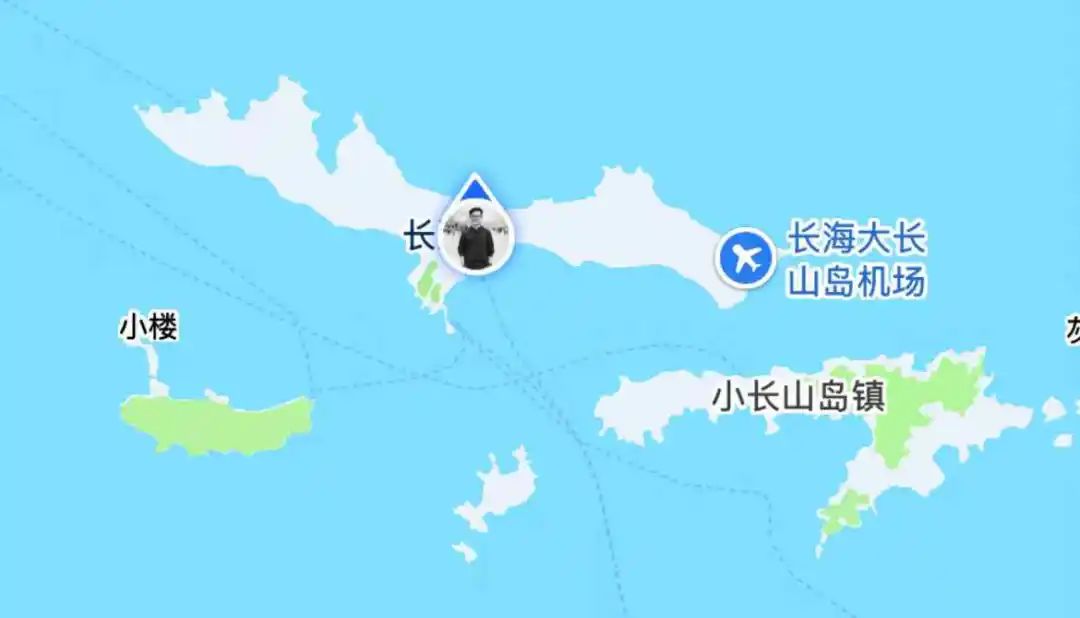
加钱都打不到车,为什么没人在这开滴滴?
3 6 Ke· 2025-07-30 08:38
Core Insights - The article discusses the failure of the Didi ride-hailing service on the Daqingshan Island due to a mismatch between supply and demand in the local transportation market [4][15][18] Group 1: Market Dynamics - The local taxi drivers prefer not to use Didi because the platform takes a service fee, reducing their earnings significantly compared to direct fares [6][7] - The supply of taxis on the island exceeds the demand for rides, leading to an oversaturated market where drivers can easily find passengers without needing a platform [7][8] - In larger cities, Didi provides value by optimizing ride allocation and reducing idle time for drivers, which is not applicable in smaller markets like Daqingshan Island [8][18] Group 2: Consumer Behavior - Local taxi drivers have a strong understanding of the island's geography and typical fares, allowing them to negotiate flat rates directly with passengers [9][10] - Many drivers promote their services through personal contact information, making it easy for potential customers to reach them directly [11][12] - The local culture and market conditions encourage drivers to accept direct calls for rides, even if it means driving empty to pick up passengers [13][14] Group 3: Business Model Viability - The article emphasizes that successful business models must be validated against real market conditions, particularly in terms of supply and demand [17][18] - The failure of Didi on the island illustrates that having a product or service does not guarantee market success without proper alignment of supply and demand [15][18] - The insights suggest that understanding local market dynamics is crucial for the success of any business model [19][20]


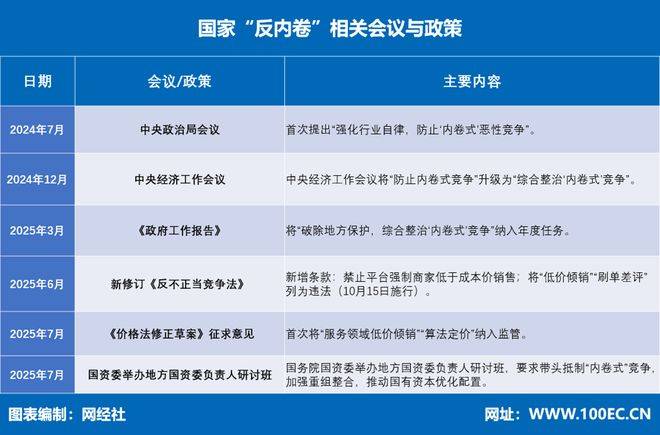
剑指平台经济“内卷式”竞争 网经社启动第47次专项调查行动
Sou Hu Cai Jing· 2025-07-30 07:45
Core Viewpoint - The Chinese government is intensifying its "anti-involution" policies to combat low-efficiency competition in the platform economy, aiming to shift from chaotic "traffic involution" to a new phase of healthy competition focused on efficiency and service [2][9]. Group 1: Policy Background - "Anti-involution" has become a key term in China's economic governance, with significant policy developments from July 2024 to March 2025, including the introduction of the revised Anti-Unfair Competition Law, which prohibits platforms from forcing merchants to sell below cost [2][3]. - The series of policies aims to curb malicious competition, protect stakeholders' rights, and drive the industry towards high-quality development [2][3]. Group 2: Industry Challenges - Various sectors, including live e-commerce, retail e-commerce, food delivery, ride-hailing, and online travel, are deeply entrenched in "involution" and face severe challenges due to ongoing low-price wars and subsidy battles [2][4]. - The food delivery industry exemplifies this issue, where platforms transfer costs to merchants through irrational subsidies and rising commissions, creating a vicious cycle [4][6]. Group 3: Investigation Actions - The "Breaking 'Involution' and Reshaping Ecology" investigation initiated by the China E-Commerce Research Center focuses on major platforms across retail e-commerce, local life services, cross-border e-commerce, ride-hailing, and online travel [9][20]. - The investigation will include real-time monitoring of "involution" issues, extensive research on platforms' responses to policies, expert analyses of industry pain points, and multi-channel dissemination of findings [20][22]. Group 4: Future Directions - The investigation aims to establish a new competitive dimension centered on "efficiency" and "service," moving beyond mere traffic and price competition to enhance supply chain optimization and technological empowerment [22]. - Regulatory measures and legal deterrents are necessary to address the current challenges, but a sustainable evaluation system focused on creating real social value is essential for long-term success [22].
7月28日电,LYFT的自动驾驶班车据悉将于2026年登陆美国城市。
news flash· 2025-07-28 15:59
智通财经7月28日电,LYFT的自动驾驶班车据悉将于2026年登陆美国城市。 ...

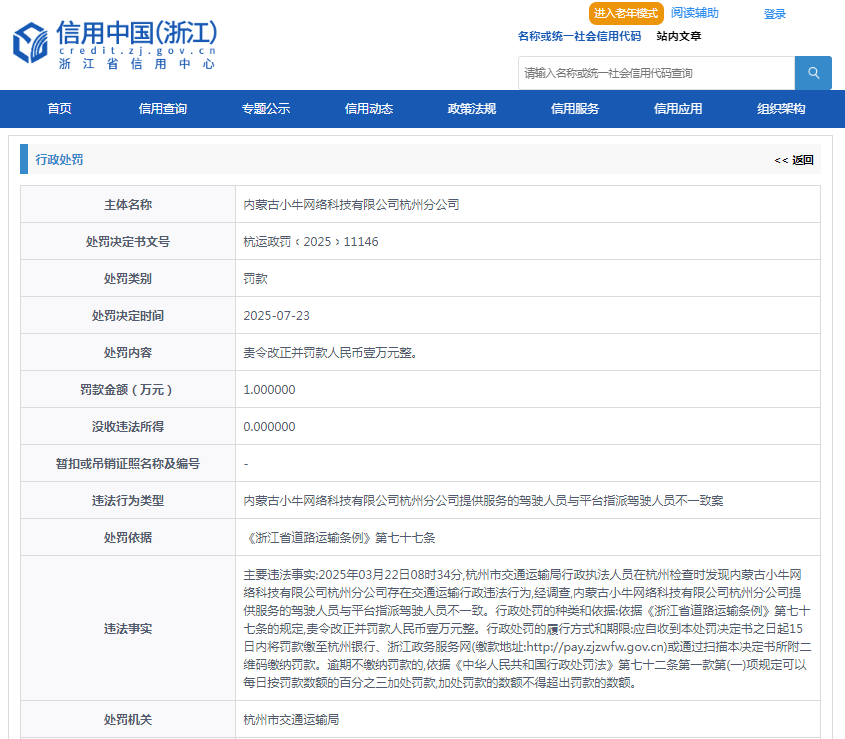
小牛网络被罚20次、APP被下架后,旗下分公司再领罚单
Qi Lu Wan Bao· 2025-07-28 07:39
齐鲁晚报·齐鲁壹点记者于信用中国(浙江)行政处罚公示栏获悉,7月23日,山西小牛快跑旗下的内蒙古小牛网络科技有限公司杭州分公司(下称"小牛快 跑杭州分公司")收行政处罚决定书,违法行为类型是"提供服务的驾驶人员与平台指派驾驶人员不一致",决定书文号是杭运政罚﹝2025﹞11146。 | | | | 进入老年模式 阅读辅助 | 强 | | --- | --- | --- | --- | --- | | | 名称或统一社会信用代码 站内文章 | | | | | | 请入名称或统一社会信用代码查询 | | | Q | | 首页 信用查询 | 专题公示 信用动态 政策法规 信用应用 | 信用服务 | | 组织架构 | | 行政处罚 | | | | << 返回 | | 主体名称 | 内蒙古小牛网络科技有限公司杭州分公司 | | | | | 处罚决定书文号 | 杭运政罚 < 2025 > 11146 | | | | | 处罚类别 | 罚款 | | | | | 处罚决定时间 | 2025-07-23 | | | | | 处罚内容 | 责令改正并罚款人民币壹万元整。 | | | | | 罚款金额(万元) | 1.000000 ...
网约车运价迎变局
Zhong Guo Qi Che Bao Wang· 2025-07-28 02:23
Core Viewpoint - The recent implementation of the "Kunming City Network Booking Taxi Operation Service Management Implementation Rules" introduces a market-adjusted pricing mechanism for ride-hailing services, with the potential for government-guided pricing to address issues arising from rapid market expansion and price disparities across regions [2][4]. Pricing Mechanism - Ride-hailing prices vary significantly between large cities and smaller towns, with examples showing that in Shanghai, the fare is 1.8 yuan/km during normal hours, while in smaller cities like Handan, it can reach 2.6 yuan/km [3]. - The presence of limited platforms in smaller cities often leads to higher prices due to lack of competition, while larger cities benefit from multiple platforms and competitive pricing [3]. Government Intervention - The new rules allow for government intervention when market pricing fails, aiming to protect the rights of drivers and ensure fair pricing [4][5]. - The government-guided pricing could help stabilize the market, which has seen a decline in driver income and service quality due to aggressive price competition [4][5]. Market Dynamics - The current market pricing system is criticized for leading to low profit margins for platforms, with projections indicating an average profit margin of less than 3% for major platforms in 2024 [5]. - The need for a balance between market-driven pricing and government intervention is emphasized, as unchecked market dynamics can lead to safety concerns and decreased customer satisfaction [5][6]. Proposed Solutions - Suggestions include establishing a "credit rating system" for platforms, implementing a tiered penalty system for violations, and utilizing big data to monitor pricing fluctuations [6][7]. - A proposed framework for government-guided pricing includes a base price determined by local income and operational costs, with a flexible range allowing for adjustments based on demand [7]. Stakeholder Collaboration - The importance of a collaborative approach among drivers, platforms, and government is highlighted, advocating for labor contracts and a fatigue warning system to protect driver rights [7]. - Direct negotiation between drivers and passengers has shown positive results, with a reported 40% decrease in complaints, indicating the effectiveness of optimized mechanisms [7].

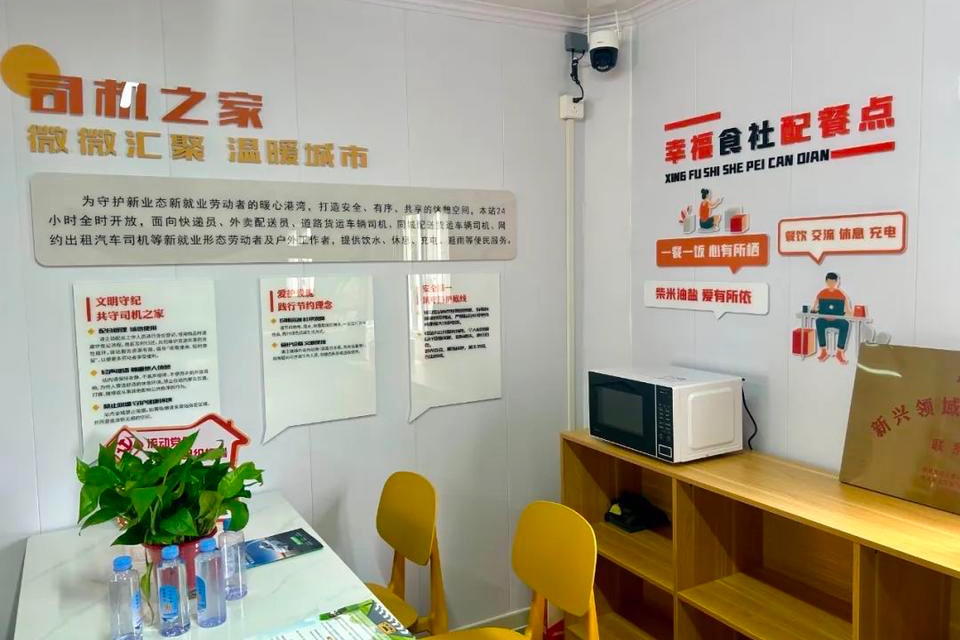
淄博首家网约车“司机之家”建成启用
Qi Lu Wan Bao Wang· 2025-07-26 05:45
Core Viewpoint - The establishment of the first "Driver's Home" for ride-hailing drivers in Zibo aims to address the challenges of rest, charging, and dining for this workforce, enhancing their working environment and overall well-being [1][5]. Group 1: Infrastructure and Facilities - The "Driver's Home" covers an area of 8,000 square meters, with the dedicated driver area being 200 square meters, featuring eight functional zones including a dining area, shower room, and charging stations [1]. - The facility includes 106 charging stations, making it a comprehensive support hub for ride-hailing drivers [1]. Group 2: Driver Experience and Community - The "Driver's Home" is equipped with amenities such as sofas, computers, refrigerators, water dispensers, and air conditioning, providing a comfortable environment for drivers to rest and socialize [3]. - Drivers have expressed satisfaction with the new facility, highlighting the importance of having a dedicated space to relax and connect with peers [3]. Group 3: Strategic Importance and Future Plans - The initiative is part of Zibo's "Warm New" project, leveraging market-oriented approaches and third-party resources to create a supportive environment for new employment groups [5]. - The Zhangdian District plans to utilize the "Driver's Home" as a platform for community engagement, skill enhancement, and rights protection, contributing to the development of a "friendly city" for new employment groups [5].
网约车立法建议 准入门槛是否过高
Nan Fang Du Shi Bao· 2025-07-25 05:11
Core Viewpoint - The ongoing dispute between ride-hailing services and traditional taxis in Hong Kong has persisted for over 11 years, highlighting the need for regulatory frameworks to address safety, service quality, and competition issues [1][2]. Regulatory Framework - The Hong Kong government recognizes the urgency of establishing a legal framework for ride-hailing services, as the lack of regulation has led to ongoing disputes between ride-hailing and traditional taxi services [2][4]. - The proposed regulatory framework aims to prioritize the interests of citizens, ensuring safer and more diverse transportation options [4]. Platform Regulation - All ride-hailing platforms must obtain a ride-hailing platform license, with a validity of five years, subject to performance evaluations for renewal [5]. - Platforms must be registered companies in Hong Kong and are required to comply with specific licensing conditions to ensure service quality [5]. Vehicle Regulation - All vehicles providing ride-hailing services must obtain a ride-hailing vehicle license, with conditions including a maximum vehicle age of seven years and annual inspections [6]. - Licensed vehicles can register with multiple ride-hailing platforms but cannot pick up passengers without prior booking [6]. Driver Regulation - Drivers must obtain a ride-hailing driver license, valid for five years, with the possibility of unlimited renewals if they meet specific criteria [7]. - Requirements for drivers include being at least 21 years old, holding a private car driving license for at least one year, and passing designated assessments [7]. Industry Dynamics - The proposed regulations aim to create a complementary relationship between ride-hailing services and traditional taxis, enhancing the overall transportation ecosystem in Hong Kong [8]. - The framework acknowledges the unique characteristics of Hong Kong's high-density road resources and aims to balance the interests of various stakeholders while avoiding congestion [8][9].
人民时评:从发展痛点中找治理突破点
news flash· 2025-07-24 23:24
Core Viewpoint - The emergence of new technologies, business models, and practices reflects the vitality of the Chinese economy and presents new demands for governance innovation [1] Group 1: New Technologies and Business Models - New technologies and business models are rapidly emerging, serving as a window to observe the vitality of the Chinese economy [1] - The fields of instant delivery and ride-hailing lack regulatory precedents, necessitating continuous exploration and optimization [1] Group 2: Governance and Regulation - There is a need for precise regulatory measures ("invisible hand") to enhance services, establish standards, and strengthen oversight [1] - The ongoing evolution of new business models requires a balance between encouraging innovation and ensuring regulatory compliance [1] Group 3: Development and Problem-Solving - The approach of learning through practice ("learning to swim while swimming") is emphasized as a means to address issues and promote development [1] - The belief in achieving a win-win situation between encouraging innovation and regulating development is highlighted [1]
从发展痛点中找治理突破点(人民时评)
Ren Min Ri Bao· 2025-07-24 22:18
Group 1 - The core viewpoint emphasizes that development pain points are both breakthroughs for governance innovation and growth opportunities for industries [1][2] - Recent initiatives include the Ministry of Industry and Information Technology's pilot program for number protection services, using a dedicated 700 number segment to replace real phone numbers in delivery and ride-hailing services, addressing privacy concerns [1][2] - The introduction of a "traffic safety code" for delivery riders in Shanghai, which uses a color-coded system to indicate safety levels, aims to enhance traffic safety and improve industry standards [1][2] Group 2 - The article discusses how addressing pain points in new business models can lead to governance innovation and improved social governance modernization [2][3] - The governance framework for shared bicycles in Beijing, which combines dynamic control and smart scheduling, has improved governance efficiency and increased the penetration rate of shared bicycles in commuting scenarios [2] - The need for a unified technical standard in number protection is highlighted, as various internet companies have made attempts but lack consistency in processes [2][3]
与微信达成合作,Uber这回不用再怕“系统抖动”了
3 6 Ke· 2025-07-24 12:03
Core Insights - The long-standing rivalry between WeChat and Uber has reached a resolution with the launch of the Uber mini-program on WeChat, allowing users to book rides directly within the app using WeChat Pay, enhancing the travel experience for Chinese users abroad [1][3][6] Group 1: Partnership Details - The integration of Uber into WeChat aims to simplify the travel experience for Chinese tourists facing challenges such as difficulty in hailing rides and payment issues while abroad [3][19] - The Uber mini-program will initially be available in Hong Kong and Japan, with plans to expand to nine other popular destinations including the US, UK, France, and Australia in the coming months [3][19] Group 2: Historical Context - The partnership marks a significant shift after a decade of conflict, characterized by a fierce price war between Uber and Didi, supported by major investors like Tencent and SoftBank [6][9] - In 2015, Uber faced restrictions on WeChat, including being unable to share links, which was attributed to a "system glitch" that lasted for three months, raising questions about Tencent's technical capabilities [9][11] Group 3: Competitive Landscape - Didi's recent expansion into international markets poses a threat to Uber, as Didi has begun offering services in multiple countries, leveraging its understanding of Chinese tourists' needs [16][19] - Didi's overseas operations have reportedly become profitable, with daily order volumes nearing ten million, indicating a strong competitive position against Uber [16][19]