
机器人制造

Search documents
中国人形机器人爆发:资本、技术与商业化三重突破中
2 1 Shi Ji Jing Ji Bao Dao· 2025-07-17 08:30
Capital Inflow - The humanoid robot sector is experiencing unprecedented capital influx, with 114 investment events in the first five months of 2025, surpassing the total of 77 events in the previous year, and raising 23.2 billion yuan, exceeding the total of 20.9 billion yuan in 2024 [4][6] - Government-led funds are entering the market, with over 70 billion yuan allocated to humanoid robots from local government funds [6][7] - The competition among local governments to establish 10 billion yuan funds for the humanoid robot industry has intensified, with cities like Beijing, Shanghai, and Shenzhen joining the "10 billion fund club" [6][7] Technological Breakthroughs - 2025 is marked as a pivotal year for advancements in humanoid robot motion control technology, with significant progress in hardware capabilities such as high-torque motors and tactile sensing systems [8][9] - The market for dexterous hands, a key interface for human-robot interaction, is projected to grow from 1.7 billion USD in 2024 to over 3 billion USD by 2030 [8] - Software advancements have enabled humanoid robots to achieve human-like decision-making capabilities, integrating AI-driven task planning and data-driven execution [9] Commercialization Progress - The commercialization of humanoid robots is accelerating, highlighted by a major procurement order from China Mobile worth 124 million yuan, marking a significant milestone [11][12] - Industrial applications are becoming the primary battleground for commercialization, with numerous automotive companies placing orders for humanoid robots [12] - Despite the surge in orders, approximately half are focused on public demonstrations and data collection, indicating a structural contradiction in the market [13]

中国经济“半年报”出炉!底盘稳、韧劲足!
Xin Hua Wang· 2025-07-16 13:51
Economic Overview - In the first half of the year, China's GDP reached 66,053.6 billion yuan, with a year-on-year growth of 5.3% at constant prices [1] - The external environment has become increasingly complex and severe, but proactive macro policies have shown effectiveness, leading to a stable and positive economic trend [1] Economic Stability - The GDP growth rates were 5.4% in Q1 and 5.2% in Q2, indicating a steady economic performance [2] - The average urban survey unemployment rate was 5.2%, a decrease of 0.1 percentage points from Q1 [2] - The Consumer Price Index (CPI) saw a slight decline, but rose in June after four consecutive months of decrease [2] - The total import and export volume reached a record high for the same period [2] Consumption Trends - Final consumption expenditure contributed 52% to economic growth in the first half of the year [5] - The total retail sales of consumer goods amounted to 24.55 trillion yuan, reflecting a year-on-year growth of 5% [5] - There is an increasing share of service consumption, with holiday consumption playing a significant role and a rise in upgraded consumption and green consumption trends [5] Innovation and New Industries - The number of effective invention patent applications reached nearly 5 million from January to May, growing by 12.8% [6] - The digital economy is rapidly developing, with its core industries accounting for about 10% of GDP [6] - The service sector plays a crucial stabilizing role, and green industries are thriving, contributing to improved economic circulation [6] Domestic Demand and Policy Support - Domestic demand contributed 68.8% to GDP growth in the first half of the year [8] - A series of policies have been introduced to strengthen domestic circulation, expand demand, and promote production [8] Future Outlook - The year marks the conclusion of the 14th Five-Year Plan and the preparation for the 15th Five-Year Plan, with expectations for China's economy to provide more stability and certainty to the global economy [10]


追涨博弈?
第一财经· 2025-07-16 11:57
Core Viewpoint - The article highlights the efficiency and potential of robotics in manufacturing, specifically focusing on the capabilities of Zhiyuan Robotics, which can replace approximately 1.4 to 2 workers with a single robot during operations such as moving 800 boxes in three hours [2]. Group 1 - The implementation of robotics in factories can significantly enhance productivity and reduce labor costs [2]. - Zhiyuan Robotics has demonstrated the ability to perform tasks that traditionally require multiple human workers, showcasing the potential for automation in various industries [2]. - The article emphasizes the growing trend of integrating advanced robotics into manufacturing processes to meet increasing demand and improve operational efficiency [2].

龙虎榜复盘 | 创新药轮番活跃,机器人持续走强
Xuan Gu Bao· 2025-07-16 11:17
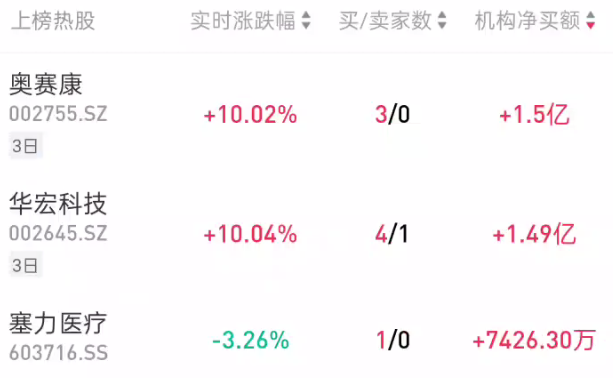
Group 1: Stock Market Highlights - A total of 33 stocks were listed on the institutional leaderboard today, with 12 stocks seeing net purchases and 21 stocks experiencing net sales [1] - The top three stocks with the highest net purchases by institutions were: Aosaikang (150 million), Huahong Technology (149 million), and Saily Medical (74.26 million) [1][2] Group 2: Company Performance - Aosaikang is expected to see a year-on-year net profit growth of 78.58% to 131.5%, attributed to the commercialization of multiple new products launched in the past two years, leading to increased revenue and improved profitability [2] - Qianhong Pharmaceutical anticipates a year-on-year net profit growth of 222.42% to 246.85%, driven by market expansion and increased product sales despite price reductions [2] Group 3: Robotics Industry Insights - The robotics sector is witnessing significant advancements, with companies like Jujie Microfiber and Dayilong focusing on innovative applications such as bionic muscles and industrial sorting robots, respectively [3] - The Chinese humanoid robot market is projected to reach nearly 38 billion by 2030, with a compound annual growth rate exceeding 61% from 2024 to 2030, indicating a substantial increase in sales from approximately 4,000 units to 271,200 units [3]


【A股收评】指数疲态个股活跃,医药、机器人王者归来!
Sou Hu Cai Jing· 2025-07-16 09:54
Group 1: Market Overview - The three major indices experienced fluctuations and closed with slight declines: Shanghai Composite Index down 0.03%, Shenzhen Component Index down 0.22%, and ChiNext down 0.22%. The STAR Market 50 Index rose by 0.14%. Over 3,100 stocks in the two markets rose, with a total trading volume of approximately 1.44 trillion yuan [2]. Group 2: Pharmaceutical Sector - The pharmaceutical sector stood out, with notable gains from companies such as Guangshentang (300436.SZ) up 16.55%, Iwubio (300357.SZ) up 15.9%, and others like Qianhong Pharmaceutical (002550.SZ) and Frontier Biotech (688221.SH) also experiencing significant increases. The National Healthcare Security Administration recently initiated the 11th batch of centralized drug procurement, focusing on mature "old drugs" while excluding innovative drugs from the procurement process [2]. Group 3: Robotics and Automation - The robotics and reducer sectors saw a collective surge, with Weichuang New Materials (688585.SH) recording six consecutive 20%涨停. The founder of ZhiYuan Robotics plans to acquire 29.99% of Weichuang New Materials at 7.78 yuan per share, potentially gaining control of 66.99% of the company. This move is perceived as a "backdoor listing" in the wind power sector [3]. Group 4: Textile Sector - The textile sector also showed strength, with companies like Jujie Microfiber (300819.SZ) and Lianfa Shares (002394.SZ) hitting涨停. CITIC Securities forecasts steady growth in shoe and clothing consumption by Q2 2025, with major domestic sports brands expected to achieve single-digit growth. The textile manufacturing sector is anticipated to benefit from recent tariff developments, alleviating concerns over tariff uncertainties [4]. Group 5: Declining Sectors - Sectors such as banking, insurance, precious metals, and industrial metals faced declines, with companies like China Ping An (601318.SH) and Xiamen Bank (601187.SH) experiencing downturns. The steel and coal sectors also weakened, with Liugang Co. (601003.SH) dropping over 9% and Zhengzhou Coal Electricity (600121.SH) down over 2% [4].




7月16日主题复盘 | 医药板块持续走强,机器人也再度活跃,算力人气不减
Xuan Gu Bao· 2025-07-16 08:17
Market Overview - The Shanghai Composite Index experienced fluctuations throughout the day, while the ChiNext Index saw a rise followed by a decline. The pharmaceutical sector showed strength, with stocks like Lianhuan Pharmaceutical and Lisheng Pharmaceutical hitting the daily limit. The automotive parts sector also saw gains, with stocks such as Yingli Automotive and Xishanghai reaching the daily limit. In contrast, the organic silicon sector faced adjustments, with Chenguang New Materials nearing a limit down. Overall, over 3,200 stocks in the Shanghai, Shenzhen, and Beijing markets were in the green, with a total transaction volume of 1.46 trillion yuan [1]. Key Highlights Pharmaceutical Sector - The pharmaceutical sector remained active, with Lianhuan Pharmaceutical hitting the daily limit again, and Lisheng Pharmaceutical and Wanbangde achieving consecutive limit ups. Other notable stocks included Rundu Pharmaceutical and Asia-Pacific Pharmaceutical, which also reached the daily limit. Both the A-share and Hong Kong innovative drug indices hit historical highs [4][5]. - According to Zhongyou Securities, China's share of global innovative drug business development (BD) transactions increased from 3% in 2019 to 13% in 2024, with the monetary share rising from 1% to 28%. The total amount of innovative drug license-out transactions in China for the first half of 2025 is approaching 66 billion USD, surpassing the total BD transaction amount for 2024 [5][6]. Robotics Sector - The robotics sector continued to perform well, with stocks like Shenzhou New Materials achieving six consecutive limit ups, and Dayilong and Huahong Technology both reaching four consecutive limit ups. Other stocks such as Zhejiang Rongtai and Jujie Microfiber also hit the daily limit [7][8]. - NVIDIA's CEO Jensen Huang stated that the next wave of AI will be robotic systems, and the market for humanoid robots in China is projected to reach nearly 38 billion yuan by 2030, with a compound annual growth rate (CAGR) exceeding 61% from 2024 to 2030 [10]. Computing Power Sector - The computing power sector showed continued performance, with Weichai Heavy Machinery achieving three consecutive limit ups, and Zhongdian Port and Hongbo Shares both hitting the daily limit. Other stocks like Hongsheng Technology also performed well [11][12]. - According to Zheshang Securities, diesel generator sets are crucial for the power redundancy system of data centers, with the global market size expected to reach 17.864 billion USD in 2024 and 25.509 billion USD by 2029, reflecting a CAGR of 7.02% [12]. Other Notable Trends - The AI server market is seeing a significant increase in GPU costs, which may account for nearly 70% of the overall costs. The transition from standard servers to AI training servers is expected to drive substantial value increases in components such as memory, SSDs, PCBs, and power supplies [13]. - The performance of large consumer goods and earnings growth sectors remains active, while sectors like new urbanization and real estate are experiencing declines [13].



收评:沪指微跌 医药股整体表现强势 钢铁等金属股跌幅靠前
Xin Hua Cai Jing· 2025-07-16 07:39
Market Performance - The Shanghai Composite Index opened slightly lower, while the Shenzhen Component and ChiNext Index opened slightly higher on July 16, 2023. After initial adjustments, all indices rose collectively, with the ChiNext Index peaking at a 1.1% increase before fluctuating back down. The Shanghai Composite Index experienced narrow fluctuations, while the Shenzhen Component and ChiNext Index faced downward movements during the day. By the end of the trading session, the Shanghai Composite Index closed at 3503.78 points, down 0.03%, with a trading volume of approximately 572.4 billion yuan [1] Sector Performance - The pharmaceutical sector showed strong performance, with significant increases in sub-sectors such as animal vaccines, hepatitis concepts, generic drugs, innovative drugs, weight loss drugs, and pharmaceutical e-commerce. Other sectors that saw notable gains included pet economy, Hainan free trade, textile manufacturing, automotive parts, education, integrated die-casting, short drama games, and humanoid robots. Conversely, metal stocks, including steel, titanium, lithium extraction from salt lakes, and rare earth permanent magnets, faced declines [1] Institutional Insights - According to institutional perspectives, the overall market trend remains upward, with the Shanghai Composite Index solidifying around the 3500-point mark, indicating potential for further upward movement. The second quarter economic outlook is positive, enhancing the value of Chinese asset allocation. Key sectors to watch include high-growth areas such as semiconductors, consumer electronics, artificial intelligence, robotics, and low-altitude economy [2] - The pet consumption market is transitioning from a "basic needs" model to a "quality upgrade" model, with a significant portion of new pet owners (67% from the post-90s and post-00s generations) prioritizing ingredient quality over basic availability [2] Industry Development - The robotics industry is experiencing robust growth, with local supply chain rates exceeding 60%. The Ministry of Commerce emphasizes the importance of a complete industrial chain in optimizing domestic and international circulation, supporting high-level openness [3] - Chongqing is focusing on identifying and nurturing enterprises in the intelligent connected vehicle sector that meet listing and merger conditions. The city plans to establish a joint service mechanism to support key component enterprises in market expansion, technology research, and financing [4]
机器人: 关于修订《公司章程》及部分治理制度的公告
Zheng Quan Zhi Xing· 2025-07-15 16:29
Summary of Key Points Core Viewpoint - The company, Shenyang Siasun Robot & Automation Co., Ltd., has revised its Articles of Association and governance systems, including the elimination of the supervisory board, transferring its responsibilities to the audit committee of the board of directors [1][2]. Revision of Articles of Association - The company will no longer have a supervisory board, with its powers being assumed by the audit committee of the board of directors [1]. - The current supervisors will be relieved of their duties upon the approval of the revised Articles of Association by the shareholders' meeting [1]. - The revisions are in accordance with the updated Company Law of the People's Republic of China and relevant regulations [1][2]. Key Amendments - The Articles of Association now emphasize the protection of the rights of the company, shareholders, employees, and creditors [1]. - The legal representative of the company will be the chairman or the general manager, and the company must appoint a new legal representative within 30 days if the current one resigns [1][2]. - The company’s total shares are set at 1,565,619,950, with a par value of RMB 1.00 per share [2][3]. Shareholder Rights and Obligations - Shareholders have the right to sue other shareholders, directors, and senior management under the revised Articles of Association [2]. - The company has established clear guidelines for the issuance of shares, ensuring equal rights for all shareholders of the same class [3]. - Shareholders are required to report any pledges of their shares to the company [3][4]. Governance and Decision-Making - The company’s governance structure allows for the board of directors to make decisions on capital increases and other significant corporate actions, subject to shareholder approval [3][4]. - The company will hold annual and extraordinary shareholder meetings, with specific procedures for convening these meetings outlined in the revised Articles [4][5]. Compliance and Legal Obligations - The company is committed to complying with legal and regulatory requirements, including timely disclosure of significant events and maintaining the independence of its operations [6][7]. - The audit committee and board of directors are responsible for ensuring compliance with laws and regulations, and shareholders have the right to request legal action if necessary [6][7].
机器人: 华泰联合证券有限责任公司关于沈阳新松机器人自动化股份有限公司募集资金投资项目结项并将节余募集资金永久补充流动资金的核查意见0715
Zheng Quan Zhi Xing· 2025-07-15 16:24
Core Viewpoint - The company has completed the fundraising investment project and plans to permanently supplement its working capital with the remaining funds, which is expected to enhance the efficiency of fund usage and meet operational needs [1][4][6]. Fundraising Basic Situation - The company raised approximately RMB 2.999 billion through a private placement of 54,347,826 shares at a price of RMB 55.20 per share, with actual funds raised being RMB 2.960 billion after deducting issuance costs [1][2]. - The total committed investment amount for the fundraising projects was RMB 296,088.30 million [1]. Fundraising Investment Project Input and Replacement - The company approved the use of RMB 19,688.50 million of the raised funds to replace self-raised funds previously invested in the projects [1][2]. Fundraising Management and Storage - The company established a three-party supervision agreement with several banks to ensure the proper management and usage of the raised funds [1][2]. - As of June 30, 2025, the balance in the fundraising special accounts was reported, ensuring compliance with the regulations [2]. Use and Surplus of Fundraising - As of June 30, 2025, the total amount of funds used and the surplus from the fundraising projects were detailed, with a total surplus of approximately RMB 71,868.62 million planned for permanent working capital supplementation [3][4]. Reasons for Surplus Funds - The surplus was attributed to cost savings achieved through efficient project management and cash management, resulting in additional interest income of approximately RMB 24,073.35 million [3][4]. Plan for Surplus Fund Usage - The company intends to use the surplus funds for daily operational activities and business development, ensuring that all outstanding payments for the projects will be settled with self-raised funds after the surplus is allocated [3][4]. Impact of Surplus Fund Supplementation - The decision to permanently supplement working capital with surplus funds is expected to improve fund usage efficiency and support the company's long-term development without adversely affecting normal operations [4][5]. Approval Procedures - The board of directors, supervisory board, and independent directors have all expressed their agreement with the plan to conclude the fundraising projects and allocate surplus funds for working capital, pending approval from the shareholders' meeting [5][6].
证券代码:688165 证券简称:埃夫特 公告编号:2025-051
Zhong Guo Zheng Quan Bao - Zhong Zheng Wang· 2025-07-15 02:48
Group 1 - The core point of the announcement is the renewal of the "Consistent Action Agreement" among the major shareholders of the company, which aims to maintain the stability of the company's equity and control structure [2][5]. - The major shareholders involved in the agreement include Wuhu Yuanhong Industrial Robot Investment Co., Ltd., Wuhu Yuanda Venture Capital Co., Ltd., Wuhu Ruibo Investment Management Center, and Wuhu Jiazhikewei Venture Capital Partnership [1][2]. - The renewed agreement is effective for one year, with an automatic extension clause if no written objections are raised 30 days prior to expiration [2][4]. Group 2 - As of the announcement date, the shareholdings of the major shareholders are as follows: Wuhu Yuanhong holds 84,000,000 shares (16.10%), Wuhu Yuanda holds 65,818,276 shares (12.61%), Wuhu Ruibo holds 45,922,050 shares (8.80%), and Wuhu Jiazhike holds 5,533,982 shares (1.06%), totaling 201,274,308 shares (38.57%) [3]. - The renewal of the agreement does not change the company's controlling shareholder or actual controller, which remains Wuhu Yuanhong and the Wuhu Municipal Government State-owned Assets Supervision and Administration Commission, respectively [5]. - The renewal is expected to benefit the stability of the company's control and maintain the consistency of its development strategy and management policies, without adversely affecting daily operations or harming the interests of minority investors [5].
