电池

Search documents
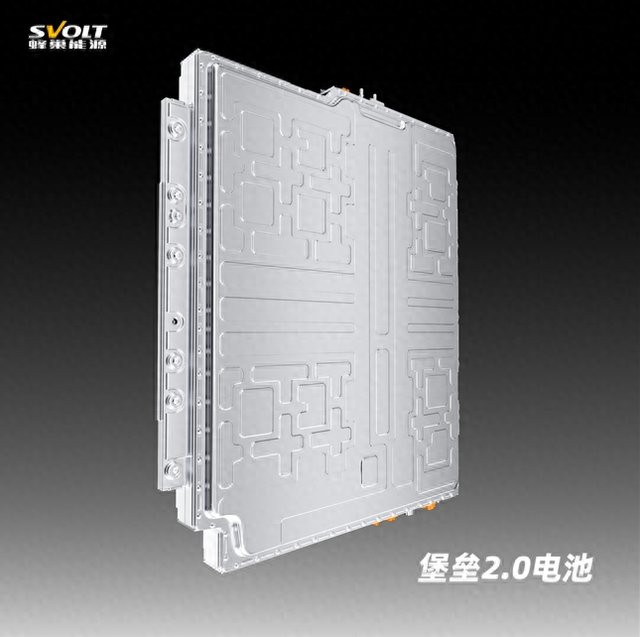
拆解蜂巢“堡垒2.0”:6C快充、双倍抗撞与不起火电芯如何炼成
Xin Lang Cai Jing· 2026-01-22 06:52
Core Insights - The article highlights the launch of the "Fortress 2.0," the world's largest 80kWh plug-in hybrid battery pack by Honeycomb Energy, addressing user expectations beyond fuel efficiency to include quiet operation, rapid response, extended electric range, fast charging, and uncompromised safety [1][6] Group 1: Battery Technology - The "Fortress 2.0" enables D-class plug-in hybrid vehicles to achieve over 400 kilometers of pure electric range through advanced technological innovations [1][6] - The system's high integration technology improves both volume utilization and energy density by 6%, allowing for more energy storage without compromising cabin or trunk space [3][6] Group 2: Charging Efficiency - The battery pack features ultra-fast charging technology, supporting peak charging rates of 6C, allowing the battery to charge from 10% to 80% in just 10 minutes, comparable to the time taken for a coffee break [4][6] Group 3: Safety Features - The "Fortress 2.0" emphasizes safety with a unique pultruded composite design that exceeds national standards for side impact resistance, providing a robust first line of defense for passengers [4][6] - The battery cells are designed to withstand severe testing conditions without catching fire or exploding, effectively managing thermal runaway risks [4][6] Group 4: Market Positioning - The introduction of the "Fortress 2.0" not only sets a record for the largest plug-in hybrid battery pack but also systematically addresses the challenges of range, charging, and safety from the perspective of real-world user scenarios [6] - This technology offers a high-value option for consumers prioritizing family travel quality and safety, aiming to redefine user expectations for plug-in hybrid batteries [6]

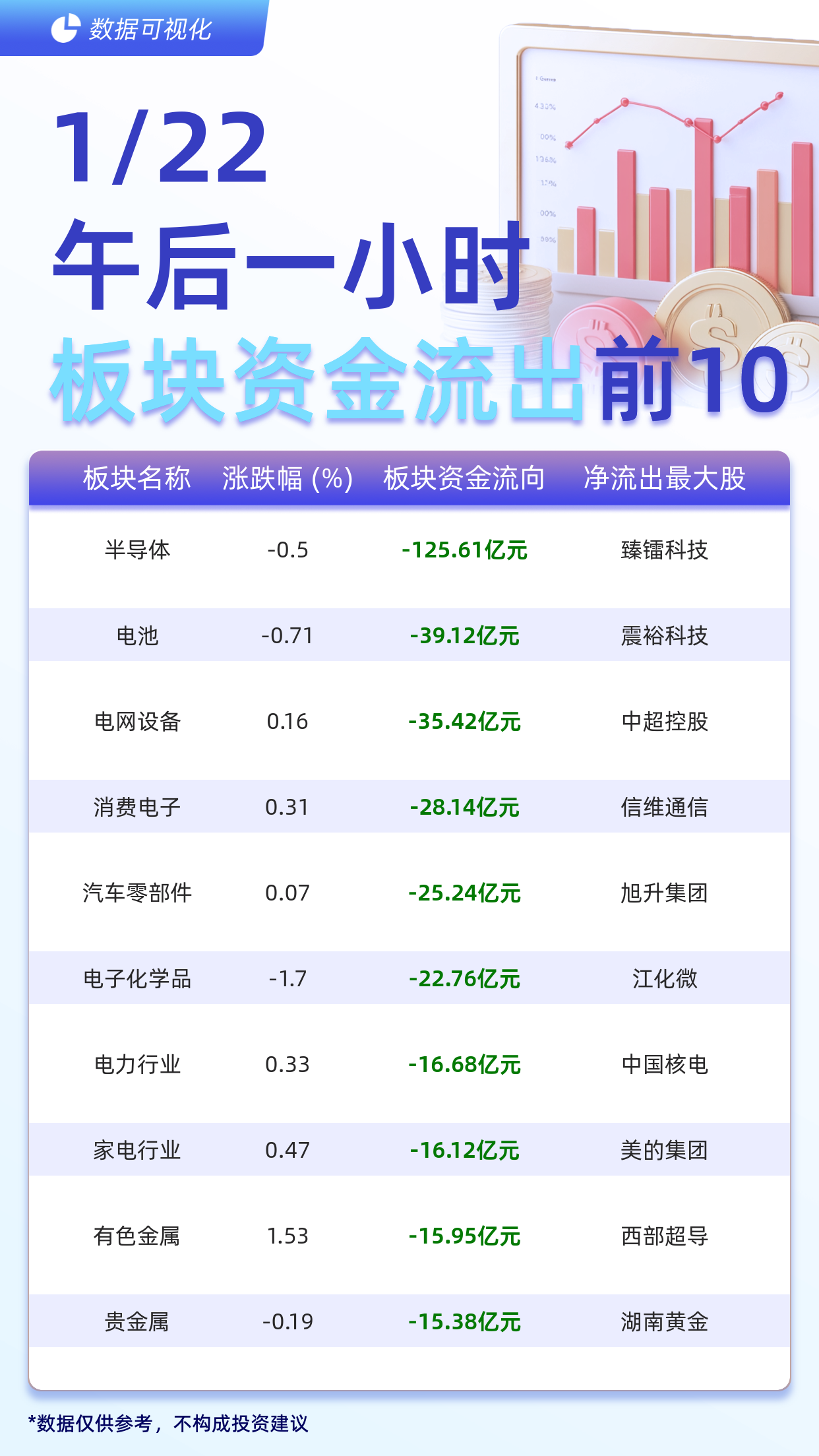
主力板块资金流出前10:半导体流出125.61亿元、电池流出39.12亿元
Jin Rong Jie· 2026-01-22 06:50
Group 1 - The main market experienced a net outflow of 29.79 billion yuan in major funds as of January 22 [1] - The top ten sectors with fund outflows included: Semiconductor (-12.56 billion yuan), Battery (-3.91 billion yuan), Power Grid Equipment (-3.54 billion yuan), Consumer Electronics (-2.81 billion yuan), Auto Parts (-2.52 billion yuan), Electronic Chemicals (-2.28 billion yuan), Power Industry (-1.67 billion yuan), Home Appliances (-1.61 billion yuan), Non-ferrous Metals (-1.60 billion yuan), and Precious Metals (-1.54 billion yuan) [1] Group 2 - The semiconductor sector saw a decline of 0.5% with a net outflow of 12.56 billion yuan, led by Zhenlei Technology [2] - The battery sector decreased by 0.71% with a net outflow of 3.91 billion yuan, primarily impacted by Zhenyu Technology [2] - The power grid equipment sector had a slight increase of 0.16% but still experienced a net outflow of 3.54 billion yuan, with Zhongchao Holdings being the most affected [3] - The consumer electronics sector rose by 0.31% despite a net outflow of 2.81 billion yuan, with Xinyi Communication as the major contributor [3] - The auto parts sector had a minimal increase of 0.07% while facing a net outflow of 2.52 billion yuan, led by Xusheng Group [3]
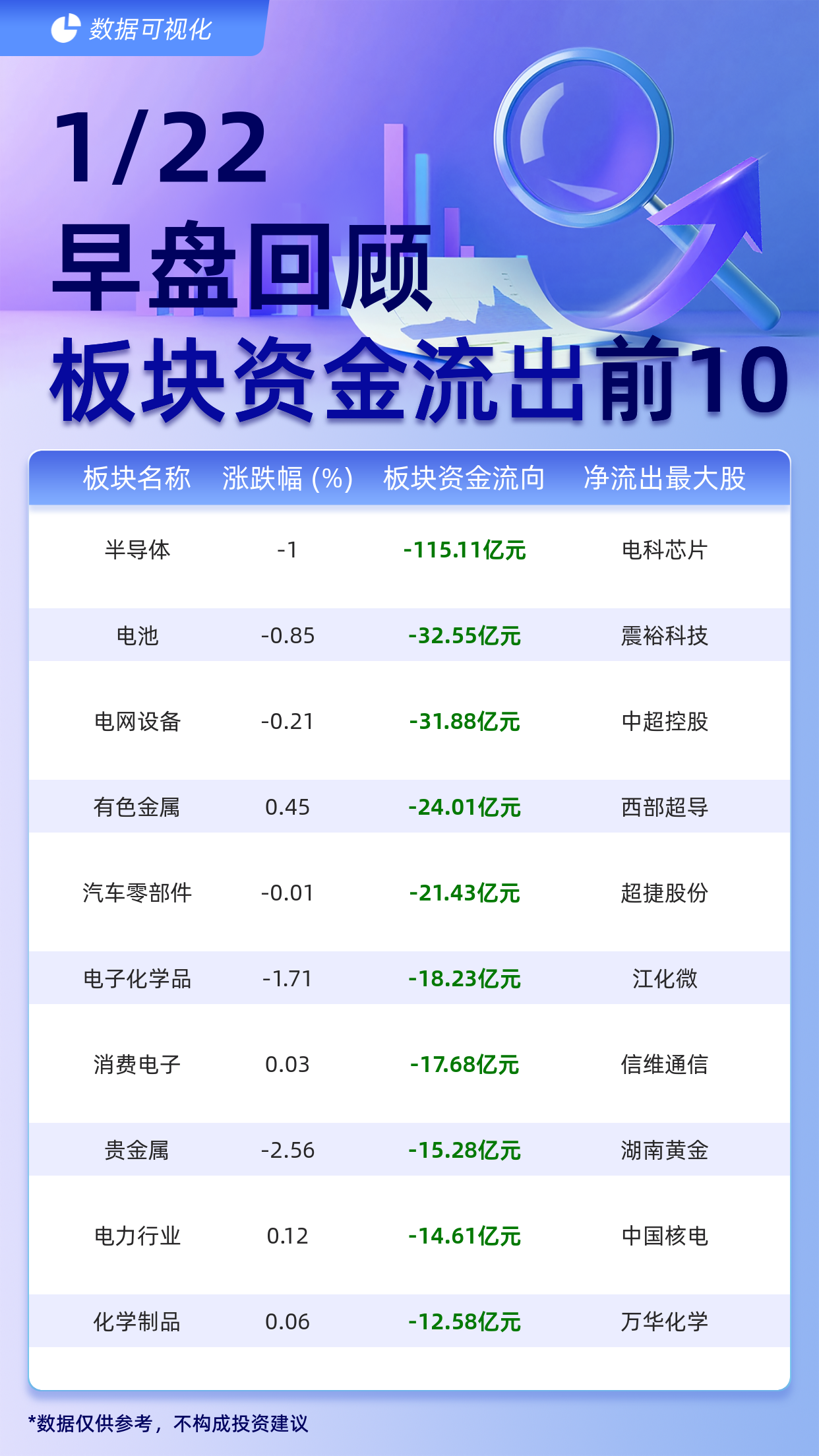
主力板块资金流出前10:半导体流出115.11亿元、电池流出32.55亿元
Jin Rong Jie· 2026-01-22 03:45
Core Viewpoint - The main market experienced a net outflow of 28.413 billion yuan in major funds as of January 22, with significant withdrawals from various sectors [1]. Group 1: Sector Performance - The semiconductor sector saw the largest net outflow of 11.511 billion yuan, with a decline of 1% [2]. - The battery sector experienced a net outflow of 3.255 billion yuan, with a decrease of 0.85% [2]. - The electric grid equipment sector had a net outflow of 3.188 billion yuan, with a slight drop of 0.21% [2]. - The non-ferrous metals sector recorded a net outflow of 2.401 billion yuan, with a modest increase of 0.45% [2]. - The automotive parts sector had a negligible change with a net outflow of 2.143 billion yuan [2]. - The electronic chemicals sector faced a significant outflow of 1.823 billion yuan, declining by 1.71% [3]. - The consumer electronics sector had a minor outflow of 1.768 billion yuan, with a slight increase of 0.03% [3]. - The precious metals sector saw a notable decline of 2.56%, with a net outflow of 1.528 billion yuan [3]. - The power industry experienced a small outflow of 1.461 billion yuan, with a slight increase of 0.12% [3]. - The chemical products sector had a net outflow of 1.258 billion yuan, with a minor increase of 0.06% [3].
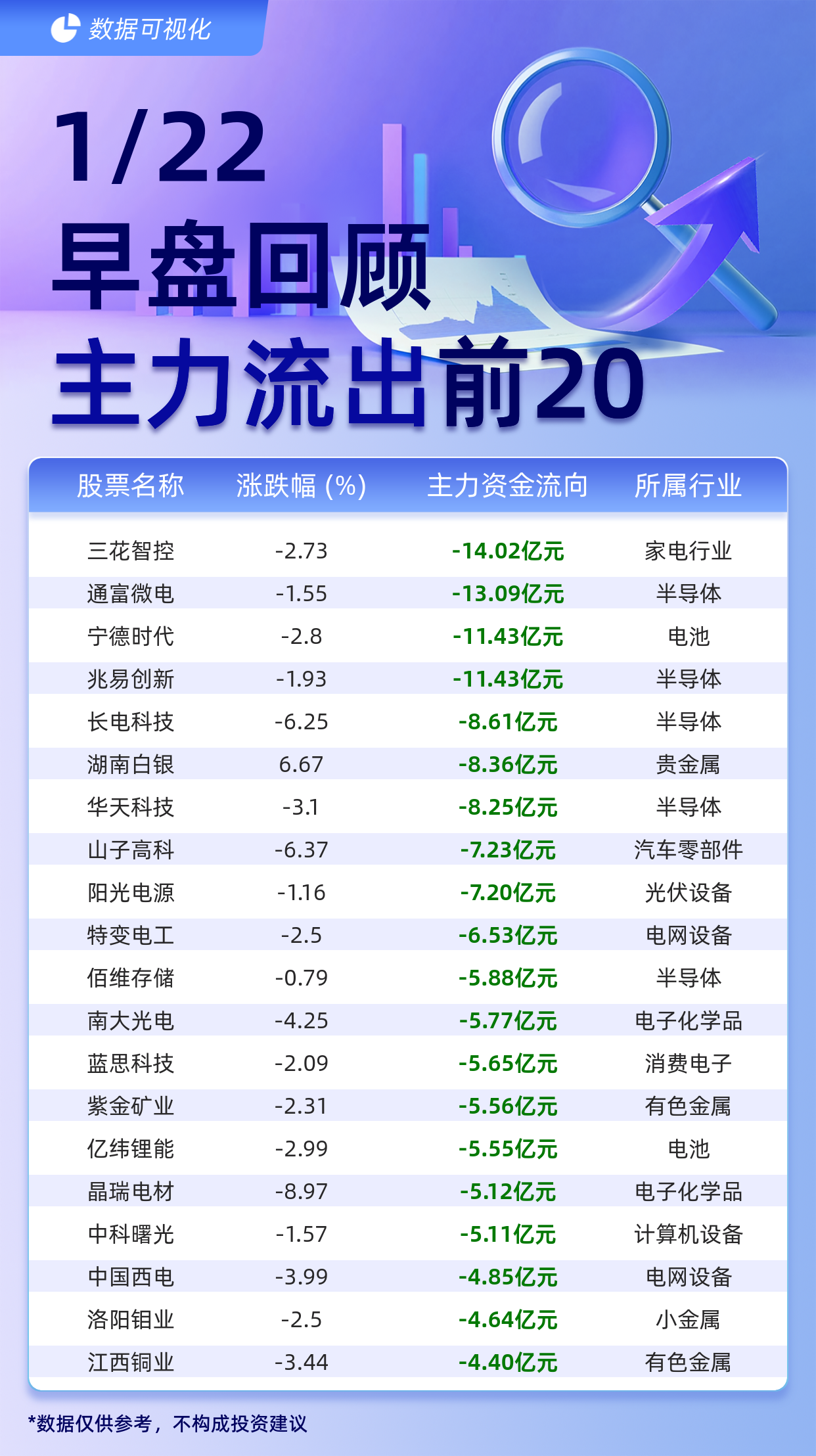
主力个股资金流出前20:三花智控流出14.02亿元、通富微电流出13.09亿元
Jin Rong Jie· 2026-01-22 03:45
Core Viewpoint - The data indicates significant outflows of capital from various stocks, with notable amounts withdrawn from companies across different industries, suggesting a potential shift in investor sentiment and market dynamics [1][2][3] Group 1: Major Stocks with Capital Outflows - Sanhua Intelligent Control experienced a capital outflow of 1.402 billion, with a decline of 2.73% in stock price [2] - Tongfu Microelectronics saw a capital outflow of 1.309 billion, with a decrease of 1.55% [2] - Contemporary Amperex Technology reported a capital outflow of 1.143 billion, with a drop of 2.8% [2] - Zhaoyi Innovation also faced a capital outflow of 1.143 billion, with a decline of 1.93% [2] - Changdian Technology had a significant outflow of 861 million, with a sharp decrease of 6.25% [2] Group 2: Other Notable Stocks - Hunan Silver experienced a capital outflow of 836 million, but its stock price increased by 6.67% [2] - Huada Technology saw an outflow of 825 million, with a decline of 3.1% [2] - Yango Technology faced a capital outflow of 723 million, with a significant drop of 6.37% [2] - Sungrow Power Supply had an outflow of 720 million, with a decrease of 1.16% [2] - TBEA reported a capital outflow of 653 million, with a decline of 2.5% [2] Group 3: Additional Stocks with Capital Outflows - Baiwei Storage experienced a capital outflow of 588 million, with a slight decrease of 0.79% [2] - Nanda Optoelectronics saw an outflow of 577 million, with a decline of 4.25% [3] - Lens Technology faced a capital outflow of 565 million, with a decrease of 2.09% [3] - Zijin Mining reported an outflow of 556 million, with a decline of 2.31% [3] - EVE Energy experienced a capital outflow of 555 million, with a drop of 2.99% [3]





宁德时代午前跌超4% 里昂称公司目前估值已反映市场大部分担忧
Zhi Tong Cai Jing· 2026-01-22 03:23
Core Viewpoint - CATL (宁德时代) is facing multiple headwinds as it approaches 2026, raising investor concerns about its growth prospects, including a slowdown in electric vehicle sales in China, rising lithium prices, and reductions in battery export VAT rebates [1] Group 1: Stock Performance - CATL's stock dropped over 4%, specifically down 4.65%, trading at HKD 463.4 with a transaction volume of HKD 9.65 billion [1] Group 2: Analyst Insights - According to a report from Citi, CATL's A/H shares are currently trading at a projected P/E ratio of 17x/22x for 2026, which reflects most of the market's concerns [1] - The same report predicts a compound annual growth rate (CAGR) of 31% in earnings per share from 2025 to 2027, suggesting an attractive risk-reward profile [1]
在特斯拉股价上涨带动韩国电池板块反弹之际,LG能源解决方案股价上涨5.8%。
Jin Rong Jie· 2026-01-22 02:45
本文源自:金融界AI电报 在特斯拉股价上涨带动韩国电池板块反弹之际,LG能源解决方案股价上涨5.8%。 ...

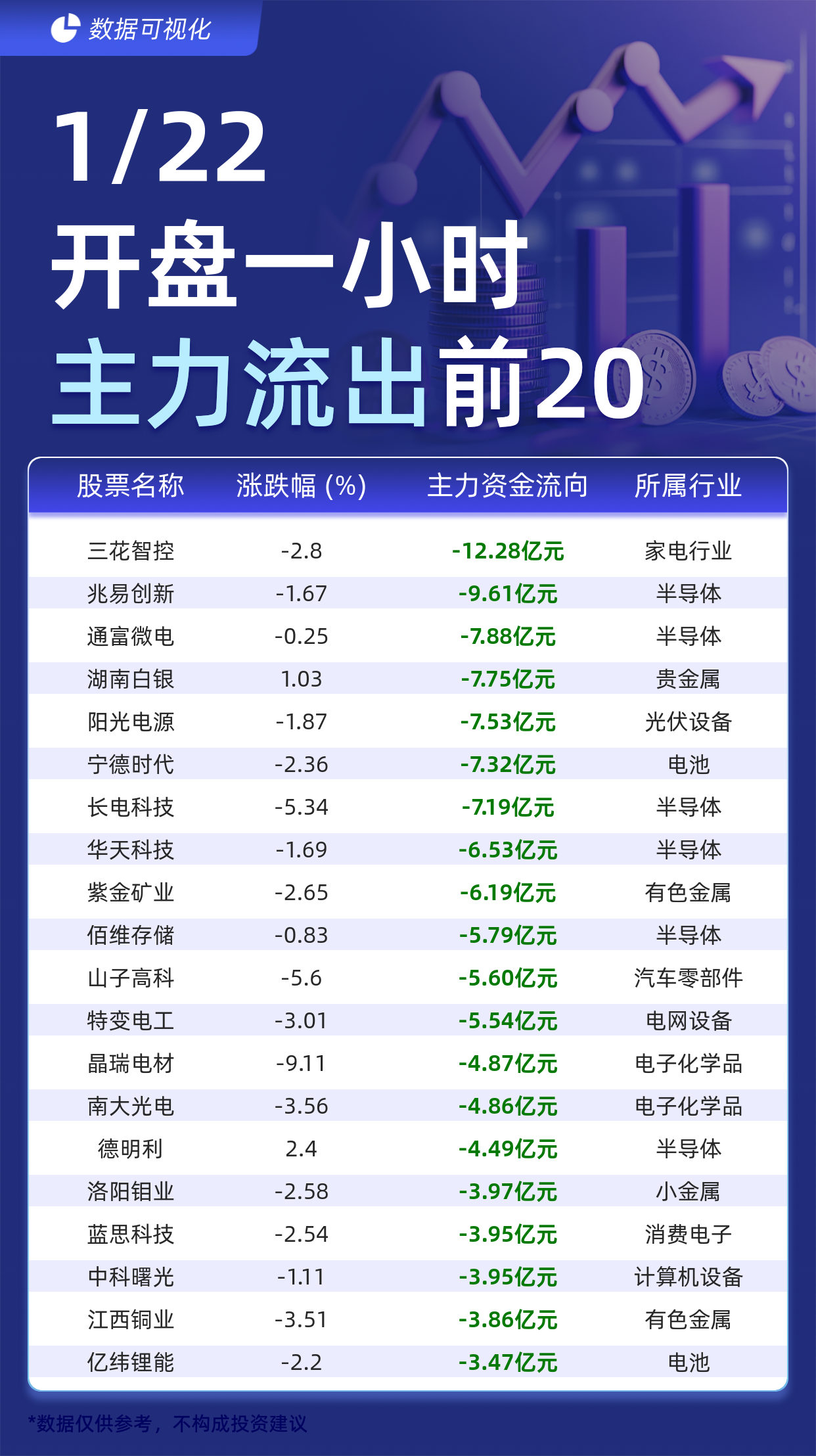
主力个股资金流出前20:三花智控流出12.28亿元、兆易创新流出9.61亿元
Jin Rong Jie· 2026-01-22 02:43
| 特变电工 | -3.01 | -5.54亿元 | 电网设备 | | --- | --- | --- | --- | | 晶瑞电材 | -9.11 | -4.87亿元 | 电子化学 | | 南大光电 | -3.56 | -4.86亿元 | 电子化学 | | 德明利 | 2.4 | -4.49亿元 | 未营体 | | 洛阳钼业 | -2.58 | -3.97亿元 | 小金属 | | 蓝思科技 | -2.54 | -3.95亿元 | 消费电- | | 中科曙光 | -1.11 | -3.95亿元 | 计算机设 | | 江西铜业 | -3.51 | -3.86亿元 | 有色金属 | | 亿纬锂能 | -2.2 | -3.47亿元 | 电池 | *数据仅供参考,不构成投资建议 | 股票名称 | 涨跌幅 (%) | 主力资金流向 | 所属行) | | --- | --- | --- | --- | | 三花智控 | -2.8 | -12.28亿元 | 家电行业 | | 兆易创新 | -1.67 | -9.61亿元 | 未营体 | | 通富微电 | -0.25 | -7.88亿元 | 未营体 | | 湖南白银 | 1. ...


国泰海通晨报-20260122
国泰海通· 2026-01-22 00:45
Group 1: Textile and Apparel Industry - The textile and apparel industry is expected to see a tightening supply as both Brazil and the US, the two largest cotton exporters, are projected to reduce production for the 2025/26 season, with Brazil's cotton output expected to decline by 6.3% year-on-year and the Mato Grosso region facing a more aggressive reduction of 14.5% [2][3] - The US cotton yield forecast has been significantly revised down by 7.8%, with a 2.5% reduction in overall production, leading to a notable decrease in inventory pressure [3] - Current cotton prices are significantly below the average planting cost, indicating a clear bottoming out, with prices around 65 cents per pound compared to an average cost of 80 cents per pound, suggesting limited downside potential [3] - Investment recommendations include focusing on companies like Baolong Oriental and Tianhong International Group, which are expected to benefit from the rising cotton prices and improved profit margins due to low-cost cotton inventory [3] Group 2: Anfu Technology - Anfu Technology has released its earnings forecast for 2025, expecting a net profit of 216 to 254 million yuan, representing a year-on-year increase of 28.6% to 50.9%, with a significant increase in Q4 profits expected [5][24] - The company is focusing on its core business of rechargeable batteries while also investing in high-potential sectors such as semiconductors to create a second growth curve [6][24] - Anfu's strategic acquisitions have increased its stake in Nanfu batteries to 46.02%, which is anticipated to further enhance profitability as the company continues to increase its ownership [24][25] Group 3: Cement Manufacturing in Uganda - Uganda is emerging as a key market for cement exports in Africa, with rapid population growth and urbanization driving demand, leading to a significant increase in cement production from 370,000 tons in 2000 to 5.1 million tons in 2023 [11][12] - The competitive landscape is favorable, with only three clinker production lines in the country, and major players like West Cement and Tororo holding a combined market share of 56% [12] - Despite high cement prices, profitability remains challenging due to high production costs driven by a lack of raw materials and logistical challenges [12] Group 4: Smart Glasses Industry - The smart glasses industry is poised for rapid growth, with companies like Mingyue Lens and Yingpais expected to benefit from the rising demand for AR technology and smart eyewear [14][15] - The launch of new products, such as Ray-Ban Meta, is expected to drive sales, with significant improvements in features and integration with social media platforms [14][15] - The supply chain for smart glasses is expanding, with a diverse range of players entering the market, including traditional eyewear manufacturers and tech companies [15][17]

安孚科技(603031)2025年业绩预告点评:业绩实现高增 预计南孚业绩承诺超额完成
Xin Lang Cai Jing· 2026-01-22 00:27
Core Viewpoint - Anfu Technology forecasts a net profit of 220 to 250 million yuan for 2025, representing a year-on-year increase of 28.6% to 50.9% [1] - The company expects to exceed performance commitments related to Nanfu Battery, driven by significant quarterly growth in Q4 2025 [2] Financial Performance - For Q4 2025, Anfu anticipates a net profit of 40 to 80 million yuan, with a year-on-year increase of 129.2% to 335.4% [1] - The non-recurring net profit for the same quarter is projected to be 40 to 70 million yuan, with a year-on-year increase of 111.5% to 319.0% [1] - Nanfu Battery's estimated net profit for Q4 2025 is between 150 to 230 million yuan, exceeding the performance commitment of 91 million yuan [2] Business Expansion and Strategy - Nanfu Battery has potential for price increases and overseas expansion, as it has not adjusted prices in the past two years due to macroeconomic conditions [3] - The company is actively pursuing OEM business expansion through partnerships with overseas brands and aims to enhance its brand presence internationally [3] - Anfu has invested in a startup, Suzhou Yilong Micro, which is expected to produce 1.6T products by 2026, indicating a strategy for diversification and growth [3] Investment Outlook - The company maintains a strong cash position and high profitability, with expectations for significant growth from overseas expansion and increased equity in Nanfu [3] - Adjustments to net profit forecasts for 2025-2027 are made to 240 million, 440 million, and 480 million yuan respectively, reflecting the potential for continued growth [3] - Anfu is assigned a target price of 67.6 yuan based on a 40x price-to-earnings ratio for 2026, maintaining a "strong buy" rating [3]
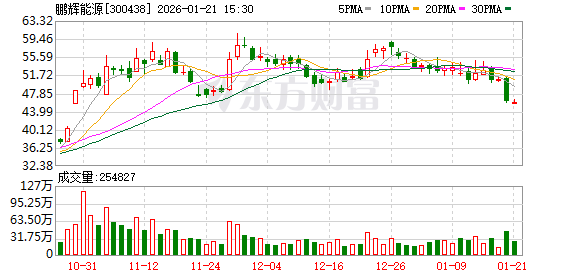
鹏辉能源:2025年度业绩预告
Zheng Quan Ri Bao· 2026-01-21 14:12
(文章来源:证券日报) 证券日报网讯 1月21日,鹏辉能源发布2025年度业绩预告称,公司预计2025年度归属于上市公司股东的 净利润为17,000万元–23,000万元。 ...