
建筑

Search documents
*ST天龙:股东广州龙朔拟减持不超过约201万股
Mei Ri Jing Ji Xin Wen· 2025-09-19 11:56
Group 1 - *ST Tianlong announced that its major shareholder, Guangzhou Longshuo Enterprise Management Partnership, plans to reduce its holdings by up to approximately 2.01 million shares, which is 5.78% of the total share capital [1] - The reduction will occur through centralized bidding and block trading methods, with a limit of 1% of the total shares in any consecutive 90-day period [1] - As of the announcement, *ST Tianlong's market capitalization is 1.2 billion yuan [1] Group 2 - The company's revenue composition for the year 2024 is entirely from the construction industry, accounting for 100% [1]

山东路桥:聘任安耀峰为公司董事会秘书
Mei Ri Jing Ji Xin Wen· 2025-09-19 10:41
Company Changes - Zhao Mingxue has resigned from the positions of director, board secretary, and deputy general manager due to job changes, but will continue to hold other management roles [1] - An Yaofeng has been appointed as the new board secretary, with a term aligned with the current board's tenure [1] Financial Performance - For the first half of 2025, Shandong Road and Bridge's revenue composition is as follows: construction industry accounts for 95.75%, leasing and sales for 2.66%, ready-mixed concrete processing and sales for 1.02%, and design consulting for 0.57% [1] - The current market capitalization of Shandong Road and Bridge is 9.6 billion yuan [1]

港股昊天国际建投跌超10%
Mei Ri Jing Ji Xin Wen· 2025-09-19 07:42
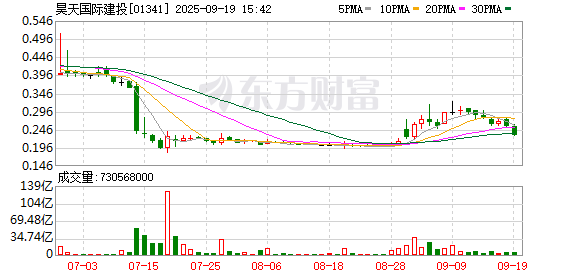
Group 1 - Haotian International Investment (01341.HK) experienced a decline of over 10%, specifically a drop of 10.2% [2] - The stock price is currently at 0.229 HKD [2] - The trading volume reached 169 million HKD [2]

基建ETF(159619)涨超1.3%,机构:关注财政部化解存量隐性债务影响
Sou Hu Cai Jing· 2025-09-19 05:47
Group 1 - The core viewpoint of the article highlights the positive impact of the Ministry of Finance's measures to address existing hidden debts, which is expected to influence the accounts receivable and cash flow of construction companies [1] - Western Securities points out that the Ministry of Finance has preemptively allocated part of the 2026 new local government debt limit and is utilizing debt relief quotas, which will help alleviate existing hidden debts [1] - As of H1 2025, the accounts receivable and contract assets of the eight major central construction enterprises accounted for 28.06% of total assets, indicating a significant portion of their financial structure is tied to these assets [1] Group 2 - Over 60% of financing platforms have achieved exit, indicating a rapid advancement in the reform and transformation of financing platforms within the industry [1] - The construction industry is experiencing improvements in profitability and cash flow in Q2, with the issuance of special bonds accelerating; as of September 12, 2025, the cumulative issuance progress of new local government special bonds reached 77.59%, faster than the same period in 2024 [1] - The national cement market price increased by 0.4% week-on-week, with multiple regions pushing for price hikes to improve profitability, and prices are expected to show a fluctuating upward trend in the future [1]
多只高位股,跳水!
Shang Hai Zheng Quan Bao· 2025-09-19 04:57
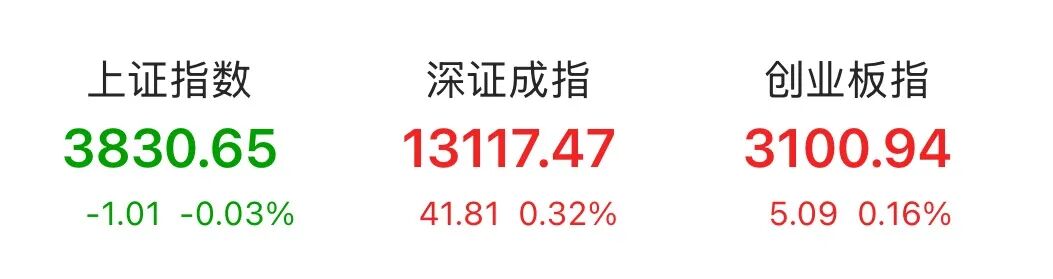
Market Overview - On September 19, A-shares showed mixed performance with the Shanghai Composite Index down 0.03%, Shenzhen Component up 0.32%, and ChiNext Index up 0.16% [1] - The total trading volume in the Shanghai, Shenzhen, and Beijing markets reached 1.51 trillion yuan, a decrease of 209.6 billion yuan compared to the previous day [1] Sector Performance - Chip concept stocks continued to perform strongly, with Yongxin Optics achieving a three-day limit-up and Demingli hitting the daily limit [2] - Lithium mining and energy metal sectors saw a surge, with Ganfeng Lithium hitting the daily limit [2] - The solid-state battery concept also regained strength, with Ganfeng Lithium closing at 52.82 yuan per share and a trading volume of nearly 7 billion yuan [2] Company Developments - Ganfeng Lithium announced on September 18 that its energy storage cells have achieved large-scale production and established long-term stable supply partnerships with several leading companies [4] - The company reported that its energy storage cell production capacity is fully utilized, and it is actively developing solid-state batteries for various applications, including electric vehicles and drones [4] - Ganfeng Lithium is accelerating its industrialization process in the fields of new energy vehicles and consumer electronics [4] Robotics Sector - The robotics sector experienced a broad pullback, with stocks like Wolong Electric Drive hitting the daily limit down [5][6] - Wolong Electric Drive reported that its robotics-related products accounted for approximately 2.71% of its total revenue in the first half of 2025, indicating a low impact on overall business performance [8] High-Profile Stock Movements - Several high-profile stocks experienced significant declines, with Shanghai Construction falling to the daily limit at 3.49 yuan per share, following a five-day limit-up streak [10] - Shanghai Construction's stock price increased by 61% from September 12 to September 18, leading to heightened trading risks due to market overheating and irrational speculation [13]
【财经早报】百亿市值叉车龙头,筹划重要收购
Zhong Guo Zheng Quan Bao· 2025-09-18 23:19
Company News - Anhui Heli plans to acquire 51% stake in Jianghuai Heavy Industry for 274 million yuan, constituting a related party transaction. After the acquisition, Jianghuai Heavy Industry will become a subsidiary of Anhui Heli and included in its consolidated financial statements. Anhui Heli's stock closed at 21.59 yuan per share, with a market capitalization of 19.23 billion yuan [7] - Fulin Precision announced a prepayment agreement with CATL, where CATL will pay a total of 1.5 billion yuan to secure lithium iron phosphate supply commitments from Fulin Precision. The prepayment will be made in two installments, with 500 million yuan in September and 1 billion yuan in November [7] - Tianpu Co., after a significant stock price increase, warned of trading risks due to its stock price deviating from the company's fundamentals. The Shanghai Stock Exchange has taken measures to suspend trading accounts of some investors involved in abnormal trading behaviors [8] - Nanjing Public Utilities announced the termination of its cash acquisition of 68% stake in Hangzhou Yugu Technology due to a lack of agreement on transaction terms, which will not adversely affect its current operations [10] - Neusoft Group received a notification from a major domestic automaker, designating it as a supplier for intelligent cockpit domain controllers, with an estimated total supply value of around 5.6 billion yuan over a product lifecycle of approximately four years [10] - Nvidia announced a comprehensive cooperation agreement with Intel, involving a $5 billion investment to purchase Intel shares at $23.28 per share. This partnership aims to develop AI infrastructure and personal computing products, with Nvidia expected to hold over 4% of Intel's shares post-transaction [11] Industry News - The Ministry of Science and Technology reported advancements in AI, including multiple general models achieving over 95% accuracy and breakthroughs in humanoid robotics technology, which are being applied in various sectors such as automotive manufacturing and logistics [5] - The National Data Bureau announced plans to support the establishment of data factor comprehensive pilot zones, aiming to explore new practices for market-oriented data value realization [5] - The National Health Commission and the Ministry of Finance issued guidelines for the implementation of a childcare subsidy system, ensuring timely and adequate distribution of subsidies [6]
两座新城,让绿色可知可感(美丽中国·关注零碳园区)
Ren Min Ri Bao· 2025-09-18 22:32
Core Viewpoint - Shaanxi Xixian New Area's Konggang New City and Fengxi New City have been selected as the first batch of low-carbon and near-zero carbon county (district) and park pilots in Shaanxi Province, focusing on green low-carbon development and carbon emission reduction in production and operation processes [1][2]. Group 1: Low-Carbon Development Initiatives - The two new cities are promoting low-carbon and near-zero carbon park construction through energy transition, building energy efficiency, transportation optimization, and industrial upgrading [2][3]. - The Xi'an Xianyang International Airport T5 terminal, which opened in February, incorporates various green design elements and has been recognized for four low-carbon cases at a national conference [2][3]. Group 2: Renewable Energy and Technology Integration - The China Western Science and Technology Innovation Port's Yuanju Building integrates seven energy-saving and emission-reduction technologies, achieving self-sufficiency in daily office electricity through solar photovoltaic walls [3]. - The building's smart green energy system covers an area of 2,750 square meters, generating approximately 400,000 kilowatt-hours annually [3]. Group 3: Clean Heating Solutions - Fengxi New City is implementing a clean heating technology that utilizes deep geothermal energy to address high carbon emissions during winter heating [4]. - This technology involves drilling 2,000 to 3,000 meters underground to extract heat using a closed metal casing heat exchanger [4]. Group 4: Digital Transformation and Energy Management - Konggang New City leverages its unique resources, including the Xi'an Xianyang International Airport, to develop advanced manufacturing, aviation support, and high-end services [5]. - A digital transformation office has been established to promote low-carbon aviation and explore smart airport solutions using Building Information Modeling (BIM) for construction management [5][6]. Group 5: Research and Development Focus - The construction of zero-carbon parks relies heavily on continuous technological innovation, with a need for increased R&D investment in clean energy, energy efficiency, and carbon capture technologies [7]. - A collaborative research center for carbon neutrality is being established to accelerate the implementation of low-carbon technologies through partnerships between universities and enterprises [7].
淮安全面启动2025年“质量月”活动 五大行动筑牢高质量发展根基
Xin Hua Ri Bao· 2025-09-18 21:56
Core Viewpoint - The "Quality Month" activities in Huai'an aim to enhance comprehensive quality management and promote the construction of a quality-oriented city, injecting vitality into the city's economic and social high-quality development [1] Quality Management Improvement Action - The quality management improvement action focuses on the actual needs of enterprises, promoting standardized construction and technical support to enhance quality management levels [2] - Huai'an is advancing provincial standardization pilot evaluations and guiding enterprises to establish standards that exceed national and industry standards [2] - Specialized training sessions are being held to update knowledge and skills in key sectors such as surveying engineering and tour guide services [2] Quality Safety Supervision Action - The quality safety supervision action emphasizes safeguarding quality safety in key industries, including explosives, food safety in elderly care institutions, and agricultural product quality [3] - Comprehensive inspections are being conducted to identify safety hazards and ensure compliance with quality safety responsibilities [3] - Increased monitoring of agricultural product quality is being implemented to ensure food safety for consumers [3] Quality Brand Building Action - The quality brand building action aims to enhance the influence of product and service quality brands in key industries and livelihood sectors [4] - Activities include promoting certifications for special equipment, organic products, and green products to improve market competitiveness [4] - Huai'an is conducting inspections and providing guidance for construction quality to ensure high standards in urban infrastructure projects [4] Quality Safety Co-Governance Action - The quality safety co-governance action fosters collaboration among government, enterprises, and financial institutions to support quality development [5] - Financial products like "Su Quality Loan" and "Huai Quality Loan" are being introduced to assist quality enterprises in overcoming financing challenges [5] - Public engagement activities are being organized to enhance community awareness of quality safety [5] Quality Consumption Improvement Action - The quality consumption improvement action focuses on enhancing consumer experience and protecting consumer rights [6] - Strict enforcement actions are being taken against counterfeit goods and false advertising to deter illegal activities [6] - Initiatives are in place to promote safe consumption practices, such as the "old for new" policy for electric bicycles [6] Conclusion - The "Quality Month" activities represent a significant initiative for Huai'an in advancing quality-oriented city construction, with a commitment to collaborative efforts across departments to ensure effective implementation and high-quality service delivery [7]

牛市的第二个降温信号
Sou Hu Cai Jing· 2025-09-18 16:18
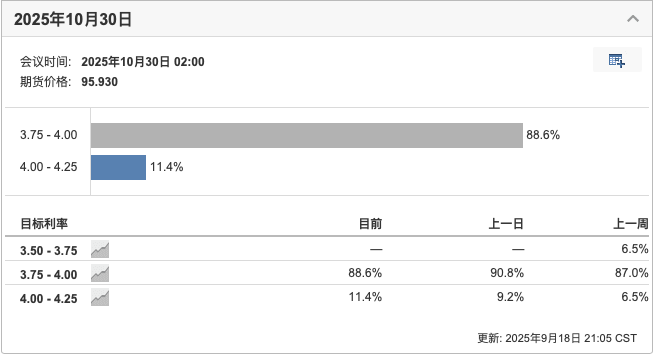
Group 1 - The Federal Reserve has lowered the federal funds rate by 25 basis points, bringing it to a range of 4%-4.25% as expected [1] - This rate cut is categorized as a preventive measure against economic recession, with Powell referring to it as "risk management-style rate cut" [2] - Market predictions indicate an over 88% probability of another 25 basis point cut in the next month's meeting, with a similar expectation for December [2] Group 2 - The resumption of the rate cut cycle provides more room for monetary policy, which previously led to significant market movements [2] - The narrowing interest rate differential between China and the U.S. is favorable for dollar inflows into China, contributing to a 3% appreciation of the renminbi this year [2] Group 3 - The upcoming LPR adjustment on September 22 is anticipated to reflect the trend of potential rate cuts, with macro data from July and August supporting this expectation [3] - A reduction in mortgage rates to the 2% range could enhance the attractiveness of investment properties in the coming years [3] Group 4 - Recent A-share market movements show a pattern of initial gains followed by declines, suggesting possible index manipulation as the market approaches the National Day holiday [5] - Speculation exists regarding the intentional suppression of the market to avoid volatility similar to last year's post-holiday fluctuations [5] Group 5 - The term "old Deng assets" refers to traditional sectors like liquor, real estate, and coal, which have seen declines this year, while "new Deng assets" like AI and renewable energy are gaining traction [10][11] - The disparity in performance between traditional and new sectors highlights a shift in market focus towards technology and innovation [12]
DuPont (NYSE:DD) 2025 Investor Day Transcript
2025-09-18 14:02
Summary of DuPont's Investor Day 2025 Company Overview - **Company**: DuPont - **Event**: Investor Day 2025 - **Key Themes**: Transformation, innovation, and acceleration [1][2] Financial and Strategic Highlights - **Pro Forma Basis**: Presentation based on the new DuPont after the spin-off of Delrin and divestiture of the Aramids business [2] - **New Reporting Segments**: Focus on healthcare, water technologies, and diversified industrials [2] - **Timeline**: Spin-off expected on November 1, 2025, and divestiture completion in Q1 2026 [2] Key Messages from Leadership 1. **Transformation Execution**: Focus on portfolio and operational transformation to reduce complexity and cyclicality [7] 2. **Excellence Focus**: Codifying innovation excellence and operational excellence into a comprehensive business system [8] 3. **Growth Acceleration**: Half of the businesses positioned in markets growing above GDP, with continued investment in these areas [8] 4. **Capital Allocation**: Disciplined model to deliver strong returns for shareholders [9] 5. **Cultural Enhancement**: Building a culture focused on growth and continuous improvement [9] Financial Performance and Projections - **Revenue Growth**: Divestiture of the Aramids business expected to increase revenue growth by 50 basis points and margin by 90 basis points [10] - **Long-term Targets**: Projecting 3-4% organic growth CAGR, margin expansion of 150-200 basis points by 2028, and EPS growth of 8-10% [25][26] Business Segments Healthcare and Water Technologies - **Sales Contribution**: Healthcare and water technologies each represent about 25% of sales [13] - **Market Position**: Leading position in medical devices, biopharma, and water filtration [34][42] - **Growth Drivers**: Aging population, chronic diseases, and increasing demand for clean water [38][46] - **Expected EBITDA Margin**: Approximately 30% for the Healthcare and Water segment [34] Diversified Industrials - **Sales Contribution**: Represents about 50% of DuPont's portfolio [14] - **Market Leadership**: Strong presence in construction, automotive, aerospace, and industrial sectors [55] - **Sales and Margin**: $3.6 billion business with a 22% operating margin [55] - **Growth Opportunities**: Focus on energy efficiency, sustainability, and innovation in product offerings [62][63] Innovation and R&D - **Investment Focus**: Emphasis on innovation to drive growth, with a vitality index of 30% [16] - **New Product Sales**: 40% growth and 60% renew, with plans to shift towards more growth [16] - **Customer Collaboration**: Strong partnerships with leading medical device and biopharma companies [41] Market Opportunities - **Addressable Market**: Combined addressable market of over $40 billion [14] - **Sustainability Trends**: Increasing focus on sustainability and regulatory requirements driving growth in water technologies [46][48] Conclusion - **Commitment to Excellence**: DuPont aims to enhance shareholder value through disciplined capital decisions and consistent delivery of growth and margin expansion [26][27] - **Future Outlook**: Positioned to lead in innovation and sustainability, with a strong focus on operational excellence and customer collaboration [69][70]
