
光电子器件制造

Search documents
跑起来!眉山开启“争先竞速”
Xin Lang Cai Jing· 2026-02-23 21:43
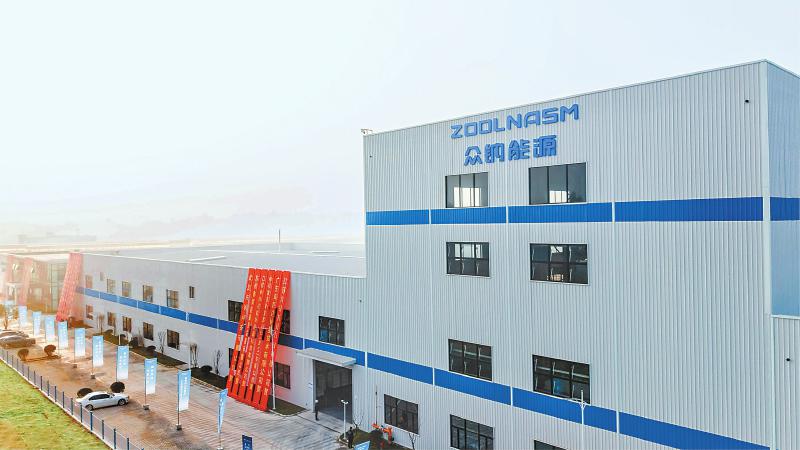
Core Insights - The establishment of the Jiangsu Zhongna Energy Technology Co., Ltd. headquarters in Meishan marks a significant breakthrough in the large-scale preparation of sodium-ion battery key materials, filling a gap in the region's sodium battery core material sector [1][4] - The project has received over 5,000 tons of orders and has nearly 20,000 tons in intended orders, with an investment of 2 billion yuan and an annual production capacity of 10,000 tons for the first phase [1][3] - Meishan aims to expand its industrial layout from a single "lithium battery track" to a "lithium-sodium dual-drive" model, positioning itself advantageously in the sodium battery industry [4][6] Company Developments - The Meishan sodium base has entered continuous production, achieving a monthly output of over 600 tons, with the first batch of sodium iron sulfate cathode materials ready for shipment to downstream companies for validation [2][3] - The project was initiated in April 2025, with the local government's deep understanding of the industry and long-term service commitment being key factors in attracting the investment [3][4] Industry Trends - Sodium batteries are seen as an important supplement to lithium batteries, with the current stage of industrialization being in its early phases [3] - The rapid production launch of the Meishan sodium base is part of a broader strategy to attract upstream and downstream supporting enterprises, accelerating the formation of an industrial cluster [4][6] Economic Impact - Meishan has announced a total of 284 key projects with a total investment of 238.77 billion yuan, including 80 advanced manufacturing projects aimed at establishing a "manufacturing strong city" [6] - The local government is focused on enhancing project execution and service support to ensure timely commencement, construction, and operational efficiency of key projects [6]

科创中国生机勃勃
Jing Ji Ri Bao· 2026-02-09 22:33
Core Insights - China's technological innovation has made significant strides in 2025, with numerous breakthroughs across various fields, indicating a robust growth trajectory in the tech sector [1][2][3][4][6][7]. Group 1: Major Technological Achievements - The Jiangmen Neutrino Experiment achieved a measurement precision improvement of 1.5 to 1.8 times over the previous international standard, marking a significant milestone in neutrino research [1]. - The "artificial sun" nuclear fusion experiment in Anhui set a world record by maintaining a temperature of 100 million degrees Celsius for 1066 seconds, representing a major leap from basic science to engineering practice in fusion energy [2]. - The construction of "Zuchongzhi No. 3" by the University of Science and Technology of China achieved a speed of solving quantum random circuit sampling problems that is 10 trillion times faster than the current fastest supercomputer [2]. Group 2: Industry Growth Metrics - In 2025, the manufacturing value added of intelligent unmanned aerial vehicles and intelligent vehicle-mounted equipment grew by 57% and 26.2%, respectively, while integrated circuit manufacturing and optoelectronic device manufacturing increased by 26.7% and 18.8% [4]. - By the end of 2025, the number of valid invention patents in China reached 5.32 million, with a per capita high-value invention patent ownership of 16, exceeding the target set in the "14th Five-Year Plan" for intellectual property [4]. Group 3: Global Recognition and Innovation Capacity - China ranked among the top ten in the global innovation index for the first time, with the highest number of top 100 innovation clusters for three consecutive years [7]. - In 2025, total R&D expenditure reached 39,262 billion yuan, maintaining China's position as the second-largest R&D investor globally, reflecting a significant increase from 10 trillion yuan in 2012 [6].
炬光科技:公司产品销往欧洲市场,其中包括欧盟成员国
Zheng Quan Ri Bao Wang· 2026-02-09 13:16
Core Viewpoint - The company, Juguang Technology, has a significant presence in the European market, with approximately 40% of its total revenue derived from this region as of the third quarter of 2025 [1] Group 1: Revenue Sources - The company's products are sold in the European market, including EU member states [1] - Revenue generation includes direct exports from domestic entities to EU clients, direct sales by European subsidiaries, and sales through agents or distributors, including buyout-style resales to the EU market [1]

全国31省经济数据出炉,东部巩固经济“压舱石”作用中西部稳中求进
Lian He Zi Xin· 2026-02-06 12:33
Economic Overview - By the end of January 2026, all 31 provinces in China had released their 2025 economic data, with GDP rankings remaining stable except for Chongqing surpassing Liaoning[4] - In 2025, the GDP growth rate for Tibet led the nation, while 18 provinces exceeded the national average growth rate of 5.0%, a decrease of 3 from 2024[4] Eastern Region - The eastern region accounted for over 50% of the national GDP, with Guangdong, Jiangsu, and Shandong remaining the top three provinces; Shandong's GDP surpassed 10 trillion for the first time[5] - Guangdong's GDP represented over 10% of the national total, with a new economy value-added ratio of 26.7% and high-tech manufacturing accounting for 34.7% of industrial output[6] Central Region - The central region's total economic output reached 29.91 trillion, with Henan, Hubei, and Anhui leading in growth rates of 5.6%, 5.5%, and 5.5% respectively[10] - In 2025, Henan's strategic emerging industries accounted for over 25% of industrial value-added, significantly contributing to economic stability[10] Western Region - The western region saw most provinces exceed the national average growth rate, with Tibet's growth rate at the top and its GDP surpassing 300 billion for the first time[14] - Gansu's industrial output increased by 9.5%, driven by a 19.5% growth in the non-ferrous metal smelting industry, benefiting from new industry demands[14] Northeast Region - The Northeast region, led by Liaoning, faced significant challenges with a notable decline in economic growth, as it was surpassed by Chongqing in GDP ranking[15] - Liaoning's industrial output growth was only 0.6%, far below the national average of 5.9%, indicating difficulties in transitioning traditional industries[15]
GDP突破14万亿,江苏经济亮眼的不只是“量”
Xin Lang Cai Jing· 2026-01-29 10:30
Economic Performance - Jiangsu Province achieved a GDP of 14,235.15 billion yuan in 2025, with a year-on-year growth of 5.3%, surpassing the national growth rate of 5% [1] - The primary industry added value reached 536.97 billion yuan, growing by 3.5%; the secondary industry added value was 6,003.82 billion yuan, increasing by 4.7%; and the tertiary industry added value was 7,694.37 billion yuan, growing by 5.8% [1] Confidence and Development - There has been a significant enhancement in confidence across Jiangsu, with collective efforts from the government, enterprises, and residents to eliminate negative factors affecting development [2] - The "Su Chao" football league has become a nationwide cultural and sports event, boosting confidence and engagement among the population, which has positively impacted economic development [2] Industrial Focus - Jiangsu's industrial structure has become clearer and more rational after years of adjustment and transformation, particularly in the manufacturing sector [3] - In 2025, the industrial added value for large-scale industries grew by 6.5%, with manufacturing increasing by 6.7% and equipment manufacturing rising by 8.8% [3] - Notably, the manufacturing of railway, shipbuilding, aerospace, and other transportation equipment surged by 15.8%, indicating a robust industrial performance [3] Innovation as a Driving Force - Innovation has emerged as the strongest driving force behind Jiangsu's economic growth, with the province leading the nation in intellectual property innovation indicators [4] - In 2025, the number of high-value invention patents per ten thousand people reached 34.2, which is 2.1 times the national average [4] - High-tech industries accounted for 52.1% of the province's industrial output, with high-tech manufacturing value increasing by 11.9% [4]
江苏省2025年实现地区生产总值142351.5亿元
Zhong Guo Xin Wen Wang· 2026-01-28 06:57
Economic Growth - Jiangsu Province aims to achieve a GDP of 142,351.5 billion yuan by 2025, representing a year-on-year growth of 5.3% at constant prices [1] - The primary industry is expected to contribute 5,369.7 billion yuan, growing by 3.5%, while the secondary industry will add 60,038.2 billion yuan with a growth of 4.7%, and the tertiary industry is projected to reach 76,943.7 billion yuan, growing by 5.8% [1] Agricultural Sector - The total output value of agriculture, forestry, animal husbandry, and fishery is projected to be 9,526.1 billion yuan in 2025, with a year-on-year increase of 4.0% [1] - The area of grain sown is expected to be 82,303,000 acres, an increase of 170,000 acres from the previous year, while the yield per acre is projected to decrease by 0.3 kg to 463.6 kg [1] - Vegetable and edible fungus production is expected to grow by 2.6%, fruit production by 2.1%, and livestock and poultry meat production by 5.0% [1] Industrial Sector - The added value of above-scale industries in Jiangsu is projected to grow by 6.5% in 2025, with 30 out of 40 industrial categories showing year-on-year growth, resulting in a growth coverage of 75% [2] - The equipment manufacturing sector is expected to see an 8.8% increase, with specific growth in computer, communication, and other electronic equipment manufacturing at 13.5%, and transportation equipment manufacturing at 15.8% [2] - High-tech industries are projected to account for 52.1% of the province's above-scale industrial output, with high-tech manufacturing value added expected to grow by 11.9% [2] Digital and Service Sectors - The added value of the digital core product manufacturing industry is expected to grow by 10.2% [2] - From January to November, revenues from internet-related services and software and information technology services are projected to grow by 13.5% and 11.1%, respectively [2] Cultural and Tourism Sector - The "Su Chao" event is expected to significantly boost cultural and tourism consumption in Jiangsu, with tourism and entertainment services growing by 11.1%, cultural services by 11.2%, and resident travel services by 15.9% from January to November [3] - The revenue from sports competition organization, ticketing agencies, and travel services is expected to grow by 35.7%, 36.4%, and 11.8%, respectively [3] - Online retail sales in Jiangsu are projected to reach 13,739.1 billion yuan, reflecting a year-on-year growth of 7.8% [3]
腾景科技:公司签订1280万美元日常经营重要订单
Xin Lang Cai Jing· 2026-01-21 09:05
Core Viewpoint - The company has received a purchase order for a two-dimensional collimator array from a subsidiary of client C, amounting to 12.8 million USD (approximately 89.15 million RMB), which is expected to positively impact the company's operational performance [1] Group 1 - The total value of the purchase order is 12.8 million USD [1] - The order is classified as a routine operational order for the company [1] - The expected outcome of this order is a positive effect on the company's business performance [1]

来之不易成绩单彰显经济韧性活力
Ren Min Ri Bao· 2026-01-20 01:57
Core Insights - China's economy demonstrates strong resilience and vitality, with significant progress expected in innovation, industrial quality improvement, digital empowerment, and green transformation by 2025 [1][2] Supply Quality Improvement - China becomes the first country with over 5 million valid domestic invention patents, with R&D expenditure reaching 39,262 billion yuan, maintaining the second position globally [2] - The added value of high-tech manufacturing and equipment manufacturing accounts for 17.1% and 36.8% of the total industrial added value, respectively [2] - The production of civil drones and industrial robots increases by 37.3% and 28% year-on-year [2] Green Leadership - Clean energy generation from hydropower, nuclear, wind, and solar grows by 8.8%, with non-fossil energy consumption rising by approximately 2 percentage points compared to 2024 [3] - The industrial added value reaches 41.7 trillion yuan, growing by 5.8% year-on-year, contributing 35% to economic growth [3] Consumption Trends - The total retail sales of consumer goods exceed 50 trillion yuan, growing by 3.7% compared to 2024, with final consumption contributing 52% to economic growth [4] - Service retail sales increase by 5.5%, outpacing goods retail sales, with service consumption accounting for 46.1% of per capita consumption expenditure [4] - Online retail sales grow by 8.6%, driven by e-commerce and digital technologies [4] Policy Effectiveness - The number of household cars reaches 52.9 per hundred households, an increase of 1.7 from 2024 [6][7] - Policies promoting consumption upgrades lead to a 4.1% increase in retail sales of six categories of goods [7] Technological and Industrial Innovation - The added value of smart unmanned aerial vehicle manufacturing and smart vehicle-mounted equipment manufacturing grows by 57% and 26.2%, respectively [8] - The core CPI rises by 1.2% year-on-year, while the decline in industrial producer prices narrows [8] Positive Economic Trends - The economic foundation remains solid, with over 36 trillion yuan added to the economy during the 14th Five-Year Plan [9] - The manufacturing purchasing managers' index returns to expansion territory, indicating positive growth trends [9] - New production forces and reform benefits continue to emerge, with significant advancements in artificial intelligence and digital economy [9] Supportive Development Environment - More proactive macro policies are expected to ensure stable economic operations, with a focus on key project implementations [10]
我国GDP首次跃上140万亿元新台阶
Mei Ri Jing Ji Xin Wen· 2026-01-19 13:03
Core Viewpoint - In 2025, China's GDP reached 140,187.9 billion yuan, marking a 5.0% increase from the previous year, driven by proactive macroeconomic policies and consumer initiatives [1] Economic Performance - The implementation of proactive macro policies effectively stabilized the economy, with retail sales of six categories of products under the "old for new" policy increasing by 4.1%, contributing 0.6 percentage points to total retail sales growth [2] - The investment in equipment and tools rose by 11.8%, contributing 1.8 percentage points to overall investment growth [2] Structural Optimization - The focus on high-quality development led to a 5.5% increase in service retail sales, with a continuous recovery observed over four months [3] - The production value of the equipment manufacturing industry grew by 9.2%, with its share rising to 36.8% [3] New Growth Drivers - The integration of technological and industrial innovation, particularly in AI and emerging industries, has significantly contributed to economic stability, with the manufacturing value of smart drones and smart vehicle equipment increasing by 57% and 26.2%, respectively [4] - The growth in integrated circuit manufacturing and optoelectronic device manufacturing was 26.7% and 18.8%, respectively [4] Economic Circulation Improvement - The establishment of a unified national market and improved market competition conditions have positively influenced price recovery and corporate profitability [4] - In December 2025, the core CPI rose by 1.2%, while the manufacturing PMI returned to the expansion zone at 50.1% [4] Achievement of Economic Goals - The economic performance in 2025 laid a solid foundation for continued growth in 2026, with positive changes in production, prices, and expectations [5] - The contribution rates of final consumption expenditure, capital formation, and net exports to economic growth were 52.0%, 15.3%, and 32.7%, respectively [6]
国家统计局:系列宏观政策为全年经济社会发展主要目标任务的完成提供坚实支撑
Sou Hu Cai Jing· 2026-01-19 06:30
Group 1 - The core viewpoint of the news is that China's macroeconomic policies in 2025 have effectively supported stable economic growth and high-quality development through various measures, including the promotion of consumption and infrastructure projects [1][2][3] Group 2 - In 2025, the implementation of proactive macro policies led to a 4.1% increase in retail sales of six categories of goods related to the "old for new" consumption policy, accelerating by 2 percentage points compared to the previous year, contributing 0.6 percentage points to the total retail sales of consumer goods [1] - The investment in equipment and tools increased by 11.8%, contributing 1.8 percentage points to overall investment growth [1] Group 3 - The service retail sector saw a 5.5% growth compared to the previous year, with a continuous recovery in growth rates over four months since September [2] - The "old for new" policy has led to a greater presence of high-quality durable goods in households, with the number of cars per hundred households reaching 52.9, an increase of 1.7 from the previous year [2] Group 4 - The manufacturing sector experienced a 9.2% increase in value added, accelerating by 1.5 percentage points, with its share rising to 36.8% [2] Group 5 - The integration of technology and industry has been emphasized, with significant growth in sectors such as smart unmanned aerial vehicle manufacturing (57% increase) and smart vehicle equipment manufacturing (26.2% increase) [3] - The integrated circuit manufacturing and optoelectronic device manufacturing sectors also saw substantial growth, with increases of 26.7% and 18.8%, respectively [3] Group 6 - The core Consumer Price Index (CPI) rose by 1.2% year-on-year in December, while the decline in industrial producer prices narrowed, and the manufacturing PMI rose to 50.1 [3] - Profits of large-scale manufacturing enterprises grew by 5.0% from January to November, compared to a decline of 4.6% in the same period last year [3]