
养老机器人

Search documents
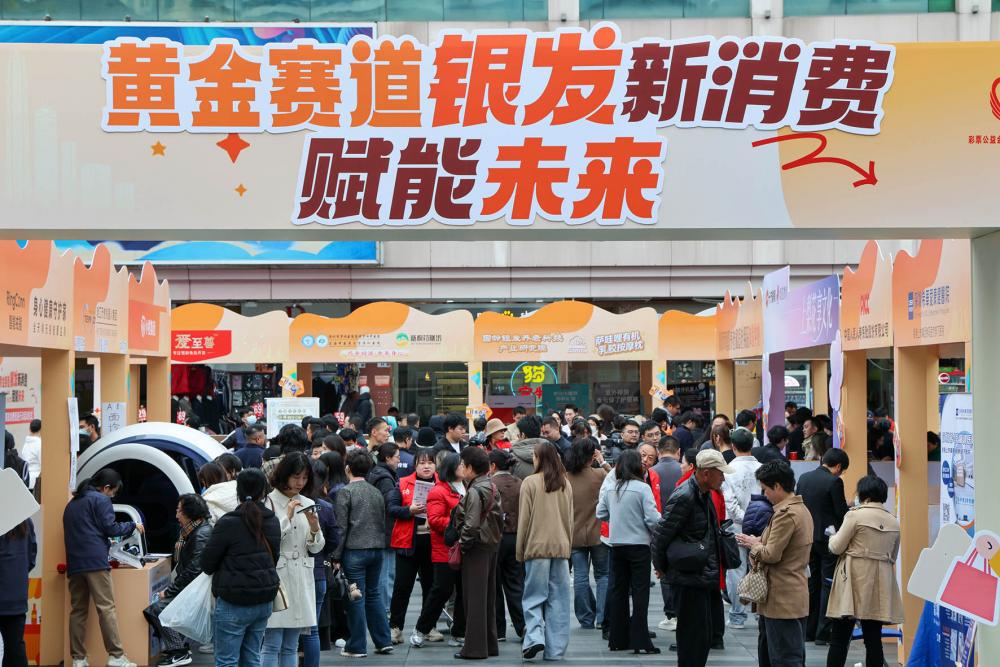
消费补贴+新业态新场景 银发经济和养老服务再迎政策力挺
2 1 Shi Ji Jing Ji Bao Dao· 2026-02-25 23:06
Core Insights - The Chinese government is focusing on the development of the silver economy and elderly care services, recognizing its significant potential and the need for supportive measures to address the challenges of an aging population [1][3][4] Policy Initiatives - A series of policies have been introduced since 2024 to enhance the silver economy, including opinions and measures aimed at improving elderly welfare and promoting consumption in the sector [3][4] - By 2026, additional measures will be implemented to cultivate service providers and promote technological innovation in elderly care [3][4] Market Potential - The silver economy is projected to exceed 30 trillion yuan by 2035, indicating substantial growth potential [3] - Despite this potential, challenges such as insufficient supply, low professional standards, and a shortage of workforce in elderly care services remain [3][4] Service Quality and Safety - The government aims to improve the quality and accessibility of elderly care services, ensuring a sustainable system that covers both urban and rural areas [4] - Safety management in elderly care institutions will be strengthened, with measures to combat fraud and protect the rights of the elderly [4] Consumption Incentives - The government is encouraging the issuance of consumption subsidies to stimulate demand among the elderly, with plans to create new consumption scenarios and business models [4][5][7] - Various regions have started providing electronic vouchers for elderly care services, enhancing purchasing power for the elderly [6] Technological Innovation - The Ministry of Civil Affairs is promoting technological innovation as a key strategy to address aging, focusing on developing smart elderly care products and services [8][9] - The integration of technology, such as robots and AI, is expected to play a significant role in the future of elderly care [8][9] Market Development - The exploration of new consumption scenarios for the silver economy is ongoing, with initiatives to showcase products and services at major trade events [9] - E-commerce platforms are being encouraged to enhance the supply of elderly-friendly products and services, catering to diverse needs [9]

新浪财经资讯AI速递:昨夜今晨财经热点一览 丨2026年2月1日
Xin Lang Cai Jing· 2026-01-31 23:52
Group 1 - The gold and silver prices experienced a significant drop, marking the largest single-day decline in 40 years, attributed to a technical correction after an overheated market [2][17] - The first trigger for the decline was profit-taking and forced liquidation of leveraged positions, while the second was the hawkish stance from the newly nominated Federal Reserve chairman and unexpected core PPI data, which increased real interest rates and the dollar's strength, diminishing gold's appeal [2][17] - Despite short-term market volatility, geopolitical tensions and the trend of de-dollarization are expected to provide structural support for gold in the medium to long term [2][17] Group 2 - The aging population in Guangdong is driving the growth of the eldercare robotics industry, which is seen as a new market with significant potential, supported by government policies [3][18] - The industry faces challenges such as technological disconnect and weak ecosystems, requiring strategic coordination and market environment improvements to advance [3][18] - Future developments in the industry are expected to focus on lightweight, intelligent, and home-based solutions [3][18] Group 3 - The demand for transformers, essential for AI computing power, has surged, with some orders extending to 2027, indicating a booming market [4][19] - Domestic manufacturers benefit from a shorter delivery cycle compared to European and American counterparts, leading to rapid export growth [4][19] - The ongoing "East Data West Computing" project and increased power consumption for computing are driving significant market expansion for high-end transformers [4][19] Group 4 - The commercial aerospace sector is experiencing a divergence in performance, with some companies like Beimo High-Tech projecting a net profit increase of over 12 times, while others face substantial losses exceeding 1 billion yuan [11][26] - The industry is shifting from valuation-driven growth to a focus on fundamentals, with 2026 anticipated to be a critical year for technology implementation and business model validation [11][26] Group 5 - The A-share market is witnessing a wave of delistings, with several companies facing termination due to financial misconduct or failing to meet market capitalization requirements [10][24][25] - This trend reflects the acceleration of the "delist as needed" mechanism under the registration system, indicating a deepening market clearing process [10][24][25] Group 6 - The photovoltaic industry in Yiwu is struggling due to rising metal prices and changes in export tax policies, leading to unstable pricing and increased customer hesitance [7][22] - Companies are clearing inventory to mitigate risks and exploring new business avenues such as energy storage and inverters, while recognizing the need for brand and core technology development for long-term success [7][22]
政策风吹来了,养老机器人产业快速发展还会远吗?
机器人大讲堂· 2026-01-15 04:00
Core Viewpoint - The article highlights the emergence of the elderly care robot industry as a significant opportunity driven by supportive policies, technological advancements, and increasing demand, with 2026 expected to be a pivotal year for the sector [1][5][30]. Policy Support - Eight government departments jointly issued measures to foster the development of elderly care service operators, marking the official arrival of the elderly care robot trend [1]. - The policy encourages technological innovation and product development in elderly care robotics, focusing on daily care, emotional support, and social assistance for the elderly [3]. - A comprehensive policy framework has been established, transitioning from mere encouragement to substantial support, including pilot programs and standardization [5][6]. Market Dynamics - The elderly care robot industry is experiencing a "triple dividend" of policy support, technological maturity, and explosive demand, revealing a market potential worth trillions [5]. - By 2025, government procurement is projected to account for 28% of the elderly care robot market, acting as a significant growth engine [11]. - The elderly population in China is expected to exceed 20% by 2031, intensifying the demand for innovative care solutions [13]. Technological Advancements - The article emphasizes the importance of integrating advanced technologies such as AI, robotics, and smart home systems to provide comprehensive support for the elderly [3][30]. - Innovations in product design and functionality are being driven by the need to address specific challenges faced by the elderly, such as mobility and emotional companionship [15][19]. Consumer Trends - There is a notable shift in consumer preferences among the elderly, moving from basic needs to a focus on quality, safety, and usability of elderly care robots [20]. - The willingness to pay a premium for high-quality products has increased significantly, with 57% of users willing to pay more for superior features by 2024 [20]. Industry Challenges - The elderly care robot industry has faced challenges such as high costs, reliability issues, and low user acceptance, which have hindered widespread adoption [23]. - Recent advancements in domestic manufacturing and innovative business models, such as rental and insurance services, are helping to lower costs and improve accessibility [26][23]. Future Trends - The industry is expected to evolve towards more specialized products tailored to specific needs, integrating AI for proactive service delivery, and creating an ecosystem that combines hardware, services, and insurance [31][33]. - The article predicts that the elderly care robot market will transition from niche technology to a mainstream necessity, driven by policy support, technological breakthroughs, and increased market acceptance [35][36].

3亿人的养老焦虑,有救了?
Xin Lang Cai Jing· 2025-11-01 06:22
Core Insights - The article discusses the increasing integration of robots in elderly care facilities in China, highlighting the introduction of smart hair-washing robots that significantly improve efficiency in caregiving tasks [1][3][4] - The aging population in China is projected to exceed 300 million by the end of 2024, leading to a growing demand for elderly care robots to alleviate the burden on families and society [3][4] - Despite advancements, robots still struggle to fully replace human caregivers, particularly in tasks requiring emotional support and complex care [4][5][7] Group 1: Industry Trends - The introduction of international standards for elderly care robots by the International Electrotechnical Commission (IEC) indicates a formal recognition of the industry's potential [3][4] - The Chinese government is actively promoting pilot projects for smart elderly care robots, covering various categories such as emotional support and rehabilitation [3][4][16] - The market for elderly care robots is expanding, with many facilities adopting robots for repetitive tasks, although the technology is still evolving [4][5][7] Group 2: Technological Developments - Smart hair-washing robots have reduced the time required for hair care from 30 minutes to 8 minutes, showcasing significant efficiency improvements [1][4] - AI rehabilitation robots are being utilized for physical therapy, indicating a trend towards integrating advanced technology in elderly care [4][9] - Companies are focusing on developing specialized robots for specific tasks, such as mobility assistance and basic household chores, rather than general-purpose robots [4][10][15] Group 3: Market Challenges - High costs of robotic solutions remain a barrier for widespread adoption, with prices for robots ranging from 60,000 to 150,000 yuan, making them unaffordable for many facilities [21][26] - The lack of comprehensive data on elderly care needs complicates the development and deployment of effective robotic solutions [20][27] - Safety concerns regarding the use of robots in elderly care highlight the need for robust monitoring and insurance mechanisms to mitigate risks [28][29]

中国“贴牌”电气公司布局养老机器人成潮流,养老服务细分场景激活市场想象力
Cai Jing Wang· 2025-09-30 09:49
Core Insights - The rise of humanoid robots is being leveraged by companies in China, particularly in the context of the aging population and the silver economy [1][6] - Aojiahua, known as the "first stock of massage chairs," is focusing on developing intelligent health service robots in collaboration with the Chinese Academy of Sciences [1][4] - The market for elderly care robots is still in its infancy in China, with significant room for commercial development [1][3] Company Developments - Aojiahua reported a revenue of 2.327 billion yuan in the first half of 2025, a year-on-year increase of 5.65%, with a net profit of 27 million yuan, up 14.01% [3] - The company’s self-owned brand revenue accounted for 51.06% of total revenue in the first half of 2025, indicating a dual-driven strategy of self-owned and ODM businesses [3] - Aojiahua's project on "intelligent massage robots based on traditional Chinese medicine" was approved by the Xiamen Science and Technology Bureau in February 2022, marking a breakthrough in the industry [3][4] Market Trends - The aging population in East Asia presents a significant opportunity for massage chair products, which are more cost-effective compared to manual massage services [4] - The penetration rate and market concentration of massage and health products in China are currently low, suggesting potential growth as health demands increase [4] - Other companies like Beiliang and Ousheng Electric are also targeting the silver economy, with Ousheng Electric developing intelligent nursing robots for elderly care [6][10] Competitive Landscape - Beiliang reported a revenue of 385 million yuan in the first half of 2025, a decline of 36.22%, and a net loss of 36.11 million yuan, contrasting with Aojiahua's growth [7] - Beiliang has initiated its entry into the robot sector with the establishment of a subsidiary focused on intelligent massage robots [8] - Ousheng Electric's nursing robots are designed to meet the physiological needs of the elderly, with a significant increase in order intentions and ongoing deliveries [10]

“十四五”以来,中国标准国际化水平不断提高——超500项标准中外互认,意味着什么
Ren Min Ri Bao Hai Wai Ban· 2025-09-23 08:52
Core Viewpoint - The article highlights the increasing global influence of Chinese standards, showcasing how they are becoming a vital part of international cooperation and trade, particularly through projects like the Jakarta-Bandung High-Speed Railway and agricultural standardization in Zambia [1][4][9]. Group 1: International Standards Development - During the "14th Five-Year Plan" period, China has led the formulation of 1,079 international standards and facilitated mutual recognition of over 500 standards with other countries [1][4]. - China has taken on 26 technical secretariat roles in international standard organizations and has proposed 880 new international standard proposals in key sectors like new energy vehicles and aerospace [4][7]. Group 2: Case Studies of Chinese Standards Abroad - The Jakarta-Bandung High-Speed Railway, as Indonesia's first high-speed rail, utilizes Chinese standards for its entire technical framework, significantly reducing travel time and enhancing local economic activity [2][3]. - In Zambia, the implementation of Chinese agricultural standards has led to a 15% increase in oil yield for local farmers, demonstrating the adaptability and effectiveness of these standards in different agricultural contexts [3][4]. Group 3: Economic Impact and Trade Facilitation - The internationalization of standards has reduced trade costs and technical barriers, enabling many Chinese companies, especially SMEs, to expand into international markets more efficiently [5][6]. - For instance, a company reported saving over 10 million yuan by reducing the number of molds needed for exports due to the mutual recognition of standards with 44 countries along the Belt and Road [6][7]. Group 4: Strategic Importance of Standardization - Standardization is seen as a key element in enhancing China's international influence and competitiveness, facilitating deeper integration with global markets and promoting a stable economic environment [9][10]. - The establishment of bilateral and multilateral standardization cooperation frameworks is crucial for supporting trade facilitation and international collaboration [8][9].
我国正牵头制定脑机接口相关国际标准
Zhong Guo Xin Wen Wang· 2025-09-05 01:45
Core Viewpoint - The article emphasizes the critical role of standards in supporting economic activities and social development, particularly in enhancing the quality of manufacturing during the "14th Five-Year Plan" period [1] Group 1: National Standards and Manufacturing Development - Since the beginning of the "14th Five-Year Plan," over 4,000 national standards have been released in key industries such as integrated circuits, new materials, new energy vehicles, robotics, and aerospace equipment [1] - In the field of intelligent manufacturing, 491 national standards have been published, providing high-quality references for the digital and intelligent transformation of manufacturing enterprises [1] - In the new energy vehicle sector, 95 national standards have been established to enhance collaboration across the automotive supply chain, improve production efficiency, and reduce costs [1] - The solar photovoltaic sector has seen the release of 221 national standards, which help prevent irrational competition and promote high-quality industry development [1] Group 2: International Standards and Global Competitiveness - During the "14th Five-Year Plan," China has taken on 26 technical secretariats in international standard organizations and proposed 880 international standard proposals in key areas such as new energy vehicles and aerospace [2] - The conversion rate of advanced applicable international standards into Chinese standards exceeds 90% in key areas [2] - International standards are seen as a means to enhance the international competitiveness of industries, particularly in emerging technologies like artificial intelligence and brain-computer interfaces [2] Group 3: New Business Models and Trade Facilitation - International standards are facilitating the development of new business models driven by digital economy and technological innovation, providing unified technical specifications for various new industries [3] - The establishment of international standards for products like photovoltaic and new energy vehicles promotes smooth international trade connections [3] - Standards related to carbon data tracing and carbon footprint accounting are aiding sustainable development by addressing cross-border comparability and verification challenges [3] Group 4: Future Directions - The focus will be on guiding more technological achievements to be transformed into international standards and enhancing practical exchanges with other countries to continuously support high-quality manufacturing development [4]
国家市场监督管理总局:正牵头制定一系列脑机接口领域国际标准
Zheng Quan Ri Bao· 2025-09-04 16:12
Core Points - The National Market Supervision Administration emphasizes the importance of advanced manufacturing standards as a fundamental and leading role in transforming the manufacturing industry from large to strong [1] - The administration has launched a series of key initiatives during the 14th Five-Year Plan period to support national strategies and industrial upgrades [1] Group 1: Key Initiatives - Strengthening top-level design to continuously improve the advanced manufacturing standard system [1] - Accelerating standard supply to create new engines for industrial upgrading [1] - Co-building international standards to enhance new competitive advantages in the industry [1] - Deepening standard implementation to actively stimulate new vitality in business entities [1] Group 2: Data and Achievements - Since the 14th Five-Year Plan, over 4,000 national standards have been released in key industries such as integrated circuits, new materials, new energy vehicles, robotics, and aerospace equipment [2] - China has taken on 26 technical secretariats in international standard organizations and has appointed 30 experts as chairs of technical bodies, along with 486 leaders for international standard revision working groups [2] - 880 international standard proposals have been made in fields like new energy vehicles and aerospace, with 532 international standards being led for development [2] - Over 4,210 advanced applicable international standards have been converted into national standards, with a conversion rate exceeding 90% in key areas [2] Group 3: International Standards in Emerging Fields - In the brain-computer interface field, Chinese experts are leading the development of international standards to unify terminology and data formats, promoting innovation and large-scale development [2] - The world's first international standard for elderly care robots has been established, providing benchmarks for design, manufacturing, testing, and certification, which will guide the high-quality development of the global elderly care robot industry [2] Group 4: Role in Belt and Road Initiative - The standardization work plays a fundamental and leading role in promoting the Belt and Road Initiative, enhancing connectivity through standards [3] - An international standard for pressure pulsation conversion of mixed-flow turbines has been crucial in the acceptance of turbine models in key Belt and Road projects [3]
以更优标准助力产业提质
Qi Huo Ri Bao· 2025-09-04 16:08
Group 1 - The core viewpoint of the articles emphasizes the importance of advanced manufacturing standards in supporting the high-quality development of China's manufacturing industry [1][2] - Since the beginning of the 14th Five-Year Plan, China has issued over 4,000 national standards related to key industries such as integrated circuits, new materials, new energy vehicles, robotics, and aerospace equipment [1] - In the field of intelligent manufacturing, 491 national standards have been published, providing high-quality references for the digital and intelligent transformation of manufacturing enterprises [1] Group 2 - The implementation of standards is accelerating the intelligent transformation and upgrading of the manufacturing industry, with guidelines for smart factory construction providing clear directions and implementation paths [2] - Currently, over 30,000 basic-level smart factories, more than 1,200 advanced-level smart factories, and over 230 excellent-level smart factories have been established in China [2] - Excellent-level smart factories have achieved significant improvements, with an average reduction of product development cycles by 28.4%, an increase in production efficiency by 22.3%, a decrease in defect rates by 50.2%, and a reduction in carbon emissions by 20.4% [2] Group 3 - Standards also play a crucial role in promoting internationalization of industries, with China leading the development of the world's first international standard for elderly care robots and several international standards in brain-computer interface technology [2] - The establishment of international standards in photovoltaic, new energy vehicles, power batteries, and household appliances has enhanced the international competitiveness of industries and facilitated international trade [2]
2025年中国智能养老设备白皮书:智能浪潮下,如何破解养老需求“密码”
Tou Bao Yan Jiu Yuan· 2025-07-21 12:29
Investment Rating - The report does not explicitly provide an investment rating for the intelligent pension equipment industry Core Insights - The intelligent pension equipment industry is a crucial segment of the silver economy, addressing the needs of an aging population through technology-driven solutions that enhance safety, convenience, and health management for the elderly [3][8] - The market for intelligent pension equipment in China is projected to grow significantly, with a compound annual growth rate (CAGR) of 11.9% from 2020 to 2024, increasing from 4.3 trillion yuan to 6.8 trillion yuan [9] - By 2029, the market size is expected to reach 11.6 trillion yuan, driven by factors such as population aging, policy support, technological advancements, and changing consumer demands [9] Market Overview - The intelligent pension equipment market is expected to grow rapidly, with a CAGR of 21.2% from 2020 to 2024, reaching a market size of 156 billion yuan by 2024 [17][18] - The market for intelligent home care products is projected to grow from a penetration rate of 3.5% in 2020 to 12% in 2024, and further to 25% by 2029 [10][23] - The intelligent pension equipment industry is characterized by a complete industrial chain, from upstream technology to midstream manufacturing and downstream application scenarios [15] Key Segments - The intelligent home care segment is a significant part of the intelligent pension equipment industry, focusing on enhancing the safety and comfort of elderly individuals in their daily lives [10] - The rehabilitation robot market is expected to grow rapidly, with a market size of 7.9 billion yuan in 2024, driven by a CAGR of 16.3% during the 14th Five-Year Plan period [11] - The intelligent pension equipment includes various categories such as health monitoring devices, safety monitoring devices, and emotional companionship devices, all aimed at improving the quality of life for the elderly [14] Competitive Landscape - Major players in the intelligent pension equipment market include technology giants like Xiaomi and Huawei, focusing on ecosystem building and technological standards, while traditional appliance manufacturers like Haier and Midea emphasize practical solutions and service completeness [35][36] - The market is also seeing the emergence of specialized brands and new entrants that focus on niche segments and innovative solutions tailored for the elderly [36] Future Trends - The intelligent pension equipment market is expected to evolve towards more personalized and user-friendly solutions, integrating advanced technologies such as AI and IoT to enhance service delivery [27][28] - The report highlights the importance of policy support and technological innovation in driving the growth of the intelligent pension equipment industry, with a focus on creating a coordinated service system that integrates home, community, and institutional care [26]