
咖啡烘焙

Search documents
唐山高新技术产业开发区午末萃取咖啡烘焙馆(个体工商户)成立 注册资本1万人民币
Sou Hu Cai Jing· 2025-10-27 21:43
Group 1 - The establishment of Tangshan High-tech Industrial Development Zone's Wumei Extract Coffee Roasting House is noted, with Zhang Xin as the legal representative and a registered capital of 10,000 RMB [1] - The business scope includes licensed projects such as small catering and food internet sales, which require approval from relevant authorities before operation [1] - General projects include the sale of pre-packaged food, health food, special medical purpose formula food, retail and wholesale of edible agricultural products, internet sales (excluding items requiring licenses), delivery services, personal internet live broadcasting services, and wholesale and retail of fresh vegetables [1]
又一台湾品牌收缩大陆市场,曾是“星巴克”劲敌
东京烘焙职业人· 2025-10-16 08:33
Core Viewpoint - 85°C, a Taiwanese coffee and bakery chain, is undergoing a significant strategic contraction in mainland China due to ongoing losses, competitive pressures, and a lack of strategic focus [5][7]. Group 1: Store Closures - The company plans to close over 40 stores in mainland China this year, marking the largest adjustment in five years, which represents more than 10% of its total mainland stores [8][18]. - The closures will affect not only store locations but also the supply chain and production base, with a shift in focus to profitable regions in East and South China [8][18]. - As of June 2023, the total number of stores in mainland China was 441, a decrease of 21 stores since the beginning of the year, indicating a trend of intensified closures [18][22]. Group 2: Financial Performance - 85°C reported a loss of approximately 460 million New Taiwan dollars (around 46 million RMB) in the first half of 2023, with projections indicating that losses could exceed 400 million New Taiwan dollars (over 93 million RMB) by 2025 if operational structures are not adjusted [22][23]. - Revenue in the first nine months of 2023 decreased by about 14% compared to the same period last year, exacerbated by competitive pressures and delayed revenue from seasonal products [23][26]. Group 3: Competitive Landscape - The brand faces stiff competition not only from major players like Starbucks but also from local bakery chains such as Christine, BreadTalk, and others, which have a better understanding of local tastes and faster market response [25][26]. - The shift in consumer behavior towards rational spending has further squeezed the market space for Taiwanese brands, which previously relied on regional characteristics to attract customers [26]. - The overall trend among Taiwanese restaurant brands in mainland China is to reassess their market strategies, with many opting for contraction as a survival strategy [26].


全年闭店超40家,初代网红85度C大撤退
Sou Hu Cai Jing· 2025-10-15 05:20
Core Insights - 85°C, a once-popular bakery brand, is facing significant challenges in the Chinese market, leading to a strategic shift that includes closing over 40 underperforming stores, marking the largest adjustment in five years [2] - The company's revenue in mainland China has decreased by approximately 14% year-on-year, with a reported loss of about 200 million New Taiwan Dollars (approximately 40 million RMB) in the first half of the year [2] - The brand's revenue share from mainland China has dropped from a peak of 72% to 42% as of September 2024, indicating a substantial decline in its market position [2] Company Background - Established in 2004, 85°C initially achieved significant market share in Taiwan, surpassing Starbucks, and expanded rapidly into mainland China starting in 2007 [3] - The company went public in 2010, leveraging capital to fuel its growth, and by early 2013, it had opened 324 stores in mainland China [4] Strategic Challenges - The company's attempt to transition to a franchise model has faced setbacks, with the first franchise store only opening in late 2014, and subsequent management changes impacting strategic direction [5][6] - The competitive landscape in the bakery market has evolved, with 85°C facing challenges from other brands that have adopted aggressive franchise expansion strategies, leading to a loss of its competitive edge [6] Market Environment - The bakery market in mainland China has seen a stagnation in growth, with a net increase of only 1% in total bakery stores in 2023, amidst a backdrop of closures and reduced investment in the sector [7] - The operational adjustments required due to store closures are impacting the entire supply chain, necessitating reductions in production and logistics [8] Conclusion - The trajectory of 85°C reflects broader trends in the Taiwanese food and beverage sector, highlighting the difficulties faced by brands in adapting to the rapidly changing Chinese market [8]
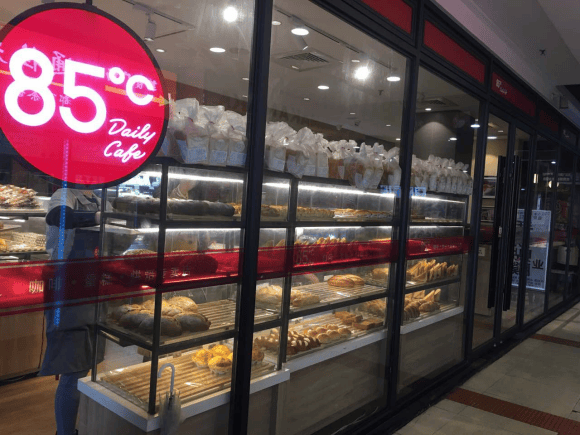
又一台湾品牌败走大陆市场,一年闭店十分之一,一手好牌为何被它打烂?
3 6 Ke· 2025-10-13 03:00
Core Viewpoint - The Taiwanese coffee chain 85°C is undergoing significant store closures in mainland China, with over 40 stores expected to shut down this year, marking the largest adjustment in five years. This move aims to address intensified competition and declining consumer spending in the mainland market [1][4]. Group 1: Store Closures and Financial Impact - 85°C plans to close more than 10% of its mainland stores to improve operational efficiency and reduce losses [1][4]. - The company reported a loss of approximately NT$200 million (around RMB 46 million) in the first half of this year, with projections indicating that losses could exceed NT$400 million (over RMB 93 million) by 2025 if operational structures are not adjusted [2]. - The mainland operations, which were profitable in 2021, have turned into a financial burden, with losses reaching nearly NT$400 million (approximately RMB 93 million) last year [4]. Group 2: Market Position and Competition - 85°C's rapid expansion in mainland China began in 2007, but management issues have hindered its performance, leading to a focus on internal improvements rather than aggressive expansion [5][9]. - The brand has struggled to maintain a clear consumer identity in mainland China, where it is perceived more as a traditional bakery rather than a coffee shop, resulting in a lack of loyal customer base [10][12]. - The competitive landscape has shifted, with local and foreign bakery chains posing significant challenges, diminishing 85°C's initial market advantages [10][12]. Group 3: Management and Strategic Decisions - The company has faced management challenges, including a failed franchise strategy and high turnover among key personnel, which have contributed to its operational difficulties [8][9]. - Following a period of aggressive expansion, 85°C has shifted its focus to internal talent development and closing underperforming stores [9]. - The brand's inability to establish a strong brand identity and customer loyalty has been a critical factor in its declining market position [12].

关税冲击下首份美联储《褐皮书》:107次提及关税,淡化通胀影响
Sou Hu Cai Jing· 2025-04-24 12:11
Group 1: Trade Policy Impact - The tariff policies have significantly affected key industries such as steel, aluminum, and automotive parts, forcing companies to shorten pricing cycles and implement daily price adjustments to transfer cost pressures [2] - Consumer behavior has shifted, with a surge in demand for durable goods before tariffs took effect, while non-durable goods consumption has declined, indicating concerns over future price increases [2] - Companies in regions like Atlanta and St. Louis have paused capital expenditures due to policy uncertainty, with some manufacturers stating that the environment is too chaotic for investment [2] Group 2: Inflation and Wage Dynamics - The Beige Book reveals signs of stagflation, with most regions reporting accelerated wage growth, contradicting signs of layoffs in manufacturing [3] - The healthcare sector continues to expand, driving up labor costs, while low-skilled jobs are shrinking due to industry shifts [3] - Input cost pressures are expected to rise further, with companies anticipating increased costs over the next six months, leading to a situation where consumers will ultimately bear these costs [3] Group 3: Federal Reserve Policy Dilemma - The Federal Reserve faces a dilemma between slowing economic growth and persistent inflation, with expectations of a rate cut in June despite inflation remaining above target [4][5] - Core PCE inflation expectations have been raised to 2.8%, while GDP growth forecasts have been downgraded from 2.1% to 1.7% [5] - The Fed's attempt to slow down balance sheet reduction has been interpreted as a dovish signal, reinforcing expectations for rate cuts [5] Group 4: Global Supply Chain Restructuring - The tariff situation is accelerating the restructuring of global supply chains, with companies facing challenges such as skyrocketing costs and order uncertainties [6][7] - For instance, U.S. agricultural exporters have been severely impacted, with the cost of soybeans rising from 4,000 yuan/ton to 7,000 yuan/ton, leading buyers to shift to South American markets [7] - Companies are adopting varied strategies to mitigate risks, including short-term measures to expedite shipments and long-term strategies like localizing supply chains [7] Group 5: Political and Market Pressures - The Trump administration's pressure on the Federal Reserve has reached new heights, with public calls for immediate rate cuts impacting market dynamics [8] - Despite the Fed's emphasis on policy independence, the acknowledgment of deteriorating economic prospects suggests that monetary policy is influenced by political factors [8] - Market reactions have been mixed, with Bitcoin rebounding and tech stocks performing well, while concerns over economic recession are reflected in deepening yield curve inversions [8]
消费参考丨关税风暴下的乳业:如何走出苜蓿进口依赖?
2 1 Shi Ji Jing Ji Bao Dao· 2025-04-09 01:49
Group 1 - The dairy industry is facing a tariff storm, with China opposing the potential 50% tariff increase from the U.S. and announcing a 34% tariff on all imports from the U.S. starting April 10, 2025 [1][2] - The rising cost of alfalfa, crucial for increasing milk production and protein levels, poses a significant cost pressure on the dairy industry [2][4] - The industry is currently experiencing overproduction, leading to increased inventory of milk powder and significant losses per ton sold [3][4] Group 2 - To mitigate risks, diversifying alfalfa import sources, particularly increasing imports from Spain, is suggested as a potential solution [5] - The macroeconomic environment is pushing the dairy industry towards accelerated transformation [6]