家电及零部件

Search documents
三花智控午前拉升超6% 此前预计2025年全年净利润同比增长超25%
Zhi Tong Cai Jing· 2025-12-30 04:02
Core Viewpoint - Sanhua Intelligent Control (002050) has seen a significant stock price increase of 6.09%, reaching HKD 36.24, with a trading volume of HKD 626 million, following the release of its 2025 earnings forecast [1] Group 1: Earnings Forecast - The company anticipates a net profit attributable to shareholders of approximately RMB 3.874 billion to RMB 4.649 billion for 2025, representing a year-on-year growth of 25% to 50% [1] - The net profit after deducting non-recurring gains and losses is expected to be around RMB 3.679 billion to RMB 4.615 billion, indicating a year-on-year increase of 18% to 48% [1] - According to Shenwan Hongyuan's report, using the median of the earnings growth forecast, the company is expected to achieve a net profit of RMB 1.019 billion in Q4 2025, reflecting a year-on-year growth of 27.8% [1] Group 2: Market Position and Product Development - Dongwu Securities notes that major overseas competitors are continuously iterating their hardware and software, with significant product launches imminent, suggesting that the company's main hardware components have reached a stable design phase [1] - The company aims to achieve an annual production target of 1 million units within five years, maintaining a strong position in product development [1] - If the target of 1 million units is met, with an estimated profit margin of 10% on a total assembly cost of RMB 50,000 per unit, the company could contribute RMB 3.5 billion in profit, indicating substantial growth potential [1]

三花智控盘中涨超4% 预期全年净利同比增长25%-50% 机器人业务有望迎突破性进展
Zhi Tong Cai Jing· 2025-12-29 02:54
Core Viewpoint - Sanhua Intelligent Control (02050) has seen a stock price increase of over 4% during trading, currently up 3.83% at HKD 34.72, with a trading volume of HKD 265 million [1] Financial Performance - The company expects a net profit attributable to shareholders of approximately HKD 3.874 billion to HKD 4.649 billion for 2025, representing a year-on-year growth of 25% to 50% [1] - The net profit excluding non-recurring gains and losses is projected to be around HKD 3.679 billion to HKD 4.615 billion, with a year-on-year growth of 18% to 48% [1] Growth Prospects - According to Guotai Junan Securities, the company is actively expanding into new fields and steadily increasing production capacity, with expected annual growth rates of 20% to 30% in the coming years [1] - The company has announced a share buyback plan with an investment of HKD 300 million to HKD 600 million, having repurchased HKD 106 million worth of shares by the end of November, indicating potential positive effects on stock prices [1] Robotics Development - The company is optimistic about the future of robotics and is leveraging close partnerships with major clients to enter the robotics actuator market [1] - A robotics division was established this year, with increased R&D investment in robotics-related products [1] - The company plans to allocate 10% of its IPO proceeds (approximately HKD 700 million) to the robotics business and aims to hire 200 additional R&D personnel over the next three years [1] - Collaboration with major clients is ongoing for R&D and trial production, with expectations for mass production of client robotics products by 2026, indicating a potential breakthrough in the robotics business [1]
美国就业警报拉响!降息大局已定?
Di Yi Cai Jing Zi Xun· 2025-12-01 23:52
Core Insights - The overall manufacturing sentiment in the U.S. has declined for the ninth consecutive month, with the ISM manufacturing PMI dropping from 48.7 in October to 48.2 in November, indicating a contraction in the sector [2][3] - The trade war initiated by the Trump administration has led to increased costs and reduced demand, with 67% of surveyed participants indicating that workforce management is focused on controlling numbers rather than hiring new employees [3][4] - The Federal Reserve is expected to consider another interest rate cut as economic indicators show weakness, with predictions of a 25 basis point reduction in December [6][7] Manufacturing Sector Performance - The new orders index fell to 47.4, reflecting a decrease in demand due to tariffs raising prices on certain goods [3] - Manufacturing employment has contracted for ten consecutive months, with only four industries, including computers and electronics, showing growth, while others like wood products and transportation equipment are shrinking [3][4] - Manufacturers in the transportation equipment sector are beginning to implement permanent adjustments, including layoffs, due to the current tariff environment [3] Economic Indicators and Federal Reserve Actions - The upcoming economic data, including the ISM services index and ADP private employment report, will be closely monitored as indicators of future monetary policy [6] - Recent data shows that initial jobless claims have risen to 1.96 million, the highest level since the pandemic, indicating increased difficulty in job searching [6] - Market expectations for a rate cut have shifted significantly, with most major brokerage firms anticipating a 25 basis point reduction in the upcoming Federal Reserve meeting [7]


就业警报拉响!ISM制造业指数“九连缩” 降息大局已定?
Di Yi Cai Jing· 2025-12-01 23:45
Group 1: Manufacturing Sector Overview - The overall manufacturing sentiment in the U.S. has declined for the ninth consecutive month, with the ISM manufacturing PMI dropping from 48.7 in October to 48.2 in November, indicating continued contraction [1][2] - The new orders index fell to 47.4, reflecting reduced demand due to tariffs increasing prices of certain goods [2] - Manufacturing employment has contracted for ten consecutive months, with 67% of survey participants indicating that managing personnel numbers is the norm rather than hiring new employees [2] Group 2: Impact of Tariffs and Economic Conditions - Tariffs have led to increased production costs, with the prices index rising from 58.0 in October to 58.5 in November, further suppressing demand [2] - Some manufacturers are linking layoffs to the broad tariff policies implemented by President Trump, indicating a shift towards permanent adjustments in response to the current tariff environment [2][3] - The chemical products sector has reported that tariffs and economic uncertainty are suppressing demand for adhesives and sealants, which are primarily used in construction [3] Group 3: Federal Reserve's Monetary Policy Outlook - As the Federal Reserve approaches its year-end meeting, there is speculation about potential interest rate cuts, with expectations for a 25 basis point reduction in December [4][5] - Recent data shows that initial jobless claims have risen to 1.96 million, the highest level since the pandemic, indicating significant challenges in the job market [4] - Economic analysts predict that further rate cuts may occur in 2026, with the terminal rate expected to fall to the range of 3.00%-3.25% [5]
美国就业警报拉响!降息大局已定?
第一财经· 2025-12-01 23:41
Core Viewpoint - The overall manufacturing sentiment in the U.S. continues to decline, marking the ninth consecutive month below the threshold, primarily due to the impacts of the trade war initiated by the Trump administration, which has led to decreased orders, job demand pressure, and increased production costs [3][4]. Manufacturing Sector Pressure - The ISM reported that the manufacturing Purchasing Managers' Index (PMI) fell from 48.7 in October to 48.2 in November, with the new orders sub-index dropping to 47.4, indicating weakened demand due to tariffs raising prices [5][6]. - Manufacturing employment indicators have contracted for ten consecutive months, with 67% of survey participants indicating that managing personnel numbers is the norm rather than hiring new employees [5][6]. - The manufacturing sector accounts for 10.1% of the U.S. economy, with only four industries, including computers and electronics, showing growth, while sectors like wood products and transportation equipment are experiencing contraction [6][7]. Impact of Tariffs and Economic Uncertainty - Manufacturers in the transportation equipment sector are linking layoffs to the extensive tariff policies of President Trump, indicating a shift towards permanent adjustments, including layoffs and new overseas production initiatives [6][7]. - Chemical product manufacturers report that tariffs and economic uncertainty are suppressing demand for adhesives and sealants, which are primarily used in construction [6][7]. - The chaotic trade environment has led to complaints from electrical equipment and appliance manufacturers regarding increasing difficulties in exporting to the U.S. [6][7]. Federal Reserve's Policy Considerations - As the Federal Reserve approaches its year-end meeting, market attention is focused on economic data, including the ISM services index and the ADP private employment report, which are critical for assessing future policy directions [8][9]. - Recent data shows that the number of Americans filing for unemployment benefits rose to 1.96 million, the highest level since the pandemic, indicating significant challenges in the job market [9][10]. - The Federal Reserve has already cut rates twice since September and may consider another cut in the coming weeks, with expectations for a 25 basis point reduction at the December meeting [9][10].

就业警报拉响!美国ISM制造业指数“九连缩”,降息大局已定?
Di Yi Cai Jing· 2025-12-01 23:40
Group 1 - The overall manufacturing sentiment in the U.S. has declined for the ninth consecutive month, with the manufacturing employment index contracting for ten months [1][2] - The ISM manufacturing purchasing managers' index (PMI) fell from 48.7 in October to 48.2 in November, indicating a continued contraction in the sector [2] - The new orders sub-index dropped to 47.4, while input costs for manufacturers increased, with the price index rising from 58.0 to 58.5 [2] Group 2 - 67% of survey participants indicated that controlling personnel numbers is the norm rather than hiring new employees, reflecting ongoing employment challenges in the manufacturing sector [2] - The manufacturing sector accounts for 10.1% of the U.S. economy, with only four industries, including computers and electronics, showing growth, while others like wood products and transportation equipment are contracting [2] - Manufacturers in the transportation equipment sector are linking layoffs to the broad tariff policies implemented by President Trump, indicating a shift towards more permanent adjustments [2][3] Group 3 - Chemical product manufacturers reported that tariffs and economic uncertainty are suppressing demand for adhesives and sealants, primarily used in construction [3] - The business environment remains weak due to rising costs from tariffs, government shutdowns, and increased global uncertainty [3] - Economists believe that structural issues, such as labor shortages, are preventing the manufacturing sector from returning to previous levels of prosperity [3] Group 4 - As the Federal Reserve approaches its year-end meeting, economic data will be closely monitored, including the ISM services index and the ADP private employment report [4] - Recent data shows that the number of Americans filing for unemployment benefits rose to 1.96 million, the highest level since the pandemic, indicating significant challenges in the job market [4] - The Fed has already cut rates twice since September and may consider further cuts in the coming weeks, with market expectations leaning towards a 25 basis point cut [4][5]
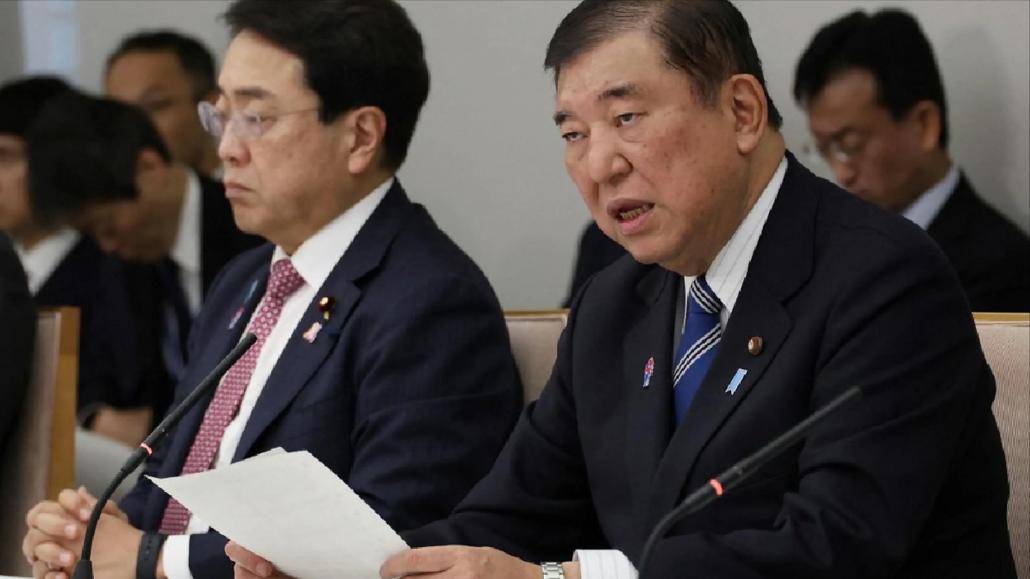
日美彻底闹掰,专攻对方痛点,日本扛不住求助中方:愿认真看历史
Sou Hu Cai Jing· 2025-07-18 09:01
Group 1: Trade Relations and Tariffs - The ongoing tariff negotiations between Japan and the United States have failed to reach an agreement, leading to increased sanctions from the U.S. against Japan, causing frustration in Japan over its past compromises [1][7] - The U.S. has announced a 25% tariff on all Japanese goods starting August 1, which has severely impacted Japan's economy and its export sectors, particularly in automobiles and electronics [7][9] - Japan's heavy reliance on exports to the U.S. has made it vulnerable, with competitors like South Korea, Germany, and Mexico quickly capturing market share due to rising costs from tariffs [9][10] Group 2: Political Responses and Domestic Pressure - Japanese politician Shigeru Ishiba has publicly vowed to resist U.S. pressure, but Japan's current capabilities may not allow for a direct confrontation with the U.S. [3][14] - The internal political landscape in Japan is becoming increasingly strained, with opposition parties criticizing the government's handling of U.S. relations amid rising public discontent [9][12] - The U.S. administration is experiencing internal divisions regarding the tariff strategy, with some officials advocating for negotiations while others support a hardline approach [10][12] Group 3: Japan's Shift Towards China - In light of the escalating tensions with the U.S., Japan is looking to strengthen its relationship with China, with recent meetings indicating a willingness to address historical issues and improve bilateral ties [5][15] - Japan's approach towards China is seen as a strategic move to balance its position against U.S. pressures, although the effectiveness of this strategy remains uncertain [17][20] - The Chinese government is cautious in its response, emphasizing that Japan must take concrete actions rather than merely discussing historical grievances to improve trade relations [20][21] Group 4: Broader Implications - The current trade conflict highlights the fragility of alliances based on mutual interests, with Japan's experience serving as a warning to other nations about the risks of economic dependency [22][24] - The restructuring of global supply chains means that countries must navigate their positions carefully, as showing weakness could lead to significant repercussions [24]